
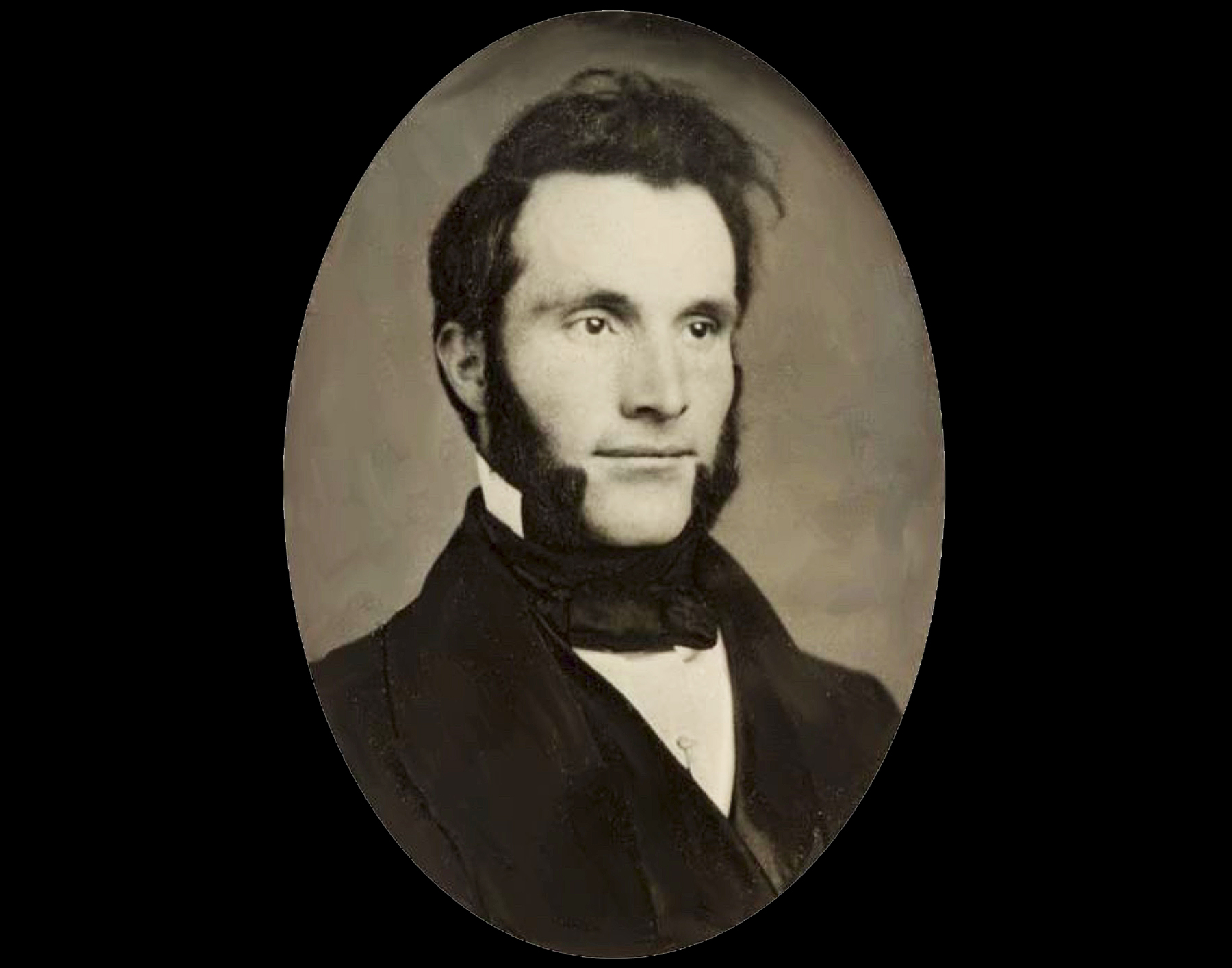

Mahlon Loomis: July 21, 1826 – October 13, 1886)
✪ Mahlon Loomis was an American dentist and inventor credited for being the first to propose a mechanism for wireless communication and an electric power generating system based on his idea there were electrically charged layers in the Earth’s atmosphere.
Loomis’ theory proposed the Earth’s upper atmosphere was divided into discrete voltage layers, rising from zero at ground level to higher voltages in successive layers with increasing altitude; and these atmospheric layers could be “tapped” of their electrical energy using kites fitted with metallic screen conductors and 600 foot long copper cords, flown high above hills and mountains to conduct electricity for use on the ground or to transmit and receive electromagnetic code impulse messages.
In 1868, he claimed he sent wireless telegraphic transmissions between two Virginia hilltops 18 miles apart using the apparatus based on his theories. Historians’ opinions regarding what he actually did range from his claim being completely unproven to theories he may have inadvertently sent electromagnetic wave (radio) signals between the two hilltops; irregardless of his ideas about atmospheric electrical charges.
Mahlon Loomis was born in Oppenheim, New York, the third of eight children to Nathan and Waitie J. (Berber) Loomis. The family later moved to Springvale, Virginia. On May 28, 1856, Loomis married Achsah Ashley and they had a daughter, Catherine Ashley, born on August 5, 1860.
In September 1848 Loomis moved to Cleveland, Ohio to study dentistry under a Dr. Wright. He began practicing dentistry in Ohio before moving back to Virginia, and later residing in Earlville, New York, Cambridgeport, Massachusetts, and Philadelphia, Pennsylvania, before finally moving to Washington, D.C. From 1860 to 1862 he was listed as a “master mason” within the Free and Accepted Masons fraternal organization, and attended the Dawson Lodge.
As part of his dentistry practice, Loomis developed a process for making dentures entirely out of porcelain; which he patented in the United States (U.S. patent 10,847) in 1857, as well as in England and France. However, patenting a medical device at that time was controversial and a New York dental convention deemed the action “unprofessional.”
In response Loomis took out advertisements in local newspapers defending his dental patent and himself against the “unprofessional” charge, stating:
“Whether my taking out letters patent be deemed professional or otherwise, I shall still persist in holding and defending my patent, in spite of the divers insinuations and falsehoods of my professional brethren, and shall still continue to manufacture at my different offices, as I have for the past three years, my inimitable and absolutely perfect artificial dentures, and defy any dentist in this or any other country, to produce a similar work of art, to equal in purity, beauty, durability or artistic excellence, my style of teeth, which I am now making; and will further offer A REWARD OF FIVE HUNDRED DOLLARS, which shall be promptly paid, in case they are so equalled.“
An historical review of Loomis’s dental patent concluded he “had great confidence in the ultimate success of his process, and regarded it as easy of manipulation and adaptation.” However, the profession encountered very great difficulties with it in these directions, principal among them being the almost impossibility of properly governing the shrinkage of the material in firing; and Mr. Loomis’s process, although experimented with to some extent, never actually achieved commercial success.
By the mid-1800s it had been well established the Earth was surrounded by a significant electrical field; and Loomis felt passionately this was a overlooked resource of vast potential; both for generating electrical power, and as a conduit which could support worldwide wireless communication.
In 1864, Loomis mused in his notebook:
“The lightning with its thunder crash seems to be the most powerful and terrible thing in nature. There always seems to be an abundance of this electrical element; and why not use it for various purposes?”
In an 1872 lecture he prophesied:
“The atmosphere, like the inside of a Leyden jar, or the zinc plate of a galvanic battery, is always highly charged with positive electricity, and the intervening air, like the glass of the Leyden jar, or the separated poles of the galvanic battery, is a perfect non-conductor, thus forming and constituting the most complete and colossal electric battery that ever gave an electric spark.”
Loomis noted: ” Benjamin Franklin had already demonstrated the practicability of drawing electricity from the clouds to the earth; but not one step has since been taken to pursue that fact to a profitable practice.” But, once the infrastructure for drawing electrical currents from the upper atmosphere was in place, it would mean that:
“Mill and factory will then run with a more subtle power, although the waterwheel stands dry and idle. Our dwellings will glow with wholesome heat on wintry days and be illuminated with clear, unwavering light in the night time from the steady and exhaustless flow of this vital element.”
Another electrical phenomenon which greatly influenced Loomis’s theories was the aurora borealis or “Northern Lights.” As early as 1839, the German mathematician and physicist Carl Friedrich Gauss had correctly speculated its luminescence originated in an electrically conducting region of the upper atmosphere; which would later became known as ionosphere.
Loomis was also familiar with the solar storm of 1859, which in addition to a major aurora display produced widespread surging electrical currents which disrupted telegraph lines. However, at this time the exact height of the phenomenon was uncertain. Although it is now known to be located hundreds of miles above sea level, Loomis believed it was actually only a few miles above the Earth’s surface; and thus well within the range of the highest mountain summits.
Reflecting his belief in the tremendous untapped potential of atmospheric electricity, Loomis declared in a January 1868 letter to his brother Joseph: “Telegraph! That’s the least important result I expect to attain.” However, virtually all his reported ensuing efforts dealt with attempts to establish long-distance signalling.
Loomis believed in the absence of disrupting influences like thunderstorms, the atmosphere naturally arranged itself into discrete concentric layers; which could be individually accessed in order to provide distant wireless communication. Therefore, transmissions would only be possible when both the sending and receiving conductors were at the same altitude above sea level. There were a number of instances in the years between 1866 and 1879 where Loomis was reported making successful experimental transmissions, ranging from 11 to 400 miles. Unfortunately, in most cases the details were inadequately recorded and documented.
A November 1872 report in the Washington Chronicle stated, using kites and galvanometers, “Loomis’ aërial system has just been tried on lines of different lengths, with variable, but perfectly satisfactory results. On a line of 400 miles lineal distance (800 mile circuit) the tests were perfectly satisfactory at an elevation of 2100 feet. At a mountain elevation of 1200 feet the tests and results that were very strong at a distance of 14 miles.”
In a January 1873 interview printed in the same paper, Loomis was quoted as saying that during the previous summer he had “telegraphed by my imperfect experiments in the most satisfactory manner, on the spurs of the Blue Ridge Mountains, in Virginia, at a mountain elevation of about thirteen hundred feet, with kites let up with a small copper wire of about five hundred feet in length.
Fifteen years after Mahlon Loomis’s death, his older brother George wrote an account about his brother’s activities. George Loomis reported that a series of financial setbacks had hindered development. A plan to raise $20,000 to finance a demonstration of the system in the U.S. Cascade Range, spanning the 300 miles between Mount Hood, Oregon, and Mount Shasta, California, had to be canceled due to losses encountered by the backers in the September 1869 Black Friday stock market crash. Alternate financing for this test was then arranged from a group located in Chicago, but this support also failed, due to the aftereffects of the October 1871 Great Chicago Fire.
On January 13, 1869, Senator Charles Sumner of Massachusetts submitted a petition prepared by Loomis which requested the U.S. Congress appropriate $50,000 for financing for developing his ideas “during the next year.” This petition was initially referred to the Committee on Patents, then at Loomis’s request was rereferred on March 11, 1870, to the Committee on Appropriations. Twenty days later the petition was again transferred, to the Committee on Commerce.
Loomis’s request for a government appropriation had a precedent in an 1843 congressional grant of $30,000 to Samuel Morse, for the construction of an experimental wire telegraph line from Washington to Baltimore, Maryland. During the time Congress was evaluating this request, Morse conducted multiple onsite demonstrations of the telegraph’s operation at the Capitol building. In addition, the House Committee on Commerce, reviewing Loomis’ proposal, noted there was already a similar telegraph system, developed by Charles Wheatstone, already in commercial operation in England, which had been “put into practical use for two or three hundred miles in Great Britain.” This led the committee to conclude that “The practicality of establishing telegraphs on the electric principle is no longer a question.: Ultimately Loomis’s petition for financial support was not approved.
Rebuffed in obtaining Federal financing, Loomis concluded forming a corporation under a Federal charter would help increase the visibility of his efforts, and would be more likely to be approved, since the Federal Government would not have to spend any money. Thus, on July 11, 1870, a bill was introduced by John Bingham of Ohio in the House of Representatives to incorporate the Loomis Aerial Telegraph Company. Under the proposed charter, the company would be used “to utilize the principles and powers of natural electricity in telegraphing, generating light, heat and motive power”
This bill would be submitted three times in as many years, failing to be passed the first two times; and on each occasion was referred back to the Committee on Commerce. On May 20, 1872, representative Bingham submitted “An Act to incorporate the Loomis Aerial Telegraph Company” for a third time, again stressing that there would be no monetary appropriation. At the time the bill was submitted, Bingham stated: “I have introduced the bill at the instance of the gentleman (Mr. Loomis) whose name it bears. My acquaintance with this gentleman is very limited. He entertains a dream, and it may be only a dream, a wild dream, that when his proposition comes to be fully applied, it may light and warm your houses, that it may furnish all the heat needful for all the uses of human life, and to propel your machinery upon the land and upon the sea.” This time the bill was passed by the House of Representatives, and on January 16, 1873, the U.S. Senate also gave its approval. President Grant signed the bill five days later.
J. R. Hayes, M.D., one of the investors in the Loomis Aerial Telegraph Company, penned a positive review that appeared in a number of newspapers. In his opinion: “The conception of Dr. Loomis is a grand one, and worth the profound attention of all his countrymen. It is a far more feasible plan, in view of our present knowledge of electricity as applied to telegraphy, than was the Morse system at its conception.” Moreover, he predicted “This system will revolutionize telegraphy all over the world as it is practically developed and utilized, and so inexpensive will it be in its daily operation that it will soon supersede the postal system of all countries without the aid of legislation to this effect.”
On July 30, 1872, Loomis was issued U.S. Patent 129,971 for “Improvement in Telegraphing.” This one-page patent makes a vague claim about using atmospheric electricity to eliminate the overhead wire used by the existing telegraph systems, but it contained no schematic diagram of how to build it, and no specific theory of how it might function. Loomis envisioned towers on the tops of high mountains, and thus penetrate or establish electrical connection with the atmospheric stratum … to form the electrical circuit.
in late 1877 it was reported Loomis was now conducting successful experiments in West Virginia: and also had the financing needed to test a bold plan to connect the western United States with Switzerland. According to this report, carried in numerous papers: “Information has reached here recently that Professor Loomis, who has been in the mountainous regions of West Virginia for some months conducting a series of experiments with his proposed aerial telegraphy, has demonstrated finally that telegraphing without wires is practical.”
The Washington Chronicle, stated that Loomis had reported he had “demonstrated by repeated tests that the telephone could be used as easily as the Morse instruments, and that lately he had done all his talking to his assistant, twenty miles away from him, by the telephone, the connection being aerial only.” In addition, Loomis was quoted as saying he had “been in correspondence with Edison for a long time, and that he had received many valuable hints from him”
Beginning in the 1860s, Loomis’ claim he successfully conducted long range wireless telegraph and telephone communication, is controversial. Opinions about his claims range from full acceptance to complete dismissal as being unproven and impractical. In general even individuals accepting his reports assume that the transmissions still didn’t work in the way his patent specified.
The lack of independent witnesses or detailed technical descriptions has made it difficult to make a conclusive analysis of Loomis’s various assertions and ideas. During this era the common practice for verifying that a system was working as advertised was to post observers at each end of a communication link, sending their own messages and making public reports. Although Loomis claimed that “eminent scientists and engineers” observed his experiments, he never provided their names or those of his assistants, and extensive research has not uncovered any independent reports by eyewitnesses.
In 1909 a Washington Star article reported that a proposal was under review by the U.S. Weather Bureau to conduct tests, using kites, to try to verify Loomis’s experiments. The paper noted that: “The facts in the case have been transmitted by Prof. Willis Moore to Dr. Blair, who is carrying on a series of kite-flying experiments at Mount Weather, and he will try to reproduce the results.“
In 1922, the authors of The Complete Book of Radio were intrigued by Loomis’s work, although they prefaced their review with the comment that they were “by no means asserting that Loomis discovered radio telegraphy, as we understand it today.” Others, however, considered Loomis to be a misunderstood prophet who was thirty years before his time, and who should be credited with having invented wireless telegraphy “two years before the birth of Marconi.”
The October 1965 issue of Popular Electronics printed an article, “The Real Inventor of Wireless,” authored by Thomas Appleby. Appleby’s overall conclusion was Loomis had successfully made multiple wireless telegraphic transmissions beginning in 1866; and based on his analysis of Loomis notebooks, he had inadvertently created a “spark-gap” radio transmitter, similar to what early radio inventors would employ a few decades later.
▶️ 14 Minutes 11 Seconds
In the 2003 issue of Invention & Technology, the article “Through The Air In 1866” by Malvin E. Ring was sub-titled “Virginia dentist demonstrated wireless telegraphy decades before Marconi.” This review accepted Loomis’s claims of making long-distance wireless telegraphy transmissions, although the author had outstanding questions about the technical details, stating “How exactly this happened is not entirely clear.”
Loomis eventually became estranged from his wife, and by 1878 was working as a mineralogist for the Mount Athos company in Lynchburg, Virginia. He moved into his brother George’s home in Parkersburg, West Virginia. Then in 1884, he moved again to Terra Alta, West Virginia, where he set up another dental practice.
His brother, George Loomis reported that near the end of his life, Mahlon recounted that “an impulse has driven me that I could not resist” and:
“I know that I am by some, even many, regarded as a crank—by some perhaps as a fool—for allowing myself to the sacrifice of material advantages to abandon a lucrative profession and pursue this ignus fatuus, but I know that I am right, and if the present generation lives long enough their opinions will be changed—and their wonder will be that they did not perceive it before. I shall never see it perfected—but it will be, and others will have the honor of the discovery. Still, I do not care for that—except it would be gratifying I confess, to live to see the world acknowledge that I am at least sane; or at least such a crank as God employs to move the world.”

Loomis died at Terra Alta on October 13, 1886, at the age of 60, and is buried in the Terra Alta Cemetery. ✪


















▶️ ◼️◼️◼️◼️◼️◼️◼️◼️◼️◼️ ✪✪✪ DONATE ✪✪✪ ◼️◼️◼️◼️◼️◼️◼️◼️◼️

▶️ DONATE VIA PAYPAL (DEBIT & CREDIT CARD)
ALL PayPal Transactions Are Encrypted For Card Holder Privacy & Security
▶️ DONATE VIA ZELLE (DIRECT BANK CASH TRANSFER)
ZELLE is the perfect online alternative to PayPal. It’s an incredibly simple, secure, easy, fast and FREE way to send or receive money to recipients directly from your online banking account without a middleman. Best of all, there are NO fees.
ZELLE is a service provided by your bank and is already built in to your online banking account. You only need to activate it first before using. If you’ve already activated ZELLE in your online bank or credit union account, you can donate to The New Americanist by using our ZELLE address:
vip@thenewamericanist.com
To activate your ZELLE, follow these easy instructions (a simple two minute process):

▶️ DONATE VIA SNAIL MAIL