




▶️ VICTOR DAVIS HANSON: WHY DO THEY SO DESPISE MUSK?
⭐️ HelloKitty’sGotAHairtrigger

VICTOR DAVIS HANSON: WHY DO THEY SO DESPISE MUSK?

hhh
s the midterms approach, the Left has gone nearly berserk in its hatred of trillionaire entrepreneur Elon Musk. Yet its escalating venom would have been almost inconceivable before 2022, when Musk publicly declared that he would be voting Republican.
Before Musk’s recent political reversal (he voted for both Hillary Clinton in 2016 and Joe Biden in 2020), he was beloved by the Left as the first successful upstart challenger to the century-long dominance of the Big Three fossil-fuel automakers. Liberals once loved his revolutionary, electrically powered Teslas and drove them proudly as a green virtue signal.
Not now. Far-left podcaster Jennifer Welch has run out of Nazi epithets for Musk. Alexandria Ocasio-Cortez; ironically, given her own limited talents—trashed Musk as “probably one of the most unintelligent billionaires I have ever met or seen or witnessed.”
Elon Musk’s shift to the Right, support for Trump, and defense of free speech have turned a former liberal darling into a target of the Left’s growing hostility toward billionaires.
Fellow multibillionaire Bill Gates smeared Musk for supposedly “killing the world’s poorest children” by promoting cuts to U.S. foreign aid programs.
Just this week, former Clinton labor secretary Robert Reich even demanded that Musk’s SpaceX and Starlink be nationalized and run by the government; a move more associated with Cuba or the old Soviet Union than with the United States of America.
Such unhinged venom can contribute to violence. In early 2025, leftists launched more than 80 attacks against Tesla cars and dealerships; and sometimes even individual Tesla drivers. Similar cases of vandalism and arson have continued into 2026.
So why did the Left go from hailing Musk as the next Thomas Edison to treating him as public enemy No. 1 and targeting him with death threats?
The Left once loved all the tech and Wall Street billionaires who ensured that Democrats always had more money than Republicans.
Billionaire George Soros and his various foundations have channeled well over half a billion dollars to left-wing candidates and causes in just the last six years alone. Billionaires like Reid Hoffman, Tom Steyer, and the now-imprisoned Sam Bankman-Fried gave hundreds of millions to the Democrat Party and its candidates.
But Elon Musk now embodies everything the enraged Left hates. First and most obviously, Musk no longer endorses Democrats. Instead, in 2024 and 2026, he donated hundreds of millions of dollars to help Republican candidates.
Second, Musk gave lavishly to the hated 2024 Trump campaign, especially in critical swing states. Furious Democrats actually blame him for Trump’s victory.
Third, Musk paid billions of dollars to buy the liberal social media company Twitter. He eliminated censorship, renamed it X, and turned it into a free-speech platform which no longer caters to left-wing dogmas.
Fourth, Musk was instrumental in conducting the 2025 DOGE cuts which reduced the Federal workforce by some 270,000 employees. DOGE also helped slash USAID programs that had often been involved in politicking abroad to support globalist and left-wing causes.
Fifth, the spurned Left has started hating billionaires as much as it once worshipped them. Its members now talk openly about confiscating wealth, nationalizing private corporations, taxing net worth and unrealized gains, and regulating and suing large companies to drive them out of business.
In 2020, Mark Zuckerberg and his wife, Priscilla Chan, donated some $420 million to help ensure greater Democrat turnout; and they were deified for helping to defeat Trump.
Now Zuckerberg has been talking about fleeing Left-wing California if it passes a “billionaire tax” on net worth.
Billionaires like Amazon’s Jeff Bezos, Oracle’s Larry Ellison, and Palantir’s Alex Karp; along with other Silicon Valley magnates such as Marc Andreessen, Ben Horowitz, and David Sacks, have drifted rightward, fearing the new agenda of the Islamist-sympathizing socialist Democrat Party.
Sixth, and perhaps most important, Musk; one of the greatest entrepreneurs of the last hundred years, is not shy about his own talents and spectacular successes, ensuring even more left-wing envy and venom.
Musk not only brought stranded U.S. astronauts home but also helped revive the moribund NASA space program.
This year, his company will launch more satellites than all other countries and private corporations combined. Indeed, by June 2026, it had sent into space more satellites than humanity had launched in total since Sputnik. SpaceX’s behemoth Starship, the most powerful rocket in history, dwarfs its Chinese, European, and Russian rivals.
The upstart Tesla has the highest market capitalization ($1.5 trillion) of any car company in the world. Musk’s social media platform X may have nearly 600 million monthly active users.
His artificial intelligence company, SpaceX Super Intelligence, and its Grok model are among the world’s best-known.
Musk’s Neuralink may become the first company that allows the paralyzed and the blind to regain their lost abilities.
His Boring Company has created a subterranean transport service in Las Vegas and is building another in Nashville.
Musk is history’s first trillionaire. He is a mechanical and business genius, and he may well be one of the most brilliant technological entrepreneurs, not just of the last hundred years but of all time.
So is it any wonder that the new democratic socialist Left, with its insistence on equality of results, despises everything that Musk does and represents? ✪

▶️ VICTOR DAVIS HANSON: THE UKRAINIAN GORDIAN KNOT
⭐️ HelloKitty’sGotAHairTrigger

VICTOR DAVIS HANSON: THE UKRAINIAN GORDIAN KNOT

lll
he Ukraine war’s mounting casualties, Western divisions, and dwindling prospects for victory make a negotiated peace increasingly urgent before the conflict spirals into an even greater catastrophe.
✪ The Ukrainian Gordian Knot
After crossing with his army into Asia, Alexander the Great stopped at Gordium (in modern-day Turkey). He approached the famous Gordian knot; a tangled mass of bark tying an ox cart to a pole, so intricate and tight that no one could unravel it. When told anyone who could untie the mess would rule all of Asia, Alexander simply pulled out his sword and cut through it; solving the problem and fulfilling the prophecy.
The Ukraine war may be our Gordian knot, but in our current nuclear age, it is dangerous to cut rather than unravel it.
✪ A European Stalingrad
No one knows exactly how many people have been killed in the Ukraine war, which has now lasted four years and eight months; longer than World War II in the Pacific, the American Civil War, or World War I. There is still no end in sight. Estimates of the human toll vary widely, since it is in the interest of both sides to exaggerate the losses of the enemy while underreporting their own casualties.
Nonetheless, most sources agree that more than half a million have died. Other estimates put the total fatalities closer to one million. At least another million and a half have been wounded or are missing. Some calibrate well over 30,000 total civilian deaths, the overwhelming majority of them Ukrainians. On average, well over 1,500 Ukrainians and Russians are being killed or wounded each day.
To outside observers, the war appears different from most other current armed conflicts, in which religion or ethnicity is the cause, or at least the force multiplier, of the conflict. Despite Ukrainian political independence, both sides are ethnically similar and; when it comes to almost half of Ukraine’s prewar population, linguistically identical. Both sides are indistinguishable in superficial appearance. Both are predominantly Orthodox Christian. They fought alongside each other in World War II and often shared a common history.
In February 2022, Vladimir Putin planned to decapitate Ukraine with a lightning strike on Kyiv, thereby bringing the entire country within days into his envisioned new Russian empire. That operation, reminiscent of the “Thunder Runs” to capture Baghdad in 2003 with a shock-and-awe wave, utterly failed in the face of remarkable Ukrainian courage and savvy.
What followed, however, has become even more nightmarish than the death cauldrons at Verdun or Stalingrad.
✪ A Slaughterhouse War
Ukraine’s economy is ruined. A fourth of the population has been displaced. Perhaps 15 percent has fled abroad. The Zelenskyy government relies on Western aid and the heroism of its troops for survival. The latter have established a nearly impenetrable line of defense in the contested Donetsk Oblast, one of the richest and most urbanized regions of Ukraine.
If the Russians were to break through that line, there would be little left to stop them from marching on Kyiv, and thus little to prevent the collapse of Ukraine’s entire resistance. Yet for now, the Russians, in tragically ironic fashion, are playing the role of the trapped German aggressors at Stalingrad: a hemorrhaging army that can no longer advance and won’t retreat.
But as we approach the end of the fifth year of this insane war in late 2026, the Ukrainians—now with roughly one-fifth of Russia’s population, one-twelfth of its GDP, and one twenty-eighth of its area—are starting to run out of men, money, and support. Ukraine’s last chance of salvation is to keep sending its vast drone fleet—brilliantly created all but ex nihilo—against Russian industrial targets, especially fuel refineries.
Russian strategy, by contrast, aims at hitting more civilian targets in Ukraine to kill enough noncombatants to demoralize the population.
The longer the war drags on, the more Russia—its military humiliated, its oil-exporting economy under strain, its losses staggering—grows desperate and dangerous, as its image as a major power erodes further. As a result, Russia hopes to stop European aid to Ukraine by quietly sending “mysterious” drones over European nations—nations Putin despises for their humanitarian affectations and military weakness.
The Russians seek to counter American aid through a renewed partnership with America’s chief rival, China; by stealthily aiding Iran with intelligence, satellite reconnaissance, and smuggled weapons; by hoping that soaring global fuel costs will demoralize the American public on the eve of the midterms; and by making wild threats of nuclear and conventional attacks against the entire NATO alliance.
✪ A Fragmenting West
The war has certainly further deepened the long-standing divisions between the United States and Europe, which transcend Donald Trump’s occasional furor at Europe and Europe’s own bouts of Trump Derangement Syndrome.
The United States is seething at European calls for additional transatlantic solidarity. The United States has already provided Ukraine with well over $100 billion in total logistics, weaponry, reconnaissance, and economic aid to prevent Russians from pouring into European countries, but such help has not been matched by the Europeans when it comes to stopping a nuclear Iran.
For decades, European leaders have warned that a nuclear-armed Iran would pose an existential danger. But European denial of dual-use NATO bases to the American military, the prohibition on even flying Middle East-bound U.S. military or logistical aircraft over several European nations, and the constant rhetorical attacks on the American military effort to stop an Iranian bomb are all starting to fragment the alliance’s support for Ukraine.
Europe sees the future of the West as hinging on stopping Russian aggression. The United States may agree but sees an unhinged nuclear Iran as an even greater danger. Europe is peeved that Trump is ending fuel sanctions against Russia to lower sky-high global diesel prices. America is even angrier green and vehemently anti-Russian Europe has been the chief buyer of Russian natural gas since the war began. And on and on the acrimony goes.
It does not help that the framing of the war as European democracy against Russian totalitarian aggression is undermined somewhat by the desperate Zelenskyy government’s banning of allegedly pro-Russian political parties, restrictions on opposition media, and suspension of scheduled elections. Such suspension of elections is something that the United States never entertained during the darkest days of World War II. Winston Churchill was voted out of office even as the war in the Pacific raged on. Adding to the mess, Europe is itself in crisis.
France and Italy have been aflame for weeks. The rioting and upheavals have no easy solution. Native students, socialists, communists, and anarchists have been joined by first- and second-generation immigrants (mostly Muslims from the Middle East and Africa) in calling for more government expenditures for social causes—or else. But a dangerously indebted France already spends nearly 60 percent of its budget on social welfare programs of some sort.
Suicidal European energy policies have nearly wrecked the once robust European economy. Despite having 100 million more citizens, the EU has a GDP that is $10 trillion smaller than America’s. And NATO’s European members—until recently de facto unarmed—are scrambling to increase their military budgets beyond a meager 2 percent of GDP.
In short, Europe’s problem is not a dearth of redistributive social welfare programs but an inert economy that cannot even afford its present welfare generosity.
Worse, Europe’s borders are still mostly open. Dismal European fertility ensures an aging and shrinking indigenous population. Meanwhile, the growing immigrant population remains poorly assimilated, poorly integrated, and poorly acculturated to European values; and increasingly angry at its magnanimous hosts.
✪ When Or How Will It All End?
So, given these dismal facts, will this horrific war ever end? There are lots of scenarios for a conclusion to the madness, but most are either unlikely or terrifying.
1) After nearly five years of frightening human costs, economic ruin, and global ostracism, Russia could agree to an armistice based on the status quo of the current battlefront. It would keep Crimea and its eastern Ukrainian acquisitions. It could thus claim victory before its disenchanted population. Ukraine would also be able to declare victory for stopping the Russian colossus from pushing farther into the country.
Ukraine would not join NATO. But during the peace, it would arm itself to the teeth. Ukraine would fortify its new eastern border to deter further Russian aggression, given that Putin’s ultimate agenda is to absorb all the former Soviet republics either by outright conquest or through puppet governments, and so to claim a status like Peter the Great’s by restoring millions of new “Russians” to the current shrinking Russian Federation. This conclusion would not please either side or its allies. And therefore it might be the only realistic way to stop the slaughter.
2) Ukrainian elections might result in a coalition government willing to negotiate a more generous settlement for Putin. The war would end, but with an even greater Russian threat to Ukraine and the rest of Europe than either faced before the war.
3) The unsustainable human and economic costs of the war could result in a coup removing Putin and installing a more realistic oligarchy that would negotiate a peace and blame the deposed Putin for the catastrophe. Putin’s political longevity so far (now well into a third decade in power, having survived a number of existential political crises) makes this notion unlikely.
4) A hollowed-out Russian military could finally collapse, allowing Ukraine to advance to its pre-February 2022 borders.
5) A strapped Ukraine, with its European allies under economic and social strain and the United States occupied with Iran, simply collapses. Russia then annexes most or all of the country. Or perhaps Putin sympathizers win an election, seek to capitulate, and hand over the rest of the country, along with Crimea and the Donbas, to Russia.
6) The war could simply drag on for years, resembling the bella interrupta of the Middle East.
✪ Strange War & Stranger Reactions
Finally, there is something surreal about the politics of the Ukraine war. Almost no one is talking about either its catastrophic human costs or the concrete details of how it might end.
Western campuses are silent about the bloodletting. Yet we witnessed violent demonstrations damning Israel for “genocide” and calling on us to “Free Palestine”—even though the death toll following October 7 represents only around six months’ losses in Ukraine. Meanwhile, some on the ultraright who damn Israel’s “aggression” are openly supportive of the Russian invader.
The supposedly antiwar Left talks only of more arms for Ukraine, without any real agenda for how Ukraine can win or stop the slaughter.
Any talk of Western negotiations with Putin is declared proof of appeasement or collaboration, even though the Obama Left gave us the “Russian reset” of 2009 as what it claimed was the only sensible way to deal with the prior Russian invasion of Georgia.
The Right, too, damns the idea of Trump meeting with Putin, even though Ronald Reagan met with the Soviet dictator when the USSR had thousands of nuclear weapons targeting the United States.
After October 7, the West pressed Israel constantly on issues of “proportionality, negotiations,” and “collateral damage”—not to mention new elections—but such vocabulary is absent from discussions of the far more lethal Ukraine war.
In sum, someone had better start thinking of ending this godless war before something or someone else far scarier ends it for us. ✪
▶️ JB SHURK: ANOTHER SUSPICIOUS ELECTION IN BRAZIL
⭐️ HelloKitty’sGotAHairTrigger

JB SHURK: ANOTHER SUSPICIOUS ELECTION IN BRAZIL

ppp
nce again, a major national election is tainted by the appearance of fraud. This one occurred in Brazil, where communist Luiz Inácio Lula da Silva (aka, “Lula”) has claimed victory over Flávio Nantes Bolsonaro.
Over the course of his political career, Lula was implicated in several vote-buying scandals but managed to avoid prosecution. In 2017, he was finally convicted of numerous public corruption offenses; including bribery, money laundering, influence peddling, and obstruction of justice, and eventually sentenced to seventeen years in prison.
Lula’s communist and Marxist-globalist friends around the world; including Pope Francis, Noam Chomsky, Bernie Sanders, Ro Khanna, and the United Nations’ Human Rights Committee, painted Lula as a “political prisoner” and worked for years to secure his release. In 2021, Brazil’s Supreme Federal Court annulled Lula’s convictions (holding that the original court lacked jurisdiction and that Lula’s prosecution had been politically motivated) and ruled all evidence used against him would be inadmissible in any future court proceedings.
Lula immediately declared his candidacy for president and won his third term in office in 2022 by defeating President Jair Messias Bolsonaro with 50.9% of the vote to Bolsonaro’s 49.1%. Bolsonaro’s supporters accused Lula and the courts of engaging in corruption and fraud as part of a scheme to install the criminally convicted communist in the presidency. Bolsonaro’s party eventually contested the election on the grounds that the internal logs of electronic voting machines showed irregularities and that the criminally convicted Lula was not eligible to have run for office in the first place.
Public riots against Lula’s election grew through December of 2022, and on January 8, 2023, thousands of Bolsonaro’s supporters stormed and ransacked the National Congress, the presidential office, and the Supreme Federal Court. Lula and his judicial allies used the incident to accuse Bolsonaro of plotting a coup d’état; exactly as Democrats had used the January 6, 2021, protest against election fraud at the Capitol in D.C. to accuse President Trump of “sedition” and “treason.” Unlike the special treatment that Lula received for his numerous public corruption crimes, Bolsonaro was eventually convicted of “crimes against democracy” and sentenced to twenty-seven years in prison for supposedly engineering an “insurrection” against Lula’s government.
While Jair Messias Bolsonaro remains a prisoner, his son, Flávio Nantes Bolsonaro, challenged Lula for the presidency this year. In the first round of the election, held on October 4, Flávio Bolsonaro received 56.1 million votes (47%) to Lula’s 53.9 million votes (45%). All other presidential candidates received 9.3 million combined votes, and the majority of those votes went to conservative political candidates.
Because Bolsonaro did not reach the magic 50% threshold in the first round, a runoff was held on October 25. Despite expectations that most of the 9.3 million votes for other first-round candidates would go to Bolsonaro in the runoff, Lula picked up 10.4 million new votes for a total of 64.3 million (51.8%), while Bolsonaro picked up only 3.7 million new votes for a total of 59.8 million (48.2%).
This was the first and only time in Brazilian history in which the presidential candidate with the most votes in the first round lost the second round. Lula went from two percentage points down to nearly four percentage points up.
As Elon Musk quickly noted on his social media platform, X, the “Math doesn’t add up.” After the results of the first round, the markets did not expect this outcome either. Three weeks of global investments based on the expectation that Bolsonaro would win became costly bets as communist Lula declared victory. Absolute chaos in Brazilian markets followed.
What happened? Well, what we know for sure is that a member of Brazil’s Supreme Court, Justice Christiano Zanin; who was Lula’s former defense attorney before Lula appointed him to the Court, unilaterally extended voting across the country for two hours after Lula complained that some of his voters had been unable to reach the polls due to public transportation delays.
A time extension such as this had never been granted in a Brazilian presidential election, and it is the Superior Electoral Tribunal; not the Supreme Court, that has exclusive jurisdiction over these matters. At the very least, then, a judge who could not be considered impartial from a court with no jurisdiction over the electoral process gifted Lula an unprecedented two extra hours to gather votes.
This is no small thing, particularly because the order came down just minutes before the election was supposed to have concluded. Polling places that had closed before receiving the order could not restart voting machines that had already been shut down. In other words, those polling stations whose election workers knew the order was coming were able to stay open while other polling centers were forced to remain closed.
The two-hour gift of extra vote-counting from Lula’s personal attorney-turned-supreme-court-justice doesn’t explain how Lula picked up 10.4 million additional votes from a pool of third-party voters expected to vote for Bolsonaro, but the judicial intervention from a Lula loyalist once again taints the entire election.
During his victory speech, Lula told Brazil’s voters, “I was chosen by God.” I’ve never met a communist who believed in the Almighty, so I assume Lula was blasphemously referring to George Soros. As Stephen Miller’s wife, Katie, wrote while Lula was celebrating, “The Soros family knows how to fix elections.” That is certainly true, which is why Hillary Clinton should still feel embarrassed (if she were capable of normal human feelings) for being the 2016 beneficiary of Soros’ financial and election-rigging network and still losing all the swing states to President Trump!
Bolsonaro is requesting an annulment of the election, citing the unilateral decision of Lula’s former defense attorney to extend voting for two hours. However, as the Associated Press not-so-subtly points out, his father is already serving a twenty-seven-year sentence for contesting Lula’s victory four years ago.
Furthermore, Lula’s first statement after declaring victory included a promise to go after social media platforms that permit dissent to his regime’s propaganda. “We’re going to have to regulate” the “interference coming from outside to inside through digital platforms…Crime in the digital world must be treated like crime in the real world.”
Lula and his thuggish compatriot on Brazil’s Supreme Court, Justice Alexandre de Moraes, already target and criminally punish citizens for expressing opinions online that are contrary to the State’s official “narrative,” so Lula’s promise of additional “regulation” likely means that Brazil’s digital “Iron Curtain” will soon censor more speech, punish more speakers, and confiscate more money from social media platforms.
My guess is that Lula’s communist enforcers will jump at the chance to imprison any member of the Bolsonaro family who dares to question Lula’s latest “victory.”
Here we are again: A geopolitically powerful nation conducts an election in such a way that half of the populace will never believe the result.
In the case of Brazil, Lula’s suspicious comeback after the first round of voting reinforces bitter suspicions that have never dissipated following Lula’s unexpected transition from prison to the presidency in 2022. The fact that his 2022 opponent, President Bolsonaro, is serving a multi-decade sentence for “crimes against democracy” while Lula — who was implicated in vote-buying scandals in the past — celebrates “democratic” victory only increases the likelihood of civil division in Brazil. Two-tiered justice is bad enough. When Lula is rewarded for committing crimes against democracy while his opponents are persecuted, simmering public resentment has a tendency to boil over into outright violence.
We know that Lula and his enforcers will come down hard on anyone who questions the legitimacy of his “election,” but how many more questionable elections can take place around the world before national populations decide they’ve had enough? ✪

▶️ DISARMING THE IRS

DISARMING THE IRS

ooo
ot the least of Donald Trump’s achievements is his successful effort to disarm federal government agencies. Since the turn of the century – and probably much longer – there has been a tendency by Federal agencies to create their own private SWAT teams, equipped with everything from Humvees to armored vehicles and armed with military-grade automatic weapons.
While some of these made a minimal kind of sense (the Bureau of Land Management has had problems with marijuana cultivators and the Bureau of Indian Affairs has memories of the deadly 1973 Wounded Knee confrontation), most didn’t. One of the more puzzling involved the Internal Revenue Service.
No one has ever quite explained exactly what the IRS was doing with the massive armory it acquired. Over the past twenty years, the IRS spent over $35 million on firearms and related hardware. These guns included Smith and Wesson M&P-15 AR-15 platform rifles, Heckler and Koch HK 416 rifles, Beretta 1301 tactical shotguns, and Remington 870 Police model shotguns (no cheap Mossbergs for these guys). The purchases also included body armor and ballistic shields. As far as anybody knows, the IRS didn’t possess any armored cars or other tactical vehicles.
But the spending really ramped up under Joe Biden (I know, who would ever have guessed?) In short order, $474,000 was spent on S&W M&P-15s, $463,000 on Beretta shotguns, and $2.5 million on various types of armor. By 2019, the IRS had 4500 guns and a jaw-dropping five million rounds of ammunition. But as the 2020s opened, the agency spent another $10 million on firearms and related items.
It was the vast ammunition purchases that caused the most disquiet among the public, particularly since this came at the same time that Biden provided the agency with $80 billion to hire 87,000 new agents, all of whom were to be armed. Speculation ensued as to what he was up to, with some concluding that the IRS was to act as the spearhead for a new national police force of the type once promised by Obama.
Congress looked into it but got no real answers. A bill intended to disarm the IRS went nowhere. As usual, it had to wait for Donald Trump and his hobby of getting things done that nobody else can.
In the past two years under Trump,Federal Government agencies have started disarming. The FDA, the Social Security Administration, and the Indian Health Service zeroed out their weapons budgets. The General Services Administration, Veterans Affairs, and the Bureau of Reclamation cut theirs severely. As for the IRS, it cut its weapons budget nearly in half, from $2.4 million to $1.3 million. In 2026, for the first time in years, the agency purchased no firearms.
Guns have a way of going off, and even under the best circumstances can easily lead to over enforcement and over policing. This is due to the hammer and nail effect, in which every suspect has a tendency to become a target. The IRS does encounter situations, such as those involving criminals or money launderers, where it may well need lots of guns. But under those circumstances, the Federal Marshals or the FBI can be called in. The disarming by the Executive Branch is one of those good things that would not have happened without Donald Trump being in office. ✪
▶️ AMERICAN EXCEPTIONALISM: WHAT OUR FOUNDERS UNDERSTOOD
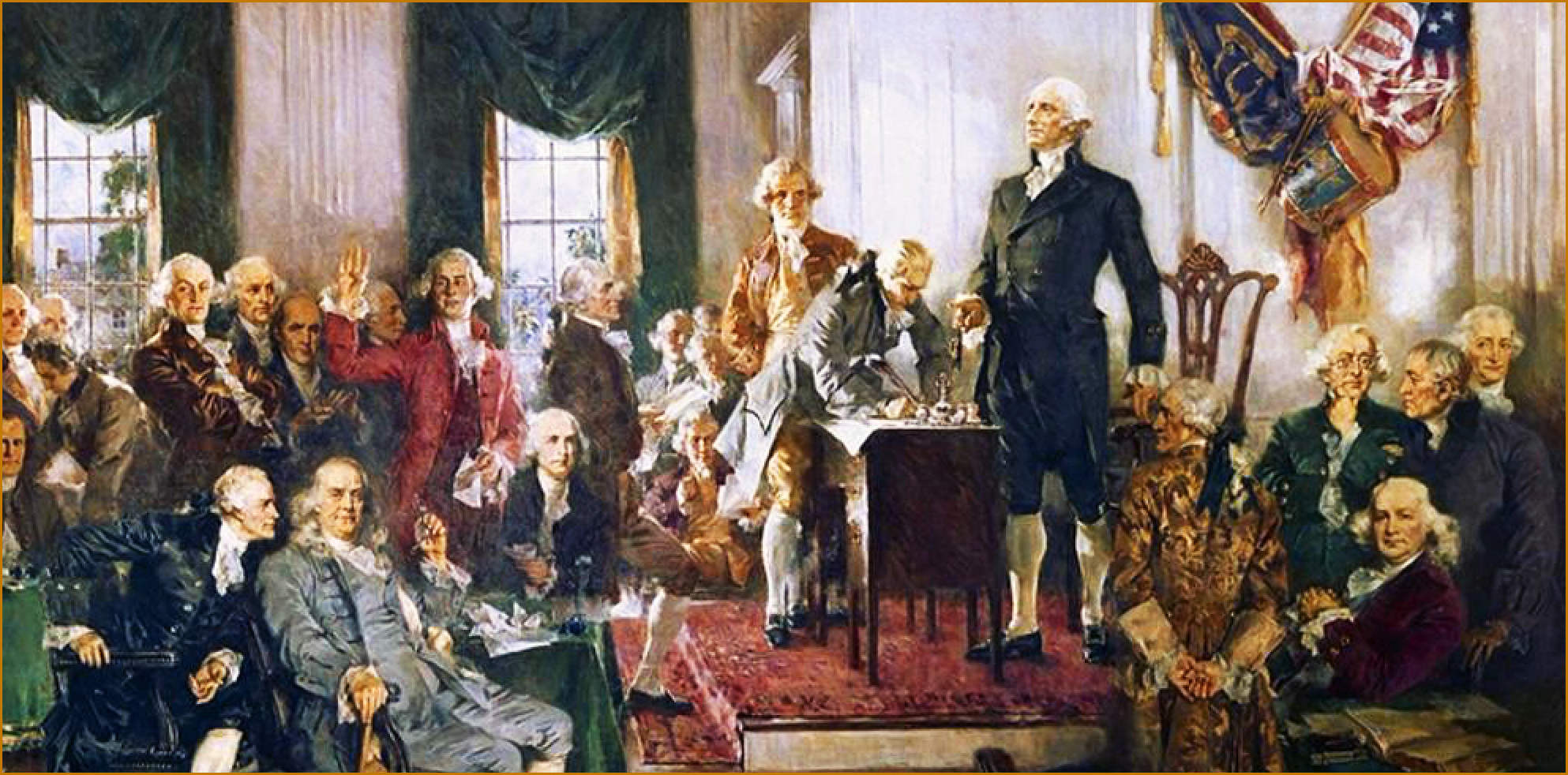
AMERICAN EXCEPTIONALISM: WHAT OUR FOUNDERS UNDERSTOOD
jjj
oo many faculty members, students, and members of the media dispute American exceptionalism, citing racism, the legacy of slavery, legal injustice, and various omnicauses. But what does history tell us? Consider events 239 years ago, in October 1787.
No matter the insults hurled at them today, many of our Founders opposed slavery. John Adams, Samuel Adams, Alexander Hamilton, Gouverneur Morris (Pennsylvania), Thomas Paine (Pennsylvania), and Roger Sherman (Connecticut) were among them. Benjamin Franklin and John Jay, although former slaveowners, also became prominent opponents of slavery.
Most importantly, though, The Federalist Papers, a series of 85 essays written by Alexander Hamilton, John Jay, and James Madison between October 1787 and May 1788, defended the proposed Constitution and explained how it would preserve liberty while establishing an effective government. Eventually, most Americans understood this liberty extended to all races, and they fought and died to defend that idea.
In the first essay, published October 27, 1787, Hamilton declared: “Yes, my countrymen, I own to you that, after having given it an attentive consideration, I am clearly of opinion it is your interest to adopt it.“
He continued:
“I frankly acknowledge to you my convictions, and I will freely lay before you the reasons on which they are founded. The consciousness of good intentions disdains ambiguity.”
John Jay, writing in the second essay, understood the gravity of their mission:
“WHEN the people of America reflect that they are now called upon to decide a question, which, in its consequences, must prove one of the most important that ever engaged their attention, the propriety of their taking a very comprehensive, as well as a very serious, view of it, will be evident.”
James Madison later played a leading role in securing the Bill of Rights, the first ten amendments to the Constitution, ratified on December 15, 1791.
Those amendments protect freedom of religion, speech, the press, peaceful assembly, and petition; the right to keep and bear arms; protection against unreasonable searches and seizures; due process; trial by jury; and protection against cruel and unusual punishment. The Constitution also recognizes rights not specifically enumerated and reserves to the states or the people powers not delegated to the federal government.
Today, the Constitution has 27 ratified amendments. Usefully, the Twenty-Fifth Amendment addresses presidential succession and incapacity, while the Twenty-Second Amendment ensures Obama can never again be elected president. Whew!
But what was happening in Europe during this same historical era, when these indisputably exceptional, serious, thoughtful, and brilliant men understood the gravity of their mission to create a “more perfect Union?”
In France, the Reign of Terror (1793–1794) saw Robespierre and the Jacobins sending thousands to the guillotine, with blood running through the streets of Paris.
In England, there were dreaded debtors’ prisons and public hangings treated as jolly outings for whole families, complete with lunches and sweets.
Meanwhile, the American Founders were establishing a constitutional republic that recognized individual liberty and limited government power. They were imperfect men, but they created a magnificent framework to correct injustice and protect freedom.
Thirty-nine delegates signed the United States Constitution on September 17, 1787, a day still observed on the Federal calendar, though too few young people today know it. The Constitution and The Federalist Papers should be part of the core curriculum in all high schools and universities before woke policies and assorted omnicauses completely eclipse an understanding of this magnificent document.
Meanwhile, anyone who continues to deride our nation should spend one night in Siberia and experience the fate of too many people in a country which didn’t have our Constitution. ✪
▶️ KURT SCHLICHTER: THE MOST OR LEAST IMPORTANT MIDTERMS
KURT SCHLICHTER: THE MOST OR LEAST IMPORTANT MIDTERMS

iiii
don’t know what’s going to happen in the midterms, and you don’t know what’s going to happen in the midterms, and the boosters and pundits certainly don’t know what’s going to happen in the midterms. But something is going to happen in the midterms. And what happens in the midterms will make them either the most important midterms in the history of ever, or the least important. It all depends. Which means you shouldn’t take a chance, and you should get out there and vote all red just in case.
There is a substantial chance that these will be the least important midterms ever. Now, I know we’re not supposed to say that. I know we’re supposed to treat everything as if it’s existential, and there’s certainly the potential for existentiality here. But if the Republicans keep both houses of Congress, it’s going to turn out not to be a very important midterm. And, if the Republicans lose the House, particularly by a small margin; this seems to be the historically likely outcome, then it also won’t be that important in retrospect.
What do I mean? I mean, having Hakeem Jeffries wrangling the herd of cats that is a Democrat majority in the House of Representatives is a fate I wouldn’t wish upon anybody except a Democrat, which is convenient. The fact is, if they take the House, what are they going to do? On the legislative side, Donald Trump’s signature legislation has already gone through. President Trump passed the Big Beautiful Bill. We got the tax cuts, and we funded ICE for the foreseeable future. I guess they can pass a bunch of pinko-commie wishlist bills, like socialized medicine, defunding the police, and demanding that the United States withdraw from North America, but who cares? That kind of onanism won’t go anywhere in the Senate if we keep it. And I think we will probably keep it.
But even if we don’t keep it, President Trump will still have his veto. Look for the veto to become a leftist bugaboo like the Electoral College, the Supreme Court, and heterosexuality. They can pass all the neo-Marxist bills they want, which Trump will veto. And they’ll stand there, looking stupid, a do-nothing Congress that is merely a spectator to the president’s pen-and-phone governance.
They’ll be stuck passing their pet bills merely to make a point, but the message they send may not play well outside of coastal California, Manhattan, and blue inner-city congressional districts. Much of the stuff they will pass is pure poison out in real America, but even the alleged moderates are going to have to get aboard because the Democrat majority’s margin is going to be so thin that it needs to be all hands on deck on the political Titanic. That means people who got elected pretending to be normal are going to have to vote for crazy things.
Are they going to try to tell the mouth-breathing psychopath Democrat base that they couldn’t pass the DSA’s wishlist? Do you think that the DSA types are going to accept that President Trump will veto whatever they send him as a reason not to send him their kooky legislation? This election cycle, one of the things that has helped the Democrats is the fact that they haven’t actually done anything. Oh, they’ve said lots of stuff about transing kids, opening the borders, and so on, but once they get a majority, their own party is going to force them to take actual votes. All those people pulling the Spanberger Moderate Campaign Game are going to get stuck voting for this wacky nonsense. And next election cycle, their Republican opponents will use it as an electoral suppository.
This is not to say that losing won’t have negative consequences. It’s just that those consequences aren’t apocalyptic, at least not in the short term. And there’s lemonade to be made from lost election lemons. If the Republicans lose the House, Trump has something that he’s uniquely suited to using to his advantage; a nemesis he can play against.
Losing the Senate is a bigger deal because the Senate ratifies nominations. A Democrat Senate will refuse to allow Trump to hire subordinates as a way to refuse to allow Trump to govern. The Democrats are of the opinion that the American people had no right to elect Donald Trump, and that anything he does is illegitimate, and therefore they have no obligation to even consider his appointees. Their only purpose will be to destroy him and disenfranchise his voters. Don’t expect any nominee to be confirmed to any office, not one judge, ambassador, or secretary. And that would be a problem for the administration, though not insurmountable.
But it would also be a problem for the Democrats. The American people have limited patience for that kind of shenanigans. Remember, Donald Trump is going to be looking to 2028, not for himself but for his legacy. If he has one or two houses of Congress in opposition, he’s going to highlight their knee-jerk rejection of his most common-sense and popular proposals. And when the economy inevitably improves and the Iran War resolves, then things are going to start getting better. It’ll be the Democrats’ turn to demand that voters not believe their lying eyes. Remember 1982? Reagan got creamed in the midterms. But what happened in 1984? Two years later, the economy was cranking, and it was morning in America. Ronald Reagan won 49 states.
Moreover, in opposition, the congressional and Senate Republicans are going to look better and better. Their big problem this year is that when the Republicans had the majority in both houses, they did not do much after the first year. In opposition, at least they’ll have an excuse for not doing anything. Throwing the GOP into the trunk will, ironically, probably do them a world of good. In politics, absence makes the heart grow fonder, and no one excels like the Republicans in meeting the expectations of people who have low expectations.
But the Democrats will exploit any power they have. For example, there’s the threat of impeachment and investigations. Please bring on the impeachments. They just spent a whole cycle talking about how Trump is refusing to focus on affordability. Well, it doesn’t make a lot of sense to then spend the next two years focusing on the exercise in windmill jousting that is another impeachment, or impeachments.
It’s all a show, and a stupid one. If we hold the Senate, the House will have its festival of judicial onanism and then walk over with the impeachment documents; John Thune; if he knows what’s good for him politically, will take them and throw them in the trash just like the Democrats did with the Mayorkas impeachment. And if the Democrats take the Senate, they can have their Senate trial, and they will still lose. Even the weakest Republican is going to look at what happened to Bill Cassidy after he supported impeachment and vote no.
Impeachment is a loser’s game. Ask the Republicans whether it’s a good plan to try to lose your way to victory.
There will be lots of investigations and lots of kangaroo committees trying to frame Trump and those who work for him for imaginary crimes. If the Democrats are smart, which is a big if; they are the Chauncey Gardiners of American politics, they will focus on a few select targets. But what do you think the chances are that they’re going to be disciplined and focused? And what do you think the chances are that Donald Trump’s DOJ is going to bring charges against someone who refuses to testify or respond to a Dem subpoena? The only thing these investigations are going to result in is adding names to Trump’s preemptive pardon list.
But here’s the real danger and the reason why this election could be hugely important. It sets up the map for the 2028 election. If they do well now, they’re in a better position to win in 2028. We know what the Democrats are going to do if they get a trifecta. They’re going to end the filibuster and attempt to change the government once and for all such that they can never lose power again. Now, that’s a fool’s errand, and it won’t work, but the danger is that in their attempts to crush democracy in favor of perpetual democratocracy, they will permanently damage the constitutional order of this country. There’s approximately a 0 percent chance that normal Americans will look at a Democrat administration backed up by a Democrat Congress that has packed the Supreme Court with ventriloquist dummies who tell them that they don’t have free speech, freedom of religion, or the right to keep and bear arms, and just sort of give in. You’re looking at chaos.
So, the real importance of 2026 is how it affects 2028. This election will tee up that one. And if we end up in a hole that we can’t dig out of next cycle, then this will truly be the most important midterm election ever. ✪
▶️ THE TRAIN TO CRAZYVILLE
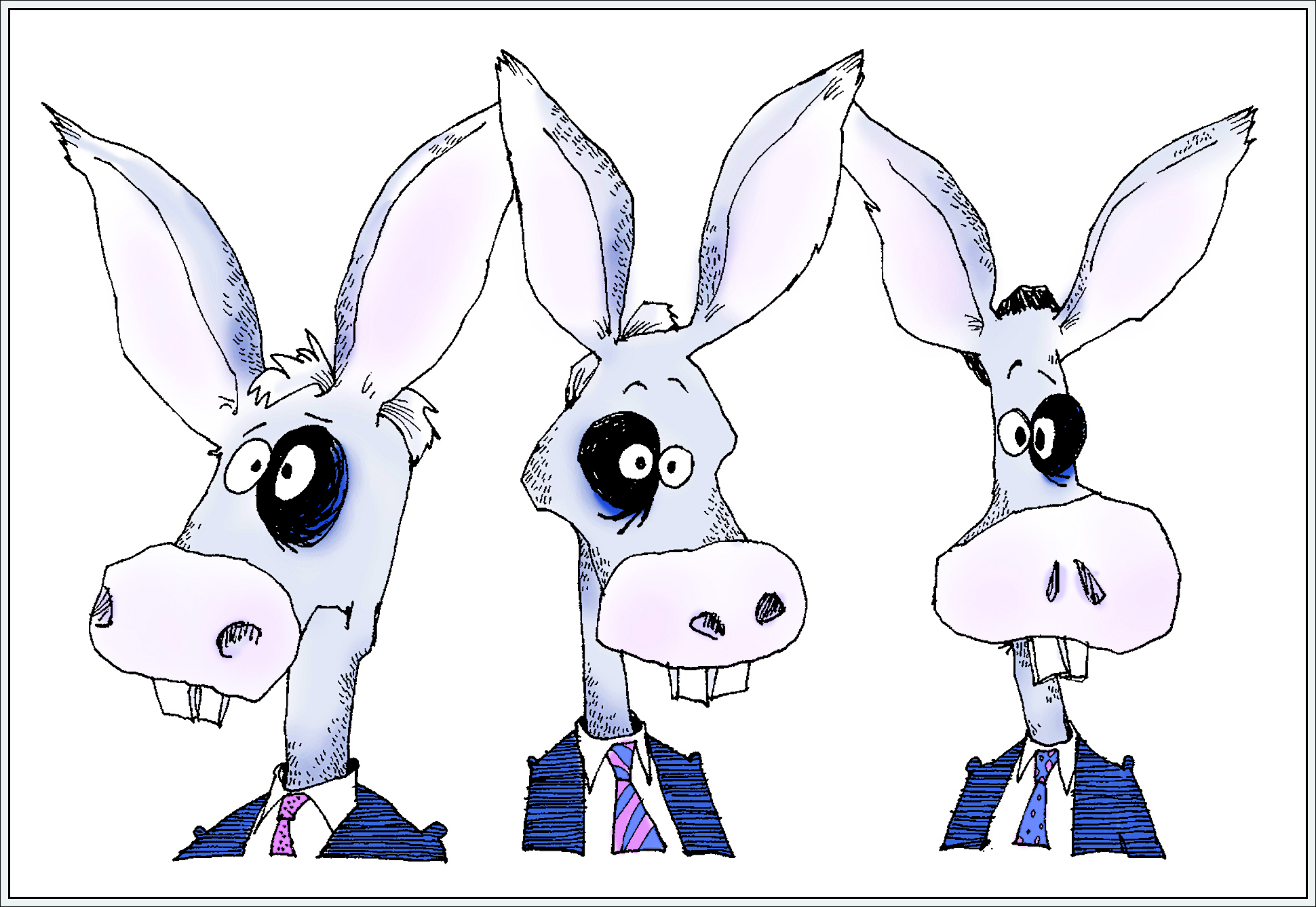
THE TRAIN TO CRAZYVILLE
nnn
‘ve been asked repeatedly to predict what will happen on Tuesday. I’ve looked at the polls, the historical patterns and the candidates. And I’ve reached the conclusion my crystal ball has never been fuzzier.
The conventional math says Republicans should lose ground. Midterms punish whoever holds the White House. That’s the pattern, but there’s a complication nobody seems able to factor into the equation. The other side keeps nominating whackjobs.
The real question on the ballot this year was never simply whether voters are unhappy with Washington. It’s whether they’re unhappy enough to hand power to people whose ideas are even further removed from common sense than the ones currently in charge.
I have a good friend. Decent heart, intelligent in most respects. Let’s call him Daren. Daren genuinely believes he’s being compassionate every time he embraces an idea which makes no sense on contact. He confuses good intentions with good outcomes. He thinks disagreement is cruelty and skepticism is extremism. And when the policies he supports produce the consequences anyone could have predicted, he concludes we simply haven’t tried hard enough yet.
Daren isn’t the enemy. He’s the illustration. America has an enormous number of good-hearted people like Daren who’ve confused compassion with surrendering their own judgment. You can have a good heart and still have catastrophically bad ideas.
Let’s talk about the economy honestly, because nobody struggling to pay their mortgage needs a politician telling them their problem isn’t real. Groceries still cost money. Real wages have been essentially flat over the past year; up sharply in the first stretch of this administration, down slightly since, netting out close to even. Unemployment sits around 4.1 percent, historically still low even after ticking up. GDP grew at a real 2.2 percent last quarter. Inflation remains stubbornly above where anyone wants it. None of that is a victory lap. But you don’t judge a recovery by pretending the damage never happened. You judge it by whether the repair work is actually underway. It is. Slowly, imperfectly, but it is.
Which brings me to the real question this election is actually asking. Not turnout. Not approval ratings. Something more fundamental: are we, as a nation, boarding the express train to Crazyville, or are we going to insist that reality still matters?
Enforce the laws, or treat enforcement itself as oppression. Produce abundant energy, or restrict the supply while demanding it stay affordable. Reward work, or promise benefits nobody explains how to pay for. Protect public safety, or minimize disorder and its victims. Debate opposing ideas, or declare disagreement itself unacceptable. The ticket to Crazyville looks free. It’s the destination which will cost you everything.
Suppose Tuesday goes badly. Suppose the headlines scream Trump is finished. What actually changes? The economy still recovers; that momentum doesn’t vanish because a committee chairmanship changes hands. The mullahs still don’t get a nuclear weapon. The border stays closed. American energy keeps getting produced. Crime keeps trending down. The tax relief already signed into law on tips, overtime, and Social Security benefits stays signed into law; a new Congress can’t erase it without passing something to replace it.
What does change is simpler and uglier: impeach, impeach, impeach. Investigations. Subpoenas. Two more years of cable-news spectacle, another attempt to make the presidency itself the story instead of the country’s actual problems. Washington will spend two years trying to impeach a man who has already survived every political weapon they know how to throw at him.
Trump doesn’t need to win another election. He’ll keep governing through the authority he already has. But 2028 becomes the real battlefield, and that’s where Marco Rubio enters the picture; foreign policy command, national security credibility, the clearest heir to this coalition currently standing. The Democrats may think they’re writing Trump’s final chapter. They may be writing Rubio’s first.
And while we argue about one election, look at what happens when a civilization stops enforcing its own standards. Paris is burning right now, literally. Dearborn wrestles with cultural integration. Minneapolis fights to rebuild basic public trust. San Francisco lives with the wreckage of failed homelessness policy. New York asks whether affordability, safety, and competent governance can coexist at all anymore. Different cities, different problems. Same warning: a civilization doesn’t collapse because people disagree. It collapses when people decide standards and shared responsibility no longer matter.
I don’t know who will win on Tuesday. I don’t know if the pollsters get it right or spend Wednesday morning explaining what they missed.
But I do know this. America has survived bad elections, bad politicians, terrible ideas dressed up as noble intentions. What we cannot survive indefinitely is losing the ability to tell the difference between what sounds compassionate and what actually works.
I can’t tell you who wins Tuesday, but I can tell you which train I will refuse to board. ✪
▶️ THE BUSH FAMILY IS BACKING TALARICO IN TEXAS SENATE RACE

THE BUSH FAMILY IS BACKING TALARICO IN TEXAS SENATE RACE
lll
eil Bush, the brother of former President George W. Bush, posted on Facebook he has voted for far-left Democrat James Talarico in the Texas Senate race.
Bush, who holds a number of business interests in China, said of Talarico, “I have been enormously impressed by the way he approaches complicated and controversial issues.” Neil is the latest member of the Bush family to publicly support Talarico over Republican Ken Paxton.
“My vote was motivated by two things: deep concern about Ken Paxton’s record and genuine admiration for the character and principles I see in James Talarico,” Bush said in the post, claiming President Donald Trump and those who have “enabled him” have “done enormous damage to the Republican Party.” He also said he disagreed with Paxton’s concerns over the conduct of the 2020 election.
Bush also said of Talarico, “His faith appears to be a deeply rooted source of humility, compassion, and conviction.” In an earlier report, Talarico’s church in Austin led by the Reverend Jim Rigby, says he welcomes atheists to join his church and, “If you hate religion, we’re on the same team.”
Talarico called Rigby “my pastor in every sense of the word,” adding he was one of “the biggest influences on me as a Christian, as a human being.” In another report, Rigby questioned whether Jesus actually rose from the dead in an Easter sermon.
Neil Bush is most famous for being sued by the FDIC and federal regulators for “gross negligence” following the collapse of Silverado, a Denver-based savings and loan association, in which he ultimately paid a hefty fine.
The admission that the long-time Republican voted for Talarico is the second recent announcement from the Bush family in support of the Democrat.
Barbara Bush, the daughter of the 43rd President, donated to a super PAC supporting Talarico; in 2024 she had campaigned in support of failed presidential candidate Kamala Harris.
As for the former President, George W. Bush headlined a fundraiser in support of several Republicans running for the U.S. Senate including Sens. Susan Collins, Jon Husted, Dan Sullivan, and challengers in open seats; Ashley Hinson, Mike Rogers, John Sununu, and Michele Tafoya. Paxton was notably not one of the beneficiaries of Bush’s support.
Paxton defeated George P. Bush, the nephew of Neil, in the May 2022 GOP primary runoff for Attorney General by a substantial margin, with 68 percent to Bush’s 32 percent. ✪
▶️ THE COST OF AMERICA’S LOST SEMICONDUCTOR INDUSTRY

THE COST OF AMERICA’S LOST SEMICONDUCTOR INDUSTRY
kkk
he American economy is in the middle of an extraordinary business investment boom. And the latest GDP numbers demonstrate just how extraordinary it has become.
However, there’s still a specter haunting the boom: the specter of import dependence created by decades of American neglect in the face of successful economic nationalist policies on the part of our trading “partners.”
✪ Still Too Dependent On Imported Technology
On Thursday, the Commerce Department reported the economy grew at a 3.4 percent annualized rate in the third quarter, accelerating from 2.2 percent in the second quarter and beating economists’ expectations.
Business investment drove the acceleration. Nonresidential fixed investment grew at a 12.7 percent annualized rate, contributing 1.78 percentage points to GDP growth. Equipment investment surged at a 20.9 percent rate, contributing 1.16 points all by itself.
The most impressive numbers came from information-processing equipment. Investment in computers and peripherals contributed 0.72 percentage point to GDP growth. Other information-processing equipment contributed another 0.14 point. So nearly nine-tenths of a percentage point of economic growth came from business investment in information-processing equipment.
Of course, we know what’s driving much of this. The Super Intelligence boom is generating enormous demand for data centers, servers, advanced semiconductors, power infrastructure, and the software that makes it all work.
Unfortunately, much of the equipment needed to build that infrastructure isn’t manufactured in America.
✪ The Great Import Leakage
The third-quarter GDP report contained another extraordinary number. Net exports, which measure exports minus imports, subtracted 3.32 percentage points from economic growth.
As Harvard economist Jason Furman pointed out Thursday, that’s the third-largest negative contribution from net exports in the history of the Commerce Department’s quarterly GDP series, which stretches back to 1947. The second-largest came in the first quarter of 2025, when businesses rushed to import goods ahead of President Trump’s tariffs. The largest was in the fourth quarter of 1947.
Of course, imports are subtracted from GDP because they represent foreign production already included in measures of American spending and investment. The subtraction prevents foreign-made goods from being counted as American output or double-counted in a way that would inflate GDP.
But that’s precisely what makes these numbers so revealing. American businesses are building the infrastructure of the future, but foreign factories are supplying much of the equipment. We cannot supply the seed corn that we’re planting in our fields.
Imports surged at a 19.7 percent annualized rate in the third quarter. Imports of goods alone rose at a 26.4 percent pace. And what were Americans importing? You already know. We’re bringing in ships loaded with the high-tech stuff we need for the AI boom.
The Census Bureau reported that capital-goods imports jumped $14.4 billion in July. Computers accounted for $6.9 billion of that increase, computer accessories another $6.6 billion, and semiconductors $1.2 billion. Capital-goods imports rose another $6.2 billion in August, reaching a record $146.4 billion. Advance Census figures show they jumped another $10.9 billion in September, to a new record of $157.4 billion. That was an astonishing 77.2 percent increase from September of last year.
Many of the advanced semiconductors used in artificial intelligence arrive in the United States already installed in servers and other computer equipment. They’re counted as imports of computers or computer components rather than semiconductors. So you have to pull from multiple lines in the government reports to get a look at the full scale of our import dependence.
A Federal Reserve study published in July estimated approximately 90 percent of equipment goods used in high-technology sectors originate abroad, with production heavily concentrated in East Asia. The researchers anticipated that the AI boom would generate substantial additional imports. And that’s exactly what we’re seeing.
✪ How America Lost An Industry It Invented
Why are we so dependent on imports? After all, the semiconductor industry was invented in the United States. Our engineers developed the transistor and pioneered integrated circuits. The technologies that made modern computing possible, and that now provide the hardware for the Super Intelligence boom, are overwhelmingly American innovations.
So what happened? Back in 1990, the United States accounted for 37 percent of global semiconductor manufacturing capacity. By 2000, that share had fallen to approximately 19 percent. By 2022, it was just 10 percent.
How did we lose our capacity to meet even our own demand for semiconductors, much less export enough to meet the rest of the world’s?
The tale of decline begins with the migration of consumer electronics manufacturing to Asia during the 1970s and 1980s. American companies had pioneered many of the technologies used in radios, televisions, video recorders, and computers. But manufacturing increasingly moved overseas, and the companies making electronic products are also the customers for semiconductors. As electronics manufacturing moved overseas, demand for semiconductor production increasingly moved with it.
Of course, this wasn’t simply a matter of Japanese companies outcompeting their American rivals. Japanese workers are not gifted by nature or God when it comes to creating semiconductors. And it wasn’t a matter of some organic “comparative advantage” that shows up in economics textbooks. It was a matter of economic policy.
Japan’s government has long pursued economic nationalist policies and actively promoted the development of its semiconductor industry. In 1976, the Ministry of International Trade and Industry organized a cooperative research program involving major Japanese electronics manufacturers to accelerate the development of advanced integrated circuits.
Taiwan also pursued its own nationalist industrial strategy, with even more enduring consequences. In 1987, Morris Chang—a former Texas Instruments executive who had run Taiwan’s government-backed Industrial Technology Research Institute (ITRI)—founded Taiwan Semiconductor Manufacturing Company, better known as TSMC, with a business model that transformed the industry. Instead of designing its own chips, TSMC specialized in manufacturing chips designed by other companies.
From the start, TSMC was created with the direct involvement of the Taiwanese government and the ITRI. Its founding investors included the government, Philips, and private companies. The ITRI provided technology, manufacturing facilities, and personnel. The Taiwanese government was actively building an industry that would become one of the most important in the world. And it was promoting the TSMC business model designed to lure manufacturing away from the United States.
Why didn’t we react? Because Taiwan wasn’t fighting American economic policy. It was collaborating with it.
Starting in the 1960s, U.S. tariff rules allowed companies to ship American-made components abroad for assembly and pay duties only on the value added overseas. In the 1970s, Pan Wen-yuan, a researcher at RCA’s labs, was advising Taiwan’s government on how to build an electronics industry. He convinced officials that Taiwan should buy proven technology rather than try to develop its own. In 1974, the ITRI set up an electronics unit, later called ERSO, to carry out the plan. In 1976, RCA licensed its chipmaking technology to ERSO and trained a cohort of Taiwanese engineers in semiconductor manufacturing. The price was a few million dollars, pocket change for RCA. Those engineers went on to build Taiwan’s chip industry; and in 1987, TSMC was spun out of ERSO.
In short, RCA, a company created through a deal between the U.S. Navy and General Electric to secure American dominance of international radio, planted the seeds that grew into TSMC a decade later.
Twenty years later, Washington championed a global agreement to eliminate tariffs on a wide range of information-technology products, including computers, semiconductors, and telecommunications equipment. American tax policy also encouraged the accumulation of overseas profits and investment abroad. Even the 2017 tax reform originally exempted a 10 percent return on foreign factories and equipment from its new minimum tax on overseas profits, a provision Congress finally eliminated in President Trump’s One Big Beautiful Bill in 2025.
Why did American policy move this way? Because it was immensely profitable for American corporations. U.S.-headquartered companies accounted for 53.4 percent of global semiconductor sales last year, their highest share since 1984, even though much of the manufacturing took place overseas. As public-choice theory teaches us, government policy tends to favor those who receive concentrated benefits, even when the costs are dispersed across the rest of society.
And we had a Cold War we were trying to win, in part by making our allies wealthy capitalists. It didn’t make a dime’s worth of difference how Americans voted. The leadership of both parties supported this economic arrangement, even after the Cold War justification fell away. All our post-Cold War presidents and their opponents—regardless of whether they were named Bush or Clinton or Dole or Gore or McCain or Obama or Romney—were on board with offshoring until we elected Donald J. Trump.
In short, the jobs and the factories didn’t leave because Americans wouldn’t do the work or couldn’t compete. Our rules pushed them out, and our trading partners’ rules pulled them in.
✪ The Price Of The Great Offshoring
The remarkable thing about the offshoring of chipmaking is that it was widely celebrated as economic progress. For decades, the prevailing wisdom was that America could specialize in designing technology, developing software, and owning intellectual property while leaving physical manufacturing to other countries.
The fatal flaw in this arrangement is manufacturing itself produces knowledge. Companies learn to improve products by figuring out how to make them. Factories create demand for specialized suppliers, skilled workers, and new generations of manufacturing equipment.
In a 2025 essay in American Affairs, Kenneth Flamm and William Bonvillian explained how modern semiconductor fabrication benefits from enormous economies of scale. TSMC can spread the tens of billions of dollars required to build advanced factories across chips designed by hundreds of customers. Its factories also benefit from the accumulated expertise that comes from manufacturing at scale. The more it manufactured, the better and cheaper it became at manufacturing.
There’s a well-established economic explanation for this. Economists call it agglomeration, the tendency of industries to become more productive as they concentrate geographically. Paul Krugman’s pioneering work on economic geography demonstrated that manufacturing concentration can become self-reinforcing. Factories attract specialized suppliers and workers, making it cheaper and more efficient for additional factories to locate nearby, attracting more specialized workers. Rinse and repeat.
In other words, the advantages economists observe today are the consequences of industrial policies adopted decades ago. Taiwan’s lower manufacturing costs reflect decades of accumulated expertise, investment, and industrial concentration. Treating those advantages as permanent features of the economic landscape amounts to treating the results of previous government intervention as evidence against future intervention.
The result was a vicious circle for American manufacturing and a virtuous circle for Taiwan. What began as an industrial shift became an entrenched competitive advantage.
And that brings us back to the extraordinary imports of servers and computer equipment revealed in the latest trade figures. Even as America begins rebuilding semiconductor fabrication, much of the equipment incorporating those chips is still assembled overseas.
Rebuilding chip factories is essential. But recovering the full benefits of the AI investment boom will also require rebuilding more of the manufacturing ecosystem around them.
✪ The Good News: America Is Rebuilding
So are we doomed? Maybe not. Under President Trump, we’re finally using the might of the U.S. economy to reverse the long decline of American tech manufacturing. TSMC is expanding its manufacturing operations in Arizona. Samsung is investing in semiconductor fabrication in Taylor, Texas. Micron is expanding domestic memory-chip production, while Texas Instruments is investing in new American fabrication capacity.
According to projections from the Semiconductor Industry Association and Boston Consulting Group, American semiconductor manufacturing capacity is expected to roughly triple by 2032. The American share of global fabrication capacity is projected to rise from around 10 percent to 14 percent, its first sustained increase in decades. America’s share of global capacity for advanced logic chips is projected to rise from essentially zero in 2022 to 28 percent in 2032.
Of course, rebuilding factories is only part of the challenge. “If you build it, they will come” is a nice line from a movie, but it is bad economics. Years of offshoring also eroded the specialized labor force needed to construct and operate them. TSMC’s Arizona project encountered shortages of workers experienced in installing advanced fabrication equipment, prompting the company to bring in specialized personnel from Taiwan. (Those workers, by the way, are apparently horrified by the quality of the U.S. public schools that their children attend.)
However, there’s reason to think the recovery could eventually become self-reinforcing. New factories should help create the suppliers, workers, and technical expertise that make additional factories more competitive. The economics of agglomeration and geographic concentration can run in reverse or at least in our favor.
For now, the third-quarter GDP report is a reminder of just how much ground there is to recover.
America is experiencing one of the greatest technological investment booms in our history. Yet an enormous amount of the equipment we’re using to support our Super Intelligence boom is coming from countries that spent the last several decades building the manufacturing industries we allowed, and encouraged to slip away. ✪
▶️ TRUMP ADMIN MAKING HISTORIC GAINS AGAINST OPIOID CRISIS

TRUMP ADMIN MAKING HISTORIC GAINS AGAINST OPIOID CRISIS
ssssss
dramatic reduction in opioid prescriptions and addiction and overdose deaths is being accomplished during the Trump Administration, according to new analysis announced this week by Health and Human Services (HHS) Secretary Robert F. Kennedy Jr.
However, while U.S. opioid addiction and fatalities from drugs like oxycontin and fentanyl have been one of the top news stories in the U.S. for the past two decades, the latest positive development announced on Tuesday has been universally ignored by the legacy media, a Google search revealed. Kennedy said in an exclusive interview:
“They never write about our accomplishments. They did the same thing over the border, saying for years the president had no control, yet this administration closed it tight. When we lowered our drug prices, the highest in the world to the lowest, we got it done when no administration previously could — and nobody covered that, either.”
Kennedy added, “It’s like if a tree falls in a forest and nobody hears it, you wonder if it really happened.”
The HHS Secretary announced the new opioid findings at a roundtable with local officials at the Detroit Wayne Integrated Health Network, which provides crisis and behavioral health services for metropolitan Detroit.Kennedy also said in a statement released to dozens of news outlets:
“President Trump has attacked the opioid crisis from every direction — rightsizing opioid prescribing, disrupting the fentanyl supply chain, and expanding treatment and recovery. Those actions are saving lives and driving opioid deaths to the lowest in nearly a decade.”
The new analysis came from the Office of the Assistant Secretary for Planning and Evaluation (ASPE) which examined America’s record-low overall age-adjusted death rate in 2025.
At its peak from 2021 until 2024 under the Biden administration, overdose deaths were averaging more than 100,000 a year, approximately twice the number of American troops killed in the entire Vietnam War, according to the Centers for Disease Control and Prevention (CDC).
That number dropped below 70,000 in a one year period ending in December of 2025 and as of May of 2026 was down to approximately 65,000.
Titled “U.S. Age-Adjusted Death Rate Reached a Record Low in 2025: What Drove the Decline?” the analysis examines the CDC’s provisional finding that the overall age-adjusted death rate reached 689.2 deaths per 100,000 people in 2025. That is the lowest rate ever reported, according to HHS.
An accompanying analysis, “Two Opioid Policy Trends Are Moving in the Right Direction: Sustaining a Decade of Progress,” examines pharmacy dispensing from March 2015 through March 2026. Using population-adjusted measures, researchers found:
- Opioid prescriptions dispensed fell to 45.3 percent of their March 2015 level.
- Total opioid dosage dispensed fell to 35.2 percent of the baseline.
- The number of patients receiving prescription opioids through retail pharmacies fell to 49.6 percent of the baseline.
- The number of patients filling retail prescriptions for buprenorphine or naltrexone, medications used to treat substance use disorders, rose to 218 percent of the baseline.
The opioid crisis developed in three waves, according to HHS’s National Capital Poison Center.
The first wave began in 1991 with deaths following the sharp increase in prescribing pain killers, particularly oxycontin, with false assurances from drug companies that the rate of addiction was low.
The second wave started in 2010 with fatalities associated with heroin abuse. As early efforts to decrease opioid prescribing began to take effect, making prescription opioids harder to obtain, the focus turned to heroin, a cheap, widely available substitute.
The third wave of the epidemic began in 2013 with an increase in deaths related to synthetic opioids like fentanyl. The sharpest rise in drug-related deaths occurred in 2016 with over 20,000 deaths from fentanyl and related drugs.
Trump’s efforts to attack the opioid crisis actually began in his first term when he signed the SUPPORT for Patients and Communities Act in 2018, a landmark law which marshaled a series of prevention, treatment, and recovery measures to address the problem. Trump reauthorized the law in 2025.
On the law enforcement front, the Drug Enforcement Agency (DEA) intensified efforts to disrupt the global fentanyl supply chain and launched its Fentanyl Free America initiative, the HHS said in a statement.
In January 2026, President Trump also established the Great American Recovery to better align Federal programs and integrate prevention, treatment, recovery support, and reentry across systems, according to HHS officials.
Kennedy’s appearance in Detroit, where he also announced that city would be receiving a $12 million grant to combat its homelessness and addiction problems, received some local coverage.
However, another report by a local outlet focused on remarks he made at a get-out-the-vote rally in Grand Rapids where he blamed radical Muslims for “destroying” that culture’s tradition of scientific discovery.
Critics from Muslim groups called his remarks Islamophobic and “white supremacist,” with one local outlet tying the remarks into others made against Democrat senate candidate Abdul El-Sayed.
The negative coverage, however, cannot negate the newly analyzed findings. “For families living with addiction, saving a life means another birthday, another holiday together, another chance to come home — that is what President Trump’s commitment to this fight is about,” said HHS Senior Advisor Kathryn Burgum and co-chair of the recovery effort.
“Through the President’s Great American Recovery, we will keep our focus on the people behind the numbers and the families counting on the Trump Administration to save more American lives.”
Kennedy added, “We will keep pressing forward until every American struggling with addiction has a real path to recovery and a chance to rebuild a healthy life.” ✪
▶️ OUR POST WESTERN FUTURE

OUR POST WESTERN FUTURE

lll
enerals always fight the last war. The media theorist Marshall McLuhan made a similar point when he argued that we understand the effects of new technologies in terms of past ones. He called this rear-view mirror thinking.
Right now, Western countries are suffering from a collective exercise in rear-view thinking about the effects of digital technology on mass migration. Rather than seeing the unique functions of digital technology, we have assumed it has the same homogenizing effects as prior information technologies. That exercise of rear-view thinking is accelerating cultural replacement.
Let’s take stock of where we are. Since the 2010s, it has become clear we are living in the end of the end of history. Having studied the West for decades, China and Russia decided not to imitate it but to pursue their own civilizational paths. Islamic civilization had long been pursuing its own. As the geo-strategic ambitions of those three civilizations became clear, the concept of “the West” gained fresh life.
The civilizational paradigm seemed perfectly poised to address these new clashes. You might call it Samuel Huntington’s posthumous revenge over Francis Fukuyama. Many liberals and conservatives embrace a quasi-Huntingtonian paradigm of a clash of civilizations, in which the liberal democratic West is ready to face off against its rivals. It’s enticing. But the weakness of this paradigm is that it conceals an increasingly incoherent concept of Western Civilization.
Huntington’s best critic, the political scientist James Kurth, made this point. In his 1994 essay “The Real Clash,” Kurth argues Huntington played down the growing conflicts emerging within the West. Sometime late in the previous century, it repudiated the institutional arrangements of mid-20th-century liberal democracy and went in a new direction. Kurth argued:
‘The real clash of civilizations…is already underway within the West itself, particularly within its central power, the United States. This is a clash between Western civilization and a different grand alliance, one composed of the multicultural and the feminist movements. It is, in short, a clash between Western and post-Western civilizations.”
Multiculturalism and feminism are more than a set of ideas; they are social technologies for administering society. Moreover, they claim the need to have absolute efficacy in every human activity. Anti-discrimination law cannot stop at the door of a privately funded school, business, or social club; it must pry its way in, enlisting state police power when necessary.
Feminism is the social technology which by assuming men and women are the same and can contribute equally to the same order, renders them interchangeable in politics, work, and the home. In effect, it treats men and women as replaceable. Multiculturalism is the social technology which assuming all cultures are the same and can contribute equally to a liberal and democratic order, renders cultures and peoples interchangeable within a single administrative order. In effect, it treats all cultures as replaceable.
These assumptions of sexual and cultural replaceability were locked in by the development of information technology and a way of thinking about its effects. Let’s set feminism aside and focus on how that happened with multiculturalism.
✪ Digital Tribalism
In 1965, the U.S. Congress passed the Hart-Celler Act which opened America to all cultures, banning the national origins system that looked too much like racial discrimination. But what if some thought certain cultures were not compatible with America’s? Senator Ted Kennedy had a rebuttal ready.
In 1965, debating Hart-Celler, he scoffed at those who said immigrants don’t assimilate. “In an age of global television and the universality of American culture, their assimilation, in a real sense, begins before they come here.” Kennedy assumed that, thanks to a particular kind of information technology, the world was already becoming American. Globalization brought television, which brought modernization, which brought Westernization and Americanization to all cultures.
That’s the subterranean promise of the end of history: thanks to the homogenizing power of information technology, even if we can’t invade the world, we can certainly invite the world in without changing anything of substance about our political system.
Kennedy incarnated a misplaced confidence in the capacity of information technology to serve as a force for coherence. But he was looking backwards. Kennedy had grown up in a country where assimilation worked because of a particular technological environment. When people left their countries for a new one in the early 20th Century, they were cut off from kin, clan, and tribe by distance, relying on the written word to transmit substantive communication. Over time, severed from old connections, they built a new home.
We can understand why Kennedy assumed TV’s homogenizing effects: in 1965, there were only three national channels. But in the 1960s, that centralized world was already breaking down. McLuhan anticipated the instantaneous communication technologies of the electric age would thrust us into virtual relationships with others, enhancing our connections to our preferred groups and kin.
McLuhan’s concept of the global village was not something from John Lennon’s “Imagine,” but a depiction of a tribal world haunted by in-group preference, mistrust of outsiders, and the threat of violence. Or to put it differently, a migrant who sails the Atlantic to America leaves his co-ethnics behind. But a migrant with a smartphone keeps his co-ethnics in his pocket. What are the implications?
Migrants use digital networks to coordinate entry and exploit loopholes in the legal system. Events at Ceuta this summer provide a snapshot of how that happens.
In lieu of integration, migrants develop transnational ethnic client politics. They construct parallel power centers that pressure others to encourage chain migration. Recent reports from Britain allege that gangs are coercing or bribing single mothers to name asylum seekers as fathers on birth certificates. These ethnic cartels capture parts of the state apparatus; those promoted within the state system leverage their official positions to deliver benefits to their co-ethnics, both within their host country and beyond. One example of what happens when they reach the top came in 2021, during the evacuation of Kabul. Then-Canadian Defense Minister Harjit Sajjan directed special forces to rescue non-citizen Afghan Sikhs instead of Canadian citizens.
Digitization also makes it easy to preserve traditional identities. Since the migrant crisis, 70% of asylum-seekers admitted to Germany have been Muslim. According to Germany’s Federal Office for Migration and Refugees, nine out of ten retain their religion. Of all religious migrants, Muslims are the most likely to use digital content “at least once a week.”
All this undermines notions that digital technology homogenizes cultures through Westernization. It’s an environment conducive not to assimilation in a national civic culture but to cultural replacement.
That process, described by Renaud Camus as the “Great Replacement,” is certainly one part of our post-Western future. It’s deeply intertwined with what Camus calls the “Little Replacement” the transformation of our cultural reference points that encourage us to think there is nothing special about our own achievements. Between peoples and cultures, we can swipe left or right as we like. No serious evaluation or judgment is needed. You can easily go from one to the next, with just a few emotional pangs in between.
The Great Replacement is not a conspiracy orchestrated by a cabal but the effect of a social technology. But there is a process of post-Western transformation that is happening much faster.
✪ The Wrong Choice
The effects of the social technology of multiculturalism in the digital age are decoupling the Western nation-state. The shrinking civic nation or ethnos of the majority now competes with numerous ethnoi (nations or tribes) for control of increasingly scarce state resources. That conflict raises the specter of tribal violence that McLuhan predicted.
Western elites know this. During the 2010s; consider the pivotal year of 2015 and the migrant crisis, they made a choice. Instead of opting for border control, they chose to control information.
Since 2015, multiculturalism has required controlling and curating volatile online speech to manage the effects of digitization and blunt the specter of tribal violence. It’s also another exercise in rear-view thinking: harking back to an older, centralized, homogenizing media environment and imagining that, with sufficient control, we can recreate it; then becoming increasingly desperate and despotic when we cannot. That’s our immediate post-Western reality: in response to instantaneous communication, we are locking in a new system of governance which polices political speech, suppresses civil liberties, and hands over more power to the “Court Party”—the parastate of judges and NGOswhich are shielded from legislative accountability.
As long as we are still enraptured by the late 20th Century confidence that any culture can integrate into the West, we will continue to be pulled in this post-Western direction. We need clarity of vision to understand that the era of integration is over. The technological conditions that underwrote it are no longer possible.
This affects policymakers who want to embrace “the clash of civilizations” paradigm to confront our geopolitical challengers. Thanks to constant mass immigration, the new national settlements and cultural coherence that could sustain their preferred grand strategy have not had time to emerge. Those eager to pursue this strategy in Iran or elsewhere need to understand that it is premised on a shrinking constituency. Moreover, they must reckon with growing transnational ethnic tribes that mobilize against it.
The way forward is to revisit the 2015 choice between information control and border control. Steps are already being taken in the latter direction: even Poland’s anti-populist government has found geopolitical reasons to suspend asylum claims at its eastern border. Many solutions don’t require any new statutes: the Trump Administration has, for example, reduced immigration from Muslim-majority countries to near-zero without statutory reform. One important part of the remigration agenda—providing voluntary inducements for migrants to leave by restricting welfare, banking, and government services to legal residents—is simply what the plain text of many statutes already demands.
Some thinkers say crowns are lying in the street waiting to be picked up, but much of the scene is more mundane: a matter of venerable, viable policy levers waiting to be pulled for those who stop looking in their rear-view mirrors and gaze ahead. ✪
▶️ THE DEMONIC DSA POSSESSION OF THE CITY OF ANGELS

THE DEMONIC DSA POSSESSION OF THE CITY OF ANGELS

fff
ast year, I told New Yorkers to vote for Republican Guardian Angel (and perennial candidate) Curt Sliwa, but prepare for the worst.
Democratic Socialist Mamdani was the favorite from May to November 2025, with polling consistently giving him the edge. Former governor Andrew Cuomo, forever corrupt and incompetent and glorying in self-aggrandizement, was the last person who should have been mayor.
Democrats and Republicans who didn’t want a crazy commie taking over their city glided toward Cuomo. Mamdani had the momentum, though; he had the outsider star power (the fact that he never held down a real job made that edge even easier), and he offered a bold set of ideas … at least to anyone ignorant of history, which describes the vast majority of the educated chattering classes in New York City Upper East or Lower West or anywhere else.
The communists won, and New Yorkers are getting what they voted for. They wanted government grocery stores? They will get lines of people waiting for bread when across the country the bread waits in line for us. They wanted potholes filled? Good luck keeping the police officers on the force, as well. They wanted cheaper housing? They’re getting rent control, less housing, higher prices, and a feeling that they are better than the suburbs.
New York City is on its last legs, and the voters deserve what’s coming. A silver lining shines out, though. Democrats to the left of Hochul are failing in New York City. How about electing a governor to the Right? Bruce Blakeman is gaining on the incumbent governor, and Democrat celebrities are lining up behind a Republican to keep the Empire State from turning into a rump, failed state.
What about Los Angeles? The same dynamic is taking flight on the West Coast. Another deep blue city is looking at voting between bad and worse, dumb and dumber, and corrupt and more corrupt as its final choices for next mayor of Los Angeles.
During the June primary, Los Angeles voters had a chance to elect common sense, results, and accountability: Spencer Pratt. A victim of the Palisades fires, which devoured multiple homes while Mayor Karen Bass was celebrating the inauguration of Ghana’s next president, Pratt demanded a city that would work for everyone. His campaign? Lock up the criminals, clean up the streets, protect the businesses, and allow everyone to enjoy a better quality of life.
Voters also had the choice of repeat failure, politician-for-life incumbent Karen Bass, or Democratic Socialists of America (DSA)-aligned city councilwoman Nithya Raman.
Raman had won her city council reelection outright in 2024, despite residents and business owners complaining about the neglected, dilapidated state of her district, which stretches from Silver Lake to Encino, with Sherman Oaks and Studio City thrown in for good measure. A richer, higher echelon of voters still chose the least of all candidates. Homelessness has gotten so bad that residents staged their homeless sit-in protest outside her home! How do you like it, Nithya? The stunts, the anger, the despair spilling onto the City of Angels might not matter if the polling proves accurate, since all of them point to a Raman victory over incumbent Bass come November.
The Democratic Socialists of America will have realized their greatest feat yet: control over the two largest cities in the country. From there, they can build on their big donor base and run one of their own for president and more U.S. Senate seats.
Raman, an immigrant from India, educated at Harvard and MIT, blessed with all the goodness that is America, has campaigned on grievance and gain at the expense of those who work for their money or own their property. She hates the West, the wise, the good, and the common-sensical. What Democrat Party apparatchiks have promised for decades, she will deliver: votes for non-citizens, single-payer healthcare, abolition of law enforcement, etc.
California election law does not permit a write-in at the general election for mayor, so the voters are stuck between a rock and a prison. Indie journalist Daniel Guss urges LA voters to vote for both to spoil the county and tally their outrage and opposition, but one of them will still win. The winner is looking more and more like Raman. And the voters of Los Angeles deserve everything that happens to them.
Can’t they get their act together and vote for someone worthwhile? Decent? Not evil? Los Angeles hasn’t had a Republican mayor since philanthropist Richard Riordan, who brought class and competence to city government during his tenure. Despite his endorsement of President Bill Clinton in 1996, Riordan did well by the city. Democrat successors demonstrated some competence of their own, as well as controversy. With the rise of the DSA in the last five years and its en masse takeover of the Los Angeles County Democratic Party, Los Angeles County and the city of Los Angeles have witnessed a sharp veer to the political Left.
Land acknowledgements, defunding of the police, LGBT celebrations everywhere, ethnic months and nonprofit pandering, reparations boards, protests against Israel, and more attacks on churches and Jewish communities have erupted across every level of government in the wake of the socialist spread.
And now the mayor’s race will broaden the bad. Bass is desperate for support, touting endorsements of local leaders in a recent spate of commercials. She expected a walk in the park as the first female (and first black female) mayor in the city’s history. She’s getting walked and will likely get put out to pasture. Identity politics aren’t getting her across the finish line this time. The LA-area progressive left has gone full commie, and it wants its workers’ revolution NOW! They can out-organize the establishment, overcoming the institutional inertia of the labor unions, big business, and the many lobbyists who made Downtown Los Angeles their second home.
Nithya Raman is the face of the rising socialist uprising, and Los Angeles should get ready for the Bolshevik takeover.
The one silver lining in all of this is that Karen Bass deserves to go. She’s a political climber from state assembly to assembly speaker to Congress, who had a shot at Joe Biden’s VP slot, and now LA mayor. To see her political career crash and burn will be fun.
The one question that Raman needs to consider is this: Is she ready for them when they turn on her, just as the DSA Left has taken Mamdani to task for not moving fast enough to enact their demented agenda? Silly DSA politicians, they never learn: the Revolution always eats its own, especially its enthusiastic thought leaders who fail (because they can’t succeed) to live up to and enact their utopian aspirations.
Finally, here’s my question to the Los Angeles electorate: will four years of DSA madness at the helm of your angelic city awaken you from your regressive leftist woke slumbers to vote for common sense? Perhaps you will vote for Spencer Pratt in four years, perhaps even for a Republican? Or are you prepared for the full demonic DSA possession of your city? Are you prepared to pay for the political exorcism once the city breathes its last? ✪
▶️ AMERICA BUILT A NUCLEAR POWER PLANT & NEVER USED IT

AMERICA BUILT A NUCLEAR POWER PLANT & NEVER USED IT

fff
or decades, nuclear power has occupied a strange place in American politics. Environmentalists who demand an end to fossil fuels have often resisted one of the largest sources of low-carbon electricity available, while many conservatives have historically treated nuclear power with skepticism because of its cost, regulation, and perceived danger.
That alignment is beginning to change. President Donald Trump has made expanding nuclear power a significant part of his energy agenda. Last year, he signed executive orders directing the Nuclear Regulatory Commission to streamline licensing, establish deadlines for applications, and reduce regulatory barriers to new reactors. His administration has set a goal of expanding American nuclear capacity from roughly 100 gigawatts in 2024 to 400 gigawatts by 2050.
I am not a nuclear scientist, and I do not pretend to know whether nuclear power should become America’s dominant energy source. Nuclear plants remain extraordinarily expensive to construct, nuclear waste presents legitimate challenges, and when nuclear accidents occur, the consequences can be catastrophic.
However, the debate over nuclear power demonstrates a broader problem: Government cannot regulate every conceivable risk out of existence without imposing costs of its own.
Consider the Shoreham Nuclear Power Plant on Long Island. Construction began in the 1970s, and the plant was essentially complete by 1983. But state and local officials argued Long Island could not be adequately evacuated in the event of a serious accident. The dispute over an emergency evacuation plan became the primary obstacle preventing Shoreham from operating at full power.
By the end, the plant had cost roughly $5.5 billion to $6 billion and never generated electricity commercially. Much of that cost ultimately fell on Long Island ratepayers, who were saddled with years of additional charges. A New York State audit later noted Shoreham contributed significantly to Long Islanders paying among the highest utility rates in the country.
That does not mean officials were irrational to consider evacuation. The government has an obvious responsibility to protect people from genuine dangers. But risk must be measured against reality, not fear.
Chernobyl understandably transformed the public perception of nuclear power. It was a genuine catastrophe. Yet it also involved a Soviet reactor design, operating practices, and safety failures fundamentally different from modern American nuclear facilities.
Even the health effects of Chernobyl are often misunderstood. The World Health Organization reports among roughly 530,000 recovery workers, the average radiation dose was about 120 millisieverts. For comparison, the CDC says acute radiation sickness generally requires a whole-body dose of roughly 700 to 1,000 millisieverts delivered over a very short period, although mild symptoms can begin at lower levels.
A dose of about 4,000 millisieverts received at once is enough to kill roughly half of those exposed. In other words, the average Chernobyl recovery worker received only a fraction of the radiation associated with acute radiation sickness, while most surrounding residents received far less.
Measured across the electricity it produces, nuclear power is among the safest energy sources available. Estimates compiled by Our World in Data find nuclear dramatically safer than coal, oil, and natural gas when you account for deaths from accidents and air pollution. Its safety record is roughly comparable to wind and solar.
None of that makes nuclear power risk-free. Nothing is. We accept risk every day because eliminating risk entirely would make modern life impossible. Americans drive cars despite tens of thousands of traffic deaths each year. We build bridges, pipelines, factories, airports, and power plants knowing that something can go wrong.
The proper question is whether the benefits justify the risks and whether those risks can reasonably be managed. Nuclear power should face serious safety standards. But there is a difference between regulation designed around realistic dangers and regulation driven by the assumption that any risk is unacceptable.
If a community does not want a nuclear reactor, it does not have to build one. But that decision should belong to the people who actually live there, not to Washington regulators who effectively decide in advance that nuclear power is too dangerous for anyone. There is a difference between setting reasonable safety standards and making an entire source of energy nearly impossible to build because of a worst-case scenario that modern technology has made increasingly unlikely.
America needs enormous amounts of reliable electricity, particularly as artificial intelligence, manufacturing, and data centers increase demand. Nuclear may be part of that answer. The government should at least allow Americans to find out. ✪
▶️ EUROPE: THE NEW TOTALITARIANS

EUROPE: THE NEW TOTALITARIANS
ssss
ermany’s governing coalition of the Christian Democratic Union (CDU) and Social Democratic Party (SPD), increasingly desperate to cling to power as the Alternative für Deutschland (AfD) continues to hammer them in the polls, is turning ever more totalitarian.
For a start, Chancellor Friedrich Merz has made it clear he wants to end anonymity on the internet.
“I want to see real names on the internet. I want to know who is speaking,” Merz said back in February. “In politics, we engage in debates in our society using our real names and without visors.”
In other words, Merz wants the government, and the big tech companies, to know exactly who is behind every single comment, tweet, and meme on the internet.
Internet anonymity makes it harder to arrest people for inconvenient speech — “hate speech” and “insults.” Germany’s police have been raiding the homes of such internet participants for years. Merz himself has filed hundreds of criminal complaints against ordinary German citizens perceived to have insulted him online, including against a 71-year-old pensioner who committed the unconscionable crime of calling him “Pinocchio” on Facebook, and others who called him “Lügenfritz” (“Lying Fritz”) and “Lackaffe” (a poseur or slick monkey).
Insulting a politician is considered an especially monstrous crime in Germany and it carries a sentence of up to three years in prison or a fine. German police have entire specific departments, whose task it is to comb through the internet to detect people who dare to insult the Great German Leader or engage in other incommodious speech.
It appears that the end of internet anonymity in Germany may be fast approaching. On October 14, the government officially approved a policy framework establishing a roadmap to block children under 13 from major social media networks. This ban, however, would most likely to make it impossible for anyone to access social media without first identifying themselves. The most logical outcome will be identification taking place by means of a “Digital ID,” which the European Union has demanded every member country implement by the end of 2026.
The desire to see an end to internet anonymity is rife among European governments. The European Commission itself is currently working on a bill, known as the EU KIDS Act, whichwill ban social media for teenagers under a certain age, “to restrict social media platforms’ access to children in the EU.” Paired with the Digital ID, it is the easiest road to end anonymity on the internet. It may not happen immediately, but the EU train is barreling towards that goal.
Meanwhile, in the United Kingdom, the totalitarian strain has become just as strong, if not worse. The government has been making examples of citizens who protest the mass migration, which has been continuing across the UK’s open borders. Most recently, Daniel Thomas, known as Danny Tommo, was arrested for criminal damage after he slashed an inflatable dinghy at sea, the kind of boat in which illegal migrants arrive. The government did not simply arrest him, but locked him in prison and refused to release him bail until his trial 17 months from now — in March 2027.
By contrast, the men who were arrested on September 27 for what is believed to have been an Iranian-orchestrated attempted attack on England’s RAF Fairford air base, used by U.S. warplanes to carry out strikes on Iran, were all released on bail the next day. Then again, the UK Government has released more than 70,000 criminals early since 2024 under the Labour Government’s plan to “combat jail overcrowding.” So far, since their release, a third of those released have committed new crimes. One man sexually assaulted a woman the day he was freed. Some of the victims of the criminals released early have fled the country.
“The early release scheme is necessary because without it prisons would get so full that police would not be able to make arrests” stated Jake Richards, the parliamentary under-secretary of state for sentencing. “Without intervention we risk running out of prison places, leaving courts unable to sentence offenders and police unable to make arrests.”
The room they are eager to make in prisons seems to be for ordinary citizens fed up with how their country is run and had the gall to state it. That is how it works in totalitarian systems. Criminals are freed so that dissidents can take their places. In addition to Tommo, a man was recently arrested who protested against the arrival of a large dinghy carrying illegal immigrants by throwing a small empty plastic bottle into the air at a police line and then shouted “f–k off” at them. For this outrage he was arrested; his case was processed through the justice system at record speed, and he was sentenced to an unconditional two years in prison.
“Throwing a plastic bottle is simply about inflaming the actions of others. He lobbed it in that general direction. He is chucking something,” the judge ruled.
“It is important to distinguish the right to peaceful protests and offences when people cease to protest peacefully. Many of those were wearing face coverings adding to the air of intimidation. The community impact of that night’s violence has been profound…. this offense is so serious that the only punishment can be immediate imprisonment.” You don’t say.
Over three years of pro-Hamas protests inciting violence in the form of calling for a “global intifada” and “intifada revolution is the only solution” on the streets of Britain and not a single protester even came close to that kind of sentencing, even though Hamas is a proscribed terrorist organization in the UK. Protesters who wore the Hamas paraglider symbol or the Hamas headband were convicted of terrorism offenses but discharged by friendly judges and never served any time in prison.
Judge Tan Ikram told the three women who used the paraglider symbols: “You crossed the line, but it would have been fair to say that emotions ran very high on this issue. Your lesson has been well learned. I do not find you were seeking to show any support for Hamas.”
It is evidently all right to be carried away by emotion in favor of Hamas’ mass slaughter, dismemberment and rape of Jews. The judge even seems to be saying that their view is understandable, not a sign of support for terror. When it comes to trying to protect your family from predatory third-world illegal male migrants arriving by the thousands on the shores of your country, that is not all right.
“The offence here was Mr Hajsaad wearing a bandana at a demonstration,” Judge Nina Tempia ruled in a Hamas headband case.
“In respect to harm, I agree with the prosecution that there was harm as the conduct linked to support of a proscribed organization. The offense was committed after (the October 7 attacks). Not days or weeks later, but seven weeks later. I would not classify the harm as serious.” The terrorist supporter was spared both prison and fines “on account of his ‘extremely limited budget’ of £49 per week used for food and travel.”
This seems to be how the UK “justice” system works. If you support Hamas, a terrorist organization, it is considered either not really support at all, or not to cause “serious harm.” Instead, protesting illegal immigration must immediately be punished with unconditional prison sentences. If this is not an example of the state emboldening terrorism, it would be hard to say what is.
When ordinary citizens are imprisoned for standing up for the safety of their families and their country, while terrorist supporters are coddled, you know that your country is being ruled by psychopaths.✪



























▶️ ◼️◼️◼️◼️◼️◼️◼️◼️◼️◼️ ✪✪✪ DONATE ✪✪✪ ◼️◼️◼️◼️◼️◼️◼️◼️◼️

▶️ DONATE VIA PAYPAL (DEBIT & CREDIT CARD)
ALL PayPal Transactions Are Encrypted For Card Holder Privacy & Security
▶️ DONATE VIA ZELLE (DIRECT BANK CASH TRANSFER)
ZELLE is the perfect online alternative to PayPal. It’s an incredibly simple, secure, easy, fast and FREE way to send or receive money to recipients directly from your online banking account without a middleman. Best of all, there are NO fees.
ZELLE is a service provided by your bank and is already built in to your online banking account. You only need to activate it first before using. If you’ve already activated ZELLE in your online bank or credit union account, you can donate to The New Americanist by using our ZELLE address:
vip@thenewamericanist.com
To activate your ZELLE, follow these easy instructions (a simple two minute process):

▶️ DONATE VIA SNAIL MAIL







▶️ RSBN LIVESTREAM LINK: Trump Midterm Rally In Daytona Beach, Florida
⭐️ TokaiseBlessedPatriot
