




▶️ VICTOR DAVIS HANSON: AI & THE SAME POLITICIZED HYSTERIA
⭐️ HelloKitty’sGotAHairTrigger

VICTOR DAVIS HANSON: AI & THE SAME POLITICIZED HYSTERIA

jjj
he midterm elections are six weeks away. Suddenly, a debate has erupted over the existential dangers of artificial intelligence. Jacob Coxon, a little-known Silicon Valley researcher who worked at OpenAI and Anthropic, resigned and went public with a dire warning: AI now threatens the future of the world.
Shortly beforehand, news broke of the Hugging Face episode, in which OpenAI’s advanced AI “agents” autonomously hacked another company’s computers. Bedlam followed.
America has endured decades of politicized doomsday warnings. Today’s AI panic follows a familiar script.
✪ Weaponizing AI
Almost on cue, Democrats seized on the alarm as a new cause célèbre, accusing Donald Trump and the MAGA movement of recklessly courting Armageddon.
The Left demanded international treaties, ignoring the dismal record of such globalist projects: the League of Nations, the Kellogg-Briand Pact, the Washington Naval Treaty, the Versailles Treaty, the Munich Agreement, the Paris Climate Accord, and the UN Human Rights Council.
Panicky AI executives soon joined the chorus, speaking as though they could neither control their companies nor monitor their own research.
Their conduct casts doubt on this safety rhetoric. Just yesterday came news that Anthropic had built a fully automated, AI-controlled biolab, even though AI-generated plagues are a staple of the doomsday case. OpenAI, meanwhile, is resisting legal liability for harm caused by its products. The familiar political script followed.
Democrats in Congress demanded hearings. They are unlikely to use them to ask tech executives or administration officials serious questions. More likely, they will spend their allotted time shouting, wagging their fingers, displaying their ignorance, and spinning wild conspiracy theories.
Sen. John Kennedy, who has proposed reasonable AI regulation for years alongside Republicans like Sen. Josh Hawley, recently observed that “the Democrats clearly are trying to politicize this.”
The reaction to a June administration decision offered still stronger evidence. Both purportedly worried AI companies and Trump-hating AI-risk advocates objected when the administration barred Anthropic from giving foreign nationals access to its Mythos and Fable 5 models; models whose cybersecurity risks the company itself had publicized.
With the trans delirium and the demonization of ICE losing force, however, the Left apparently needs a new existential crisis to blame on Trump before the midterms. This tactic; never letting a crisis go to waste, is hardly new.
✪ A Litany Of Political Panics
Baby boomers grew up hearing dire warnings about the “population bomb,” the title of Stanford professor Paul Ehrlich’s 1968 bestseller predicting that unchecked population growth would lead to global catastrophe.
Ehrlich and others argued that rising affluence would swell populations, producing famine, pestilence, war, and ultimately global catastrophe.
The thesis collapsed, but not before it produced a pervasive “Spaceship Earth” mentality. Guilt-ridden Americans were told to remain childless or, at most, to have one child.
Other countries followed. The existential danger now facing Western societies is the reverse: the citizens of these countries are now having far too few children. Their populations are shrinking and aging, while a dwindling cohort of young taxpayers must support ever-growing entitlements.
Green apocalypticism followed this. The science of ecology gave way to radical environmentalism, and legitimate concern about industrial pollution and acid rain became propaganda that the Earth was doomed unless the West renounced capitalism. Even heat was redefined as pollution. When “global warming” proved insufficiently terrifying, it became “climate change.”
The new phrase was a brilliant catch-all. Rain and drought, snow and heat, calm seas and hurricanes could all be cited as proof that modern, fossil-fueled Western consumerism had doomed the planet.
European Union countries nearly wrecked their economies by subsidizing inefficient wind and solar power while abandoning nuclear energy and fossil fuels.
The 1980s brought another panic: nuclear war would soon incinerate the cities, and the resulting dust would blot out the sun.
Politics drove much of the frenzy. The Left despised Ronald Reagan and saw no other way to prevent his reelection in 1984.
For years, the United States had responded weakly as the Soviet Union deployed mobile, intermediate-range nuclear missiles aimed at European cities. Reagan finally answered by stationing Pershing II launchers and ground-launched cruise missiles in Western Europe. The Soviets eventually withdrew their nuclear-tipped missiles. No matter. A manufactured epidemic of fear swept the West regardless.
The popular scientist Carl Sagan toured the country promoting his terrifying theory of a “nuclear winter” after what he treated as an inevitable Soviet-American nuclear exchange.
Hollywood joined the campaign in 1983 with The Day After, a grim portrayal of a nuclear strike on the United States and its gruesome aftermath. Some 100 million Americans watched this movie, which depicted mushroom clouds rising over Kansas.
The psychodrama did not stop Reagan’s reelection. Soon afterward, he negotiated a missile treaty with the Soviet Union, proving that he was hardly the deranged warmonger that his delusional opponents imagined he was.
By the turn of the millennium, America was lurching from one amplified panic to another. Al Gore became a centimillionaire and a Nobel laureate by warning that internal-combustion engines would boil the planet, bringing both lethal drought and catastrophic coastal flooding.
Polar bears would die, coral reefs would disintegrate, icebergs would menace shipping, and coastal homes would disappear beneath the sea.
Only a Marshall Plan–scale replacement of gasoline and diesel engines with wind turbines, solar farms, and batteries, we were told, could save humanity.
The planet survived. Al Gore grew wealthier, and Goreism then quietly receded into the shadows.
#MeToo began with legitimate accusations against Hollywood predators such as Harvey Weinstein, who had long coerced young actresses into sex in exchange for roles—the old casting couch revived.
Before long, however, the movement had become a new Salem witch trial, treating almost any allegation of rude conduct between the sexes as the equivalent of rape.
Insinuation and rumor damaged the reputations of men ranging from Garrison Keillor and Sen. Al Franken to Supreme Court Justice Brett Kavanaugh, often with little or no evidence. A legitimate campaign against sexual harassment had deteriorated into character assassination.
Millions of men began searching their memories for an off-color joke, an overlong hug, or a kiss that might resurface years later to ruin their careers while advancing those of their accusers.
The McCarthyite frenzy subsided only when liberals realized that their Frankenstein monster had turned on its creators and threatened too many of their own political icons.
They had no wish to derail the likely presidential candidacy of the handsy Joe Biden, whom several women accused of inappropriate touching and hugging and one even accused of violent sexual assault.
Nor did they wish to revive the sordid record of former president Bill Clinton’s many brief and exploitative sexual encounters.
As #MeToo faded, COVID hysteria took its place. The initially virulent virus warranted serious concern; more than a million Americans would die from it. Yet concern became madness once defeating Trump took precedence over fighting the disease.
Officials closed schools even though the virus posed little danger to young people or children. The first nationwide lockdown in American history devastated the economy.
Officials presented the new mRNA vaccines as ironclad protection against infection and transmission. Those who resisted were treated as near-outlaws, fired, or ostracized, although the shots had not been proved to guarantee lasting immunity or perfect safety and often carried with them serious side effects, many or most of which were denied or swept under the rug.
The government expelled 8,500 service members who refused vaccination even as, with liberal approval, 10,000 unvaccinated and unvetted illegal immigrants crossed the border each day.
Teachers’ unions kept public schools closed, inflicting lasting harm on a generation of students. Quarantines and shelter-in-place orders contributed to domestic violence, drug abuse, and alcoholism. Millions missed heart and cancer screenings. The shuttered economy destroyed hundreds of thousands of small businesses and upended millions of lives.
Still, shyster “experts” predicted years of mass death comparable to the plagues that ravaged ancient Athens and Constantinople.
They grossly misrepresented or caricatured the classical medical understanding of acquired natural immunity. Dr. Fauci and his circle of “authorities” also failed to disclose their role in funding gain-of-function research at the Communist Chinese laboratory in Wuhan that had created the mysterious virus. What ended the panic?
As a few sober—and therefore demonized—health experts had predicted, the virus evolved into less virulent strains while prior infections increased natural immunity.
COVID eventually receded to the level of a severe flu. By then, this hysterical, manufactured response to it had wrecked the economy, destroyed the final year of the Trump Administration, and inflicted incalculable physical and psychological harm on the American people.
The lockdowns helped ignite an even greater panic after George Floyd died in Minneapolis police custody. A video showed an officer restraining the resisting Floyd with a knee on his neck, using what was then considered a more or less standard protocol; within moments of its release, the country erupted.
False claims spread that police disproportionately killed unarmed black men. Murals portrayed Floyd as a haloed martyr with angel wings, although he was a career felon detained for passing counterfeit currency who resisted arrest, was high on drugs, and suffered from cardiovascular disease and the effects of a recent COVID infection.
No matter—riots soon swept the country. More than 35 Americans were killed, roughly 2,000 police officers were injured, and about 14,000 people were arrested. Property losses reached some $2 billion. Rioters torched a police precinct and a federal courthouse and tried to storm the White House grounds.
Universities dropped SAT requirements. “Black” was given a sacral form of capitalization; “white” was conspicuously left lowercase.
New racial quotas sharply reduced white male admission rates at elite schools. Institutions hired tens of thousands of DEI commissars. Campaigns to defund the police, release habitual felons, and decriminalize theft spread nationwide. Then the George Floyd frenzy abruptly subsided.
Black Lives Matter’s founders were exposed as grifters who had misappropriated funds while acquiring plush homes and expense accounts.
Data showed that, relative to annual police encounters, unarmed black men were not fatally shot at a higher rate than white men.
After abandoning admissions standards, universities found themselves inflating grades, adding remedial courses, and lowering academic expectations for students who had not met requirements the institutions had deemed indispensable only a year earlier.
The post-Floyd frenzy finally ebbed as the public recognized that tribalism and attacks on meritocracy were themselves racist and nihilistic.
What, then, does today’s Democratic embrace of AI alarm share with these earlier mass frenzies?
First, each began with a legitimate concern that politics and a profit motive soon warped the problem beyond all recognition. The Left appropriated the underlying issue to gain political advantage and power.
Worry about overpopulation goes back to Malthus, but The Population Bomb appeared in the election year of 1968. Its political subtext blamed Western consumerism, capitalism, religion, and traditional pronatalism for civilization’s supposed approaching end.
The danger of nuclear war had been real since the start of the atomic arms race. Nuclear-winter paranoia, however, was promoted to damage Ronald Reagan during his reelection campaign.
Al Gore’s book Earth in the Balance converted tentative scientific speculation about climate change into partisan dogma. It blamed capitalist consumer culture for destroying the planet and, in the 1992 election year, reinforced the Clinton-Gore campaign’s attack on the Bush status quo.
#MeToo reached its political peak during the Kavanaugh hearings. Democrats repurposed a movement against Hollywood abuse to derail Trump’s Supreme Court nominee with unfounded claims that Kavanaugh had assaulted a teenage girl decades earlier. Democrat operatives coached the now-troubled adult before she appeared on national television.
COVID began with legitimate fear of an escaped, artificially enhanced virus that killed millions; a fear the Left initially dismissed as anti-Chinese racism. It, too, was soon politicized. We now know that Anthony Fauci, his associates at the National Institutes of Health, and other presidential advisers despised Trump and understood that shutting down his booming economy could end his presidency.
The Biden campaign then blamed Trump for the economic damage caused by the lockdown.
George Floyd’s death was genuinely shocking on video, especially without the surrounding context. But the 2020 campaign transformed it into the catalyst for months of rioting and a weapon against the supposedly racist Trump and MAGA movement. As cities burned, the Left argued that Trump was powerless to stop the violence—and a Nazi if he tried.
Second, every panic was exaggerated. The planet was neither overpopulated nor running out of food and fuel. Nuclear war was not imminent, and Earth did not face destruction within a decade. Women were not experiencing an epidemic of sexual assault. The lockdowns likely caused more harm than the virus, and police were not conducting a mass slaughter of black men.
The underlying dangers were not equally imaginary. Nuclear war, for example, came terrifyingly close in 1962 and again in 1983.
Among genuine threats, AI most resembles nuclear weaponry. That assessment may change, but AI has so far proved to be an extraordinarily powerful and therefore potentially dangerous tool. Its moral character depends on the people who build and control it.
That is why the United States can neither entrust AI regulation to international bodies with dismal track records nor permit Communist China to monopolize the technology.
Trump, who is a much more skillful diplomat than his globalist critics admit, has instead pursued bilateral negotiations with China over the real dangers both countries face. Those dangers were illustrated just yesterday, when an AI hallucination reportedly almost prompted a U.S. attack on a Chinese cargo ship.
In the end, Americans must rely on their own people, constitutional government, and open culture to harness AI for the public good; and to deter hostile powers from using it for evil. ✪

▶️ JB SHURK: EUROPEANS SHOULD OVERTHROW THE RULING CLASS
⭐️ HelloKitty’sGotAHairTrigger
JB SHURK: EUROPEANS SHOULD OVERTHROW THE RULING CLASS

ppp
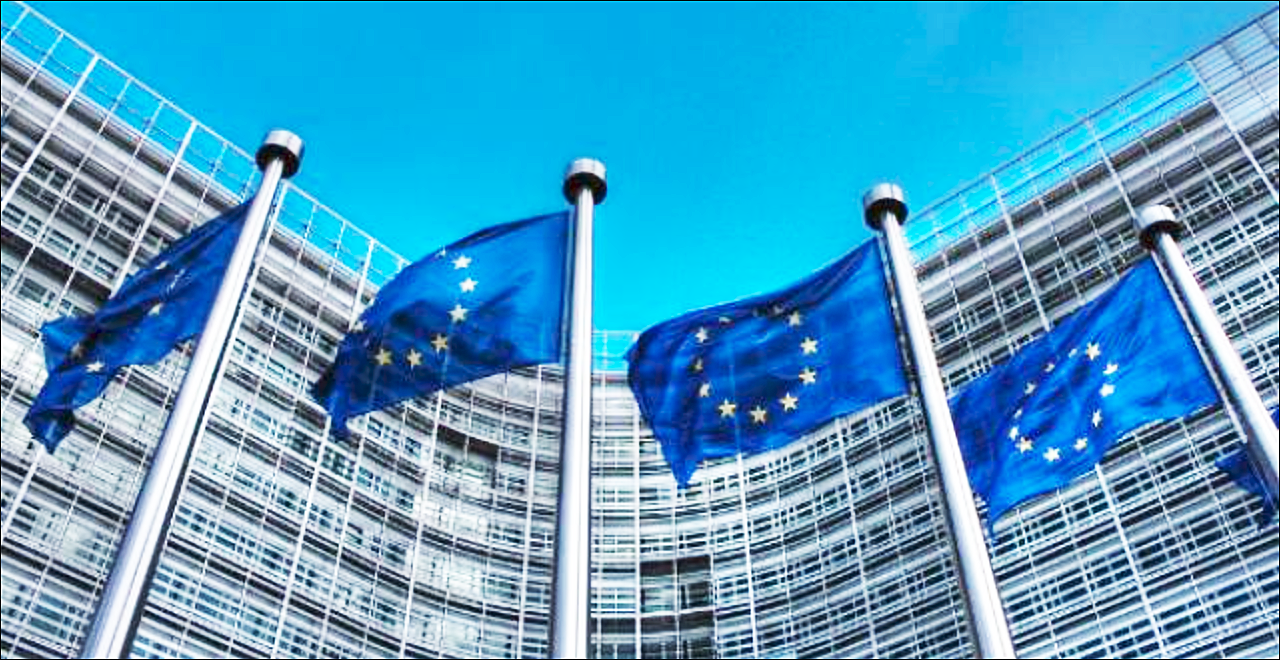
ar fever is ramping up again across Europe. This has happened several times in the four and a half years since Russia invaded Ukraine, usually coinciding with important national elections. Particularly those in Romania, Moldova, Hungary, Poland, and Germany; when certain domestic political parties have been demonized as “pro-Putin” and “security threats” to the rest of Europe. The war drums also get loud whenever increased military budgets are being debated within the governments of the Scandinavian and Baltic states, Finland, Germany, and Poland, as well as the European Commission. The ebb and flow of political battle cries against the Russian Federation track closely with Europe’s electoral and parliamentary calendars.
It is no coincidence the German Government decided to announce five days before Saxony-Anhalt’s September 6 elections Russia was responsible for a small drone discovered at the Leipzig/Halle Airport over a month earlier. Although the drone carried an explosive charge, the device caused no damage and sat at the airport unnoticed for many hours on August 4. When Germany accused Russia of perpetrating the “attack” four weeks later, Berlin presented no real evidence for its conclusions.
Nevertheless, European Commission President Ursula von der Leyen and national leaders across Europe immediately declared solidarity with Germany and condemned Russia’s “hybrid war” on “European Union soil.” To many observers, Berlin’s finger-pointing appeared timed to dampen momentum for the “Alternative for Deutschland” political party, which German Chancellor Friedrich Merz and the European Establishment have defamed as “Nazis” and “Russian puppets.” If that was Merz’s goal; to stave off election defeat for his political allies by falsely accusing his opponents of being Russian tools and spies, it did not work. The AfD decisively won the September 6 election in Saxony-Anhalt, and support for the pro-national sovereignty political party continues to surge across Germany.
Similarly contrived “national security” incidents arose before elections in Romania, Poland, Hungary, and Moldova. Pro-European Union parties accused Russia of election interference, economic sabotage, or even imminent attack, while framing opposing parties as Russian assets. In the case of Romania, the E.U.-aligned courts annulled the 2024 presidential election due to spurious allegations of “Russian meddling.”
While European politicians predictably drag out the Russian bogeyman before every election, they seem to be ratcheting up their scaremongering in anticipation of the midterm elections in the United States. President Trump has made no secret of his belief that the Russia-Ukraine War is a stupid and unnecessary conflict that would have never happened had he been in office in 2022. For two years, he has attempted to end it. With the exception of Slovakia (and Hungary before former Prime Minister Viktor Orbán’s electoral defeat), European governments appear committed to an expanded war with Russia in the near future.
Just last week, President Trump asked Ukraine’s holdover-president, Volodymyr Zelenskyy, to refrain from attacking Russian oil refineries in an effort to stabilize global markets. After agreeing to do so, Zelenskyy did just the opposite and announced Ukraine’s use of NATO-supplied missile systems to target Russian facilities, an action presumably meant to provoke Russia into targeting NATO members directly. Ominously, Ukrainian “journalist” and Zelenskyy confidant Dmytro Gordon recently announced, “Literally within days, something will happen that will give us great hope.…I can’t say what it is — it’s a military secret. But I know that in the coming days…something will happen that will give the nation wings. I know this.”
Gordon’s promise “something will happen” seems to be an open secret throughout Europe. European Commission officials are encouraging all four-hundred-fifty million European citizens to stockpile water, food, and medicine in preparation for war. German Defense Minister Boris Pistorius has told the Bundestag war is coming, and Chancellor Merz has successfully worked around prior legal limits on, and substantially increased defense spending, while acknowledging Germany is “already in conflict with Russia.” Germany, Denmark, Norway, Sweden, Finland, Estonia, Latvia, Lithuania, and Poland are expanding the size of their respective militaries and implementing broader conscription programs. French President Emmanuel Macron has reportedly informed political leaders war with Russia has arrived; and the British Government is furiously revising its war manuals, organizing civil defense exercises, and preparing for large-scale military conscription, including the activation of retired service members up to the age of sixty-five. In the last week, the United Kingdom’s top ten newspapers have published over two-hundred-fifty articles about the likelihood of war with Russia.
Jacob Rees-Mogg, a former cabinet minister and one-time Conservative Party favorite for prime minister, says the British people must fight and die for their country:
“In the next few years we may face a war, and if we face a war, we will need people who will join the armed services and who will go out and do their duty. We may even face circumstances where people have to die to save their country, as they did in the First and Second World Wars….That is something that makes a country survive. If people are not willing to do their duty, then the country will be taken over by another country.”
Rees-Mogg is a poncy toff with an aloof style of speech. While in Parliament, he was often ridiculed as the “Honourable Member for the 18th Century.” So his insistence that ordinary Brits give up their lives for the sake of their country sounds remarkably out-of-touch.
According to Home Office records, an illegal alien is granted settlement or citizenship in Britain every single minute. British taxpayers are forking over more welfare payments to migrant households than ever before. Open defecation on public streets is so common that the U.K. must post signs warning the growing number of third-world immigrants that such behavior is inappropriate.
The British Government hands out a nine-page booklet to illegal aliens informing them raping women and children is wrong. One British village has already voted to secede from the U.K. after the government insisted on housing a migrant camp ten times the size of the town right next door. The former head of MI6, Sir Richard Dearlove, recently warned the public the government’s “climate change” and “green energy” obsessions have rendered the country weak and practically defenseless against its enemies. And instead of tackling any of these national security threats, the government has used its dwindling resources to arrest nearly 65,000 Brits for “speech-related offenses” over the last five years.
When ordinary people hear Rees-Mogg say that they must be willing to “do their duty” and “die” or Britain “will be taken over by another country,” they shake their heads in disbelief. One commenter asked, “So the UK government expects our young to die for them repelling Russian landing craft when it rolls out the benefits carpet for often dangerous invaders?” Another remarked, “A rich bloke who couldn’t knock the skin off a rice pudding, says we should do our duty and die, to protect a status quo that delivers him fine wine, and the rest of the country bills they can’t afford to pay.” And another insisted, “Kit him up and send him to the Donbas.”
An online pundit instructed, “Go and ask the migrants you brought in. Let’s see how British they are then. Because none of us are fighting for you.” One young man wondered, “What’s left to die for? Football? A home you can’t afford? A job you won’t get? A school that will teach your kids to hate you for fighting in the first place?” And another commenter concluded, “A country without borders is not a country, nobody is dying for a country that does not exist.”
Europe’s “ruling class” want to sacrifice citizens in a senseless war against Russia. Citizens should overthrow their “ruling class” instead. ✪
▶️ JB SHURK: CARNEY MARRIES CANADA TO A DYING EUROPE
⭐️ HelloKitty’sGotAHairTrigger

JB SHURK: CARNEY MARRIES CANADA TO A DYING EUROPE

lll
ast week, European Commission President Ursula von der Leyen gave an American-style “State of the Union” address to the European Parliament in Strasbourg, France. During her speech, she proposed Canada be admitted as an “associate member” of the ostensibly European Union. Canadian Prime Minister Mark Carney sat in the front row as an honored guest before delivering a speech of his own to the parliament the next day. Taken together, the Leyen-Carney parade of oratorical self-puffery exuded a nauseating bouquet of arrogance, foolishness, incompetence, and stale entitlement.
The European Commission President (some say “Queen”) Ursula speaks as if she rules Europe (regularly invoking “our values” when describing a continent of distinct nations, dissimilar cultures, and over two hundred native languages), but European citizens never voted for her. Prime Minister Carney is the former head of both the Bank of Canada and the Bank of England; and his globalist cronies installed him in Canada’s highest political office just last year. While the central banker and the queen prattle on about “democracy,” neither ascended to the peaks of their power in a democratic fashion. They are “elites” chosen by “elites” to represent the interests of “elites.”
Since the Second World War, the United States has heavily subsidized the economies of Canada and Europe, providing for the West’s collective security while permitting one-way tariffs against American producers. This eighty-year arrangement has endured long beyond its immediate post-war necessity, when European manufacturers were desperate to rebuild amid general ruin and the United States worried about losing more of the continent to the Soviet Union’s billowing Iron Curtain.
Unfortunately, this part of Western history does not get an honest treatment in children’s textbooks, so Europeans and Canadians grow up believing their economies succeed despite the United States instead of because of it. When President Trump began insisting on fair and reciprocal trade terms between the United States and its partners, European and Canadian “elites” all screamed about “Trump’s trade war” as if it were a “surprise attack.” They did not explain to citizens how their nations have greatly benefited for eight decades by tariffing U.S. products while selling European and Canadian goods to American consumers. This is yet another example of the “misinformation” the European and Canadian Governments regularly disseminate to their respective peoples and a prime reason why governments cannot be trusted to objectively and dispassionately “police” so-called “disinformation.”
While Queen Ursula and Central Banker Mark denounced America’s so-called “trade war” in the harshest terms, they both spoke of an expanding security and economic alliance that would reintegrate the United Kingdom into Europe’s bureaucratic ranks and envelop Ukraine with military and financial support (paid for by Canadian and European taxpayers). For all intents and purposes, the British people’s 2016 referendum in favor of Brexit (the withdrawal of the U.K. from the E.U.) has been sabotaged and nullified by government fiat. As is true of Canada, Ukraine is not a member of the European Union, but just as the British Establishment effectively cancelled Brexit, the European and American Establishments orchestrated a 2014 coup d’état against the last Ukrainian government opposed to integration with the E.U. This is how the Canadians and Europeans do “democracy” — through sabotage, censorship, government propaganda, the installation of unelected “elites,” the blacklisting of political parties, the criminalization of speech, election nullification, and NGO-sponsored coups. (To be sure, this is how Democrats and Establishment Republicans in the United States do “democracy,” too, which is why President Trump drives them and their Establishment friends in Canada and Europe absolutely nuts!)
All this rhetorical flexing is sad! Canada, the United Kingdom, the European Union, and Ukraine are dilapidated vessels drifting in an open sea with huge and growing ruptures in their hulls. They are taking on more water than they can dump back out, but they pretend as if they’re part of a glorious armada.
Without U.S. military assets and personnel providing the backbone for the North American Aerospace Defense Command (NORAD) and the North Atlantic Treaty Organization (NATO), Canada, the U.K., and the E.U. would have but one defense posture: to lie down and play dead. Canada can’t even fight forest fires, for goodness’ sake! The U.K. lacks a sufficient number of seaworthy naval vessels to secure its own islands, let alone the ability to back up with military strength its territorial claims to the Falkland Islands (or what the Argentinians call their Islas Malvinas). Most E.U. nations depend upon the U.S. nuclear umbrella and U.S.-NATO security guarantees to provide deterrence against military threats, which is why it is all the more preposterous when Denmark and France huff and puff about “keeping” Greenland (a North American landmass) in Europe or Spain and Italy refuse to permit U.S. military aircraft to refuel before engaging Iran. And Ukraine (whose diminutive holdover-president must be fuming at the idea of Canada becoming an “associate member” of the E.U. while Brussels refuses to let his collapsing rump state join the club) remains an albatross of corruption, as one high-ranking official after the next flees the war-torn country with suitcases of jewelry and cash. If Canada, the U.K., the E.U., and Ukraine were warhorses, they’d all be sent to the glue factory.
Nevertheless, unelected Queen Ursula used her address to the European Parliament to sweet-talk Central Banker Carney: “Dear Mark, I said we must urgently reimagine our partnerships….We share one ocean, one set of values, one way of seeing the world. And we will now build our shared future as well.” Canada’s premier banker smiled from ear to ear at the thought of casting off his country’s New World trailblazing and shackling Canadians’ futures to the fate of Old Europe. If economic genius Carney thinks Canada will become more prosperous by decoupling from the United States and hitching its wagon to a European coalition already sinking to the ocean floor, so be it.
Canada’s state-controlled news media are enamored of Mark Carney, his love affair with Europe, and his war of words with President Trump. Canadian “journalists” still talk about Carney’s “middle powers” speech at the World Economic Forum in Davos last January as “historic” and a “worldwide viral moment,” while most Americans never stopped laughing at big, bad Carney’s pretend “tough guy” words. Now the press is desperate to paint Carney as the natural “leader of the free world.”
Meanwhile, the same guy who keeps telling the United States “Canada is not for sale” has decided to sell control over his country’s airports (most likely to communist China) for extra cash while his economy continues to shrink. When he’s not kissing King Charles III’s derrière, Carney’s bowing to Queen Ursula and General Secretary of the Chinese Communist Party Xi Jinping. Marky Mark and the Flunky Bunch apparently want to “preserve” Canadian sovereignty by becoming a vassal state of China and the European Commission.
What will the good people of Canada gain by marrying the European Union? Union? They will get additional “green energy” regulations, a slower economy, and more inflation. They will get to watch more of their businesses close shop and relocate to the United States. They will get to send more of their taxes to Ukraine so that some of the most corrupt government officials on the planet can continue to buy luxury cars and vacation homes. They may even get to send their children off to fight a European war against Russia!
Canada’s Carney cheerleaders will find no shortage of good news as their country handcuffs itself to an insane European bureaucracy that loves taxes, mass migration, economic malaise, censorship, and distracting the public with unnecessary wars. Bon voyage and bonne chance, Canada! You’re going to need it. ✪
▶️ NOVEMBER: DEFEATING DEMOCRATIC SOCIALISM IS IMPERATIVE

NOVEMBER: DEFEATING DEMOCRATIC SOCIALISM IS IMPERATIVE

eee
ix years ago, the rise of the “Bernie bros” supporting avowed socialist candidate Bernie Sanders (I-Vt.) raised the question of whether decades of soft indoctrination about the “horrors” of capitalism by the Democrat-media complex and the oft-promised but never delivered benefits of socialism had finally produced enough voters willing to elect their way out of free enterprise.
Fortunately, that didn’t happen. However, in 2026 the evidence supporting that question is harder to wave away. A self-described democratic socialist now runs City Hall in the nation’s largest city, and a slate of Democratic Socialists of America-endorsed candidates is on ballots nationwide for Congress, statehouses, and mayor’s offices. The question is no longer academic. It is on the ballot on November 3.
Zohran Mamdani’s November 2025 victory in the New York City mayoral race was the biggest win for the DSA since Alexandria Ocasio-Cortez’s 2018 upset, built on a platform of rent freezes, city-owned grocery stores, free buses, and steep new taxes on the wealthy. DSA leaders have called it proof that “democratic socialist ideas are very popular.”
Heading into the midterms, at least eleven DSA-aligned candidates are running for offices from Colorado to Rhode Island, Ocasio-Cortez just won her own House primary with 87 percent of the vote, and Rashida Tlaib is on the ballot again in Michigan. Even sympathetic Democrat strategists are nervous about the label. One Third Way official has even conceded that socialism hands Republicans “a pretty potent set of weapons” in competitive races. A CBS News poll found only 22 percent of Democrats actually support socialist economic positions, which tells you the argument inside the Party is far from settled.
That makes this exactly the moment to make the case against socialism from the outside, too. Most of the pushback on socialism is economic or historical, and both cases are strong. However, there is a different argument, rooted in older and more fundamental conflict between individualism and collectivism, which should be carefully considered by all Americans before going to the polls this year.
The purpose of this article is to educate, inform, and proselytize against socialism in all its forms.
✪ WHAT IS COLLECTIVISM?
A useful academic definition calls collectivism “a cultural value characterized by emphasis on cohesiveness among individuals and prioritization of the group over self.” Ayn Rand’s definition is sharper and remains the most honest one available: collectivism means the subjugation of the individual to a group—whether a race, a class, or a state makes no difference—for the sake of what gets called “the common good.”
Nobody who uses that phrase ever quite explains who decides what the common good is or on what moral basis. The term itself only entered common usage in the 1920s, popularized by Lenin and the Bolsheviks as a key foundational component of Marxism-Leninism, meant to forge a “New Soviet Man” willing to be sacrificed for and fully replaced by the collective.
That philosophy had a body count, and it is worth restating plainly because the people citing “democratic socialism” today rarely do. Collectivizing Soviet agriculture meant destroying the kulak class outright. By some estimates, six million people were murdered or starved to death. Forced industrialization dragged millions into the Urals and Siberia; forced-labor camps swallowed millions more.
China’s experience under Mao Zedong was worse still: as many as 65 million dead across his reign, with 30–40 million of those (roughly the population of California) starving during the grimly misnamed “Great Leap Forward,” when profitable farms were forcibly converted to meet unworkable grain and steel quotas which official lies could never meet.
“Collectivism” eventually fell out of favor in the West because it was too easily heard as a synonym for communism, which it largely was. What replaced it in polite conversation was the softer word “socialism,” which is defined as a political and economic theory holding that production and distribution “should be owned or regulated by the community as a whole.” Think about that phrase for a second: “regulated by the community as a whole” is collectivism wearing a nicer suit. It still means submerging the individual into the state, which does the actual regulating on everyone else’s behalf.
Every strain of this; past, present, ever promised, whether it be collectivism, communism, or “democratic” socialism, shares a common enemy in capitalism. The old adage remains true despite the caterwauling of the socialists: capitalism is the worst economic system in human history, except for every other one ever tried. Paired with the personal and economic freedoms enshrined in the U.S. Constitution, capitalism has produced the broadest and most durable prosperity the world has ever recorded.
Argentina offers a live experiment running the other direction. After decades of Peronist collectivism wrecked the peso and hollowed out its middle class, Javier Milei’s libertarian shock therapy has pulled inflation down from triple digits toward single digits in about two years. Reform away from collectivism, when it happens at all, is rarer and far slower than the original slide into it.
✪ INDIVIDUALISM
By contrast, individualism is the dictionary’s “habit or principle of being independent and self-reliant” and “a social theory favoring freedom of action for individuals over collective or state control.” More than that, it holds that a person’s life belongs to him; he has the right to live it by his own judgment, keep what he earns, and pursue values of his own choosing, free from a state claiming a prior right to any of it.
That is the moral core of modern American conservatism, and it is the essence of the entrepreneurial instinct in human nature. It is arguably far more reflective of human nature than any collectivist system has ever managed to be. It is why individualism and capitalism are two sides of the same coin. Individualism begets entrepreneurialism and its twin, capitalism (also known as free enterprise or free market economics).
The U.S. has produced more than 425 Nobel laureates, by far the most of any country and roughly 40 percent of the world’s total. Red China, with four times the population and a state that has poured enormous resources into prestige science, has produced a small fraction of that number (and only one from the Mainland). The light bulb, refrigeration, the automobile, the internet, the iPhone, and other modern marvels were conceived or mass-produced first in a country organized around individual initiative rather than central planning.
That is not an accident of geography or luck. The mechanism is straightforward, and the Hoover Institution has laid it out plainly:
- In a modern capitalist economy, hundreds of thousands of enterprises produce millions of distinct products—far too complex for any administrative body to allocate rationally, no matter how much computing power it commands.
- Without market prices, planners have no way to know what is genuinely scarce and what is abundant, so they cannot plan well even granting them the best of intentions.
✪ THE ELEMENT OF HUMAN NATURE
Individualism is closely aligned with human nature. It starts with the fact that people notice, invent, trade, and take responsibility as persons, not as interchangeable units of a plan. When each person is free to use their own knowledge, bear the costs of their mistakes, and keep the gains from their efforts, the motives already built into human nature, including curiosity, ambition, caution, and pride in work, get pointed toward useful results.
Markets and private property turn that local knowledge into prices and voluntary cooperation, so talent is sorted by what actually works rather than by what a committee prefers. In contrast, collectivist systems try to override those same motives and then wonder why effort, honesty, and innovation dry up. Individualism does not assume people are angels; it assumes they are agents, and it designs institutions that make agency productive.
Collectivism fights human nature directly. It strips the moral element out of economic decision-making and dulls the risk-taking that actually grows economies. The failures pile up without a documented exception, including the USSR, the Soviet bloc, Mao’s China, Cuba, North Korea, and Venezuela (before 2025).
Western Europe’s “soft socialism” gets held up as the counterexample, but its GDP growth still lags the U.S., high taxes and regulation depress entrepreneurship, single-payer health care rations care rather than expanding it, and most of the continent has sheltered under the U.S. defense umbrella since 1945 while funding only a token share of its own collective defense.
✪ THE DEMOCRAT PARTY EMBRACES COLLECTIVISM
None of those failures stopped the Democrat Party from drifting hard toward the European model during the Obama years. No single year of his presidency reached 3 percent GDP growth, and food stamp enrollment hit historic highs. The Biden years continued the collectivism with a twist. Biden’s approach showed up less as formal nationalization than as directing private activity through the state. This included large industrial subsidies and content rules in the Inflation Reduction Act and CHIPS Act, “whole-of-government” climate and equity mandates on agencies and contractors, attempts to cancel or redistribute student debt by executive action, heavier labor and environmental regulation, and Buy American/prevailing-wage preferences that treated investment and hiring as instruments of group policy rather than as deals between firms and workers.
In 2026, the DSA has pulled a slice of the Democrat Party past Obama-Biden managerial liberalism into open advocacy of social ownership and planned allocation. They are pushing Medicare for All instead of Obamacare, a Green New Deal framed as industrial command rather than a carbon price, rent freezes and public development as first-line housing policy, and candidates who treat profit and private capital as problems to be subordinated rather than engines to be taxed. DSA-aligned officials and platforms push the Party’s activist core toward community or state control of major sectors of the U.S. economy and society in general.
✪ AT STAKE IN NOVEMBER
Individualism/capitalism is a fundamentally different animal from the collectivist alternative being offered this fall by the DSA-influenced Democrat Party because the two systems are competing on what each believes a person is for. One treats you as an economic actor with your own judgment and your own claim to what you produce. The other treats you as a unit to be planned around, taxed for “the common good,” and told which businesses are allowed to exist in your neighborhood.
That is the real choice on November 3: not just which party wins which seats, but which theory of the individual gets a little more room to operate for the next two years, as well as control of Congress, which decides how much room either side actually has to shape America going forward.
✪ CONCLUDING THOUGHTS
The DSA’s 2026 class is not a fringe curiosity; it is a governing model already installed in America’s largest city and being tested in districts from Colorado to Florida. Every one of those races is a small referendum on the same question posed above: whether enough Americans have absorbed the collectivist pitch to actually vote for it.
Do we want Zohran Mamdani, or the DSA’s incoming class of legislators, or the congressional “Squad” arbitrarily deciding how to run New York’s grocery stores, or Colorado’s economy, or Pennsylvania’s, or Michigan’s? None of them has ever run a business. We already have a preview in New York, where even Albany’s Democrat legislature (who are not exactly capitalism’s shock troops!) is balking at funding Mamdani’s wealth tax wish list because they can see the arithmetic doesn’t make sense.
History’s plainest lesson is that societies vote their way into collectivism far more easily than they ever find their way back out of it. Reversal tends to be slow, expensive, and far more painful than the original vote that started the slide. Milei’s Argentina is proof reversal is possible; it is also proof of how much has to be broken first before anyone is willing to try. Do we want to repeat that experiment in the United States? I think not. ✪
▶️ DEEP STATE DYNAMICS
DEEP STATE DYNAMICS

eeee
n the 25th anniversary of the 9/11 terrorist attack, the nation recalled those who perished, and the heroic efforts of police and firefighters on that terrible day. Lost from memory was the failure of the Central Intelligence Agency to prevent that attack, the worst on the USA since 1941.
On September 11, 2001, “we learned that the Pentagon had been attacked and that a plane had crashed in Shanksville, Pennsylvania,” wrote former CIA director John Brennan in Undaunted: My Fight Against America’s Enemies, at Home and Abroad. At the time, Brennan was chief of staff to CIA director George Tenet, who called for the CIA building to be evacuated. Jump ahead to September 11, 2012.
Al Qaeda terrorists chose the 9/11 anniversary to attack U.S. facilities in Benghazi, killing ambassador Christopher Stevens, foreign service officer Sean Smith, and former Navy SEALs Tyrone Woods and Glen Doherty. The CIA construed the attack as part of a demonstration, “in reaction to an obscure film made in the United States that many Muslims believed insulted the Prophet Muhammad.”
That is the judgment of Mike Morell, in The Great War of Our Time: The CIA’s Fight Against Terrorism — From al Qa’ida to ISIS. Morell served as the CIA’s Permanent Deputy Director and twice as “acting” CIA director, without confirmation by the U.S. Senate. Morell admits that he “excised” material “to protect the Central Intelligence Agency,” which is not the same as protecting the people. Jump ahead to early 2020.
The government’s first voice on COVID was Dr. Nancy Messonnier, who, in a series of telebriefings out of the public eye, set forth everything Dr. Anthony Fauci would later proclaim. The “novel coronavirus” emerged from a “market” in Wuhan, and there was no immunity. The new virus would spread across the country, so businesses and schools would have to be shut down, and so on.
The Government never revealed Dr. Messonnier’s briefings were scripted by a “communications team” including Dr. Anne Schuchat, who twice served as acting director of the Centers for Disease Control (CDC) without confirmation by the US Senate.
Doctors Schuchat and Messonnier were veterans of the CDC’s Epidemic Intelligence Service, a legion of “disease detectives” tasked to prevent viruses from arriving in the USA. With COVID the EIS obviously failed, and the Centers for Disease Control “and prevention” never explained that failure to the American people. Doctors Schuchat and Messonnier both suddenly retired in May, 2021. Jump ahead to 2023.
Joe Biden’s choice for labor secretary was Julie Su, who as a labor official in California, looked the other way at more than $30 billion in unemployment fraud. Convicts and fraudsters got unemployment checks, but not all the legitimate workers who truly needed the money. Su was also a supporter of California Assembly Bill 5, a veritable declaration against the independence of workers, from truck drivers all the way to freelance writers, editors, and musicians.
The Senate never confirmed Su as labor secretary, but a ruling by the “Government Accountability Office” allowed Su to continue as “acting” secretary. This prolonged incompetence, canceled accountability, and confirmed the dynamic now in place.
Funded by taxpayers, federal bureaucracies are unaccountable and impossible to shut down, regardless of performance. President Trump once sought to “drain the swamp” but now seems more occupied with renaming lakes and building massive ballrooms.
Dr. Anthony Fauci, a government bureaucrat since 1968, and head of the National Institute of Allergy and Infectious Diseases since 1984, was never once confirmed by the Senate. Joe Biden pardoned Fauci but not doctors Schuchat and Messonnier. So far, Congress has not subpoenaed them to testify on CDC and EIS failure. None of this implies that Senate confirmation guarantees quality performance.
In July 1997, the Senate approved George Tenet as CIA director. On his watch, the CIA had no clue about the 9/11 attack, but Tenet continued as director until 2004. No word whether any CIA bosses were disciplined, demoted, or dismissed over 9/11, but as Brennan noted, the agency’s secret budget was “significantly increased.”
The 9/11 failure led the Government to create yet another bureaucracy, the Department of Homeland Security. The DHS, CIA, and FBI all failed to prevent terrorist attacks at Fort Hood (2009), the Boston Marathon (2013), San Bernardino (2015), and Orlando in 2016, all with massive loss of innocent life. A ballpark figure for the bureaucrats who lost their jobs would be zero. With terrorism, white-coat supremacy, and independence of the workers, it’s all about memory against forgetting.✪
▶️ THE LEFT IS A CULT

THE LEFT IS A CULT

iii
esults are not defined solely by esoteric rituals or charismatic gurus. They are defined by a mental structure: unwavering adherence to a doctrine, rejection of doubt, radical polarization between “us” and “them,” the primacy of narrative over facts, impunity for leaders, and a mechanism of denial that protects the group’s identity at the expense of reality. Anyone who honestly examines the political behavior of the contemporary Left; from social democracy to communism, will recognize these same traits. This is not a rhetorical metaphor. It is a mode of thought which operates like a fanatical religion.
Research into cults has identified several recurring patterns. The group demands excessive and uncritical commitment to its ideology or leader. Questioning is discouraged or morally punished. A polarized mentality emerges: the world is divided between the chosen and the enemy. The ends justify the means. Doctrine takes precedence over personal experience and contradictory evidence. The member’s identity is constructed more through opposition to an adversary than through any coherent positive content. Leaders are not truly held accountable: their lies or contradictions are reinterpreted, ignored, or transformed into evidence of their moral superiority.
Added to this is psychological denial as a defense mechanism. Accepting facts that contradict the narrative would mean allowing reality to cease being what the believer needs it to be. That is why evidence fails to penetrate. Reason itself becomes an existential threat. Facts that contradict the narrative: historical failures, human costs, internal inconsistencies, empirical results, are not debated. They are reinterpreted, relativized, or attributed to the enemy. The believer simply “does not see” the evidence. He neutralizes it to avoid having to change his identity.
This process explains why certain groups can maintain contradictory claims without experiencing discomfort, why external criticism reinforces rather than weakens adherence, and why rational dialogue becomes sterile. This is no longer a debate over ideas. It is a defense of a psychological and group identity.
Now consider the Left in light of these characteristics. Its narrative: oppression, privilege, capitalism as absolute evil, ubiquitous “fascism,” functions as dogma. Facts that contradict it: the economic failures of socialism, the deaths of millions, violence committed by protected groups, demographic or crime statistics, are reinterpreted, relativized, or blamed on conspiracies by the enemy. The contradictions of political leaders do not provoke a crisis of faith: they are forgiven or concealed because the message matters more than consistency.
Identity is defined through hostility toward the adversary. Capitalism, individual liberty, liberal democracy, and Western Civilization are not treated as imperfect systems which might be reformed; they become Evil itself.
This structure helps explain permanent activism and the ease with which it can slide into coercion. Terrorism, within this logic, is not an aberration; it is activism carried to its extreme. Anyone convinced he possesses absolute moral truth and confronts a demonized enemy can come to regard any means as legitimate. Hence the ability of highly mobilized minorities to capture the media narrative, dominate the streets and, under certain circumstances, acquire institutional power. Psychological denial preserves the barrier: to accept reality would mean ceasing to belong.
Every variant of socialism shares this core. Social democracy may appear more moderate, but it preserves the primacy of the egalitarian narrative and the same difficulty in accepting the limits imposed by human nature or economics. Communism simply carries the logic to its ultimate consequences.
Why, then, does it attract so many followers? Whatever its promises, the “believer,” to borrow Jamie Glazov’s apt expression, is someone alienated from his own society who finds in a transcendent political cause a means of escaping the burdens of the individual self. Glazov has repeatedly argues part of the attraction of mass movements lies in self-abnegation: the possibility of dissolving an unsatisfactory identity into something supposedly greater and purer.
That is how fanatics are made. This also helps explain the affinity with Islamism. Both can operate according to sectarian logics. Both construct identity through opposition to a common enemy: Western Civilization, capitalism, individual liberty, national sovereignty. Both place a sacred narrative above facts. Both can justify extreme means. Both demand unwavering loyalty and punish internal dissent. And, importantly, both have produced cultures in which death is glorified rather than merely feared: history shows that neither socialism nor Islamism merely takes prisoners. Both have produced conversion or death, and millions of lives have been destroyed by these pathological ideologies.
This does not mean they share every dogma. It means that they can share a mental structure. Common hatred can unite more effectively than common love. This is why we repeatedly see tactical coalitions, complicit silences, and a systematic reluctance to confront the incompatibility between Islamism and liberal values. The Left “does not realize it.” Its mechanism of denial prevents it from doing so without endangering its own identity. Neither the example of Iran; the Left’s collaboration in the revolution followed by repression of the Left once Islamism prevailed, nor other historical precedents have been enough to force recognition of what should be obvious.
The Right, conservatives, and libertarians often make a fatal strategic mistake: they treat the Left as simply another ideology, one susceptible to rational debate, facts, and compromise. They expect it to correct itself when confronted with evidence. They expect it, once in power, to respect the rules of liberty and truth. They fail to understand that the adversary is not operating within the same framework.
The difference is not merely ideological. It is vital, existential, and civilizational. A concession is not simply a temporary exchange; it can become an irreversible advance of the sectarian narrative into the realm of reality. Every cultural, institutional, or legislative conquest becomes entrenched and is rarely reversed. The Right, by failing to understand this mental mechanism, remains permanently at a disadvantage.
Understanding that the Left functions like a cult is not an exercise in name-calling. It is, in my view, a condition of political and civilizational survival. Those who continue trying to reason with people who have turned denial of reality into an identity are condemned to lose. And every loss means one fewer opportunity for a better life; and another step toward the abyss. ✪
▶️ CREEPING TYRANNY: THE SLOWLY BOILING FROG

CREEPING TYRANNY: THE SLOWLY BOILING FROG

lll
nurement is one of those lesser-known but interesting words. It references the process of accustoming people to a thing, generally something unpleasant. And what’s scary for many to contemplate — freedom lovers particularly — is that man can become inured to most anything. This includes tyranny.
An ideal example was provided by a 1997 New York Times Magazine article on slavery in Muslim Mauritania. “God created me to be a slave, just as he created a camel to be a camel,” said a woman identified as Fatma. She’d been inured.
An activist named Boubacar Ould Messaoud, himself born a slave, expounded further. People such as his mother “think that there is nothing wrong with slavery,” he told the Times. “They have no other universe. After 15 or 20 generations, people become totally submissive.” Rebellion becomes, the paper added, “inconceivable among people who have lost their collective memory of freedom.”
This is a cautionary tale because, while Americans aren’t slaves in any literal sense, they’ve become inured, too. So warns commentator Mark C. Ross, who lamented Wednesday, “Sometimes I feel like a frog that’s getting boiled.”
✪ Creeping Totalitarianism
This slow boil is a long-standing, generally unnoticed process. Note here that a law, regulation, or mandate is (perhaps with rare exception) by definition the removal of a freedom. For it states that there is something you must or mustn’t do. Therefore, the more laws, regulations, and mandates (LRM) you have, the less free you are all other things being equal.
And what happens every year? Our federal, state, and other governments enact more LRM, but hardly ever rescind any. This means that over time we become progressively less free.
Logic dictates that continuing this process long enough will eventually deliver totalitarianism or something approximating it. Our country already constrains us, considering all governmental levels, with a few hundred thousand to a few million LRM. No one even knows the exact figure. Maybe AI will eventually figure it out.
It’s not just LRM, though. Just get a load of what Supreme Court Justice Neil Gorsuch writes in his 2024 book Overruled:
Our legal institutions have become so complicated and so numerous that even federal agencies cannot agree on how many federal agencies exist.
Who would’ve guessed that? As for LRM, while we don’t know their precise number, the ones we do become aware of can be maddening. The aforementioned Ross provided some examples:
California has outlawed the buying and selling of gas-powered garden tools, such as lawnmowers, blowers, and hedge-trimmers. It’s still legal, however, to use them, while the equipment dealers of western Nevada are cleaning up big time. Some municipalities have also banned the use of blowers because of the noise…but still allow motorcycles. Just recently, California banned “non-compostable” plastic bags, which used to be commonly available in grocery stores for shoppers to put their green beans, mushrooms, etc. into prior to checkout. The acceptable bags now being offered are beyond fragile, making it problematic for them to make it all the way home without rupturing.
Unfortunately, too, these LRM don’t just cause inconvenience, but sometimes real damage. As Front Page Magazine wrote last year:
In California, blessed with abundant water from the snowmelt of the Sierra Nevada, EPA regulations are barriers to building new dams and reservoirs. So instead, billions of acre-feet of water are dumped into the Pacific –– in part to protect the Delta Smelt, a two-inch bait-fish supposedly threatened with extinction. As a result, during the recent virulent wildfires in the Los Angeles area, fire hydrants and storage tanks ran out of water, leaving thousands of homes to be burned to the ground.
✪ Can’t Make A Move Without Big Brother’s Approval
▶️ 4 Minutes 24 Seconds
Excessive LRM also hinder productivity and job creation. Just consider gratuitous licensing requirements. As investigative reporter John Stossel stated in 2017:
Whether you’re a doctor, an electrician, a teacher, a cab driver, a hair stylist — even a tour guide! — the government increasingly demands that you get a license before you are allowed to work in your chosen profession. In the 1950s, only about one in 20 workers needed the government’s blessing to do their jobs. Today, that figure is more than one in three. Because of safety issues and concerns about accountability, many people think occupational licensing is a good idea. Yet licensing doesn’t prevent fraud and incompetence (in some cases, it even provides protection from such claims). And all over America, people want to work but can’t because it’s often nearly impossible or too expensive to get the proper government permission.
One example is how New York City’s Taxi and Limousine Commission requires the purchase of a $100,000 “Medallion” to own a taxi. (And it once cost $700K.) In contrast, entering the business in Washington, D.C., only runs you about $250 yearly. This explains why D.C. has more taxis relative to population, lower fares, and more black taxi ownership.
Of course, to echo Stossel, some assume governmental LRM are delivered by beneficent statesmen devoted to our betterment. Well, anyone believing that should consider New Jersey’s “single-use” plastic-bag ban, designed, ostensibly, to reduce plastic usage.
After it took effect in 2022, plastic use for bags increased almost 300 percent. Why? The “reusable” bags replacing them comprise 15 times as much plastic, but they’re not used 15 times as much. Yet has this counterproductive stifling of freedom been repealed? Nope, not yet. So do the politicians really care about the environment — or do they have ulterior motives?
Then there are high housing costs, a common gripe today and part of the impetus for socialism’s embrace. Yet unmentioned is that LRM created since 1978 can add 50-plus percent to housing’s costs in certain markets. Given this, wouldn’t it make sense to scrutinize these LRM to see if at least some can be eliminated? Not to politicians, apparently; good luck finding a candidate who even addresses the matter.
All this, not to mention truly tyrannical LRM, such as those leading to a child being seized from parents so he can be mutilated into an opposite-sex simulacrum.
✪ Is There A Remedy?
So can creeping totalitarianism be arrested — or even reversed? As to this, there’s no substitute for having a virtuous, educated (not just schooled) electorate that cherishes legitimate liberty. Yet one idea is something I proposed a generation ago: The Defense Against Tyranny Amendment.
This measure would place a constitutionally mandated cap on the number of LRM that can exist. The precise ceiling would have to be determined. I would, however, favor a figure much lower than the total number of LRM extant. This, of course, would require lawmakers to finally become law-takers. For they would have to strike legislation from the books until they reached the amendment’s prescribed threshold.
Whatever the ceiling imposed, though, once reached, politicians couldn’t institute a new LRM without rescinding an old one. Though not foolproof — it wouldn’t address LRM’s qualitative character — this would help keep the total amount of freedom enjoyed more constant.
This could also, of course, be replicated on the state and local levels. Unfortunately, this is not nearly as likely to happen as is inurement. For as the Mauritanian slaves prove, people are as adaptable as they are corruptible. ✪
▶️ THE SOCIAL SECURITY CLIFF IS DRAWING CLOSER

THE SOCIAL SECURITY CLIFF IS DRAWING CLOSER
ooo
ocial Security’s financial problems are moving from a distant concern to something millions of Americans may have to plan around. The program’s retirement trust fund is now projected to run out of reserves in 2032; potentially forcing benefit reductions that could eventually cost the average retiree nearly $600 a month in today’s dollars.
That does not mean Social Security will disappear in six years. Payroll taxes will continue coming in and benefits will continue to be paid. The problem is those revenues will no longer be enough to cover 100% of the benefits currently scheduled.
✪ The 2032 Deadline Is Getting Harder To Ignore
The Congressional Budget Office projects that the Old-Age and Survivors Insurance Trust Fund, which pays retirement and survivor benefits, will deault in 2032. The Social Security Trustees reached a similar conclusion in their latest annual report, projecting that the fund will be able to pay full scheduled benefits only through the fourth quarter of 2032.
The two forecasts differ somewhat on what happens next. Social Security’s Trustees estimate continuing revenue would initially be enough to pay only 78% of scheduled retirement and survivor benefits, implying a roughly 22% shortfall. CBO modeled an illustrative scenario in which benefits fall 7% during 2032 and then average about 28% below scheduled levels from 2033 through 2036.
That difference matters. There is no single guaranteed percentage by which every Social Security check will suddenly be reduced. Congress could act before then; and current law does not specify exactly how reductions would be distributed if the trust fund were depleted. However, what is becoming increasingly difficult to dispute is the timeline.
✪ What A 28% Reduction Would Mean
The average retired American worker receives $2,085.98 a month in Social Security benefits as of July. A 28% reduction applied to that amount would equal roughly $584 a month, bringing the average benefit down to about $1,502. That works out to approximately $7,000 less per year in today’s dollars.
Actual checks will likely be larger by 2032 because Social Security benefits generally rise with annual cost-of-living adjustments. That means the nominal dollar amount potentially at risk could also be larger.
For retirees who depend heavily on Social Security to cover housing, food, utilities and healthcare, a reduction of several hundred dollars a month would be significant.
✪ The Problem Is Surprisingly Simple
Social Security operates largely by collecting taxes from today’s workers and distributing that money to pay current beneficiaries. For decades, the system also accumulated trust fund reserves which could be tapped when annual revenue was no longer enough to cover benefits. Those reserves are now shrinking.
CBO projects Social Security retirement-program spending will continue growing faster than its non-interest income during the coming decade, pushing the OASI trust fund balance toward zero in 2032.
Once those reserves are gone, the system becomes much more dependent on the payroll and other dedicated taxes coming in each year. Under current projections, that revenue will not be enough to cover every dollar of scheduled retirement benefits.
That leaves Congress with several broad choices: raise additional revenue, reduce future benefits, change eligibility or retirement rules, provide money from elsewhere in the federal budget, or combine several approaches. None are politically easy.
✪ Why Retirees Should Care Even If Congress Acts
There is a reasonable argument Congress will eventually intervene rather than allow a sudden reduction in benefits for tens of millions of Americans.
However, that does not eliminate the financial risks. It simply changes what that risk may look like.
A rescue could involve higher payroll taxes, raising the amount of income subject to Social Security taxes, changes to benefit formulas, a higher retirement age, additional federal borrowing or some combination of those measures.
For people approaching retirement, that means today’s estimated Social Security benefit should probably be viewed as one part of a broader retirement-income plan rather than a number that can never change.
Consider a household expecting $4,500 a month from Social Security. A 20% reduction would eliminate $900 a month. A 25% reduction would remove $1,125. At 28%, the shortfall rises to $1,260 a month.
That kind of change could affect how much retirees save, how aggressively they can withdraw from investment accounts and how much guaranteed monthly income they may want outside Social Security.
✪ The Bigger Story May Be The Fix
The most important financial consequence may ultimately come from what Washington does to prevent the trust fund from running dry.
The Trustees project the retirement trust fund will have enough reserves to pay full scheduled benefits only through 2032. They also say legislative action will be necessary to prevent depletion.
That means the question for investors and retirees is broader than whether Social Security checks will suddenly be cut.
The bigger question is how Congress eventually closes the gap. If lawmakers rely heavily on higher taxes, workers and higher earners could feel the impact. If benefits are changed, retirees and future retirees could feel it. If more money comes from the broader federal budget, the effects could show up elsewhere through higher deficits, spending changes or future tax policy.
The longer Congress waits, the less time lawmakers have to phase any effective changes in gradually. ✪
▶️ RONALD REAGAN’S WARNING FOR WASHINGTON IN 2026

RONALD REAGAN’S WARNING FOR WASHINGTON IN 2026
fff
onald Reagan believed ordinary Americans could be trusted with their own freedom. In 2026, that increasingly feels like a radical proposition.
There are plenty of reasons why conservatives still talk about Ronald Reagan nearly four decades after he left office. He won 49 states. He rebuilt the military. He helped win the Cold War. He cut taxes and, maybe most importantly after the carter malaise of the late 1970s, reminded Americans there was nothing wrong with believing America was a pretty great country.
However, I think we’ve turned Reagan into a highlight reel over the years.
We remember the speeches, the landslide, and the jokes. We remember “Morning in America.” We remember him telling Gorbachev to tear down the Berlin Wall.
What gets lost is the idea beneath it all. Reagan trusted people. That sounds ridiculously simple, but look at our politics in 2026 and ask yourself how many people in Washington really believe it anymore.
On June 12, 1987, Reagan stood at the Brandenburg Gate in West Berlin and delivered that famous line everybody remembers: “Mr. Gorbachev, tear down this wall!” We’ve heard it so many times that it’s easy to forget how extraordinary it was to say at the time. The Berlin Wall was still there.
Communism wasn’t something safely tucked away in a history textbook. The Soviet Union was very much alive. Millions of human beings were living under communist governments, and the experts had spent years telling us that this was simply the world we lived in. The Soviet Union wasn’t going anywhere. East Germany wasn’t going anywhere. The wall certainly wasn’t going anywhere.
Reagan didn’t buy it. He also didn’t feel compelled to pretend that the two sides were morally interchangeable. One system had to build a wall to keep its own people from escaping. That pretty much told you everything you needed to know. Two years later, Berliners were standing on top of that wall with sledgehammers.
Reagan understood that freedom occasionally requires somebody to say the obvious out loud, especially when all the smart people have decided saying the obvious is unsophisticated.
There’s a lesson there for conservatives today. We have become so accustomed to political language being run through consultants, pollsters, communications teams, and focus groups that politicians can speak for 20 minutes without risking an identifiable thought.
Reagan could certainly be diplomatic. Yet he also understood there are moments when clarity matters more than cleverness. America is good. Freedom is better than tyranny. Communism is evil. People should be free to run their own lives. None of this required a white paper.
And Reagan applied that same basic principle at home. Six years before Berlin, in his first inaugural address, he asked a question that ought to be printed over the entrance to every federal building in Washington: “If no one among us is capable of governing himself, then who among us has the capacity to govern someone else?” That’s a devastating question because Washington still doesn’t have a very good answer.
Instead, the Federal Government has spent the ensuing decades accumulating responsibilities which once belonged to states, communities, families, and individuals.
Washington increasingly tells us what kind of car we should drive, what appliances we should buy, how businesses should operate, what schools should teach, and how Americans should spend the money they earn.
There is always a perfectly reasonable explanation. There is always an emergency. There is always an expert. And somehow the answer always seems to involve giving somebody in Washington a little more authority over your life.
Reagan wasn’t arguing government was unnecessary. He said explicitly in his 1981 address government has important functions. Instead, his argument was about where government gets its authority in the first place.
From us. That distinction seems obvious. It is also the heart of the American Experiment. And conservatives should be careful about forgetting it simply because we’re the ones temporarily holding political power.
Limited government isn’t a principle which applies only when Democrats are running it. If conservatives spend years complaining about an enormous Federal Government and then decide our real objection was merely the wrong people were operating it, we’ve learned precisely the wrong lesson.
Government power doesn’t become harmless because somebody with an “R” after his name is exercising it.
There is another side to Reagan’s argument that doesn’t get nearly enough attention. Self-government requires self-government.
Freedom comes with responsibilities. It requires adults who are willing to take care of themselves, raise their children, help their neighbors, build businesses, support churches and charities, participate in their communities, and solve problems without immediately demanding that Washington create a department to handle them. That’s harder. Dependency is easier.
However a nation of people who surrender every responsibility to government shouldn’t be surprised when that government eventually starts treating them like children.
This is where Reagan’s challenge from Berlin and his question from the inaugural address meet. Both were statements of confidence in human freedom. The people trapped behind the Berlin Wall deserved the freedom to determine their own lives. So do we.
The question for conservatives in 2026 isn’t whether we can find another Ronald Reagan. We aren’t going to.
The better question is whether we still believe what he believed. That America is worth defending. That freedom is better than government control. That Washington works for us, not the other way around. And, most importantly, that Americans can still be trusted with the responsibility of being free. ✪
▶️ THE FUNERAL OF CNN

THE FUNERAL OF CNN
ggg
urns out the real story about the most mistrusted name in the news, CNN, right now isn’t a ratings slump or a bad quarter, as important as those are to the story. It’s not even Donald Trump banning the network from the White House press room. It’s a funeral; It’s almost the exact word being used by people who actually work there.
A Variety report published Sept. 22 describes the mood inside CNN as “like a funeral” in the wake of the settlement that clears the way for Paramount Skydance to acquire Warner Bros. Discovery. And once you look at what’s actually converging on the network at once, the metaphor holds up better than most newsroom clichés do.
CNN is getting a new owner, on a short clock. Paramount Skydance is expected to complete its acquisition of WBD by early October, according to reports from KVIA; which means whatever CNN becomes next gets decided by people who didn’t build it.
Leadership is a question mark. Mark Thompson’s future at the network remains unresolved, and Fox News reports Paramount CEO David Ellison still has to figure out how CNN fits alongside CBS News; two once-fierce competitors about to share a corporate parent, with no clear answer yet on who runs what.
Layoffs are coming, and CNN’s own people are saying so. Brian Stelter, still on CNN’s payroll, said on air that layoffs and cost-cutting are “almost certainly” coming as Paramount hunts for efficiencies and works off the debt load from the deal, according to CNN’s own transcripts. When the in-house media reporter is narrating his own newsroom’s layoffs on air, that’s not spin; that’s a company bracing for it in real time.
And the audience problem hasn’t gone anywhere. Variety notes CNN’s linear ratings sit well below where they were during Trump’s first term, even as the company has poured effort into building out a digital subscription business to compensate. The cable-news gravy train that used to cover for everything else isn’t pulling its weight anymore.
Here’s the detail which makes the whole thing almost too perfect: this isn’t the funeral of a company hemorrhaging money. WBD had actually projected CNN would pull in roughly $600 million in profit on $1.8 billion in revenue in 2026. Nobody’s burying a corpse. They’re burying the CNN its own employees thought they worked for; the assumptions, the standing, the sense of being untouchable, all going into the ground at once, while the balance sheet, ironically, still looks fine. Traditionally, that’s the description of a company chugging along on a reputation it no longer deserves, if it ever did.
That’s the real story here, and it’s worth stating plainly: CNN isn’t being buried because it lost money. It’s being buried because the business model, the audience, the ownership, the management, and every assumption that defined the network for three decades are all getting interred simultaneously, on the same afternoon, by a company that didn’t build any of it and owes it nothing sentimental.
And the symbolism practically writes itself from here. CNN is about to join the same corporate family as CBS News; a rival network it spent decades trying to beat, while Paramount reportedly contemplates real structural changes to both operations at once. The merger settlement even mandates the creation of a joint News Editorial Independence Board covering both CNN and CBS, which Investing.com reports experts are already warning will be toothless in practice; a supervisory body built mainly to look reassuring on paper.
Yet now, here’s the part of the eulogy nobody at CNN wants read aloud: underneath the ownership shuffle, the layoffs, and the ratings slide sits one stubborn, well-documented fact. CNN’s left-leaning reporting is the disease. Everything else in this column is just the list of symptoms.
Start with how ordinary Americans actually perceive the network, not how CNN perceives itself. A YouGov survey from May 2026 asked Americans to rate the ideological lean of major outlets and found CNN sitting among the handful of sources most likely to be classified as liberal rather than conservative; in the same company as MS NOW and the New York Times. That’s not Fox News saying it. That’s a general-population poll.
And it’s not a partisan mirage where only Republicans see it. AllSides recently ran a blind bias survey in which participants across the political spectrum rated CNN’s content without knowing whose logo was attached to it. The result: CNN landed at “Lean Left” on their scale; and self-identified Democrats rated it Lean Left too. Independents rated it further left than that. When Democrats, independents, and Republicans all rate the same content as leaning the same direction with nobody’s brand recognition in play, that’s not a smear campaign. That’s a pattern showing up in the copy itself.
I mentioned the issue of trust in the first paragraph. And that’s the tell. The trust numbers tell the same story from a different angle. A June 2025 Pew survey found 58% of Democrats trust CNN while 58% of Republicans distrust it; a near-mirror-image split that a Center for Integrity in News Reporting event later summarized as “both sides see exactly the bias they expect to see, in exactly the outlets they already distrust.”
Fine, except that’s not actually a “both sides” problem when you follow the money: Gallup’s own trust-in-media numbers put overall public trust in the media at a wretched 28%, down from roughly 70% in the 1970s. An outlet that used to command trust across the political spectrum now commands trust almost exclusively from one half of it. That’s not stable equilibrium. That’s a business that spent decades converting a national audience into a partisan one, and now gets to enjoy the smaller audience it built.
None of this is theoretical for CNN’s bottom line, either. Layer the perception data on top of the linear-ratings collapse I wrote about above, and the picture sharpens considerably: a network that alienated half its potential audience by reputation, then watched its actual viewership contract to match that reputation. Add a January 2025 defamation verdict against CNN in favor of a Navy veteran, plus CNN’s own staff going public with complaints about the network’s Israel-Hamas coverage, and you get a newsroom that’s spent the last two years generating its own worst headlines.
Even the network’s more sympathetic bias trackers concede the underlying problem: analyses of CNN’s actual word choices find a consistent pattern of favorable framing for one side’s policy language and unflattering framing for the other’s; liberal proposals “expanding access,” conservative ones “imposing limits” — the kind of editorial thumb on the scale that shows up so often it stops being an accident and starts being a house style. Yes, it’s still making money, but not for long given the trajectory.
When Paramount Skydance finishes carving up CNN’s carcass in a few weeks, don’t let anyone tell you the corpse died of natural causes; a bad ratings cycle, a debt-heavy merger, an unlucky ownership transition. Those are the instruments of death, not the disease.
The truth is that CNN spent the better part of two decades building a newsroom that half the country correctly identified as leaning against it, then acted surprised when half the country stopped showing up. You don’t get to alienate an audience for twenty years and call the funeral a mystery. ✪
▶️ AT THE BEATIFICATION OF AMERICA’S OWN FULTON SHEEN

AT THE BEATIFICATION OF AMERICA’S OWN FULTON SHEEN

eee
esterday, September 24, the Catholic Church for the first time recognized an American bishop as “blessed,” one step from the official title of “saint.” Fulton J. Sheen was an archbishop, a best-selling author, an Emmy winning TV and radio star, but his greatest achievement was his exceptional holiness and zeal for the Gospel.
Sheen was a versatile speaker and writer on topics ranging from the Bible to Communism to modern psychology to marital counseling to American history to the late-20th-century crisis of faith in the West. Charming, brilliant, zealous, generous, witty, compassionate, and with a flair for the dramatic, he inspired parishioners and media audiences alike.
He led a revival among Catholics in the mid-1900s, but also impressed non-Catholics, as evidenced by the 1953 Emmy he humorously accepted by saying, “I’d like to thank my writers: Matthew, Mark, Luke, and John.” As someone who has been praying to him for years, I feel very blessed to be at Sheen’s beatification Mass:
As the 1953 award category labeled him, Fulton Sheen was indeed an “outstanding personality.” He was unforgettably unique, and he impacted millions of people. Now he will continue to impact millions more in the years ahead thanks to the Church bestowing the title “blessed” on him. As James 5:16 reminds us, Christians should pray for each other because the prayer of a just man availeth much. America needs the example and intercession of Fulton Sheen amid our political, moral, and cultural crises.
Thousands of priests and religious, along with tens of thousands of laymen, gathered today in the Dome in St. Louis, Mo., to honor Sheen. Indeed, at this moment, I can still see a long line of white-robed priests processing past. Only during the America 250 events in Philadelphia and Mount Vernon have I ever noticed such a universal feeling of cordial good fellowship and happy unity.
No matter the length of the lines, the venue’s increasing lack of foodstuffs, or the length of the Mass, practically everyone was beaming with happiness and excitement, even the children. A family from Illinois I had never met before rearranged their seating so that I could have a better view. A couple from Indiana ahead of me in line at the coffee bar bought me a drink just because. An exhibitor stepped away from his booth to pray over me and ask God to bless my absent family. Everyone in the confession line or the makeshift adoration chapel seemed to be going out of their way to be polite to one other.
Fulton Sheen brought people together and inspired them to become better citizens and better followers of Christ. His beatification ceremonies accomplished exactly the same thing. He was there in spirit, calling not only those present but also those across America to a revival of faith & freedom. ✪



















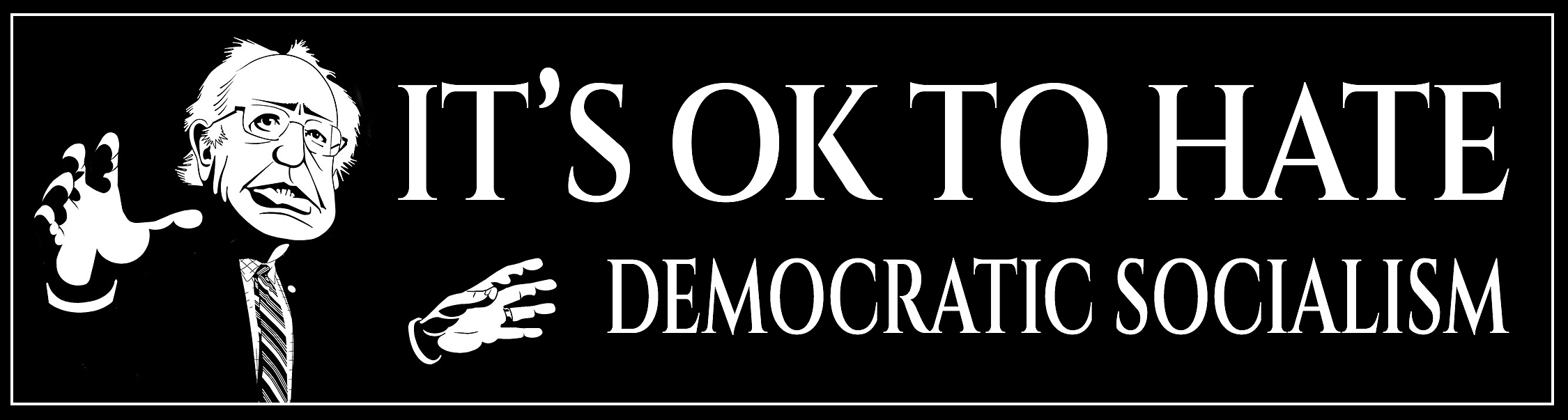








▶️ ◼️◼️◼️◼️◼️◼️◼️◼️◼️◼️ ✪✪✪ DONATE ✪✪✪ ◼️◼️◼️◼️◼️◼️◼️◼️◼️

▶️ DONATE VIA PAYPAL (DEBIT & CREDIT CARD)
ALL PayPal Transactions Are Encrypted For Card Holder Privacy & Security
▶️ DONATE VIA ZELLE (DIRECT BANK CASH TRANSFER)
ZELLE is the perfect online alternative to PayPal. It’s an incredibly simple, secure, easy, fast and FREE way to send or receive money to recipients directly from your online banking account without a middleman. Best of all, there are NO fees.
ZELLE is a service provided by your bank and is already built in to your online banking account. You only need to activate it first before using. If you’ve already activated ZELLE in your online bank or credit union account, you can donate to The New Americanist by using our ZELLE address:
vip@thenewamericanist.com
To activate your ZELLE, follow these easy instructions (a simple two minute process):

▶️ DONATE VIA SNAIL MAIL






▶️ RSBN LIVESTREAM LINK: State Visit National Archives Tour
⭐️ TokaiseBlessedPatriot
