Hi Folks…And Welcome Again To FLAT OUT!
A Musclecar From Buick? It’s …
The Buick Grand National 1982-1987

✪ The Buick Grand National was a performance-oriented car based upon the winning NASCAR Buick Regal race car. Buick hoped to capitalize on its success on the racetrack and revive the spirit of previous Buick performance cars like the 1960s Skylark Gran Sport.
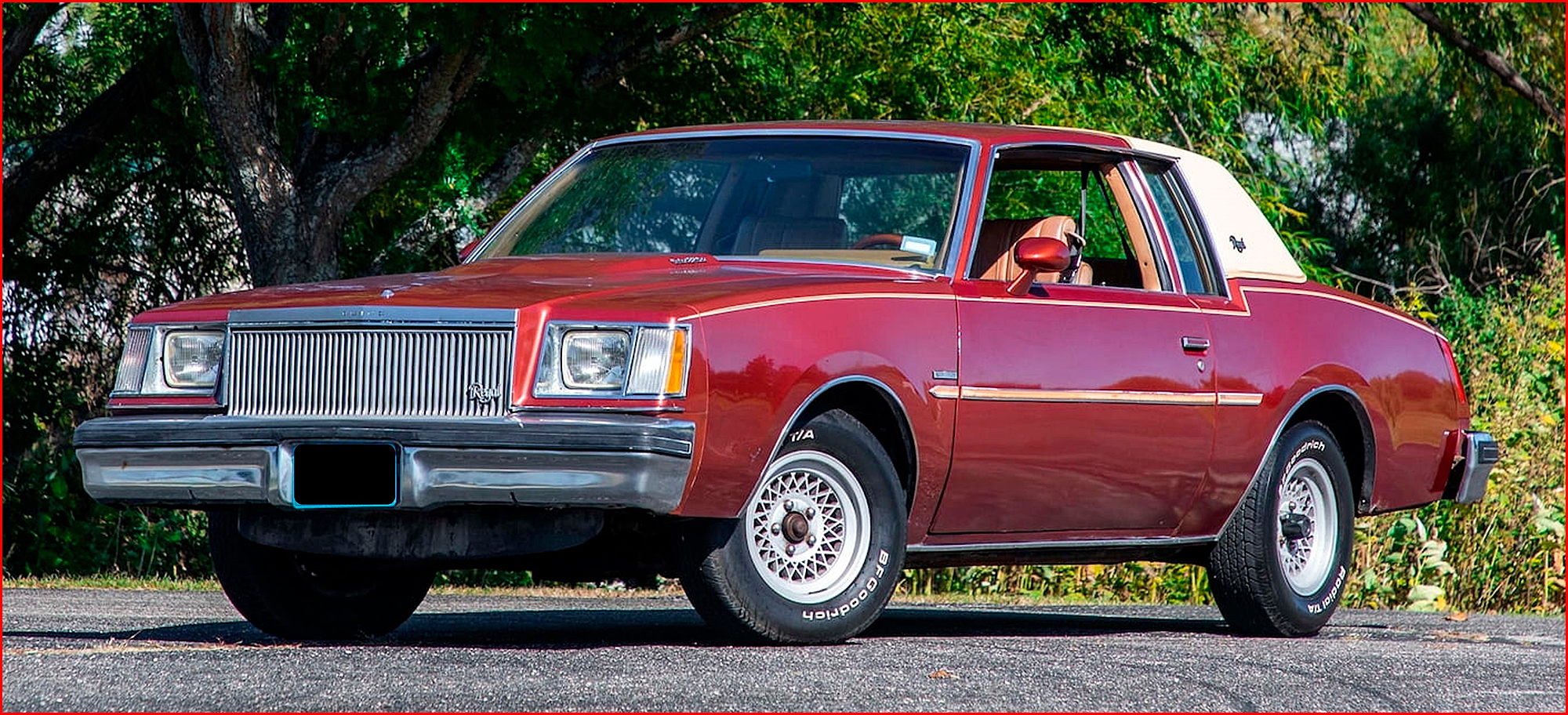
1978 Regal Sport Coupe
The predecessor to the Grand National, the Regal Sport Coupe, debuted in 1978 as the first turbocharged Regal. This made Buick, the old-time, old-line, old man’s car company the first American automaker to offer a turbocharged V6 engine. The Turbo versions were originally offered with either a two- or a four-barrel carburetor and 150 or 165 HP. The two-barrel option was removed for 1979 and the four-barrel’s output increased to 170 HP. Power remained unchanged until 1982 when it bumped to 175 HP and then 180 HP the following year, when the Sport Coupe was replaced by the Regal T-Type.
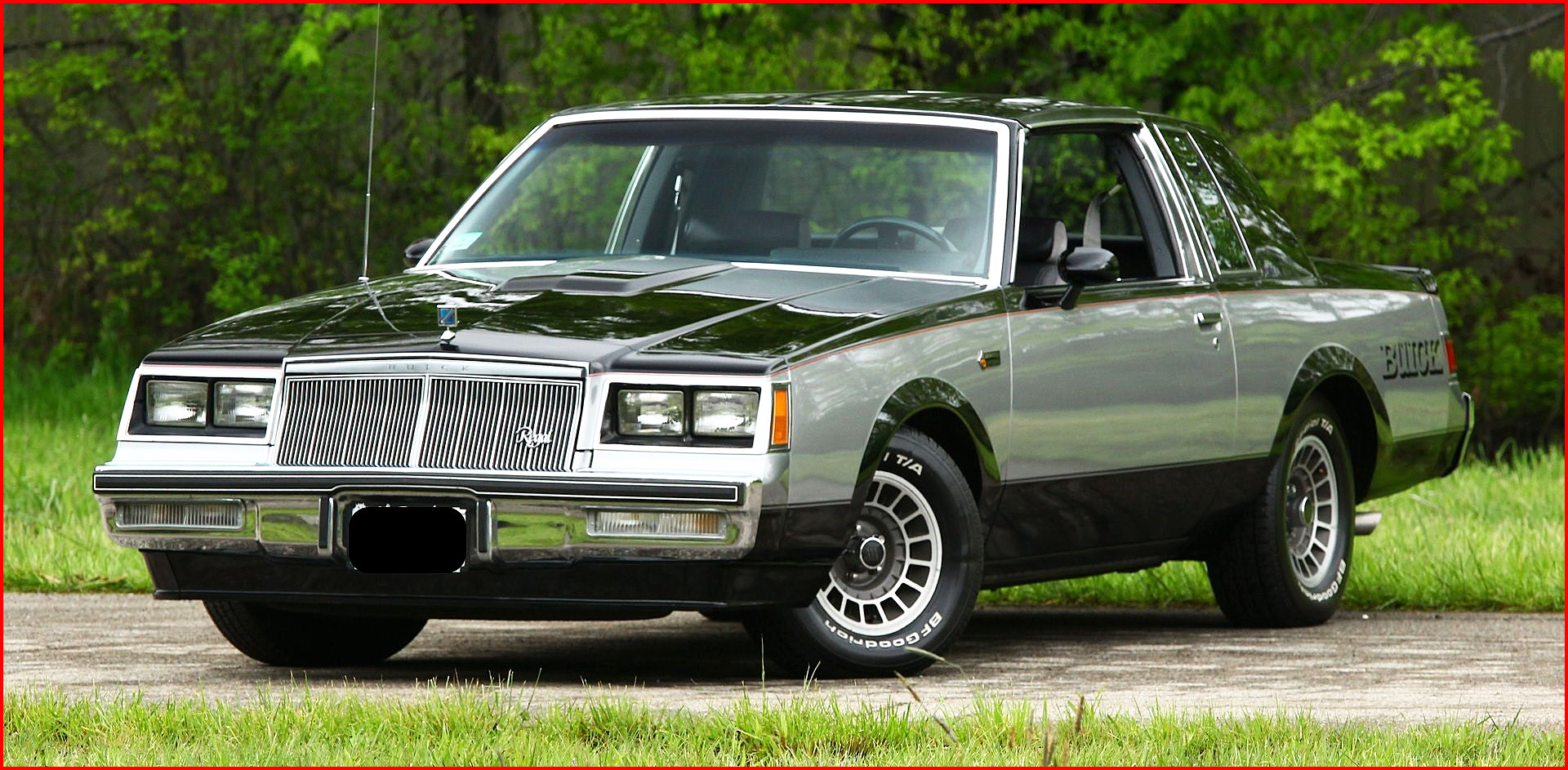
The Grand National debuted in February of 1982, named for the NASCAR Winston Cup Grand National Series (the “Grand National” term was part of the Cup series nomenclature until 1986). Darrell Waltrip had won back-to-back championships in 1981 and 1982, and Buick wanted to capitalize on that success, following the “What wins on Sunday, sells on Monday” axiom in the automotive world. Buick Division manager Lloyd Reuss also wanted to update the image of the brand from a maker of cushy “doctor’s cars” to something more useful and exciting to lure younger people into Buick showrooms, so out went the whitewall tires and wire wheel hubcaps and in went the turbo V6. The Grand National was to spearhead that update when it debuted at the 1982 Daytona 500. They also hoped to revive the performance image that they had in the 1960s with the Skylark Gran Sport. All started out as charcoal gray Regals that were shipped off to Cars and Concepts of Brighton, Michigan for finishing.
The original order was a run of 100 units, but Cars and Concepts retrofitted 215 Regals with the Grand National package, with light silver-gray firemist paint added to each side along with red pinstripes and billboard shadow lettering proclaiming “Buick.” Wheel opening moldings and rocker panel moldings were blacked out using black vinyl tape, and a front air dam and rear spoiler were installed. Special “Lear-Siegler” seats were installed in the interior, fully adjustable and covered with silver brandon cloth with black vinyl inserts with Buick‘s “6” emblem embroidered onto them. A yellow and orange “6” logo and the words “Grand National Buick Motor Division” were added to the dash in place of the clock.
A naturally aspirated 252 cubic inch (4.1 L) V6 engine with 125 HP and 205 ft. lb. of torque lived under the hood. Buick produced 215 1982 Grand Nationals, with 35 based on the Buick Regal Sport Coupe package with the turbocharged 3.8 L V6 engine producing 175 HP and 275 ft. lb. of torque. This was considered a “performance” engine in the era of strict emissions controls. The genesis of this turbocharged engine dates back to 1975 when Ken Baker, a young engineer in Buick‘s test lab, begged, borrowed and scrounged parts for a V6, installed a turbo, dyno-tested the engine, then put it into a scrap Skylark. The resulting car, according to its creators, was “a blast to drive.” Fast-forward seven years and Buick assistant chief engineer Don Runkle, who headed up the engine side of the project, had a simple message to his team: “We have to beat the Corvette.”
Buick produced no Grand Nationals in 1983, and the Sport Coupe was renamed the T-Type with a 180 HP and 280 ft. lb. of torque engine. A low-restriction dual exhaust and stainless steel headers instead of cast iron, a new Computer Command Control, electronic spark timing and a computerized EGR system gave the mill the extra HP The electronics for the EGR system and knock sensor gave better drivability, Hydro-Boost II brakes improved stopping power, and a 200-4R four-speed overdrive transmission replaced the earlier three-speed. New bucket seats and a sport steering wheel and quicker steering ratio were inside, and suspension was improved with a larger diameter anti-roll bar, altered spring rates, and re-valved shock absorbers.

The Grand National returned in 1984, sporting a new all black paint job that gave it a gloriously sinister look. The turbocharged 3.8 L V6 was now standard. Sequential fuel injection and a distributor-less computer-controlled ignition upped the HP to 200 and torque to 300 ft. lb. These numbers blew the Grand National past the Camaro and straight into Corvette territory. The new ‘84 ‘Vette may have had 5 more HP, but the mean-looking Buick had the ‘Vette‘s torque output by 10, setting up an arms race between Detroit and Bowling Green.
5,204 turbo Regals were produced that year, with 2,000 being Grand Nationals. Because this was the first year of production of the computer-controlled sequential fuel injection and distributor-less ignition, this is often considered the year and model that started the development of the legendary intercooled Grand Nationals. The performance of the Grand National package was well ahead of its time and the “little V6” easily kept up with the bigger V8s. Performance-wise, the Grand National clocked in at a 15.9 second 1⁄4 mile at a 10 PSI boost The same year Chevrolet Camaro V6 was listed at 17.0 and the Chevrolet Corvette at 15.2. They had almost achieved their objective. Not bad for a plucky little force-fed V6.

No changes were made to the Grand National in 1985, but in 1986 the Corvette got a 25 HP upgrade. Buick responded in force with a modified engine with Garrett air-air intercooling that cooled the air from the turbo to make more power, and a new two-piece aluminum intake manifold that increased airflow by 10 percent. This boosted the performance even further to 235 HP and 330 ft. lb. of torque. Now the Grand Nationals were edging into real performance territory, at least by mid-1980s standards. Car and Driver magazine’s April 1986 review began “Corvette, get outta town. Mustang, move over. Camaro, keep your back to the wall at all times. The biggest, baddest gun west of the Pecos is loose in the streets, and there’s gonna be some shootin’…”. They found that Buick had deliberately under-rated the engine to keep insurance rates lower for buyers, dyno testing the car revealed the engine actually produced 290 HP The magazine clocked the Grand National at 4.9 seconds 0-60, quicker than a Corvette, most US-market Ferraris including the flat-12 cylinder Testarossa, and even the Lamborghini Countach. Goal achieved! The quarter-mile was gobbled up in an equally impressive 13.9 seconds. 512 Grand Nationals and 2,384 T-Types were both produced that year, the first time that Grand National sales eclipsed regular turbo Regals.
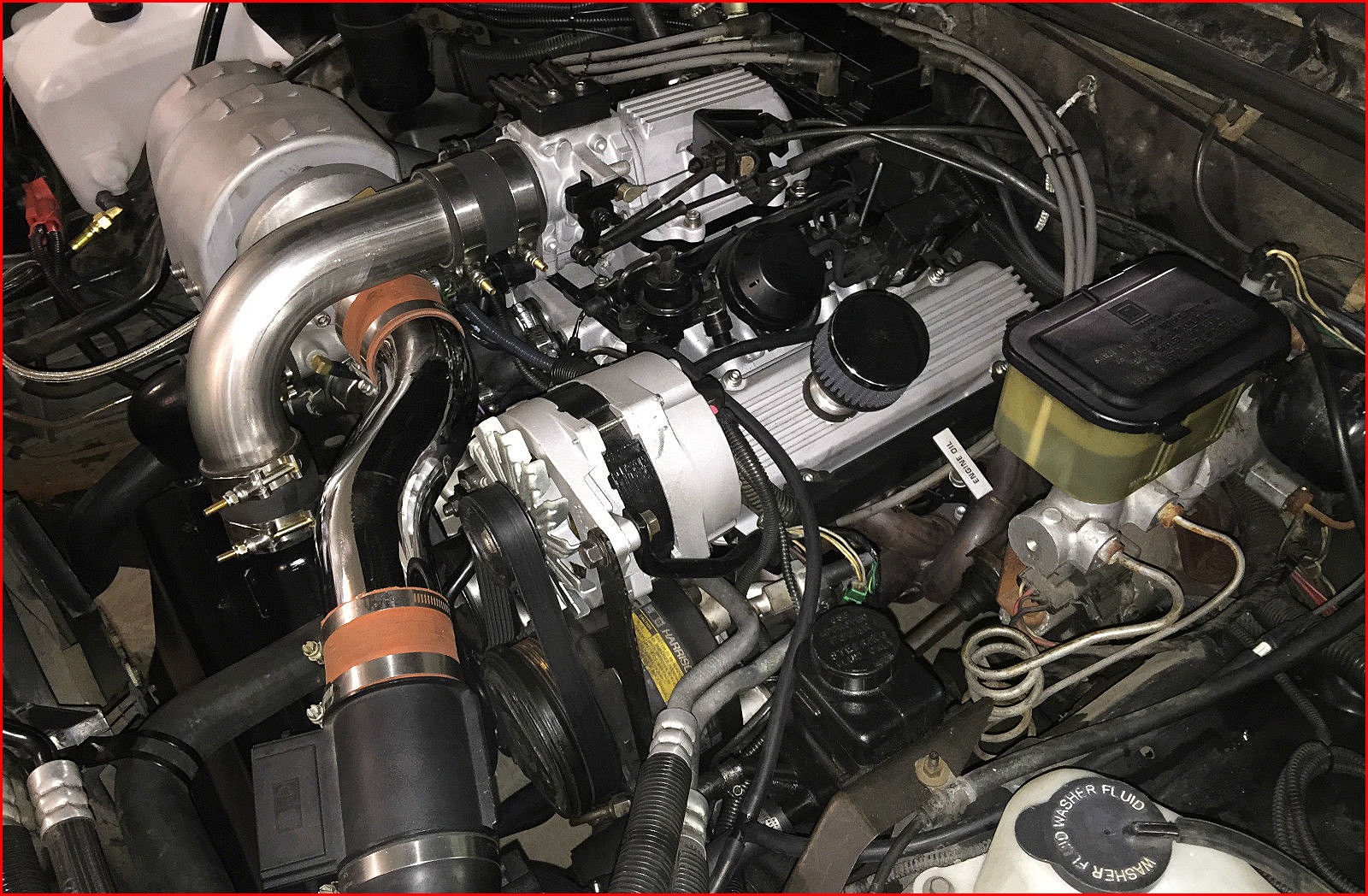
Engine output was up 10 HP for 1987 and torque up to 355 ft. lb. without any design revisions to the engine or systems. Buick dropped the T-Type package in 1987, tweaking the package and re-naming it “T Sport.” Turbo Regals reached peak popularity in 1987 with a total of 27,590 produced through December. Models produced between September and December of that year window were stickered as “1987½ cars.”
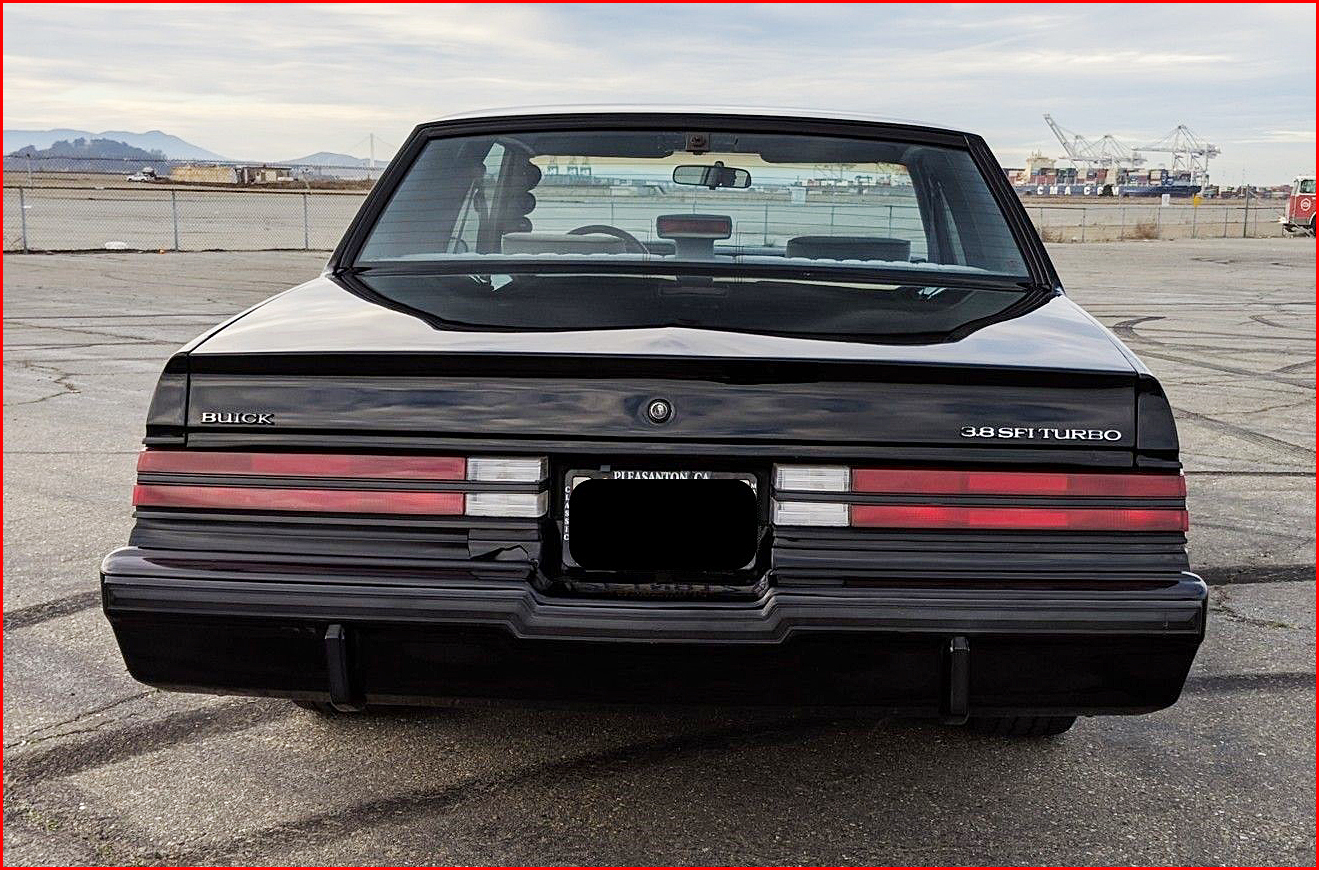
A lightweight WE4 option was offered in 1987 with an updated interior trim package, wheels, exterior badging. Aluminum bumper supports and aluminum rear drum brakes made the WE4 a lighter and faster car. There was a rear spoiler available, but only as a dealer-installed option. Only 1,547 WE4 optioned cars were produced. 1987 was also the only year that the LC2 turbo option was available on any Regal, making it possible to have a Limited with a vinyl landau roof and a power bulge turbo hood. With only 1,035 Turbo Regal Limiteds produced, they were one of the rarest models of turbo Regals produced, second only to the GNX. Limiteds were treated to a very luxurious interior with plush carpeting and optional bench pillow seats and a column shift. It was also possible to order the 1987 Regal T with the 5.0/307 V8 instead of the turbo 3.8/231 V6. 1987 would also be the end of the of the RWD midsize “G-Body” Regal, to be replaced by a front-wheel-drive GM10 platform, but GM had to extend the build of the Grand National to meet customer demand into December.
1987 Buick GNX
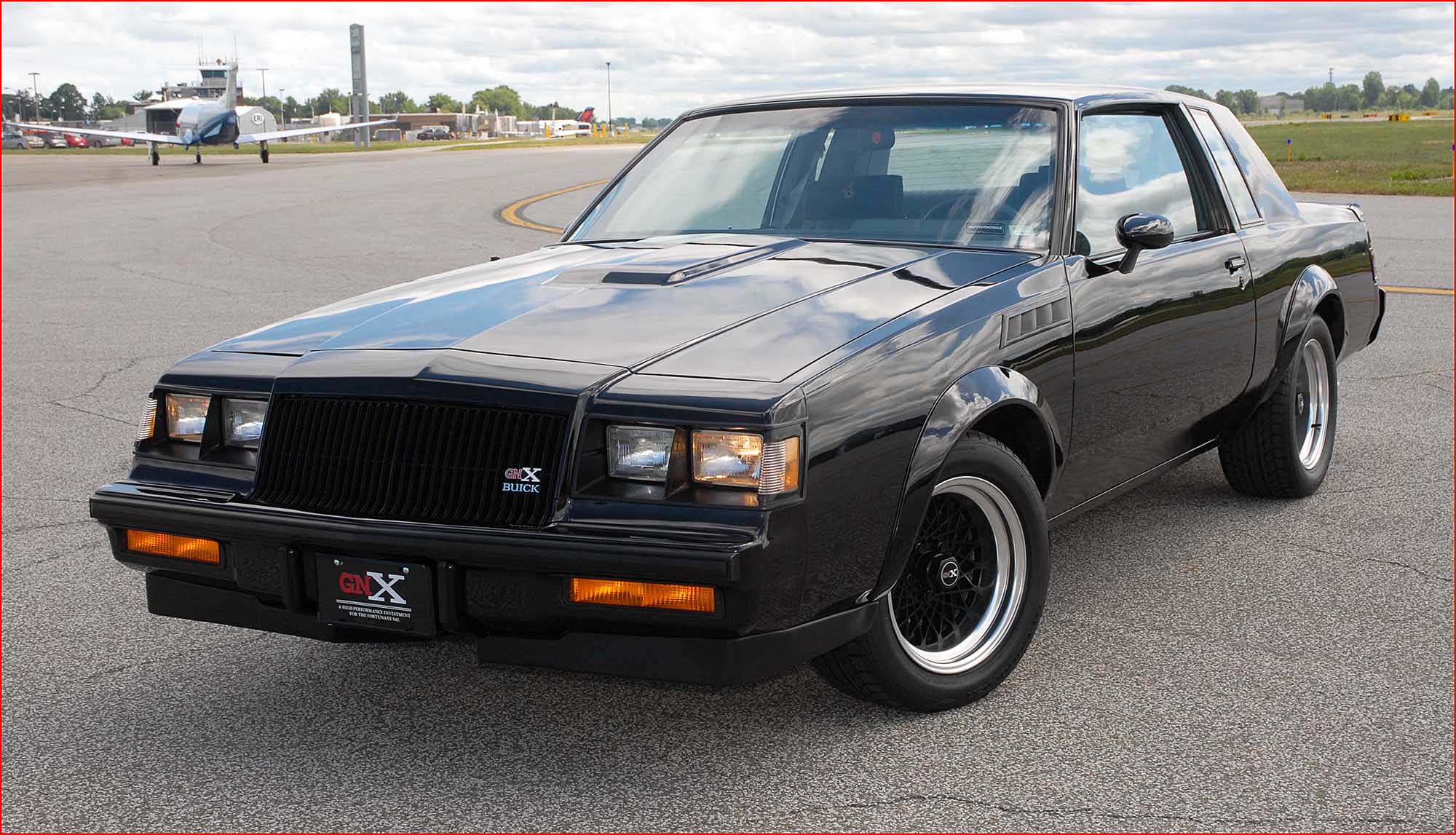
To meet that demand, and to make the Grand National go out with a bang and not a whimper, Buick introduced the limited production GNX, for “Grand National Experimental.” Then-Chief Engineer Dave Sharpe, advanced concepts manager Mike Doble and project engineer Chuck Jensen all badly wanted the GNX project to go forward, and partnered with McLaren Performance Technologies/ASC to get it done. This avoided disrupting the normal engineering and production, and they worked hard to make the GNX not only faster than any other Grand National, but also substantially better than the ’87 Grand National they were based on. They wanted to build the “Grand National” to end all “Grand Nationals” to celebrate the end of its run. In an internal Buick presentation, the objective was stated as “To create a limited-production Buick Grand National that achieves a memorable place in the history of high-performance automobiles, one that car collectors will want to own and that automotive writers will never forget.”
At $29,900 ($80,189 today) it was the most expensive Grand National model ever. Some dealers charged a $20,000 premium over the $29,290 sticker price of a GNX, which was already $10,995 over the list price of a fully optioned Grand National. One reportedly sold for $75,000. Buick was only going to produce 500 because of the Daytona 500 and Indy 500 and were to be allocated to Buick‘s 500 top-selling dealers, but because of special dealer incentives in their Select 60 program (for which only 47 dealers qualified) they produced 547 Grand Nationals with the interior trim package that were then sent off to McLaren and upgraded into the Buick GNX. Buick underrated the GNX at 276 HP and a monster (for the time) 360 ft. lb. torque. Actual output is thought to be in excess of 300 HP and 420 ft. lb. of torque.
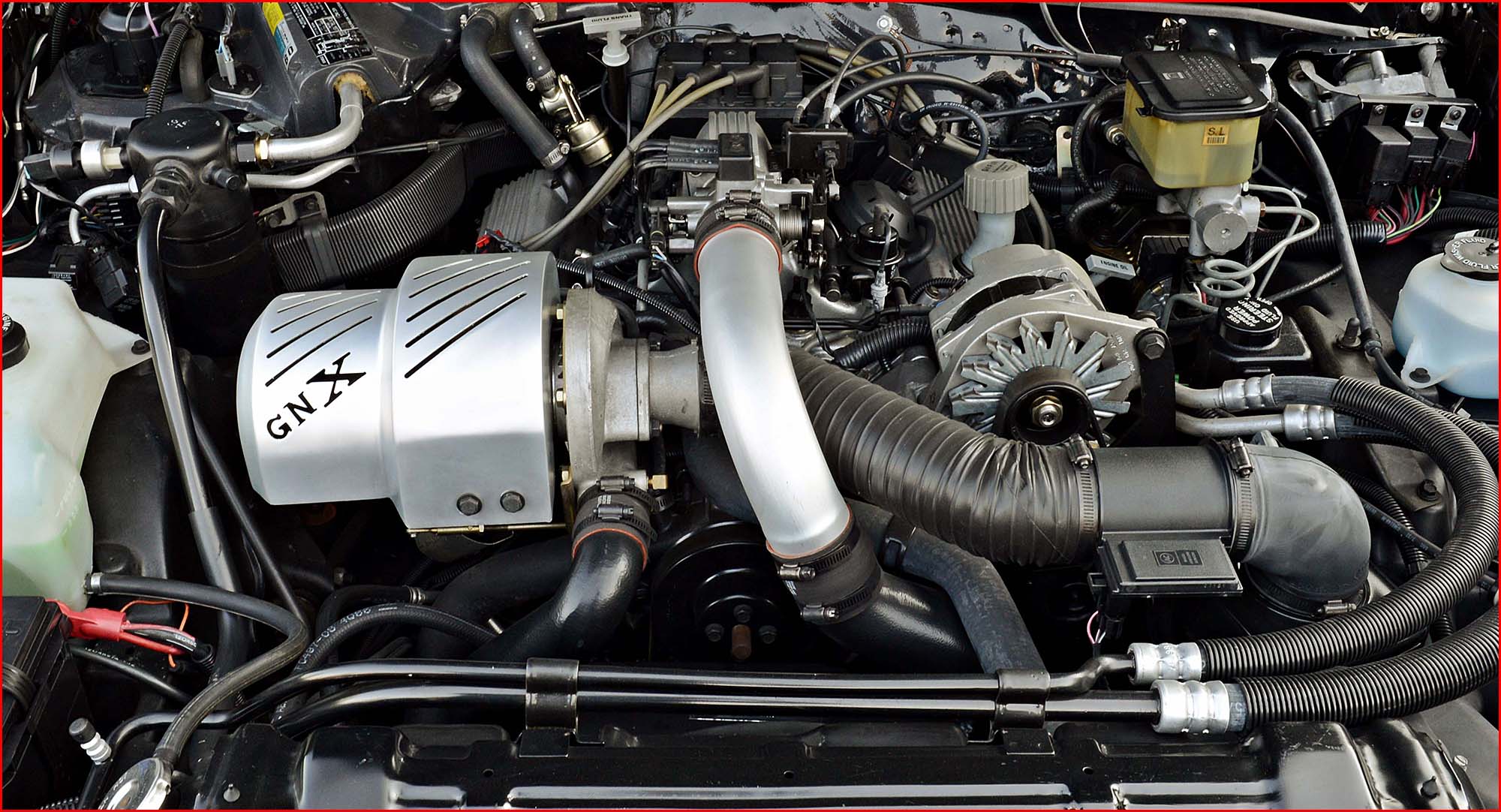
The GNX package included a special Garrett AiResearch T-3 turbocharger with a lightweight and faster-responding ceramic impeller blowing through a more efficient and significantly larger capacity intercooler with a “Cermatel (ceramic-aluminum) coated” pipe connecting the intercooler to the engine. It had its own GNX specific EPROM in the engine control computer, a low-restriction exhaust with dual mufflers, freer-flowing heads, reprogrammed Turbo Hydramatic 200-4R transmission with a custom torque converter and transmission oil cooler, and a unique differential cover/Panhard bar as part of the performance modifications. The GNX also used a unique torque arm that was mounted to a special, GNX only, rear differential cover for increased traction, which also had GNX badging. The torque arm rear suspension alters the suspension geometry, making the body lift while planting the rear tires down and resulting in increased traction. Vents located on each front fender, composite fender flares,16 inch black mesh style wheels with VR-speed rated tires (regular ’87 GNs had 15-inch wheels), and deletion of the hood and fender emblems completed the exterior look and informed onlookers that this was no ordinary Grand National. Each GNX included a serial number on the dash plaque and a revised instrument cluster with Stewart-Warner analog gauges, including a tachometer, oil pressure, coolant temperature and an analog turbo boost reading in a modified gauge cluster. GNX #001 is the 1986 prototype currently owned by Buick and sometimes makes appearances at car shows around the US.
Dragstrip performance was measured as faster than the Ferrari F40 and the Porsche 930 with a 1⁄4 mile time of 12.7 seconds at 113.1 mph, which was 0.3 seconds quicker than the Ferrari and 0.8 seconds quicker than the Porsche. The GNX also bested those two by 2.9 and 13.3 mph respectively, and accelerated to 60 mph in 4.6 seconds, 0.4 and 0.3 seconds quicker respectively than the prancing horse and the Stuttgart offering.
The stealthy appearance of the all-black 1987 GNX and Grand National (and the resemblance of its grill to his helmet’s mouthpiece), coupled with the fact that the Grand National was initially released during the popularity of Star Wars movies earned it the title “Darth Vader‘s Car.” Due to the turbocharged six-cylinder engine, the Buick make, and the black paint Grand Nationals were sometimes referred to as the “Dark Side.” The “Dark Side” contrasted with the more common V8 Mustangs and Camaros that were popular at the time.
With only 29,807 Grand Nationals and 547 GNX models produced, prices have risen substantially in recent years. Average value for a low-mileage GNX has now risen to over $168,000, and the very last Grand National ever produced recently sold at a Barrett-Jackson auction for $550,000. That’s more than a 1958 AC Ace, a 1953 Mercedes 300S roadster and a 1989 Lamborghini Countach. The baddest Grand National of them all, the Grand National to end all Grand Nationals, was not just a hoot to drive but also historically significant. As the last old-school American muscle car until the re-imagined retro-styled Ford Mustang, Dodge Charger & Challenger nearly two decades later, it was uniquely powered by a high-tech harbinger of the displacement-downsized, turbo-boosted, Federal-regulations-driven, high fuel economy future…at least for a while. When Buick transferred the Regal to GM‘s new front-wheel-drive W-body, no Grand National DNA went with it. The 2.8 liter V6 in the new Regal made the same paltry 125 HP that the 4.1 V6 did in 1982.
Buick, former producer of stodgy sedans and wagons aimed at old folks and suburbanites, now makers of stodgy SUVs and crossovers aimed at old folks and suburbanites, filed for trademarks on the names “Grand National” and “GNX” a dozen or so years ago. Whether or not this portends a return of these two legendary musclecars remains to be seen, but given that US automakers are building electric vehicles by government mandate that no one wants to buy, the future of these two storied nameplates as well as the gasoline-powered musclecar in general is in serious jeopardy. ✪
Got a Great Car Story? Share it! Reminisce About Your Other Favorite Cars, Too!
Seeyas Again Next Time On FLAT OUT!