

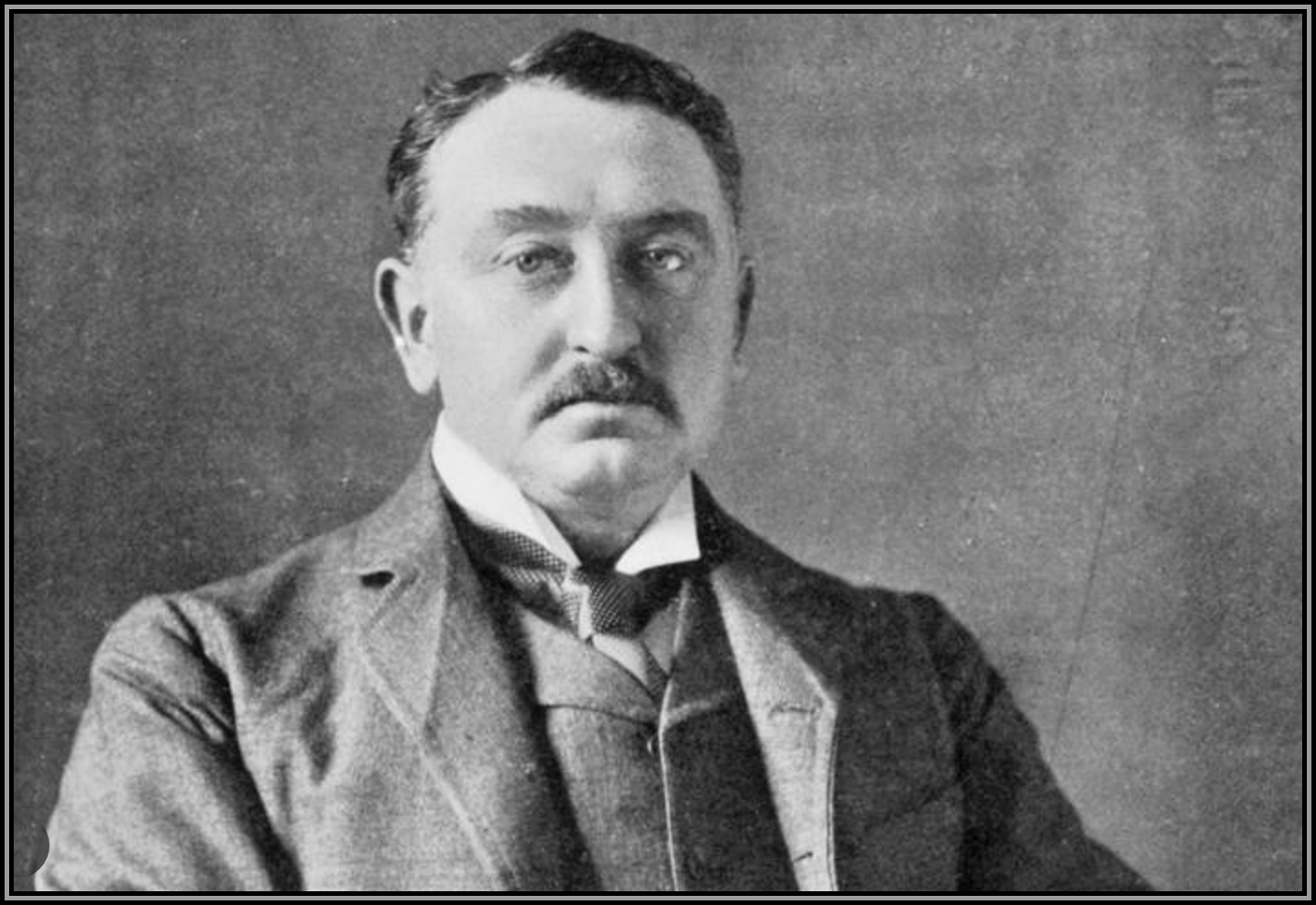

Cecil John Rhodes: July 5 1853 – March 26 1902
✪ Cecil John Rhodes was an English mining magnate and politician in southern Africa who served as Prime Minister of the Cape Colony from 1890 to 1896. He and his British South Africa Company founded the southern African territory of Rhodesia (now Zimbabwe and Zambia), which the company named after him in 1895. He also devoted much effort to realising his vision of a Cape to Cairo Railway through British territory. Rhodes also established the Rhodes Scholarship, which is funded by his estate.
Rhodes was born in 1853 in Bishop’s Stortford, Hertfordshire, England, the fifth son of the Reverend Francis William Rhodes (1807–1878) and his wife, Louisa Peacock. Francis was a Church of England clergyman. Francis was the eldest son of William Rhodes (1774–1855), a brick manufacturer from Hackney, Middlesex. The family owned significant estates in London’s Hackney and Dalston which Cecil would later come to inherit.
Rhodes attended the Bishop’s Stortford Grammar School from the age of nine, but, as a sickly, asthmatic adolescent, he was taken out of grammar school in 1869: and according to Basil Williams, continued his studies under his father’s eye …”
At age seven, Rhodes was recorded in the 1861 census as boarding with his aunt, Sophia Peacock, at a boarding house in Jersey, where the climate was perceived to provide a respite for those with conditions such as asthma. His health was weak and there were fears that he might be consumptive (tuberculosis), a disease of which several of the family showed symptoms. His father decided to send him abroad for what were believed the good effects of a sea voyage and a better climate in South Africa.
When he arrived in Africa, Rhodes lived on money lent by his aunt Sophia. After a brief stay with the Surveyor-General of Natal, P.C. Sutherland, in Pietermaritzburg, Rhodes took an interest in agriculture. He joined his brother Herbert on his cotton farm in the Umkomazi valley in Natal. However, the land was unsuitable for cotton, and the venture failed.
Rhodes entered the Cape Parliament at the age of 27 in 1881: and in 1890, he became prime minister.
In October 1871, 18-year-old Rhodes and his 26-year-old brother Herbert left the colony for the diamond fields of Kimberley in Northern Cape Province. Financed by N M Rothschild & Sons, Rhodes succeeded over the next 17 years in buying up all the smaller diamond mining operations in the Kimberley area.
In 1892, Rhodes financed The Pioneer Fruit Growing Company at Nooitgedacht, a venture created by Harry Pickstone, an Englishman who had experience with fruit-growing in California.
Rhodes began to pay more attention to export fruit farming and bought farms in Groot Drakenstein, Wellington and Stellenbosch. A year later, he bought Rhone and Boschendal and commissioned Sir Herbert Baker to build him a cottage there. The successful operation soon expanded into Rhodes Fruit Farms, and formed a cornerstone of the modern-day Cape fruit industry.
In 1873, Rhodes left his farm field in the care of his business partner, Rudd, and sailed for England to study at university. He was admitted to Oriel College, Oxford, but stayed for only one term in 1874. He returned to South Africa and did not return for his second term at Oxford until 1876.
While attending Oriel College, Rhodes became a Freemason in the Apollo University Lodge. Although initially he did not approve of the organization, he continued to be a South African Freemason until his death in 1902.
During his years at Oxford, Rhodes continued to prosper in Kimberley. Before his departure for Oxford, he and C.D. Rudd had moved from the Kimberley Mine to invest in the more costly claims of what was known as old De Beers (Vooruitzicht). It was named after Johannes Nicolaas de Beer and his brother, Diederik Arnoldus, who occupied the farm
On 13 March 1888, Rhodes and Rudd launched De Beers Consolidated Mines after the amalgamation of a number of individual claims. With £200,000 of capital, the company, of which Rhodes was secretary, owned the largest interest in the mine (£200,000 in 1880 = £22.5m in 2020 = $28.5m USD).nRhodes was named the first chairman of De Beers at the company’s founding in 1888.
In 1890, Rhodes became Prime Minister of the Cape Colony. He introduced various Acts of Parliament to make way for industrial development.
Rhodes used his wealth and that of his business partner Alfred Beit and other investors to pursue his dream of creating a British Empire in new territories to the north by obtaining mineral concessions from the most powerful indigenous chiefs. Rhodes’ competitive advantage over other mineral prospecting companies was his combination of wealth and astute political instincts, also called the “imperial factor,” as he often collaborated with the British Government.
The imperial factor was a double-edged sword: Rhodes did not want the bureaucrats of the Colonial Office in London to interfere in the Empire in Africa. He wanted British settlers and local politicians and governors to run it. This put him on a collision course with many in Britain, as well as with British missionaries, who favoured what they saw as the more ethical direct rule from London.
Rhodes wanted to expand the British Empire because he believed that the Anglo-Saxon race was destined to greatness. Rhodes bemoaned that there was little land left to conquer and said “to think of these stars that you see overhead at night, these vast worlds which we can never reach. I would annex the planets if I could; I often think of that. It makes me sad to see them so clear and yet so far”
Furthermore Rhodes saw imperialism as a way to alleviate domestic social problems.
Rhodes wanted to develop a Commonwealth in which all of the British-dominated countries in the empire would be represented in the British Parliament. Rhodes’s views on race have been debated; he supported the rights of indigenous Africans to vote, but critics have labelled him as an “architect of apartheid” and a “white supremacist,” particularly since 2015.
In the last years of his life, Rhodes was stalked by Polish princess Catherine Radziwiłł, who had married into the noble Polish family Radziwiłł. The princess falsely claimed that she was engaged to Rhodes, and that they were having an affair. She asked him to marry her, but Rhodes refused. In reaction, she accused him of loan fraud. He had to go to trial and testify against her accusation.Her accusations were eventually proven to be false.
Although Rhodes remained a leading figure in the politics of southern Africa, especially during the Second Boer War, he was dogged by ill health throughout his relatively short life.
He was sent to Natal aged 16 because it was believed the climate might help problems with his heart. On returning to England in 1872, his health again deteriorated with heart and lung problems, to the extent that his doctor, Sir Morell Mackenzie, believed he would survive only six months. He returned to Kimberley where his health improved. From age 40 his heart condition returned with increasing severity until his death from heart failure in 1902, aged 48, at his seaside cottage in Muizenberg.
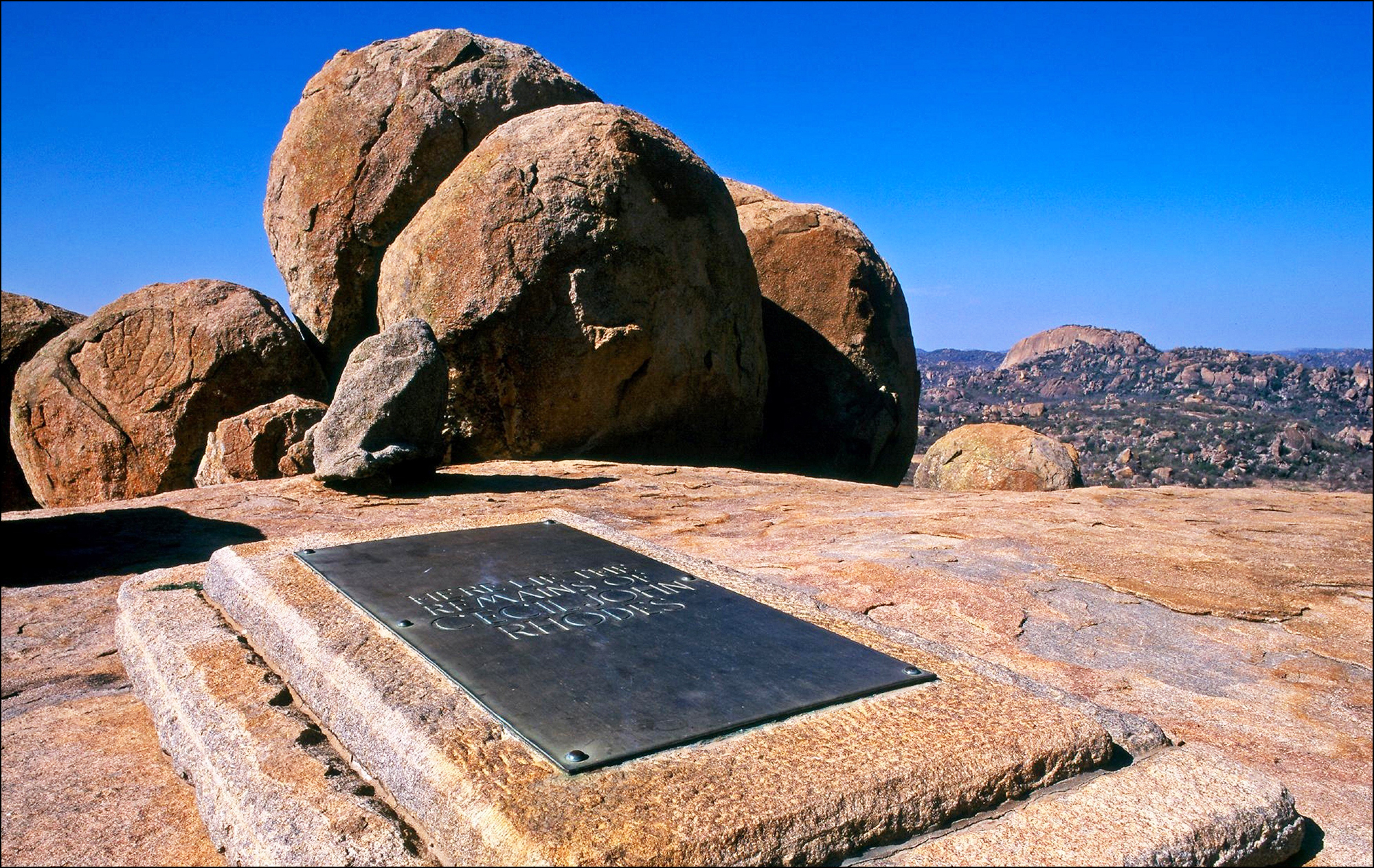
The government arranged an epic journey by train from the Cape to Rhodesia, with the funeral train stopping at every station to allow mourners to pay their respects. It was reported that at Kimberley, “practically the entire population marched in procession past the funeral car.” He was finally laid to rest at his request at Malindidzimu, a hilltop located approximately 22 miles south of Bulawayo, in what was then Rhodesia.The site was of supreme importance to Shona traditional religion as the shrine of Mwari, with this action interpreted as a gesture of colonial triumph and conquest over indigenous Africans. Today, his gravesite is part of Matobo National Park, Zimbabwe.
In his last will, Rhodes provided for the establishment of the Rhodes Scholarship. Over the course of the previous half-century, governments, universities and individuals in the settler colonies had been establishing traveling scholarships for this purpose. The Rhodes awards fit the established pattern. The scholarship enabled male students from territories under British rule or formerly under British rule and from Germany to study at Rhodes’s alma mater, the University of Oxford. Rhodes’ aims were to promote leadership marked by public spirit and good character, and to “render war impossible” by promoting friendship between the great powers. ✪



















▶️ JANUARY 2025 SUPPORT CHALLENGE

✪ ANNUAL TNA OPERATING EXPENSES
$1200 WordPress Hosting: 50GB package
$ 700 Comprehensive Site Security & Support
$ 400 Corporate License Annual Renewal
$ 150 Annual Disqus Licensing
$ 50 Name & URL Registration Annual Renewal
$2500 TOTAL FOR 2025
✪ NEW TNA ANNUAL PATRON STATUS
If you’d like to help support the site by making a donation of $500 or more during the month of January, we’ll honor you as a TNA Annual Patron with your own personal listing appearing in the bottom page footer every day for the rest of 2025.

As an Annual Patron you can list either your real life or online username, business name including web address (sorry no phone numbers) or a tribute to a living or deceased love one. If you have questions, please contact me via email.
✪ NEW MONTHLY CHALLENGE AMOUNT FOR FEB – DEC 2025
I am requesting a new monthly challenge goal amount in 2025 of $2500 beginning in February. Creating and maintaining TNA each day is a full time job position which requires between 60-80 hours per week researching, rewriting, editing, graphics, formatting and publishing. Final challenge totals for 2024 consistently averaged between $2100-2300 each month. This new monthly amount will allow me to continue to make quality the top priority.
✪ NEW NON PAYPAL DONATION OPTION
If you don’t care for PayPal’s woke business culture & attitude; or their fees, you can now use ZELLE to easily make online purchases or donations. ZELLE is already installed inside your online banking. There’s no need to register, create an account or enter any debit or credit card information. ZELLE provides safe, secure and immediate electronic transfers directly between your bank and your recipients. It’s also completely FREE and already built into your bank or credit union’s online banking account page. If you haven’t used ZELLE before, you only need to activate it. A simple, two minute process which can be found at this link:

THANK YOU FOR YOUR CONTINUING SUPPORT
YOUR DONATIONS KEEP US GOING STRONG!
▶️ DONATE VIA PAYPAL (DEBIT OR CREDIT CARD)
ALL PayPal Transactions Are Encrypted For Card Holder Privacy & Security
▶️ DONATE VIA ZELLE (DIRECT DIGITAL CASH TRANSFER)
ZELLE is a simple, secure, easy, fast and FREE way to send money directly to recipients directly from your online banking page or app without a middleman.
If you’ve already activated ZELLE in your bank or credit union account, you may make a donation by using The New Americanist ZELLE Address:
vip@thenewamericanist.com
If you haven’t yet activated ZELLE in your bank or credit union account, easy to follow instructions (a simple two minute process) may be found here:
▶️ DONATE VIA SNAIL MAIL


COUNTDOWN TO INAUGURATION DAY 2025






▶️ CLICK HERE TO VIEW
▶️ 2 Hours 9 Minute 8 Seconds
▶️ 17 Minutes 36 Seconds
▶️ 18 Minutes
▶️ 14 Minutes 53 Seconds
▶️ 12 Minutes 31 Seconds
