Hi Folks…And Welcome To
The 60th Edition Of FLAT OUT!
GM Builds A Mustang Fighter! It’s …
The Chevrolet Camaro (Part 1) 1967-1981
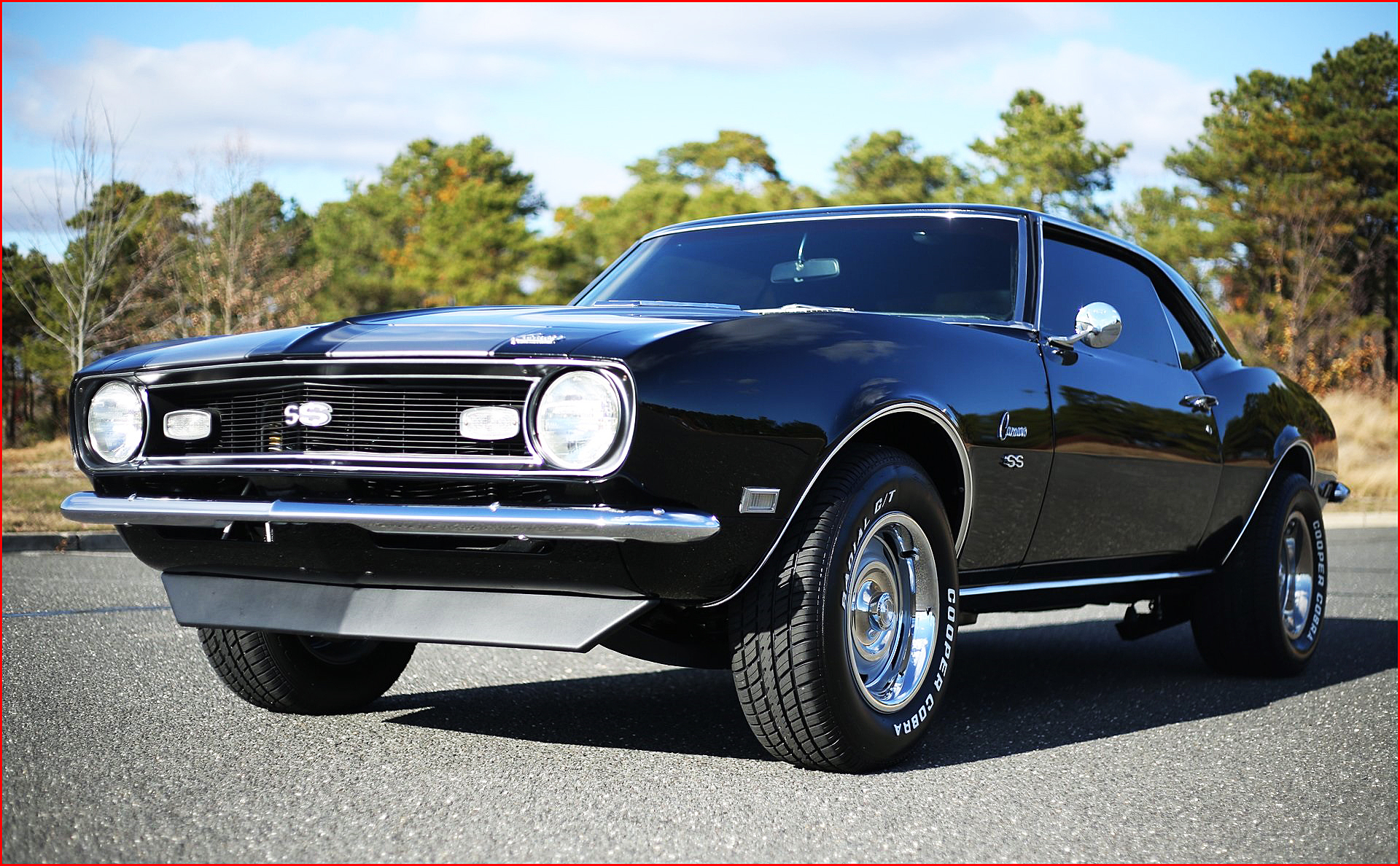
The Chevrolet Camaro was a mid-sized car, classified as a “pony car,” to compete with the original “pony car,” the Ford Mustang. GM saw the phenomenal success of the Mustang and scrambled to bring a car to market to compete in that space.
First Generation 1967-1969
Chevrolet executives knew that the sporty version of the Corvair, the Monza, would not be able to generate the sales volume of the Mustang due to limitations with the rear-engine layout and the bad press generated by Ralph Nader’s book Unsafe At Any Speed, which savaged the car as inherently unsafe. They also knew that the boxy Chevy II Nova, itself created as a belated response to Ford‘s compact Falcon, lacked the sex appeal of the new Mustang that young buyers obviously craved. They had to come up with a car that matched the same formula: sexy, rear-wheel-drive, long hood and short rear deck…but in a conventional front-engine configuration.
Before any official announcement, reports of a GM Mustang competitor began to surface in early 1965, code-named Panther. On June 28 1966, GM held a live press conference in Detroit’s Statler-Hilton Hotel, with 14 cities being connected in real-time via phone lines, a world first. They announced a new car line with a designation of XP-836, or Camaro, in keeping with other Chevrolet cars with C names (Corvair, Chevelle Chevy II and Corvette). GM VP Ed Rollet and Chevrolet merchandise manager Bob Lund chose the name after seeing it in a French-English dictionary, meaning comrade, friend or pal. When the automotive press asked “What is a Camaro?” However, they got this response; “A small, vicious animal that eats Mustangs.” Less than three months later the car was shown at a press preview in Detroit, 17 days before the car officially went on sale.
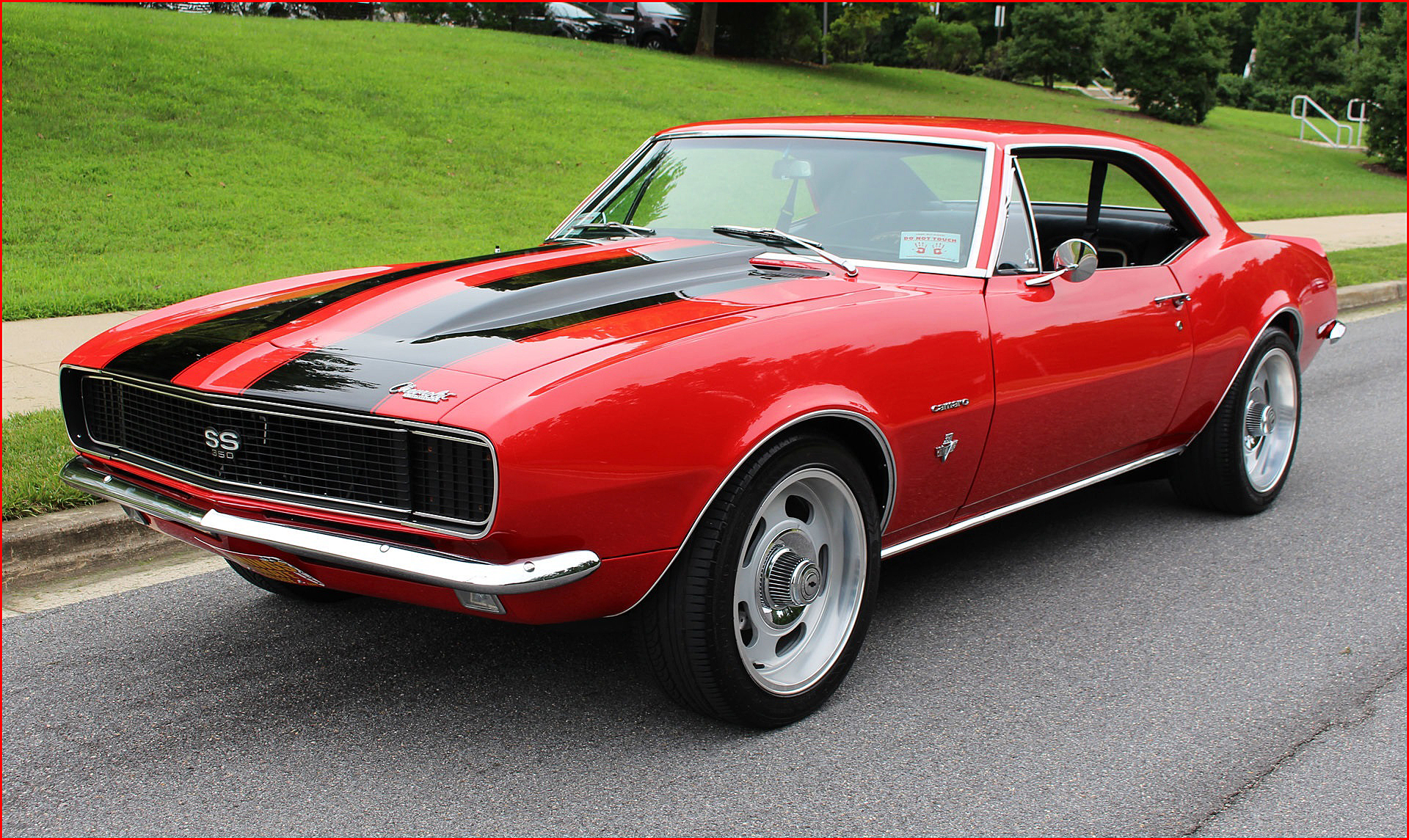
The Camaro sat on an all-new rear-wheel-drive F-Body platform, shared with the nearly identical Pontiac Firebird, as opposed to the Falcon underpinnings of the Mustang, but was designed in such a way as to able to borrow parts from the Chevy II Nova in the same way that Mustang borrowed Falcon parts. It also shared the Nova‘s subframe/semi-unibody design. It was a 2+2 configuration available in hardtop coupe and convertible form, in four different trim levels; base, the Super Sport performance package, the Rally Sport appearance package and the high-performance Z/28 package equipped with a special Chevrolet 302 cu. in. V8 engine that had been developed for Trans Am racing. A character line running from the front fender to the rear of the car, widened, rounded rear fenders with simulated air intakes and a cowl induction power hood on the Z/28 option all screamed “sexy” and “high performance” in the late 1960s.
Like the Mustang, the base engine was an inline-six; Chevrolet‘s Turbo-Thrift 230 cubic in. (3.8 liter) model rated at 140 HP. Options included a larger 155 HP 250 cu. in. (4.1 liter) inline-six, a 195 HP 283 V8, the 302 V8 (in the Z/28), Chevrolet‘s 210 HP or 275 HP 327 V8, a 295 HP 350 small-block V8s or the 325 HP (or 375 HP) big-block 396, so one could order high-HP options right from Day One. The standard transmission was a three-speed manual, but options included a four-speed manual, a semi-automatic two-speed Torque-Drive (for the six-cylinders starting in 1969), or a three-speed Turbo-Hydromatic 350 automatic, starting in 1969. A three-speed Turbo-Hydromatic 400 automatic was optional on the SS 396 model.
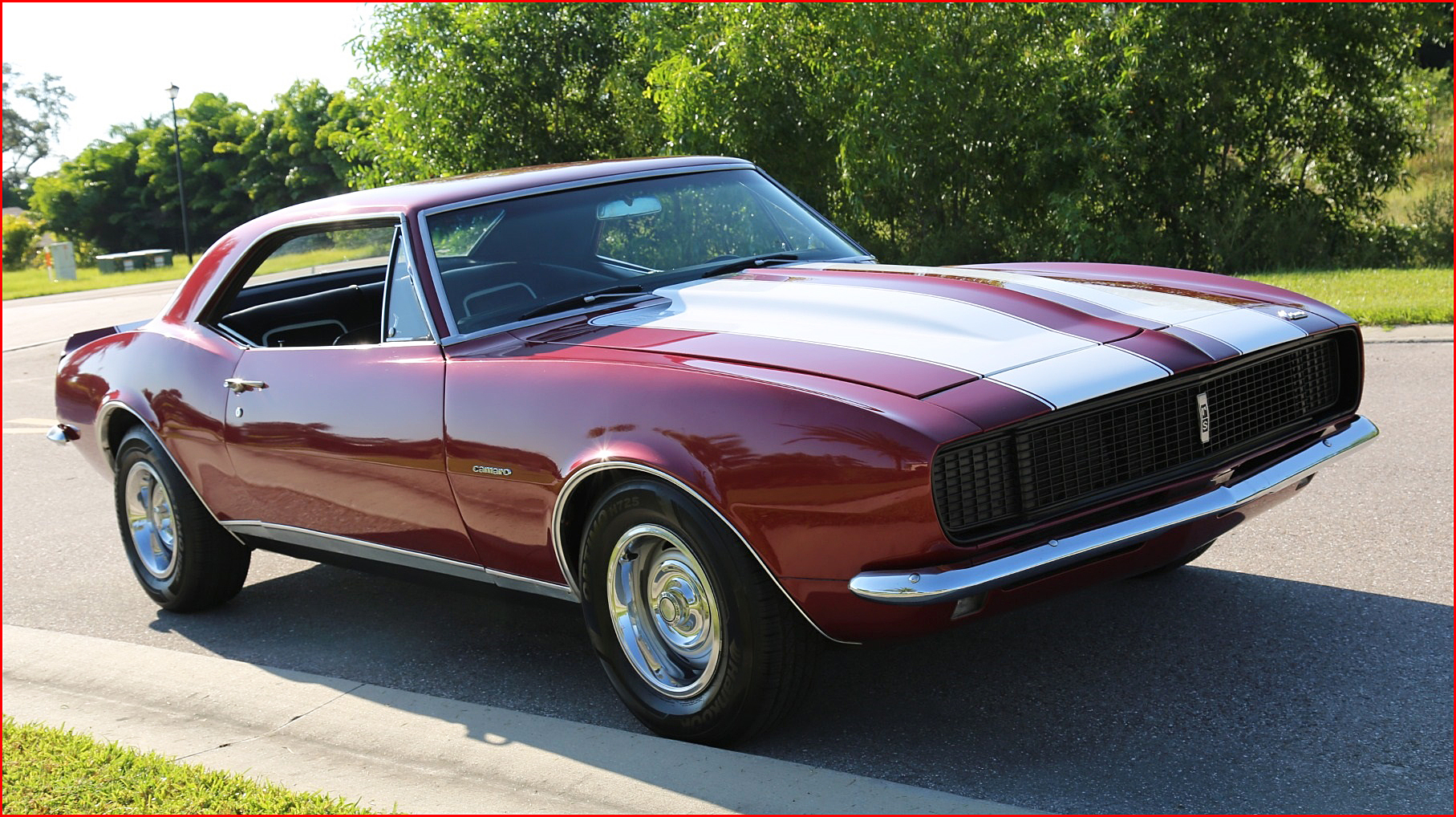
The Rally Sport appearance package was available on any model, and included hidden headlights with horizontally retractable doors, revised taillights with back-up lights under the rear bumper, bright exterior trim and RS badging.The SS performance package gave buyers either the 295 HP 350 or 396 cu. in. V8 in L35 form with 325 HP or L78 form with 375 HP. The package also gave chassis upgrades to better handle the increased power and torque as well as deliver better handling. Non-functional air inlets on the hood, special striping and SS badging on the grill, front fenders, gas cap and horn button rounded out the package.
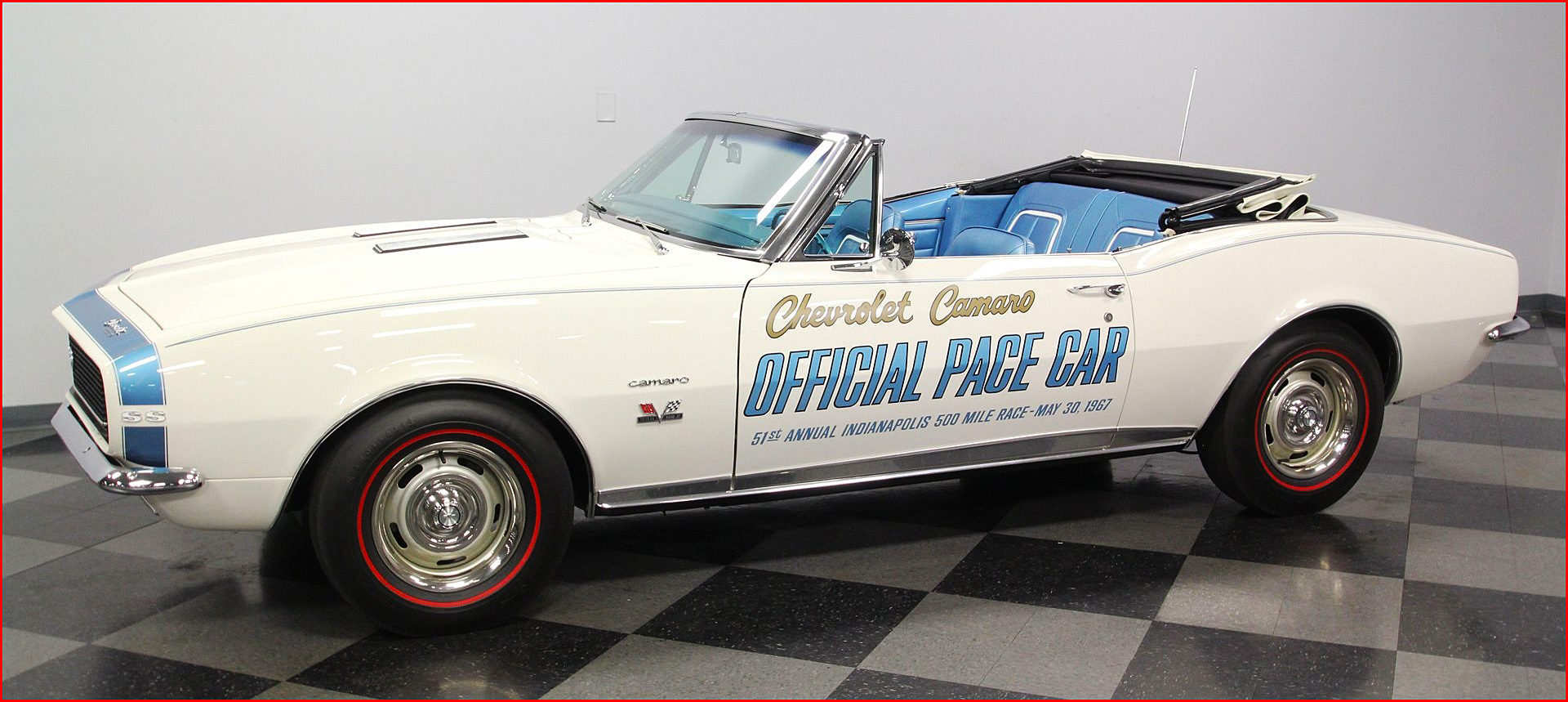
An RS/SS Camaro convertible with a 325 HP 396 was the 1967 Indianapolis 500 Pace Car, and 100 replicas in Ermine White were sold to the public.
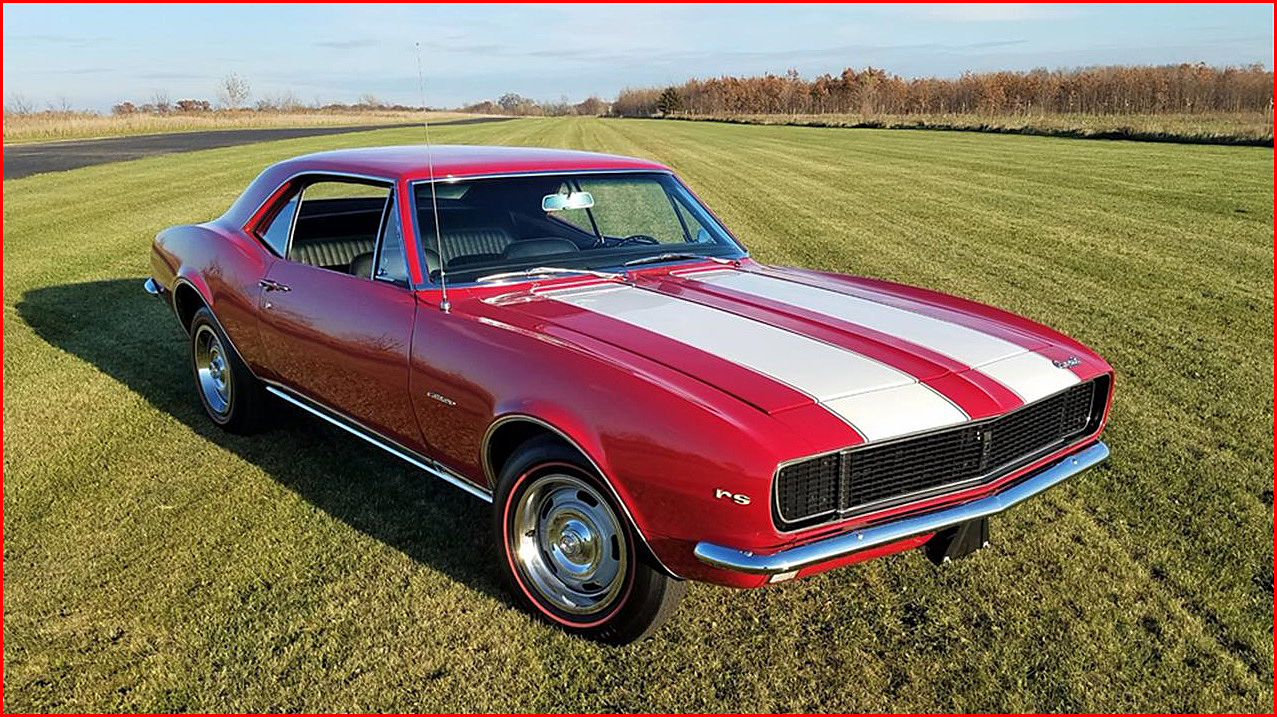
The Z/28 was named for the RPO option code for its Special Performance Package and designed to let Camaro compete in SCCA Trans-Am racing in the 5-liter class. It would take two years for Ford to come up with a head-to-head competitor, the Boss 302 Mustang.
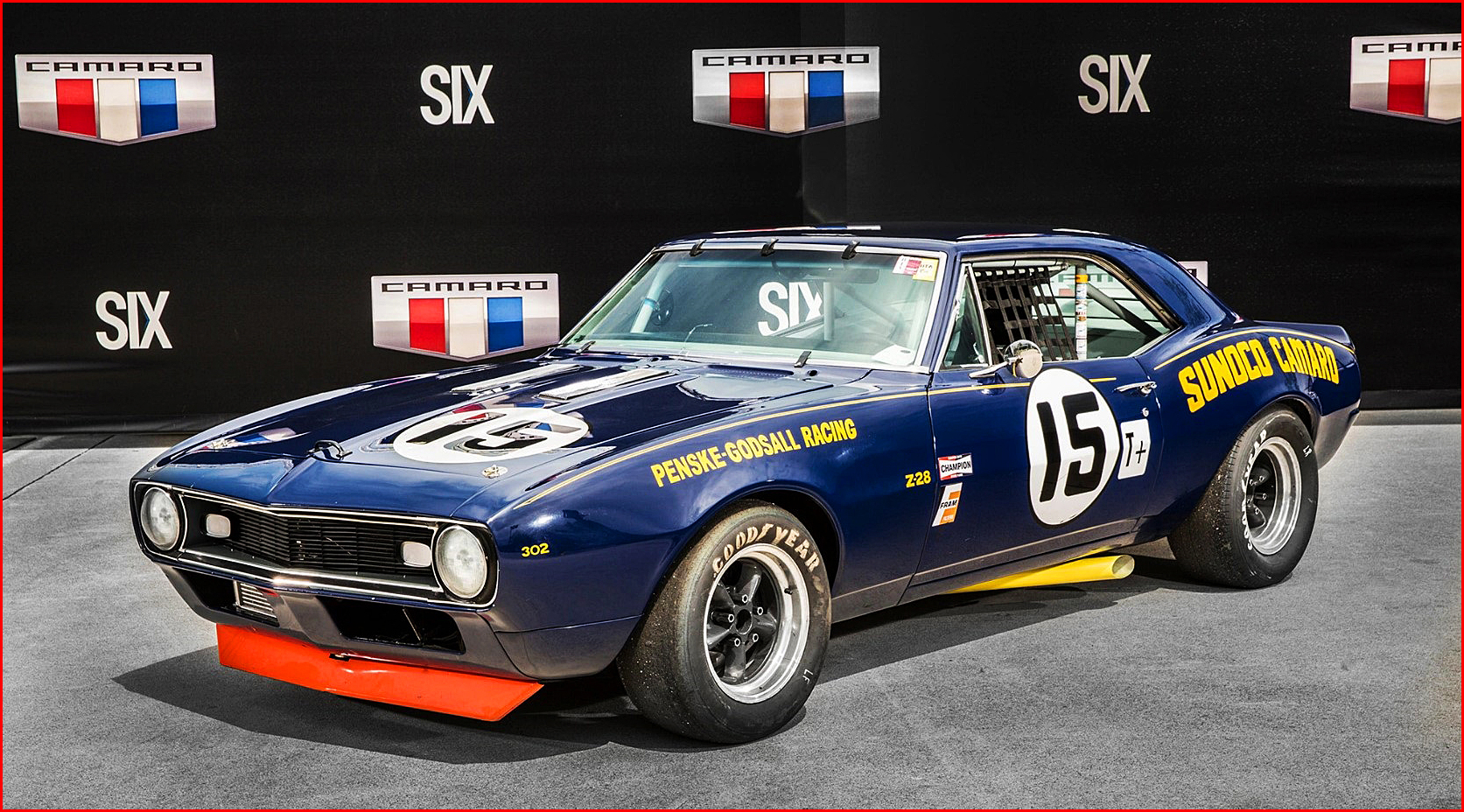
In the hands of driver Mark Donahue, the blue Sunoco Camaro Z/28 won three times in 1967 and the same car won a whopping 10 out of 13 races in 1968. Z/28 gave buyers a high-revving, solid-lifter 302 with a 4 inch bore and a 3 inch stroke and a 4-barrel 780 cfm Holley carb. The engine was under-rated by Chevrolet to 290 HP so that the output was under 1 HP per cubic inch for insurance purposes. The actual output of the 302 was upwards of 360 HP. The carb had an open-element air cleaner or an optional cowl plenum duct attached to the side that drew air from the cowl vents. The package also featured a four-speed close-ratio Muncie transmission, power front disc brakes, a 12-bolt rear axle with optional Posi-Traction, 15-inch wheels as opposed to the 14-inchers on base, RS and SS, a heavy-duty suspension and a pair of wide “skunk stripes” down the hood and trunk lid and a “302” badge on the fenders. This was envisioned as a “virtually race-ready” Camaro that could be for sale at any Chevrolet dealer, even though numerous modifications were needed to turn it into a track-ready racer. The option package was also missing from any sales literature, you had to ask for it and was thus unknown to most buyers; only 602 1967 Z/28s were sold. Although successful, the 1967 Camaro still lagged behind Mustang by over 2:1 in sales.
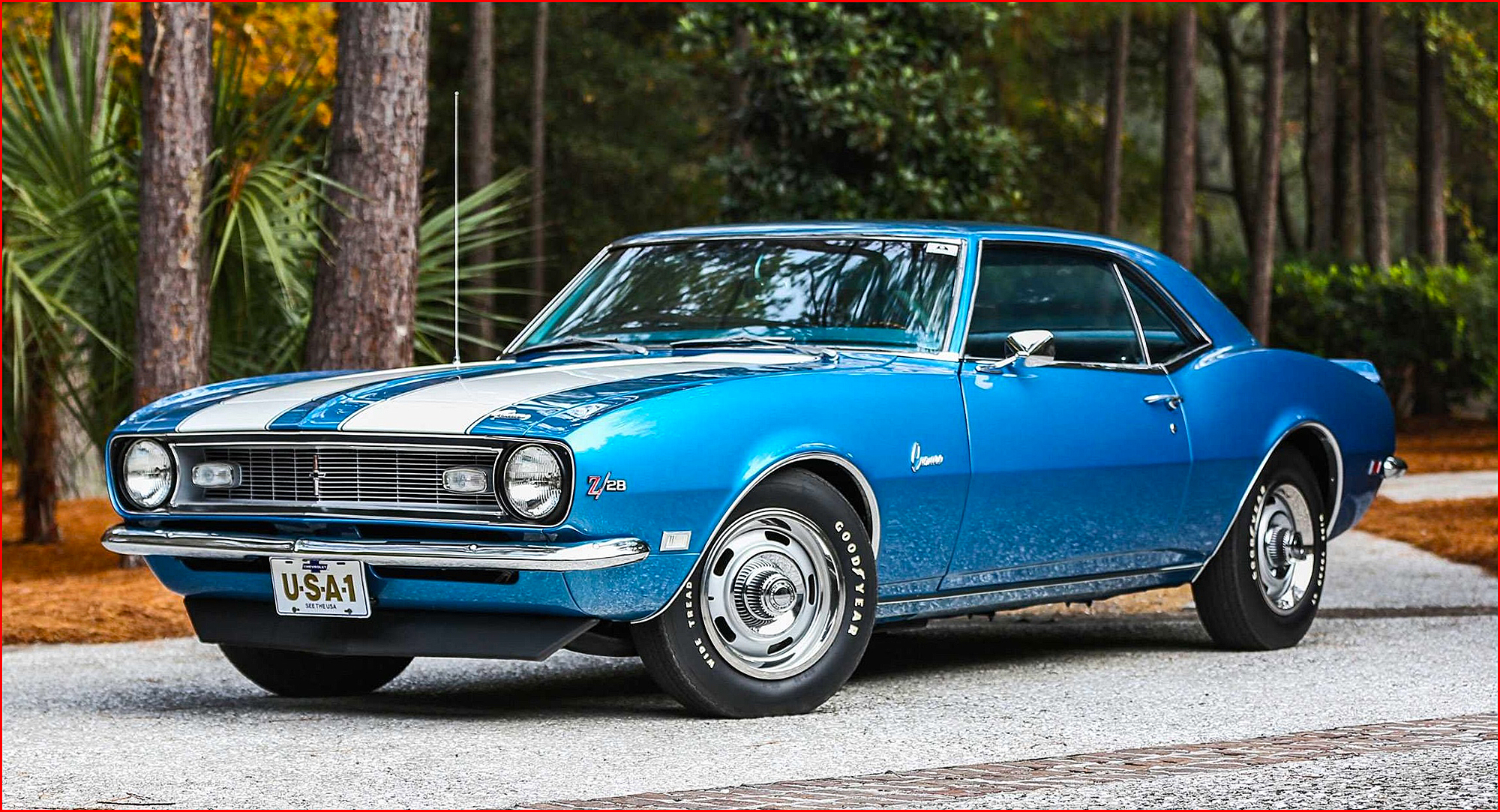
The styling of the 1968 Camaro was very similar to 1967, although the introduction of Chevrolet‘s Astro Ventilation system eliminated the need for front vent windows and they were deleted. New safety regulations required side marker lights on all cars, and these were added on the front fenders behind the bumper. The grill was more pointed than on the ’67, the front running lights on non-RS models were changed from round to oval and the rear included divided taillights. Underneath, the rear shock absorber mounting was staggered to resolve wheel-hop issues with the ’67, and its single-leaf spring was replaced with a multi-leaf unit on higher-performance models. In the engine bay, buyers now had an additional choice of a 350 HP 396 big-block.
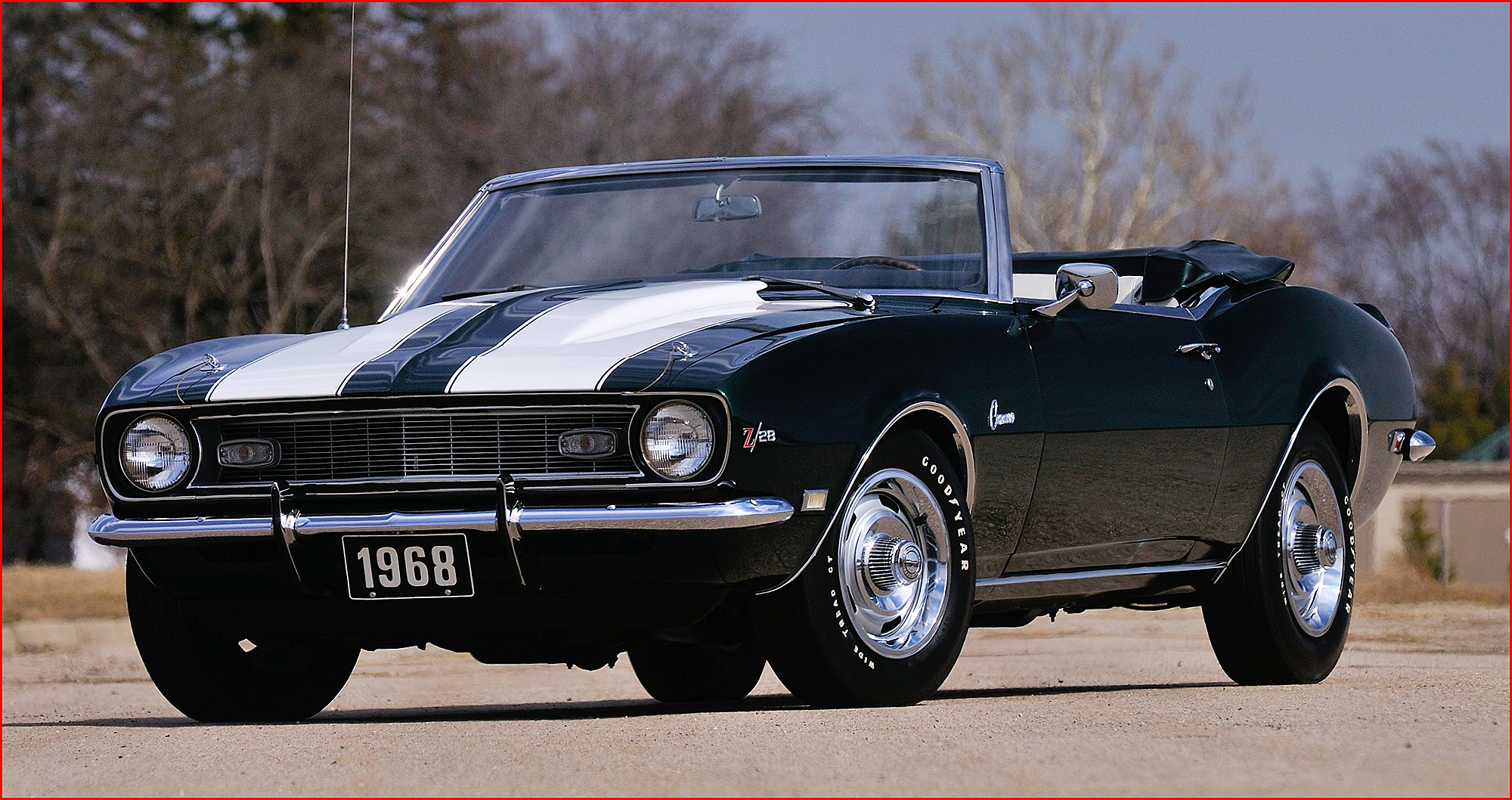
The Z/28 option finally appeared in Camaro sales literature this year. This came about after Chevrolet General Manager Pete Estes, who only drove convertibles, was given access to the one and only 1967 Z/28 convertible, built especially for the Executive Garage that he had access to by a special Central Office Production Order (COPO). After driving the car, he approved promotion of the Z/28 package.
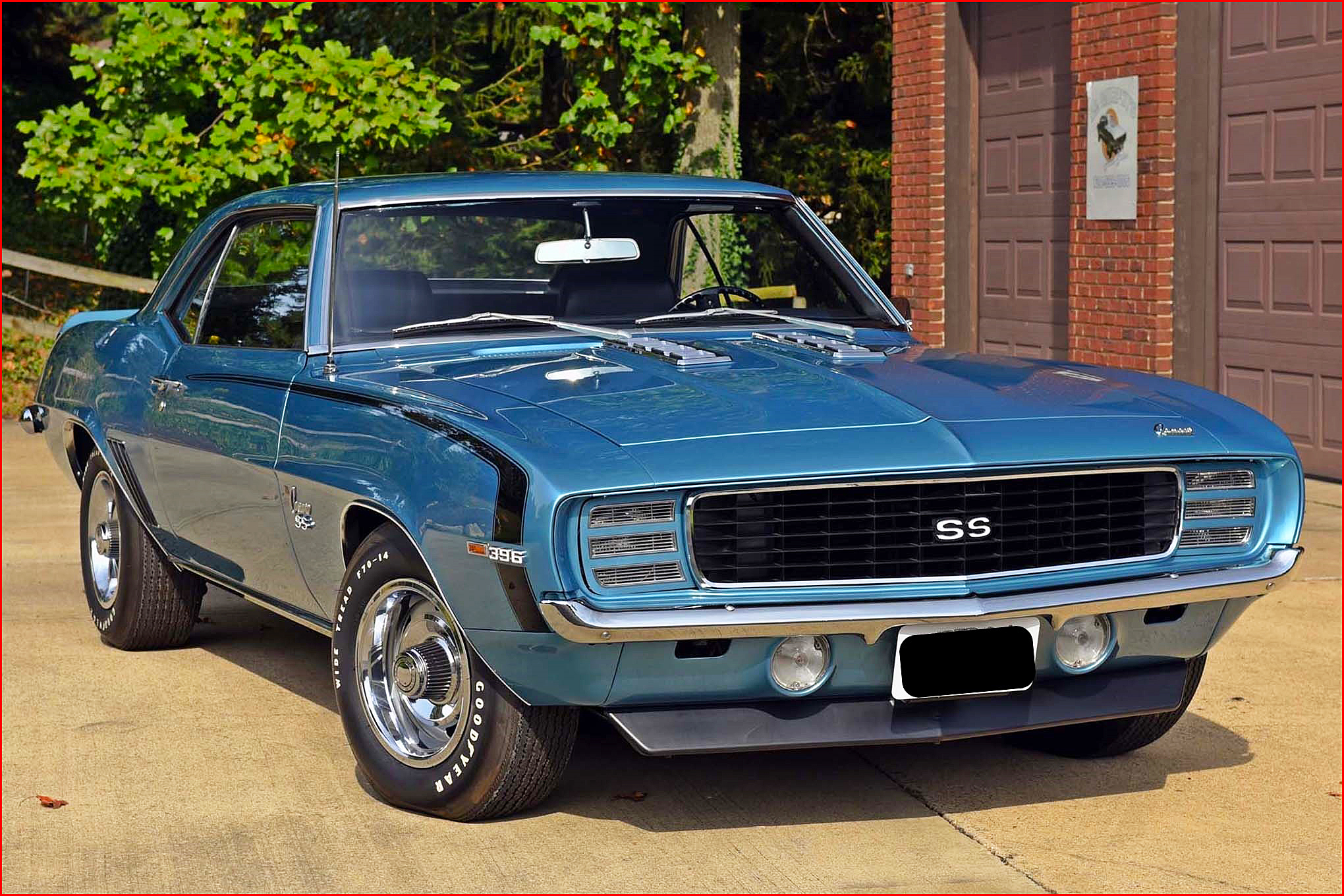
Major mechanical components and drivetrain remained the same, but all-new sheetmetal, save for the hood, trunk and roof, gave the ’69 Camaro a distinct look from its predecessors. The grill was re-designed with a sharper “V” shape and headlights that were further inset. New door skins, rear quarter panels and read valance panels gave the car a lower and wider look.
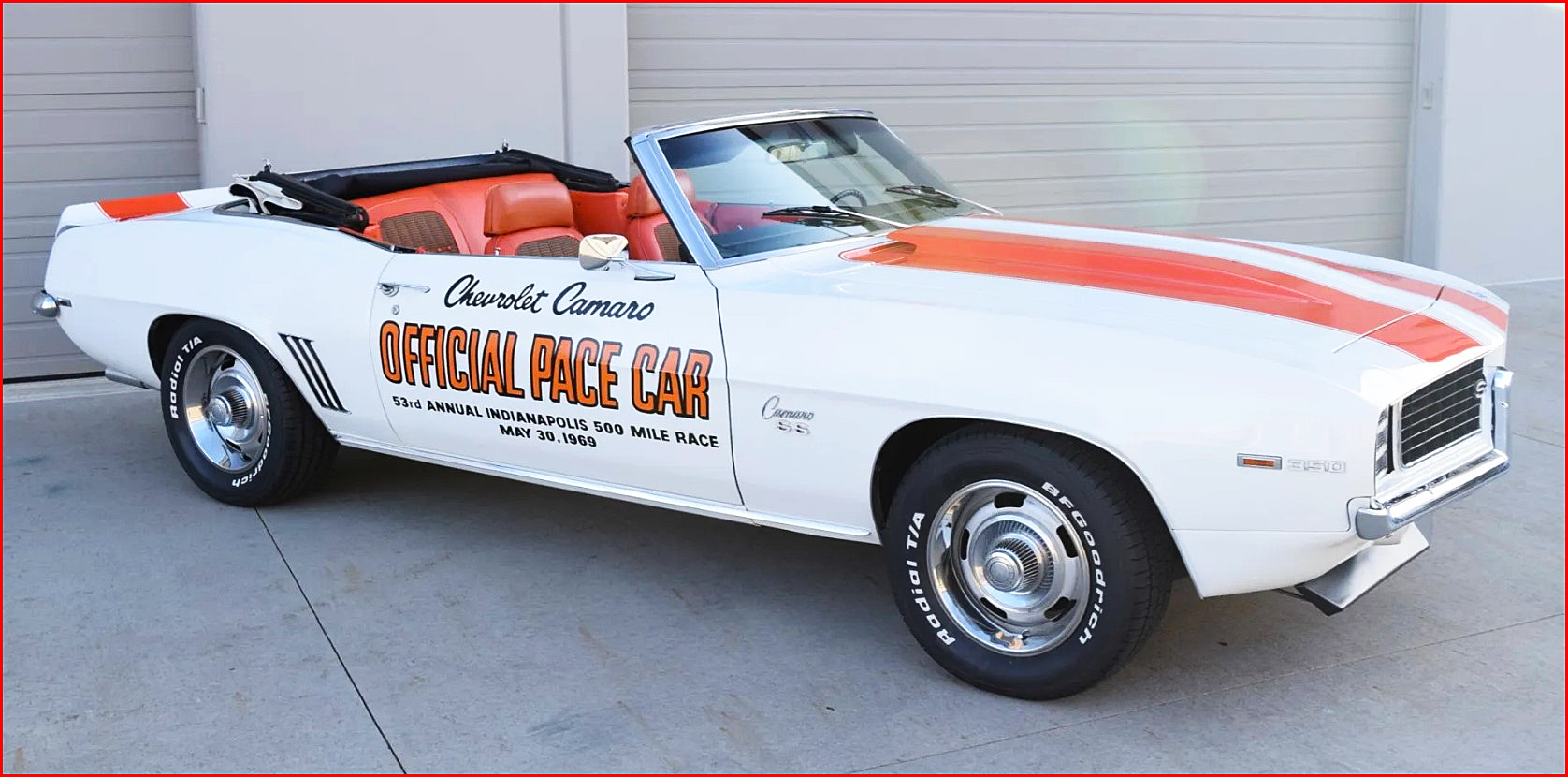
A convertible RS/SS Camaro paced the Indianapolis 500 once again, with Chevrolet producing 3,675 replicas this time, complete with orange rally stripes, an orange houndstooth interior and a cowl-induction hood. Optional four-wheel disc brakes with four-piston calipers from the Corvette were made available, thanks to improvements for SCCA Trans-Am cars that were key in winning the championship. However the expensive ($500.30 on a $2,726 Z/28) price meant that only 206 buyers chose this option.
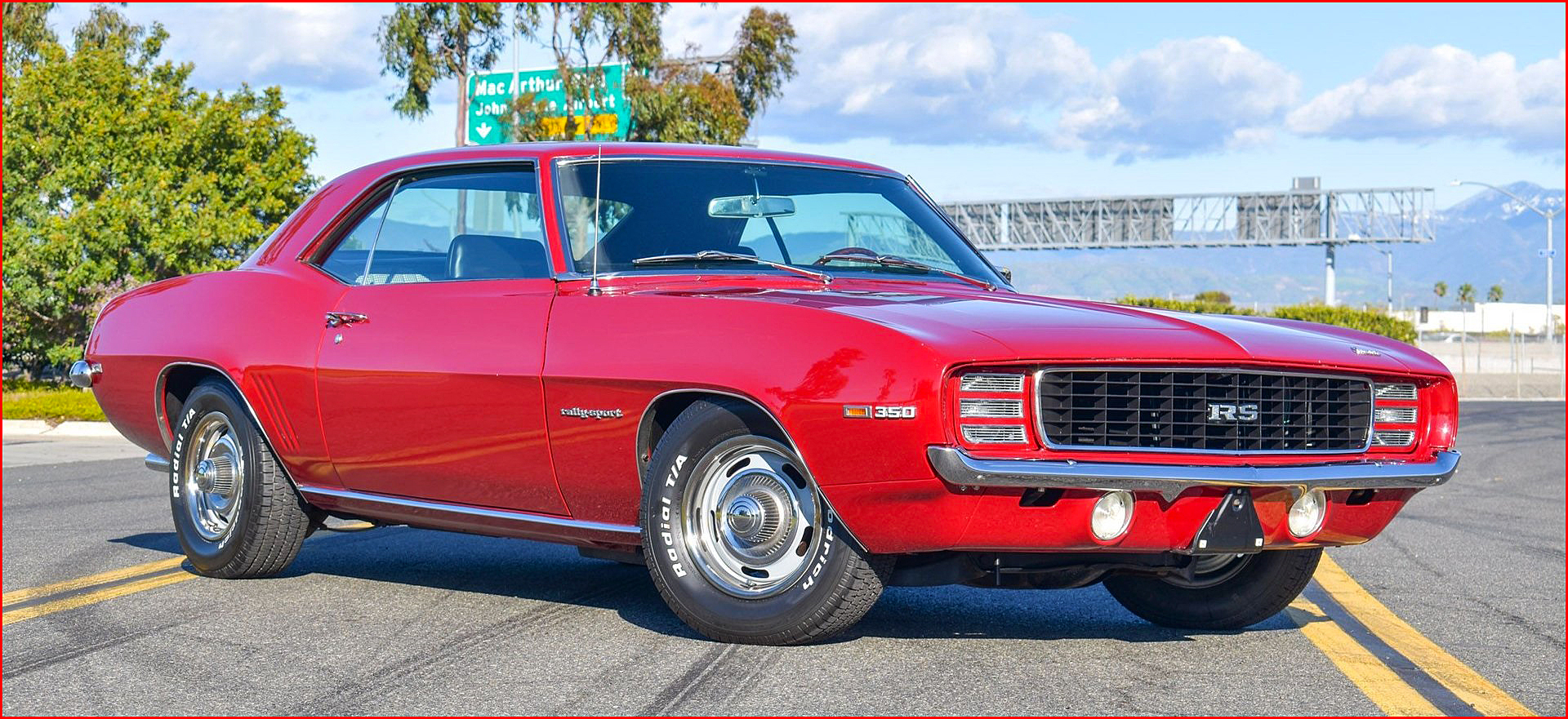
The RS package continued the hidden headlights (with headlight washers) in a unique black-painted grill. The package included fender stripes (on non-Z/28 or other sport-striped cars) simulated rear fender louvers, front and rear wheel opening moldings, and a black body sill. RS emblems adorned the grill, steering wheel and rear panel, and Rally Sport nameplates appeared on the fenders. Bright accented taillights, back-up lights below the rear bumper and bright roof drip moldings on hardtop models rounded out the package.
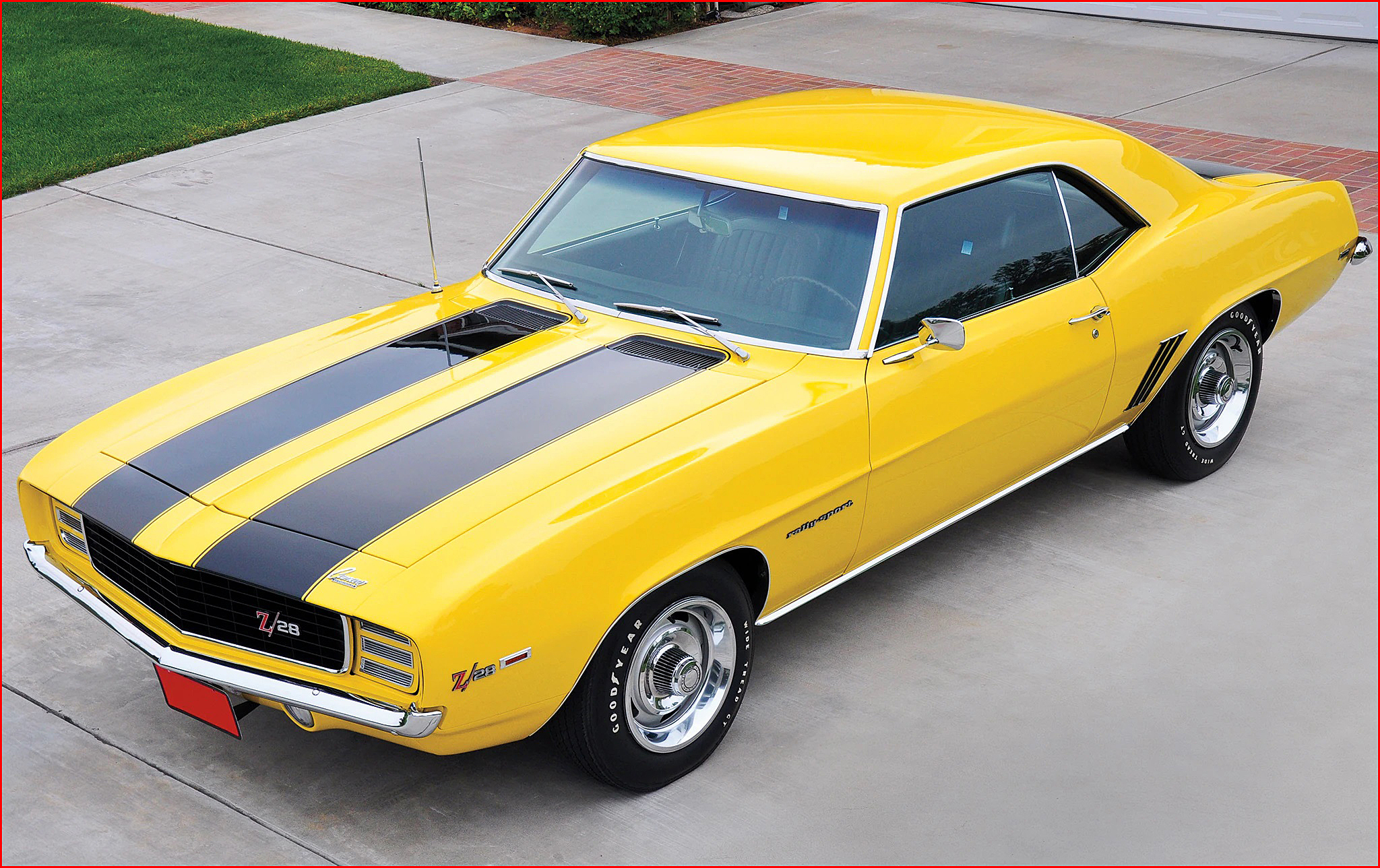
Z/28 carried over the 290 (advertised) HP 302 with an 11:1 compression ratio, forged pistons, a forged-steel crankshaft and connecting rods and solid lifters. A Holley carb on a dual-plane intake manifold fed the engine, but a dealer-installed dual four-barrel on a crossram manifold was optional. The Muncie four-speed manual carried over as well, but it got a new standard Hurst shifter. This was connected via the driveshaft to a 12-bolt differential with 3.73 gearing.
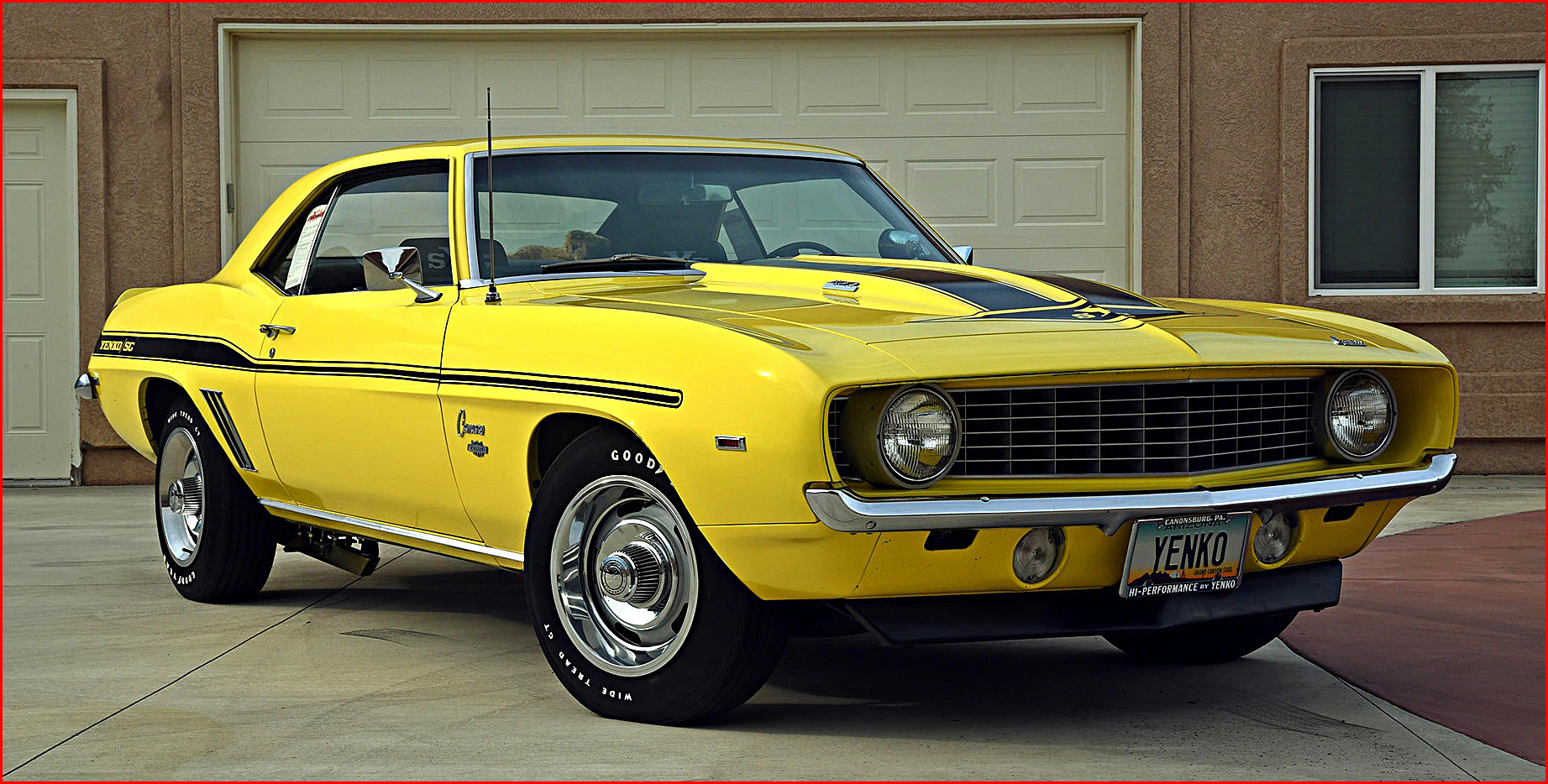
Z/28 was not the hottest Camaro of 1969, nor was the SS 396 with its 375 HP, 396 cubic inch engine. GM forbid Chevrolet from putting engines larger than 400 cubic inches in smaller and mid-sized models, but some dealers got around this restriction with two special Central Office Production Orders (COPO) 9560 and 9561. COPO 9560 put a big-block 427 cubic inch ZL-1 engine, designed for drag racing and producing 430 HP, under the Camaro‘s hood. COPO 9561 did the same with the 425 HP, 460 lb. ft. of torque L72 big-block 427. 201 of these COPO 9561s were ordered by Yenko Chevrolet in Canonsburg, Pennsylvania and became the famous high-performance Yenko Camaros, Don Yenko being the driving force behind COPO 9561. These are rare birds, Chevrolet only produced 1,000 9561 and a mere 69 9560 COPO units. The 1969 model year was extended into November of 1969 due to manufacturing problems that delayed the introduction of the second-generation 1970 model. The first-generation Camaro only saw a limited three-year run.
Second Generation 1970-1981
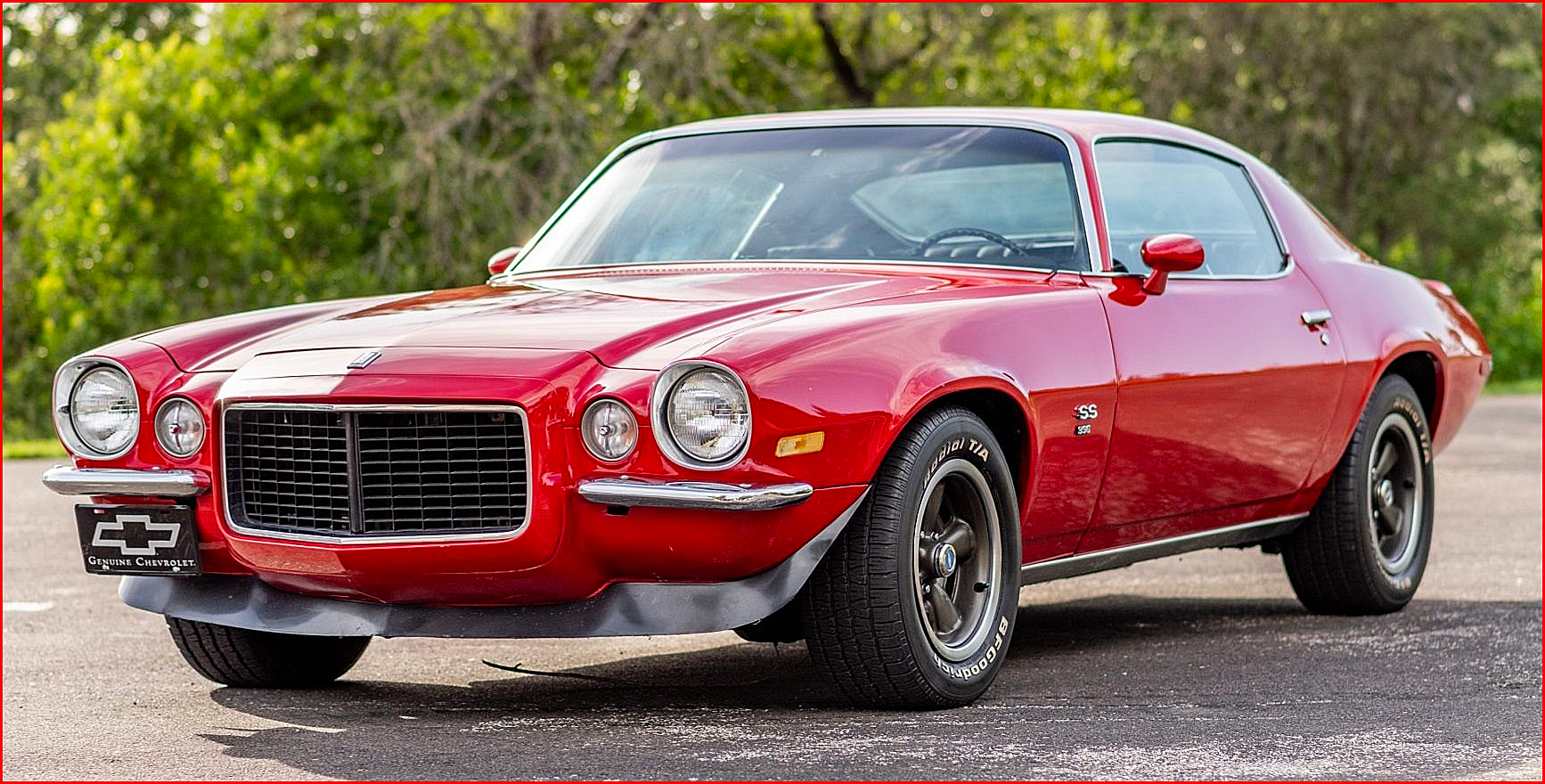
A larger, all-new F-body Camaro (and Firebird) debuted in February of 1970. The basic mechanical layout remained the same; unibody with a front sub-frame, A-arm and coil spring front suspension and leaf-spring rear suspension. However, the chassis and suspension were refined in both performance and comfort, adding a rear stabilizer bar, and significant improvements were made in soundproofing, ride isolation & road-holding. Racing experience with the first-generation Camaro and Firebird led to advances in steering, braking and balance, but curiously the four-wheel disc brake option from 1969 was not carried over. High-performance options were initially available, but as the decade wore on and the effects of higher insurance rates, emissions regulations and the two oil crises crept in performance suffered greatly.
Most of the engine and drivetrain were carried over into 1970, with the exception of the 230 cu. in. (3.8 liter) six, which was dropped, leaving the 250 (4.1 liter) six rated at 155 HP as the base engine. The SS 396 in 350 and 375 HP form remained, but the actual displacement was now 402 cubic inches even though it still carried the “396” badging. Two 454 engines, the LS6 and LS7, both putting out 450 HP and 500 lb. ft. of torque, were listed on early spec sheets and sales brochures but never actually made it into a production Camaro.
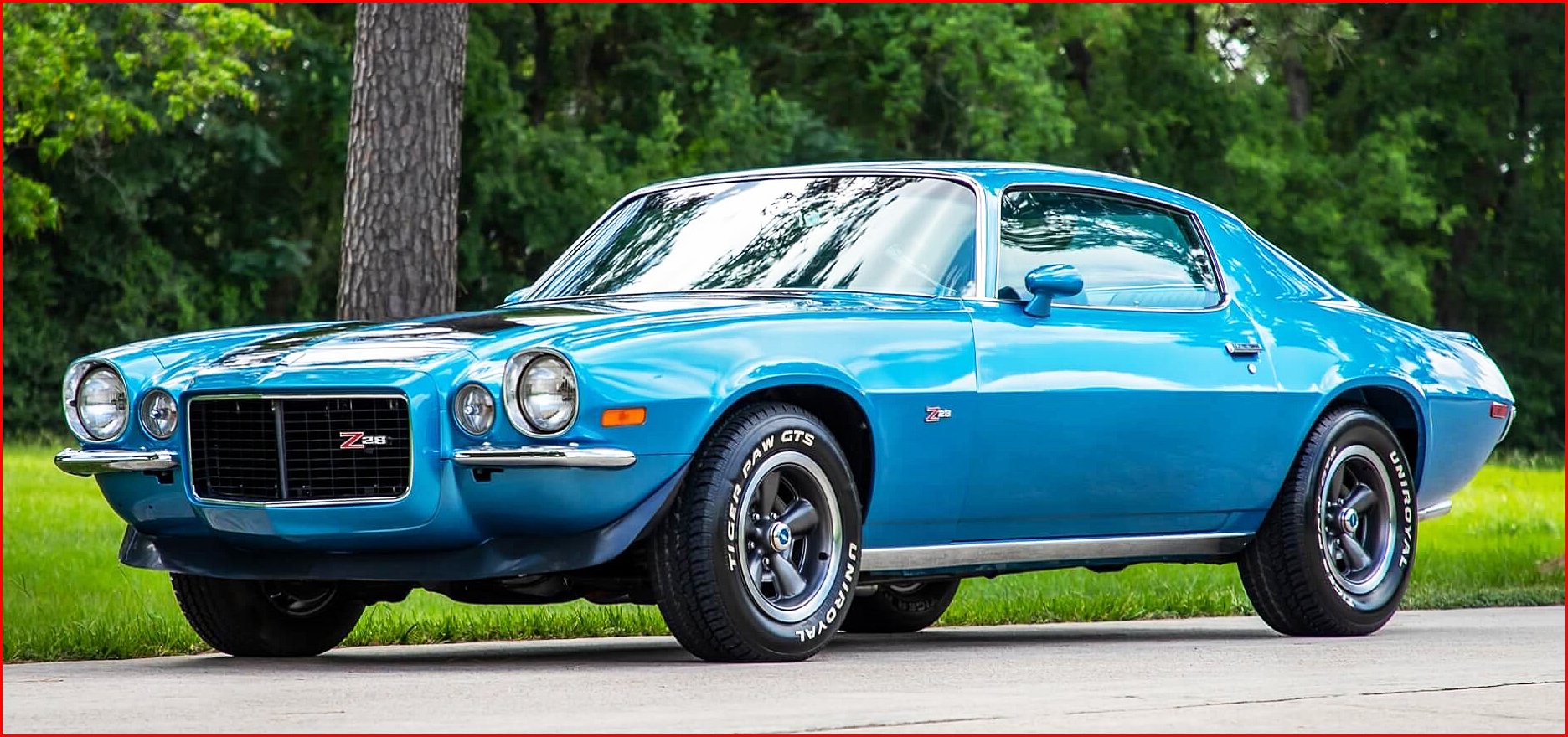
The Rally Sport appearance package carried over as did the Super Sport performance package. The Z/28 engine was now an all-new 360 HP 350 cubic inch version of the Corvette LT-1, built from the ground up using premium parts and components. Greater HP, torque and a less-radical cam made for an equally potent and less high-strung mill than the smaller Trans-Am racing-derived 302. It also enabled a 3-speed Turbo-Hydromatic 400 automatic transmission to be an option. It was not without its flaws, as Car and Driver magazine observed in 1970:
“Somehow, though, the Z/28 is not as thrilling as it once was. It’s more tolerant to driving techniques now, more mature in its behavior. All things considered, it’s a better engine now, but the loss of carefree and irrepressible adolescent spirit can never be witnessed without some regret. And although the Z/28 seems much tamer now than it once did, the transformation is more a function of the car than of the increase in displacement.”
The new F-body had a fastback roofline and full-door windows with no vents and no rear side quarter windows. A complex sail panel/C pillar flowing seamlessly into the rear of the car, character lines from front to rear fender, an open grill flanked by two bumperettes and hood lines that flowed seamlessly from grill to the back of the hood contributed to a longer, leaner-looking design than its predecessor, with influences from European grand touring sportscars in general and the 1963 Ferrari 250GT Lusso in particular. The roof was also now double-shelled to improve rollover protection and reduce noise. The doors were wider to permit easier access to the back seat and had new pull-up exterior door handles to replace the old push-button ones. In front, the base model had its own bumper/grill design with parking lights under the bumper, but the Rally Sport package had its own distinctive grill surrounded by GM‘s new flexible Endura material (touted on Pontiacs as the “squeezable nose”), round parking lights beside the headlights and bumperettes on either side of the grill, making for a unique look. The rear had four round taillights a la Corvette. There was no convertible option for this generation, the only Camaro generation not to have one.
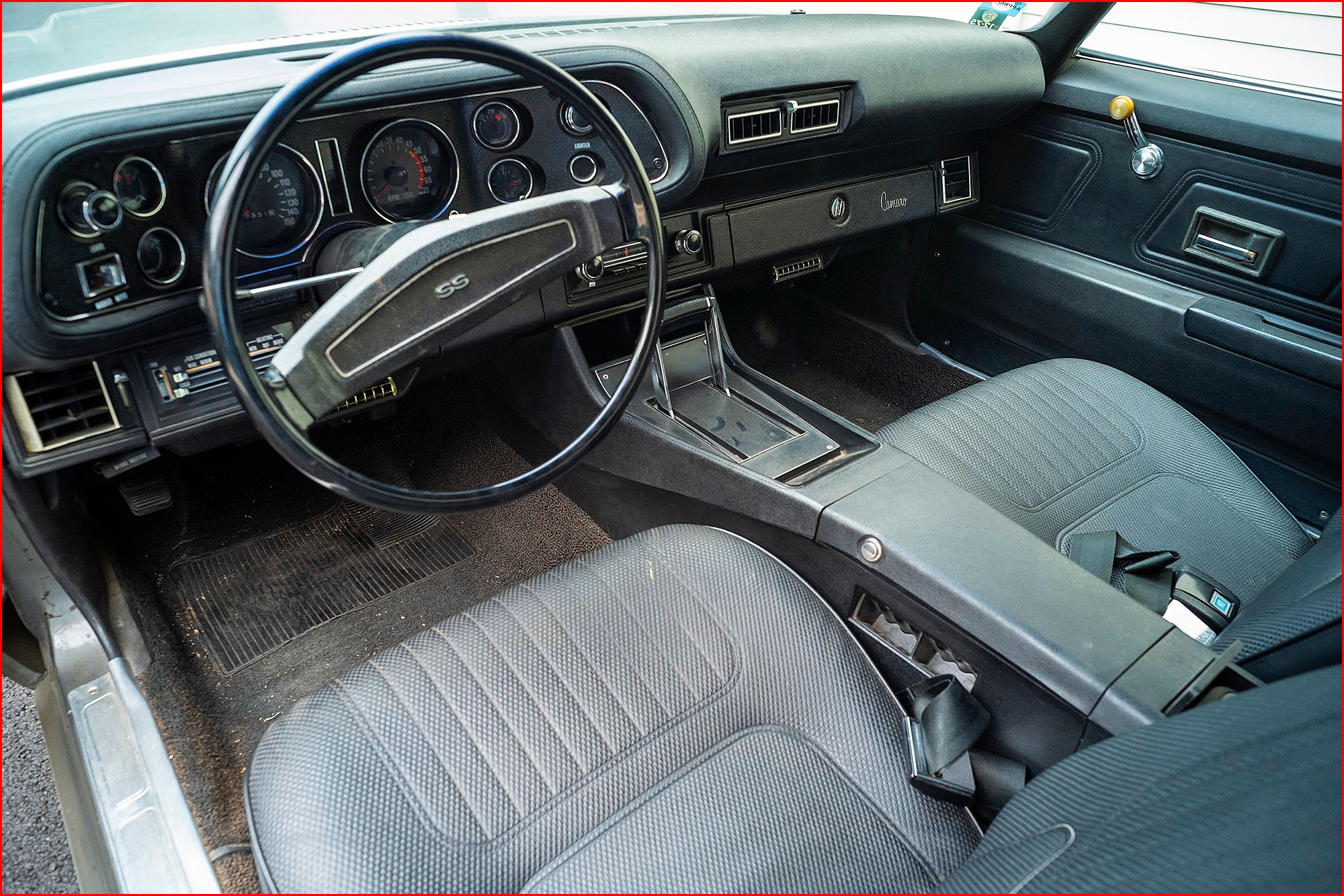
In the interior a new curved instrument panel featured round gauges and switchgear directly in front of the driver and HVAC controls on the lower part of the dashboard to the driver’s left. New low-back “Strato” vinyl bucket seats with squared-off seatbacks and adjustable headrests were unique to the 1970 model. A cloth or upgraded vinyl interior with woodgrain trim on the dashboard and console was optional. The optional center console housed a standard Hurst shifter and was integrated into the lower dashboard with a small storage area or an optional stereo tape player. The 1970 model is the most desirable year for this generation Camaro, as later years saw the introduction of performance-robbing mandatory Federal emissions controls and heavy 5 MPH impact bumpers that increased weight.
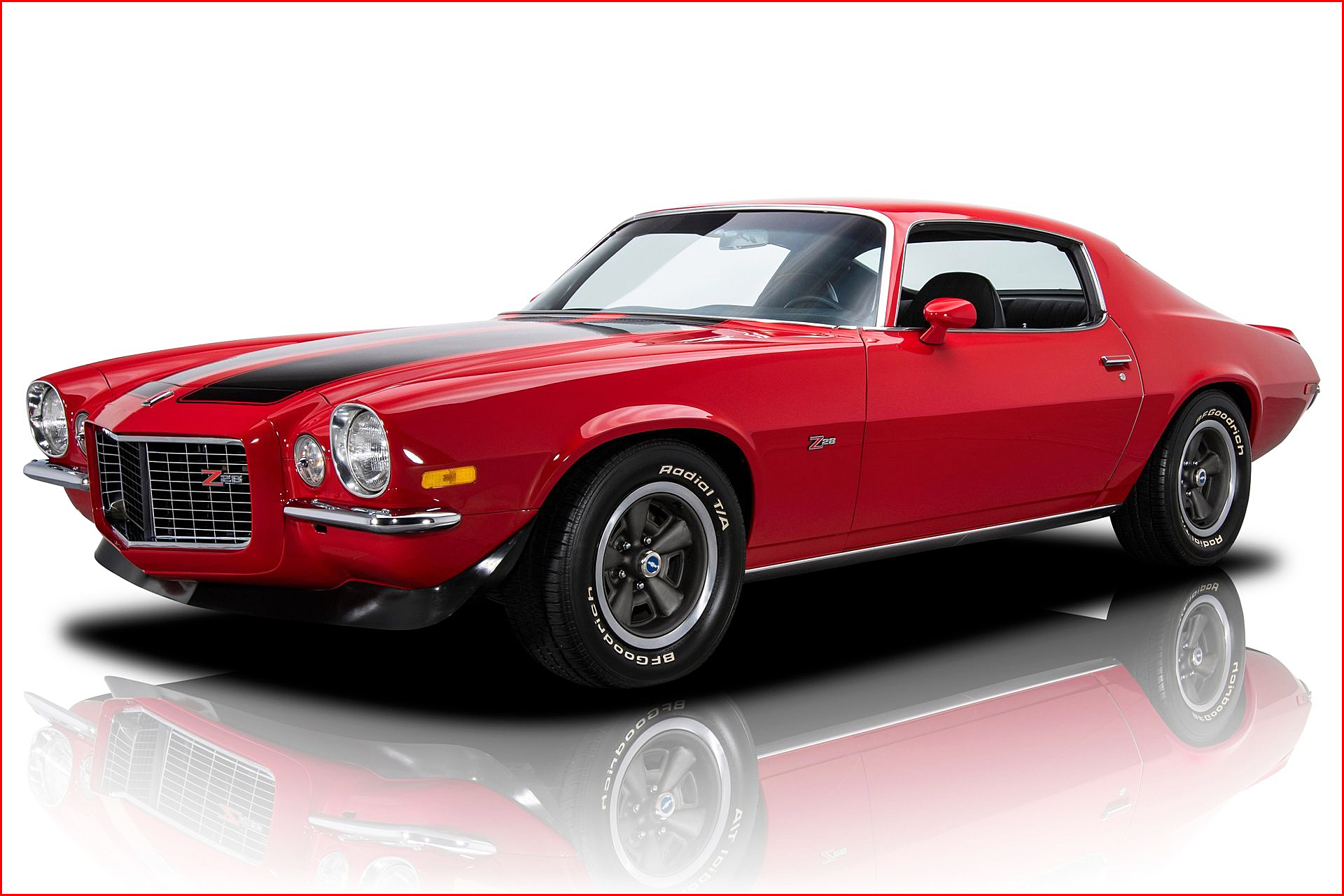
1971 saw only minor exterior appearance changes, but inside the low-back “Strato” bucket seats were replaced with high-back models with integrated headrests. The big changes were under the hood, and not for the better; emissions regulations required engines to be able to run on lower-octane regular leaded gasoline, low-lead or unleaded. This led to reductions in compression ratios and lower horsepower production. This did not affect the six, 307 and 2-barrel equipped 350s as they were already lower-compression engines, but the LT-1 350 in the Z/28 lost 30 horsepower to 330 when the compression was lowered from 11.0:1 to 10.3:1. The big-block 396 suffered even more, losing 50 HP to 300 when its compression ratio dropped to 8.5:1 from 10.25:1.
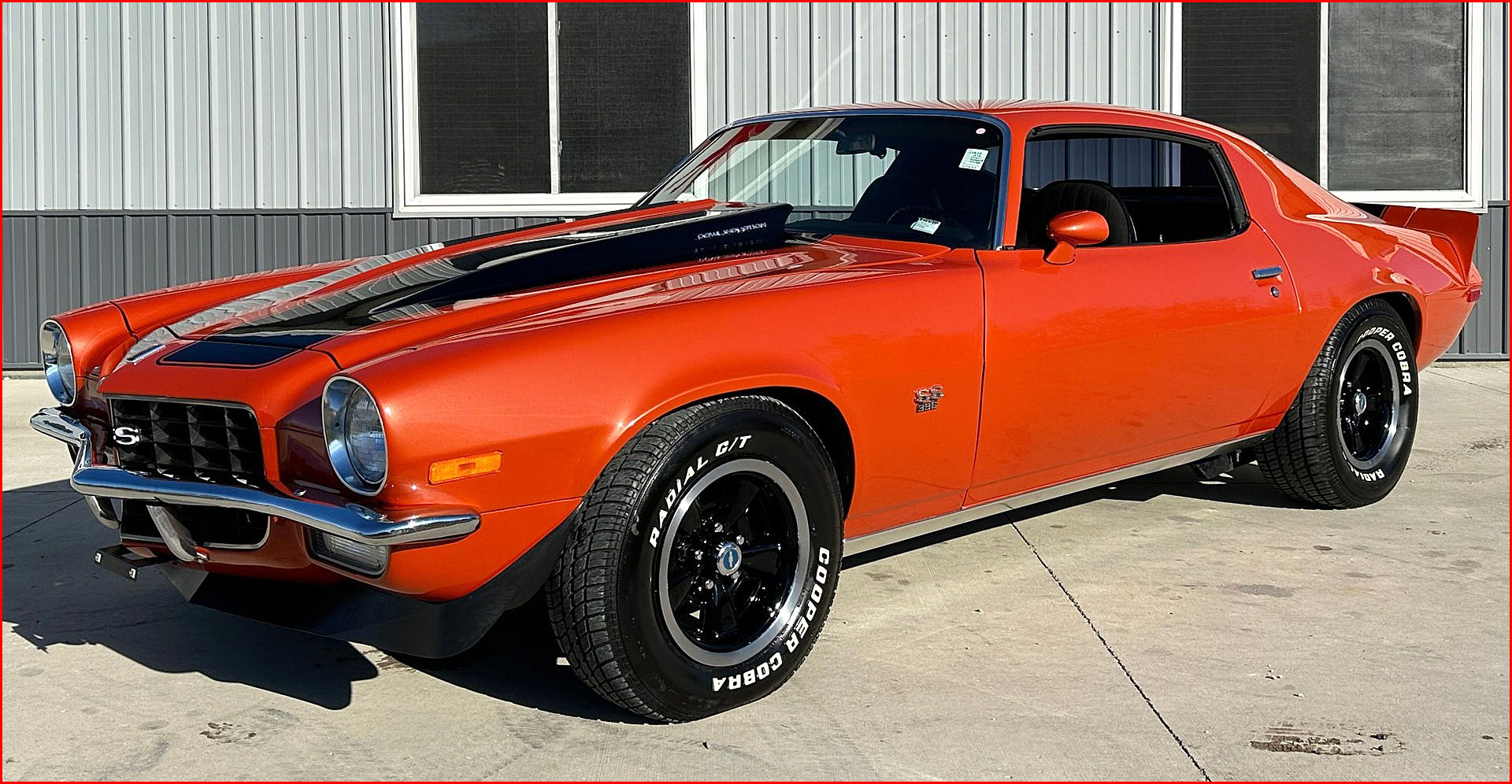
By 1972 skyrocketing insurance rates for high-performance cars and horsepower strangulation from ever-increasing Federal emissions, safety and fuel economy mandates led to declining interest in the Camaro and other musclecars, and a UAW strike at the Norwood, Ohio plant that made the Camaro led to rumors of its cancellation from inside GM. The pro-Camaro/Firebird faction won out and the car would live on despite the rumors. To add insult to injury, 1,100 incomplete Camaros had to be scrapped because they could not meet upcoming 1973 bumper safety standards. Ultimately only 970 SS 396 models would be produced out of a total of 68,656 Camaros produced. 1972 was also the last year for the SS 396 and SS 350 models, with the Z/28 badging changed to Z28. Lower compression ratios dropped HP numbers further, but not as much as the switch from SAE gross to SAE net HP, taking into account the drivetrain. The LT1 350 dropped from 330 gross HP (275 net) to 255 net HP this year, and the 300 gross HP (260 net) 396 dropped to 240 net. This was a harbinger of further horsepower erosion to come.
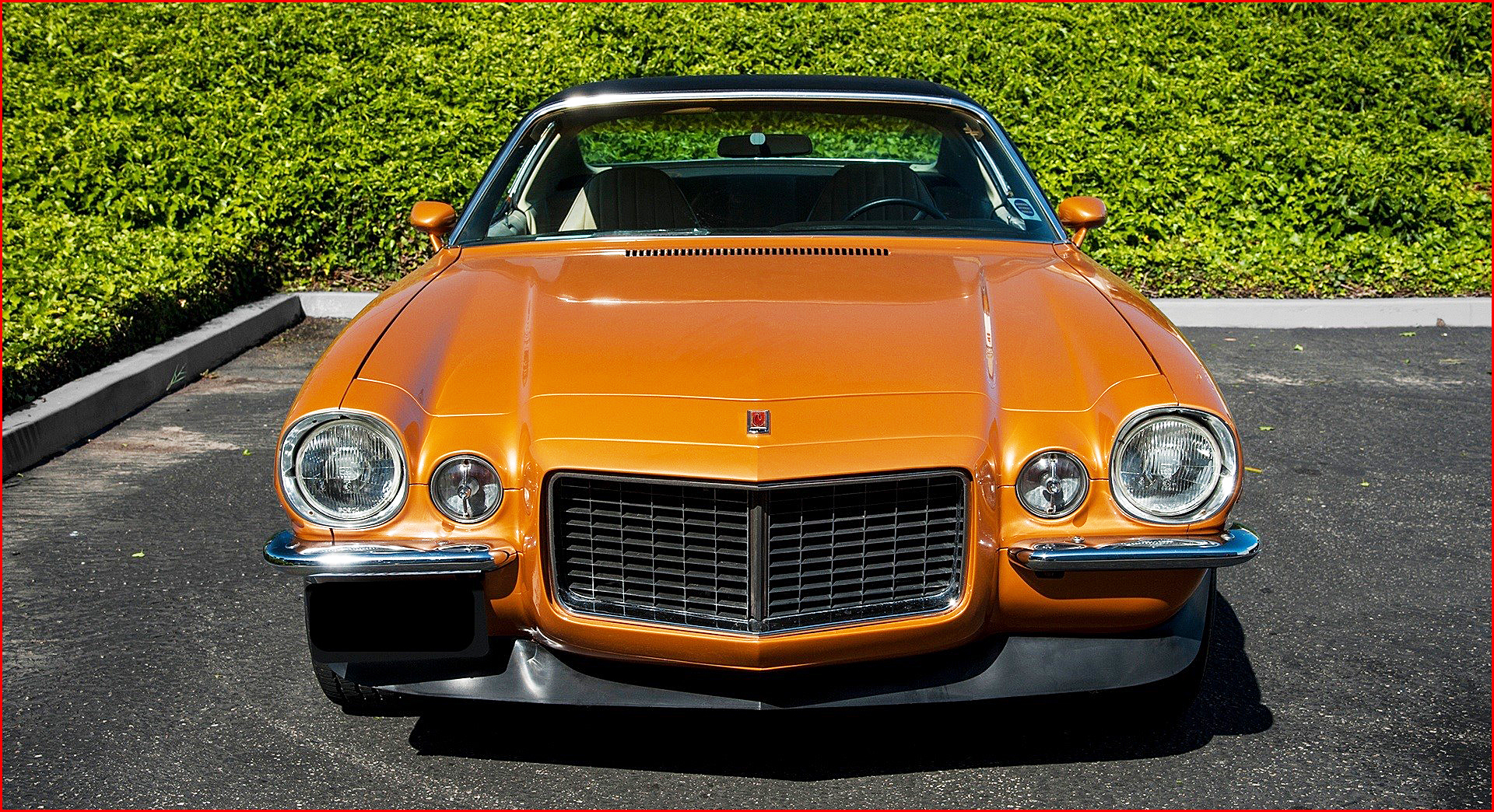
Impact-absorbing 5 MPH front bumpers became a reality in 1973, but the Rally Sport option retained its bumperettes on either side of the grill due to creative bracing behind the front sheetmetal. A new Type LT model with a quieter and better-appointed interior, Rally-style wheels, variable-ratio steering, sport mirrors and hidden windshield wipers became available. The Super Sport package was gone, as was the big-block 396, and power was down again due to newer, tighter emissions standards. The Corvette-based L82 350 was now the top-rated engine, with hydraulic valve lifters replacing the old solid variety, but HP fell to 245 net with the engine in the Z28 package, which could be ordered in both the base model and LT. However, when the Z28 package was ordered with the LT the usual Z28 badging and stripes were deleted. A new console-mounted shifter for the automatics replaced the old horseshoe shifter, and power windows were offered for the first time since 1969. As the plant recovered from the strike, sales shot up to 96,751 as the industry enjoyed a record sales year.
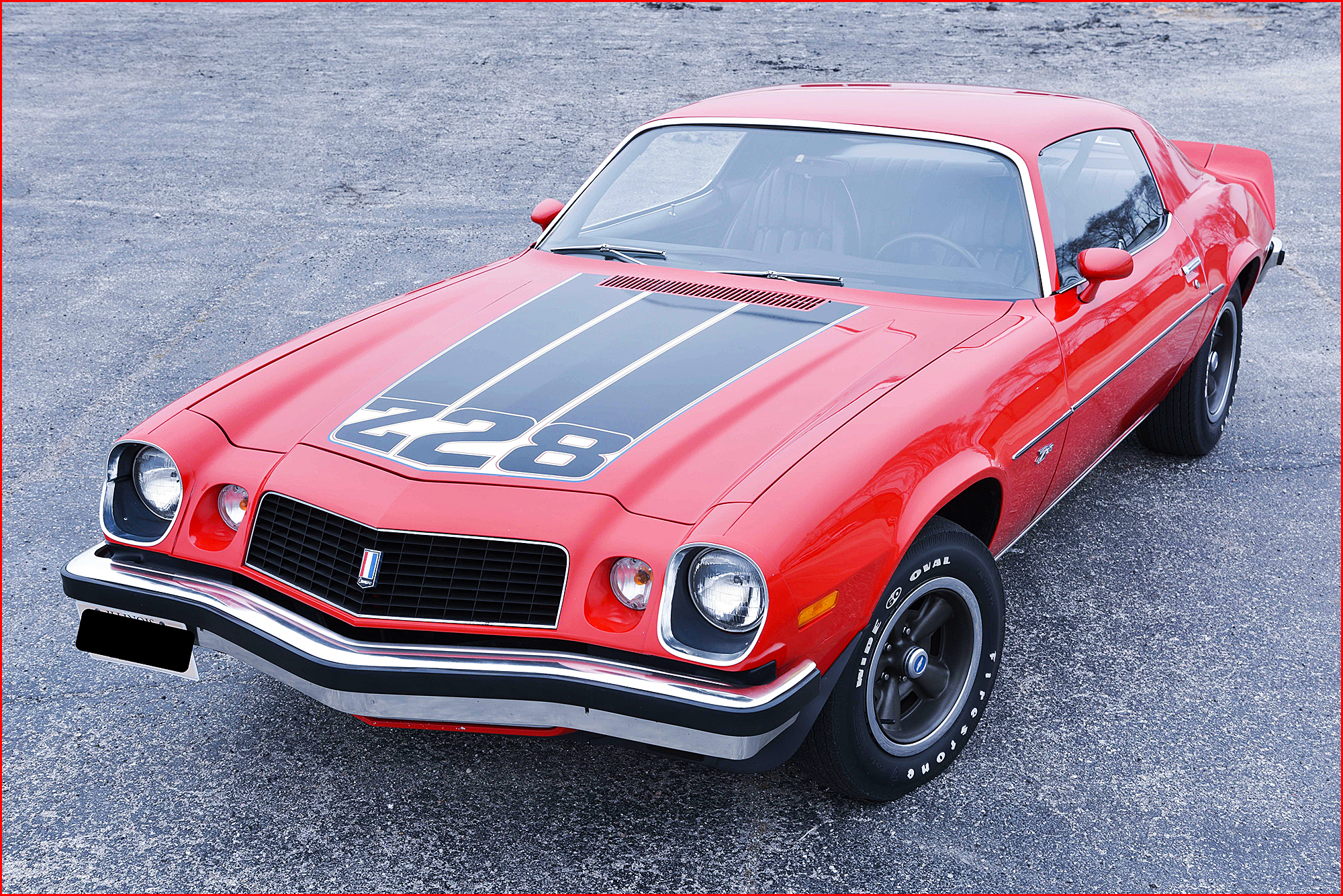
The 1974 Camaro grew by seven inches thanks to a new forward-sloping grill and massive new federally-mandated 5 MPH bumpers, now made of aluminum to save weight. The round taillights of previous 2nd generation models were replaced with wraparound rectangular ones. This was also the last year of the thick roof pillars and flat rear windows. This was also the last year of the Z28 option, it would return again three years later as its own model. As it was, the Z28 had become fat, lazy and underpowered, with the V8 still managing a mere 245 HP. Even at that reduced HP, the thirsty 350 V8 was becoming outdated in the era of the energy crisis. Sales increased to over 150,000 units, 13,802 of which had the Z28 option. This was the highest 2nd generation Z28 production year despite the energy crisis fueled by the Arab Oil Embargo. While Ford downsized its Mustang to the Pinto platform and the Plymouth Barracuda and Dodge Challenger disappeared altogether, Camaro and Firebird soldiered on with essentially the same F-body platform as 1970.
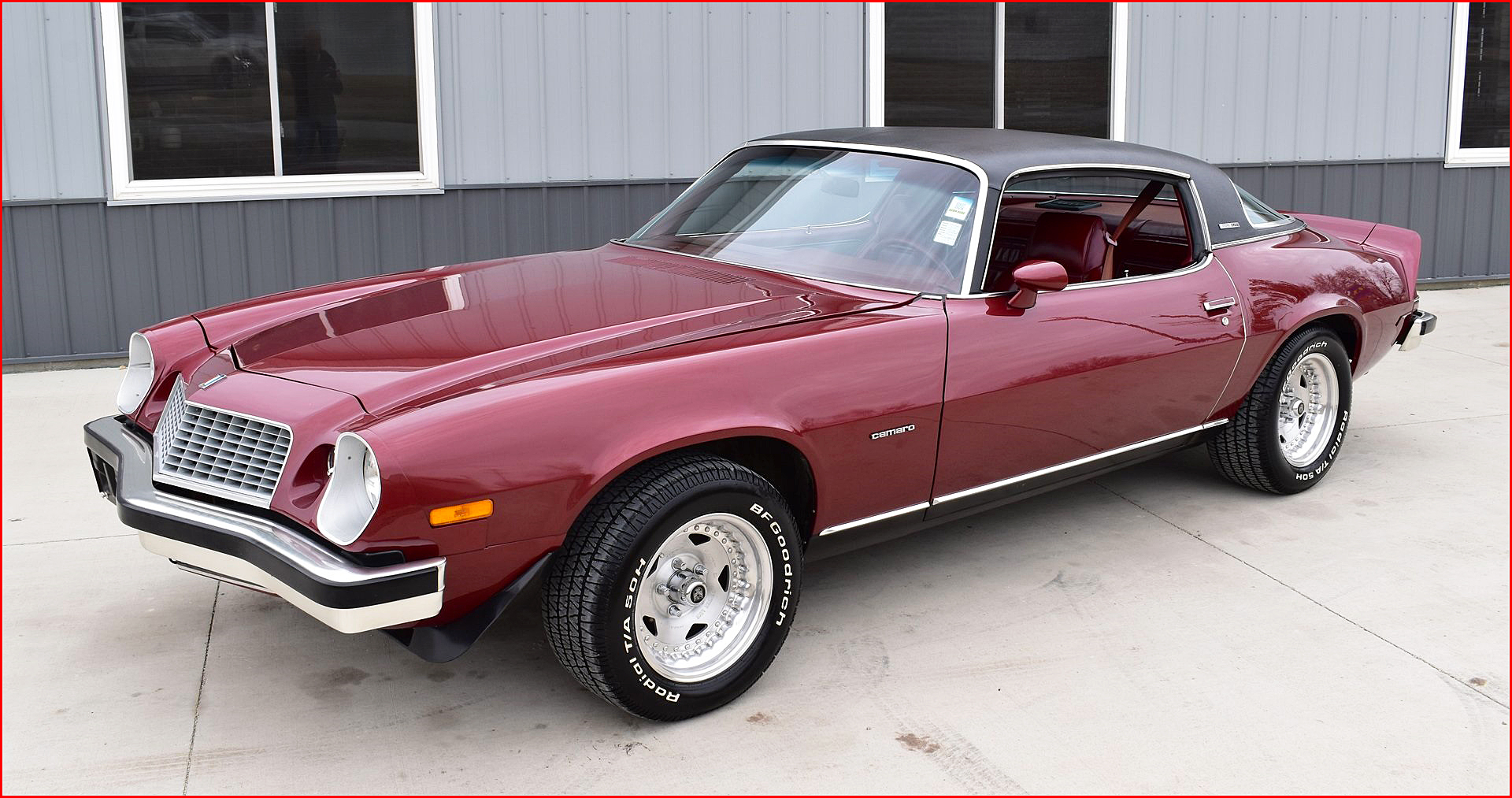
1975 saw the introduction of a catalytic converter for emissions controls, requiring the use of unleaded gasoline as the lead additive of regular gasoline would foul the converter. It was more efficient at reducing emissions, so the engine could be re-tuned for improved drivability and fuel economy, especially when paired with GM‘s new High Energy electronic ignition system. These two together offered buyers extended maintenance intervals compared to previous models.
The horsepower deficit continued to grow, with the two 350 V8s now only producing 145 and 155 net HP respectively. Part of the decline could be attributed to changes in the calculation of SAE net HP figures, as engines now had to be measured with all accessories in place and a full exhaust system with catalytic converter had to be installed. Ever-stricter emissions regulations squelched horsepower even more, and the Z28 option disappeared, despite an increase in sales the previous year. The Rally Sport option was back, but it was truly an appearance package and nothing more.
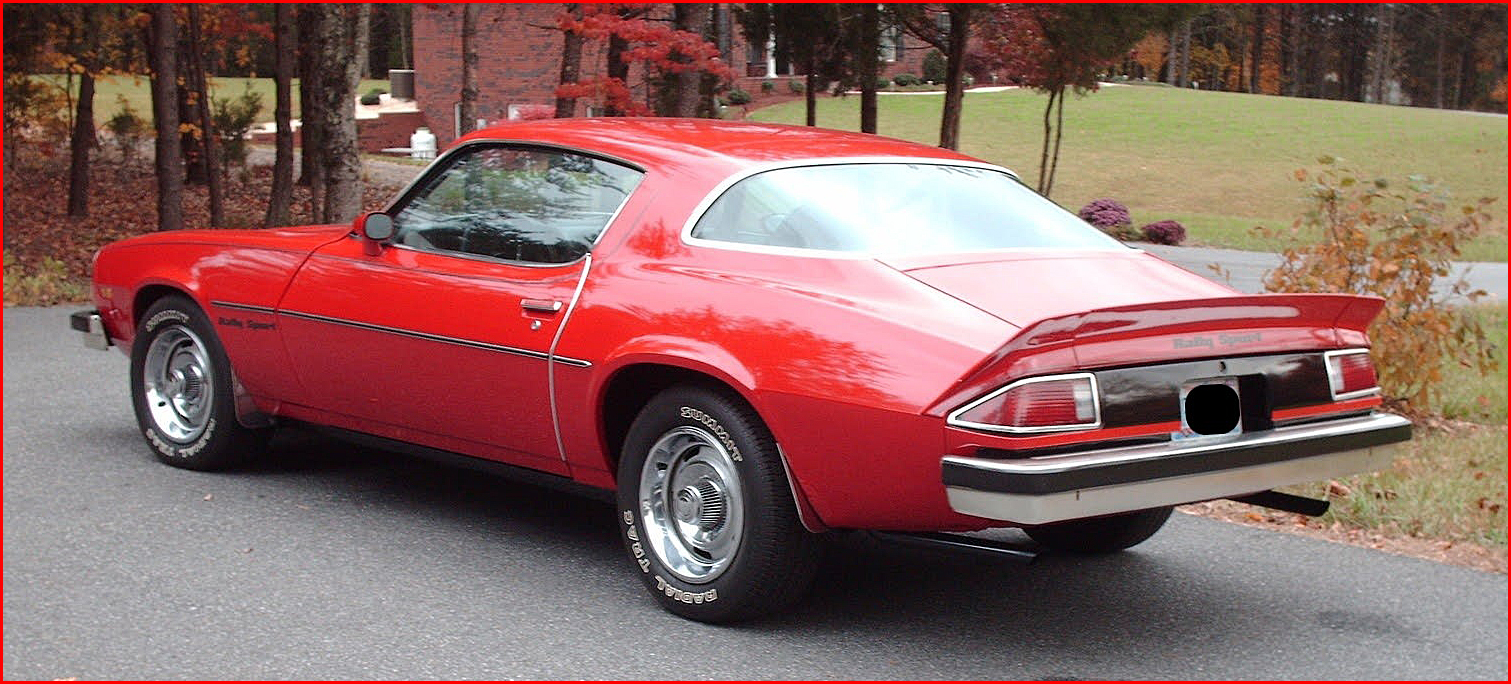
A new wraparound rear window offering slightly better rear visibility appeared along with the Camaro emblem being moved to above the grillwork from the center of he grill. The nameplate disappeared from the rear decklid and the fender badges went from script to block letters. On the interior the woodgrain on the dashboard went from walnut to birds-eye maple, power door locks became available, and a promised leather interior on the LT model never materialized; no model went out the factory door with leather. Despite the loss of the Z28, Camaro sales remained steady. All of the other ponycars had fallen by the wayside by 1975 except the Mustang, and it was a Pinto-sized shadow of its former self. Consequently, Camaro and Firebird owned the ponycar market for the first time, even with a wheezy 145 HP 350 under the hood. Also this year, despite GM’s factory-sponsored racing ban, Camaro made a name for itself on the track as the International Race Of Champions (IROC) pitted star racing drivers against one another in identically prepared Camaros.
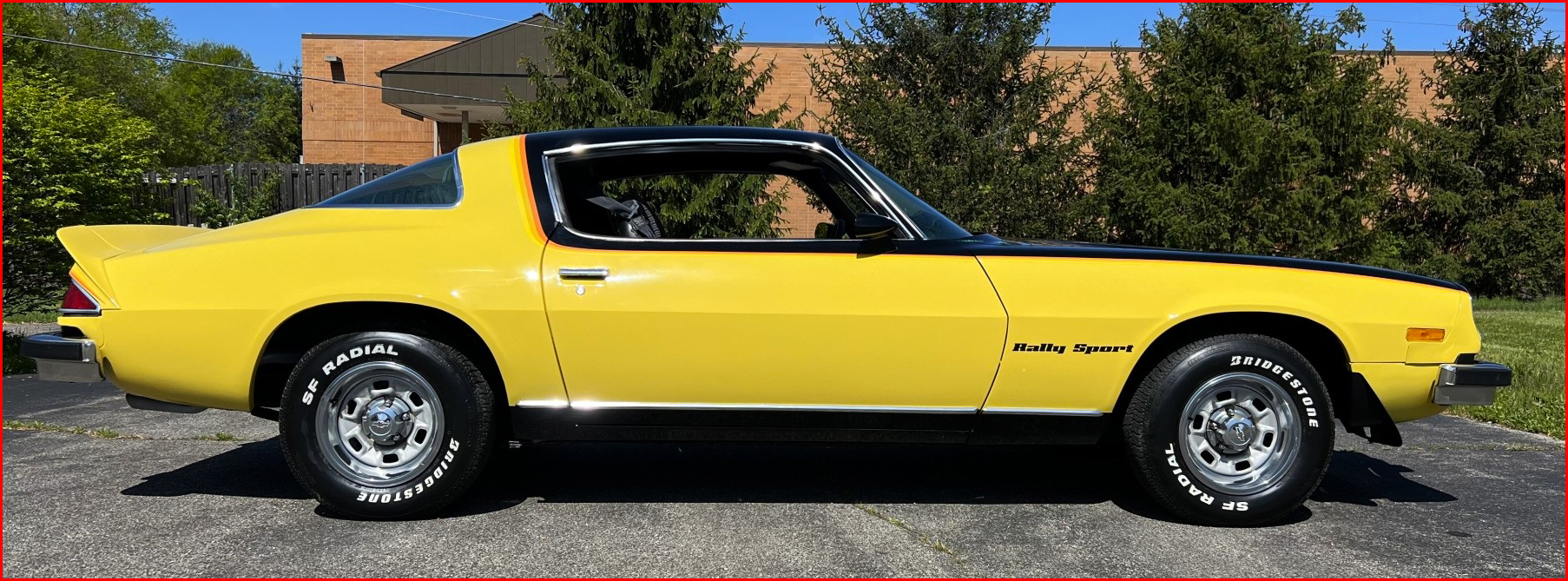
1976 saw few changes, save for some cosmetic updates and the introduction of the 140 HP 305 V8 as the standard engine in the base coupe and base V8 option in the LT. The 350 gained 10 HP with the addition of a 4-barrel carb, and power brakes became standard with either V8 engine. Rally Sport became a paint-and-tape package.
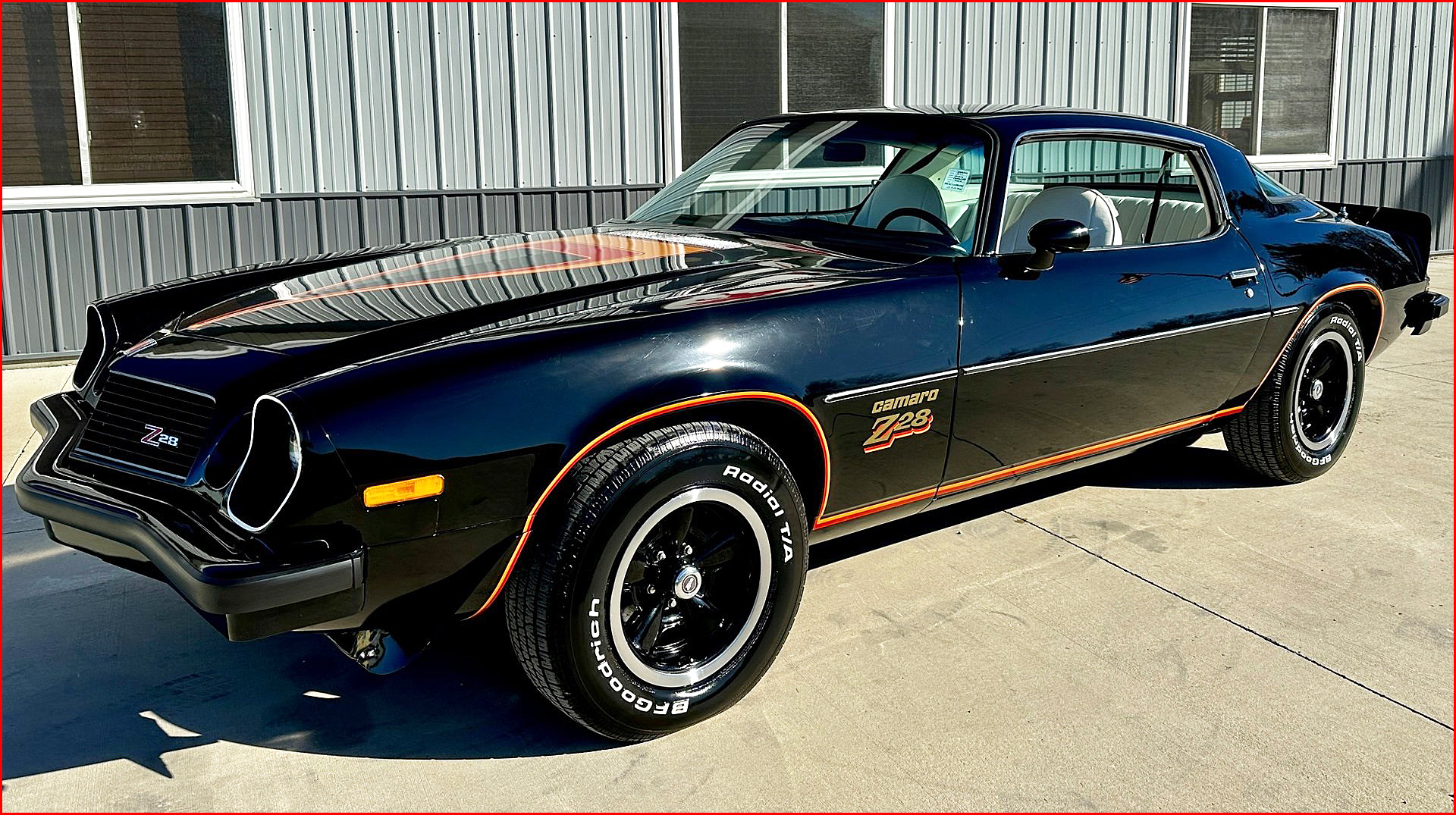
Intermittent wipers were offered for 1977, and the 250 cu. in. six became the base engine in the base Sport Coupe and LT models. The 305 remained the base V8 and the 350 gained an additional 5 HP. In response to increasing sales of Pontiac‘s Trans Am, the Z28 was re-introduced as its own model. However, this was not the Z/28 of old. Gone were the LT-1 and L82 Corvette engines, replaced by the 185 HP 350 cubic inch LM1 V8, but sadly that was the hottest Camaro engine available. The 4-bolt main bearing engine block, forged crank and pistons, big-valve heads and performance camshaft disappeared along with the Corvette engines; 1977 was not a year for performance. Most Z28s were sold with air conditioning and an automatic transmission instead of the Borg-Warner Super T-10 4-speed manual. Despite the lackluster performance, Camaros outsold Mustangs for the first time ever. That comes with a caveat; even the most powerful 1977 Mustang Cobra II equipped with a 129 HP 302 V8 was no barn-burner, and it was easily out-paced by the heavier (and neutered) Z28. Still, almost 219,000 Camaros were sold, almost three times the sales of the younger, smaller Chevrolet Monza (not the Corvair Monza of the 1960s) sport coupe. Clearly there was still a market for the mid-size ponycar.

New body-colored urethane bumpers graced the front and rear of the 1978 model, available in base Sport Coupe, LT, Z28 and Rally Sport flavors. The Rally Sport (not badged RS as in previous years) featured a new 2-tone paint job. T-Tops were also now a Camaro option, having been available on its stablemate Firebird‘s options list since 1976. Engine choices remained the same. Z28 models included a stripe package without a delete option, and again featured the 185 HP LM1 four-barrel equipped V8, coupled to either the Borg-Warner 4-speed manual or Turbo-Hydromatic 350 automatic. A non-functional hood scoop was outlined by a decal. Camaro sales topped all previous years, with 272,631 sold.
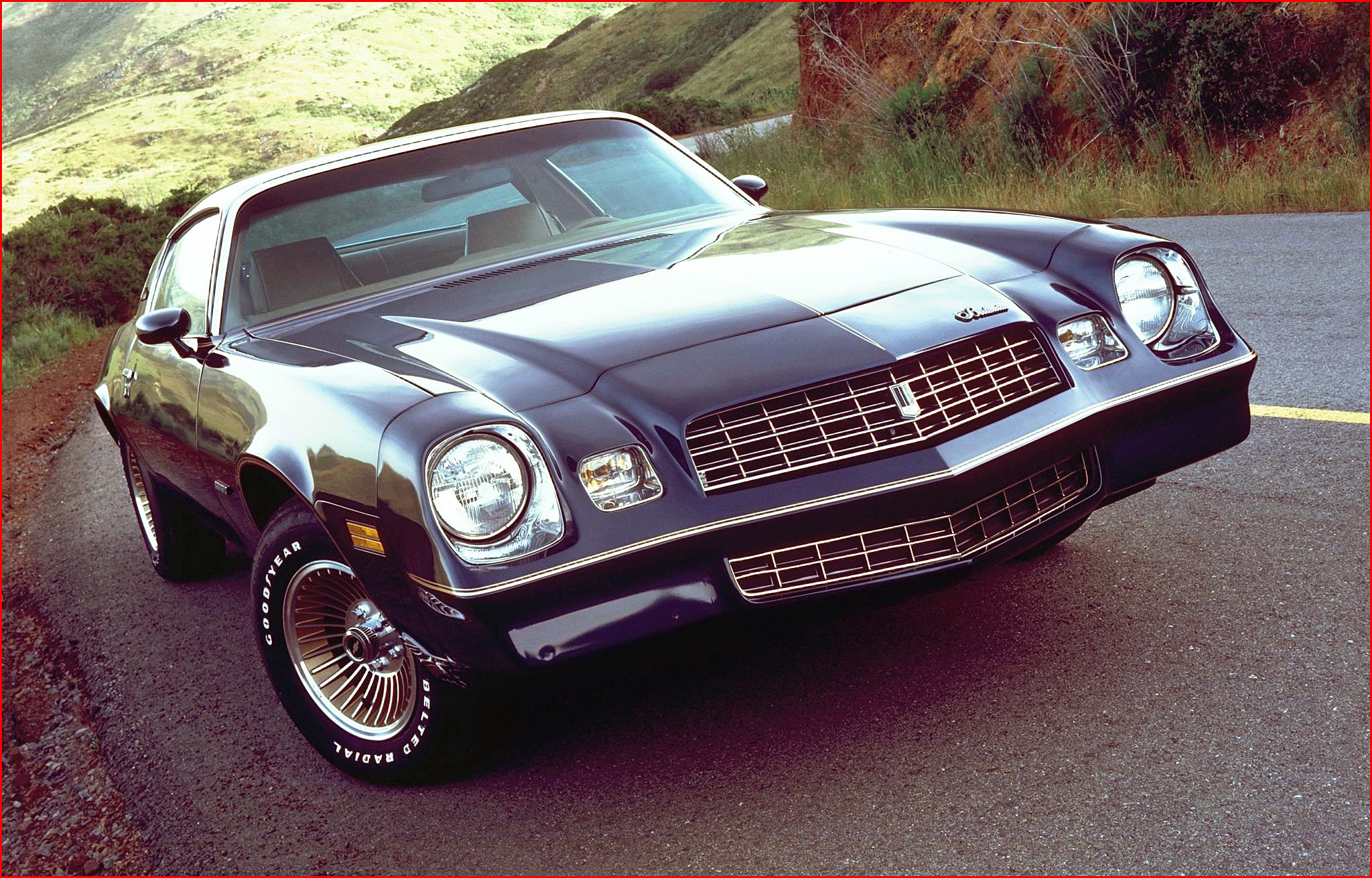
Little changed for 1979. Engine choices remained the same, but the 305 2-barrel became standard on the new luxury-oriented Berlinetta model that replaced the LT. This model also had a much flatter dashboard. The base Sport Coupe, Rally Sport and Z28 models remained, with the Z28 getting a front spoiler and fender flares like sibling Trans Am and “Z28” decals that ran from the fender flares to the bottoms of the doors. An electric rear window defroster became an option, replacing the old blower defroster. Sales peaked this year with 282,571 units sold, higher than any Camaro before or since. The aging 250 cu. in inline six was replaced in 1980 by a 115 HP 229 cu. in. V6 as the base engine, the first V6 in a Camaro. The lazy, underpowered 305 was joined by an even lazier and more underpowered 267 cu. in. V8 producing only 4 HP more than the base V6. The 350 cu. in. LM1 V8 was only available on the Z28, and it got a 5 HP bump to 190.
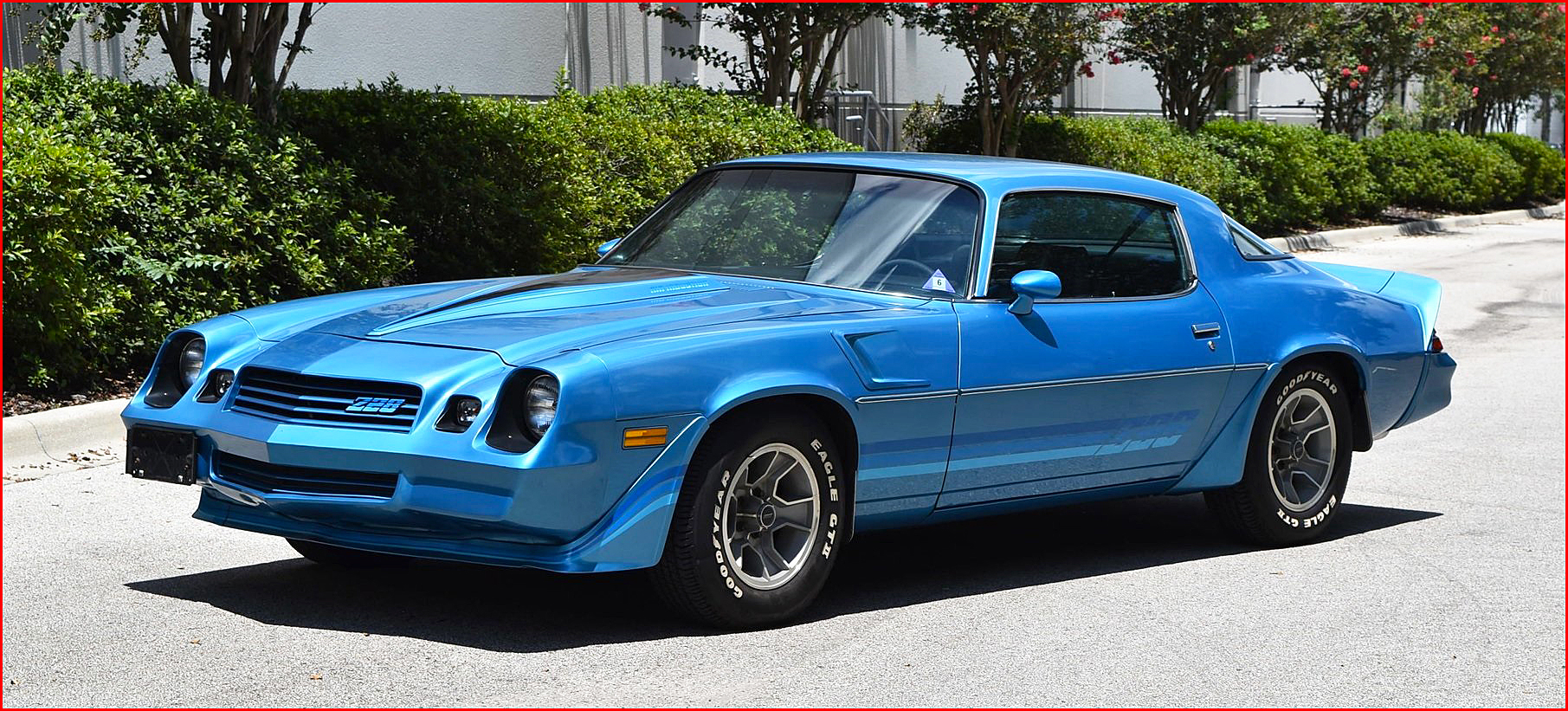
In 1980, Z28 got an actual functioning raised hood scoop, backwards-facing and with a solenoid-operated flap that opened at full throttle, allowing the engine to breathe cooler air. The model also got new optional gray 5-spoke wheels, a unique upper and lower grill and smaller door graphics. Smaller flat side scoops replaced the earlier louvered ones. Federal regulations also dropped the top speed indicated on the speedometer from 130 to 85, because by that time you weren’t supposed to drive over 55 MPH anyway.
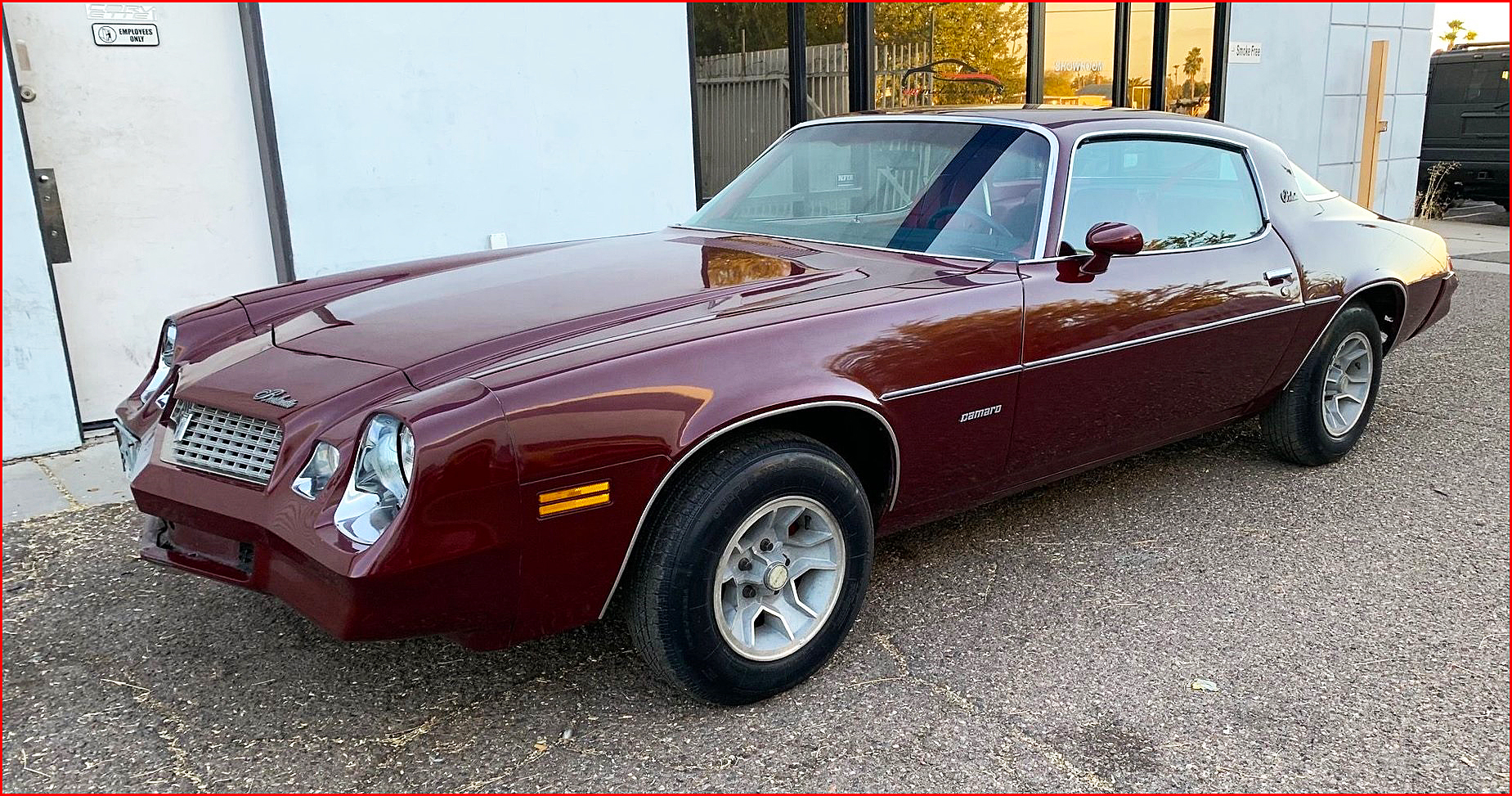
The 1981 model, the last 2 generation Camaro, was nearly identical to the 1980, at least on the outside. Base Sport Coupe, Rally Sport and Berlinetta versions remained unchanged, but due to emissions restrictions the LM1 350 was banned outright in California. The 350 was also equipped with a first-generation electronic engine control module called Computer Command Control (CCC). An oxygen sensor, throttle position sensor, barometric pressure sensor and Manifold Absolute Pressure (MAP) sensor reported back to the CCC, and the carb was electronically controlled by it. Engine diagnosis could also be performed by hooking up to the CCC, but it was primarily an emissions reduction system and the HP dropped back to 175. California Z28s had to make do with the old 165 HP 305 V8, however Canada got the same LM1 as 1980, without the CCC and its sensors.
I never owned a Camaro, but several friends did. One high school friend owned a ’69 SS 396 that accelerated like nothing I’d ever felt before. Then there was the rich kid in high school whose Dad owned the local Chevrolet dealership and thought he was a stud in his ’79 Berlinetta with that wheezy 140 HP 305 in it, until I out-raced him in my ’72 Fiat 124 Sport that had just as much horsepower but weighed a bit over half his Camaro…in front of half the school. He never lived that down, and never spoke to me again either, which was just as well. ✪
Got a Great Car Story? Share it! Reminisce About Your Other Favorite Cars, Too!
Seeyas Again Next Time On FLAT OUT!