


▶️ BONUS SUNDAY DEVOTIONAL: CLICK HERE TO READ
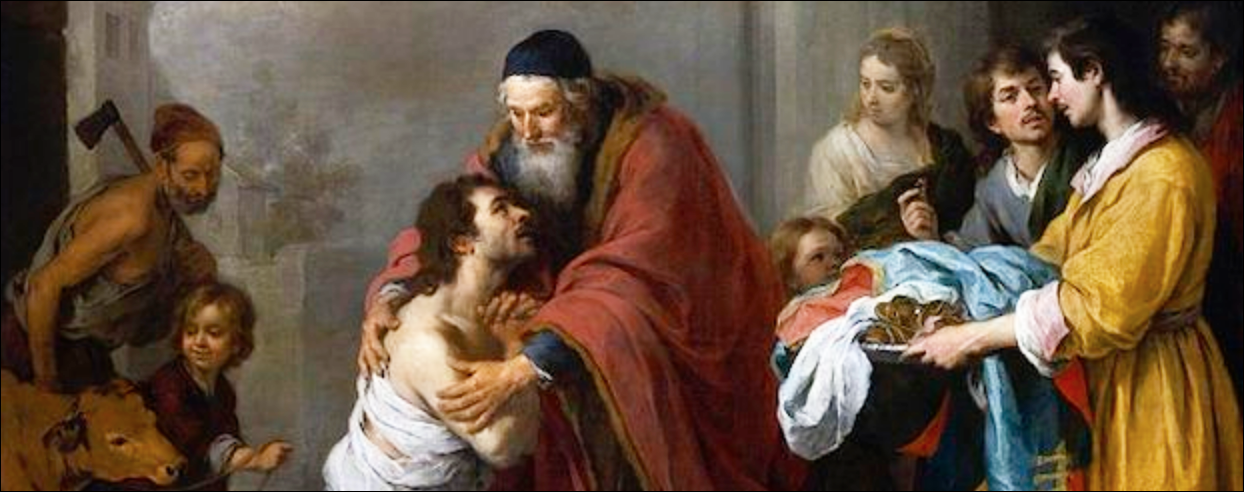
The Other Prodigal
⭐️ RailBoss

kkk
mong the most memorable parables the Savior ever told is the story of a foolish younger brother who went to his father, asked for his portion of the estate, and left home to squander his inheritance, the scripture says, in “riotous living.” His money and his friends disappeared sooner than he thought possible—they always do—and a day of terrible reckoning came thereafter—it always does.
In the downward course of all this he became a keeper of pigs, one so hungry, so stripped of sustenance and dignity that he “would fain have filled his belly with the husks that the swine did eat.” But even that consolation was not available to him. Then the scripture says encouragingly, “He came to himself.” He determined to find his way home, hoping to be accepted at least as a servant in his father’s household.
The tender image of this boy’s anxious, faithful father running to meet him and showering him with kisses is one of the most moving and compassionate scenes in all of holy writ. It tells every child of God, wayward or otherwise, how much God wants us back in the protection of His arms.
But being caught up in this younger son’s story, we can miss, if we are not careful, the account of an elder son, for the opening line of the Savior’s account reads, “A certain man had two sons”—and He might have added, “both of whom were lost and both of whom needed to come home.”
The younger son has returned, a robe has been placed on his shoulders and a ring on his finger, when the older son comes on the scene. He has been dutifully, loyally working in the field, and now he is returning. The language of parallel journeys home, though from very different locations, is central to this story.
As he approaches the house, he hears the sounds of music and laughter. “And he called one of the servants and asked what these things meant. And the servant said unto him, Thy brother is come; and thy father hath killed the fatted calf, because he hath received him safe and sound. And the older brother was angry, and would not go in: therefore came his father out, and intreated him.”
You know the conversation they then had. Surely, for this father, the pain over a wayward child who had run from home and wallowed with swine is now compounded with the realization that this older, wiser brother, the younger boy’s childhood hero as older brothers always are, is angry that his brother has come home.
No, I correct myself. This son is not so much angry the other has come home as he is angry that his parents are so happy about it. Feeling unappreciated and perhaps more than a little self-pity, this dutiful son forgets for a moment that he has never had to know filth or despair, fear or self-loathing.
He forgets for a moment that every calf on the ranch is already his and so are all the robes in the closet and every ring in the drawer. He forgets for a moment that his faithfulness has been and always will be rewarded.
He who has virtually everything, and who has in his hardworking, wonderful way earned it, lacks the one thing that might make him the complete man of the Lord he nearly is. He has yet to come to the compassion and mercy, the charitable breadth of vision to see that this is not a rival returning. It is his brother.
As his father pled with him to see, it is one who was dead and now is alive. It is one who was lost and now is found. Certainly this younger brother had been a prisoner—a prisoner of sin, stupidity, and a pigsty. But the older brother lives in some confinement, too.
He has, as yet, been unable to break out of the prison of himself. He is haunted by the green-eyed monster of jealousy. He feels taken for granted by his father and disenfranchised by his brother, when neither is the case. He has fallen victim to a fictional affront. As such he is like Tantalus of Greek mythology—he is up to his chin in water, but he remains thirsty nevertheless. One who has heretofore presumably been very happy with his life and content with his good fortune suddenly feels very unhappy simply because another has had some good fortune as well.
Who is it that whispers so subtly in our ear that a gift given to another somehow diminishes the blessings we have received? Who makes us feel that if God is smiling on another, then He surely must somehow be frowning on us?
You and I both know who does this—it is the father of all lies. It is Lucifer, our common enemy, whose cry down through the corridors of time is always and to everyone, “Give me thine honor.” It has been said that envy is the one sin to which no one readily confesses, but just how widespread that tendency can be is suggested in the old Danish proverb, “If envy were a fever, all the world would be ill.”
The parson in Chaucer’s Canterbury Tales laments it because it is so far-reaching—it can resent anything, including any virtue and talent, and it can be offended by everything, including every goodness and joy. As others seem to grow larger in our sight, we think we must therefore be smaller. So, unfortunately, we occasionally act that way.
How does this happen, especially when we wish so much that it would not? I think one of the reasons is that every day we see allurements of one kind or another that tell us what we have is not enough. Someone or something is forever telling us we need to be more handsome or more wealthy, more applauded or more admired than we see ourselves as being.
We are told we haven’t collected enough possessions or gone to enough fun places. We are bombarded with the message that on the world’s scale of things we have been weighed in the balance and found wanting. Some days it is as if we have been locked in a cubicle of a great and spacious building where the only thing on the TV is a never-ending soap opera entitled Vain Imaginations.
But God does not work this way.
The father in this story does not tantalize his children. He does not mercilessly measure them against their neighbors. He doesn’t even compare them with each other. His gestures of compassion toward one do not require a withdrawal or denial of love for the other. He is divinely generous to both of these sons. Toward both of his children he extends charity. I believe God is with us.
One observer has written: “In a world that constantly compares people, ranking them as more or less intelligent, more or less attractive, more or less successful, it is not easy to really believe in a divine love that does not do the same. When I hear someone praised,” he says, “it is hard not to think of myself as less praiseworthy; when I read about the goodness and kindness of other people, it is hard not to wonder whether I myself am as good and kind as they; and when I see trophies, rewards, and prizes being handed out to special people, I cannot avoid asking myself why that didn’t happen to me.”
If left unresisted, we can see how this inclination so embellished by the world will ultimately bring a resentful, demeaning view of God and a terribly destructive view of ourselves.
Most “thou shalt not” commandments are meant to keep us from hurting others, but I am convinced the commandment not to covet is meant to keep us from hurting ourselves.
How can we overcome such a tendency so common in almost everyone? For one thing, we can do as these two sons did and start making our way back to the Father. We should do so with as much haste and humility as we can summon. Along the way we can count our many blessings and we can applaud the accomplishments of others.
Best of all, we can serve others, the finest exercise for the heart ever prescribed.
But finally, these will not be enough. When we are lost, we can “come to ourselves,” but we may not always be able to “find ourselves.”
We cannot “save ourselves.” Only the Father and His Only Begotten Son can do that. Salvation is in Them only. So we pray that They will help us, that They will “come out” to meet and embrace us and bring us into the feast They have prepared. They will do this!
The scriptures are replete with the promise that God’s grace is sufficient. This is one arena where no one has to claw or compete. “The Lord loveth the whole world” and has given salvation freely. “Hath He commanded any that they should not partake of his goodness?” No! “All … are privileged one like unto the other, and none are forbidden at His hand. Come unto me all ye ends of the earth,” He pleads, and buy milk without money and honey without price. All are privileged, the one like unto the other.
Walk peacefully. Walk confidently. Walk without fear and without envy. Be reassured of Heavenly Father’s abundance to you always. As we do this, we can help others, calling down blessings on them even as they make supplication for us. We can cheer every talent and ability, wherever it is bestowed, thus making life here more nearly what it will be like in heaven. It will help us always to remember Paul’s succinct prioritizing of virtues, —“Now abideth faith, hope, charity, these three; but the greatest of these is charity.”
He reminds us we are all of the body of Christ, and that all members, whether comely or feeble, are adored, essential, and important. We feel the depth of his plea that there be “no schism in the body, but that the members … have the same care one for another. And when one member suffers, all suffer with it; or when on is honored, all rejoice.”
That incomparable counsel helps us remember that the word generosity has the same derivation as the word genealogy, both coming from the Latin genus, meaning of the same birth or kind, the same family or gender.We will always find it easier to be generous when we remember that this person being favored is truly one of our own.
My Friends, I testify that no one of us is less treasured or cherished of God than another. I testify that He loves each of us—insecurities, anxieties, self-image, and all. He doesn’t measure our talents or our looks; He doesn’t measure our professions or our possessions. He cheers on every runner, calling out that the race is against sin, not against each other. I know that if we will be faithful, there is a perfectly tailored robe of righteousness ready and waiting for everyone, “robes … made … white in the blood of the Lamb.”
May we encourage each other in our effort to win that prize is my earnest prayer. In the name of Jesus Christ,
Amen ✪




























▶️ DONATE VIA PAYPAL (DEBIT OR CREDIT CARD)
ALL PayPal Transactions Are Encrypted For Card Holder Privacy & Security
▶️ DONATE VIA ZELLE (DIRECT CASH BANK TRANSFER)
ZELLE is the perfect online alternative to PayPal. It’s an incredibly simple, secure, easy, fast and FREE way to send or receive money to recipients directly from your online banking account without a middleman. Best of all, there’s NO fees.
ZELLE is a service provided by your bank and is already built in to your online banking account. You only need to activate it first before using. If you’ve already activated ZELLE in your online bank or credit union account, you can donate to The New Americanist by using our ZELLE address:
vip@thenewamericanist.com
To activate your ZELLE, follow these easy instructions (a simple two minute process):

▶️ DONATE VIA SNAIL MAIL