Hi Folks…And Welcome Again To FLAT OUT!
Part TWO: GM’s Ponycar Continues!
The Chevrolet Camaro (Part 2) 1981-2002
Third Generation 1982-1992
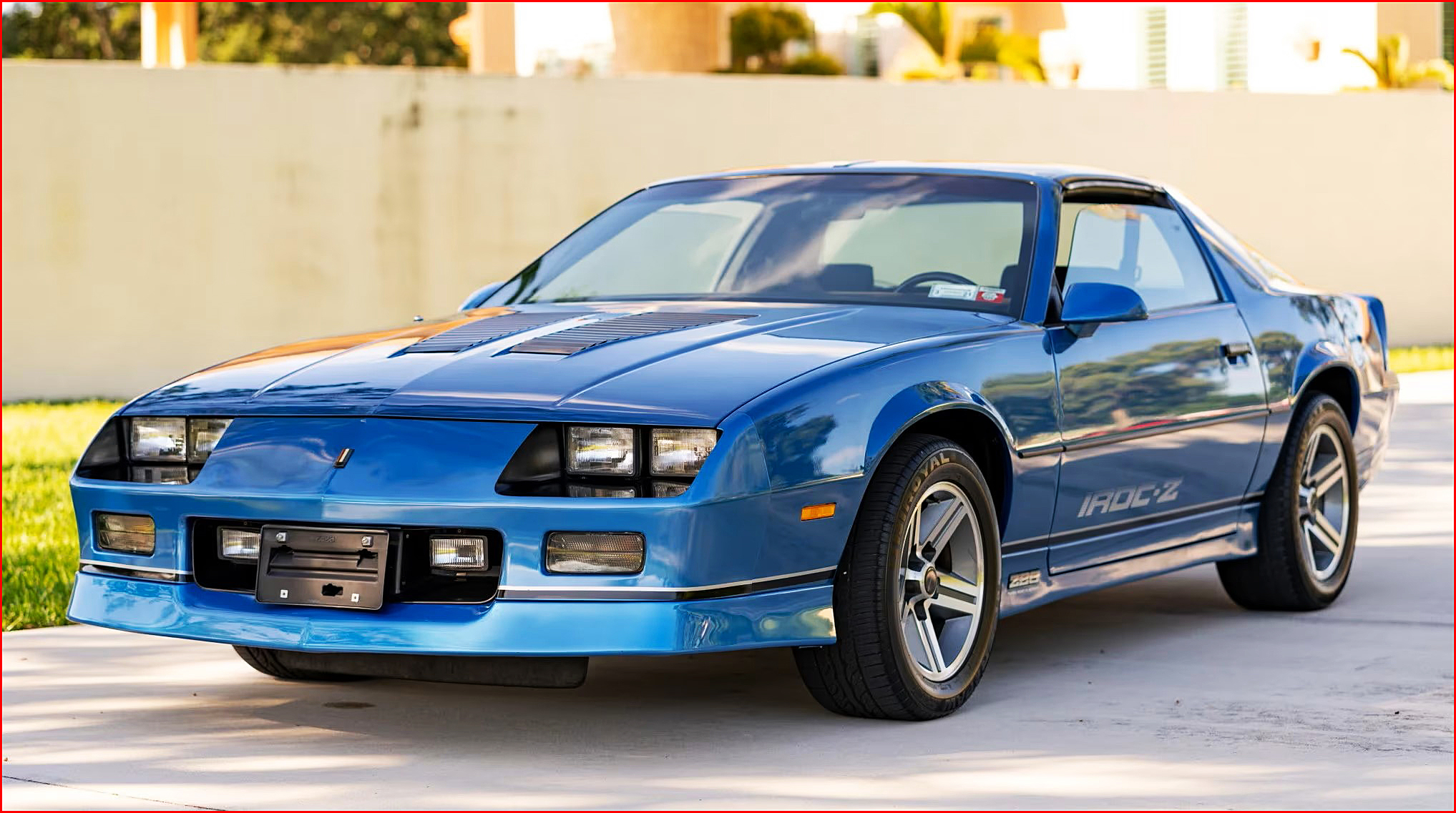
✪ This generation’s design owed nothing to previous generations and Chevrolet designers came up with a sleeker, more aerodynamic car with improved handling and slightly more powerful engines. It was also lighter and more rigid than the previous generation, resulting in improved performance. The large, complex rear window reflected recent advances in car glass design, and the windshield was raked at 62 degrees, whereas previously Chevrolet limited windshield rake to 60 degrees. The rear also sported a hatchback design missing from previous Camaros, with a fold-down rear seat to expand the luggage compartment. Inside was a new, more driver-focused dashboard layout and improved ergonomics. It was available in three styles; Sport Coupe, Berlinetta and Z28, removing the Rally Sport and Super Sport models.
Sport Coupe came standard with a 2.5 liter LQ9 four-cylinder engine producing a miserable 90 HP, the first four-cylinder to reside under a Camaro‘s hood. A 112 HP 2.8 liter LC1 V6 or a 5 liter (305 cu. in.) LG4 V8 were optional, but the 2-barrel carb equipped LG4 was still the same 145 HP dog from the previous generation. Downmarket “dog-dish” hubcaps were standard, full wheel covers were optional as were steel 5-spoke 14-inch rally wheels. There was no four-cylinder available for the Berlinetta, the 2.8 V6 was standard and the 305 was optional. Unique finned aluminum 14-inch wheels with gold accenting and a “Berlinetta” center cap, gold “Berlinetta” badging, lower-body pinstriping, headlamp pockets painted in an accent color and a gold and black horizontal divider bar on the taillights distinguished it from the Sport Coupe. On the inside, a custom cloth interior, a rear storage well cover, additional carpeting on the rear wheelhouses, full instrumentation and additional body insulation were all standard. All Camaros now came with MacPherson struts on the front end and coil springs and a long torque arm replacing the old leaf springs in the rear.
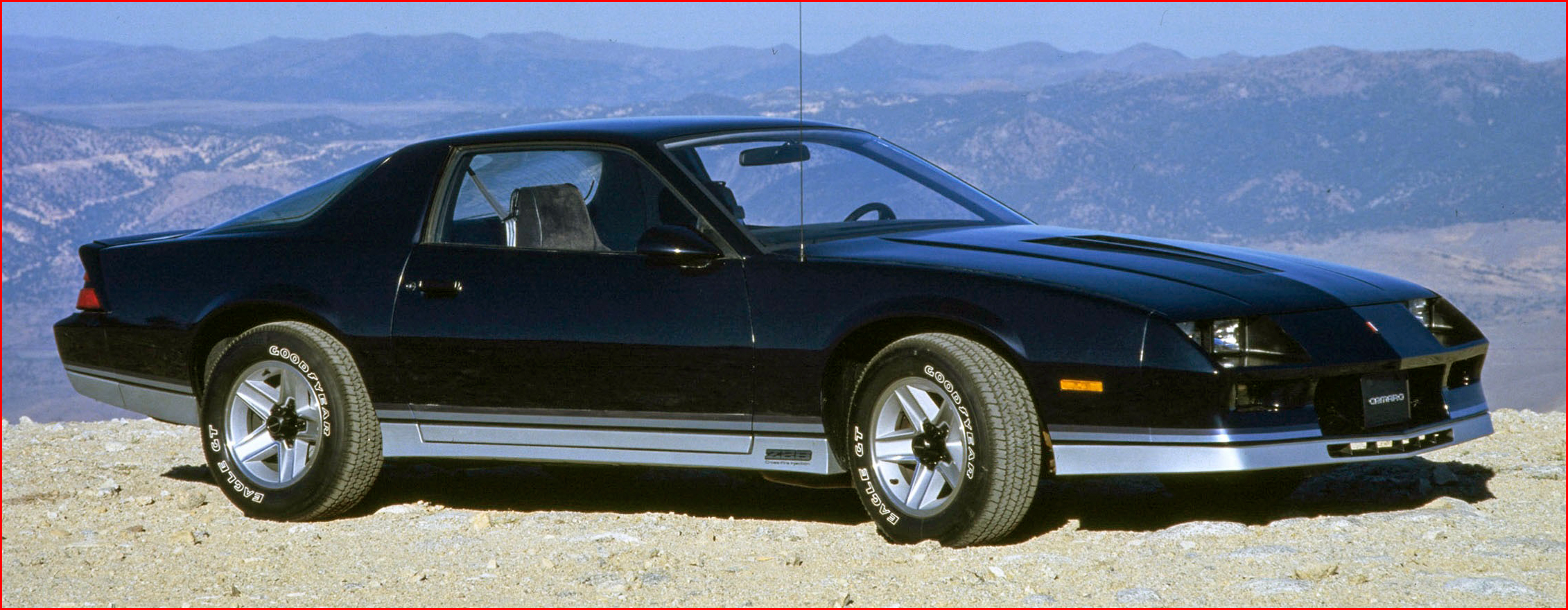
Z28 gave buyers the standard LG4 V8, but with a 4-barrel carb upping the HP to 165, still a paltry output compared to the Z28‘s ’60s and early ’70s heyday. The optional engine was the LU5 V8, still 305 cubic inches, but with the new twin throttle-body “Cross Fire Injection” that upped the output by 20 HP. The LU5 was only available with the three-speed TH200 lockup automatic transmission, you could still get a four-speed manual if you opted for the less powerful LG4. This version of the Z28 was criticized for the low power ratings of its two 5 liter V8s. A lightweight fiberglass hood with dual functional hood scoops with air induction flaps was available, but only if you opted for the fuel-injected, higher-output LU5. The Z28 also had a different nose, a three-piece rear spoiler, black headlamp pockets, and lower-body valances in silver or gold. Just above the valances was a three-color lower body stripe that encircled the car. The tires rode on new 15-inch cast-aluminum five-spoke wheels accented with silver or gold. “Z28” badging on the side valances and right rear bumper completed the package. Motor Trend magazine gave the 1982 Z28 Car Of The Year honors.
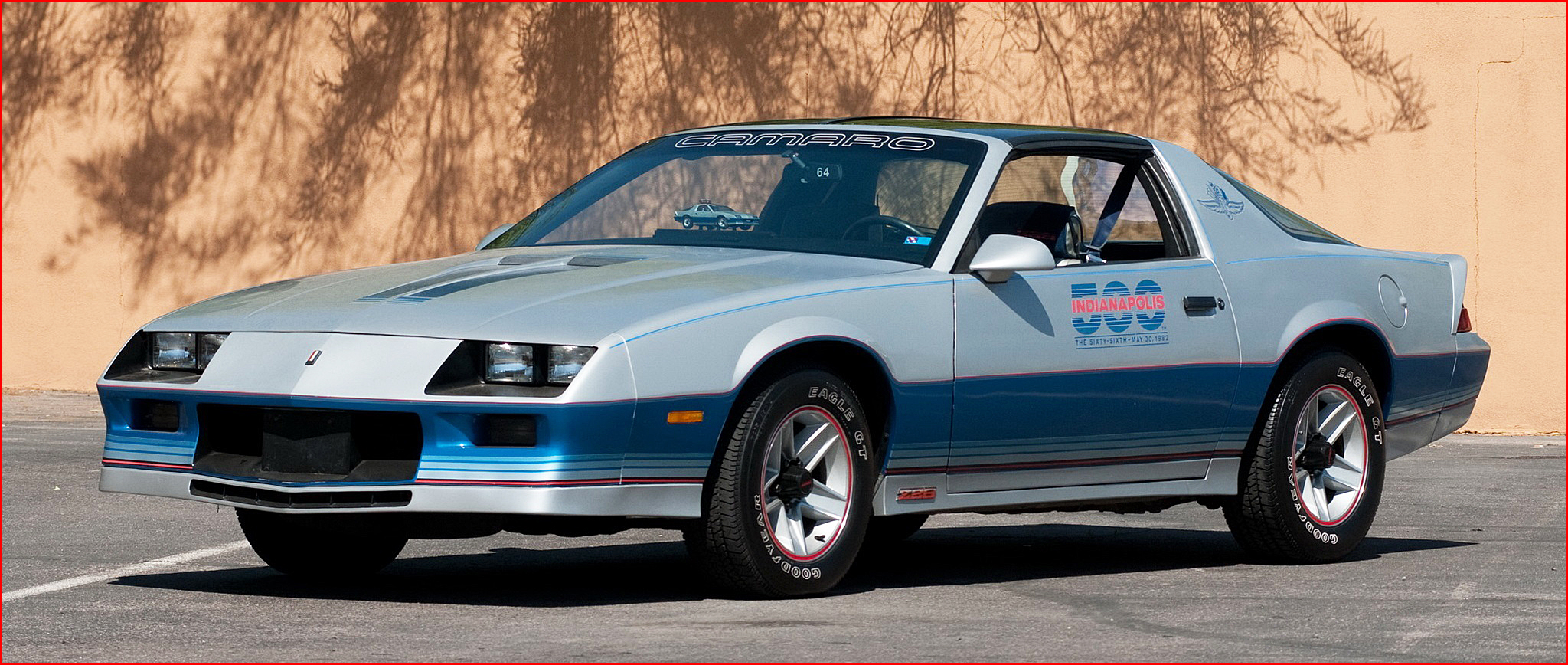
The Z28 was again the Indianapolis 500 pace car for the 1982 race, and over 6,000 appearance replicas were sold featuring special two-tone silver/blue paint and special striping, orange pinstriping on the 15-inch wheels, and a silver/blue interior with six-way Lear-Sigler manually adjustable seats. Engine choices were the two standard Z28 offerings, the actual pace car featured a heavily-modified, all-aluminum 5.7 liter V8 not available on the replicas.
A special European-spec Z28 was shown at the 1982 Geneva Motor Show, the Z28E, with the “E” standing for “Export.” The Z28E could be had with a 155 HP carbureted V8 or a 107 HP V6.
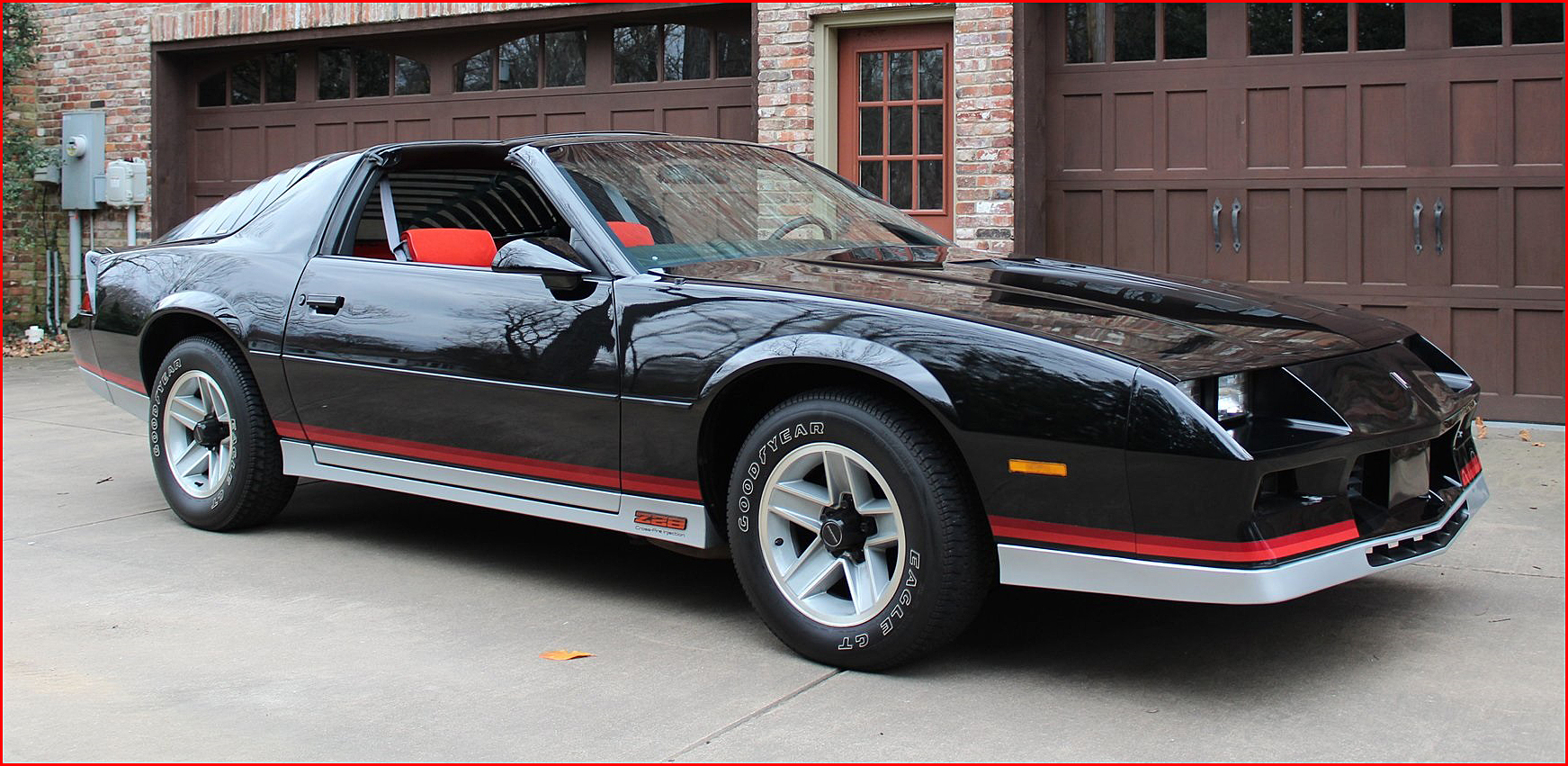
For 1983 the three-tier Camaro lineup continued, Z28 got a 10 HP boost to the 305 LU5 V8 and a new 5-liter L69 High-Output (HO) 190 HP V8 with a 4-barrel carb. The L69 was only available with the manual transmission, a new Borg-Warner 5-speed that replaces the previous 4-speed. A 4-speed automatic transmission replaced the 3-speed automatic. The TH-700 automatic overdrive was available on the Sport Coupe and Berlinetta, but not the Z28. Other than the new transmissions the Sport Coupe and Berlinetta were essentially unchanged for 1983.
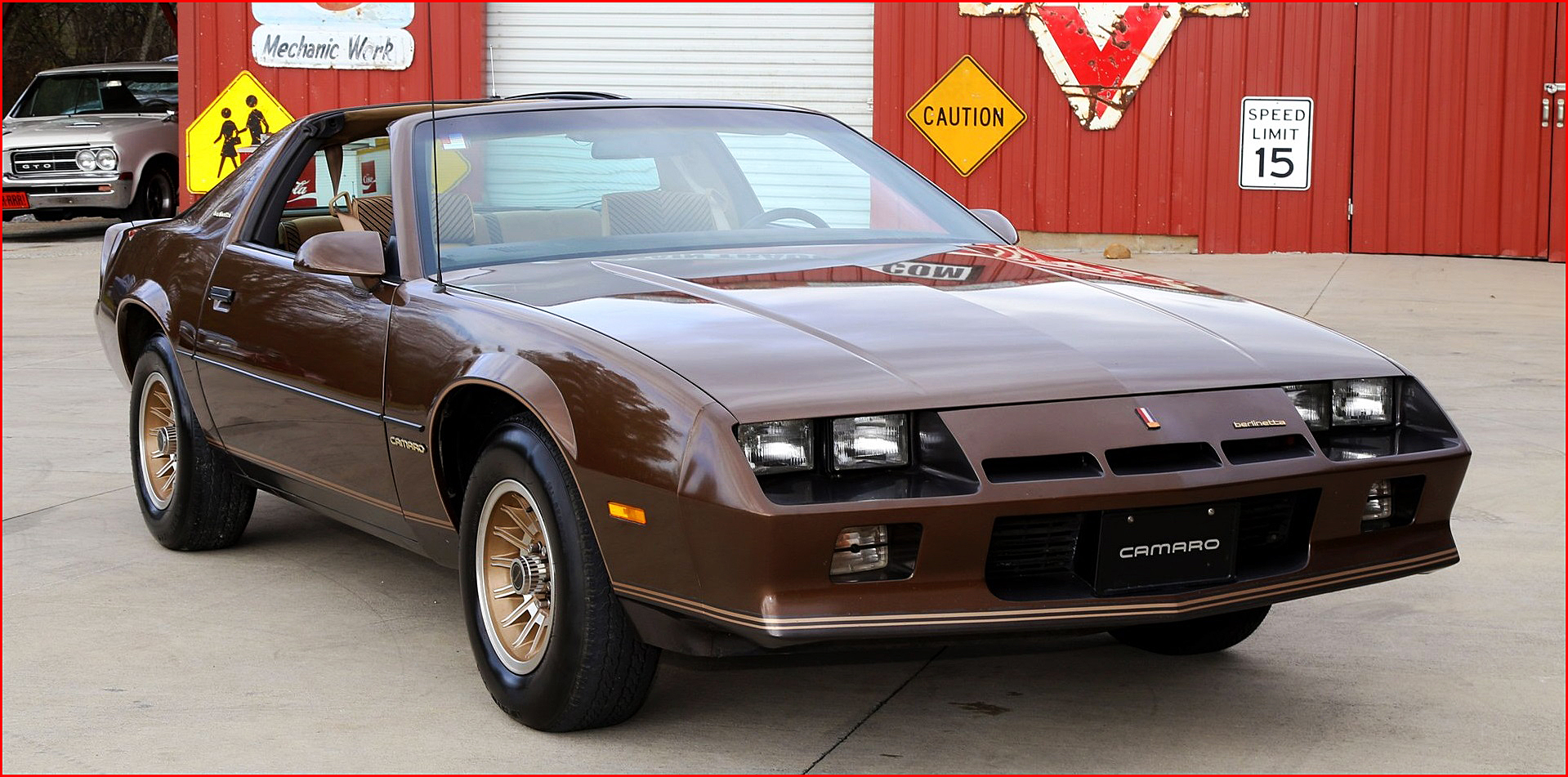
The dashboard pad received a revised shape and finish on all models for 1984, and the standard instrument cluster in the Berlinetta was replaced by an electronic bar-graph tachometer and digital speedometer. A new overhead console and pod-mounted controls for the turn signals, cruise control, HVAC, windshield wipers and headlights also appeared. The radio was also mounted on a pod on the console that could swivel towards the driver or passenger. Road & Track magazine selected the 1984 Camaro/Firebird as one of twelve best cars in the world and in the Best Sports GT category in the $11,000-$14,000 range, while Car and Driver magazine picked the 1984 Z28 as the best-handling car built in the United States.
The LU5 Cross Fire V8 was dropped, leaving the LC1 2.8 liter V6 as the highest-output engine on Sport Coupe and Berlinetta. The Z28 retained the L69 HO engine, available with an automatic transmission for the first time. Z28‘s body remained mostly unchanged except for the deletion of the fiberglass hood, replaced by steel.
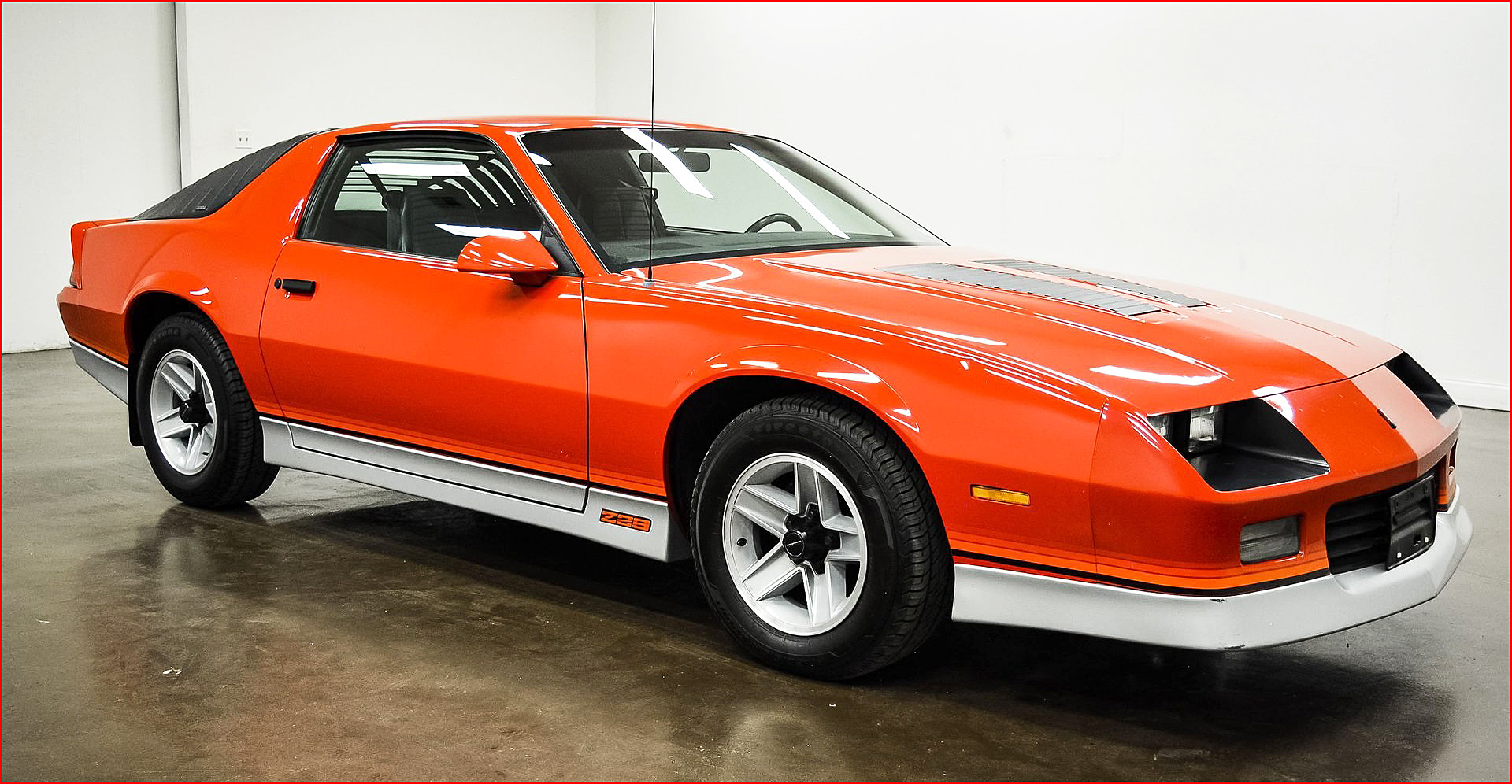
1985 Camaros got refreshed noses and new, deeper valances. Speedometers no longer had the unique double-pointed needle that simultaneously read MPH and KM/H, replaced by conventional single-pointer 85 MPH speedos.

New this year was the IROC-Z version of the Z28 named after the International Race of Champions, a race that featured special, indentically-prepared Camaros since 1978. IROC-Zs featured an upgraded suspension, lowered ride height, specially valved Delco-Bilstein shocks, larger-diameter sway bars, a steering/frame brace known as the ‘wonder bar’, a special decal package, and an optional Tuned Port Injection system for the 305 V8 taken from the Corvette. Also taken from the Corvette were the Goodyear “Gatorback” high-performance tires in 245/50/VR16 size as opposed to the Corvette‘s 255/50/VR16s. These rode on unique new aluminum 5-spoke 16-inch wheels with different front and rear offsets, resulting in the wheels being stamped “Front” and “Rear.”
The LB9 305 with Tuned Port Injection was rated at 215 HP and was only available on the IROC-Z and Z28 models with a TH700-R4 automatic transmission. 205 of them also got the G92 Performance Axle Ratio option. The 4-barrel High Output L69 305 was still rated at 190 and the LG4 305 at 155 HP.
Also this year, a California IROC-Z was created at the suggestion of Chevrolet’s California Marketing Group. 250 black and 250 red models were produced, all with the LB9 TPI and TH700-R4 automatic. They were standard IROC-Zs except with the base Camaro hood with no louvers, base Camaro rear decklid with no spoiler, and no exterior decals.
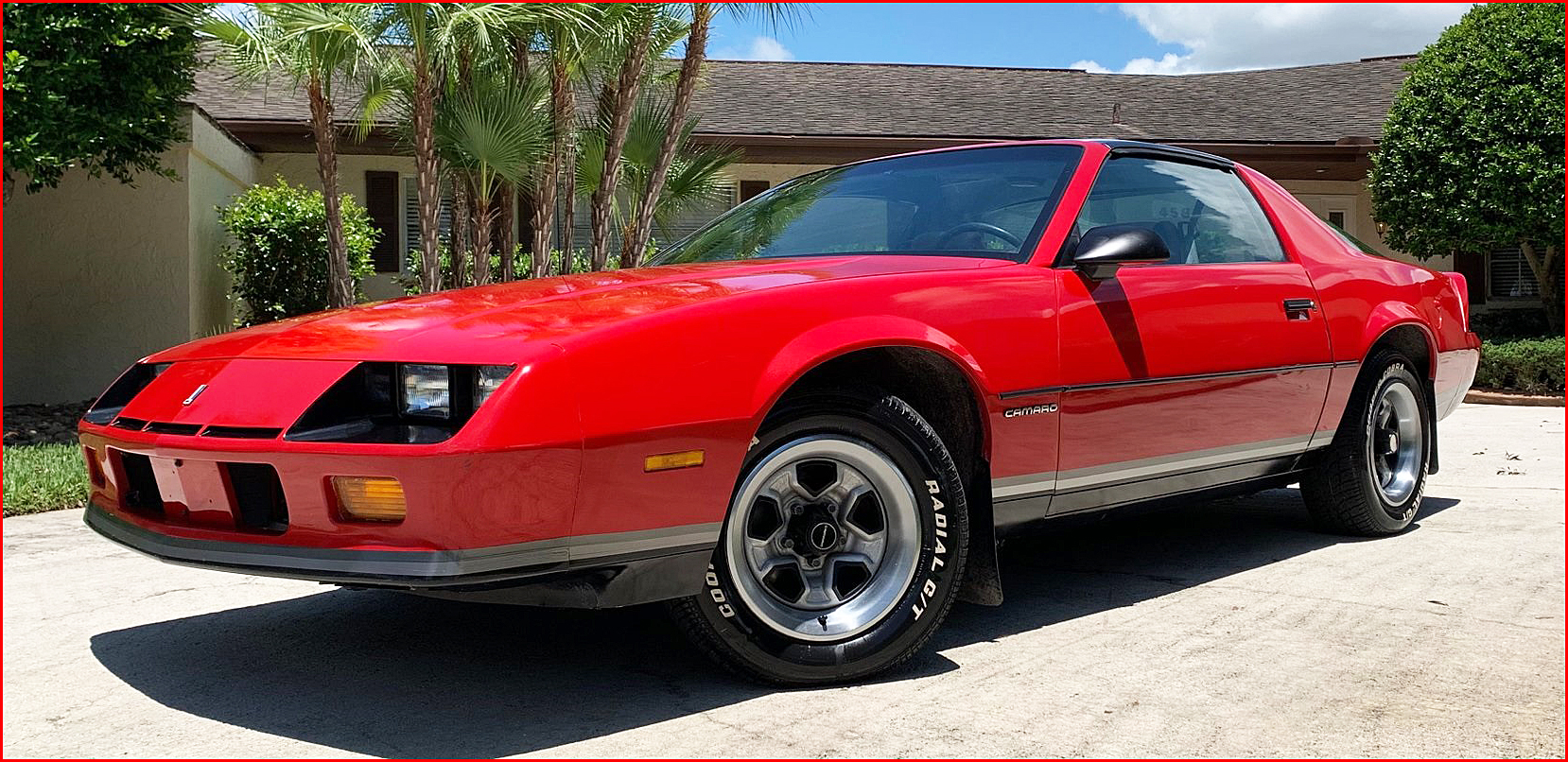
1986 saw the end of the L69 HO 305 4-barrel option. 63 were built for racing in Canada’s Players Series and only 11 were built for the public. The 2.5 liter inline-four also disappeared, leaving the 2.8 liter V6 as the base engine in Sport Coupe and Berlinetta. The 305 TPI LB9’s rating dropped to 190 HP from 215 in the IROC-Z model. This was also the final year for the Berlinetta. A new Federally-mandated Center High Mounted Stop Lamp (CHMSL) was installed, mounted to the outside hatchback glass.

A new 350 cubic inch L98 TPI engine was made available in 1987 for the IROC-Z, along with a new 5-speed manual transmission that could also be had with the 305 TPI. The 225 HP L98 was the highest-HP Camaro engine since 1974. The bumper cover decal for the 350 had “5.7L” added to the “Tuned Port Injection” decal to distinguish it from the 305. Automatic transmission equipped 305s got the 190 HP version, while those with the manual got a HP boost to 215. All the V8s got new hydraulic roller lifters and new valve cover and head designs.
The CHMSL third brake light was now mounted in the rear spoiler except on base coupes without the spoiler, those were mounted on the hatch glass like the previous year. A new LT model replaced the Berlinetta. The Z28 and IROC-Z models with TPI engines gained a new 145 MPH speedometer to replace the old 85 MPH version, which carbureted and V6 Camaros were still stuck with.
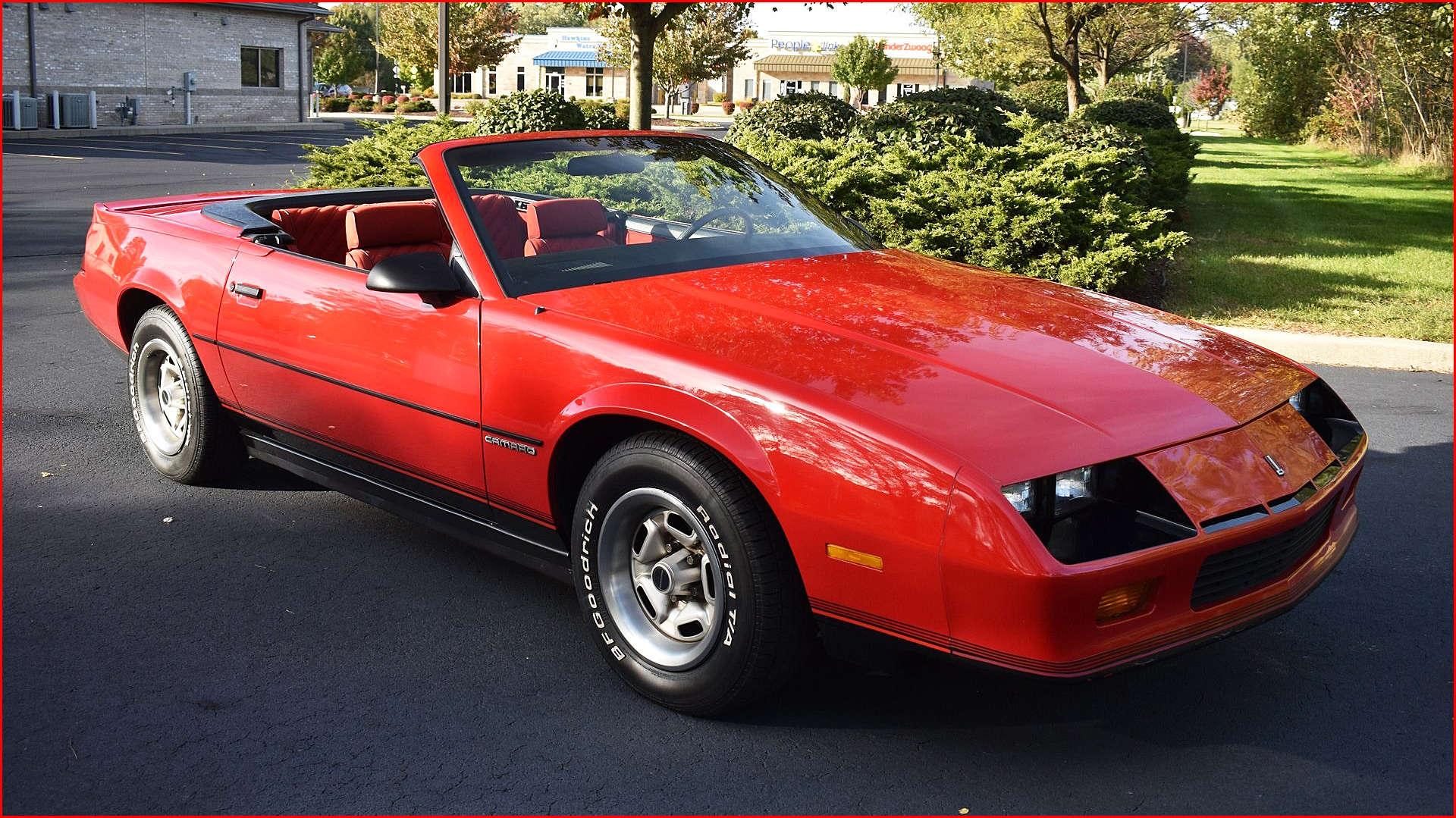
A new convertible model was available, the first since 1969, on Sport Coupe, LT, and IROC-Z models (curiously not on the regular Z28) and marked the 20th anniversary of the original Camaro, and the convertibles were considered the anniversary editions with a dash badge that read “20th Anniversary Commemorative Edition.” Despite the anniversary and the new more powerful 5.7 liter V8, Camaro sales continued to decline and GM decided to no longer produce Camaros at GM‘s Norwood, Ohio facility, consolidating production at the Van Nuys, California plant.
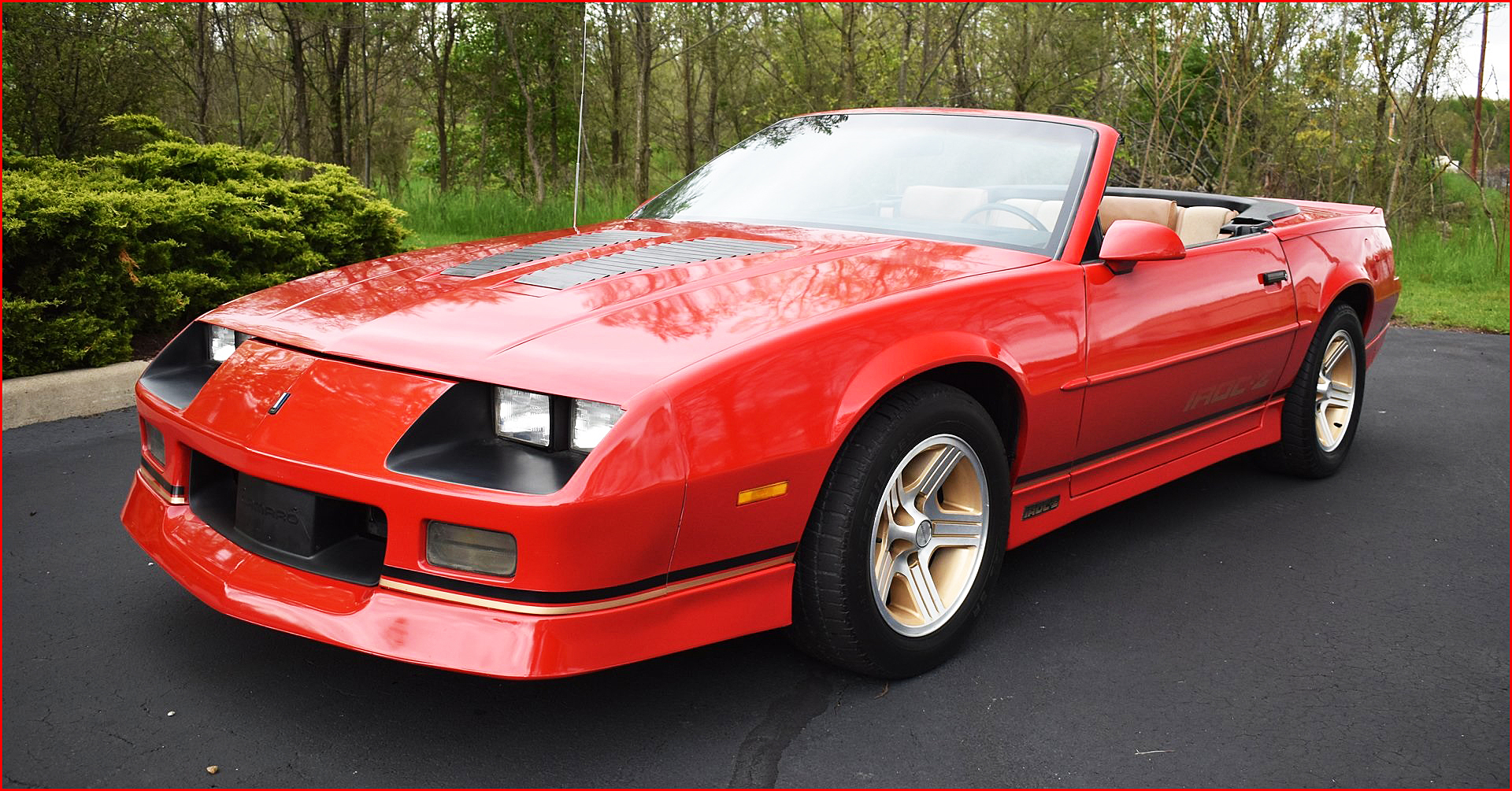
For 1988, Chevrolet simplified the Camaro line, dropping the slow-selling LT and the base Z28 models, leaving only the Sport Coupe and IROC-Z. The 16-inch 5-spoke wheels were now optional on the IROC-Z, featuring two lines on each spoke instead of one, and the standard wheels on both the IROC-Z and Sport Coupe were the 15-inch 5-spoke ones from the old Z28. The Z28‘s ground effects and spoilers also became standard on the Sport Coupe. The Z28 logos on the ground effects below the doors and rear bumper now read “IROC-Z” and the large “IROC-Z” decals were moved to the back of the doors from the front to make room for the new logos. Curiously, the dash badges read both “Z28,” and below it “IROC-Z.”
Carburetors were now gone, and all engines were now fuel-injected. The 2.8 liter V6 produced 135 HP, the base 305 with throttle-body injection gained to 170, the TPI 305 was still 220 HP with the manual and 195 with the automatic, and the 350 got a bump to 230 HP.
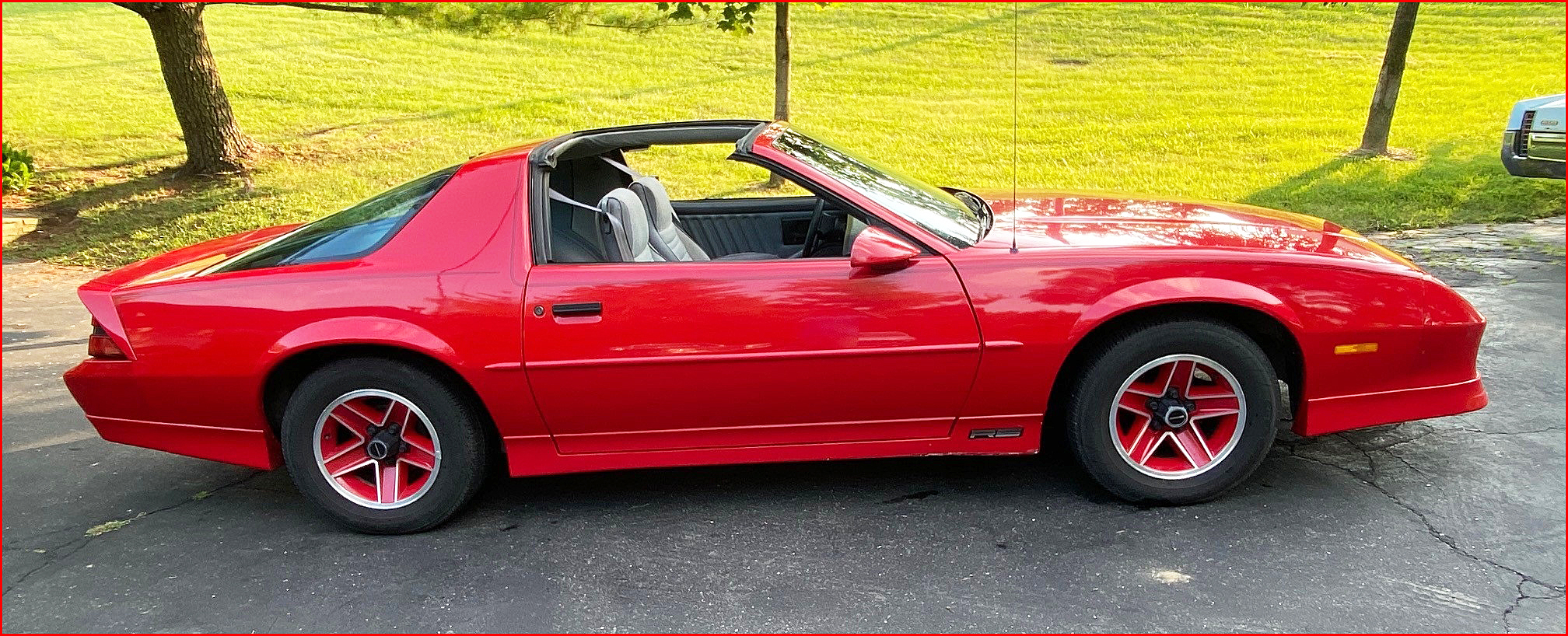
Rally Sport (designated RS) made its way back in 1989, becoming the base model to replace the Sport Coupe, still with the old Z28 ground effects but with the 2.8 V6 as standard and the 305 as an option. 1988’s raised rear spoiler was also gone. Engines carried over from 1988 as well, and IROC-Z coupes had a new dual catalytic converter exhaust system that was standard with the G92 option, but only on the 305 TPI with a manual transmission or a 350 TPI with the TH700-R4 automatic. The HP ratings varied on the 305, from 170 on the standard L03 to 230 on the LB9 with the manual and dual catalytic converter, and a jump to 240 HP for the 350 with the same setup. The G92 Performance Axle package gave the 350 a 3.27 rear end while the 305 manual got a 3.45 rear end. The package also included four-wheel disc brakes for the first time, an engine oil cooler, 245/50ZR16 Goodyear Eagle tires and a 145 MPH speedometer with a 5,500 redline tach. 1,426 IROC-Zs were sold with the G92 option. If you wanted maximum performance out of your IROC-Z, ordering one with the G92 option and no air conditioning automatically got you RPO 1LE, which included some SCCA Showroom Stock parts like larger 11.65 inch rotors with 2-piston aluminum calipers, an aluminum driveshaft, a special baffled fuel tank, specific stiffer shock absorbers and stiffer suspension bushings, along with deleting the fog lamps. 1LE was simply an option combination that most dealers weren’t even aware of, so only 111 cars were built with this package.
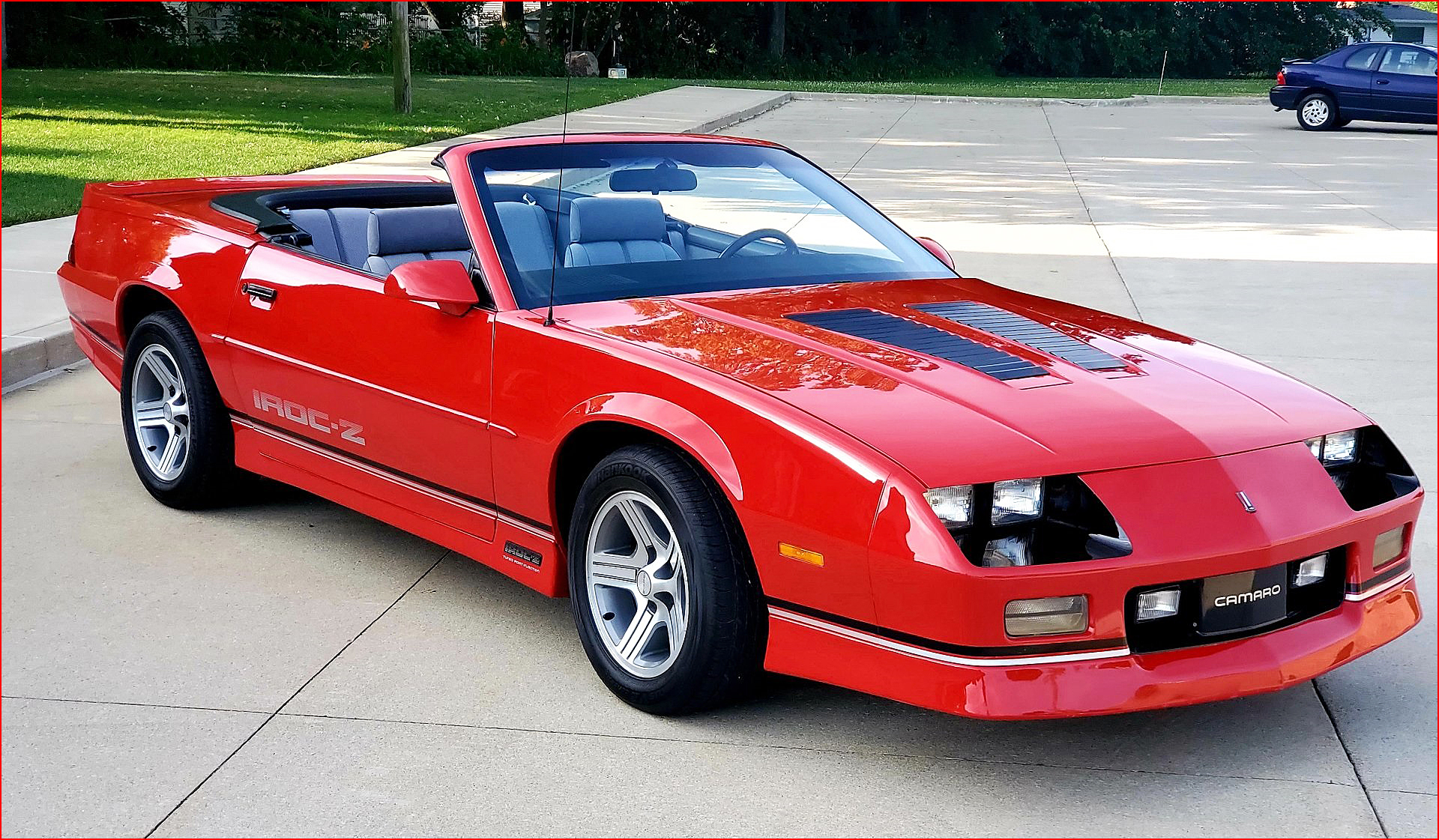
1990 had the lowest production of Camaros to date, only 35,048, but that number is misleading because the model run was stopped early on December 1st because of the introduction of the face lifted 1991 models. This was also the last year of the IROC-Z as Chevrolet decided not to renew its contract with the International Race of Champions, which was picked up by Dodge. Airbags were offered for the first time, along with a new “half-moon” gauge cluster. The sharp dash edges were rounded and the lettering on the gauges changed from yellow to white.
The 2.8 liter V6 was replaced by a new 3.1 liter version, and the 5.7 liter V8 got a HP bump to 245. RPO 1LE could again be triggered by ordering the G92 Performance Axle combined with no A/C on the IROC-Z. 62 1LE coded cars were produced.

1991 Camaros started production early, in February. All Camaros received a facelift, with a ground effects package for both models. With the demise of the IROC-Z, the Z28 re-appeared with a high-rise spoiler and non-functional hood blisters, and the third brake light was re-located back to the top of the hatch, but the housing was on the inside instead of the outside except for convertibles which retained the light in the low spoiler. A new wheel design complimented the new body. A new B4C “Special Service” option was made available to law enforcement, the military and the government, but it was only a Z28 powertrain and suspension in a Rally Sport. Some modified assembly techniques were started and carried on into the fourth generation like different seam sealers, structural adhesives and different assembly methods in key areas to reduce squeaks and rattles and give an overall better perception of quality.
Engine outputs were 245 HP for the 350 TPI, 230 for the 305 TPI and the 305 TBI remained the same at 170. The 1LE package was again available with the same options as before.
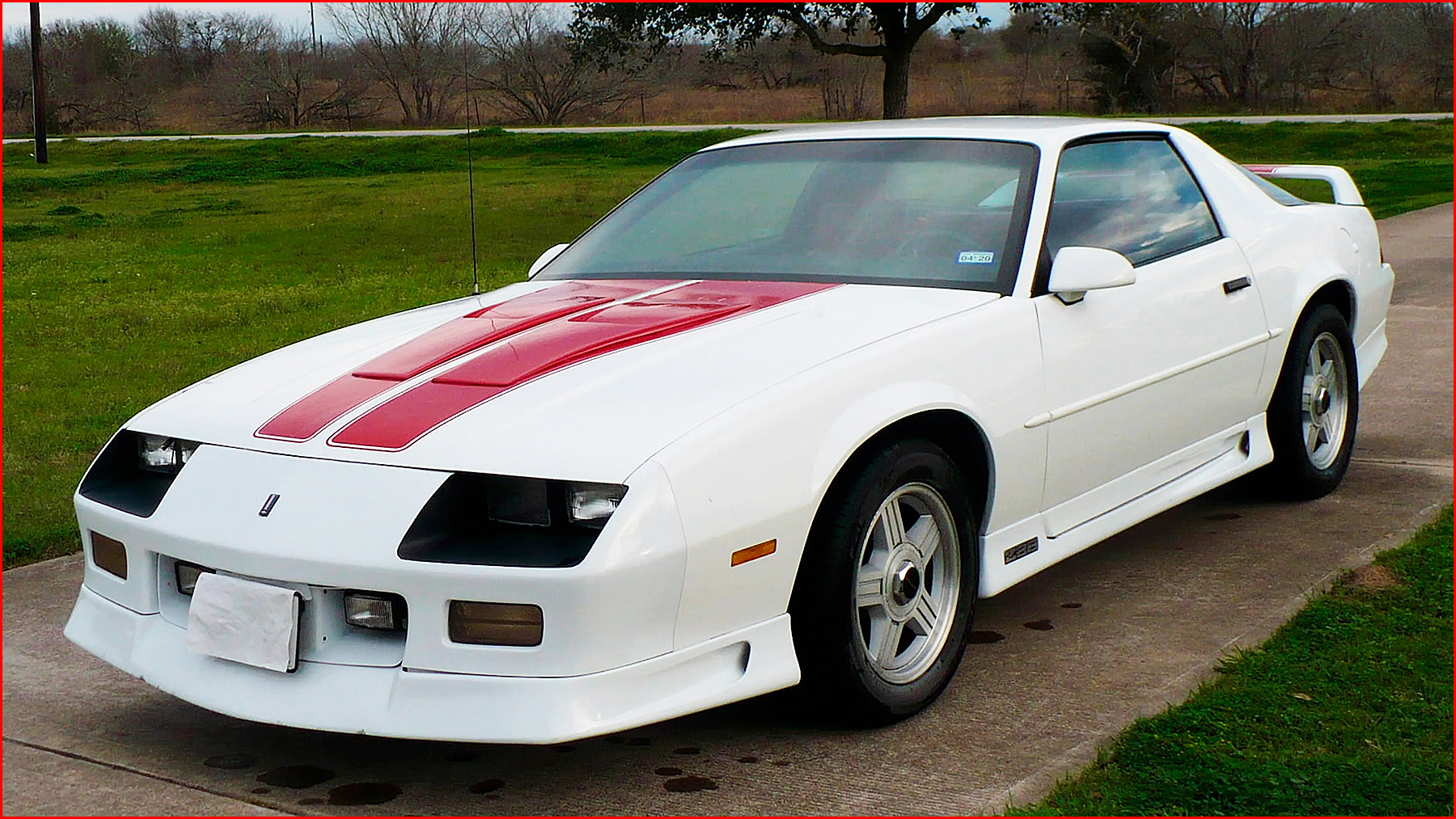
1992 marked the final third-generation year. A “25th Anniversary Heritage Edition” had been planned that included Corvette aluminum cylinder heads, tubular exhaust headers and a six-speed manual transmission, but sadly the idea was scrapped in favor of a “Heritage Package“, option code Z03, which amounted to a graphics package of badges and rally stripes. All 1992 Camaros received a “25th Anniversary” badge on the dashboard. The B4C Special Service Package got the larger brake discs and 2-piston calipers from the 1LE option code.
Some TPI Camaro engines got leftovers from the Corvette as that engine switched from Tuned Port Injection to the new LT1 engine. It was purely a cosmetic change such as rough texture intake runners instead of smooth and black painted valve covers instead of silver; engine output remained the same. This was also the last year of Camaro production at the Van Nuys plant, and the United States as a whole until 2015. The last third-generation Camaro, a red Z28 coupe, featured signatures of the assembly line workers.
Fourth Generation 1993-2002
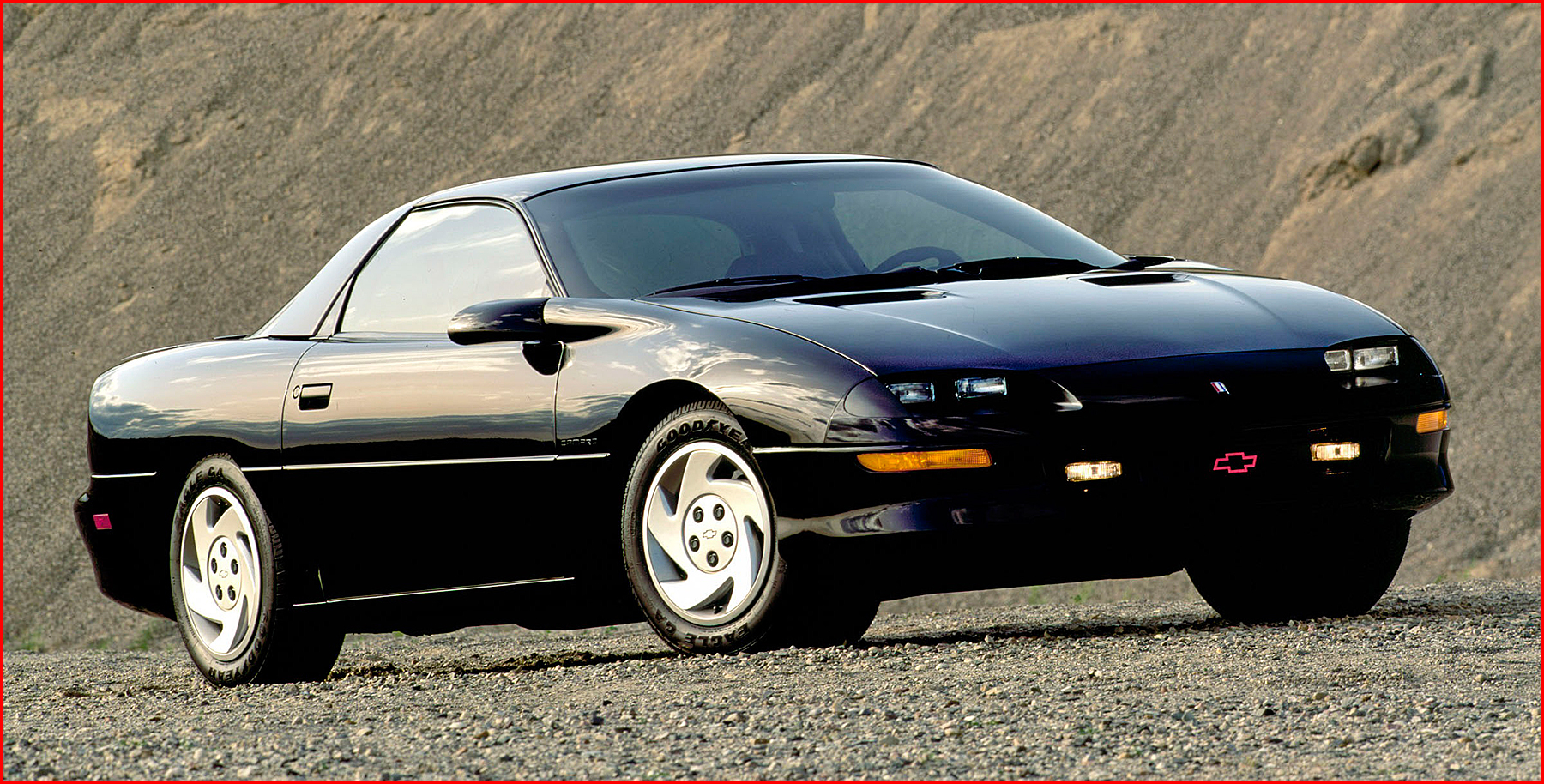
The F-body was updated in 1993, but still retained the same characteristics that it had since the Camaro‘s 1967 debut: coupe body, 2+2 seating and rear wheel drive. Visually it had a more rounded, aerodynamic look than previous generations, following the general style shift of the 1990s. The mirrors had a faired-in look that blended into the hood and the rear was rounded as well. Also new was the use of Sheet Molding Compound (SMC), made from chopped fiberglass and a polyester resin, for the roof, doors, rear hatch and spoiler.
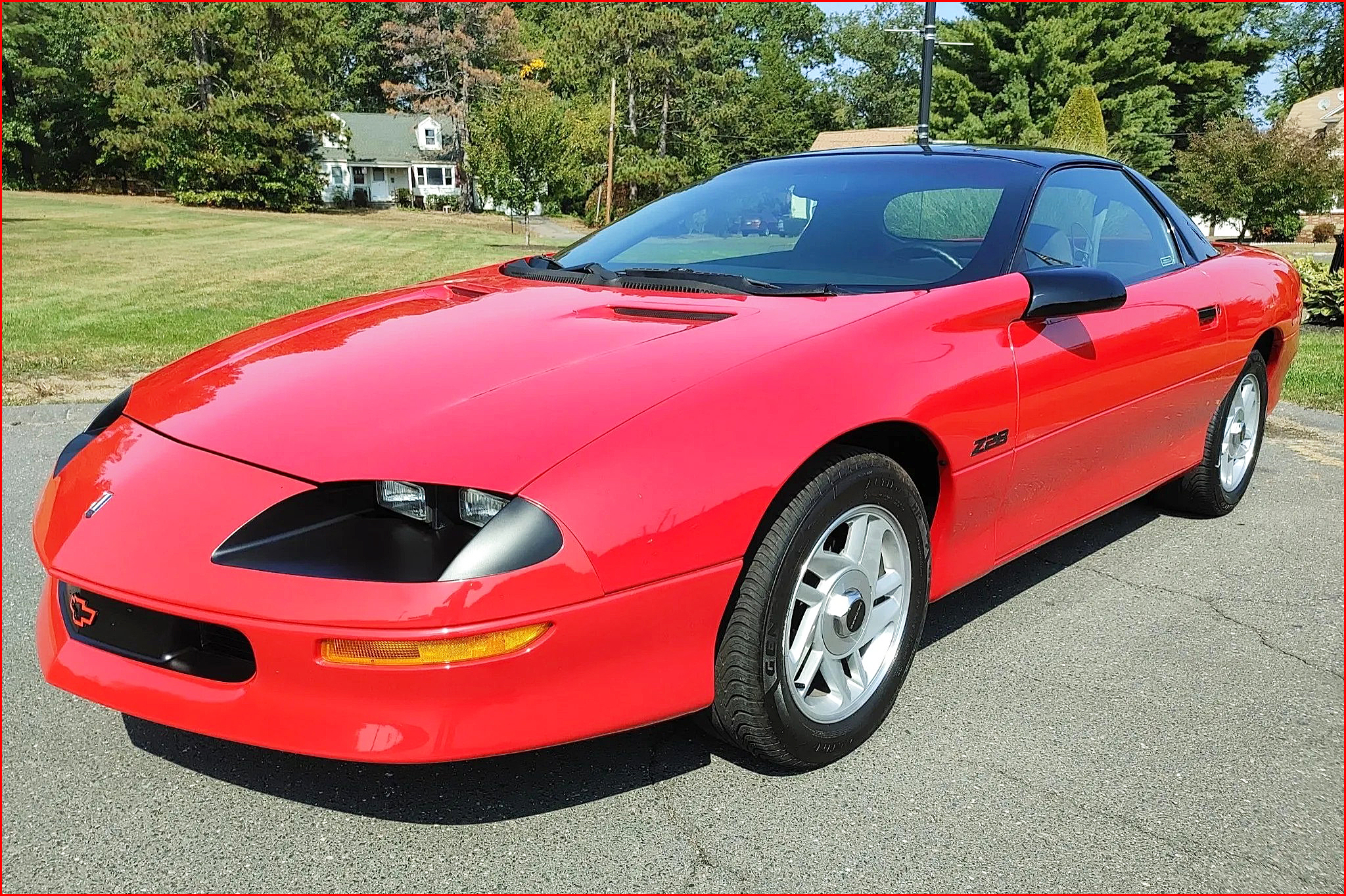
The front and rear suspension were re-designed for this generation as well, and base models were powered by a 3.4 liter V6 producing an underwhelming 160 HP. However, the Z/28 package got you the 5.7 liter LT1 V8, introduced on the Corvette the previous year, with a much more fun 275 HP and 345 lb. ft. of torque, especially if you opted for the Borg-Warner T56 6-speed manual transmission over the standard 4L60 four-speed automatic. This was the most powerful Camaro engine since the 1970 model’s LT-1.
The ECM was run via a Speed Density system, which measured engine RPM and load via a Manifold Absolute Pressure (MAP) sensor to compute airflow requirements, which were compared to a Volumetric Efficiency table in the ECM to estimate the amount of fuel required. An Intake Air Temperature sensor was also used because air density changes with temperature.
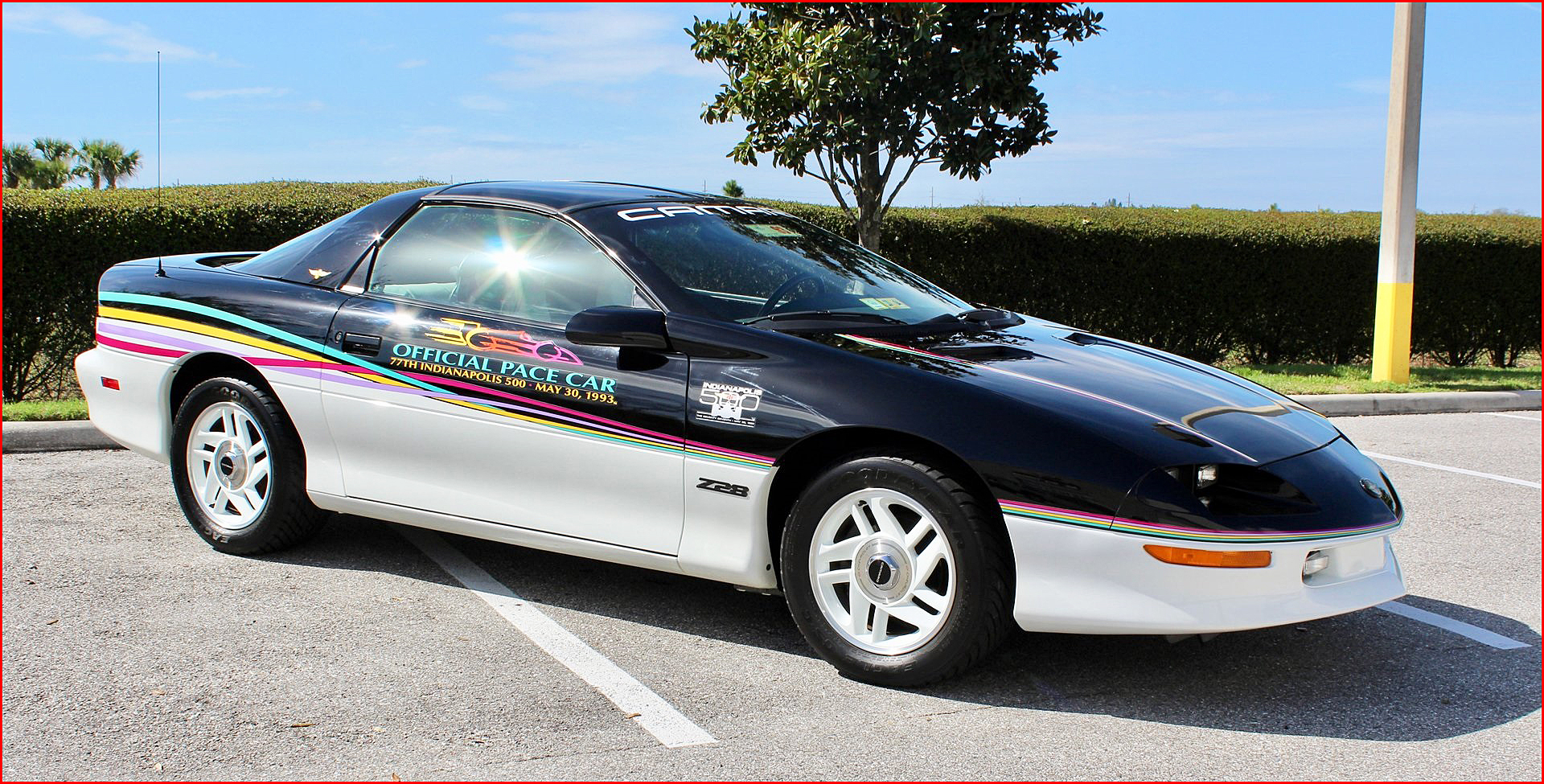
The Z/28 was again selected as the official Indianapolis 500 Pace Car, with 645 replicas produced with a black and white paint job, multi-colored pinstriping and “Indy 500 Official Pace Car” on the doors. There were no special additions to the stock Z/28 other than the paint scheme and graphics.
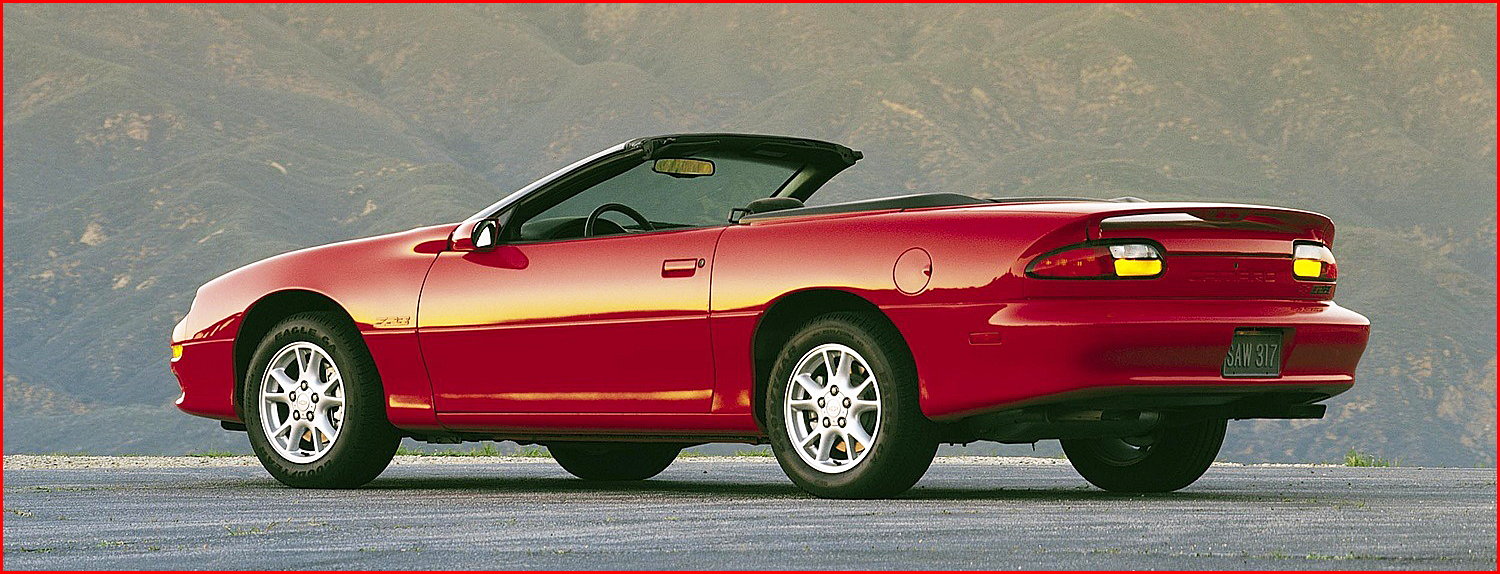
1994 saw the return of the convertible Camaro, designed and built by GM. The 4L60 automatic was phased out, replaced with the 4L60E which was shared with other GM V8-powered vehicles such as the Chevy Tahoe. The on-board computer that had dealt with only the engine the year before (ECM) now controlled both the engine and automatic transmission (PCM). Instead of using manifold pressure to determine fuel requirements like the previous year’s model, this year the computer logic was changed to receive data from the Mass Air Flow sensor (MAF) which uses a heated wire in the airstream. The air pulls heat away from the wire, which is converted into a voltage fed to the PCM, which interprets that as mass airflow. The PCM uses other sensors to judge engine conditions combined with the MAF sensor to provide the proper amount of fuel. The new PCM also had a non-removable flashable chip, replacing the removable Memcal chip on previous models, which could be re-programmed via the Assembly Line Diagnostic Link (ALDL) located under the driver’s side of the dashboard. On the dashboard, the gauge graphics were changed from the previous year’s yellow to a more traditional white, and a spot on the gauge cluster that read “ASR off”, relating to the Acceleration Slip Regulation (traction control) that was supposed to be on this model but was never installed.
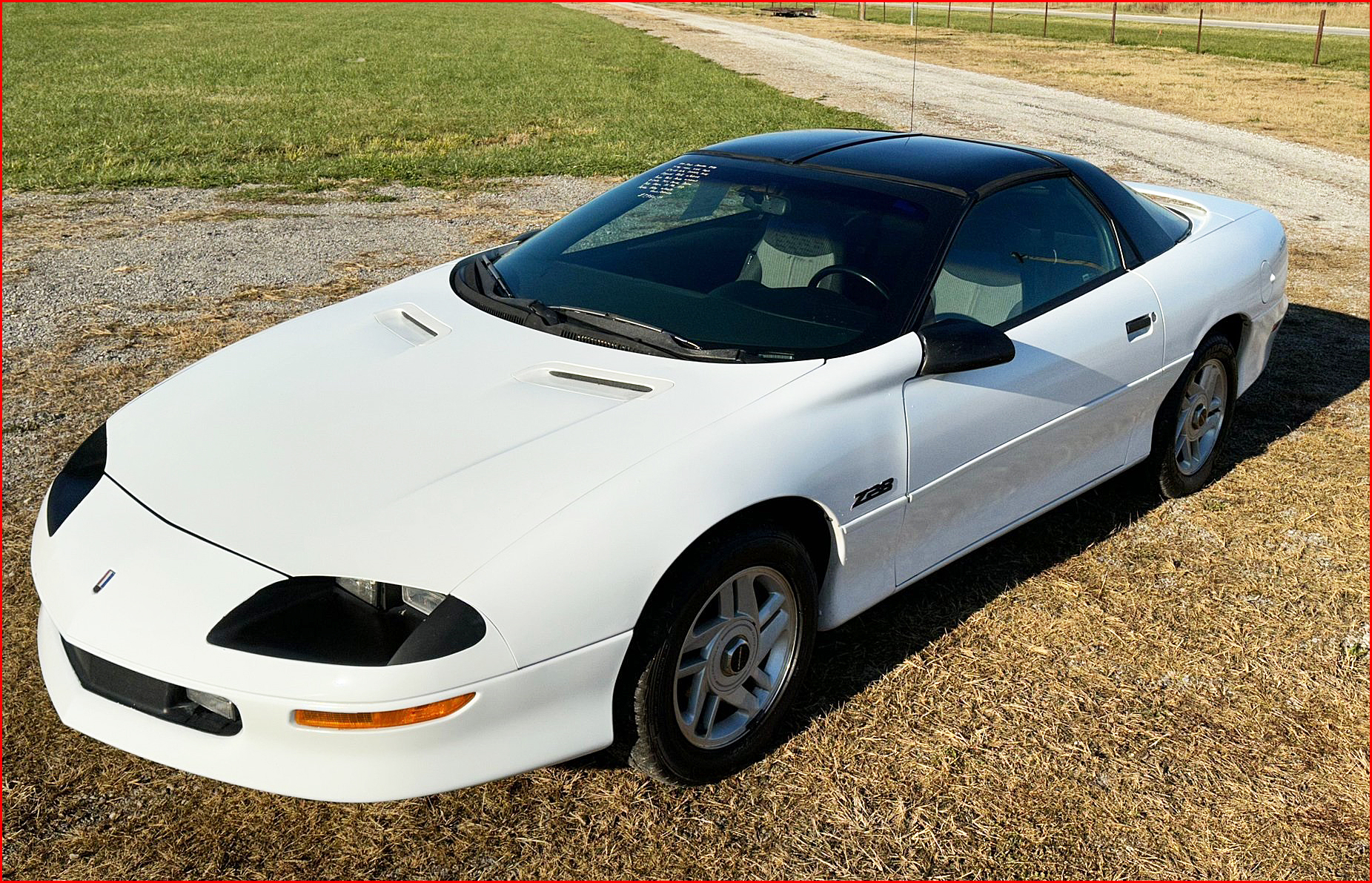
Z/28 received updated front brakes, and mid-year the cooling fans were changed from a parallel configuration to series. At low RPM the fans operated on 6VDC, but 12VDC at high RPM. The 5.7 liter V8 propelled the car from 0-60 in a very respectable 5.7 seconds, with the ¼ mile coming in 14.2.
A new optional 3800 Series II V6 joined the base 3.4 liter in 1995 as an option under the Camaro hood, giving buyers two choices of V6. The new engine upped the old 3.4 liter by 40 HP, producing 200. Output of the 5.7 liter in the Z/28 remained at 275, and 17-inch wheels became optional.
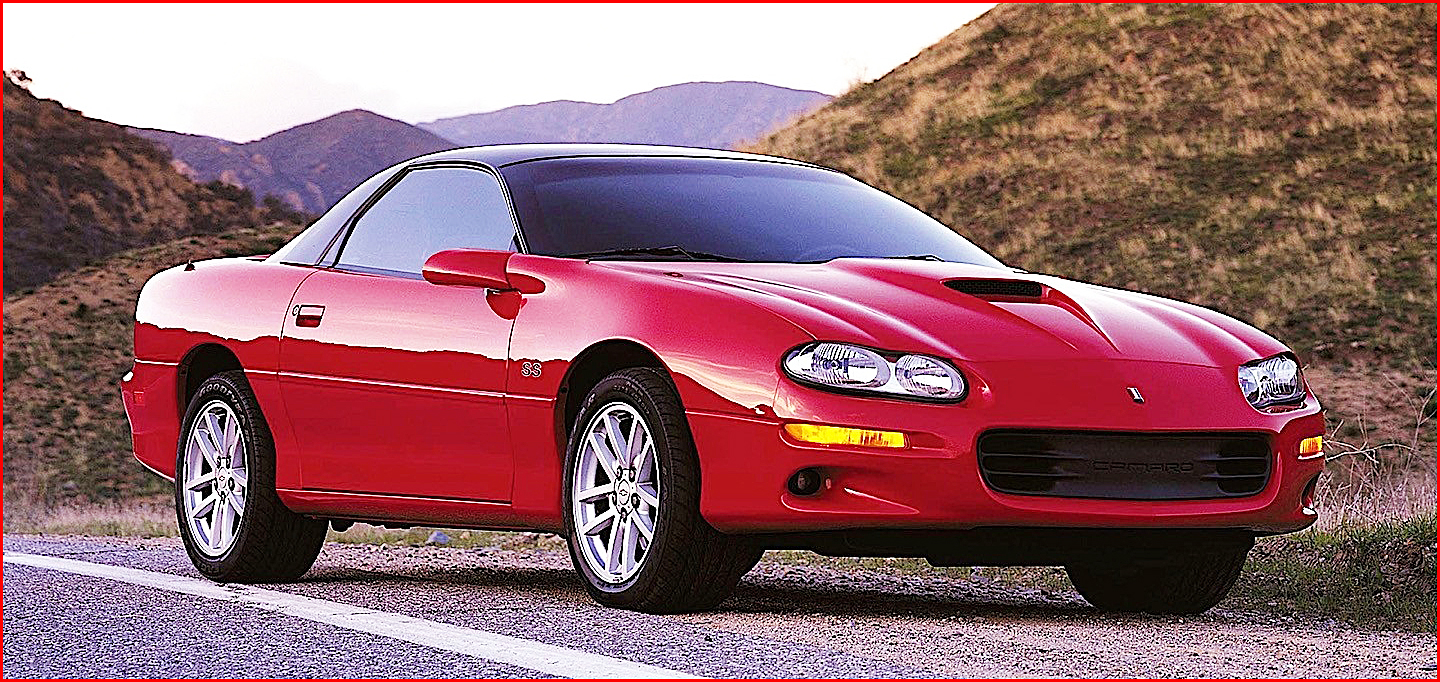
1996 saw the demise of the 3.4 liter V6, leaving the 3800 Series II introduced the year before as the base model’s sole engine. V6 buyers could also opt for the Y87 package that included an Auburn limited-slip differential, better tires, dual exhaust tips, 4-wheel disc brakes, a sportier steering ratio and a more aggressive gear ratio in the automatic transmission.
The Super Sport package, produced in collaboration with SLP Engineering, returned with a new wheels and tires that resulted in better handling and braking than the stock Z/28, with 16-inch Corvette ZR-1 style wheels as an option. The 5.7 liter LT1 V8 was also tuned to provide an extra 25 HP, bumping output to 310, and was the first Camaro engine to break 300 HP since 1971. This did not affect the 0-60 time vs. the stock Z/28, but dropped the ¼ mile time to 14 seconds flat. The RS nameplate also reappeared on the V6 coupe as a spoiler and ground effects package.
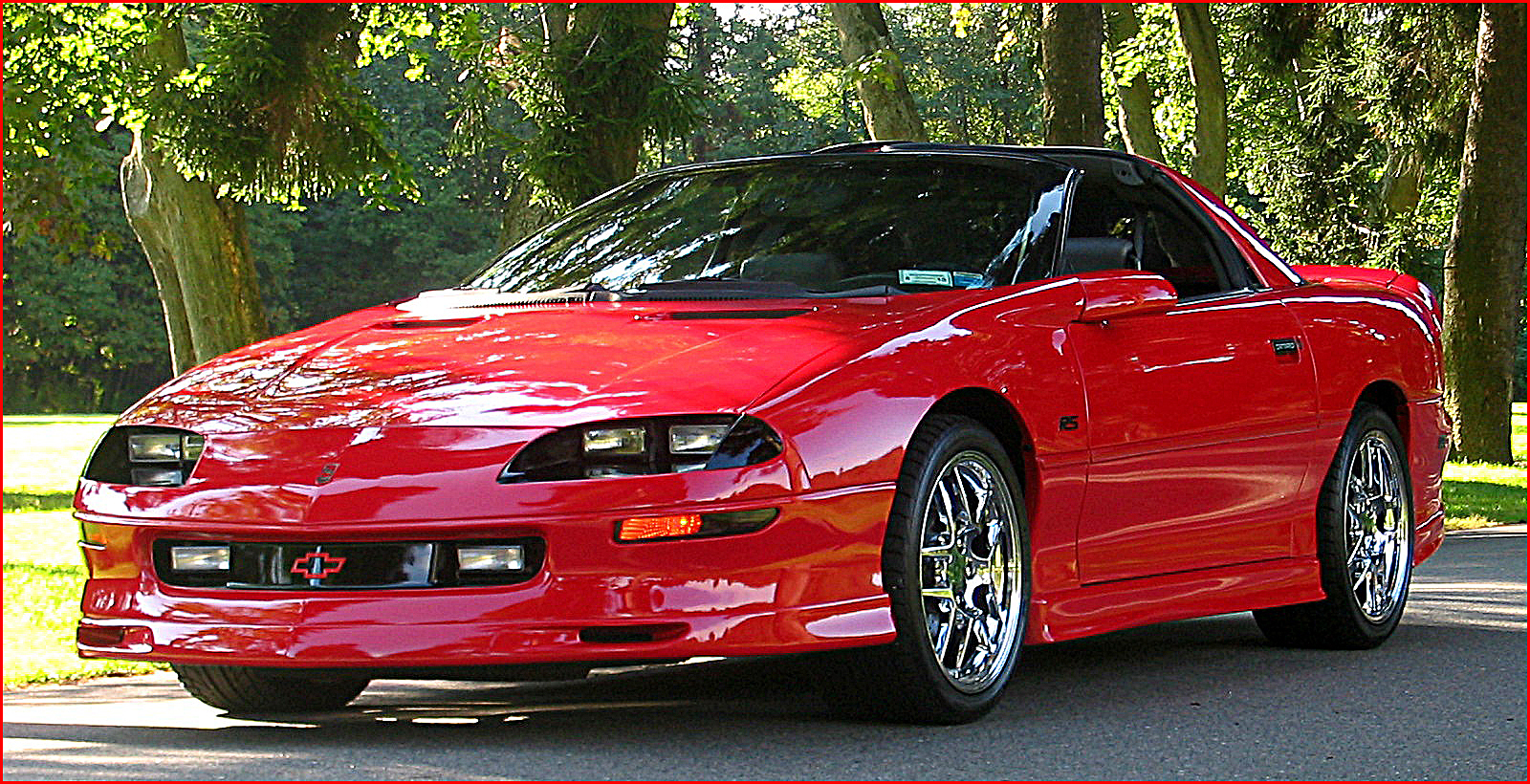
1997 saw an updated interior and new tri-colored taillights that would remain until the end of the generation. Also new were 5-spoke 16-inch wheels standard on the Z/28 with the 17-inch ZR-1 style wheels standard on SS coupe models. A 30th Anniversary Limited Edition trim package had unique orange stripes on white base paint, available on Z/28, SS and RS models.
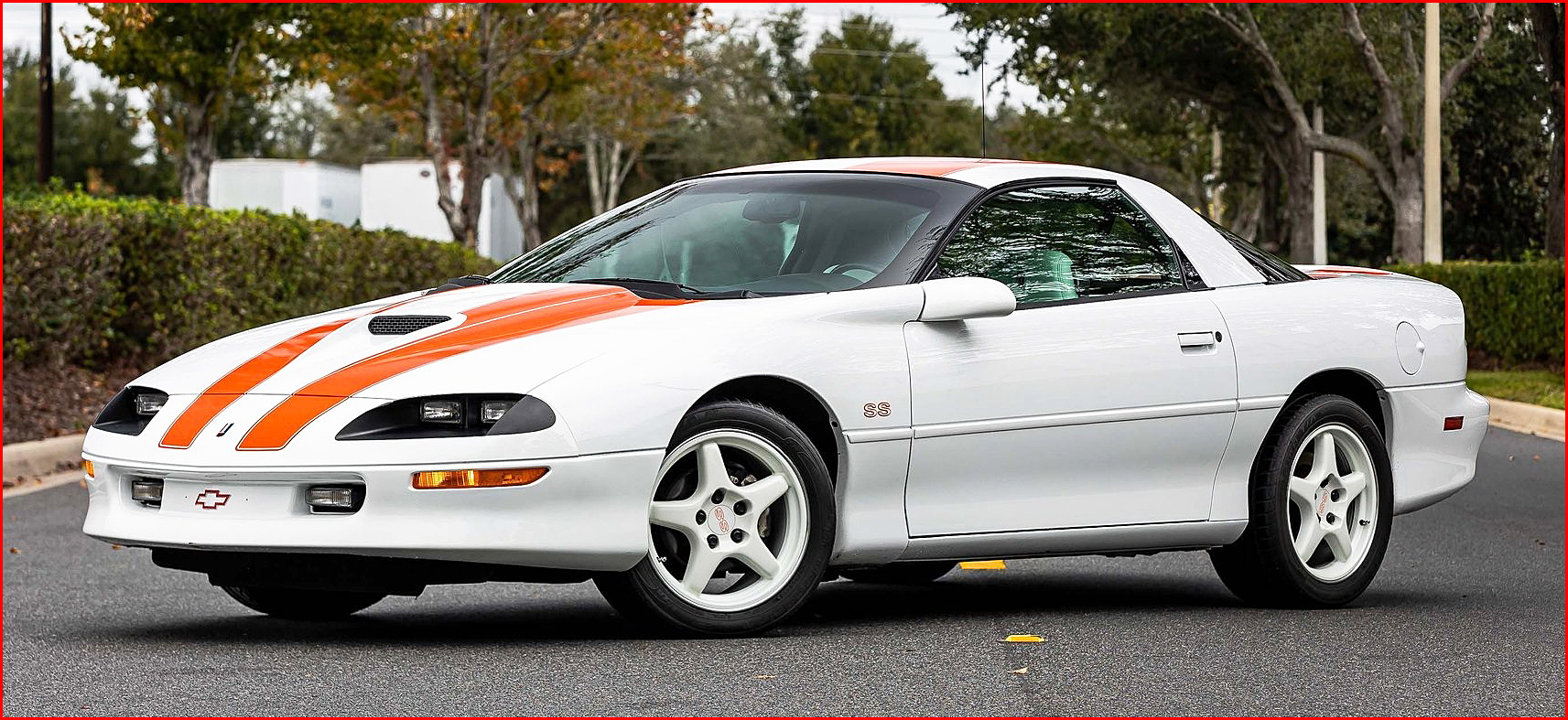
The big news was the 30th Anniversary model Z/28 SS. This could have been a paint-and-trim Anniversary Edition also, but SLP Engineering took the LT4 V8 left over from the 1996 Corvette Grand Sport, disassembled, balanced, blueprinted and enhanced the engine with stress plates, bumped the output to 330 HP and 340 lb. ft. of torque and put it under the hood of the SS. This was a tire-smoking, pavement-pounding, fastest factory-built Camaro available, reaching 60 MPH in 4.9 seconds and the ¼ mile in a mere 13.3. The only way to distinguish this snorting beast from lesser 30th Anniversary Editions is the “330 HP” decal on the rear. Only 106 were produced, 100 of which were slated for the US with the other 6 going to the Canadians. It was also the most expensive Camaro available at $40,000, just $4,500 shy of the price of a Corvette Grand Sport.
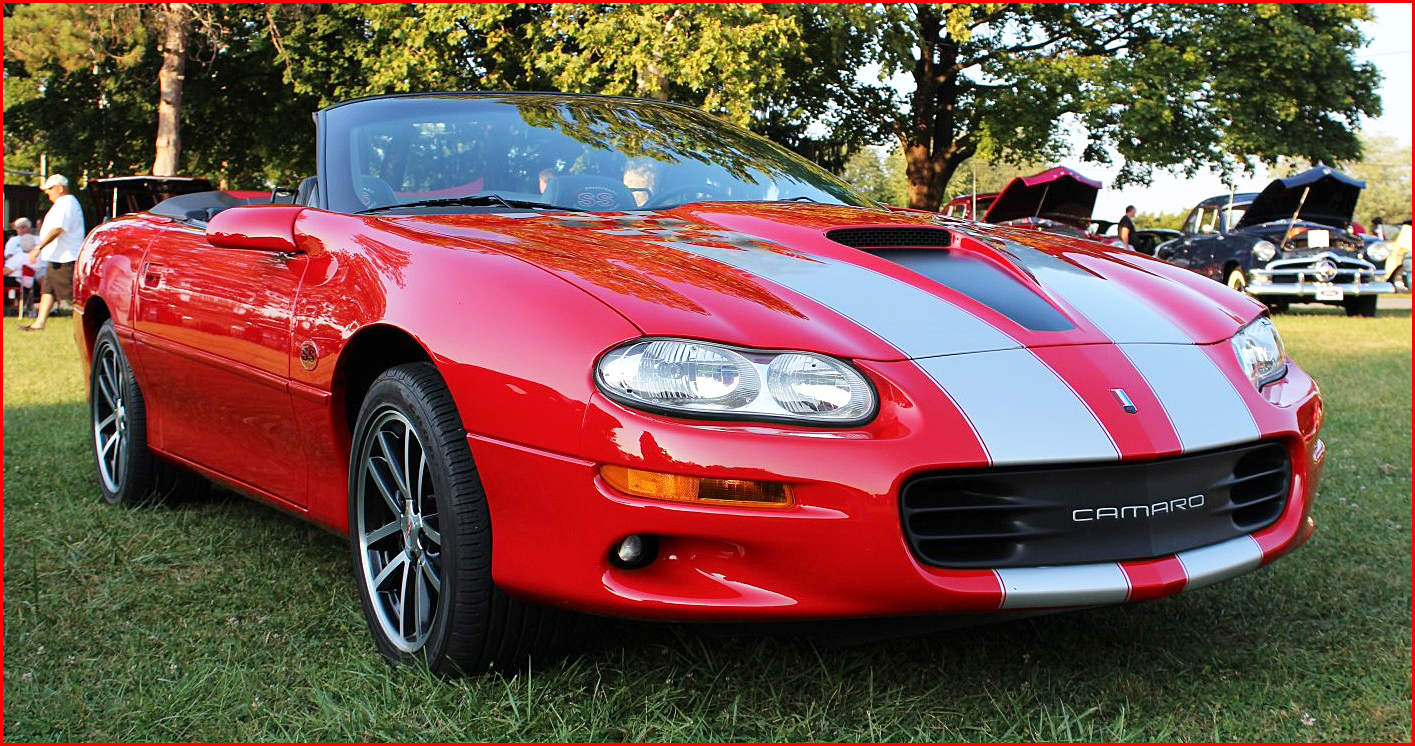
Camaro got a mid-cycle refresh in 1998, receiving a new front clip with more rounded headlights under more aerodynamic clear covers that replaced the quartet of square inset headlights. The SS also got a new V8, the LS1 from the prior year’s Corvette. The new mill had aluminum heads and an aluminum block with iron cylinder sleeves, saving about 95 lb. of weight vs. the LT1. Drive belt accessories were relocated to accommodate the Camaro‘s engine bay, a new oil pan that would fit the F-body was installed, and the throttle body was cable-activated rather than the Corvette‘s drive-by-wire setup. The engine produced 320 HP and gave the SS a 5.3 second 0-60 time and a 13.7 second ¼ mile. Minor tweaks resulted in upgraded suspension and increased brake size.
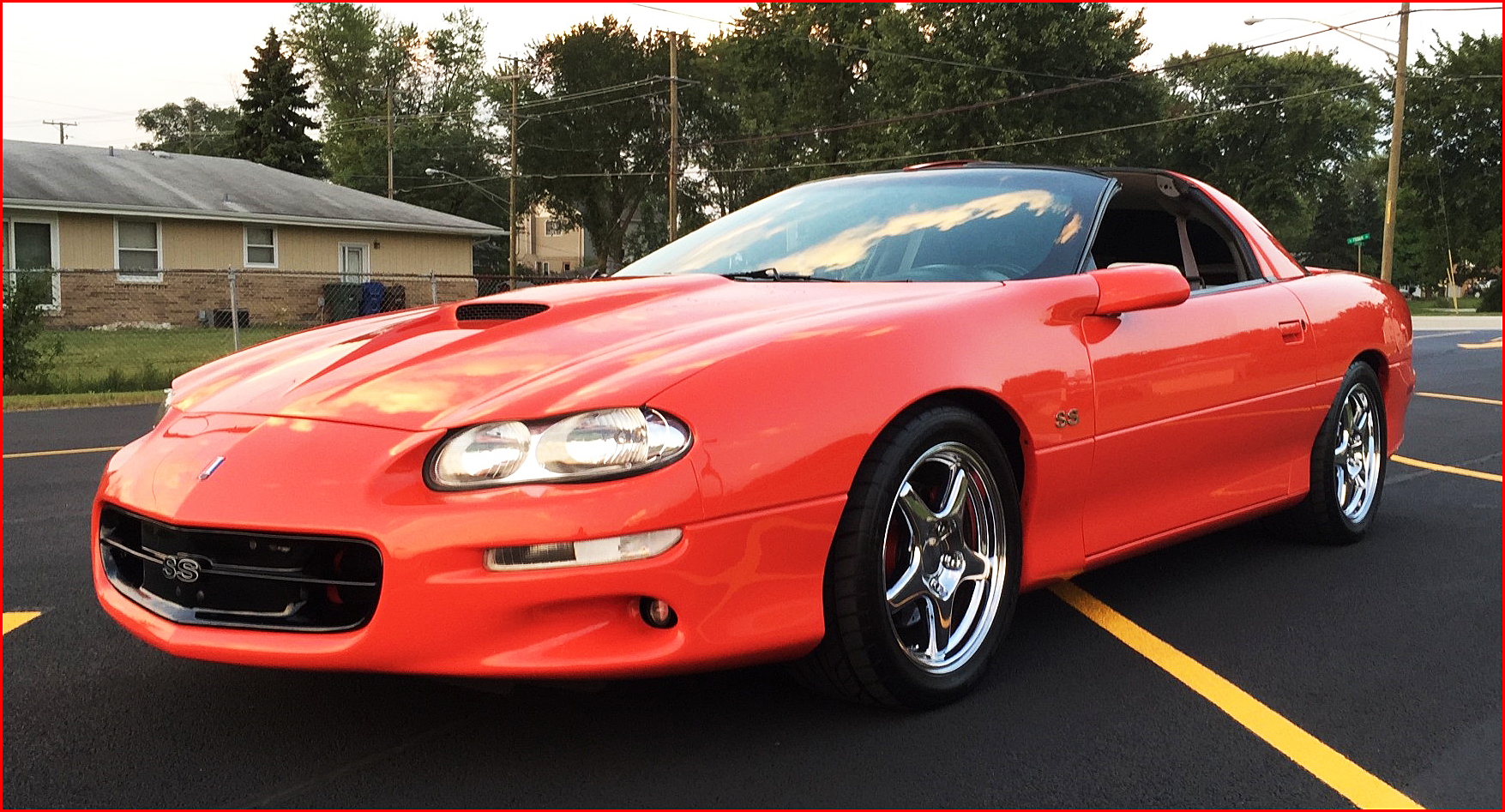
Little changed for 1999. New colors such as “Hugger Orange” were introduced and the fuel tank got larger by 1.3 gallons and was made of plastic vs. metal. Valve covers on the LS1 were switched to a center-bolt design, a Torsen differential was added to the Z28 and SS models, and GM introduced their early oil-life monitoring system, resulting in an added “oil change” light in the instrument cluster. This was also the final year for the 1LE performance package with double-adjustable Koni shocks, stiffer springs, larger front and rear anti-roll bars and stiffer suspension bushings.
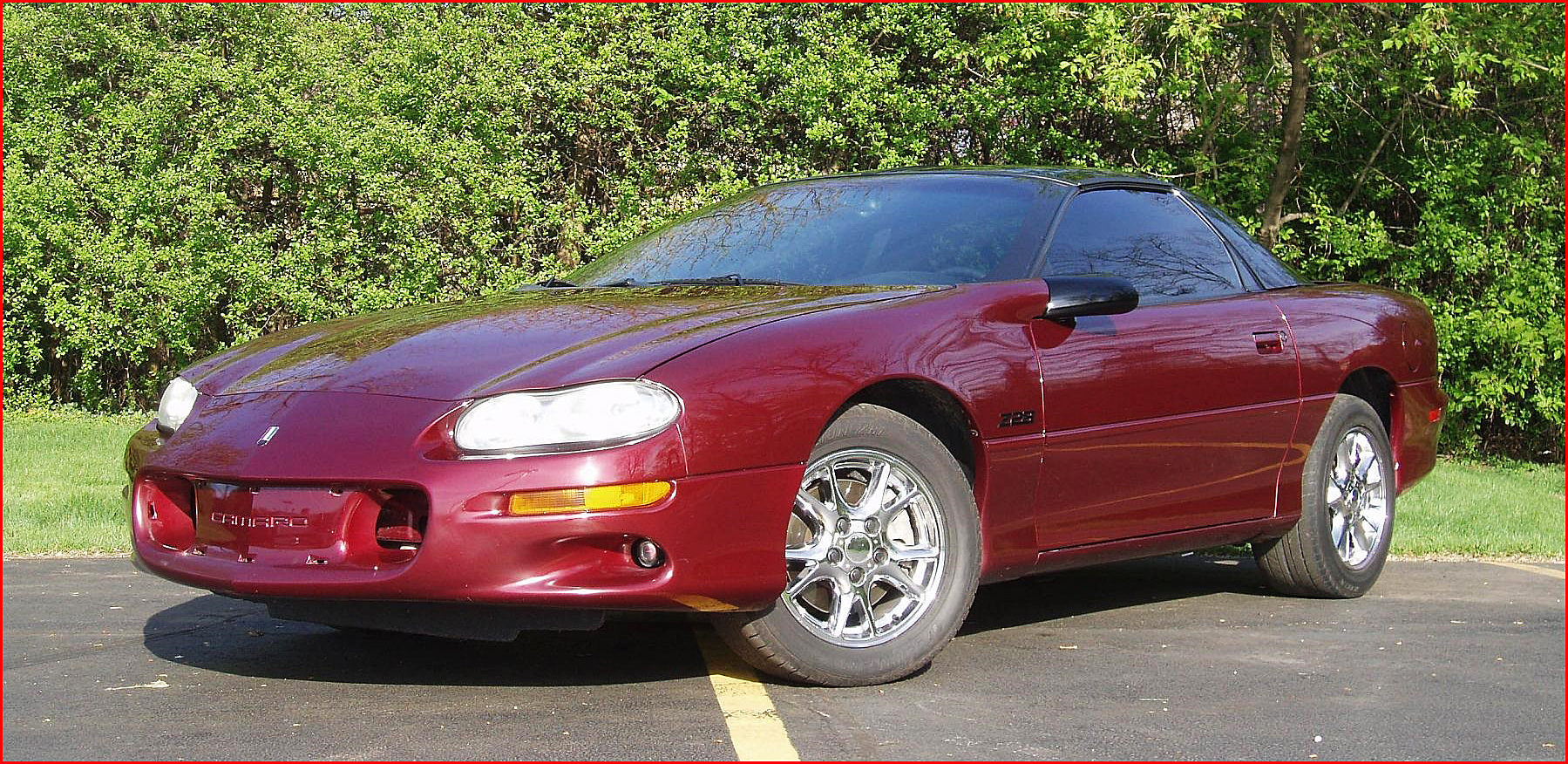
The changes to the 2000 model were all cosmetic. Another new color was added, Monterey Maroon Metallic, on all models but the SS. Body-color side view GM‘s new four-spoke steering wheel replaced the 2-spoke one that dated back seven years. New 10-spoke 16-inch wheels were available, but the older 5-spoke models could also be had if buyers liked that look.
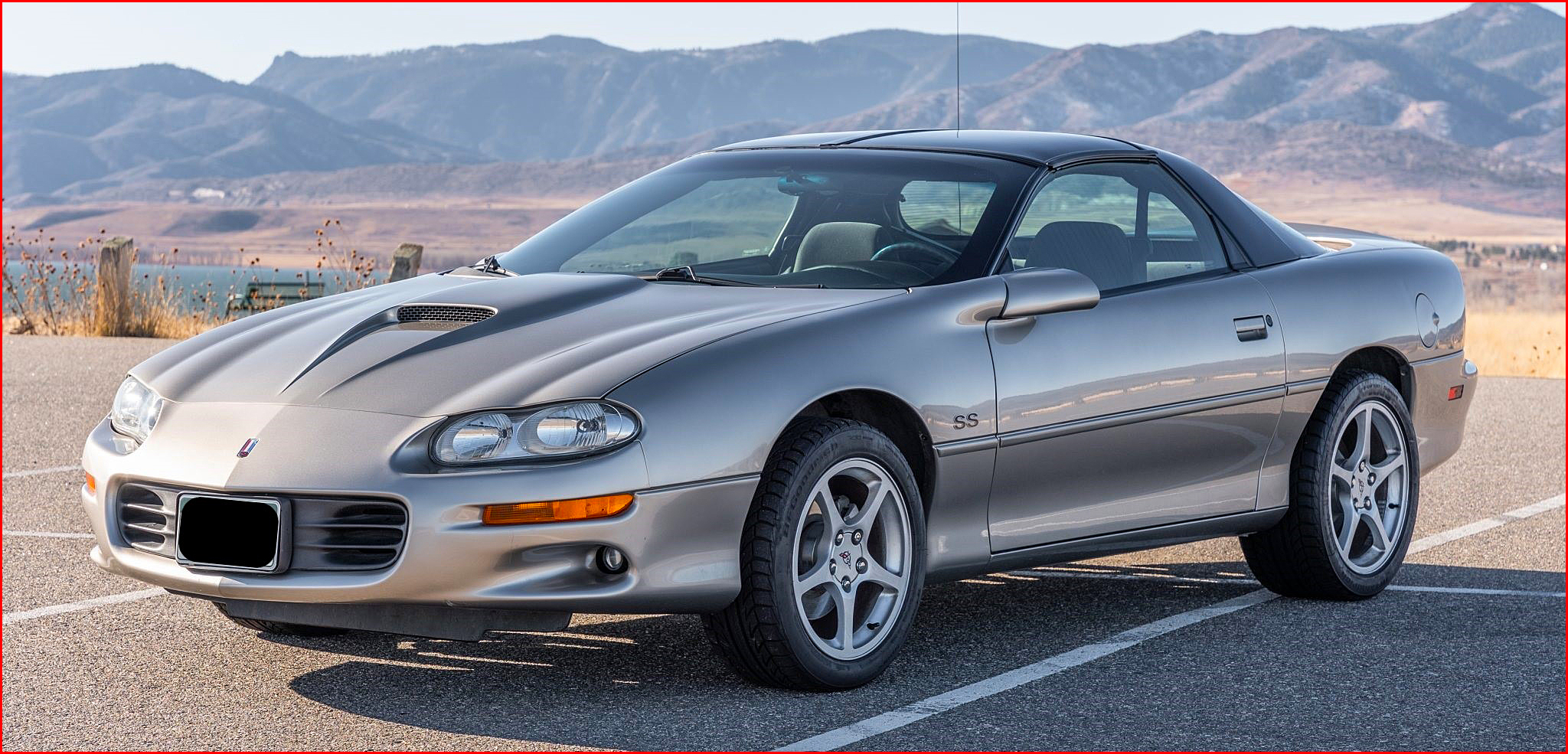
2001 saw more than cosmetic changes. Z28 and SS received the intake manifold from the new LS6 engine that lay under the hood of the Corvette Z06 and the Cadillac CTS-V. The camshaft profile was altered and the EGR system was removed. This bumped the HP of the Z28 to 310 and the SS to 325. The old clutch was replaced with the superior LS6 clutch and a new clutch slave cylinder was installed. SLP Engineering reintroduced the RS model with its rally stripes and stock cold air intake system, as well as the Z28 take-off exhaust from their old SS conversions. This was also Camaro‘s lowest production year, partly due to production ending early to begin work on the 35th Anniversary model.
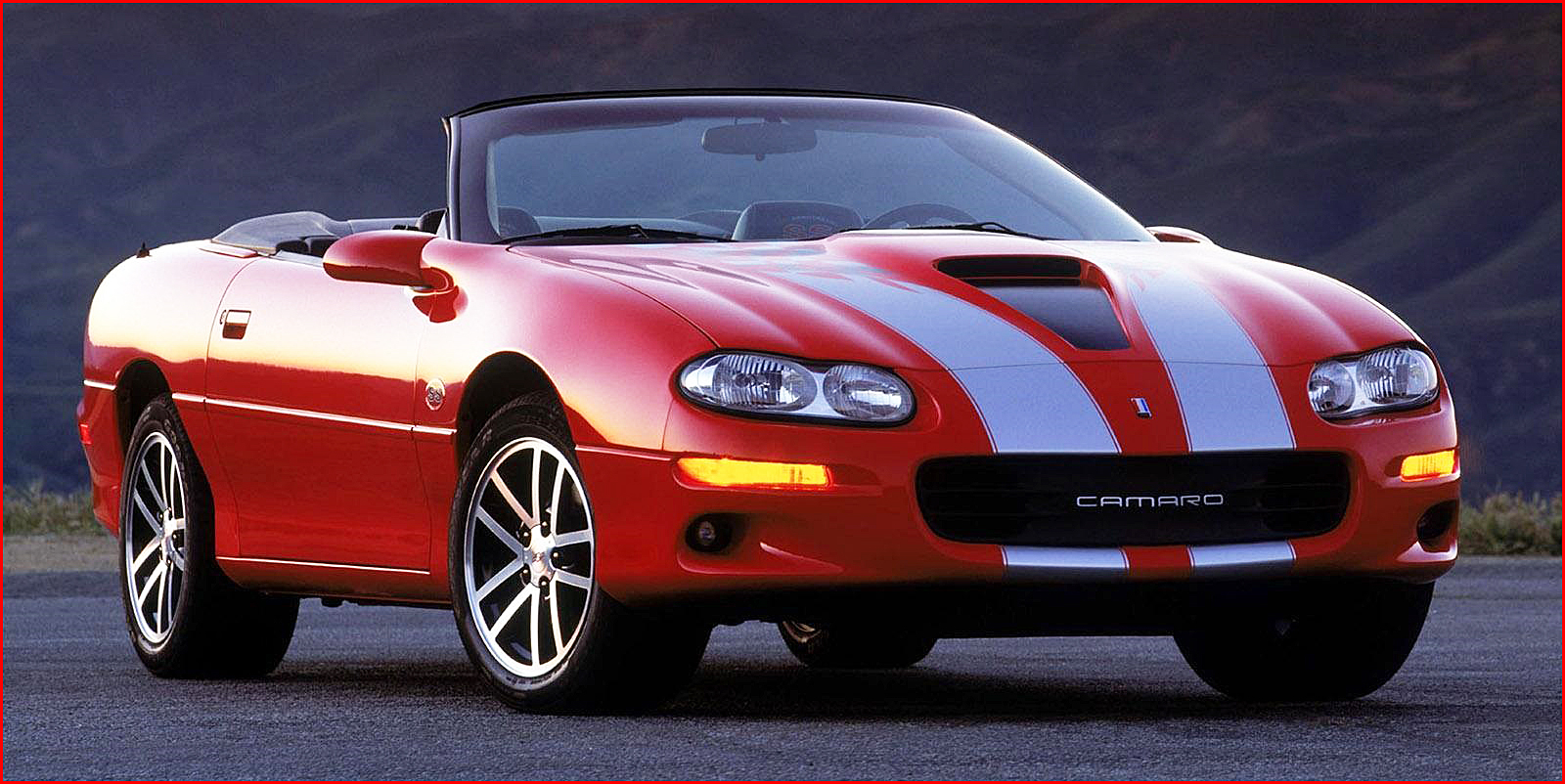
2002 was the final year for the fourth generation, and the final Camaro for the next eight years. Not much changed except for the introduction of the 35th Anniversary model, but unfortunately it was merely a trim and graphics package. GM‘s Performance Division unveiled a Z28 show car at the 2002 Woodward Dream Cruise as a send-off that emulated the 1960s and ’70s Penske-Sunoco Trans-Am race cars.✪
Got a Great Car Story? Share it! Reminisce About Your Other Favorite Cars, Too!
Seeyas Again Next Time On FLAT OUT!