
⭐️ Lou Scannon


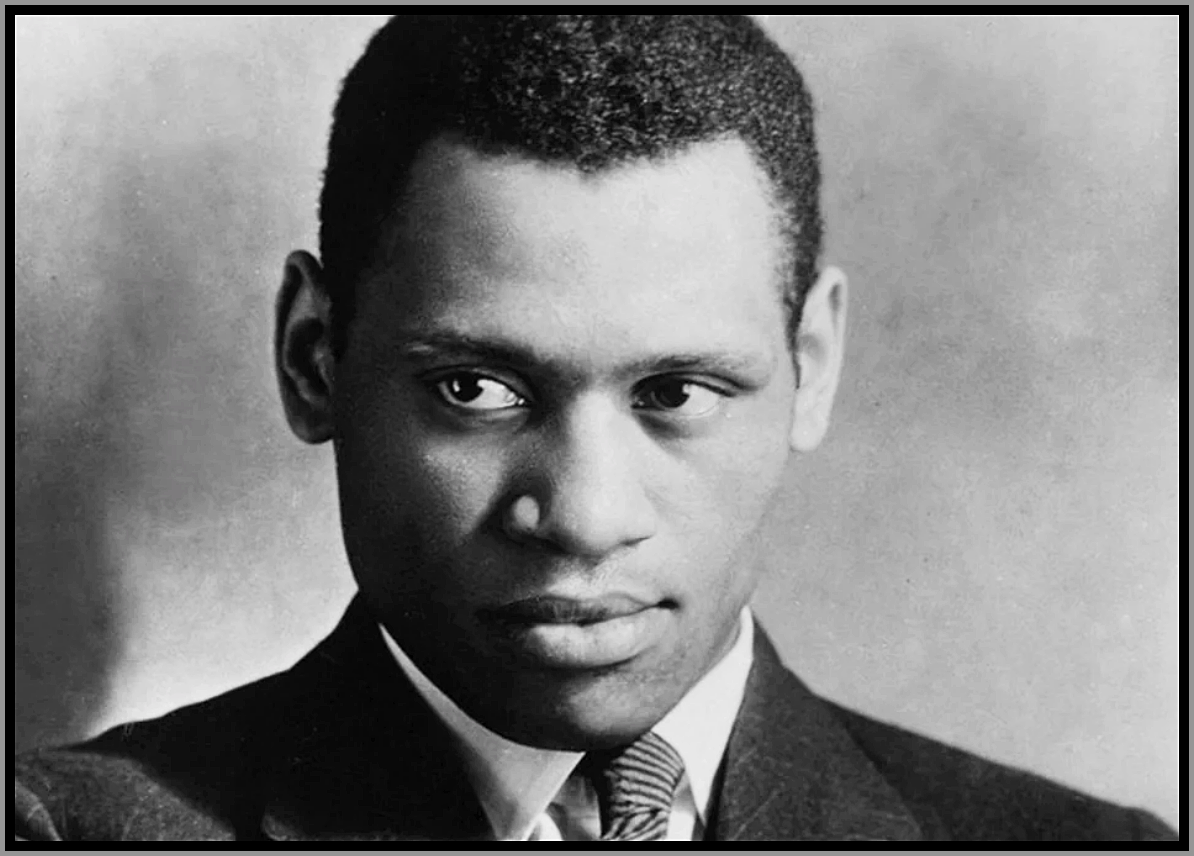

Oscar Devereaux Micheaux: January 2, 1884–March 25, 1951
✪ Oscar Devereaux Micheaux was an American author, film director and independent producer of more than 44 films. Although the short-lived Lincoln Motion Picture Company was the first movie company owned and controlled by black filmmakers, Micheaux is widely regarded as the first major African-American feature filmmaker. A prominent producer of race films, he has been described as “the most successful Black American filmmaker of the first half of the 20th century.” His career of more than forty years spanned both the silent and sound film eras.
Micheaux was born on a farm in Metropolis, Illinois, on January 2, 1884. He was the fifth child born to Calvin S. and Belle Michaux, who had a total of 13 children. In his later years, Micheaux added an “e” to his last name. His father had been born into slavery in Kentucky. Based on his surname, his father’s family appears to have been enslaved by French-descended settlers. French Huguenot refugees settled in Virginia in 1700; and their descendants took slaves west when they migrated into Kentucky after the American Revolutionary War.
Micheaux’s parents moved to the city so that their children could receive a better education. Micheaux attended a well-established school for several years before the family eventually ran into money difficulties and were forced to return to the farm. The discontented Micheaux then became rebellious and his struggles caused problems within his family. His father was not happy with him and sent him away to do marketing in the city. Micheaux found pleasure in this job because he was able to speak to many new people and learned social skills which he would later reflect in his films.
When Micheaux was 17 years old, he moved to Chicago to live with his older brother, who was living in a boarding house and working as a waiter. Micheaux became dissatisfied with what he viewed as his brother’s way of living “the good life.” He moved out, rented his own place and found work in the stockyards, which he discovered was extremely difficult. He eventually left the stockyards to seel employment in the steel mills, holding down many different jobs.
After being “swindled out of two dollars” by an employment agency, Micheaux decided to go into business for himself and become his own boss. His first business enterprise was a shoeshine stand he set up in a wealthy African American barbershop, away from Chicago competition. There, he learned the basic strategies of business and started saving his money.
He next became a Pullman porter on the major railroads; at that time considered prestigious employment for African Americans because it was a relatively stable and well paying job with security which afforded opportunities for travel and interaction with many new people. This job proved to be an informal education for Micheaux. He profited financially while also gaining contacts and knowledge about the world through travel. When he finally left the position, he had seen much of the United States and had saved a couple of thousand dollars in his bank account. He had also made a number of important connections with wealthy white people who would support his future endeavors.
Micheaux moved to Gregory County, South Dakota, where he bought land and worked as a homesteader. This experience was the inspiration for his first novels and films. His neighbors on the frontier were predominately blue collar whites. Some recall Micheaux rarely sat at a table with his blue collar white neighbors. Micheaux’s years as a homesteader allowed him to learn more about human relations and farming. While farming, Micheaux wrote a series of articles and submitted them to the press. The Chicago Defender published one of his earliest articles. When his homestead failed in 1911, he was forced to sell it.
In South Dakota, Micheaux met and married Orlean McCracken. However, her family proved to be too complex and burdensome for Micheaux. Unhappy with their living arrangements, Orlean felt that Micheaux did not pay enough attention to her. She gave birth while he was away on business, and was reported to have emptied their bank accounts and fled. Orlean’s father sold Micheaux’s property and took the money from the sale. After his return, Micheaux tried unsuccessfully to get Orlean and his property back. He married Alice B. Russell in 1926. Oscar and Alice would remain married until his death.
The next year, he began his publishing career when the Woodruff Press of Lincoln, Nebraska published his first novel, The Conquest. He began work on a second book, The Forged Note, and from 1914 to 1918 traveled among Lincoln, Gregory County, and Sioux City, Iowa marketing his work. While in Sioux City, he lived in and was influenced by the West 7th Street neighborhood where the town’s African-American community had a strong presence.
Micheaux decided to concentrate on writing; and eventually, filmmaking, a new industry. During his career, he wrote a total of seven novels.
▶️ 8 Minutes 24 Seconds
In 1913, 1,000 copies of his first book, The Conquest: The Story of a Negro Pioneer, were printed. For reasons unknown, He published the book anonymously. The Conquest was based it on his experiences as a homesteader and the failure of his first marriage. It was largely autobiographical. Although the character names were changed, the protagonist of The Conquest is named Oscar Devereaux.
A common theme found throughout all of his writings was Black Americans realizing their potential and achieving success in areas where they felt they could not. The Conquest outlines and describes the differences between the lifestyles of urban Blacks in contrast and comparison to the life he decided to lead as a Black man out in the far West as a pioneer. The Conquest discusses the culture of achievers who strive to excel beyond their limitations and those who see themselves as victims of injustice and hopelessness while still living the city lifestyle in poverty.
Micheaux attempted to encourage other young Black men to populate the frontier and make something of themselves, through real work and property investment. He wrote more than 100 letters to fellow Negroes in the East beckoning them to come West, but only his older brother eventually took his advice. One of Micheaux’s fundamental beliefs was that hard work and enterprise would make any person rise to respect and prominence regardless of race or background.
The Homesteader, his 1918 novel dedicated to his mother attracted the attention of George Johnson, the manager of the Lincoln Motion Picture Company in Los Angeles. Johnson offered to make The Homesteader into a new feature film, but negotiations broke down due to creative differences. Micheaux wanted to be directly involved in the adaptation of his book as a movie, but Johnson resisted and never produced the film.
Instead, Micheaux founded the Micheaux Film & Book Company of Sioux City. The first project of his new company was the production of The Homesteader as a feature film. This was the beginning of Micheaux’s major career as a film producer and director. He would go on to produce more than 40 films. His films drew large audiences throughout the U.S. as well as internationally. Micheaux sought and secured investment for his film projects from many of his wealthy academic connections he made earlier in his career as a porter. He also issued private stock in his company and sold shared for $75 to $100. Micheaux employed professional actors and actresses for his films. The Homesteader premiered in Chicago.The film and Micheaux both received high praise from film critics. One credited Micheaux with “a historic breakthrough, a creditable, dignified achievement.” However, some members of the Chicago clergy criticized the film as libelous. The Homesteader became known as Micheaux’s breakout film; it helped him to establish himself as a well known writer and filmmaker.
In addition to writing and directing his own films, Micheaux also adapted the works of different writers for his silent pictures. Many of his films were open, blunt and thought-provoking; addressing specific racial issues of that time. He once commented: “It is only by presenting those portions of the race portrayed in my pictures, in the light and background of their true state, that we can raise our people to greater heights.” When financial hardships during the Great Depression eventually prevented Micheaux from producing films, he then returned to writing.
Micheaux’s second silent film was Within Our Gates, produced in 1920. Film critics and historians consider this film his response to the DW Griffith’s The Birth of a Nation. Micheaux said that he created it independently as a response to the widespread social instability following World War I.
The film is set in the Jim Crow era. It contrasts the experiences of Black Americans who remained in rural areas after the Civil War and others who migrated to cities and become urbanized. Some feared this film would increase racial unrest within society, while others believed it would open the public’s eyes to the unjust treatment of blacks by whites. Protests against the film continued until the day it was released. Because of its controversial status, it was banned from some theaters.
Micheaux also adapted two works by Charles W. Chesnutt to film, which he released under their original titles: The Conjure Woman (1926) and The House Behind the Cedars (1927). The latter dealt with issues of mixed race and created so much controversy when reviewed by the Film Board of Virginia that Micheaux was forced to re-edit it before it was permitted to be shown. He remade this story again as a sound film in 1932, releasing it under the title Veiled Aristocrats. The silent version of this film is believed to have been lost.
Micheaux’s films were made during a time of great social change in the African-American community. Many of his films featured contemporary black life and racial relationships between blacks and whites.
Topics such as lynching, job discrimination, rape, mob violence, and economic exploitation were often depicted in his films as parts of the narratives. These films also reflect his ideologies and autobiographical experiences.
Micheaux sought to counter negative portrayals of Black Americans in films by white producers, which often depicted racial stereotypes. He created complex characters of different classes. His works were designed to appeal to both middle- and lower-class audiences. He said:
“My results … might have been narrow at times, due perhaps to certain limited situations, which I endeavored to portray, but in those limited situations, the truth was the predominant characteristic. It is only by presenting those portions of the race portrayed in my pictures, in the light and background of their true state, that we can raise our people to greater heights. I am too imbued with the spirit of Booker T. Washington to engraft false virtues upon ourselves, to make ourselves that which we are not.”
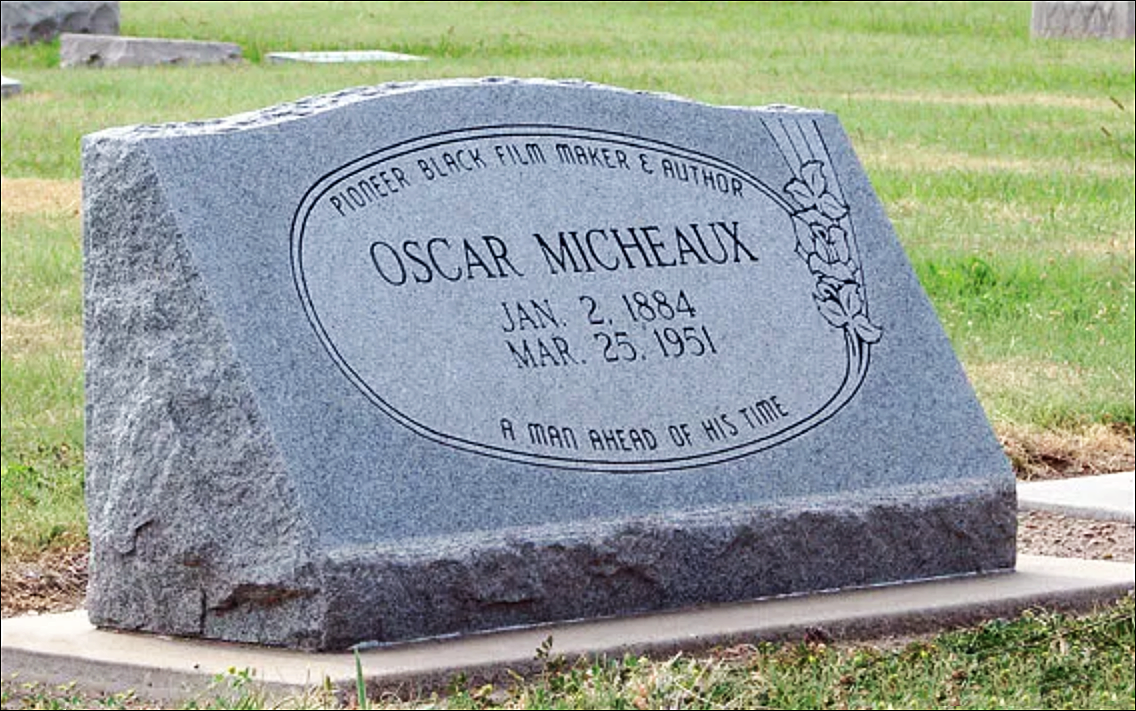
Micheaux died on March 25, 1951, in Charlotte, North Carolina, of heart failure at age 67. He is buried in Great Bend Cemetery in Great Bend, Kansas, the home of his youth. His gravestone reads: “A man ahead of his time.” ✪
















▶️ DONATE VIA PAYPAL (DEBIT & CREDIT CARD)
ALL PayPal Transactions Are Encrypted For Card Holder Privacy & Security
▶️ DONATE VIA ZELLE (DIRECT BANK CASH TRANSFER)
ZELLE is the perfect online alternative to PayPal. It’s an incredibly simple, secure, easy, fast and FREE way to send or receive money to recipients directly from your online banking account without a middleman. Best of all, there’s NO fees.
ZELLE is a service provided by your bank and is already built in to your online banking account. You only need to activate it first before using. If you’ve already activated ZELLE in your online bank or credit union account, you can donate to The New Americanist by using our ZELLE address:
vip@thenewamericanist.com
To activate your ZELLE, follow these easy instructions (a simple two minute process):

▶️ DONATE VIA SNAIL MAIL








▶️ CLICK HERE TO VIEW
▶️ 1 Hour 39 Minutes 10 Seconds
▶️ 1 Hour 16 Minutes 42 Seconds
▶️ 6 Minutes 23 Seconds
▶️ 6 Minutes 50 Seconds
▶️ 9 Minutes 27 Seconds
▶️ 1 Hour 2 Minutes 17 Seconds
▶️ 6 Minutes 13 Seconds
▶️ 8 Minutes 1 Second ⭐️ Gary Brown
▶️ 18 Minutes 59 Seconds
▶️ 13 Minutes 49 Seconds
▶️ 13 Minutes 54 Seconds
▶️ 15 Minutes 10 Seconds
▶️ 3 Minutes 29 Seconds
▶️ 5 Minutes 31 Seconds
▶️ 4 Minutes 19 Seconds
▶️ 15 Minutes 40 Seconds ⭐️ Deplorables Know Libs Suck
▶️ 9 Minutes 43 Second
▶️ 5 Minutes 50 Seconds
▶️ 5 Minutes 56 Seconds
▶️ 2 Minutes 2 Seconds ⭐️ Louisiana Mom
▶️ 11 Minutes 44 Seconds ⭐️ The New Logical Show
A NEW video podcast produced by TNA’s very own bet125. Make certain you SUBSCRIBE & LIKE.
Let’s all support new Conservative Media. 😎
