



▶️ BONUS SUNDAY FEATURE: CLICK HERE TO READ
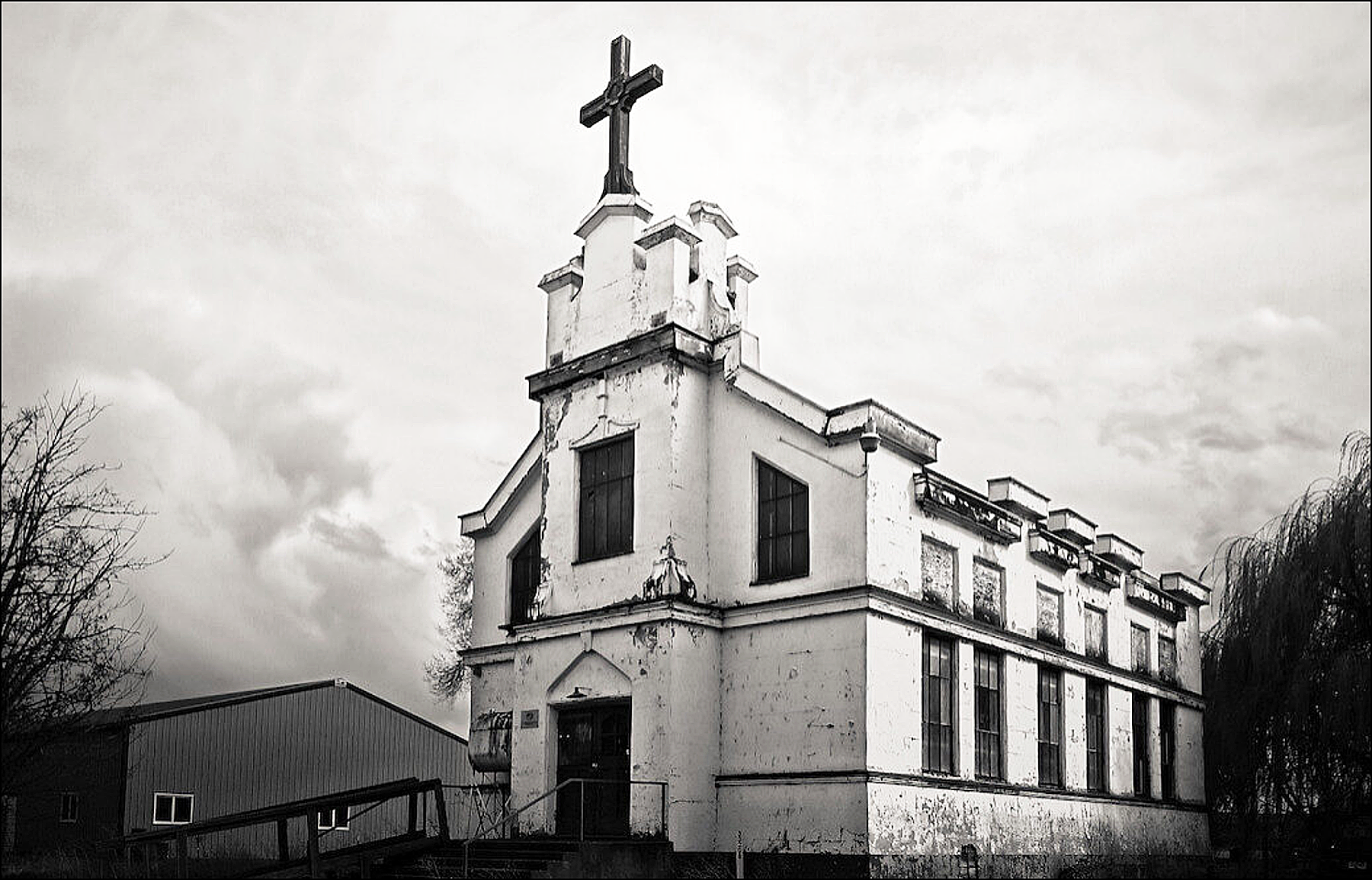
A Less Christian America Is A Problem For Everyone

hhh
major survey on the religious landscape of America was just released by Pew Research Center, and what it reveals about the decline of Christianity should alarm every American, whether or not one is Christian.
Why should the de-Christianization of America worry us? Because if America completely loses the Christian faith from which our system of government is derived, we will lose the very things which have made America what it is. All of our rights and freedoms we enjoy, the Rule of Law, checks and balances on government power, all of that could disappear.
Suffice to say, the loss of America’s Christian identity has huge implications for everyone in the country, Christian or not. And the Pew study demonstrates just how pervasive and precipitous the decline of Christianity in America is now.
It’s easy to misread the study, or misapprehend what’s important about it; which is that the de-Christianization of American society is not going to stop anytime soon. In part because it’s being driven by a younger, less Christian, increasingly neopagan cohort of Americas as the older Christians die off without being replaced. As aging Christian parents fail to pass the faith on to their children. Pew itself seems to misinterpret the results of its own survey with the strangely optimistic headline, “The Decline of Christianity in the U.S. Has Slowed & May Have Leveled Off.”
This is true only in a narrow sense. Pew’s data indeed suggests for the last five years, the percentage of the U.S. population which considers itself to be Christian has wavered between 60 and 64 percent; and the new Religious Landscape Study (RLS) released earlier this month puts their figure right in the middle of that range at 62 percent.
However, the devil is always in the details. Pew has done three RLS surveys over the past 17 years, each of which involved sampling more than 35,000 adults. The first in 2007, found 78 percent of U.S. adults identified as Christian. Smaller surveys in subsequent years showed this figure slowly trending downward. The second RLS in 2014, found the total to be just 71 percent. The most recent RLS in 2023-24 shows a 9-point drop since 2014 and a 16-point drop since 2007, which suggests the rate of our de-Christianization is actually accelerating.
When Pew says the numbers are now “leveling off,” they mean the smaller surveys conducted between 2019 and 2024 bucked the previous trend of a steadily shrinking Christian population in America. Instead of steady year-over-year decreases, it showed fluctuations within that narrow 60-64 percent range.
However, the overall trend remains one of precipitous decline in Christianity over the past 17 years. And when one digs a little deeper into the RLS survey data, the picture that emerges becomes even more alarming. For example, the share of Americans who don’t identify with any religion—the “nones” — increased from 16 percent in 2007 to 23 percent in 2014 to 29 percent in 2024. Pew claims this increase isn’t limited to growing disinterest in religion among any particular group but is “demographically broad-based.“ There are fewer Christians and more ‘nones’ among men and women; people across every racial and ethnic category; from college graduates to those with less education and residents of all major regions of the country.
It’s hard to overstate the effect of the rise of the “nones” on the American religious landscape. As Eric Sammons noted last week, “for every 100 people who leave the religious ‘nones’ (i.e., they join a religion), a full 590 become part of that irreligious cohort.” Sammons also observed that the Pew study shows Catholics are facing a sharper decline than Protestants: for every 100 people who become Catholic, 840 now leave the Catholic Church. Whereas for every 100 people who become Protestants, only 180 leave.
However, either way it’s a story of overall decline in the Christian faith across the board. While the overall number of “nones” continues to grow — so do the number of non-Christian religious adherents (Muslims, Buddhists, Hindus, etc.) whose share of the population went from 4.7 percent in 2007 to 7.1 percent today.
And it’s not just that the total number of Christians is declining. The practice of the Christian Faith is deteriorating as well. Among the 62 percent who describe themselves as Christian, only a third of them say they attend religious services monthly; either in person or virtually (TV or online). Pew doesn’t compare church attendance figures in this new RLS survey with the results from 2014 or 2007 because it used a slightly different methodology (those earlier surveys were conducted entirely by telephone, whereas the new RLS was done through online and paper surveys).
Pew did note the old telephone surveys were registering a decline in church attendance in the years before switching to online/paper surveys: “The share of Americans who reported attending religious services at least monthly dropped from 54% in 2007 to 50% in the 2014 RLS and had fallen to 45% by the time the Center transitioned away from phone surveys in 2018-19.”
For Catholics, the single largest denomination of Christians in America, who now make up just 19 percent of America’s Christian population (down from 24 percent in 2007), the attendance problem is even worse. Catholics are obligated to attend Mass weekly, yet less than a third of them (29 percent) say they fulfill this Sunday obligation. That means of America’s roughly 65 million Catholics, only 18.8 million could be considered “practicing”—and that’s not taking into account other Catholic obligations that are increasingly shirked, like going to confession at least once a year.
However, one need not get lost in all this survey data to grasp the essential reality that the Pew study reveals: America is gradually losing its Christian religion. Buried in Pew’s analysis is the critical observation that “it is inevitable that older generations will decline in size as their members gradually die. We also know that the younger cohorts succeeding them are much less religious.” That, in turn, means in order for the decline in Christianity to halt, “today’s young adults would have to become more religious as they age, or new generations of adults who are more religious than their parents would have to emerge.” Is that possible? Of course. Is it likely? Not unless something dramatically changes.
There’s much more to unpack in the Pew survey, like the decline of Christianity occurring simultaneously with a growth in alternative “spiritualities,” which suggests the future of the West will not be one of atheistic, secular materialism but of re-enchantment and neopaganism. But for now, it’s enough simply to be honest with ourselves, and with the data, and acknowledge that we are rapidly de-Christianizing. Once we accept that fact we can begin to think clearly about what it means for our country, and begin at last to counter that trend. ✪





























▶️ DONATE VIA PAYPAL (DEBIT OR CREDIT CARD)
ALL PayPal Transactions Are Encrypted For Card Holder Privacy & Security
▶️ DONATE VIA ZELLE (DIRECT CASH BANK TRANSFER)
ZELLE is the perfect online alternative to PayPal. It’s an incredibly simple, secure, easy, fast and FREE way to send or receive money to recipients directly from your online banking account without a middleman. Best of all, there’s NO fees.
ZELLE is a service provided by your bank and is already built in to your online banking account. You only need to activate it first before using. If you’ve already activated ZELLE in your online bank or credit union account, you can donate to The New Americanist by using our ZELLE address:
vip@thenewamericanist.com
To activate your ZELLE, follow these easy instructions (a simple two minute process):

▶️ DONATE VIA SNAIL MAIL