




▶️ TRUMP ISSUES EXECUTIVE ORDER TO DEFUND PBS & NPR
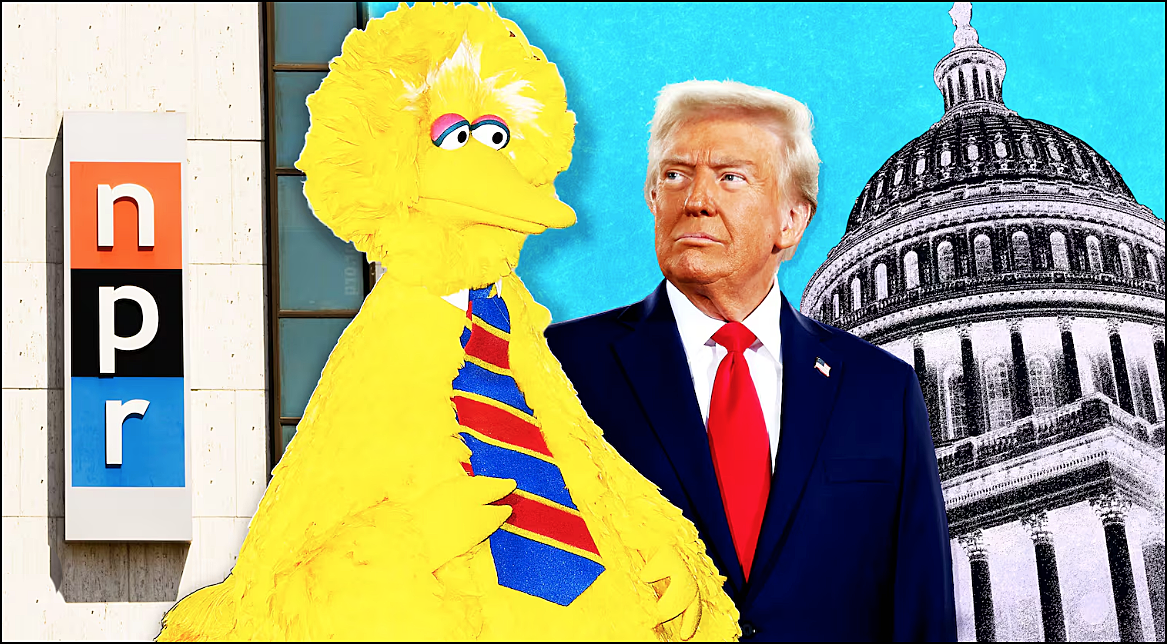
TRUMP ISSUES EXECUTIVE ORDER TO DEFUND PBS & NPR

nnn
resident Trump signed an executive order late Thursday terminating federal funding for National Public Radio (NPR) and the Public Broadcasting Service (PBS).
NPR and PBS, which have long been targeted for cuts by conservatives, both receive partial funding through the Corporation for Public Broadcasting (CPB), which the president argued is unnecessary in the current media environment.
“Government funding of news media in this environment is not only outdated and unnecessary but corrosive to the appearance of journalistic independence,” Trump wrote in his order.
“The CPB Board shall cease direct funding to NPR and PBS, consistent with my Administration’s policy to ensure that Federal funding does not support biased and partisan news coverage,” he added. “The CPB Board shall cancel existing direct funding to the maximum extent allowed by law and shall decline to provide future funding.”
Trump further directed the CPB to end indirect funding to NPR and PBS, including by “ensuring that licensees and permittees of public radio and television stations, as well as any other recipients of CPB funds, do not use Federal funds for NPR and PBS.” The president gave the CPB until June 30 to effectuate his directive.
▶️ 2 Minutes 36 Seconds
NPR and PBS both have diverse revenue streams, including major foundation grants, advertising and voluntary viewer and listener donations, meaning that neither is likely to cease operations if they lose federal support.
However, the CPB is set to receive $535 million in congressionally appropriated funds annually to distribute to public broadcasters in 2025 and 2026.
PBS and its member stations receive about 15% of their revenues from the CPB, while NPR stations get 10% of their funds from the corporation. According to NPR. NPR itself only receives 1% directly from the CPB.
Trump had previously called for NPR and PBS to be defunded in a March Truth Social post. “NPR and PBS, two horrible and completely biased platforms … should be DEFUNDED by Congress, IMMEDIATELY,” he wrote on March 27.
In his late-night order, the president argued that “Americans have the right to expect that if their tax dollars fund public broadcasting at all, they fund only fair, accurate, unbiased, and nonpartisan news coverage.”
“No media outlet has a constitutional right to taxpayer subsidies, and the Government is entitled to determine which categories of activities to subsidize.”
A White House fact sheet on the order suggested that the left-leaning networks’ output acts as a “significant in-kind contributions to the Democrat Party and its political cause,” therefore violating the CPB’s legal mandate to be “nonpolitical in nature.”
“The CPB fails to abide by these principles to the extent it subsidizes NPR and PBS. Which viewpoints NPR and PBS promote does not matter. What does matter is that neither entity presents a fair, accurate, or unbiased portrayal of current events to taxpaying citizens.”
In addition to eliminating CPB payments to NPR and PBS, Trump ordered all federal agencies to “identify and terminate” any taxpayer money going to the public broadcasters.
Trump also tasked Health and Human Services Secretary Robert F. Kennedy Jr. with determining whether PBS and NPR “are complying with the statutory mandate that ‘no person shall be subjected to discrimination in employment … on the grounds of race, color, religion, national origin, or sex.’”
“In the event of a finding of noncompliance, the Secretary of Health and Human Services shall take appropriate corrective action,” the order read. ✪

▶️ US ECONOMY ADDS 177,000 NEW JOBS IN APRIL
THE US ECONOMY ADDS 177K NEW JOBS IN APRIL

lll
mployers in the United States added 177,000 workers to their payrolls in April, the Department of Labor said Friday; and the unemployment rate remained unchanged at 4.2 percent, defying predictions of labor market sluggishness following President Trump’s announcement of tariffs.
Economists had been expecting 130,000 jobs and an unemployment rate unchanged at 4.2 percent. The prior month’s jobs figure was revised down to 185,000 from 228,000
The strength in hiring came from the private sector, which added 167,000 jobs. Economists had expected private employers to add just 125,000 workers. This was nearly unchanged from the downwardly revised 170,000 jobs added in March.
The labor market drew in more workers, growing the supply of labor in April. The participation rate rose to 62.6 percent from 62.5 in the previous month. The number of people employed in the month rose by 436,000 to 163,944,000.
The average workweek expanded to 34.3 hours from 34.2 hours, a sign that employer demand for labor grew in the month. Average hourly earnings rose 0.3 percent. Compared with a year ago, average earnings are up 3.8 percent, significantly higher than the 2.4 percent gain in the consumer price index through March.
Manufacturers did shed 1,000 jobs but this was less than the 3,000 loss expected. Durable goods manufacturers added 2,000 workers, reversing their decline in March. Within manufacturing, machinery and word products were strong while makers of semiconductors, communications equipment, and navigational technologies shed jobs. The prior month’s figure was revised up from an addition of 1,000 jobs to 3,000.
The construction sector added a solid 11,000 jobs, including 9,000 in specialty trades. Transportation and warehousing, an area that many thought might be hit by a tariff-related slowdown, added 29,000 jobs, the strongest growth since December.
The effects of Elon Musk’s Department of Government Efficiency and the Trump administration’s efforts to “reprivatize” the economy could be seen in the jobs numbers, with federal employment falling by 9,000. Since January, when President Trump took office, federal payrolls have contracted by 26,000. ✪
▶️ VICTOR DAVIS HANSON: TRUMP, TARIFFS & TRADE
⭐️ HelloKitty’sGotAHairTrigger
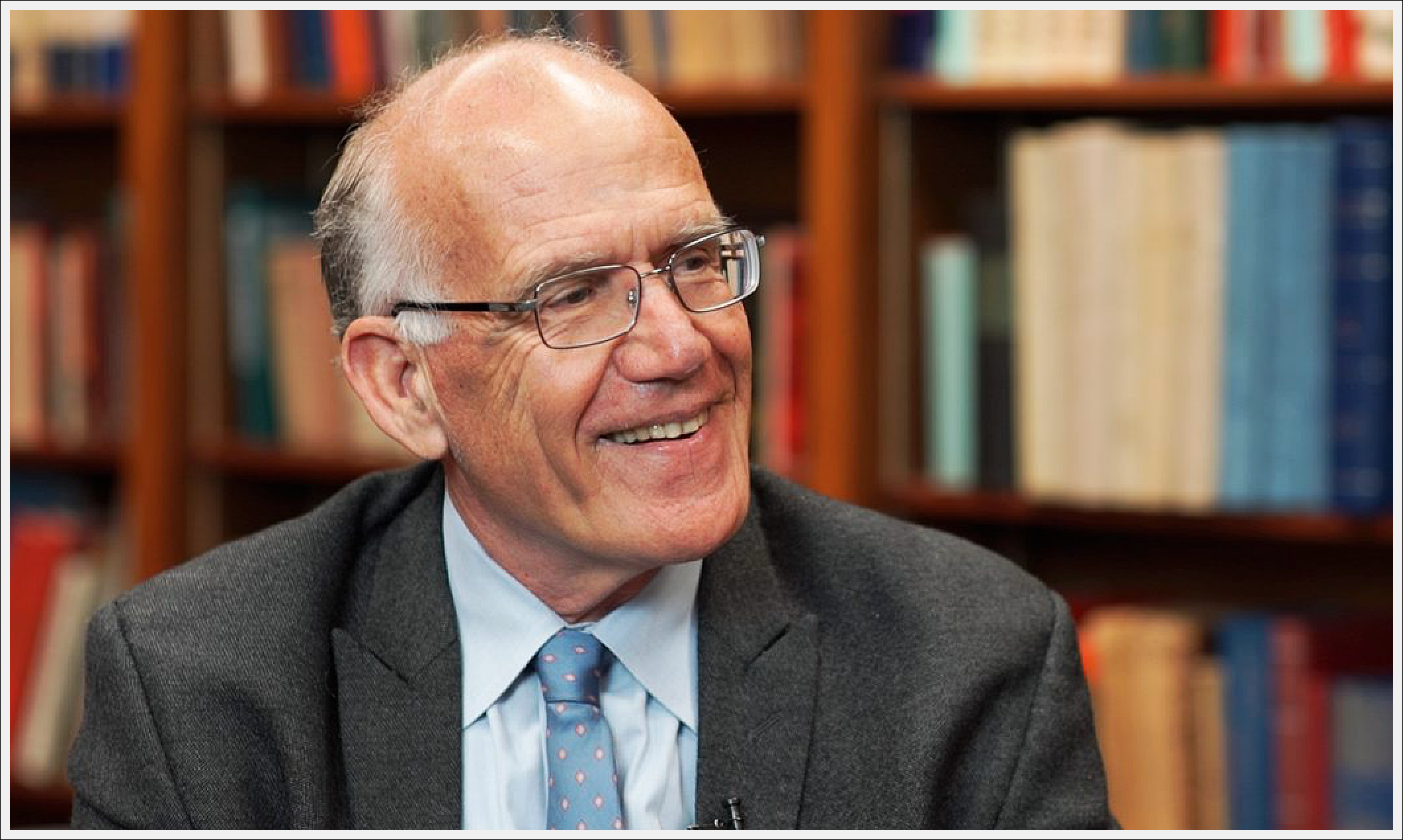
VICTOR DAVIS HANSON: TRUMP, TARIFFS & TRADE

kkk
rump’s trade strategy aims to slash the U.S. deficit by forcing fairer deals with key partners—pushing reciprocity, not profiteering, to regain economic balance. After only a hundred days, the Trump counterrevolution has made quite miraculous progress on the border, illegal immigration, cost-cutting, curbing the DEI/woke revolution, and a historic Ukrainian War settlement.
However, the pushback to this multifront effort from the lLeft has been formidable, if not hysterical. The greatest fury mostly centers around Trump’s efforts to force U.S. trading partners to adopt either reciprocal or no tariffs while obeying international trading norms—an effort aimed at vastly reducing the U.S. trade deficit.
If Trump could cut a proverbial deal in the next 100 days that, say, cut the annual $1.2 trillion trade deficit in half, coupled with multitrillion-dollar foreign investments, then stocks and bonds would settle down.
Wall Street would go back to its traditional platitudes that the trade deficit then would be no higher than the 3-percent-of-GDP red line. Stocks would then soar in anticipation of the other news of a continuation of tax cuts, more budgetary reductions, robust energy development, and further deregulation.
The U.S. has run a half-century of trade deficits. And now the red ink has climbed to nearly $1.2 trillion, the largest in history. Yet for all practical purposes, only a few entities account for most of an astronomical sum. And they all have corollary concerns to the U.S. that make their surpluses part of larger problems.
The administration can accurately talk about “70 nations wanting to deal;” but in truth, if Trump were to settle with just China, Mexico, Canada, the EU, and the ten-nation Southeast Asian trading bloc (ASEAN), then the so-called trade wars would be over.
Start with our North American partners Mexico ($171.9 billion surplus) and Canada ($63 billion surplus) that alone account for over 20 percent of the U.S. trade deficit.
Canada’s surplus is almost entirely attributable to its vast oil and gas sales to the U.S. Almost all its daily oil exports go to the U.S., some four million barrels—as well as half its natural gas shipments.
Canada claims that it sells oil and power at a discount to the northern U.S. It also boasts that its asymmetrical sky-high tariffs on American dairy products and poultry are rarely used if the American exports just stay below certain thresholds. But aren’t thresholds themselves a form of tariff?
Canadian oil deposits are landlocked and far from ports. Canadian crude is heavy, sulfurous, and difficult to refine for many nations’ refineries. In contrast, the huge U.S. market right across the border and the ability of American refineries to handle Canadian crude explain the “discount” better than simple Canadian magnanimity.
Moreover, Canada is one of the stingiest of NATO partners. It is underinvesting in military readiness at only 1.37 percent of its GDP on defense, stonewalling its 2 percent commitment for over a decade.
Should the Trump Administration prompt Canada to invest 2 percent in defense—about $41 billion extra—and buy enough U.S. products to cut its surpluses, say, by $10-20 billion of its current $63 billion, a deal could and should be easily reached.
Mexico’s surplus is huge and growing at $171 billion. It is largely created by assembling cars, electronic goods, and appliances sent to it from other countries to enter the U.S. market with reduced taxes.
Trump could ask Mexico to cut that $171 billion in half, particularly given that Mexican cartels funnel an estimated $10 billion to $20 billion annually into the U.S. through drug smuggling. Their drug factories are designed for U.S. export and contribute to the deaths of 60,000 to 100,000 Americans through opioid overdoses each year.
Add in the $63 billion in untaxed remittances that Mexico’s expatriates send home. Most senders are illegally residing in the U.S. Additionally, many are subsidized by local, state, and federal American entitlements to free up their cash to be sent home.
In other words, like Canada, there are other issues with Mexico transcending trade alone. To even the playing field, Trump could either focus on the cartels, tax remittances, or urge Mexico to buy more U.S. goods in a tripartite effort to reduce the outflow by half.
China’s surplus with the U.S. is the largest at $300 billion. It is also the most difficult to address, given that Chinese global tentacles have compromised dozens of nations. Still, we retain far greater leverage on Beijing than Beijing has on us. But to use such levers—stopping visas to 300,000 students, delisting Chinese out-of-compliance companies from our stock exchanges, curbing all technological transfers that have military applications and key spare parts for their imported goods—we would then enter a veritable Cold War.
Instead, China should use its over $1 trillion trade surplus to raise the standard of living for its own 1.4 billion consumers. But redirecting its export economy would cut back on its geostatic initiatives of massively rearming, the Belt and Road imperialist adventure, and spreading billions of dollars around in the Western world to influence universities and buying up strategic property.
Unless Trump wishes an all-out trade war, he, for now, should aim at reducing the Chinese surplus by $300-500 billion and seek some trade reforms, given Chinese violations of every international commercial canon.
The EU runs up a $235 billion surplus with America—mostly from the surpluses incurred by Germany, Ireland, Switzerland, France, and Italy, which export massive amounts of pharmaceuticals, chemicals, cars and machinery.
The EU’s socialist and highly regulated member economies grant direct subsidies to industry and agriculture and rely on contorted uses of the VAT tax and asymmetrical tariffs to gain an advantage over U.S. goods. As a rule, the EU ministers despise Trump, are closely allied with the kindred American Left, and would likely do nothing to help Trump unless pressured.
In somewhat ironic fashion, the EU suffers a $315 trade deficit with China but then turns around to run up a $235 surplus with the U.S. That circular strategy helps to ensure the EU can still rely on an aggregate $171 billion surplus with the world, again largely due to the U.S.
In the EU’s case, its $235 billion surplus with the U.S. is an inseparable issue from its assumption that the United States’s strategic arsenal and oversized NATO presence have always ensured European continental security.
The U.S. spends the most of the NATO membership on defense and is largely responsible for prodding 24 of the 32 NATO members finally to meet their 2-percent obligations, and timely so given the subsequent Russian invasion of Ukraine.
Unlike the ASEAN countries which are trying to reach Western standards of prosperity by piling up trade surpluses, the EU is struggling to maintain its own wobbling prosperity. Its disastrous energy policies, wide-open borders, massive Islamic immigration, and political paranoia about the rise of populist conservative parties have impoverished Europe materially and culturally.
What can we conclude from this global labyrinth of trade? Most nations see the U.S. market and its reserve currency as critical to their export industries. They believe America is wedded to libertarian economics and would never impose tariffs similar to their own.
They understand, as do Americans, that a $37 trillion national debt, a $1.2 trillion trade deficit, and a $2 trillion budget deficit are force multipliers of each other and not sustainable. But until those numbers hit critical mass, most nations will remain as eager to keep running up surpluses as Americans have been to borrow and spend.
So, what is the logic behind Trump’s loud art-of-the-deal trade gambits? He wants our “friends” and “allies” to seek reciprocity defined either as symmetrical or no tariffs, some reductions in their trade surpluses, and greater investment in the U.S.—in preference, of course, to a trade war.
For belligerents like China, Trump seeks to coerce it to follow global rules of commerce that it flaunts with impunity to run a global mercantile system based on technology theft, asymmetrical tariffs, espionage, and its loan-sharking Belt and Road initiatives designed to pry away nations from the Western orbit.
Will the Trump trade and tariff strategy work? It can if it follows some simple dos and don’ts:
✪ ONE: Trump knows that other nations privately concede they are taking advantage of the U.S. and are willing to renegotiate—if Trump shows them some deference, cools somewhat the “rip-off” language, and settles for gradualism. He has the moral high ground. To win his current tariff standoffs, he needs not achieve instant trade parity, but perhaps instead only prod nations to cut their particular deficits with the U.S. in half, with a schedule of more parity and further surplus reductions to come.
✪ TWO: The U.S. economy is not in recession. Job growth, stable prices, increased energy production, low prices, and corporate profits were all encouraging in March and April. News of an impending budget bill that extends tax cuts and deregulates, along with trillions of dollars in new foreign investments and budget discipline, will all fuel stock markets.
And what a funny stock market cohort—the 10 percent who own 93 percent of the nation’s stock market capitalization! From May through August of last year, investors boasted that they had hit 40,000 in the Dow Jones.
Now, less than a year later, their portfolios are back at 40,000. And yet still they moan that they lost trillions of dollars in March. These strange people apparently believe that the highest stock market peak is encased in amber as their God-given permanent profit. (They should try farming where commodity prices remain volatile and can wipe out a grower in a season if prices collapse and often do—and sometimes do not return to previous highs for years on end.)
✪ THREE: The world may fear China, but it hates it even more, given its commercial bullying, trade mercantilism, autocracy, and military buildup. For all their double-dealing, the Europeans and our Asian partners will come to appreciate that someone is finally risking it all to bridle China into following global rules while deterring its expanding military.
✪ FOUR: Trump might wish to pivot to a “tragic” style of discourse. He can remind the world he inherited a $3-billion-a-day interest tab on a growing $37-trillion national debt, fueled by $2-trillion budget deficits, which are all force multipliers of the effects of an annual $1-trillion trade deficit.
In other words, he did not want to lay off employees at home, slash programs, or badger and provoke our friends abroad. But at least in the past quarter-century, no president has made any progress on any deficit and debt front. So, Trump can admit he had no choice given the magnitude and variety of the red ink and America’s impending rendezvous with financial Armageddon.
✪ FIVE: There may be one important taboo. Trump might want to curb talk of “revenue,” as if we can return to the pre-income tax age, prior to 1913, when federal revenue came largely from tariffs.
Today’s tariffs prior to 2025 account for only $77 billion of the total annual revenue of $5.27 trillion. Even the most optimistic estimates suggest $1-3 trillion in new Trump tariff income over the next decade, with the new proposed trade policies. That might mean some $100-300 billion more per year—a fraction of our current aggregate annual income.
But far more importantly, the American people will stick with Trump if they believe we are victimized by predatory nations whose asymmetrical tariffs deliberately run up surpluses with the U.S.
They want to see the Trump trade war as an effort to obtain either similar or no tariffs with trade partners and reduce trade deficits. But if the U.S. preempts and raises higher tariffs on those with whom we now run surpluses (like the U.K. and Australia) or brags that we can become rich from tariffs (at other nations’ expense), then the administration will lose the moral high ground, and the people will not support his cause.
In sum, Trump will win this tariff spat if he sticks to “parity” and “fairness” and downplays talking about gargantuan “profits.” ✪
▶️ BYE BYE CANADA
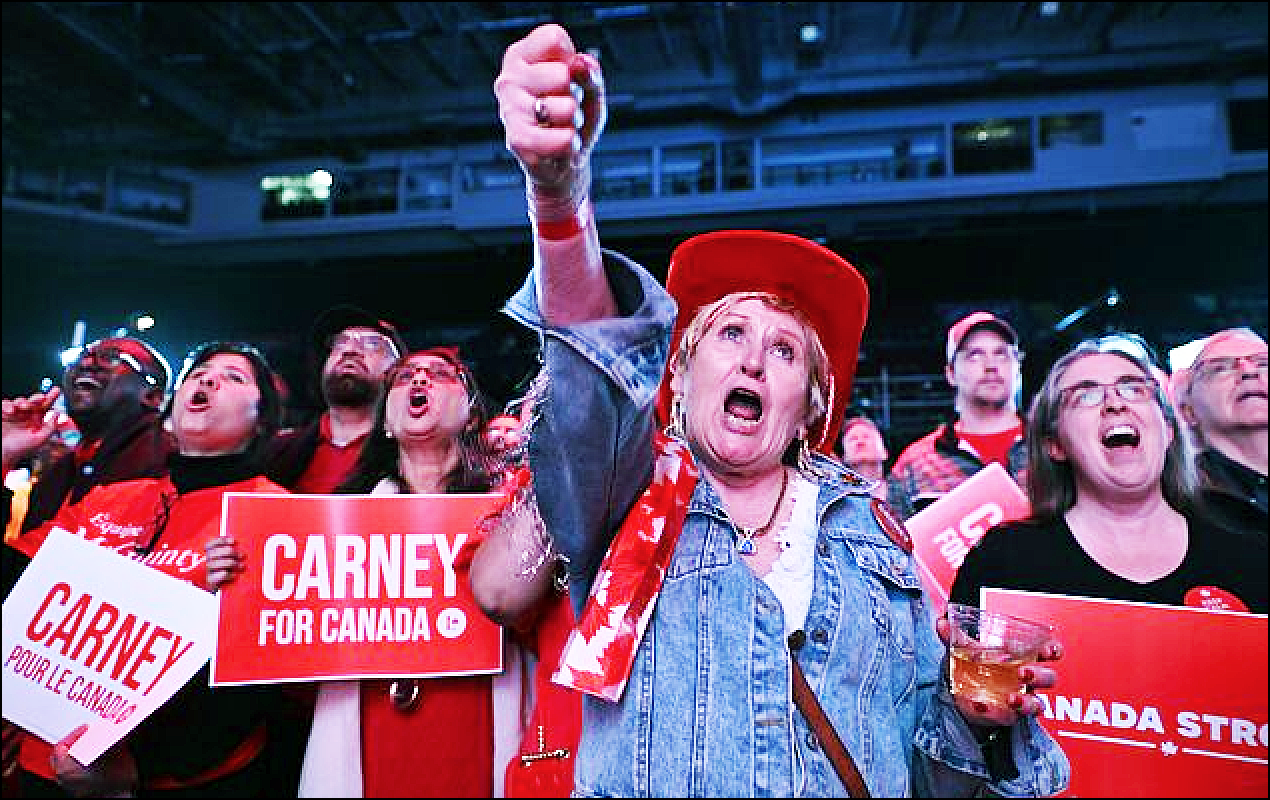
BYE BYE CANADA
nnn
he Conservatives were defeated in Canada’s federal election last Monday night; after being significantly ahead in the polls just a few months ago. Liberal leader Mark Carney has managed to cling to power.
Canada just hit its own Great Reset; Klaus Schwab-style. And it’s far from the great win for the country that the Liberal voters of Canada may think it is; unless, of course, they voted for their own country’s destruction, which we know is a desire rooted in the hearts of many leftists residing in any Western capitalist nation.
While headlines celebrate “historic change, new leadership,” and “fresh starts,” the reality is something much darker & sinister: a tired, battered system stuck rearranging the same deck chairs on a Titanic steered by the radical Justin Trudeau. The players have changed, but the leftist game remains the same.
The new Liberal face Carney, 60, doesn’t really represent any kind of surprising revolution. Anointed prime minister in early March following Trudeau’s resignation, Carney is a career globalist, a central banker polished to a high corporate shine, now sitting atop a crumbling political machine. The Liberals cling to power with what seems to now be a minority government. A sign of great weakness, not strength; while the Canadian media hails it as stability.
Canada’s Conservative leader, Pierre Poilevre, despite mounting popular support for his seemingly populist message, lost his own seat in Parliament. Jagmeet Singh, leader of Canada’s New Democratic Party (NDP), once paraded as the progressive future, was crushed into political irrelevance. And Trudeau? Gone, but his ghost remains, having successfully delivered to his nation what ominously appears to be a Trudeau 2.0.
Canada has voted for, among other things, more economic decline in pursuit of the Left’s climate change fantasies. Time Magazine reported that Carney:
“has a long record of advocating for emission reductions in financial markets—he was a U.N. climate envoy—which may make it hard for him to appeal to voters who have had enough of Liberal restrictions on oil and gas production, especially now that Canadians are wishing they had more pipelines to tidewater so that they could tell Trump where to put his tariffs.”
In other words, he is going to take Canada in precisely the wrong direction from the one in which even Canadian voters who are enraged at Trump want the country to go.
Carney is also a committed globalist, couching his socialist internationalism in fantasies about Canada replacing the United States as the leader of the free world, or what used to be known as the free world. “Canada is ready to take a leadership role in building a coalition of like-minded countries who share our values,” he declared several weeks ago. “We believe in international cooperation. We believe in the free and open exchange of goods, services and ideas. And if the United States no longer wants to lead, Canada will.”
That means open borders, more mass migration into Canada, and more outsourcing of Canadian industries to other countries. Yet many Canadians, with their Pravda-like media (aside from Ezra Levant’s brave and truth-telling Rebel Media), will likely be lulled right back to sleep. They haven’t been told the full implications and logical outcome of what Carney stands for, and they have no idea what’s coming.
▶️ 6 Minutes 5 Seconds
Ezra Levant gives this profound commentary on Carney after the fallout from the election:
I’ve called Carney Trudeau 2.0 — but smarter and harder working. That’s true, and Carney has most of the same team as Trudeau, including the disgraced Rasputin figure, Gerald Butts. But Carney — and his extremist wife — are deep ideological activists, whereas Trudeau was more of a cliche-spouting mascot. If it helps to understand Carney, know that the company he chaired, Brookfield Asset Management, has a trillion dollars under management. It’s like BlackRock, and just as ideological and dictatorial. (Has any Canadian media — other than Rebel News — reported that Carney was interrogated last year by Congressional staff, accused of extorting coal companies?)
…More importantly than personality, all of the issues that caused people to hate Trudeau — housing costs, mass immigration, taxes, wokeism — will continue, and people will see that Carney’s cabinet is largely the same as Trudeau’s was. There has been no change in the Liberals.
…Carney hasn’t given up his belief in “net zero” deindustrialization or other World Economic Forum obsessions. There’s a reason the regime media don’t want you learning about the WEF or what Carney did there as a board member.
…Expect Carney to keep his promise to lavish money on the CBC state broadcaster, partly as a reward for their service these past months, and partly to start campaigning for the next election, that could come within a year. Don’t be surprised if, as a corollary, Carney re-introduces Trudeau’s C-63 Online Harms Act censorship bill. You’ve already seen how they treat Rebel News. They want citizen journalists to know their place.
Levant makes it profoundly clear that what just happened in Canada is not only a great danger to his country, but also a dire warning for the United States and Europe. The globalist/leftist political machine simply swapped out the face cards, and the same hands are still being dealt.
In Europe, meanwhile, the same machine is showing itself to be increasingly authoritarian, barring the principal opposition leader in France from running for president, and quarantining the nationalist parties in order to prevent them from forming coalitions and making even the smallest move to dismantle the socialist, internationalist, open-borders entity that the left has constructed.
Amid all this, many of the most important power struggles are happening behind closed doors, in the corridors of the global institutions and unelected WEF-style agencies — not inside the voting booth.
And this isn’t an issue just in Canada. The forces seeking to destroy the West and its freedoms are still ruthlessly on the march, not just north of the border, but in the U.S. and in Europe as well.
These times call for courage and determination to stand for freedom, or free societies will surely be lost. ✪














▶️ DONATE VIA PAYPAL (DEBIT & CREDIT CARD)
ALL PayPal Transactions Are Encrypted For Card Holder Privacy & Security
▶️ DONATE VIA ZELLE (DIRECT BANK CASH TRANSFER)
ZELLE is the perfect online alternative to PayPal. It’s an incredibly simple, secure, easy, fast and FREE way to send or receive money to recipients directly from your online banking account without a middleman. Best of all, there’s NO fees.
ZELLE is a service provided by your bank and is already built in to your online banking account. You only need to activate it first before using. If you’ve already activated ZELLE in your online bank or credit union account, you can donate to The New Americanist by using our ZELLE address:
vip@thenewamericanist.com
To activate your ZELLE, follow these easy instructions (a simple two minute process):

▶️ DONATE VIA SNAIL MAIL







▶️ CLICK HERE TO VIEW
▶️ 29 Minutes 42 Seconds
▶️ 5 Minutes 44 Seconds
▶️ 1 Hour 23 Minutes 54 Seconds
▶️ 10 Minutes 4 Seconds
▶️ 47 Minutes 63 Seconds
▶️ 7 Minutes 26 Seconds
▶️ 7 Minute 9 Seconds
▶️ 10 Minutes 19 Seconds
▶️ 19 Minutes 4 Seconds
▶️ 20 Minutes 45 Seconds
▶️ 18 Minutes 51 Seconds
▶️ 9 Minutes 3 Seconds
▶️ 28 Minutes 8 Seconds
▶️ 28 Minutes 45 Seconds
▶️ 8 Minutes 22 Seconds ⭐️ Gary Brown
▶️ 7 Minutes 48 Seconds
▶️ Premiere: 5 Minutes 57 Seconds
▶️ 16 Minutes 49 Seconds
▶️ 36 Minutes 59 Seconds ⭐️ The New Logical Show
A NEW video podcast produced by TNA’s very own bet125. Make certain you SUBSCRIBE & LIKE.
Let’s all support new Conservative Media. 😎
