Hi Folks… And Welcome Again To FLAT OUT!
A Volvo Sports Car? It’s …
The Volvo P1800: 1961-1973
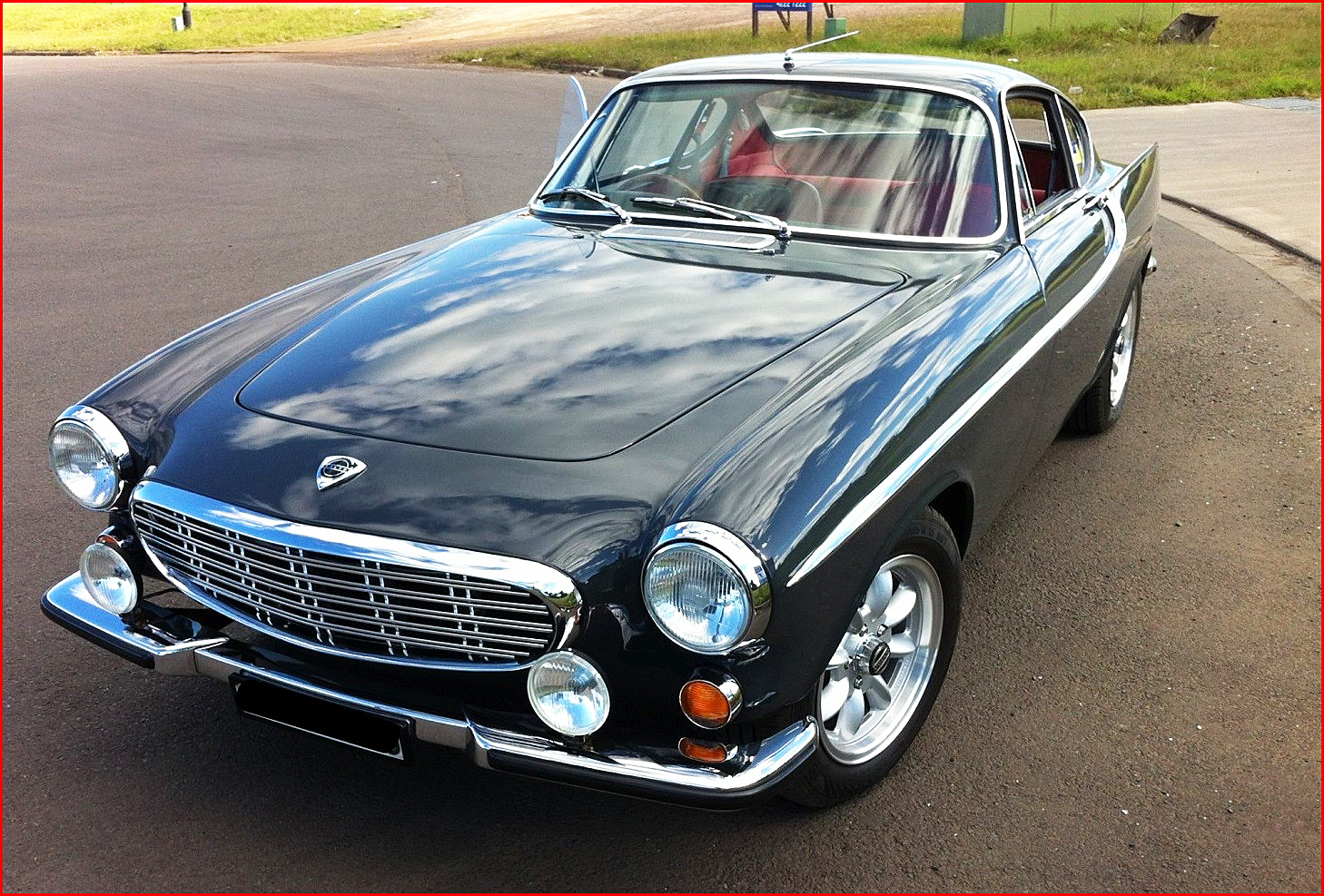
✪ The P1800 was a car manufactured by Volvo from 1961 to 1973. Its sleek lines and sporty look was a departure for Volvo and signaled a desire to get into the small sports car segment dominated by the British and Italians, even though they classified it as a “touring car” rather than a pure sports car.
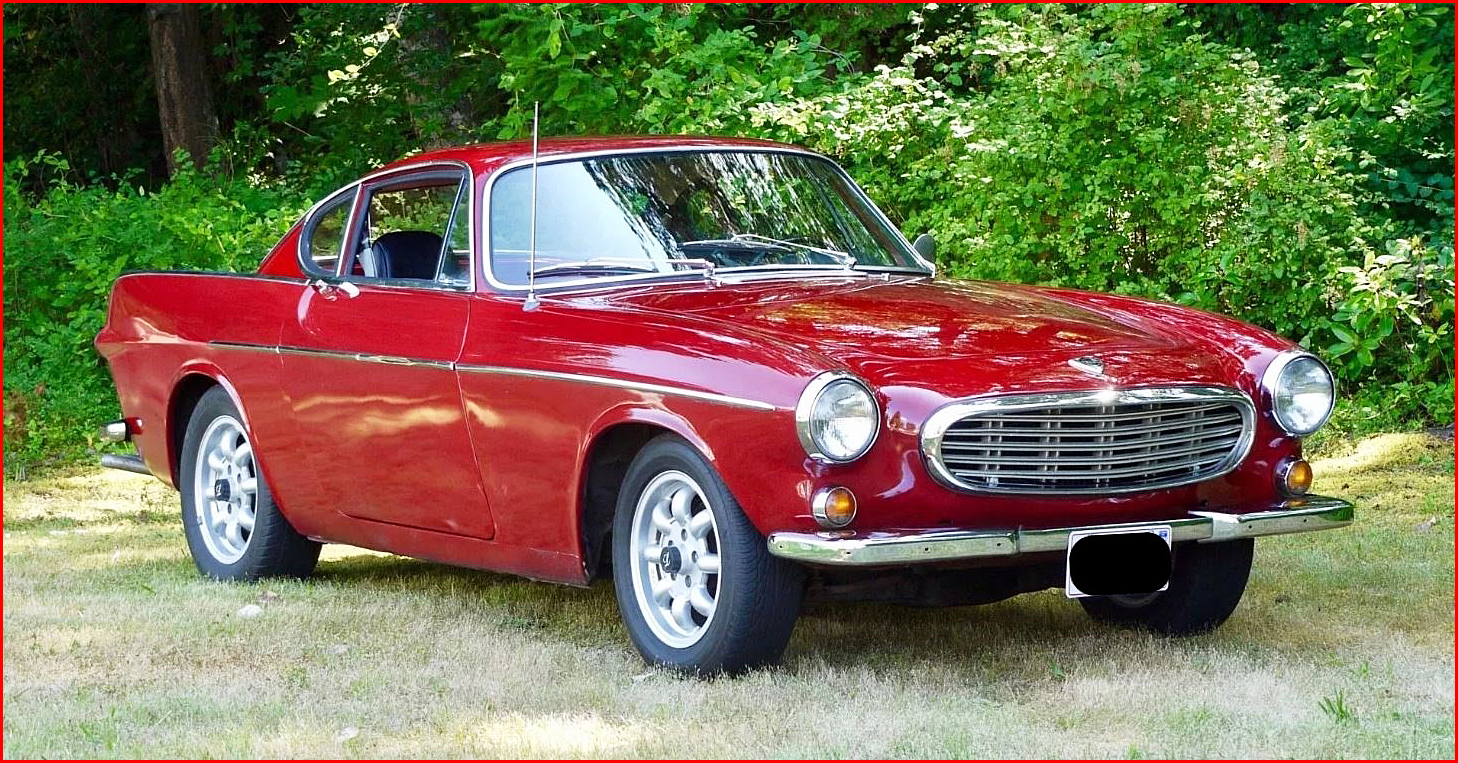
The Volvo P1800 rolled onto the scene in 1961, a sleek anomaly from a company better known for boxy, dependable sedans and wagons. Volvo, the Swedish stalwart of practicality and safety, wanted more. They eyed the sports car market—territory ruled at the time by the MGB, Morgan Plus 4, and Alfa Romeo Spider—and decided to stake their claim. The P1800 was their weapon: a front-engine, rear-wheel-drive coupe (and later, a quirky wagon) that married Italian flair with Scandinavian practicality and grit. It wasn’t just a car; it was Volvo’s bid to prove they could play with the big boys in the world of automotive fun.
Development began in 1957, around the same time as Jaguar were working on ideas for the E-Type. The man behind the P1800 project was Helmer Petterson, and engineering consultant to Volvo. Unknown to him his son Pelle Petterson, a young Swedish designer sharpening his skills under Pietro Frua at Italian design firm Carrozzeria Ghia, sketched a low-slung coupe with a chrome-trimmed grin and subtle tailfins—a shape that whispered speed even at a standstill- For Volvo. Helmer Petterson took the initial prototype, P958-X1, to coachbuilder Karmann in West Germany. Karmann engineers started preparing working engineering drawings from the wooden styling buck that Fura had built at Ghia and would be able to have cars ready to market as early as December 1958. However, Volkswagen, Karmann’s biggest customer, forbade Karmann from taking on the job and threatened to cancel all their contracts if they did, because they feared it would interfere with the sales of its own cars, most notably the Karmann Ghia sports car introduced three years before. The car was then given to Pininfarina, another renowned Italian design house, who polished it into production form. Volvo dragged their feet on the project and the car did not debut until the 1960 Brussels Motor Show to murmurs of approval. By the 1961 Geneva Motor Show, it was ready to roll, a Swedish-Italian hybrid aimed at stealing hearts and headlines.
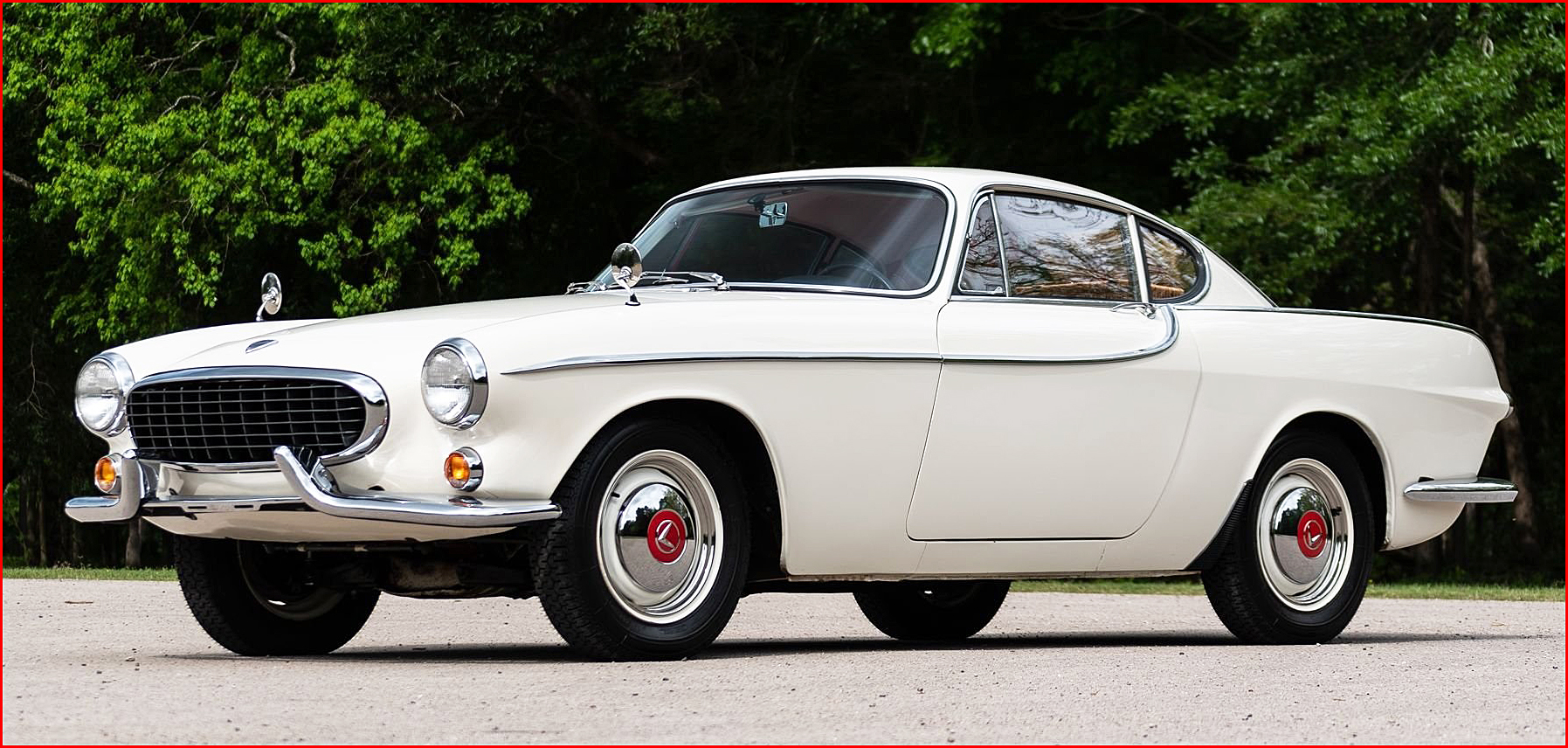
The P1800 was based on the floorpan of the Volvo 121/122S, but with a shorter wheelbase. Production, though, hit a snag. Volvo did not have the capacity to build the car itself, so they tapped Jensen Motors in England to build the first 6,000 units from bodies made by another English firm, Pressed Steel, a move that sounded smart until the cars started showing up with crooked panels, peeling paint, and wiring that seemed to have a mind of its own…which was sadly not all that uncommon for British automakers of the time. By 1963, Volvo had had enough. They moved production back to Gothenburg, Sweden, and slapped an “S” (for Sverige, Swedish for “Swedish”) on the badge. The P1800S was a different beast—tighter, cleaner, and finally worthy of the Volvo name.
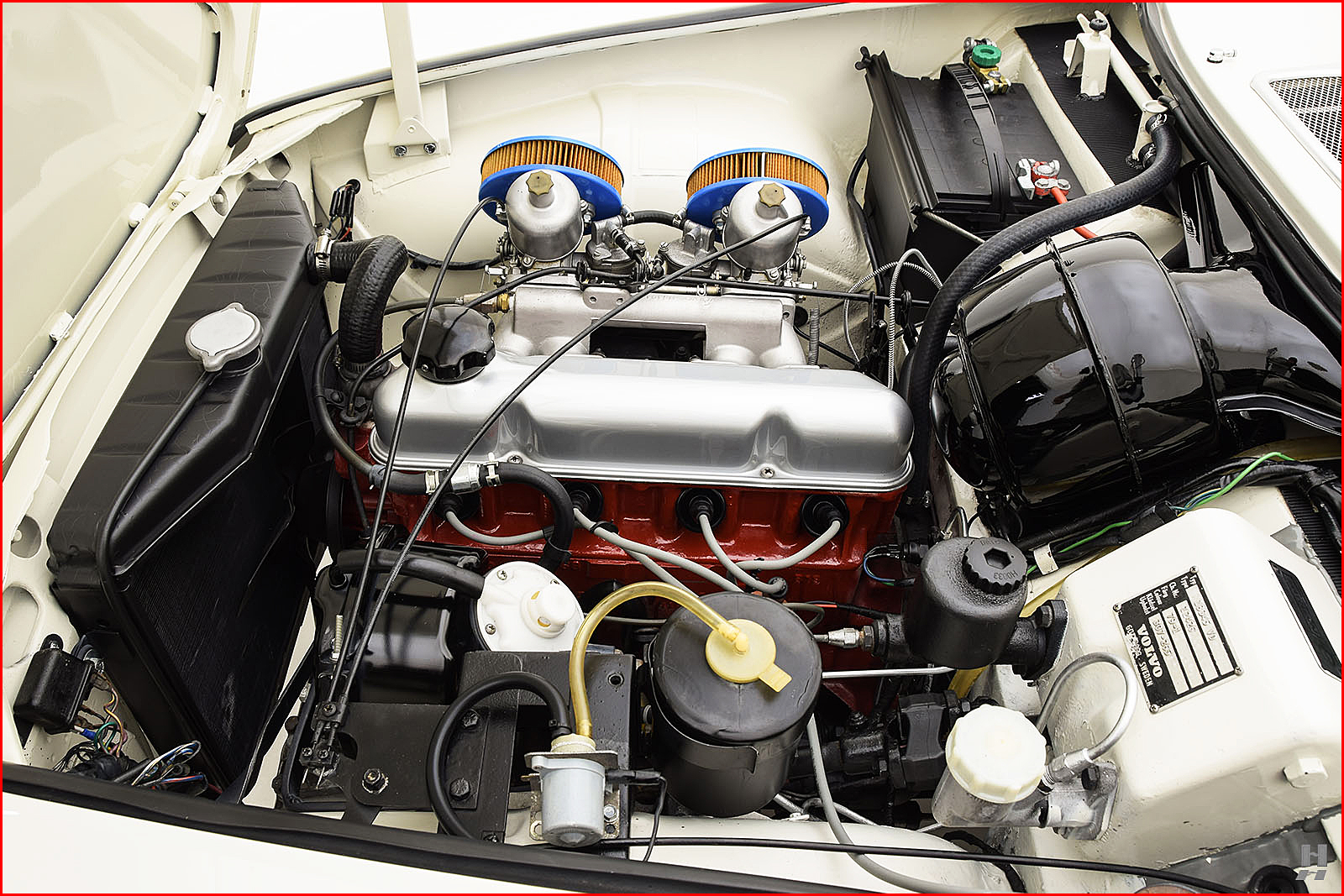
Power came from Volvo‘s B18 engine (B for Bensin, Swedish for gasoline), a 1,778 cc inline-four pumping out 100 horsepower at 5,500 RPM. It could outrun a Porsche 356B and its Volkswagen-derived boxer-four, but not the 911 that would come along two years later with a flat-six engine. It was smooth as silk thanks to dual SU carburetors and a clever counter-rotating balance shaft system—tech Volvo borrowed from Mitsubishi to hush the usual four-cylinder buzz. Mated to Volvo’s M40 four-speed manual transmission (with an optional overdrive for highway cruising), the B18 pushed the 2,500-pound coupe to 60 mph in 9.5 seconds and a top speed of 112 mph. Not scorching performance by any means, but respectable enough to beat MG, Morgan and Alfa (and Porsche, for a short time) at their own game.
The P1800 handled like a dream, too. Up front, double wishbones and coil springs kept things planted, while a live axle with leaf springs propped up the rear. It wasn’t cutting-edge, but the near-even weight split—thank the front-engine, rear-drive layout—made it nimble and forgiving. Steering was a conventional worm-and-roller setup, and brakes were discs upfront, drums out back.
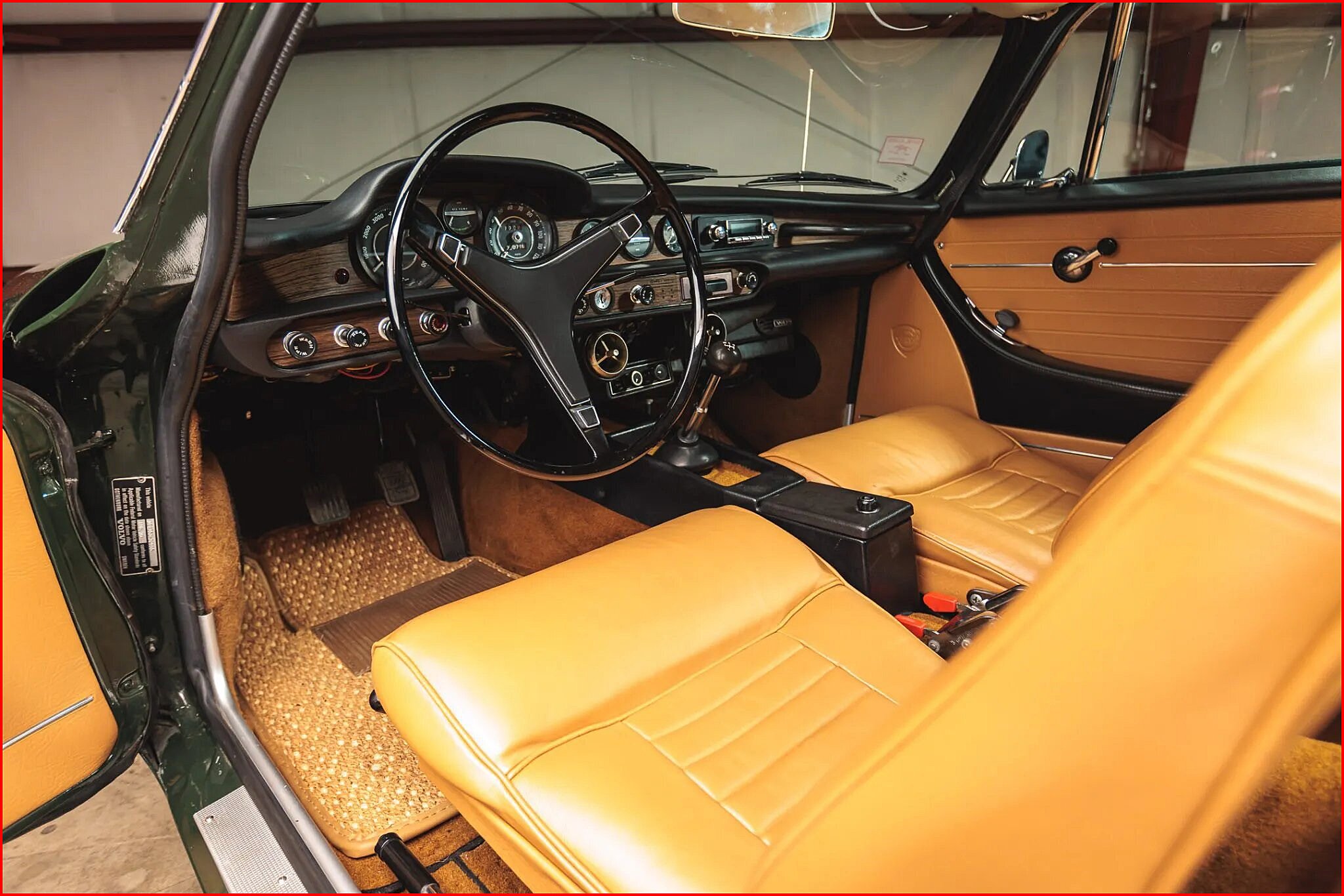
Step inside, and the P1800 wrapped you in a snug embrace. Leather or vinyl bucket seats hugged two, while a wood-rimmed steering wheel (later made of Bakelite) and a row of analog gauges—speedo, tach, fuel, oil, temp—gave it a proper sporty vibe typical of ’60s sports cars. The rear “seats” were a joke, but this was a car for drivers, not carpoolers. Try squeezing into what passed for a backseat in an early 911. A heater, defroster, and AM radio came standard. The coupe’s trunk offered 15.5 cubic feet—tight, but the 1800ES wagon would later stretch that to 31.5 with its glass hatch.
Volvo didn’t sit still. In 1962, they beefed up the chassis for rigidity, and the B18 got a five-main-bearing crank for longevity. By 1963, with Gothenburg in charge, output climbed to 108 horsepower with dual Zenith carbs replacing the often-finicky SUs, and a 12-volt electrical system replaced the outdated and creaky 6-volt setup. A 4.3:1 rear axle option nudged the top speed to 115 mph. Small tweaks, but big gains in reliability if not performance.
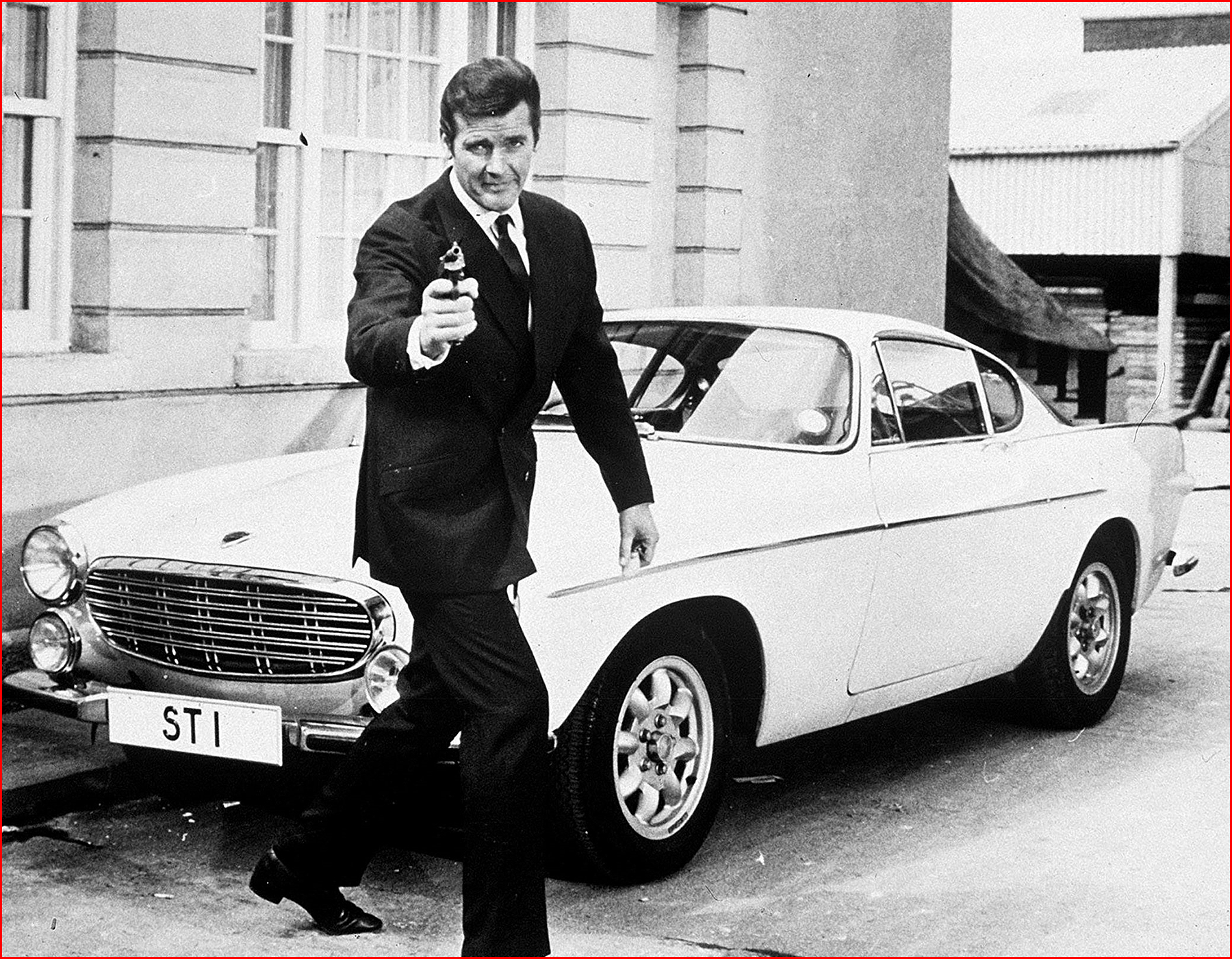
The car got a lot more famous that same year when the P1800 landed a starring role as Simon Templar’s ride in the British TV show The Saint, driven by a very debonair young Roger Moore who later became the third actor to portray Agent 007 in the James Bond franchise. Volvo supplied pristine white coupes for the show, which beamed into 71 countries across 118 episodes. Sales spiked—up 20% in the U.S. in 1963 alone—and the P1800 became a symbol of effortless cool, a legacy that stuck. 1963 also saw the introduction of the new M41 four-speed gearbox with electrically actuated overdrive.
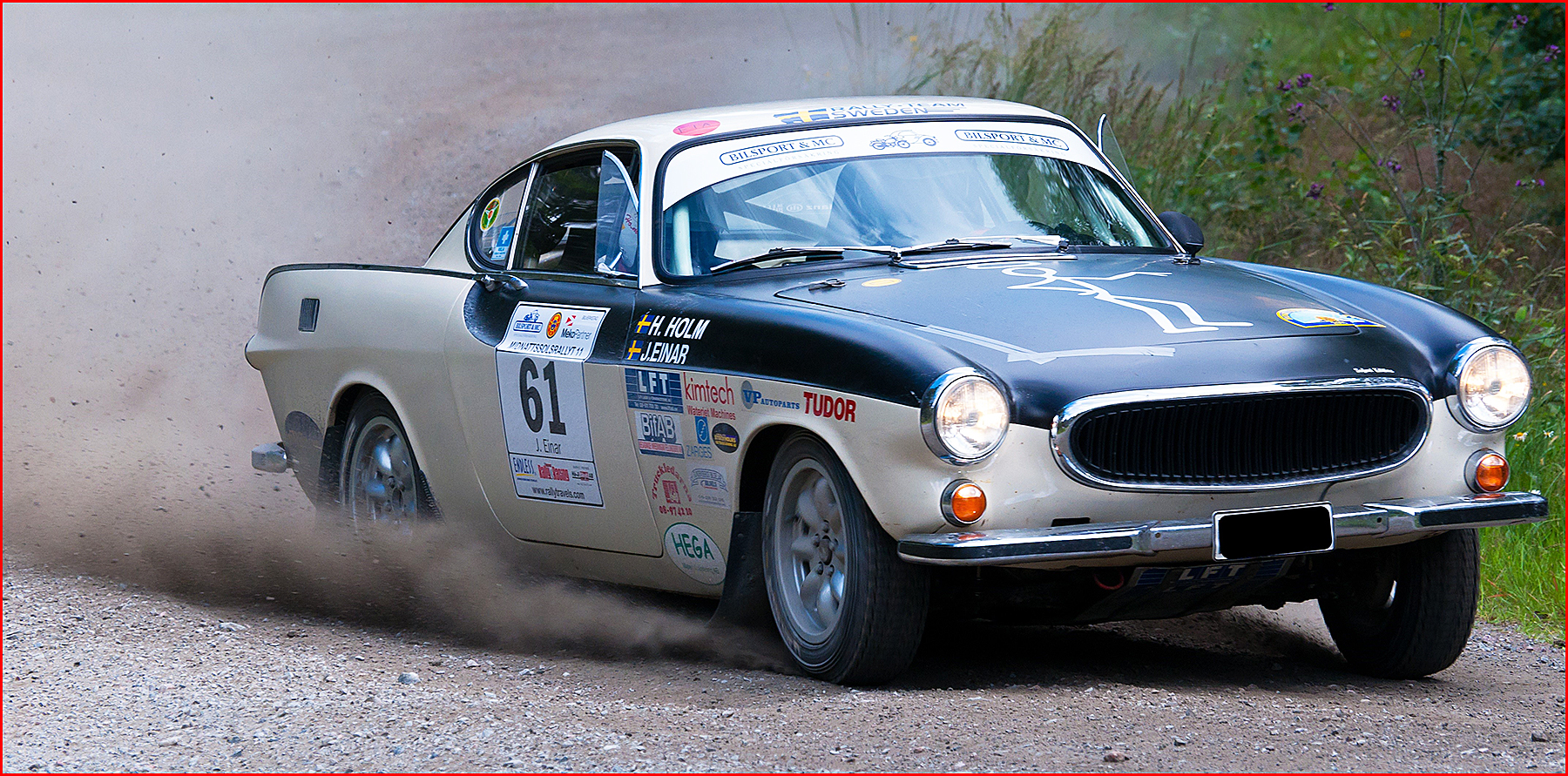
In 1966 Volvo flexed the P1800‘s muscles. They cooked up a rally-ready B18D engine, packing 135 horsepower with dual Weber carbs and a 10.2:1 compression ratio. It shaved 0–60 down to 8.8 seconds and topped 120 mph—numbers that made it a contender. In the 1963 Safari Rally, it nabbed third in class; in the 1965 Acropolis Rally, second. This was no Indy 500 pace car, but the P1800D could dance on dirt and score points when it counted against competition with much more rally pedigree.
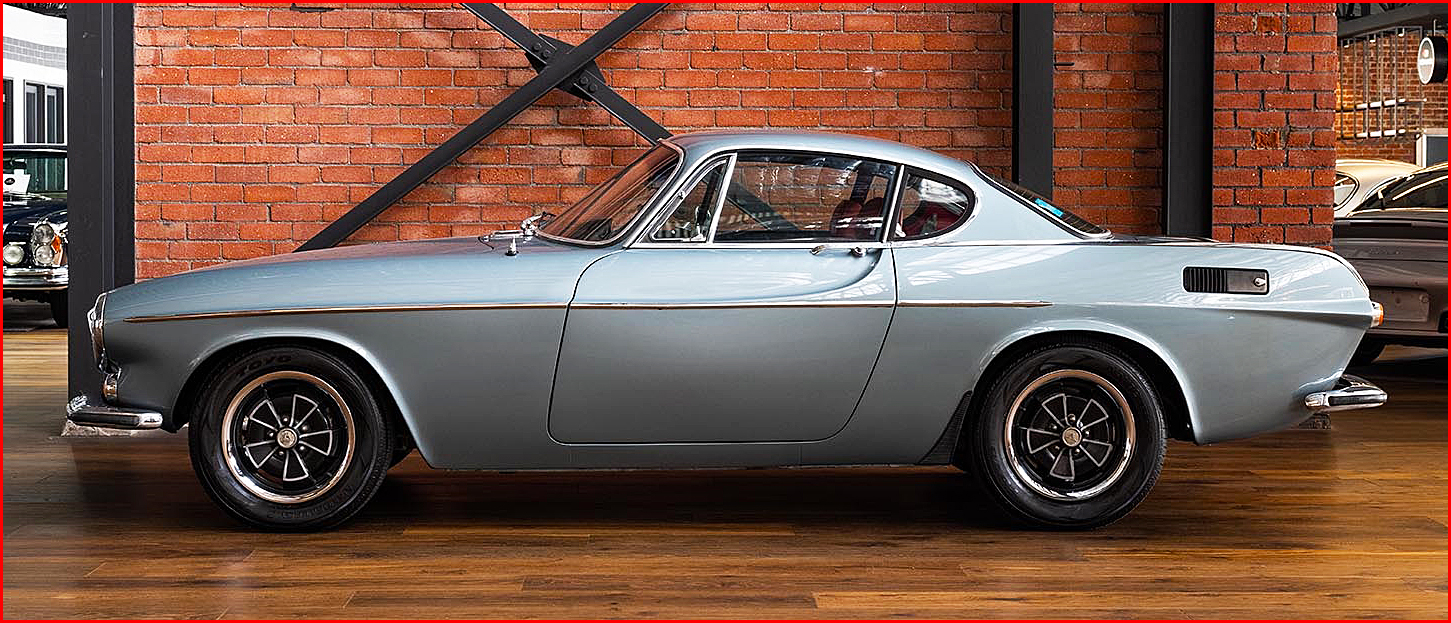
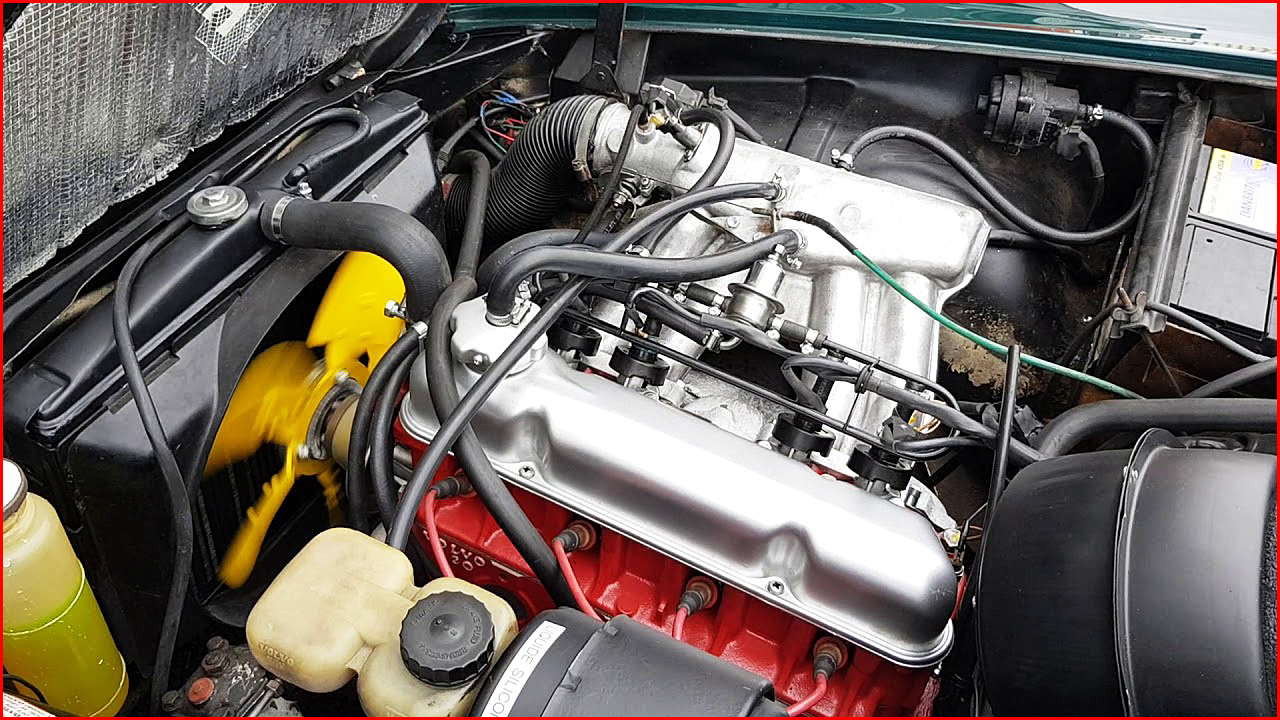
By 1969, the P1800 was growing up. The B20 engine arrived, a 1,986 cc four cranking out 118 horsepower with carbs or 130 with Bosch D-Jetronic fuel injection (badged P1800E, for Einspritzung, German for fuel injection) without sacrificing fuel economy, important on the Continent where fuel prices remained high. The injected version hit 60 in 9.0 seconds and topped 118 mph, nearly the specs of the rally racer of three years earlier. Air conditioning became an option, brakes got bigger 11.3-inch front discs with power assist, and the following year rack-and-pinion steering sharpened the edge. In 1970 the P1800 gained four-wheel disc brakes.
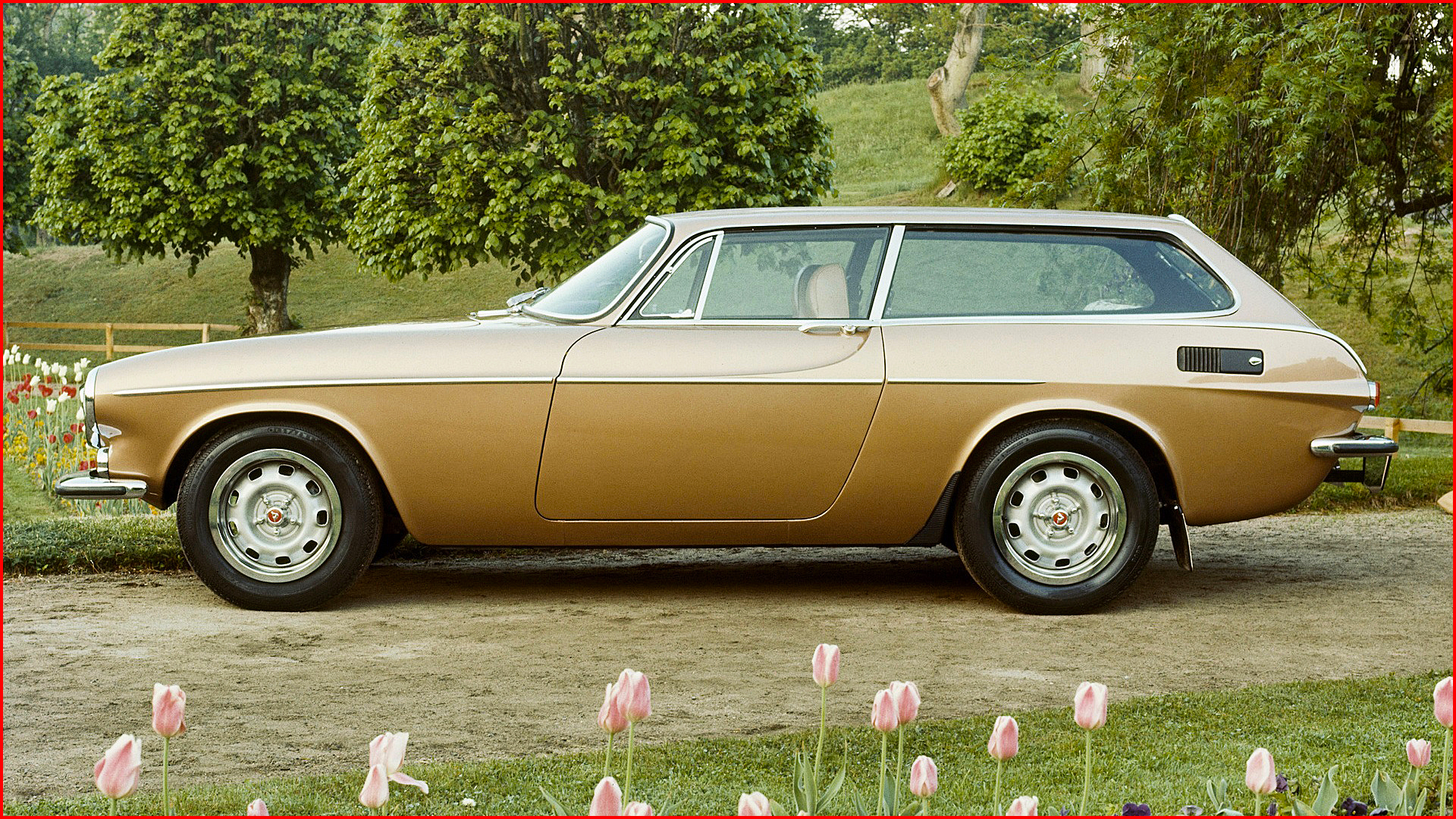
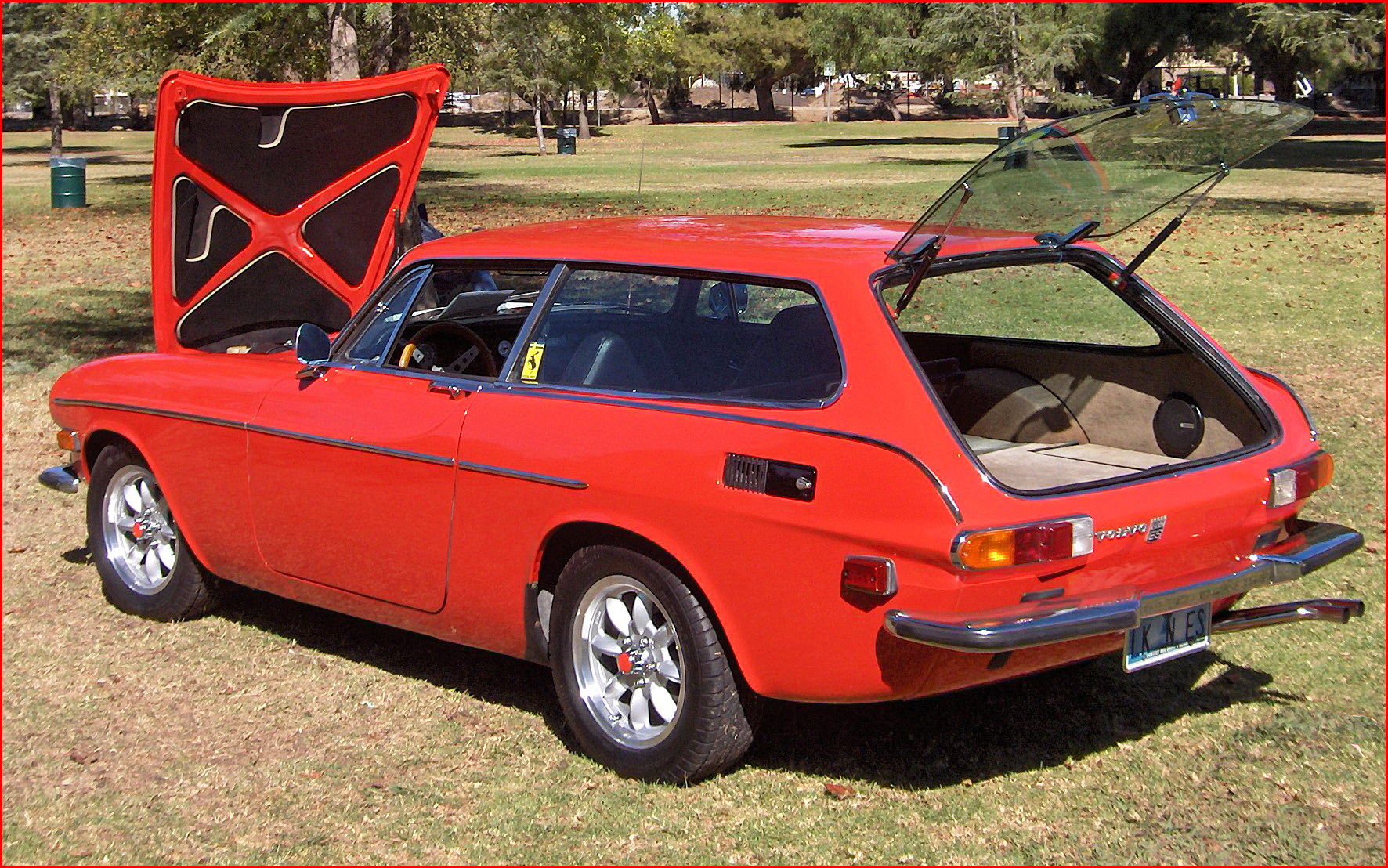
The curtain call came in 1972 with the 1800ES, a shooting-brake twist on the coupe, combining elements of coupe and station wagon style. Its extended roof and frameless glass hatch turned it into a proper station wagon, or “estate car” to the British, hence the “ES“—31.5 cubic feet with the seats down—while keeping the style intact. Design elements from the ES can be seen on later, more boxy Volvo station wagons like the 140, 240, 260 and 740…but the P1800’s end was near. Emissions rules, mainly in the U.S., choked the B20E engine to 112 horsepower in 1972, and U.S. safety regulations tacked on clunky 5-mph bumpers, stretching the car to 173.2 inches. Production wrapped in 1973, with 3,146 units that year.
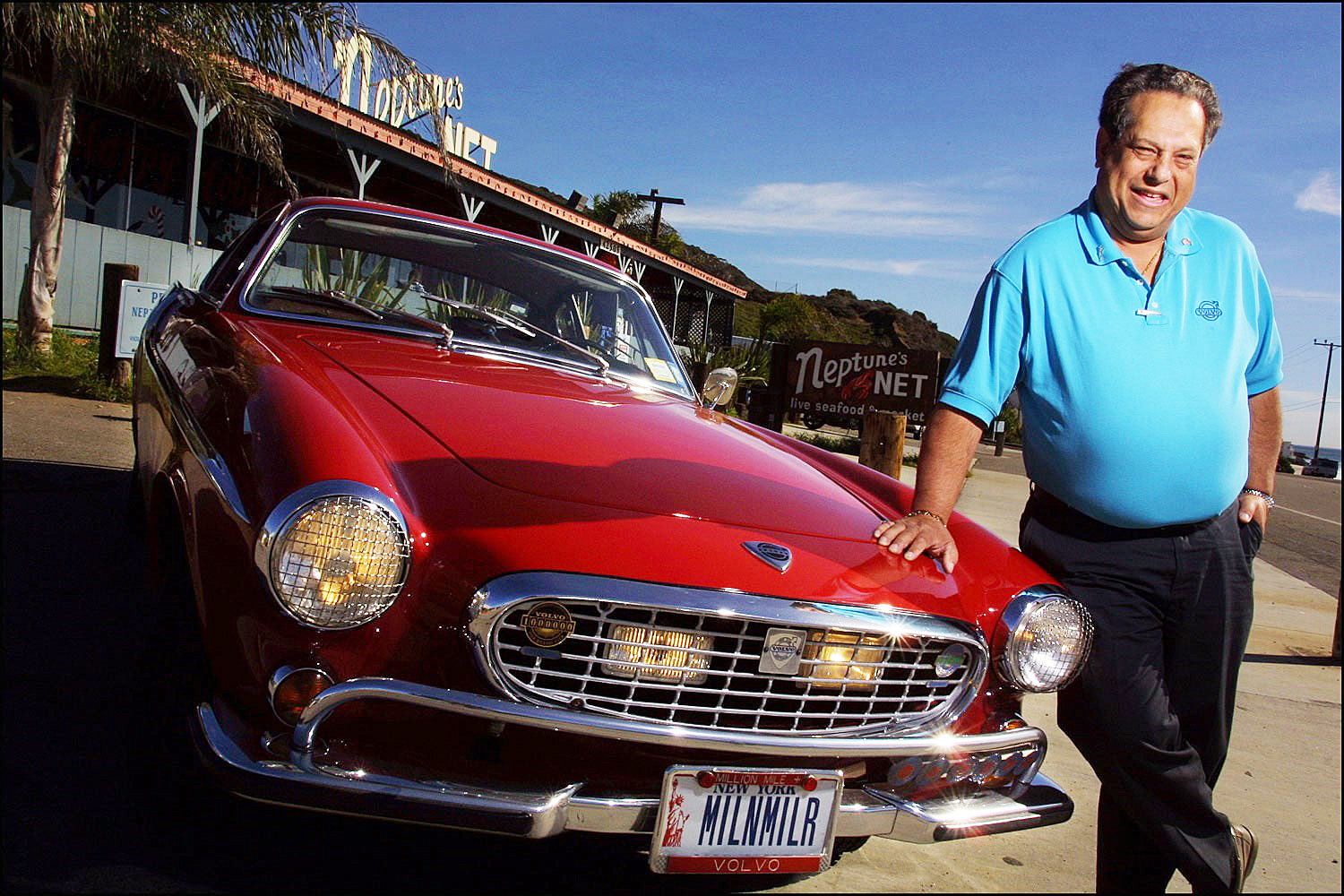
The P1800’s automotive swan song came four and a half decades later. In 2018, Irv Gordon’s 1966 coupe logged 3.2 million miles, earning a Guinness World Record for the highest-mileage vehicle. Gordon, a New Yorker, racked up the miles on highways, proving the P1800 was built to last.
From 1961 to 1973, Volvo churned out 47,492 P1800s—39,532 coupes and 7,960 ES wagons. It wasn’t the fastest or fiercest, but it carved a niche with its blend of Ghia and Pininfarina looks, Volvo toughness, and a dash of rally grit. The P1800 showed the world that Sweden could swing with the sports car crowd—and it’s still winning fans today.
Growing up in Florida in the 1960s and ’70s, one of my best friends’ parents owned what I believe was a 1969 P1800E. I got to ride in it a couple of times, and I recall that it got down the road pretty well but of course it was a poor performer compared to my mother’s Buicks or my brother’s Barracuda, but not compared to my father’s Fiat 850 Spider. I wasn’t really aware of anything else about the car at the time other than I thought it looked cool, it would be decades before I dug into the history of the car. It was a bit of a quirky machine to American eyes, but that only added to its charm for those who wanted something just a little bit different. ✪
Got a Great Car Story? Share it! Reminisce About Your Other Favorite Cars, Too!
Seeyas Again Next Time On FLAT OUT!