Hi Folks…And Welcome Again To FLAT OUT!
Honda Builds A Supercar! It’s …
The Acura NSX 1990–2022
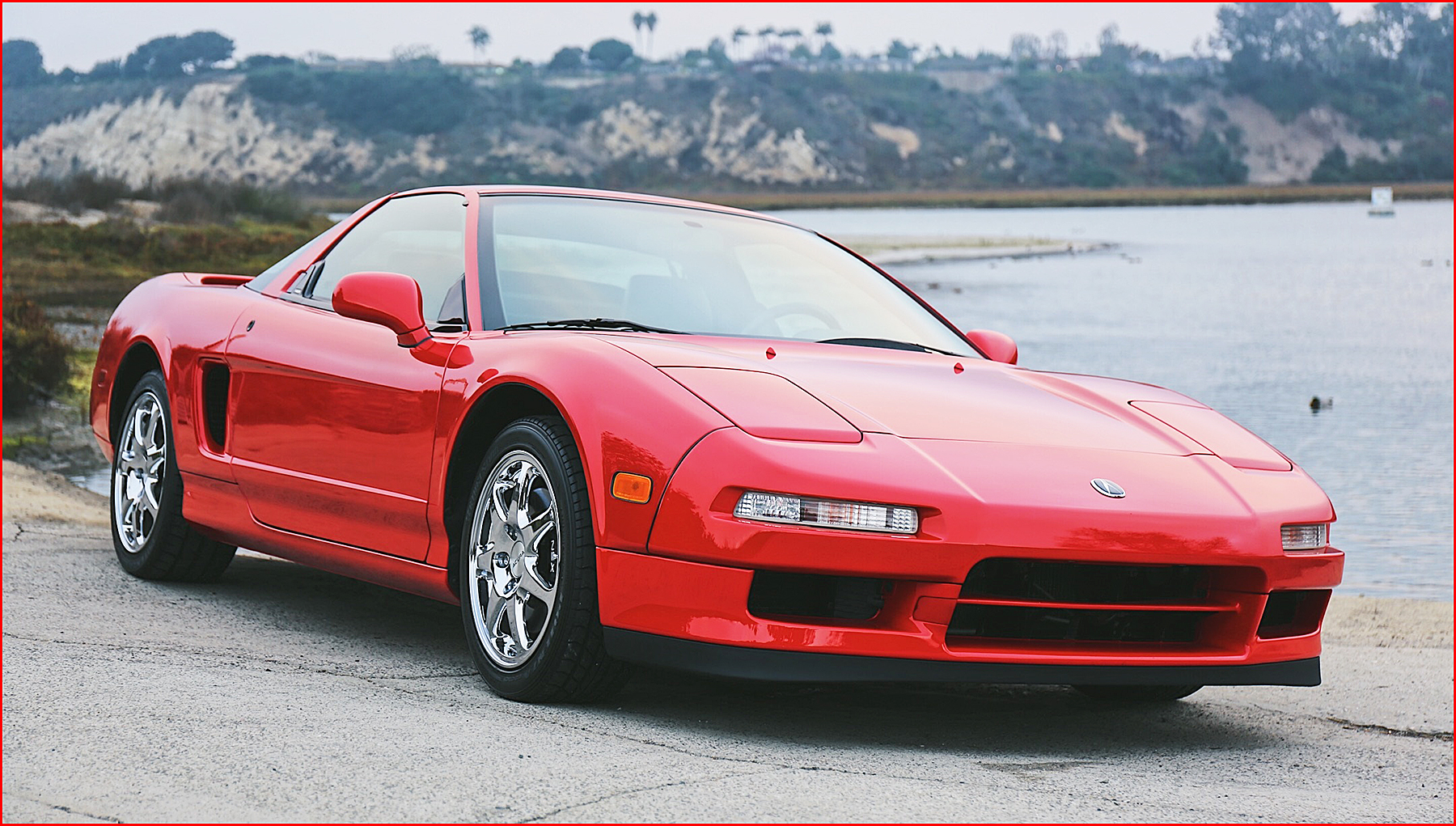
✪ The NSX was a supercar built by Honda and marketed as an Acura in the United States. It combined mid-engine power with superb handling at a price much lower than offerings with similar performance from makes such as Ferrari, Lamborghini and Maserati.
First Generation: 1990-2005
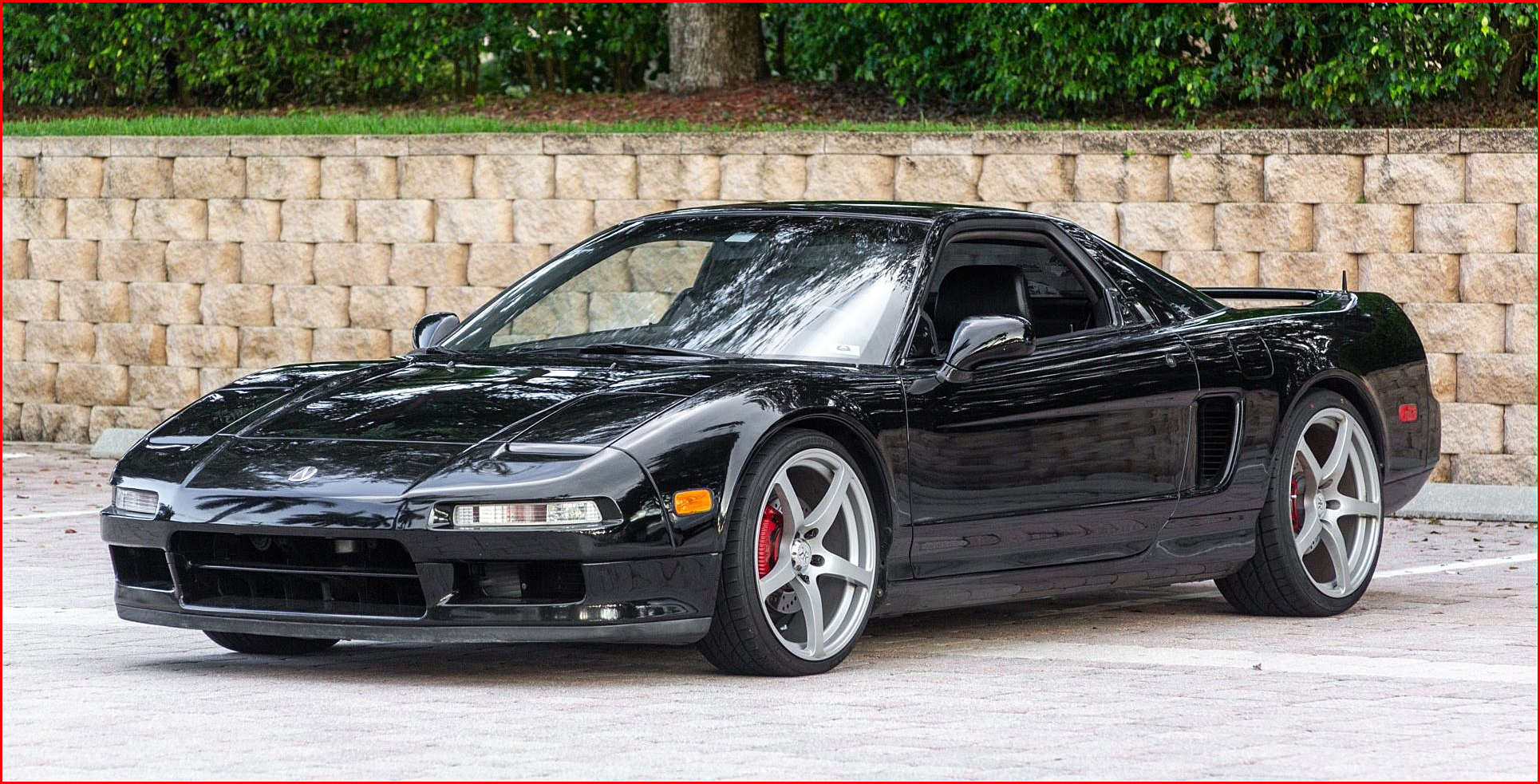
The Acura NSX hit the streets in 1990, a mid-engine marvel that shook the supercar world like a thunderbolt from Japan. Honda, known for bulletproof (but sedate) Civics and Accords, decided to aim higher – much higher. They wanted a machine to challenge Ferrari, Porsche, and Lotus, not just in performance but in precision and reliability. The NSX was their answer: a mid-engine, rear-wheel-drive coupe that blended cutting-edge tech with a driver’s soul. It wasn’t just a car; it was Honda’s declaration that Japan could redefine the supercar game.
The NSX’s story began in the mid-1980s, when Honda’s engineers, flush with Formula One racing dominance with Brazilian driver Ayrton Senna, dreamed of a street car with race-bred DNA. They started with a clean sheet, sketching a mid-engine layout for perfect balance. Honda tapped Pininfarina – yes, the same Italians who shaped Volvo’s P1800 and countless Italian sports cars – to style a sleek, low-slung body with pop-up headlights and a fighter-jet cockpit vibe. The prototype, dubbed HP-X (Honda Pininfarina eXperimental), wowed crowds at the 1984 Turin Motor Show.
By 1989, the production NSX was unveiled at the Chicago Auto Show, badged as an Acura for North America. When it hit dealers in 1990, priced at $60,000, it undercut the Ferrari 348 by $40,000 and promised something rarer: daily-driver dependability. Honda didn’t have the production muscle to build a supercar in-house, so they carved out a dedicated line at their Tochigi plant. Every NSX was hand-assembled by a team of 200 technicians, each engine balanced to Formula One tolerances. The result was a car that felt like it was milled from a single block of aluminum – because it nearly was. The NSX’s all-aluminum monocoque chassis, a production-car first, weighed just 462 pounds, making the car’s 3,659-pound curb weight feather-light for its class. This was no kit car, no one-off prototype; it was a revolution.
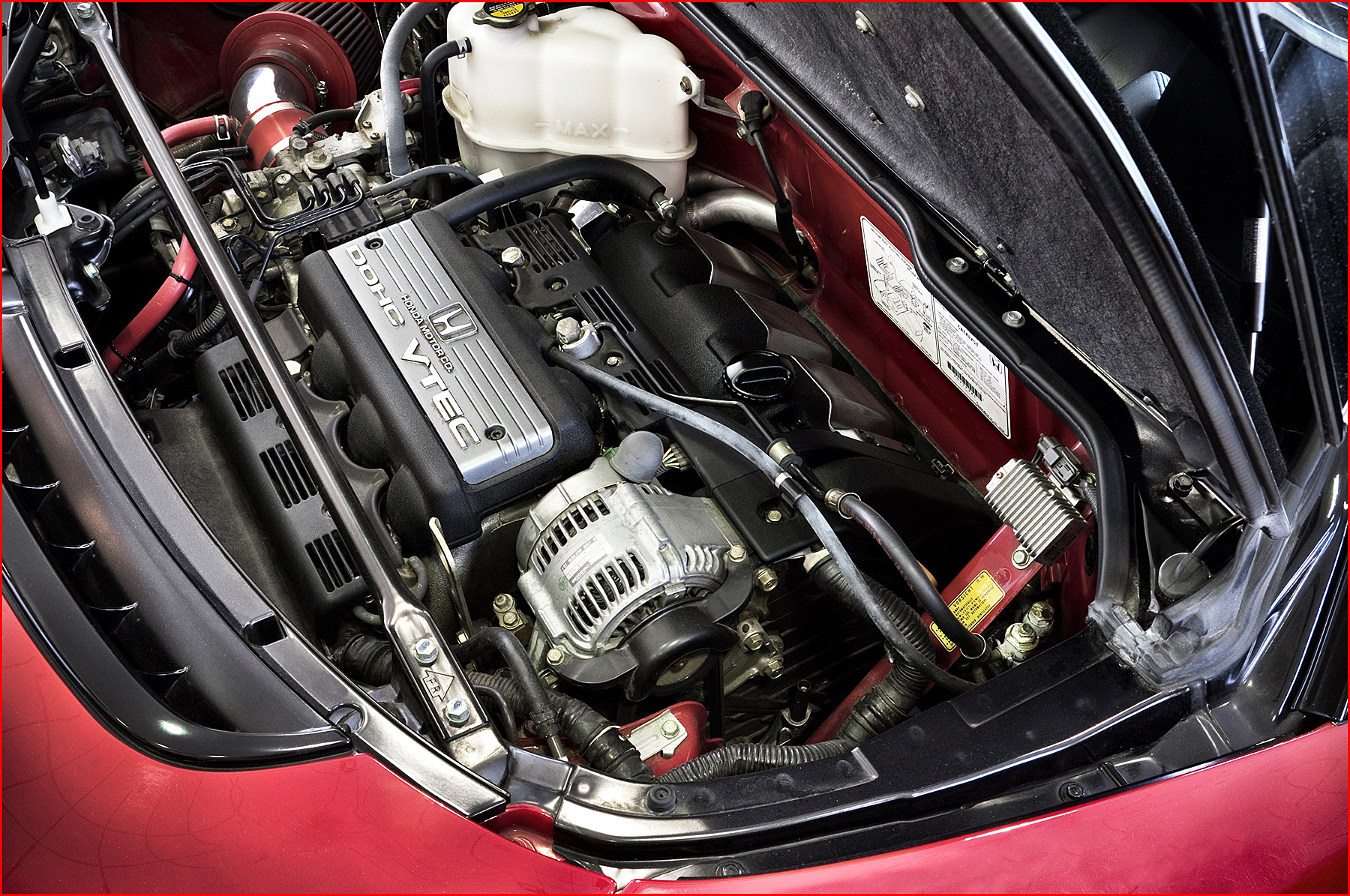
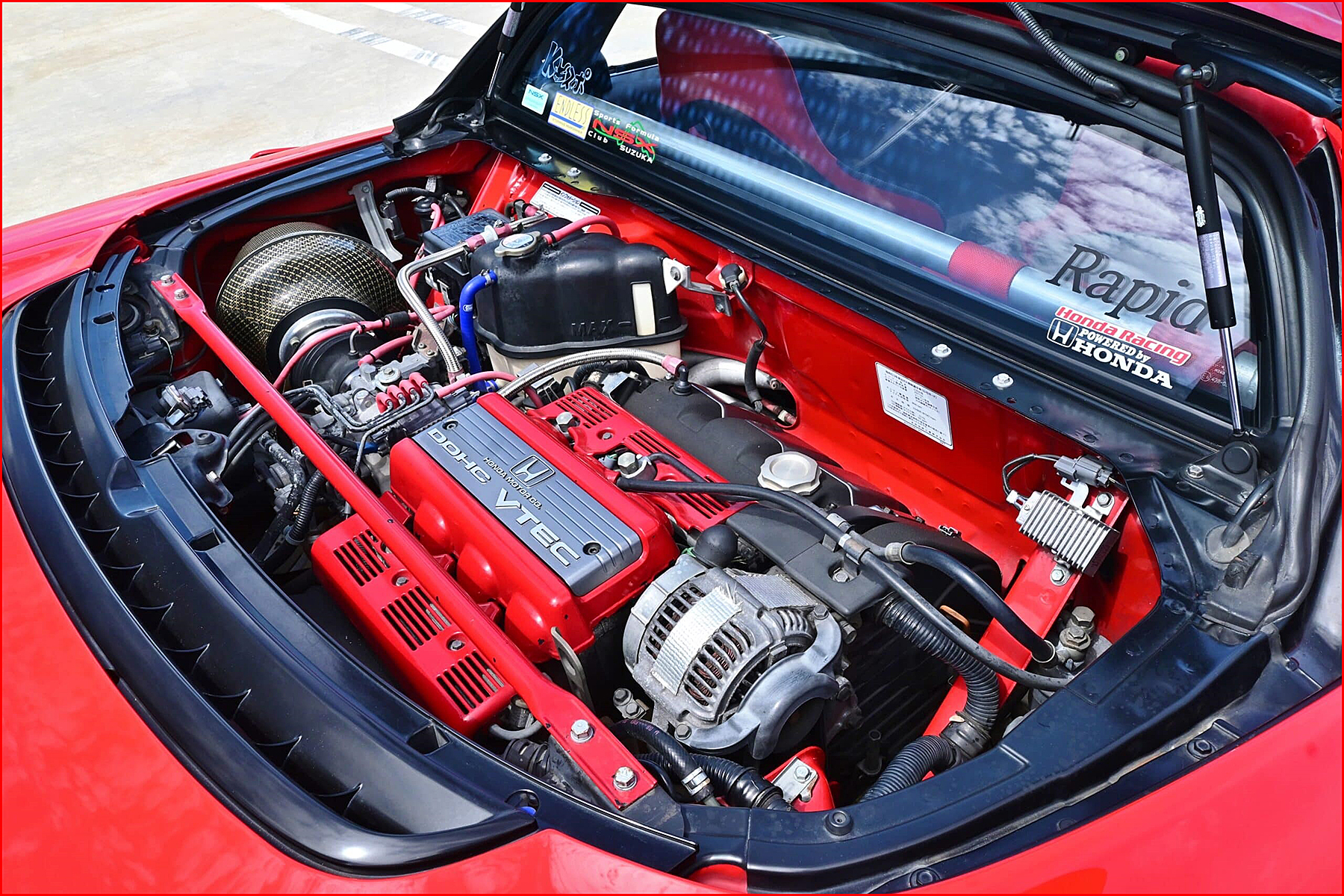
The beating heart of the NSX was the C30A engine, a 3.0-liter V6 producing 270 HP at 7,100 RPM and 210 lb-ft of torque at 5,300 RPM. That may not sound like much by the performance standards of today, but if we time-travel back to 1990 we find that the Ferrari 348 (the designers’ target car) produced 291 HP and 238 lb. ft. of torque and a Porsche 911 Carrera 4 made 250 HP and 229 lb. ft. of twisty-force, so the NSX was well in the range of the premium sports cars of the day. With dual overhead cams, four valves per cylinder, and Honda’s VTEC (Variable Valve Timing and Lift Electronic Control), it sang like an F1 engine, revving to an 8,000-rpm redline, something no car built outside of Italy or Stuttgart and certainly no other Japanese car could match. Honda was just working on its VTEC system at the time, targeting it for the four-cylinder Acura Integra and using a non-VTEC V6 for the NSX.
Honda‘s then-president Tadashi Kume, himself a respected engine designer, questioned the logic of not using their latest engine technology in their flagship car and the resulting 6-bolt main V6 featured the new VTEC system. However, the engine bay, which had been designed for the smaller heads of the non-VTEC engine, was too small for the VTEC. The engineers were forced to tilt the engine backwards 5 degrees to make it fit. Titanium connecting rods, another production-car first, kept it spinning smoothly while cutting down weight of moving parts and increasing the redline by 800 RPM. Paired with a five-speed manual (a four-speed automatic was optional but rare), the NSX could hit 60 mph in 5.7 seconds, ran the quarter-mile in 14.0 seconds at 102 mph, and topped out at 168 mph. It matched the Ferrari 348’s pace while sipping fuel at 19 MPG city, 24 highway – try getting that kind of fuel mileage with anything made in Maranello.
The NSX was a handling wizard as well. Its mid-engine layout delivered a 42/58 front/rear weight split, and an all-aluminum double-wishbone suspension front and rear kept it glued to the road. Forged control arms, borrowed from Honda’s F1 program, cut unsprung weight. Electric power steering, tuned with Senna’s input during Nürburgring testing, was razor-sharp with a 3.1-turn lock-to-lock ratio. Brakes were 11.1-inch ventilated discs with ABS, with four-piston calipers from 1997. Yokohama A022H tires (215/45R16 front, 245/40R17 rear) wrapped 16-inch front and 17-inch rear wheels, upgraded to 17-inch all around in 2002. The NSX pulled 0.90g on the skidpad, grippier than a Porsche 911 Carrera of the day.
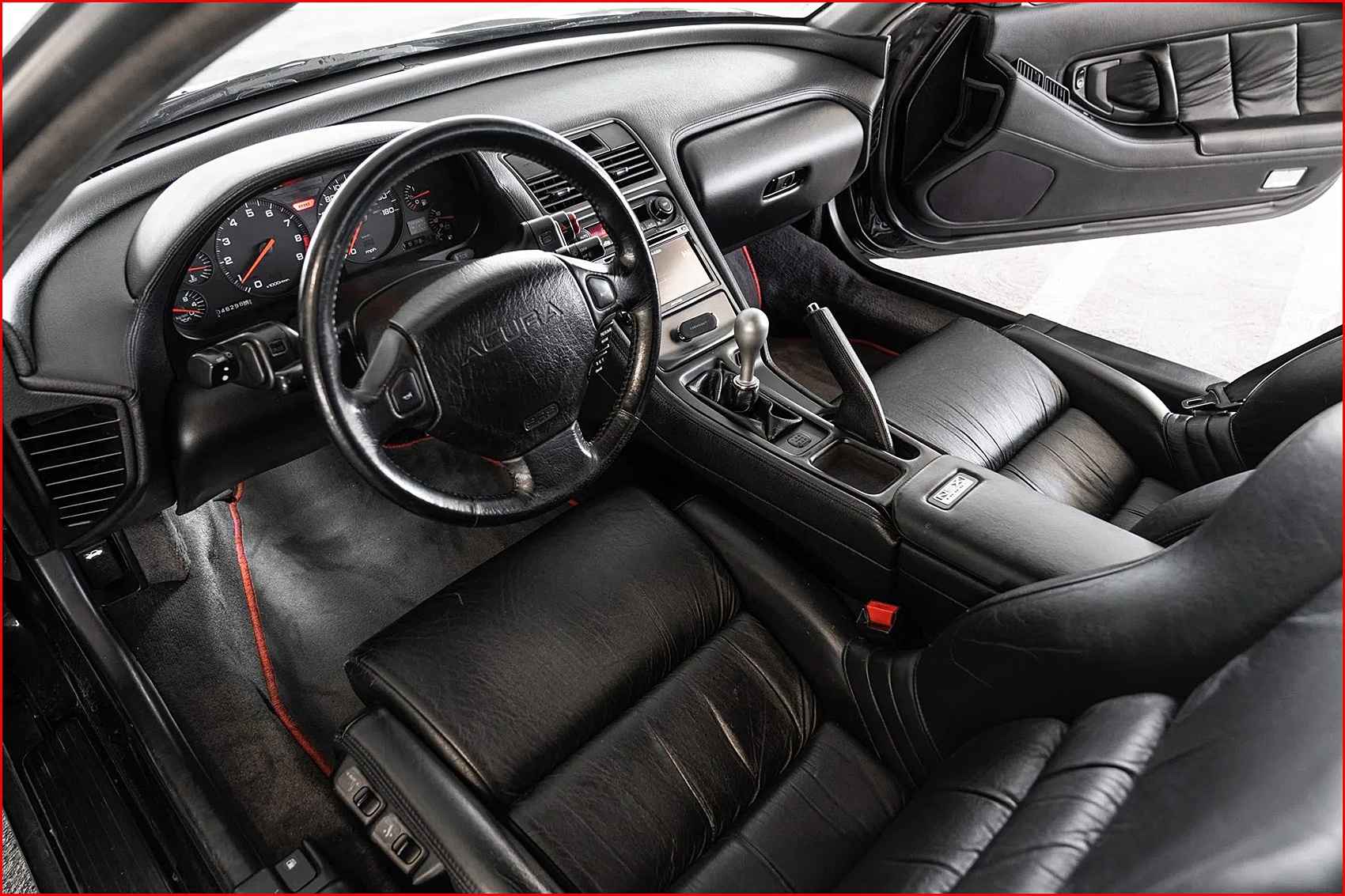
Inside, the NSX was a cockpit for purists. Leather bucket seats hugged two, with 36.3 inches of legroom and 37.0 inches of headroom. A 13.8-inch leather-wrapped wheel faced analog gauges: a 188-mph speedo, 9,000-RPM tach, and fuel, oil, and temp readouts. A 4.6-cubic-foot front trunk held weekend bags, but forget rear seats – this was a two-seat driver’s car. A top-of-the-line Bose audio system came standard along with climate control, and power windows; airbags arrived in 1991. Designers studied the 360-degree visibility of the F-16 fighter cockpit when crafting the NSX, so visibility was superb thanks to a low cowl and thin A-pillars, a rarity among supercars. It was as comfortable on a commute as on a canyon carve.
Honda‘s engineers kept refining the car. In 1991, a stiffer chassis and a 4.2:1 final drive sharpened response, and Motor Trend magazine crowned it Car of the Year. That year, a three-speed automatic option was dropped, leaving only the four-speed auto or five-speed manual.
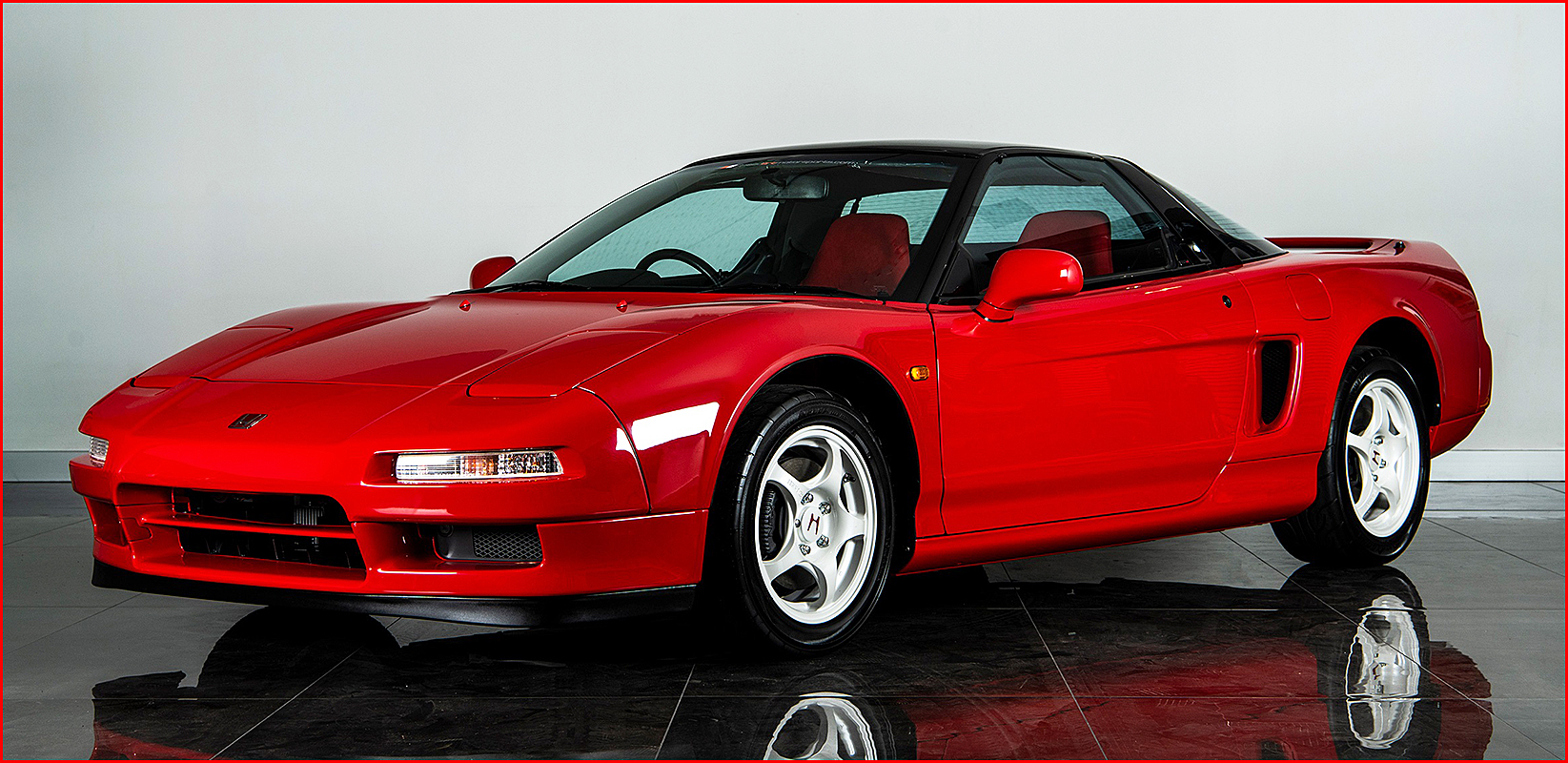
In 1992 the NSX-R dropped 265 pounds with carbon-fiber bits, no sound deadening, and the power leather seats replaced with carbon-Kevlar racing seats from Recaro. The NSX-R hit 60 in 4.9 seconds. In 2004, a final refresh added a 4.2-inch wider rear track and stickier Bridgestone Potenza tires. 483 of the NSX-R variants were built for the Japan domestic market. Production of the NSX-R ended in 1995.
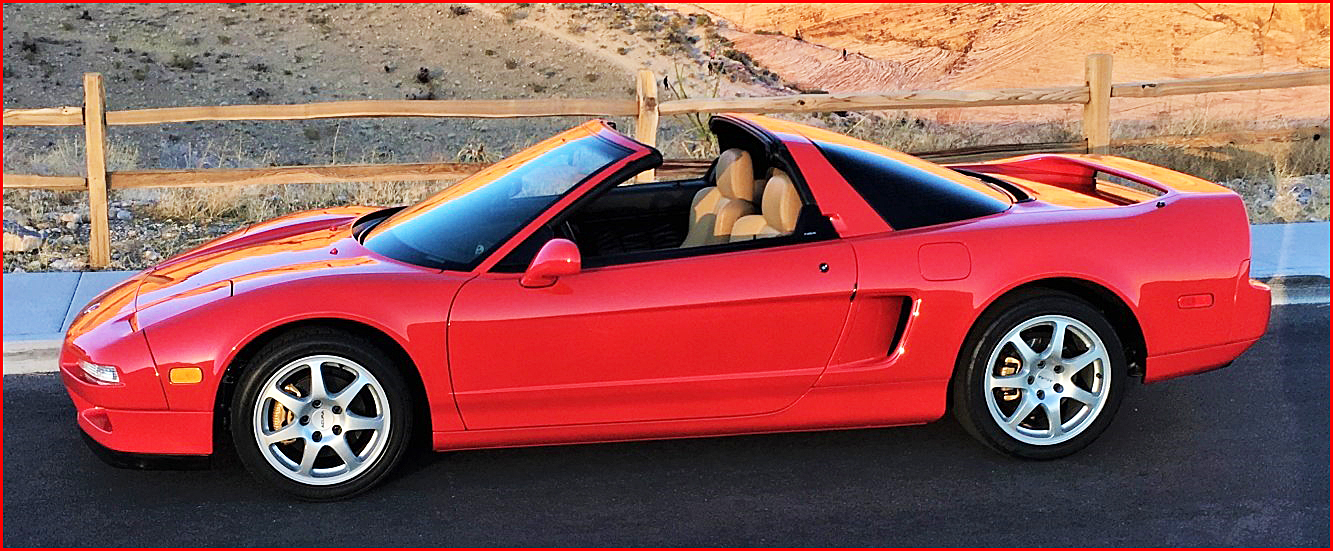
Beginning in 1995, the NSX-T with a removable Targa top was introduced in Japan, and as a special-order model in North America. It eventually replaced the coupe model as the only model available in North America, while both styles were still offered in the European market. Honda added 100 lbs. of structural reinforcements to the chassis to compensate for the loss of the solid roof, including thicker frame side-sill panels, roof pillars and new front and rear bulkhhead and floorpan crossmembers. Smaller-diameter front sway bars, stiffer front springs, softer rear springs and firmer shock-dampers were added to improve ride comfort and reduce mid-engine oversteer. The Targa’s 0–60 crept to 5.9 seconds, but the open-air thrill was worth it.
In 1997, the NSX got a displacement bump to 3.2 liters with the C32B V6 (six-speed manual only), boosting output to 290 HP at 7,100 RPM and 224 lb-ft at 5,500 RPM The 0–60 dropped to 5.2 seconds, the quarter-mile to 13.7 seconds at 104 mph, and it topped out at 175 mph. Wider rear tires (245/40R17) and 17-inch BBS wheels kept it planted. The upgrades were enough for Car & Driver magazine to dub it the “Best-Handling Car Over $30K” in 1997.
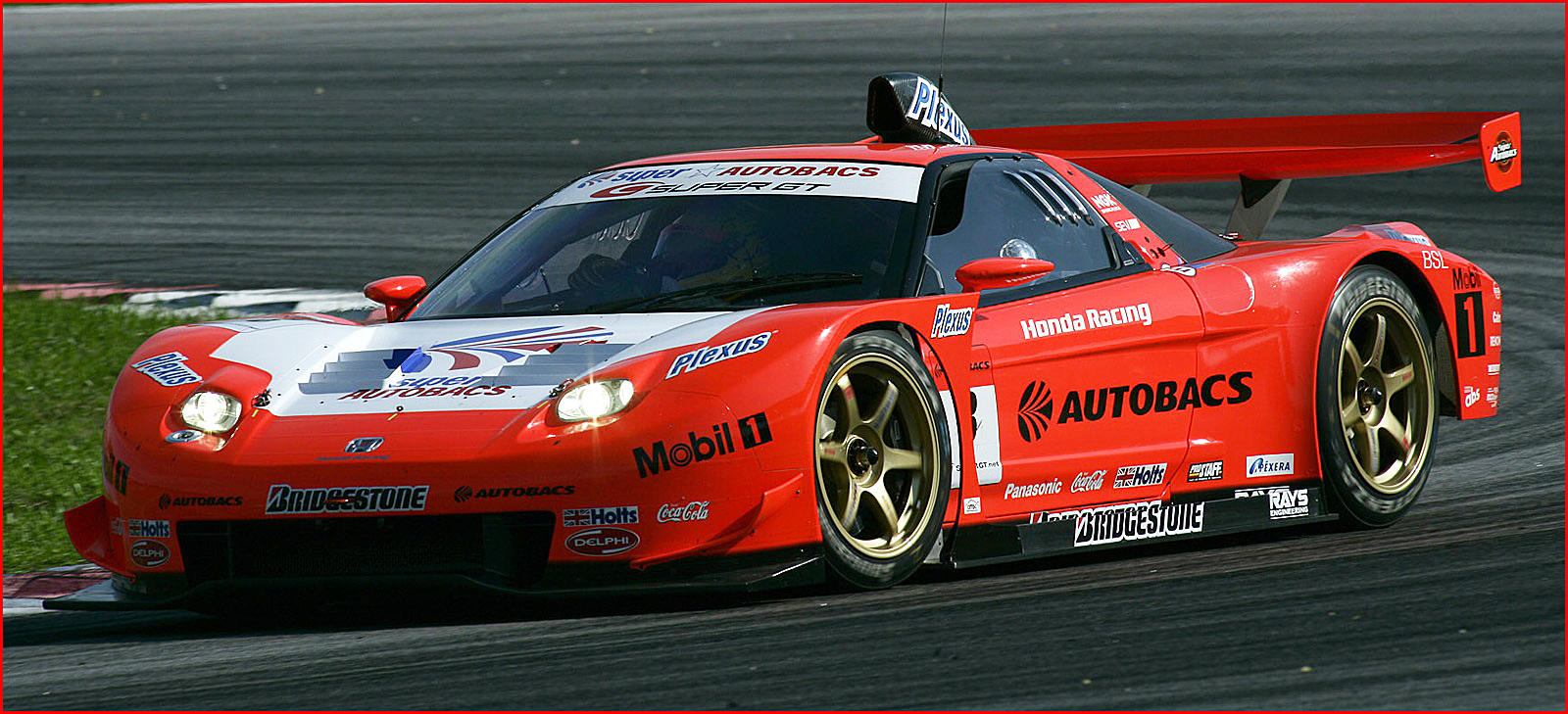
The NSX wasn’t a track star, but it punched above its weight. It competed in Japan’s JGTC series, with tuned versions hitting 400 horsepower, and scored class wins at Le Mans in 1994 and 1995. Stateside, it ran in SCCA World Challenge, proving its mettle against Corvettes. Senna’s fingerprints, literally, from his Suzuka test sessions, gave it street cred no rival could match. This was a supercar you could drive to the track, race, and drive home without a tow truck.
Pop culture embraced the NSX. It starred in Pulp Fiction (1994), driven by Harvey Keitel’s The Wolf character and making a 30-minute drive in 9 minutes and 37 seconds, and graced Gran Turismo games, cementing its ’90s icon status.
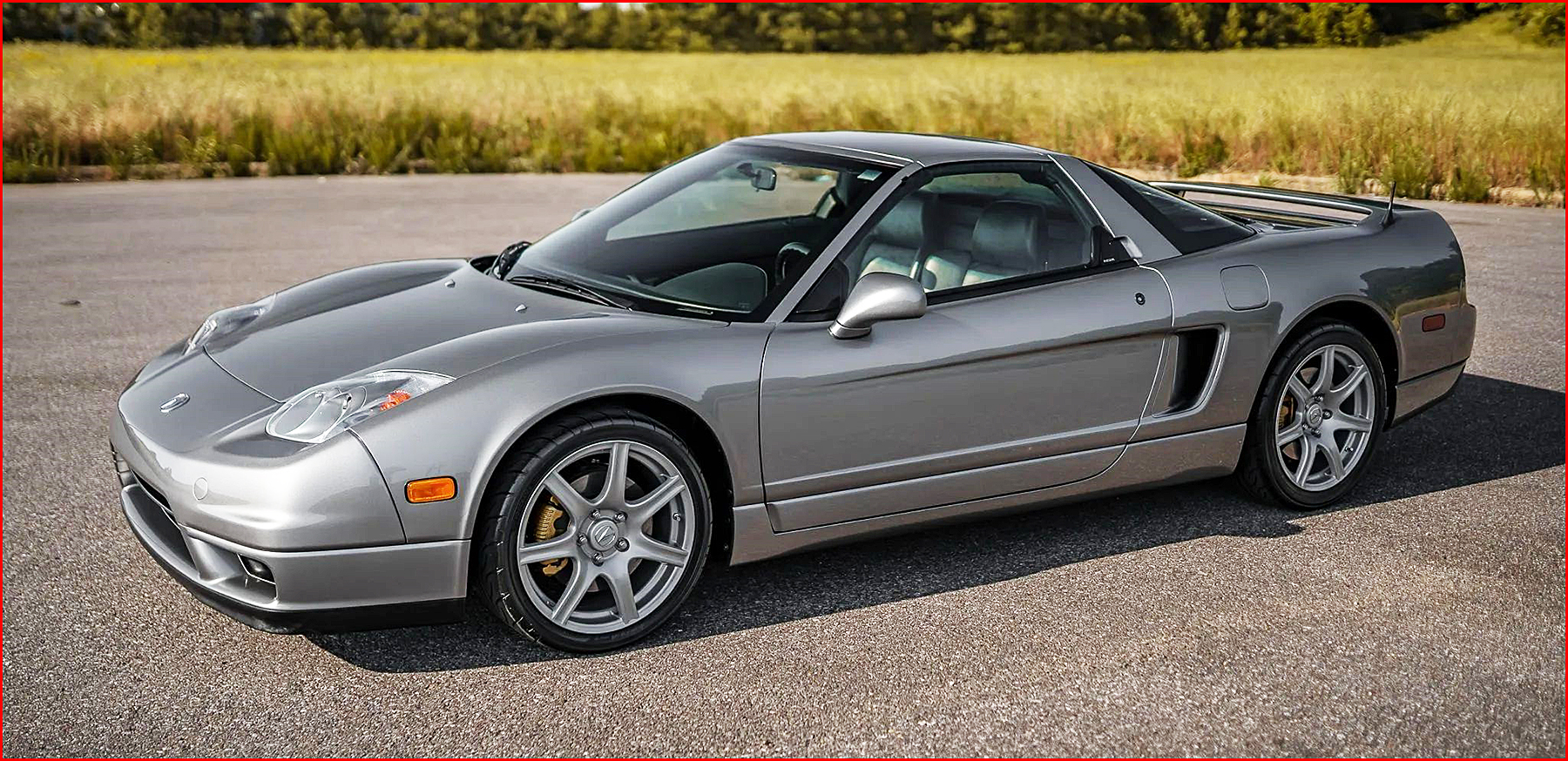
Updates kept coming. In 2002, fixed xenon headlights replaced the pop-ups and a lighter aluminum subframe shaved 20 pounds, but the end loomed large. Stricter emissions and safety rules, plus Honda’s shift to hybrids, killed the first-gen NSX in 2005 after 18,000 units with sales of 8,943 in North America, 7,000 in Japan, and the rest scattered globally.
The first-generation NSX’s legacy was quiet but profound. It outlasted the Ferrari 348 and Lotus Esprit, and its reliability shamed the Porsche 911’s finicky air-cooled engines as well as supercar offerings from Italy and the UK. Owners raved about 200,000-mile engines, a feat unheard of in the supercar world. By 2005, its $89,000 price was a bargain against the $130,000 Ferrari F430. The NSX proved Japan could build a supercar with soul, paving the way for the Nissan GT-R and Lexus LFA.
From 1990 to 2005, the NSX redefined what a supercar could be. It wasn’t the fastest, but it was the smartest – light, precise, and built to last. With Senna’s blessing, Pininfarina’s lines, and Honda’s obsessive engineering, it carved a legend that still burns bright for gearheads everywhere…but the NSX story was far from done.
Second Generation: 2016-2022
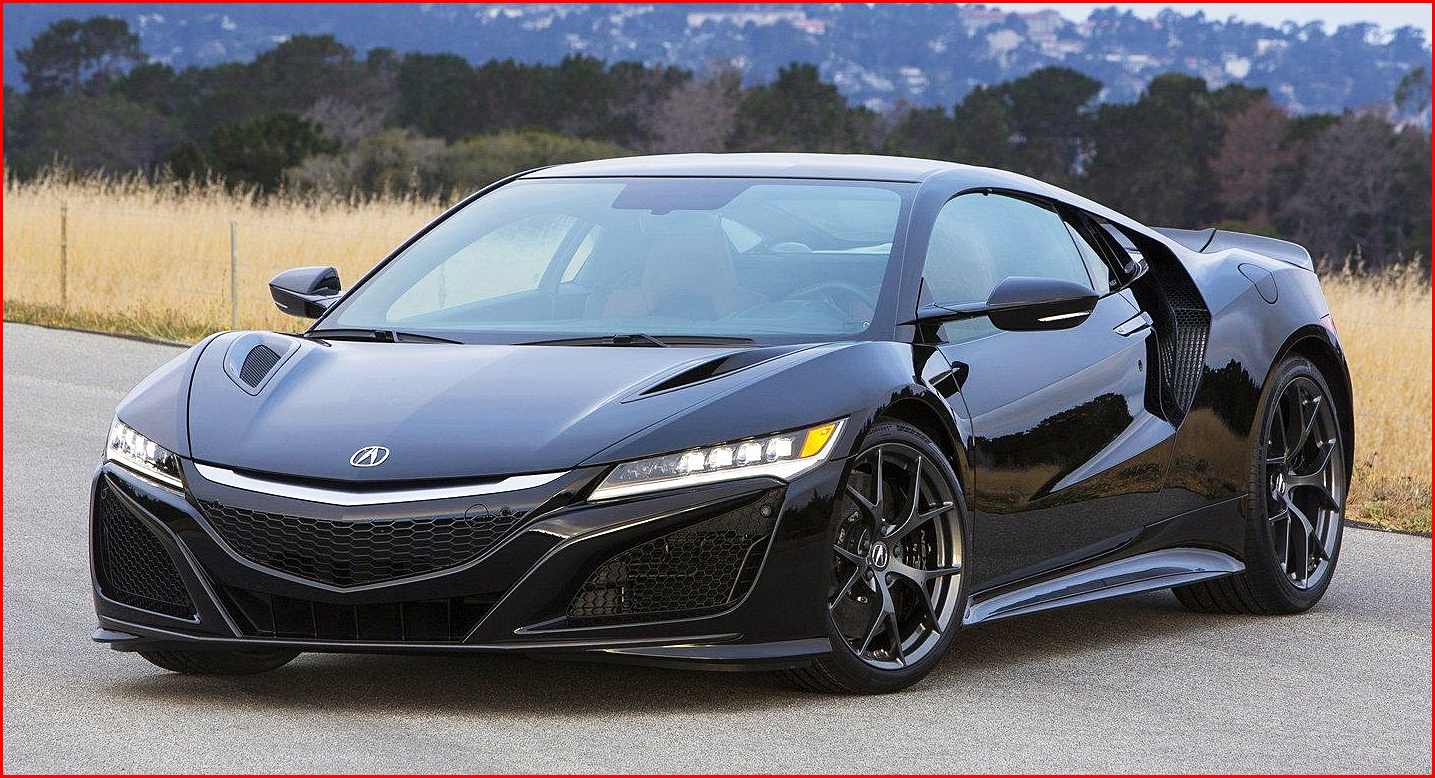
The second-generation Acura NSX roared onto the scene in 2016, a hybrid supercar that married Honda’s engineering precision with cutting-edge electric motor technology. After a decade-long hiatus, Honda revived its halo car to challenge the McLaren 570S, Audi R8, and Porsche 911 Turbo, not just with speed but with groundbreaking tech. Again marketed as the Acura NSX in North America, China, and Kuwait (Honda NSX elsewhere), this all-wheel-drive, mid-engine coupe redefined performance with a blend of twin-turbo V6 and electric motors. It wasn’t just a car; it was Honda’s bid to electrify the supercar world while honoring the first-gen’s Senna-blessed legacy.
Honda teased a front-engine V10-powered Acura Advanced Sports Car Concept in 2007, but economic woes and a strategic pivot scrapped the V10 and by 2011 Honda unveiled a hybrid NSX Concept at the Detroit Auto Show. Led by chief engineer Ted Klaus in Marysville, Ohio, the team crafted an original platform with a 3.5-liter twin-turbo V6 and three electric motors. The NSX was hand-built at Honda’s Performance Manufacturing Center (PMC) in Ohio, a $70-million facility where 100 technicians assembled each car with Formula One-level precision. Unveiled at the 2015 Detroit Auto Show, the NSX hit dealers in 2016 with a $156,000 base price, just half the cost of a Lamborghini Huracan but again with daily-driver reliability like its predecessor.
The heart of the new NSX was its Sport Hybrid SH-AWD (Super Handling All-Wheel Drive) powertrain. A 75-degree 3.5-liter twin-turbo V6 churned out 500 HP at 6,500 RPM and 406 lb-ft of torque at 2,000 RPM, paired with a nine-speed dual-clutch transmission. Three electric motors – a 47-horsepower unit between the engine and gearbox, plus two 36-horsepower front motors – pushed total output to 573 horsepower and 476 lb-ft of torque. The front motors enabled torque vectoring, sharpening cornering like a digital Ayrton Senna. Weighing just 3,803 pounds, the NSX sprinted to 60 mph in 3.0 seconds, ran the quarter-mile in 11.2 seconds at 124 mph, and topped out at 191 mph. Its aluminum space frame, a world-first, kept it rigid yet light, and it outpaced the 600-horsepower McLaren 570S in efficiency with 21/22 MPG city/highway.
Handling was again surgical…after all, it had a legacy to live up to. Double-wishbone front suspension and multi-link rear, with adaptive magnetorheological dampers, delivered 1.02 g on the skidpad, even more grippy than its predecessor. Michelin Pilot Sport 4S tires (245/35R19 front, 305/30R20 rear) wrapped 19-inch front and 20-inch rear wheels. Electric power steering offered 2.8 turns lock-to-lock, and optional 12.0-inch front, 11.8-inch rear carbon-ceramic brakes stopped it like a race car. Four drive modes: Quiet, Sport, Sport+ and Track – toggled from electric-only cruising to track-ready fury, with Quiet mode silencing the V6 for stealthy exits.
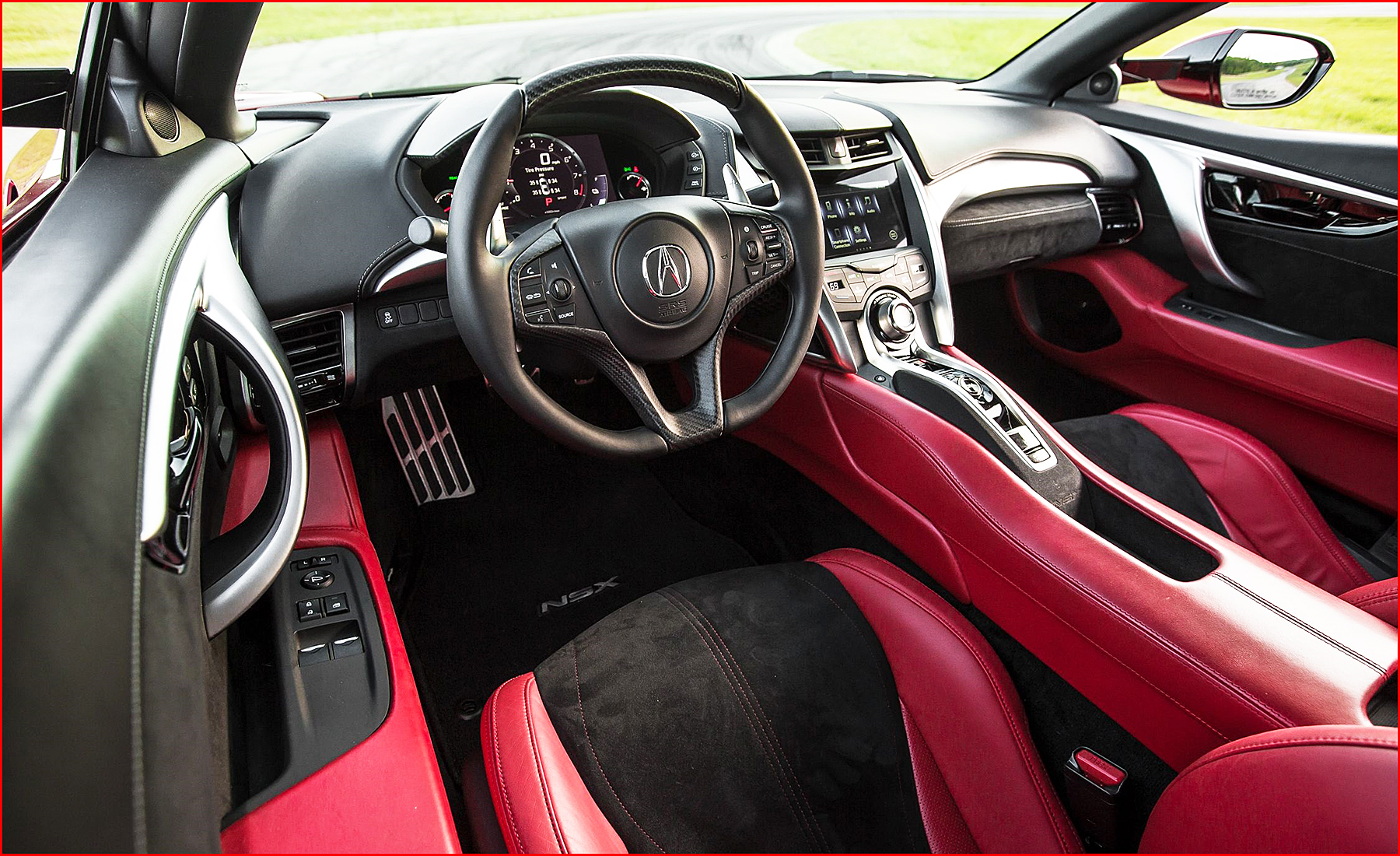
The cockpit was driver-first, echoing the first-gen’s “Human Support Cockpit.” Leather/Alcantara bucket seats held two tightly, with 36.0 inches of legroom and 37.4 inches of headroom. An 8.0-inch touchscreen (clunky by 2025 standards) ran Apple CarPlay/Android Auto alongside a 7.0-inch digital gauge cluster. A 4.4-cubic-foot front trunk swallowed golf bags and little else, but interior storage was tight. This was not the car to do your weekly grocery shopping with. A 580-watt ELS Studio audio system was standard, as was dual-zone climate control, and heated seats; a $13,000 Lightweight Package added carbon-fiber trim and brakes, shedding 57 pounds. Visibility rivaled a Civic, making it a supercar you could actually park without worrying about dinging the fenders or damaging the front or rear fascia.
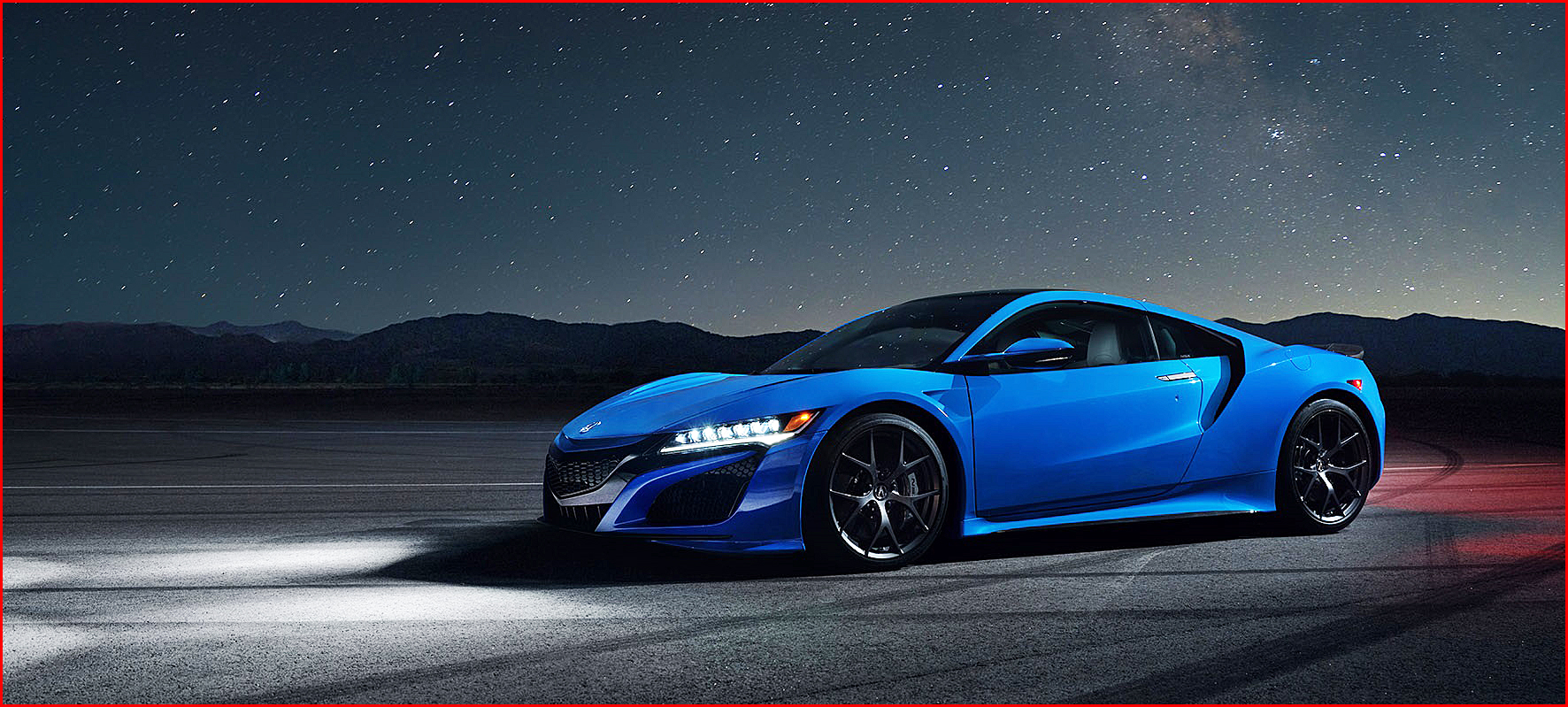
Honda upped the game fast. A 2019 refresh stiffened the chassis, added new Continental SportContact 6 tires, and tweaked the hybrid system for sharper response. Long Beach Blue Pearl paint joined the color palette in 2020.
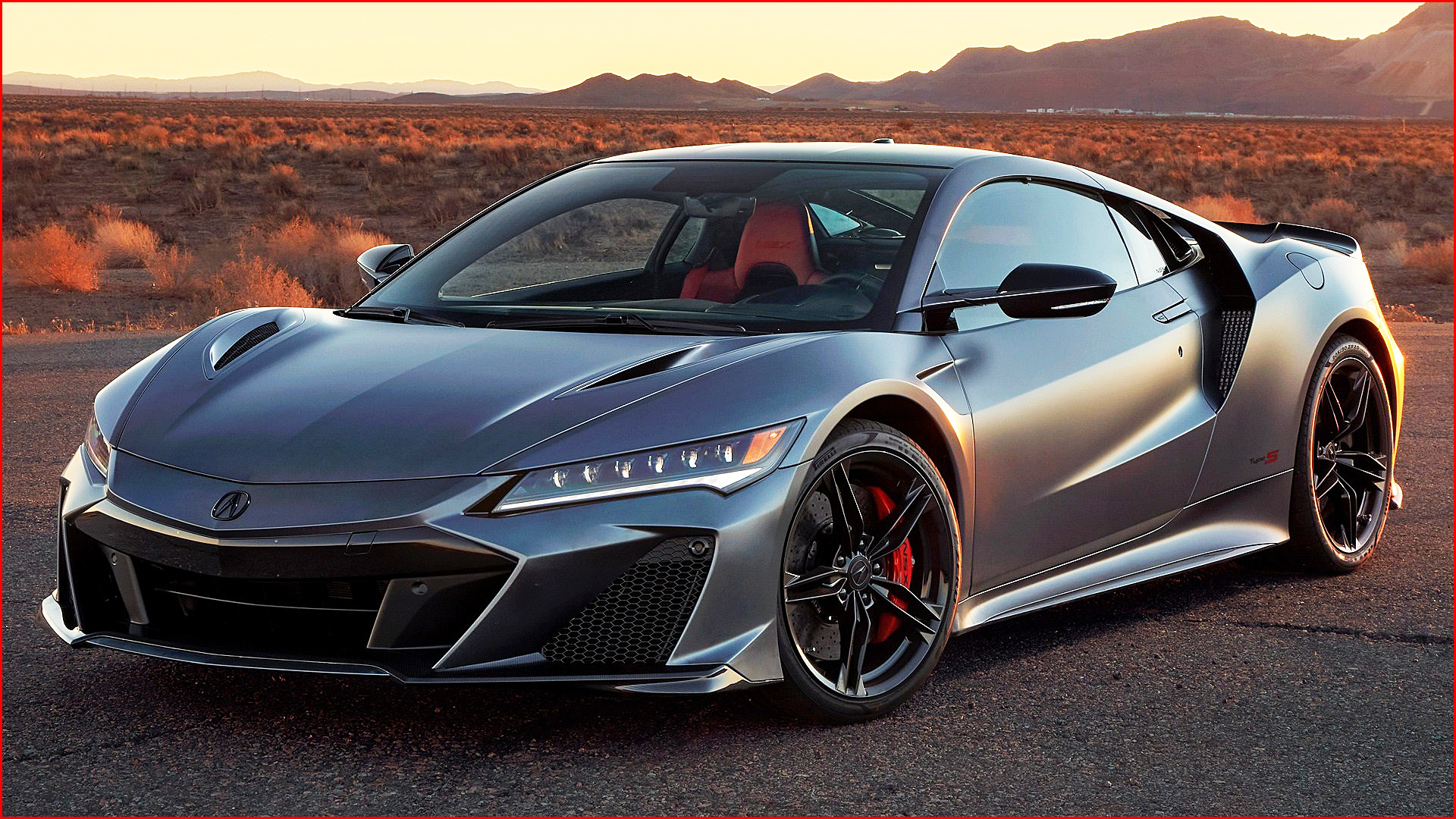
2022 saw the release of the limited-editon NSX Type S, with only 350 units built, 300 of those going to the US. This was the NSX‘s swan song, and it went out with a bang. The Type S boosted output to 600 horsepower and 492 lb-ft of torque with uprated 16.1 psi boost turbos and a retuned hybrid system. A wider track, Pirelli P Zero tires with “H0” marking, and a standard carbon-fiber roof dropped 0–60 to 2.9 seconds and lapped the Suzuka racecourse in Japan two seconds faster than the 2019 model. Priced at $171,495, it sold out in 24 hours, with VIN #001 fetching $1.1 million at auction for charity. 70 cars left the factory with an optional $6,000 Gotham Gray Matte paint job.
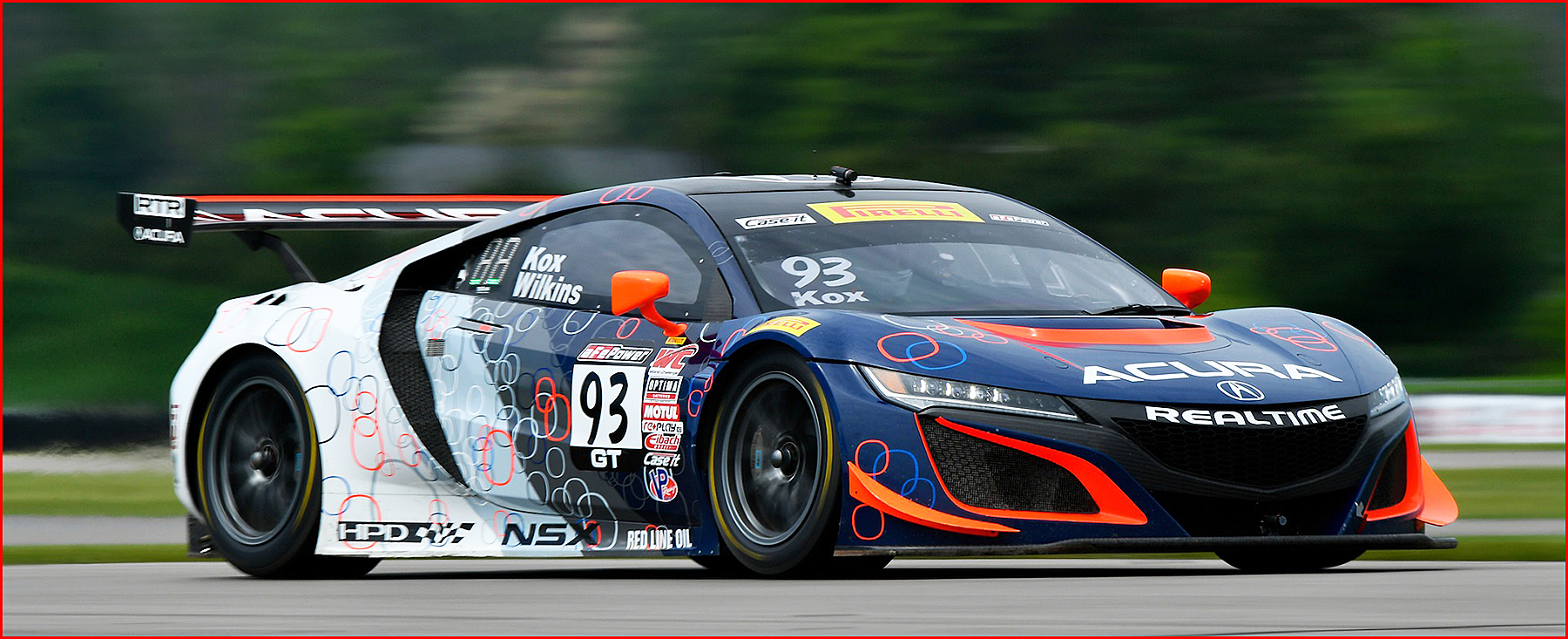
Racing cemented its credentials. The NSX GT3, debuted in 2017, won the 2022 GT World Challenge America Pro-Am title with four victories. In Le Mans Cup, it took five wins, including Road to Le Mans. Super GT saw four wins from 2022–2023. A 2017 NSX won its class at the 2016 Pikes Peak Hill Climb. The GT3 Evo25, a 2025 evolution, races in Italy’s GT Championship.
Culturally, the 2nd-gen NSX appeared in The Avengers (2012) in prototype form and Gran Turismo 7, raising its profile, but sales lagged with only 123 units sold in the US in 2021 vs. Porsche’s 9,100 911s. Critics called it a technical marvel but thought that it lacked the first generation’s raw soul, although Road & Track’s 2017 Performance Car of the Year award praised its cohesion.
Production ended in November 2022 after 2,908 units were built, with 350 being the Type S. Despite low sales, the NSX’s hybrid tech influenced Acura’s TLX and MDX Type S models. It outlasted the Audi R8’s V10 glory and proved hybrids could run with the big boys, paving the way for an possible electric NSX successor. The second-generation NSX wasn’t loved in its time, but its technically advanced V6, SH-AWD wizardry, and Ohio-built heart make it a future classic for gearheads who get it.
This one is personal and hits close to home. Back in the mid-80s when the NSX was just being developed, my brother and I were going to Formula One races in Europe. At that time I was a Nigel Mansell guy; he was all about Ayrton Senna and Honda racing performance, buying a Euro-spec 1986 Prelude 2.0 Si with surprising performance for a mid-’80s 2.0 liter four-cylinder to cruise the Autobahns of Germany. He bought a 1991 NSX after his wife passed away, and showed it at several car shows. Sadly, he had to sell it due to financial difficulties a few years after he retired. It was a rare automatic version, but the wail of the VTEC engine was still a siren song as he let me drive it and wring it out on the highway, then on some twisty back roads. I’ve owned BMWs and a Datsun 280ZX and have driven many other sports cars, but this handled like nothing I had ever driven before. Knowing Senna’s input on the handling of the car, it felt like I had motorsports history in my very hands. My brother’s NSX wasn’t just a machine, but a memory…a memory of good times cheering on our respective F1 drivers at places like Germany’s Hockenheimring, Belgium’s Spa-Francorchamps racetrack and the streets of Monaco. ✪
Got a Great Car Story? Share it! Reminisce About Your Other Favorite Cars, Too!
Seeyas Again Next Time On FLAT OUT!


















▶️ DONATE VIA PAYPAL (DEBIT & CREDIT CARD)
ALL PayPal Transactions Are Encrypted For Card Holder Privacy & Security
▶️ DONATE VIA ZELLE (DIRECT BANK CASH TRANSFER)
ZELLE is the perfect online alternative to PayPal. It’s an incredibly simple, secure, easy, fast and FREE way to send or receive money to recipients directly from your online banking account without a middleman. Best of all, there’s NO fees.
ZELLE is a service provided by your bank and is already built in to your online banking account. You only need to activate it first before using. If you’ve already activated ZELLE in your online bank or credit union account, you can donate to The New Americanist by using our ZELLE address:
vip@thenewamericanist.com
To activate your ZELLE, follow these easy instructions (a simple two minute process):

▶️ DONATE VIA SNAIL MAIL