
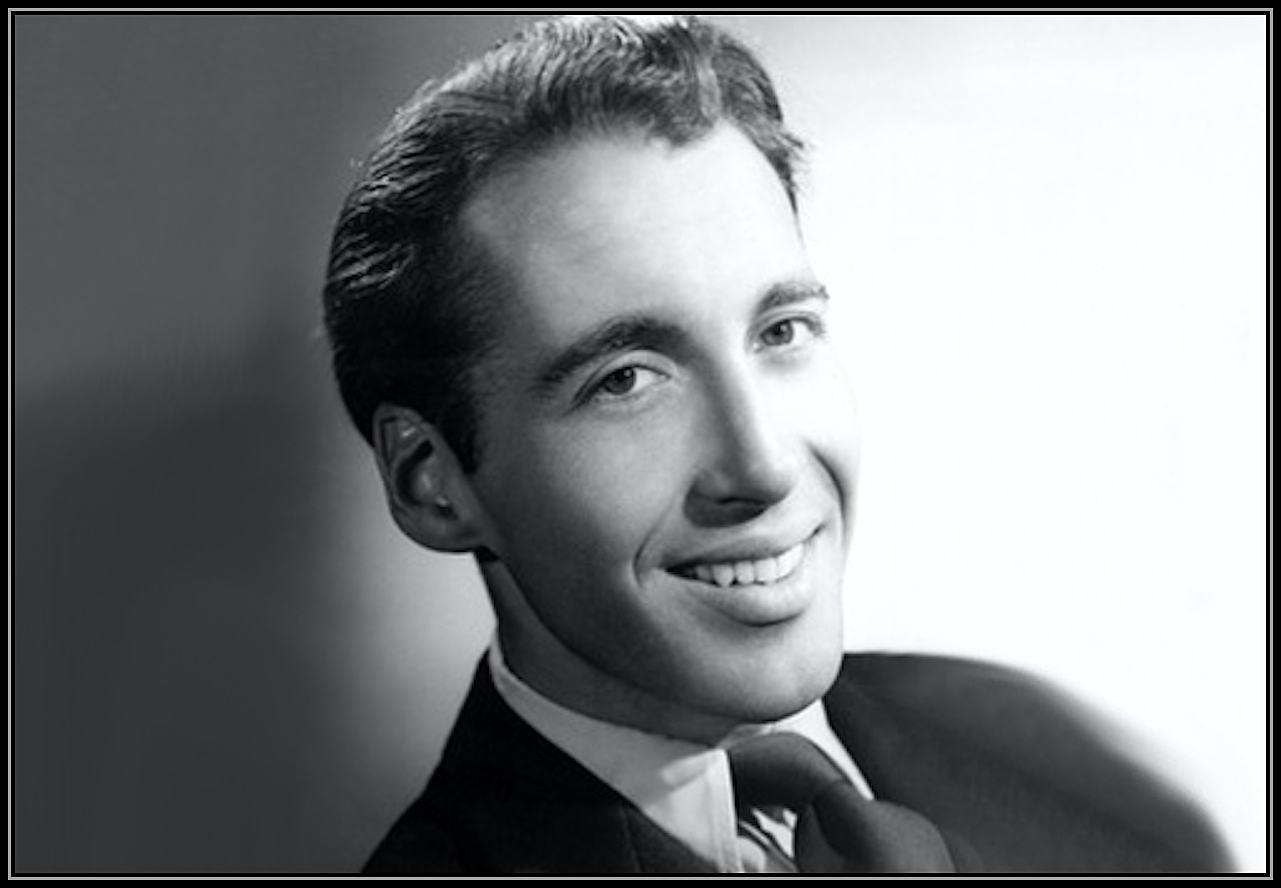

Sir Christopher Frank Carandini Lee: (May 27, 1922–7 June 7, 2015)
✪ Sir Christopher Frank Carandini Lee, known by his stage name Christopher Lee was an English actor and singer. In a career spanning more than sixty years, Lee became known as an actor with a deep and commanding voice who often portrayed villains in horror and franchise films. Lee was knighted for services to drama and charity in 2009, received the (BAFTA) British Academy of Film & Television Arts Fellowship in 2011 and also received the (BFI) British Film Institute Fellowship in 2013.
Before his acting career, Lee served in the Royal Air Force as an intelligence officer, attached to the No. 260 Squadron RAF during World War II as a liaison officer for the Special Operations Executive. He was discharged from the RAF in 1946 with the rank of flight lieutenant.
In addition to his prolific film career, Lee was a classically trained singer with a passion for Heavy Metal. He recorded several Metal albums in his final years, including the symphonic metal concept albums Charlemagne: By the Sword and the Cross (2010) and Charlemagne: The Omens of Death (2013), where he portrayed the title character of Charlemagne. These musical projects, which included his spoken word, singing and dramatic narration, were deeply personal artistic endeavors which showcased his distinctive vocal range and earned him a unique place in the world of Metal music.
Lee was born on 27 May 1922 in Belgravia, London, the son of Lieutenant Colonel Geoffrey Trollope Lee (1879–1941) of the 60th King’s Royal Rifle Corps; and his wife, Countess Estelle Marie (née Carandini di Sarzano; 1889–1981).
Lee’s father fought in the Boer War and First World War and his mother was an Edwardian beauty who was painted by Sir John Lavery, Oswald Birley, and Olive Snell, and sculpted by Clare Sheridan. Lee had an elder sister, Xandra Carandini Lee (1917–2002) as well as a younger brother, Nicholas.
Lee’s parents separated when he was four and divorced two years later. During this time, his mother took his sister and him to Wengen in Switzerland. After enrolling in Miss Fisher’s Academy in Territet, he played his first thespian role as Rumpelstiltskin. He then returned to London, where Lee attended Wagner’s private school in Queen’s Gate. His mother married Harcourt George St-Croix Rose, a banker and uncle of Ian Fleming.
When Lee was nine years old, he was sent to Summer Fields School, a preparatory school in Oxford, some of whose pupils later attended Eton College. He continued to act in school plays; though he said “the laurels deservedly went to Patrick Macnee.” Lee’s poor mathematics skills meant he was placed eleventh; and thus missed out on being a King’s Scholar by only one place. His step-father was not prepared to pay the higher fees that being an Oppidan Scholar meant; so instead he attended Wellington College, where he received several scholarships in the classics, studying Ancient Greek and Latin.
Aside from a “tiny part” in a school play, Lee did not act while at Wellington. He was frequently beaten at school, including once at Wellington for “being beaten too often,” though he accepted this as “logical and therefore acceptable” punishments for knowingly breaking the rules. At age 17, and with one year left at Wellington, the summer term of 1939 was his last. His step-father had accrued gambling debts of £25,000, (worth around £1.4 million in 2025) and could no longer afford his tuition.
Lee was forced to find a job; as his sister was already working as a secretary for the Church of England Pensions Board. With most employers on or preparing to go on summer holidays, there were no immediate opportunities available for Lee, who instead went to the French Riviera, where his sister was on holiday with friends.
On his way there he stopped briefly in Paris, where he witnessed Eugen Weidmann’s execution by guillotine; the last public execution performed in France. Lee then finally found work as an office clerk for United States Lines, taking care of the mail room and running errands.
Most all of what is known about Lee’s military service is based on a chronology of events as set out in his own autobiography. When the Second World War broke out in 1939, Lee enrolled in a military academy and volunteered to fight for the Finnish Army against the Soviet Union during the Winter War. However, he and other British volunteers were kept away from any actual fighting, but were still issued with winter gear and posted on guard duty a safe distance from the border. After only two weeks in Finland, they returned home. In a later interview, Lee said he knew how to shoot but not how to ski and that he probably would not be alive if he had been allowed to go to the front line.
Lee returned to work at United States Lines and found his work more satisfying, feeling that he was contributing. In early 1940, he joined Beecham’s, first as an office clerk, then as a switchboard operator. Realizing that he had no inclination to follow his father into the Army, Lee decided to join up while he still had some choice of service, and volunteered for the Royal Air Force.
Lee reported to RAF Uxbridge for training and was then posted to the Initial Training Wing at Paignton. Training with de Havilland Tiger Moths, Lee began to suffer from headaches and blurred vision before his first solo flight. The attending medical officer hesitantly diagnosed a failure of his optic nerve, and he was told he would never be allowed to fly again.
Lee was devastated and moved around to different flying stations before finally being posted to Southern Rhodesia’s capital, Salisbury, in December 1941. Thinking he should “do something constructive for my keep,” he applied to join RAF Intelligence. His superiors praised his initiative, and he was seconded into the British South Africa Police and was posted as a warder at Salisbury Prison. He was then promoted to leading aircraftman.
After “killing time” at RAF Kasfareet near the Great Bitter Lake in the Suez Canal Zone in 1942, Lee resumed intelligence work in the city of Ismaïlia. He was then attached to No. 205 Group RAF before being commissioned at the end of January 1943 and attached to No. 260 Squadron RAF as an intelligence officer.
For the final few months of his service, Lee, who spoke fluent French, Italian and German, among other languages, was seconded to the Central Registry of War Criminals and Security Suspects. Here, he was tasked with helping to track down Nazi war criminals. Of his time with the organization, Lee said: “We were given dossiers of what they’d done and told to find them, interrogate them as much as we could and hand them over to the appropriate authority.” He completed his service with the RAF in 1946.
Returning to London in 1946, Lee was offered his old job back at Beecham’s with a significant raise, but he turned them down as “I couldn’t think myself back into the office frame of mind.” During lunch with his mother’s cousin Nicolò Carandini, who had become the Italian Ambassador to Britain, Lee was detailing his war wounds when Carandini said, “Why don’t you become an actor, Christopher?” Lee liked the idea and he eventually met Nicolò’s friend Filippo Del Giudice, a lawyer-turned-film producer and head of Two Cities Films, part of the Rank Organisation. Lee recalled that Giudice “looked me up and down” and “concluded that I was just what the industry had been looking for.”
However, Lee had difficulty finding acting work He finally made his film début in 1948, in Terence Young’s Gothic romance Corridor of Mirrors. Lee had a single line, “a satirical shaft meant to qualify the lead’s bravura.” In this early period, he also made an uncredited appearance in Laurence Olivier’s film version of Hamlet (1948). Lee appeared uncredited in the American epic Quo Vadis (1951), which was shot in Rome, playing a chariot driver.
He recalled that his acting breakthrough came in 1952, when Douglas Fairbanks, Jr. began making films at the British National Studios. “I was cast in various roles in 16 of them and even appeared with Buster Keaton and it proved an excellent training ground.” The same year, he appeared in John Huston’s Oscar nominated Moulin Rouge. Throughout the next decade, Lee made nearly 30 films, including The Cockleshell Heroes, playing mostly stock action characters.
Lee’s first film for Hammer Film Productions was The Curse of Frankenstein (1957), in which he played Frankenstein’s monster, with Peter Cushing as Baron Victor Frankenstein. When he arrived at a casting session for the film, “they asked me if I wanted the part, I said yes and that was that.”
Lee would go on to play Dracula ten times in his career: seven films for Hammer Productions. Lee also appeared in horror films for other companies from 1957 to 1977. These included the Dr. Fu Manchu series of films made between 1965 and 1969.
Ian Fleming, author of the James Bond spy novels and Lee’s step-cousin, had offered him the role of the titular antagonist in the first Eon-produced Bond film Dr. No (1962).
In 1978, Lee surprised many people with his willingness to go along with a joke, appearing as guest host on NBC’s Saturday Night Live. Steven Spielberg, who was in the audience for that show, cast him in 1941 (1979).
Lee also had many television roles. Lee portrayed Saruman in Peter Jackson’s fantasy action epic The Lord of the Rings film trilogy. In the commentary, he stated that for decades he had dreamt of playing Gandalf. However, he conceded that he was now too old, and that his physical limitations prevented him from being considered. Lee had met J. R. R. Tolkien once, which made him the only person involved in Peter Jackson’s films to have done so.
During this time Lee provided voices for numerous films and video games. He spoke fluent English, Italian, French, Spanish, and German, and was moderately proficient in Swedish, Russian, and Greek. Lee recorded special dialogue, in addition to serving as the Narrator, for the Lego The Hobbit video game released in April 2014. At 91 years and 316 days old he appears in the Guinness Book of Records as the oldest video game narrator.
A month before his death, Lee signed to star with an ensemble cast in the Danish film The 11th. One of his final performances was the independent Angels in Notting Hill, a fantasy film about an angel trapped in London who falls in love with a human being.
With his operatic bass voice, Lee sang on The Wicker Man soundtrack. Lee’s first contact with Heavy Metal music came by singing a duet with Fabio Lione, lead vocalist of the Italian symphonic power Metal band Rhapsody of Fire on the single “The Magic of the Wizard’s Dream” from their 2004 album Symphony of Enchanted Lands II – The Dark Secret,
With the song “Jingle Hell,” Lee entered the Billboard Hot Singles Sales chart at No. 22, thus becoming the second oldest living performer to ever enter the music charts, at 91 years and 6 months. After much media attention, the song rose to No. 18. as Lee became the oldest person to have a top 20 hit.
▶️ 5 Minutes 41 Seconds
Lee released a third EP of covers in May 2014, called Metal Knight, to celebrate his 92nd birthday. His fourth EP and third annual Christmas release came in December 2014, as he put out “Darkest Carols, Faithful Sing,” a playful take on “Hark! The Herald Angels Sing.” He explained: “It’s light-hearted, joyful and fun… At my age, the most important thing for me is to keep active by doing things that I truly enjoy. I do not know how long I am going to be around, so every day is a celebration, and I want to share it with my fans.” “The Last Vampire,” recorded shortly before his death, this marks Lee’s final appearance on a musical record.
In the late 1950s, Lee was once engaged to Countess Henriette Ewa Agnes von Rosen, whom he had met at a nightclub in Stockholm. Her father, Count Fritz von Rosen, proved demanding, getting them to delay the wedding for a year, asking his London-based friends to interview Lee, hiring private detectives to investigate him, and asking Lee to provide him with references, which Lee obtained from Douglas Fairbanks Jr., John Boulting, and Joe Jackson.
Finally, Lee had to have the permission of the King of Sweden in order to marry. However, shortly before the wedding, Lee abruptly ended the engagement. He was concerned that his financial insecurity in his chosen profession meant that she “deserved better” than being “pitched into the dishevelled world of an actor.” She understood, and they called the wedding off.
Lee was introduced to the Danish painter and former model Birgit “Gitte” Krøncke (1935–2024) by a Danish friend in 1960. They were engaged soon after, and married on 17 March 1961. Lee relocated to Los Angeles in the 1970s after becoming disillusioned with film roles he was being offered in Britain at the time, and stated that in Hollywood, “I was no longer a horror star. I was an actor.” He subsequently moved back to England and lived with his family in Cadogan Square in west London until his death.
Lee was known for his imposing height of 6 feet 5 inches. Lee was an Anglo-Catholic Christian. After the Second World War, he was an altar server at St Stephen’s Church in South Kensington, London, during T. S. Eliot’s period as a parishioner there. Politically, Lee supported the Conservative Party.
Lee had an interest in the occult. It was once erroneously reported Lee had a library of occult literature that amounted to 20,000 books. However, during a talk at University College Dublin, Lee confirmed he did not have such a collection and said “Somebody wrote that I had 20,000 books. I don’t—I’d have to live in a bath!” He furthermore cautioned the audience against involving themselves in occult practices, claiming “I have met people who claim to be Satanists, who claim to be involved with black magic, who claimed that they not only knew a lot about it. But as I said, I certainly have not been involved and I warn all of you: never, never, never. You will not only lose your mind: you lose your soul.”
▶️ 3 Minutes 3 Seconds
Lee was the subject of an episode of the BBC’s This Is Your Life in 1974. In 1994, for his influence on the horror genre, he received the Bram Stoker Award for Lifetime Achievement. In 1997, he was appointed a Commander of the Venerable Order of Saint John. On 16 June 2001, as part of that year’s Queen’s Birthday Honours, Lee was appointed a Commander of the Order of the British Empire “for services to Drama.” He was made a Knight Bachelor “For services to Drama and to Charity” on 13 June as part of the Queen’s Birthday Honours in 2009.
Lee was named 2005’s “most marketable star in the world” in a USA Today newspaper poll, after three of the films he appeared in grossed more than US$640 million. In 2010, Lee received the Spirit of Hammer award at the Metal Hammer Golden Gods Awards, for his contribution to the Metal music genre. In 2011, Lee was awarded a BAFTA Fellowship; he received a BFI Fellowship in 2013.
Lee died at the Chelsea and Westminster Hospital on June 7, 2015 at the age of 93. The cause of death was heart failure. His wife delayed the public announcement until 11 June, informing his family of the death before releasing the news to the press. Lee’s body was cremated and his ashes scattered in Surrey Hills, England.
▶️ 30 Seconds
Following Lee’s death, fans, friends, actors, directors and others involved in the film industry publicly gave their personal tributes. Then-Prime Minister David Cameron praised Lee as a “titan of the golden age of cinema.” Lee was honored by the academy at the 88th Academy Awards on 28 February 2016 in the annual In Memoriam section. ✪
















▶️ DONATE VIA PAYPAL (DEBIT & CREDIT CARD)
ALL PayPal Transactions Are Encrypted For Card Holder Privacy & Security
▶️ DONATE VIA ZELLE (DIRECT BANK CASH TRANSFER)
ZELLE is the perfect online alternative to PayPal. It’s an incredibly simple, secure, easy, fast and FREE way to send or receive money to recipients directly from your online banking account without a middleman. Best of all, there’s NO fees.
ZELLE is a service provided by your bank and is already built in to your online banking account. You only need to activate it first before using. If you’ve already activated ZELLE in your online bank or credit union account, you can donate to The New Americanist by using our ZELLE address:
vip@thenewamericanist.com
To activate your ZELLE, follow these easy instructions (a simple two minute process):

▶️ DONATE VIA SNAIL MAIL