
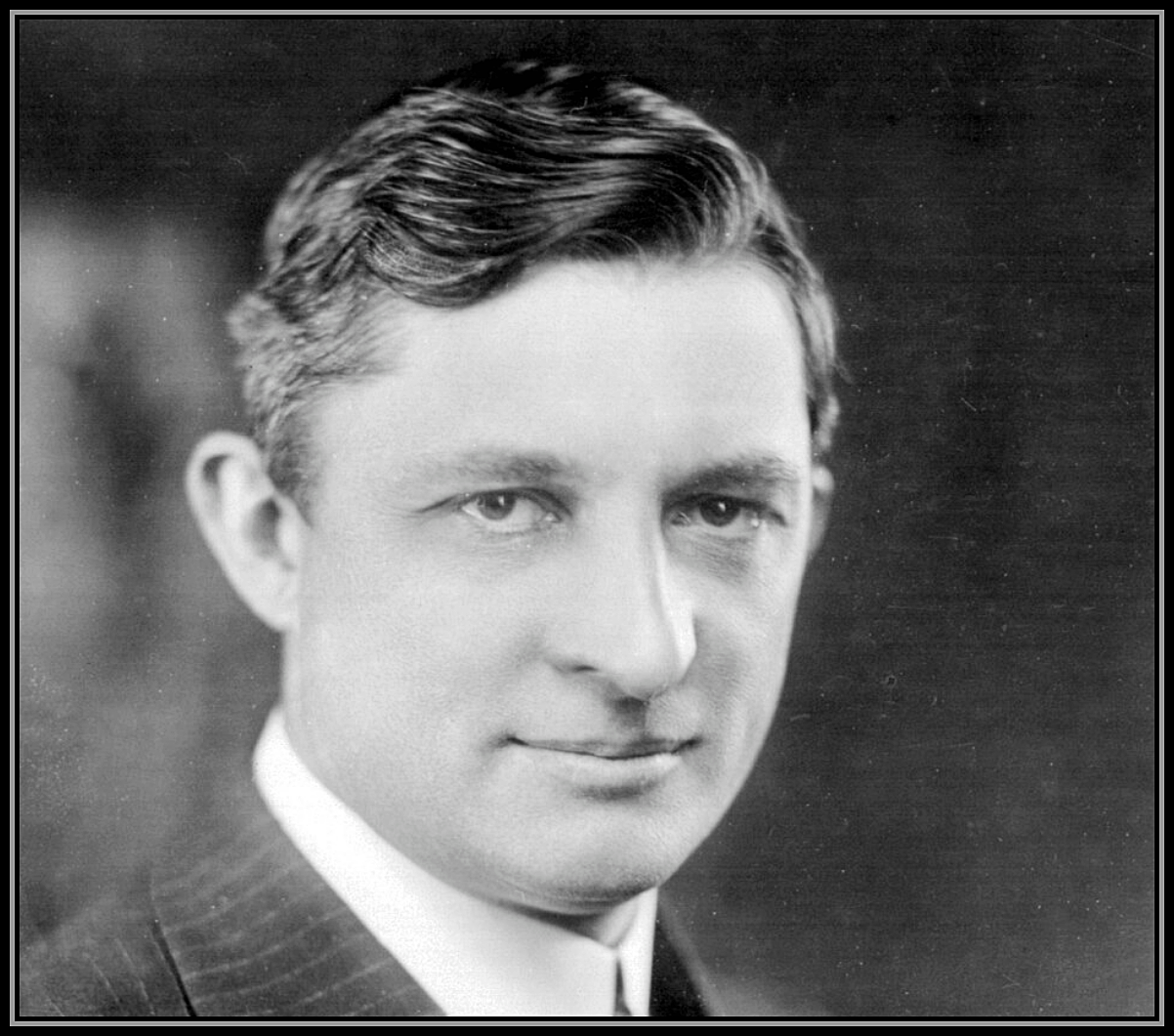

Willis Haviland Carrier (November 26, 1876 – October 7, 1950)
✪ Willis Haviland Carrier was an American engineer, best known for inventing modern air conditioning, inventing the first electrical air conditioning unit in 1902. In 1915, he founded Carrier Corporation, a company specializing in the manufacture and distribution of heating, ventilation and air conditioning (HVAC) systems. His invention would give rise to a world-leading heating, air-conditioning and refrigeration company and create an entire industry essential to global productivity and personal comfort.
Willis Haviland Carrier was born on November 26, 1876, in Angola, New York, to parents Duane Williams Carrier and Elizabeth R. Haviland. Born on a dairy farm just outside of Buffalo, Willis spent much of his early childhood working on the family farm and was their only child. As a young boy he attended a one-room schoolhouse, He enjoyed playing baseball and swimming in Lake Erie with his friends.
When Willis was 9 years old, long before becoming an engineer, he struggled to grasp the concept of fractions. His mother helped him master the concept of fractions using a pot of apples. Carrier often recalled this event fondly as “the most important thing that ever happened to me.” He continued to use simple logic to help conceptualize solutions to difficult problems throughout his life.
After graduating from Angola Academy, Willis took a short break from attending school to earn money tutoring younger students in their studies to help support his family during the Panic of 1893. When he returned to continue his education, he attended Buffalo’s Central High School where he performed well and received a scholarship to Cornell University in Ithaca.
While attending Cornell, Carrier would explore his business acumen as a door-to-door salesman for viewing cards and stereoscopes.
By 1899, he and a fellow student partnered to start a laundry business for the students at Cornell. In 1901, he successfully graduated from Cornell University with a degree in Mechanical Engineering.
After graduation, Carrier joined the Buffalo Forge Company as a research engineer. By the time he began employment with the Buffalo Forge Company he had already created engineering designs for a heating plant, a lumber dry kiln and a coffee dryer, among others. These kinds of products were the stock-in-trade of Buffalo Forge, which at the time, was a respected supplier of forges, fans and hot blast heaters.
On July 17, 1902, in response to an air quality problem with excess humidity experienced at the Sackett-Wilhelms Lithographing & Publishing Company of Brooklyn, New York, Willis Carrier submitted drawings for what became recognized as the world’s first modern air conditioning system.
It was so humid in summer that the printing paper would change size and expand between different color passes through the presses, often resulting in poor image quality because the color printing process involved running the same piece of paper up to four times, each with a different color ink.
The first set of coils was installed at the Sackett & Wilhelms plant late in the summer of 1902 along with fans, ducts, heaters, perforated steam pipes for humidification, and temperature controls.
Cooling water was drawn from an artesian well that first summer and supplemented by an ammonia compressor in the spring of 1903 to meet the demands of the first full summer of operation.
This system of chilled coils was designed to maintain a constant humidity point of 55 percent year-round and provide the equivalent cooling effect similar to the melting 108,000 pounds of ice per day.
The 1902 installation is considered the birth of air conditioning because of the addition of humidity control; which led to recognition by authorities in the field that A/C must perform four basic functions:
- control temperature
- control humidity
- control air circulation and ventilation
- cleanse the air
After several more years of refinement and field testing, on January 2, 1906, Carrier was granted U.S. patent 808,897 for an Apparatus for Treating Air, the world’s first spray-type air conditioning equipment design. It was originally designed to humidify or dehumidify air; heating water for the first function and cooling it for the second.
In 1906 Carrier discovered that “constant dew-point depression provided practically constant relative humidity,” which later became known among air conditioning engineers as the “law of constant dew-point depression.” On this discovery he based the design of an automatic control system, for which he filed a patent claim on May 17, 1907. U.S. Patent 1,085,971 was issued on February 3, 1914.
In 1908, the Carrier Air Conditioner Company of America was created as a subsidiary of the Buffalo Forge Company, with Willis Carrier as its vice president.
On December 3, 1911, Carrier presented what is perhaps the most significant document ever prepared on air conditioning; Rational Psychrometric Formulae – at the annual meeting of the American Society of Mechanical Engineers. It became known as the “Magna Carta of Psychrometrics.” This document tied together the concepts of relative humidity, absolute humidity, and dew-point temperature, thus making it possible to design and scale air-conditioning systems to precisely fit the requirements at hand.
With the onset of World War I in late 1914, the Buffalo Forge Company, where Carrier had been employed for 12 years, decided to confine its activities entirely to manufacturing. The result was that seven young engineers pooled together their life savings of $32,600 to form the Carrier Engineering Corporation in New York on June 26, 1915.
Despite the development of the centrifugal refrigeration machine and the commercial growth of air conditioning to cool buildings in the 1920s, the company ran into financial difficulties, as did many other companies during the Great Depression, as a result of the Wall Street Crash in October 1929. In 1930, Carrier Engineering Corp. merged with Brunswick-Kroeschell Company and York Heating & Ventilating Corporation to form the Carrier Corporation, with Willis Carrier named chairman of the board.
The Great Depression also greatly slowed residential and commercial use of air conditioning. The company expanded to four cities in NewJersey and Pennsylvania until Carrier consolidated and moved his company to Syracuse, New York, in 1937. The company became one of the largest employers in central New York.
Carrier’s igloo-shaped pavilion at the 1939 New York World’s Fair gave visitors a glimpse into the future of air conditioning, but before it could become popular, World War II began. During the post-war economic boom of the 1950s, air conditioning finally began its tremendous growth in popularity. Today, air-conditioning and HVAC systems are a staple in American homes and businesses.
In 1930, Carrier started Toyo Carrier and Samsung Applications in Japan and Korea. South Korea is now the largest producer for air conditioning in the world.
The Carrier Corporation pioneered the design and manufacture of refrigeration machines to cool large spaces. By increasing industrial production in the summer months, air conditioning revolutionized American life. The company became a subsidiary of United Technologies Corporation in 1980, and remained so until 2020, when it was spun off again as an independent publicly traded company. The Carrier Corporation still remains a world leader in commercial and residential HVAC and refrigeration. In 2018, the Carrier Corporation had sales of $18.6 billion and employed 53,000 people.
Carrier met Edith Claire Seymour at Cornell and they married on August 29, 1902. Edith Claire Seymour died in 1912. He married Jennie Tifft Martin on April 16, 1913.She died in 1939. He married Elizabeth Marsh Wise of Terre Haute, Indiana on February 7, 1941.
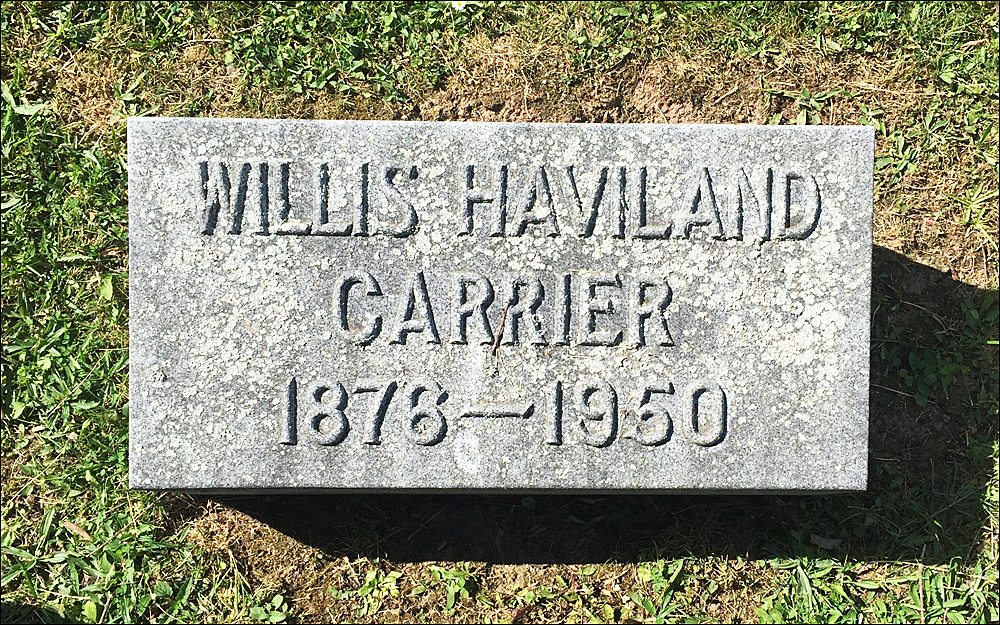
Carrier was a Presbyterian. He lived in Syracuse and died on October 7, 1950 at Cornell Medical Center. Carrier and all three of his wives are buried in Forest Lawn Cemetery in Buffalo, New York. Carrier was awarded the Frank P. Brown Medal in 1942; and was inducted posthumously in the National Inventors Hall of Fame in1985.
At the time of his death, Carrier was also a trustee of Cornell University. ✪




















▶️ DONATE VIA PAYPAL (DEBIT & CREDIT CARD)
ALL PayPal Transactions Are Encrypted For Card Holder Privacy & Security
▶️ DONATE VIA ZELLE (DIRECT BANK CASH TRANSFER)
ZELLE is the perfect online alternative to PayPal. It’s an incredibly simple, secure, easy, fast and FREE way to send or receive money to recipients directly from your online banking account without a middleman. Best of all, there’s NO fees.
ZELLE is a service provided by your bank and is already built in to your online banking account. You only need to activate it first before using. If you’ve already activated ZELLE in your online bank or credit union account, you can donate to The New Americanist by using our ZELLE address:
vip@thenewamericanist.com
To activate your ZELLE, follow these easy instructions (a simple two minute process):

▶️ DONATE VIA SNAIL MAIL