Hi Folks…And Welcome Again To FLAT OUT!
The Little Sports Car That Could! It’s…
The Fiat 850 Spider: 1965–1973
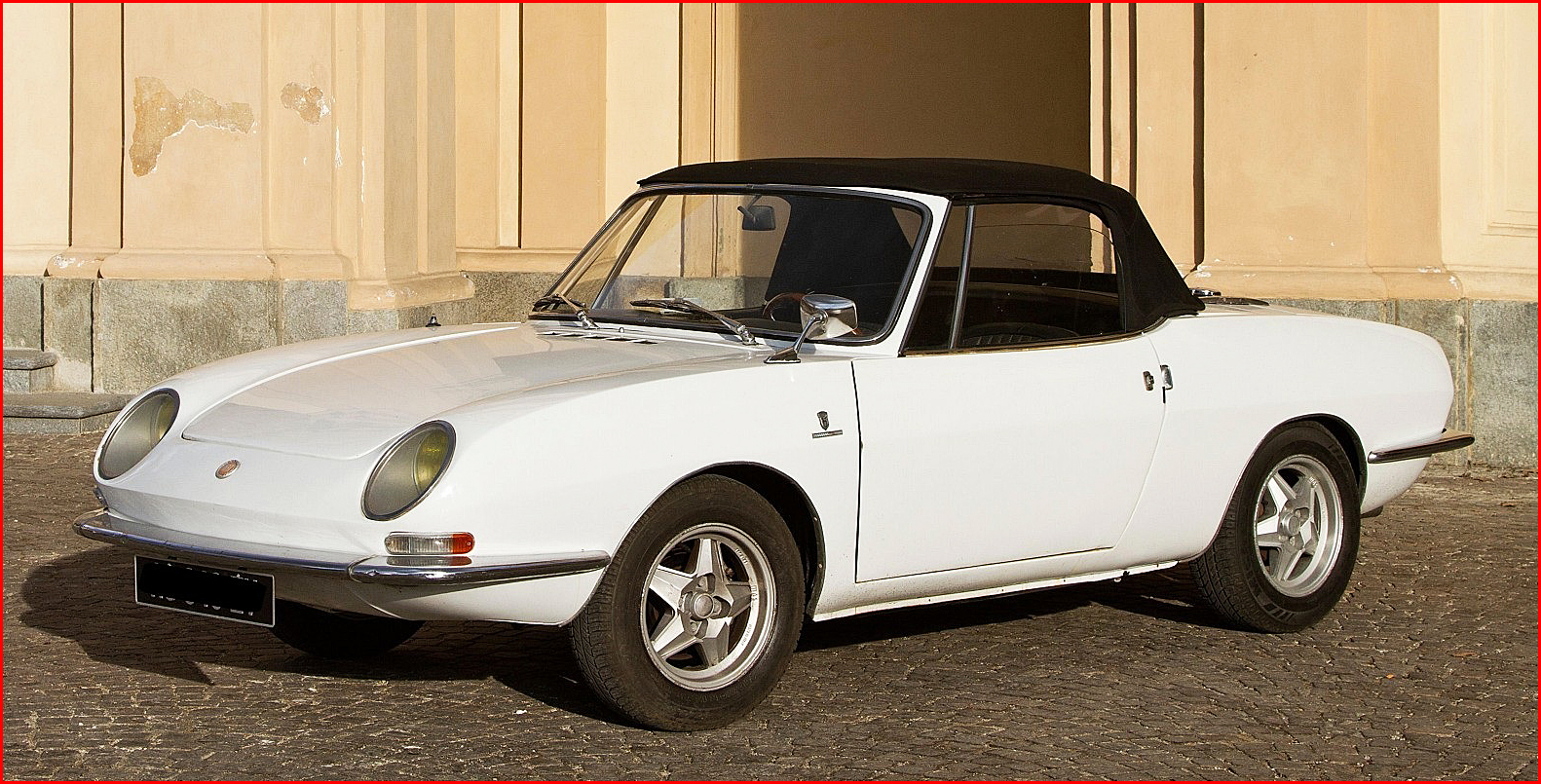
✪ The Fiat 850 Spider zipped into the automotive scene in 1965, a pint-sized convertible that brought Italian flair to the masses. Born from Fiat’s workhorse 850 platform, it was a rear-engine, rear-wheel-drive roadster designed by Bertone to rival the MG Midget and Austin-Healey Sprite. With its sleek lines and frugal 843 cc engine the Spider wasn’t built for speed, but for sun-soaked joyrides. It was Fiat’s love letter to La Dolce Vita – a car that made every driver feel like they were cruising the Amalfi Coast, even if they were stuck in suburban traffic.

Fiat’s 850 lineup debuted in 1964 as a successor to the beloved 600, offering a practical sedan and coupe for Europe’s growing middle class. But Fiat saw an opportunity in the affordable convertible market, dominated at the time by British roadsters. They tapped Turin design house Carrozzeria Bertone to craft a two-seater Spider that could charm buyers without breaking the bank. The project landed in the hands of a young Giorgetto Giugiaro, who would later pen icons like the VW Golf and Scirocco and the DeLorean DMC-12. His mission: turn the boxy 850 platform into a stylish, budget-friendly drop-top.
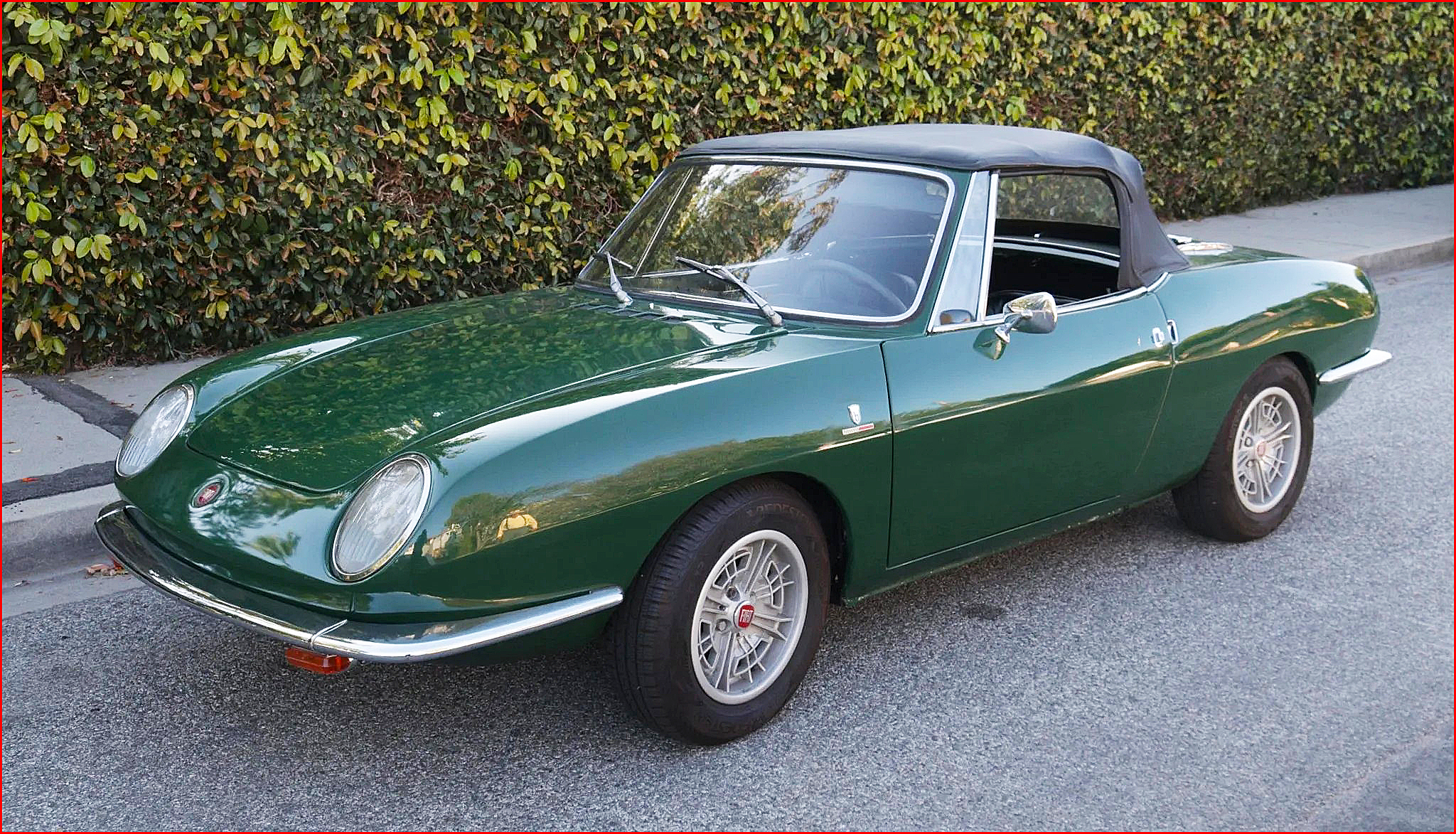
Giugiaro delivered. He adapted the car’s body to the 850 platform to lower production costs, such as extending the fenders that incorporated the headlights and covered them with an additional piece of plexiglass. Also, the clean design of the hood was continued downward by a curved panel that supported the bumper. Unveiled at the 1965 Geneva Motor Show alongside the 850 Coupe, the Spider was a stunner. Its smooth, flowing lines, recessed headlamps with plexiglass covers, and dihedral side panels echoed Bertone’s 1963 Chevrolet Testudo concept. Its low waistline was clean and devoid of any fancy trims on the doors or fenders. The folding fabric roof stowed neatly under a rear metal panel, giving it a clean, purposeful look. The design had no door handles; just a small button and keyhole on the door and dents in the rear fenders that allowed you to get two fingers behind the door panel to open it. It was no-frills frugal fun wrapped in beautiful Italian styling, perfect for sunny Sunday drives in the country as well as a weekly commute. Built at Bertone’s Grugliasco plant, the Spider hit U.S. dealers in 1967 for $2,109 – $100 less than an MG Midget and a fraction of an Alfa Romeo Spider’s $3,995. The Alfa certainly had more gravitas than the little Fiat, but it should for nearly twice the price.
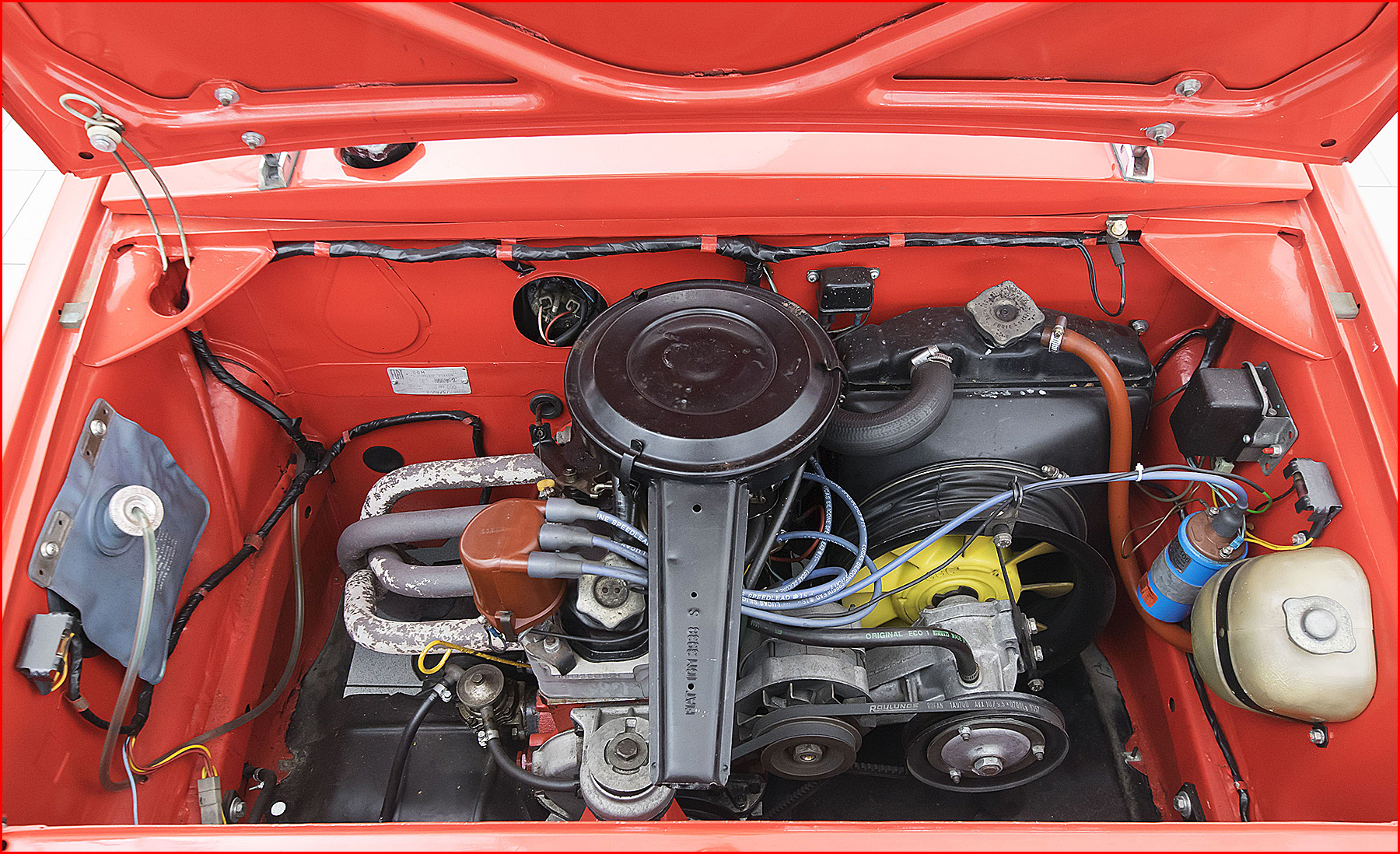
The 850 Spider’s power came from a rear-mounted 843 cc inline-four, code 100GS.000, producing 49 horsepower at 6,400 RPM and 45 lb-ft of torque at 4,000 RPM. The engine wasn’t a powerful screamer like a Ferrari V8 or V12, but it didn’t need to be; that wasn’t its purpose. With a cast-iron block, aluminum head, and counter-clockwise rotation (like a Chevrolet Corvair), it was a humble evolution of the Fiat 600’s engine. Paired with a four-speed manual gearbox and a 4.88:1 final drive, it pushed the 1,600-pound roadster to 90 mph and hit 60 mph in a leisurely 15.5 seconds, per Road & Track magazine. However, 60 MPH was met with a cacophony from behind your back as the little engine required nearly 4,500 RPM to reach that speed; relaxed highway cruising was not the 850 Spider‘s forte. Fuel economy shone at 40 mpg, perfect for budget-conscious buyers in an era of 32-cent gas and a godsend for drivers a decade later during the Energy Crises of the 1970s.
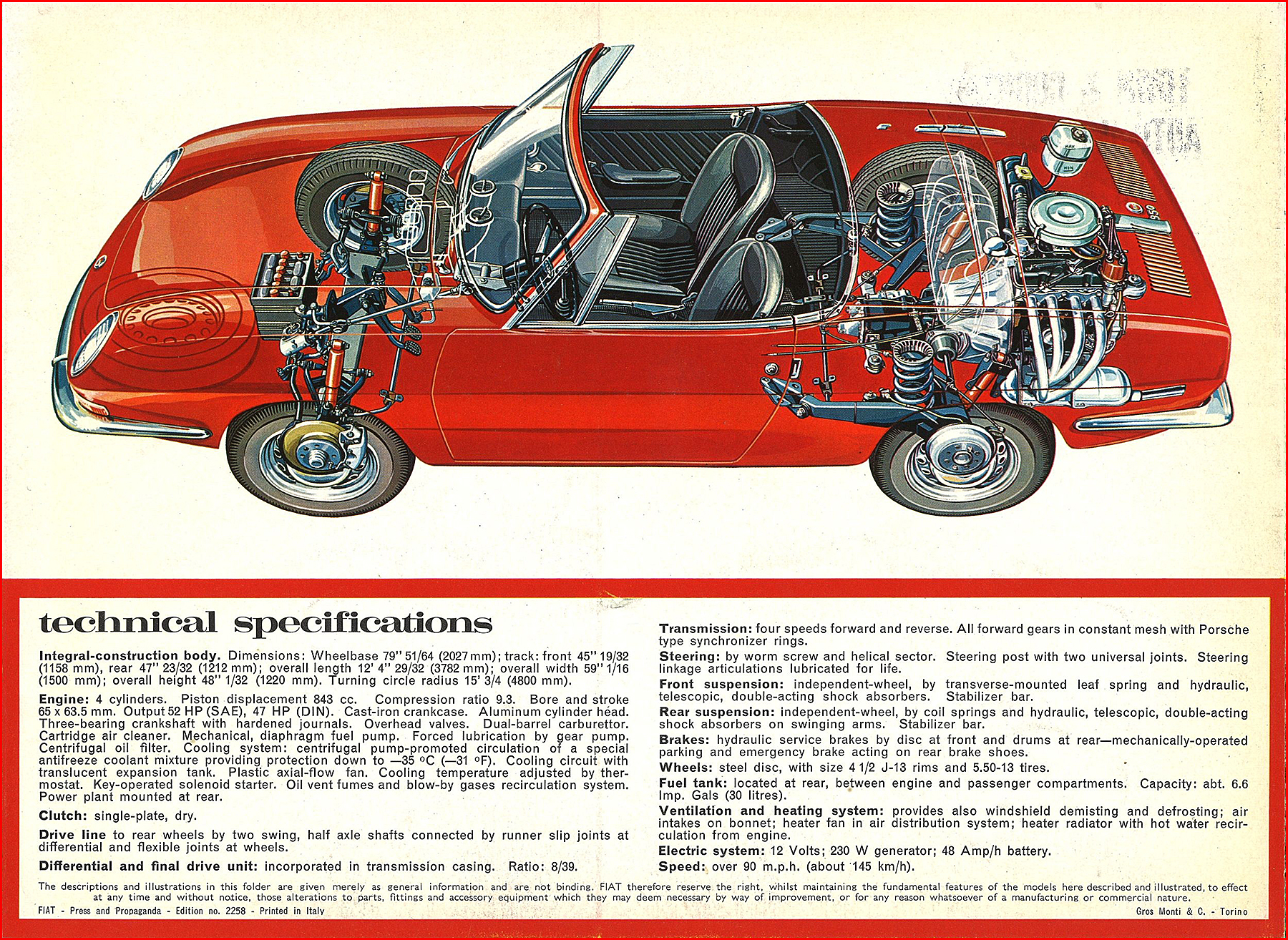
For the U.S., Fiat detuned the engine to 817 cc (47 horsepower) to slip under 1968 emissions rules for engines below 50 cubic inches. The trade-off was a slight dip in performance – 0–60 in 16.2 seconds—but it kept the Spider US emissions-compliant. Handling was very good, thanks to a 79.8-inch wheelbase and a transverse leaf spring up front with semi-trailing arms at the rear. Front disc brakes and rear drums provided decent stopping power, though the positive camber on the front wheels (a Fiat 500 holdover) gave it a quirky stance. The Spider’s low center of gravity and 48/52 weight distribution made it a tossable delight, with Road & Track magazine noting its “high fun-per-dollar quotient.” However, this was a SMALL car. How small, you ask? The 850 Spider had a length of 149 inches, the wheelbase was a mere 79.8 inches, a width of 59.1 inches, a height of 48 inches with the top up and a curb weight of only 1,600 lbs. Compare that with a modern Kia Forte, not exactly a big car: 182.7 length, 106.3 wheelbase, 70.9 inch width 56.5 height and a 2,707 lb. curb weight…over 1,000 lbs. heavier. Sitting an an 850 Spider, it looked like you could drive right under a semi trailer to inspect its undercarriage and have room to spare.
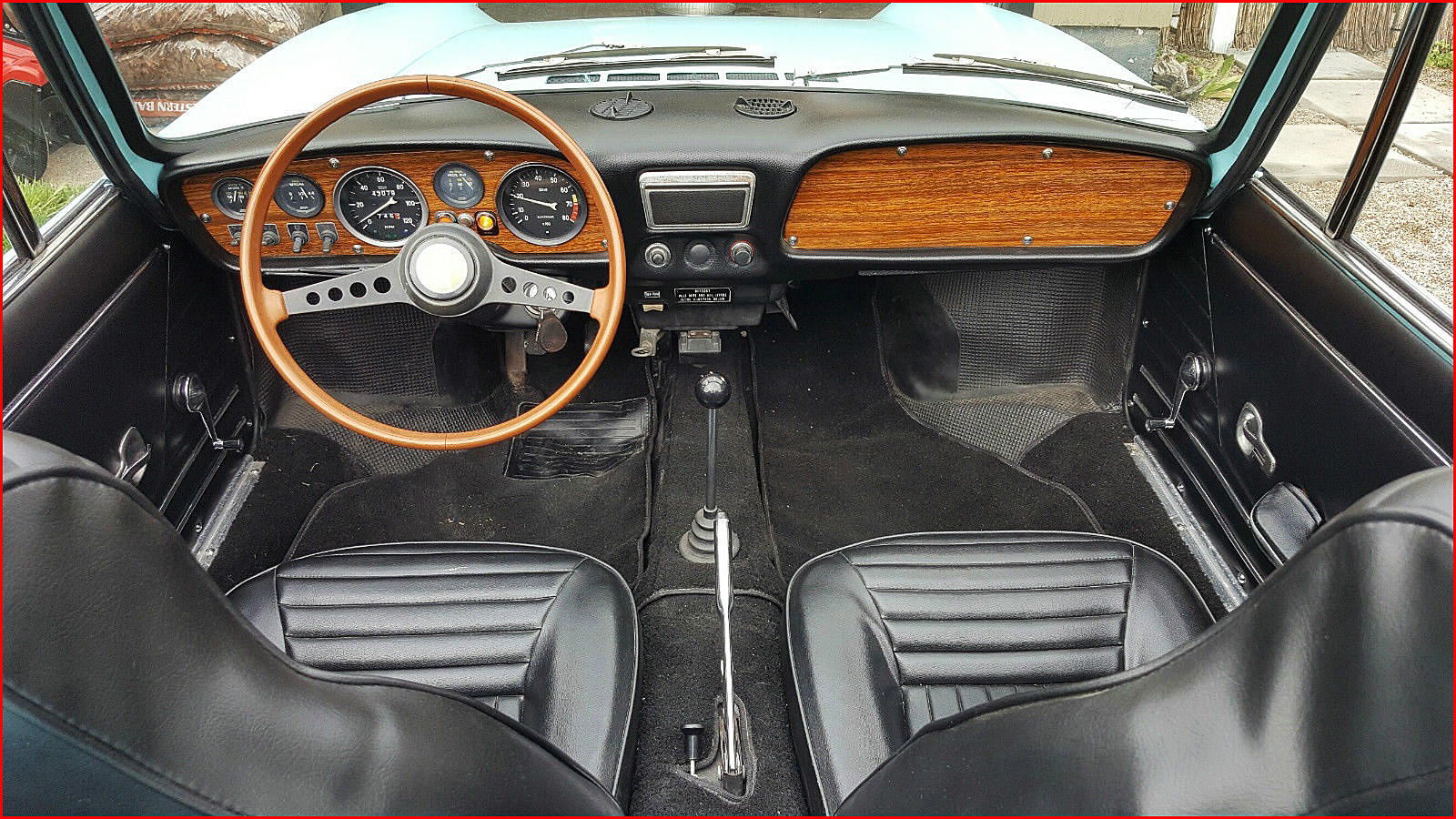
The Spider’s cabin was very cozy, built for two with a low driving position. Bucket seats in vinyl or optional leather hugged driver and passenger, with 35.7 inches of legroom and 37.2 inches of headroom. You didn’t sit in the car as much as you wore it like a suit. A center console housed the gear stick and handbrake, while the dashboard featured large dials for the speedometer and tachometer, plus smaller gauges for fuel and water temperature. These were split into two separate areas, giving the driver a race-car feeling. No center stack existed – radios were dealer-installed – but the simplicity added charm. A three-spoke steering wheel and chrome trim gave it an Italian flair, though the footwells, offset by the wheel wells, angled pedals slightly right. The folding soft top was a standout, stowing under a metal tonneau for a sleek profile when down. Standard features included a heater, defroster, and manual windows; air conditioning was a rare dealer option. The 4.2-cubic-foot trunk up front held a weekend bag, but this was a car for cruising, not hauling.
850 Sport Spider: 1968-1973
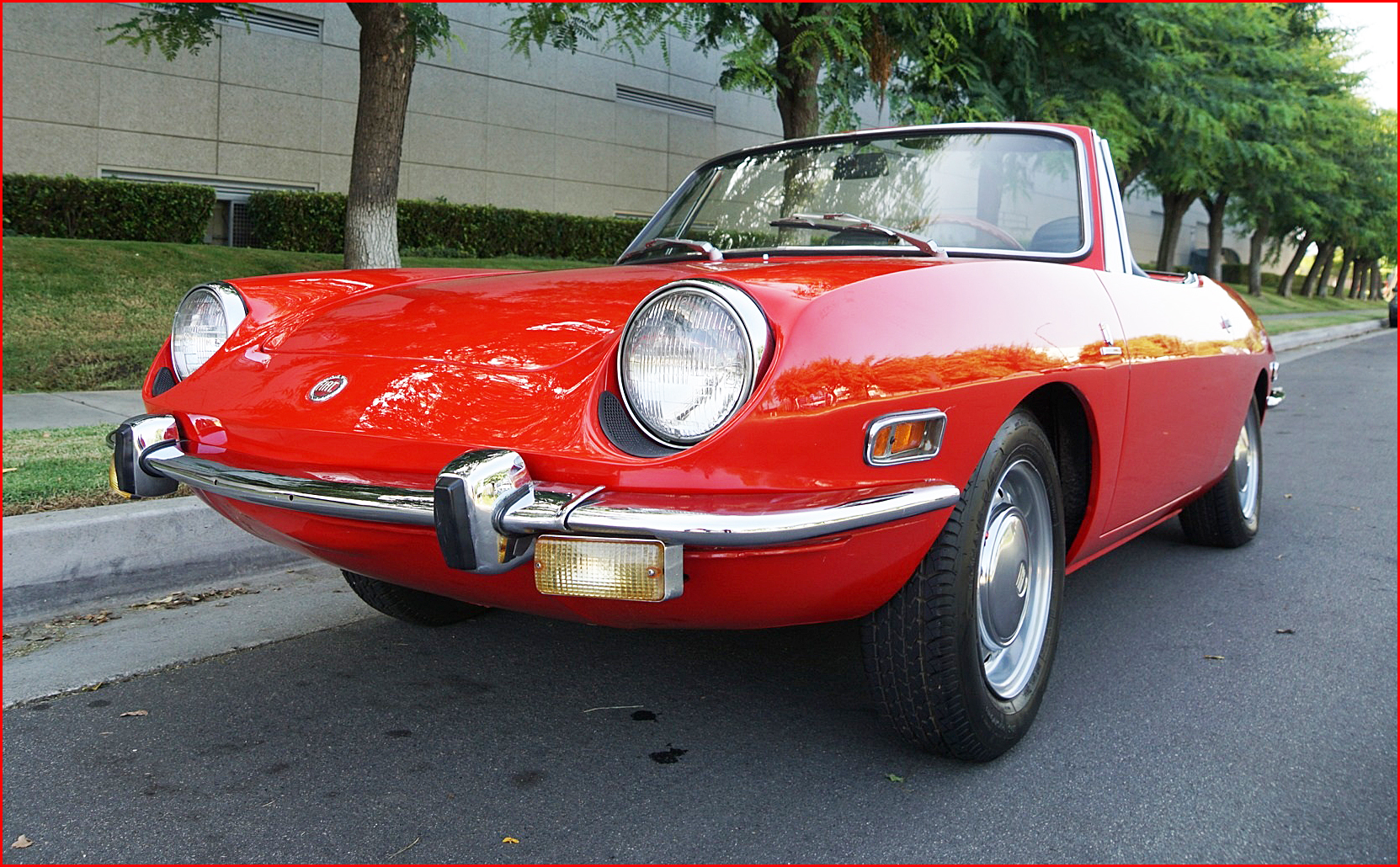
(Insert 850 Sport Spider.jpg)Fiat kept the 850 Spider fresh. In 1968, the engine grew to 903 cc, boosting output to 52 horsepower at 6,500 RPM and 49 lb-ft at 3,800 RPM. Badged as the 850 Sport Spider, it hit 93 mph and shaved the 0–60 time to 14.8 seconds. Radial tires, a dual-circuit brake system, and an alternator (replacing the generator) improved reliability. The front end got a controversial facelift to meet U.S. headlight regulations, swapping sleek covered lamps for “frog-eye” sealed beams and moving turn signals below the bumper. Purists mourned the change, as the original’s Miura-like nose (sharing headlamp units with Lamborghini’s supercar) was a design highlight.
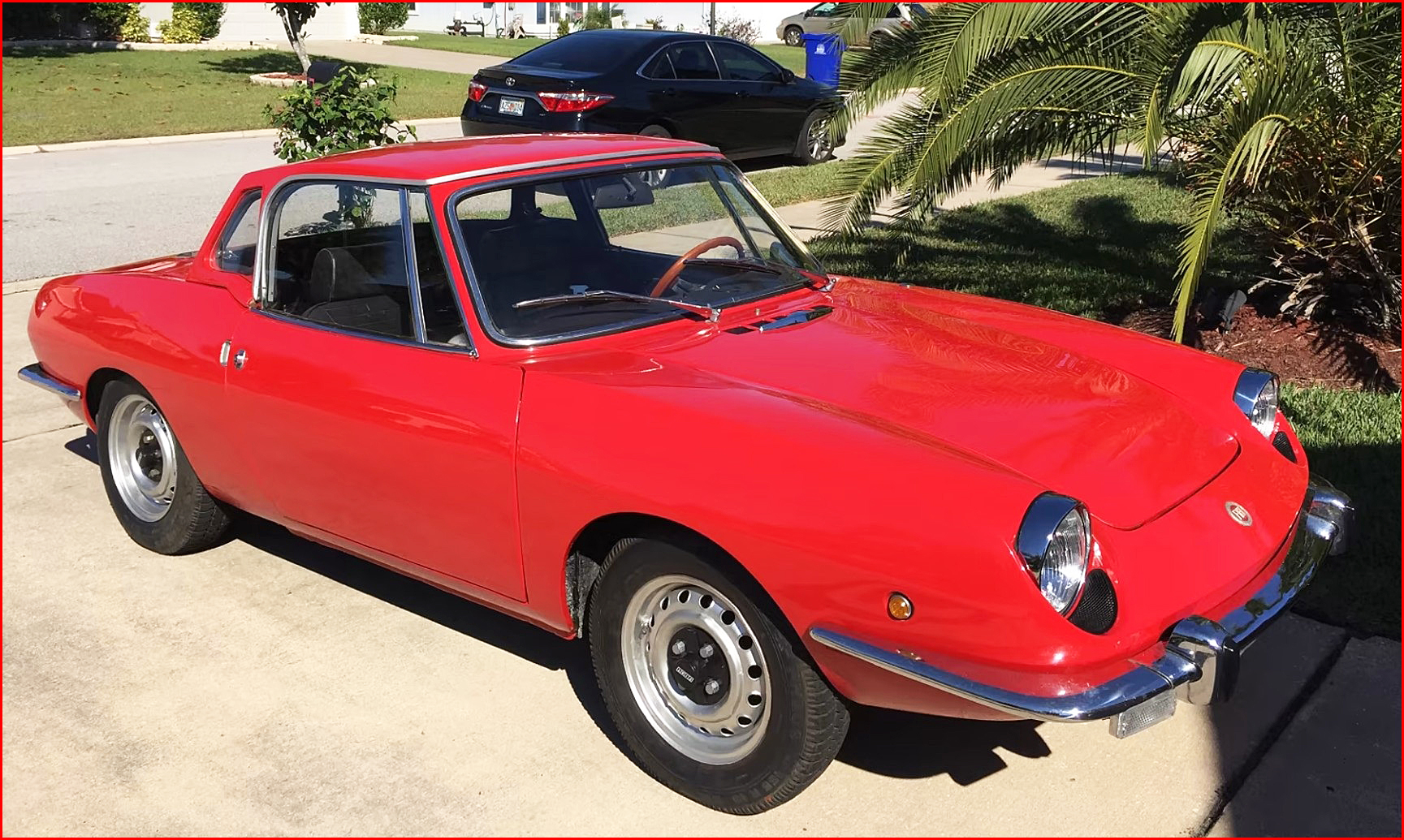
Special editions added spice. The 1968–1970 Racer featured a body-colored metal hardtop, while the Racer Berlinetta had a black vinyl top. Only 3,641 Racers and 763 Racer Team models were built, with most staying in Europe. Abarth versions, like the OT 1000 Spider (982 cc, 61 horsepower, 96 mph), added disc brakes and a sportier edge, though they were rare.
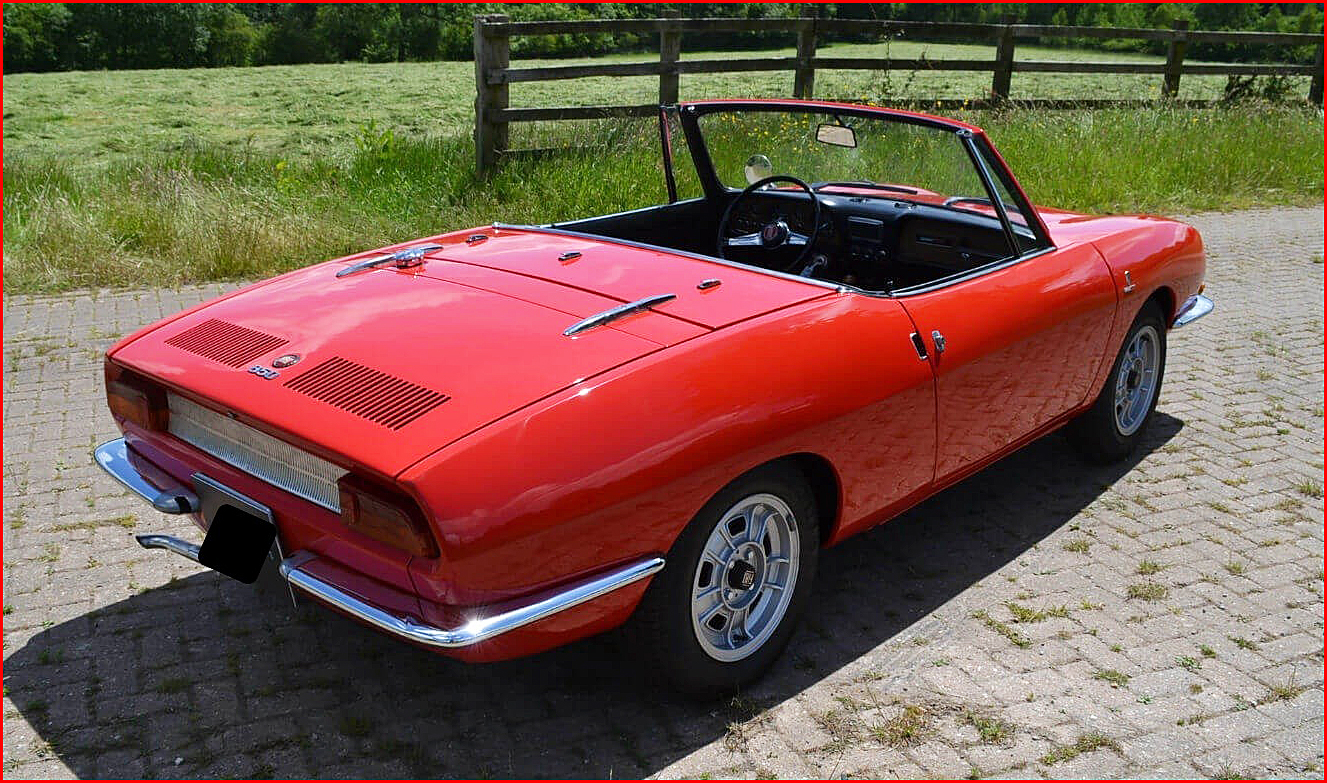
The 850 Spider was no dragstrip king, but it thrived on twisty roads. Its light weight and nimble chassis made it a favorite for autocross and joyrides. Car and Driver praised its “exquisite balance,” though it warned of trailing-throttle oversteer if pushed too hard. Rust was the Spider’s Achilles’ heel, especially in wet climates and Northern ones that salted the roads after a snowstorm, leading to recalls and a class-action lawsuit that saw Fiat buy back and scrap many U.S. models. Despite this, 125,010 Spiders were built from 1965 to 1973, with 87,360 shipped to the U.S.
Culturally, the Spider captured the 1960s’ carefree spirit. It starred in European films and was a staple on coastal drives, earning the nickname “Little Ferrari” for its looks. The Spider’s buzzsaw engine note and open-top thrill made every trip feel like a scene from Roman Holiday.
By 1971, the 850 sedan and coupe were phased out, replaced by the Fiat 127 and 128. The Spider soldiered on, with Bertone marketing a “Bertone Racer” version into 1974. In Spain, Seat built the 850 until 1974, and the Seat 133 borrowed its platform. Emissions and safety rules, plus competition from the mid-engine Fiat X1/9, ended the Spider’s run in 1973. Total 850 production neared 2.3 million across all variants, with the Spider’s 140,000 units a modest but beloved slice of the pie.
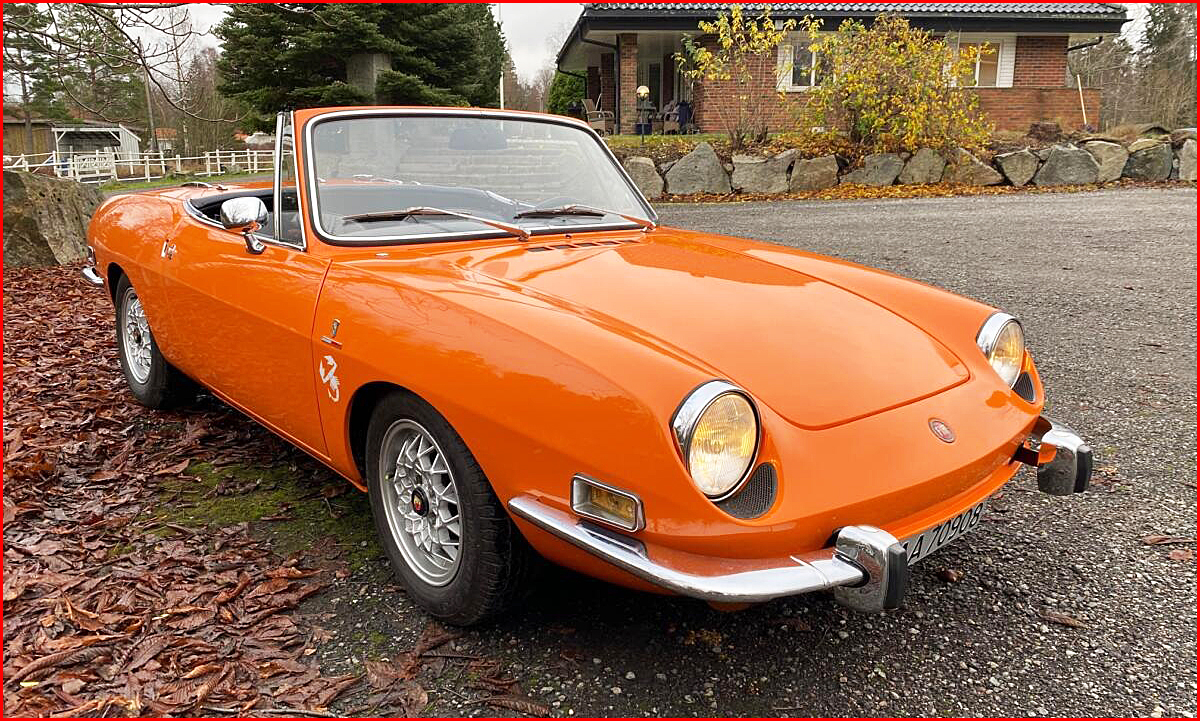
The Fiat 850 Spider wasn’t the fastest or most reliable, but it was a triumph of style and affordability. Giugiaro’s design, Bertone’s craftsmanship, and Fiat’s everyman ethos made it a classic. It outlasted many rivals and inspired later roadsters like Fiat‘s own 124 Spider. Today, rust-free examples are rare, fetching $15,000–$25,000 at auction. For every gearhead who cruised one under a summer sun, the 850 Spider remains a ticket to Italy’s golden age of motoring.
My Dad had an 850 Spider when I was growing up. It was TINY, but he loved it and used it as a commuter car on his 30-minute drive to work at Cape Canaveral. For a while I thought all sports cars were that small. He sold it before we went to Germany along with my Mom’s 1970 Buick Wildcat. Again, my brother got to drive it, but I didn’t.✪
Got a Great Car Story? Share it! Reminisce About Your Other Favorite Cars, Too!
Seeyas Again Next Time On FLAT OUT!



















▶️ DONATE VIA PAYPAL (DEBIT & CREDIT CARD)
ALL PayPal Transactions Are Encrypted For Card Holder Privacy & Security
▶️ DONATE VIA ZELLE (DIRECT BANK CASH TRANSFER)
ZELLE is the perfect online alternative to PayPal. It’s an incredibly simple, secure, easy, fast and FREE way to send or receive money to recipients directly from your online banking account without a middleman. Best of all, there’s NO fees.
ZELLE is a service provided by your bank and is already built in to your online banking account. You only need to activate it first before using. If you’ve already activated ZELLE in your online bank or credit union account, you can donate to The New Americanist by using our ZELLE address:
vip@thenewamericanist.com
To activate your ZELLE, follow these easy instructions (a simple two minute process):

▶️ DONATE VIA SNAIL MAIL