
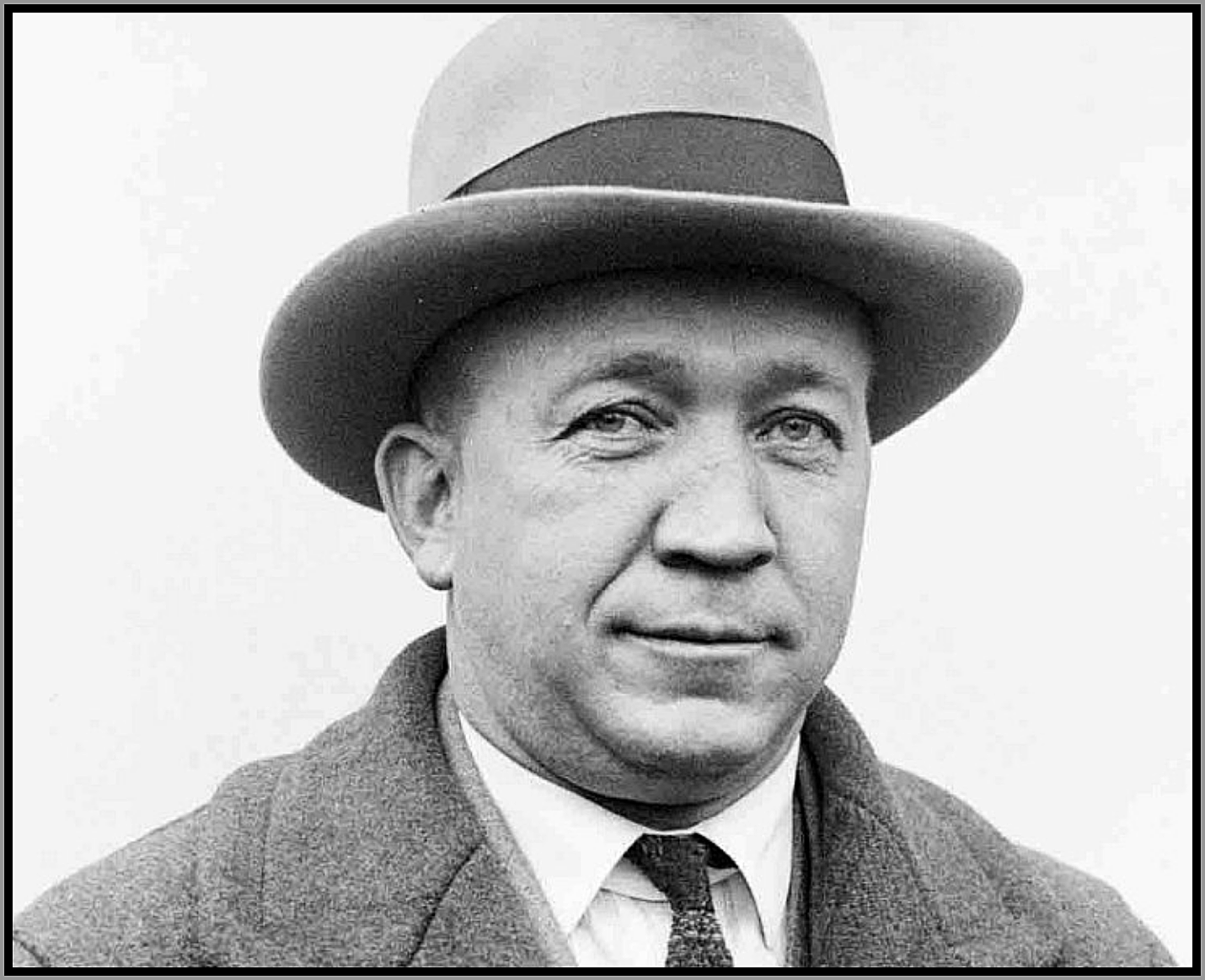

Knute Kenneth Rockne: March 4, 1888 – March 31, 1931
✪ Knute Kenneth Rockne (born Knut Larsen Rockne) was an American football player and coach at the University of Notre Dame. While leading Notre Dame for 13 seasons, Rockne accumulated over 100 wins and three national championships.
Rockne is regarded as one of the greatest coaches in college football history. His biography at the College Football Hall of Fame, where he was inducted in 1951, identifies him as “without question, American football’s most-renowned coach.” Rockne helped to popularize the forward pass and turned the Notre Dame Fighting Irish into a major force in college football.
Knute Kenneth Rokne was born in Voss, Norway, to a smith and wagonmaker Lars Knutson Rokne (1858–1912) and his wife, Martha Pedersdatter Gjermo (1859–1944). He immigrated to the US with his parents when he was five years old and grew up in the Logan Square area of Chicago, on the northwest side of the city. Rockne learned to play football in his neighborhood and later played end in a local group called the Logan Square Tigers. He attended Lorenz Brentano Elementary School and North West Division High School in Chicago where he played football and ran track.
After Rockne graduated from high school, he took a job as a mail dispatcher with the post office in Chicago for four years. His clerk’s salary was $600 in 1907 and $900 in 1909. By the time he was 22, he had saved enough money to continue his college education. He was admitted to the University of Notre Dame in Indiana to complete his education. There, Rockne excelled as a football end; winning All-American honors in 1913. Rockne also worked as a lifeguard at the Cedar Point Park in Sandusky, Ohio during the summer of 1913.
Rockne met Bonnie Gwendoline Skiles (1891–1956) of Kenton, Ohio, an avid gardener, while the two were employed at Cedar Point. Bonnie was the daughter of George Skiles and Huldah Dry. The two married at Sts. Peter and Paul Catholic Church in Sandusky, Ohio, on July 14, 1914, with Father William F. Murphy officiating and Gus Dorais as best man. They had four children: Knute Lars Jr., William Dorias, Mary Jeane and John Vincent. Rockne converted from Lutheranism to the Catholic Church on November 20, 1925. The Rev. Vincent Mooney, C.S.C., baptized Rockne in the Log Chapel on the Notre Dame campus.
Durning that summer, Rockne and his college teammate and roommate Gus Dorais worked on developing passing techniques. These plays were employed in games by the 1913 Notre Dame squad and subsequent Rockne-coached teams. They included many features still found today common in modern passing, including having the passer throw the ball overhand and having the receiver run under a football and catch the ball in stride.
Rockne was not the first coach to utilize the forward pass, but he helped to popularize it nationally. Most football historians agree that a few schools, notably St. Louis University, Michigan, Carlisle, and Minnesota, already had passing strategies in place before Rockne arrived at Notre Dame. However, the great majority of those passing attacks consisted solely of short pitches and shovel passes to stationary receivers. Additionally, few of the major Eastern teams that constituted the power center of college football at the time used the pass.
On November 1, 1913, Rockne’s Notre Dame squad stunned the highly regarded Army team 35–13 in a game played at West Point. Led by quarterback Charlie “Gus” Dorais and Rockne, the Notre Dame team attacked the Cadets with an offense that featured both the expected powerful running game but also long and accurate downfield forward passes from Dorais to Rockne. This game was not the “invention” of the forward pass, but it was the first major contest in which a team used it regularly throughout the game.
At Notre Dame, Rockne studied chemistry and graduated in 1914 with a degree in pharmacy. He worked as a laboratory assistant to noted polymer chemist Julius Arthur Nieuwland at Notre Dame and helped with the football team; but he rejected any further work in chemistry after receiving an offer to coach football.
In 1914, Rockne was recruited by Peggy Parratt to play for the Akron Indians. Rockne played both end and halfback positions. Rockne moved to Massillon, Ohio, in 1915 along with former Notre Dame teammate Dorais to play with the professional Massillon Tigers. Rockne and Dorais brought the forward pass to professional football from 1915 to 1917 when they led the Tigers to the championship in 1915.
Pro Football in the Days of Rockne by Emil Klosinski maintains the worst loss ever suffered by Rockne as a coach was in 1917 when He coached the South Bend Jolly Fellows Club as they lost in a 40–0 rout to the Toledo Maroons.
During his 13 years as head coach, Rockne led Notre Dame to 105 victories, 12 losses, 5 ties, and 3 consensus national championships; which included 5 undefeated and untied seasons. Rockne posted the highest all-time winning percentage (.881) for a major college football coach.
Rockne also recognized that intercollegiate sports had a show-business aspect. He worked hard to promote Notre Dame football in order to make it financially successful. He used his charm to court favor from the media, which then consisted of newspapers, wire services, radio stations and networks, to obtain free advertising for Notre Dame football. He also became a successful promoter & spokesperson for South Bend-based Studebaker and other products. Through a sustained effort, of working with Studebaker, several additional side jobs and coaching at the University of Notre Dame, Rockne eventually earned an annual income of $75,000 from all his financial activities combined.
During the war-torn season of 1918, Rockne made his coaching debut on September 28, 1918, against CaseTech in Cleveland, earning a 26–6 victory. In the backfield were Leonard Bahan, George Gipp, and Curly Lambeau. In Gipp, Rockne had an ideal handler of the forward pass.
Gipp died on December 14, 1920, just two weeks after being elected Notre Dame’s first All-American. He likely contracted strep throat and pneumonia whilecgiving punting lessons after his final game on November 20 against Northwestern University. Since antibiotics were not available in the 1920s, treatment options for such infections were limited and they could prove fatal even to the young and healthy. It was while on his hospital bed and speaking to Rockne that he is purported to have delivered the line “win just one for the Gipper.”
On October 18, 1924, Notre Dame triumphed over Army in a 13–7 victory which would echo through the ages, and Grantland Rice wrote what is arguably the most famous passage in sports journalism and immortalized Notre Dame’s backfield in history.
The name “the Four Horsemen” transformed this backfielder team into one of the most notable groups of collegiate athletes in football history, immortalizing their triumphs.
Grantland Rice wrote on October 18, 1924 in the New York Herald Tribune:
“Outlined against a blue, gray October sky the Four Horsemen rode again. In dramatic lore they are known as famine, pestilence, destruction and death. These are only aliases. Their real names are: Stuhldreher, Miller, Crowley and Layden. They formed the crest of the South Bend cyclone before which another fighting Army team was swept over the precipice at the Polo Grounds this afternoon as 55,000 spectators peered down upon the bewildering panorama spread out upon the green plain below.”
George Strickler, Coach Rockne’s student publicity aide, made sure the name “Four Horsemen” stuck. After the team returned to South Bend, Strickler posed the four players in their uniforms on horseback, using horses from a local stable. The photo was picked up by wire services, forever solidifying the legendary status of the Four Horsemen.
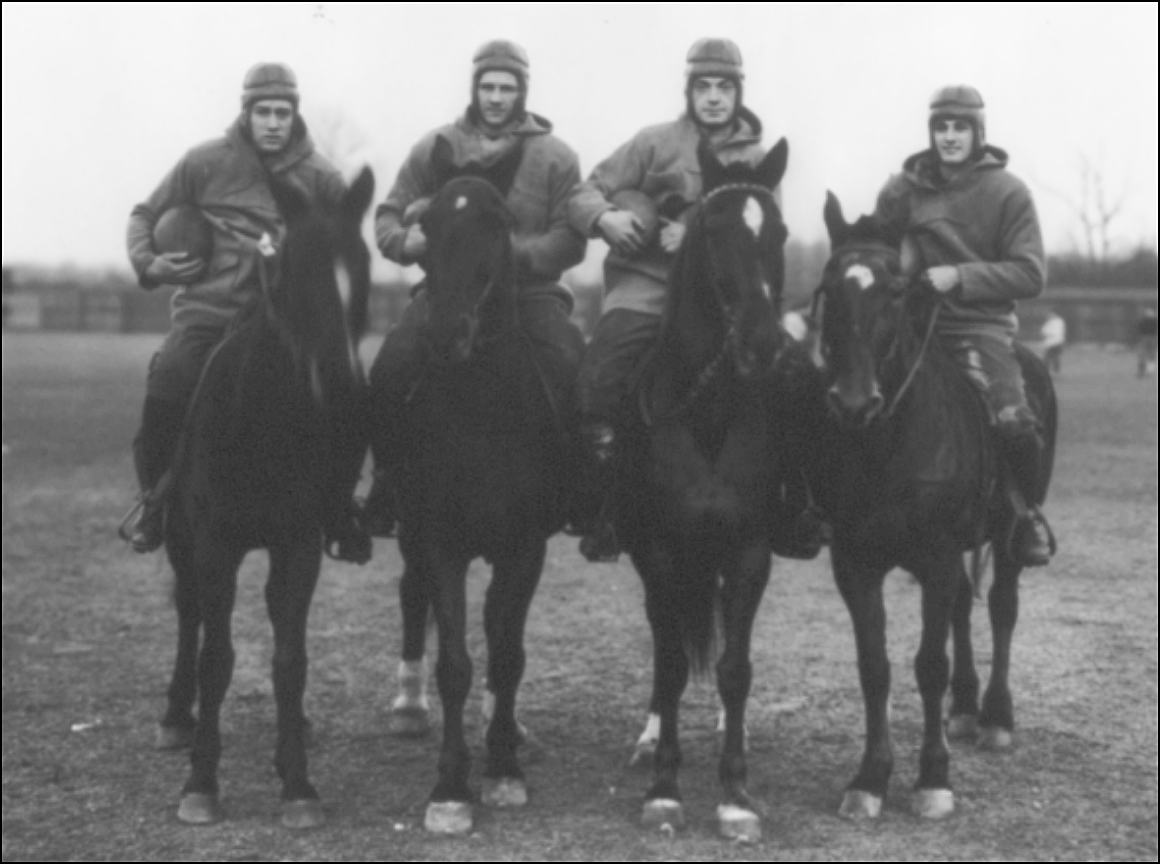
In recognition of their dominance, all four “Horsemen” were elected to the College Football Hall of Fame:Layden in 1951, Stuhldreher in 1958, Crowley in 1966, and Miller in 1970. In addition, the United States Postal Service honored the Four Horsemen with their own stamp in 1998.
For all his success, Rockne also made what an Associated Press writer called “one of the greatest coaching blunders in history.” Instead of coaching his 1926 team against Carnegie Tech, Rockne traveled to Chicago for the Army–Navy Game to “write newspaper articles about it, as well as participate in the selection of an All-America football team.” Carnegie Tech used the coach’s absence as motivation for a 19–0 win; and the upset likely cost the Irish a chance for a national title.
On November 10, 1928, when the Fighting Irish were tied with Army 0–0 at the end of thehlaf, Rockne entered the locker room and told the team the words he heard on Gipp’s deathbed in 1920: “I’ve got to go, Rock. It’s all right. I’m not afraid. Some time, Rock, when the team is up against it, when things are going wrong and the breaks are beating the boys, tell them to go in there with all they’ve got and win just one for the Gipper. I don’t know where I’ll be then, Rock. But I’ll know about it, and I’ll be happy.” This inspired the team to go on and win the game 12–6. The phrase “Win one for the Gipper” would later be used as a political slogan by Ronald Reagan, who portrayed Gipp in the 1940 film, Knute Rockne, All American.
Both of Rockne’s 1929 and 1930 teams went undefeated and became national champions. According to interviews, Rockne considered his 1929 team his strongest overall and his 1930 team to have been his best offensively.
Rockne died in the crash of a Transcontinental & Western Air airliner in Kansas on March 31, 1931, while en route to participate in the production of the film The Spirit of Notre Dame (released October 13, 1931). He had stopped in Kansas City to visit his two sons, Bill and Knute Jr., who were in boarding school there at the Pembroke-Country Day School. A little over an hour after taking off from Kansas City, one of the Fokker Trimotor’s wings broke up in flight. The plane crashed into a wheat field near Bazaar, Kansas, killing Rockne and seven others.
A memorial dedicated to the victims now stands on the site of the crash. The memorial is surrounded by a wire fence with wooden posts and was maintained for many years by James Heathman, who, at the age of 13 in 1931, was one of the first people to arrive at the scene after the crash.
Rockne’s unexpected death startled the nation and triggered a national outpouring of grief, comparable to the death of a president. President Herbert Hoover called Rockne’s death “a national loss.” King Haakon VII of Norway posthumously knighted Rockne and sent a personal envoy, Olaf Bernts, Norwegian consul in Chicago, to Rockne’s funeral.
Driven by strong public sentiment for Rockne, the crash story played out at length in nearly all the nation’s newspapers and triggered public demand for an inquiry into the crash’s causes and circumstances. The cause of the accident was determined to be the plane’s plywood outer skin was bonded to the ribs and spars with water-based aliphatic resin glue. The flight in rain had caused the bond to deteriorate to the point that sections of the plywood suddenly separated. The national outcry over the disaster triggered sweeping changes to aircraft design, manufacturing, operation, inspection, maintenance, regulation, and crash investigation, igniting an air travel, safety revolution which ultimately transformed airline travel worldwide from one of the most dangerous forms of travel to one of the safest.
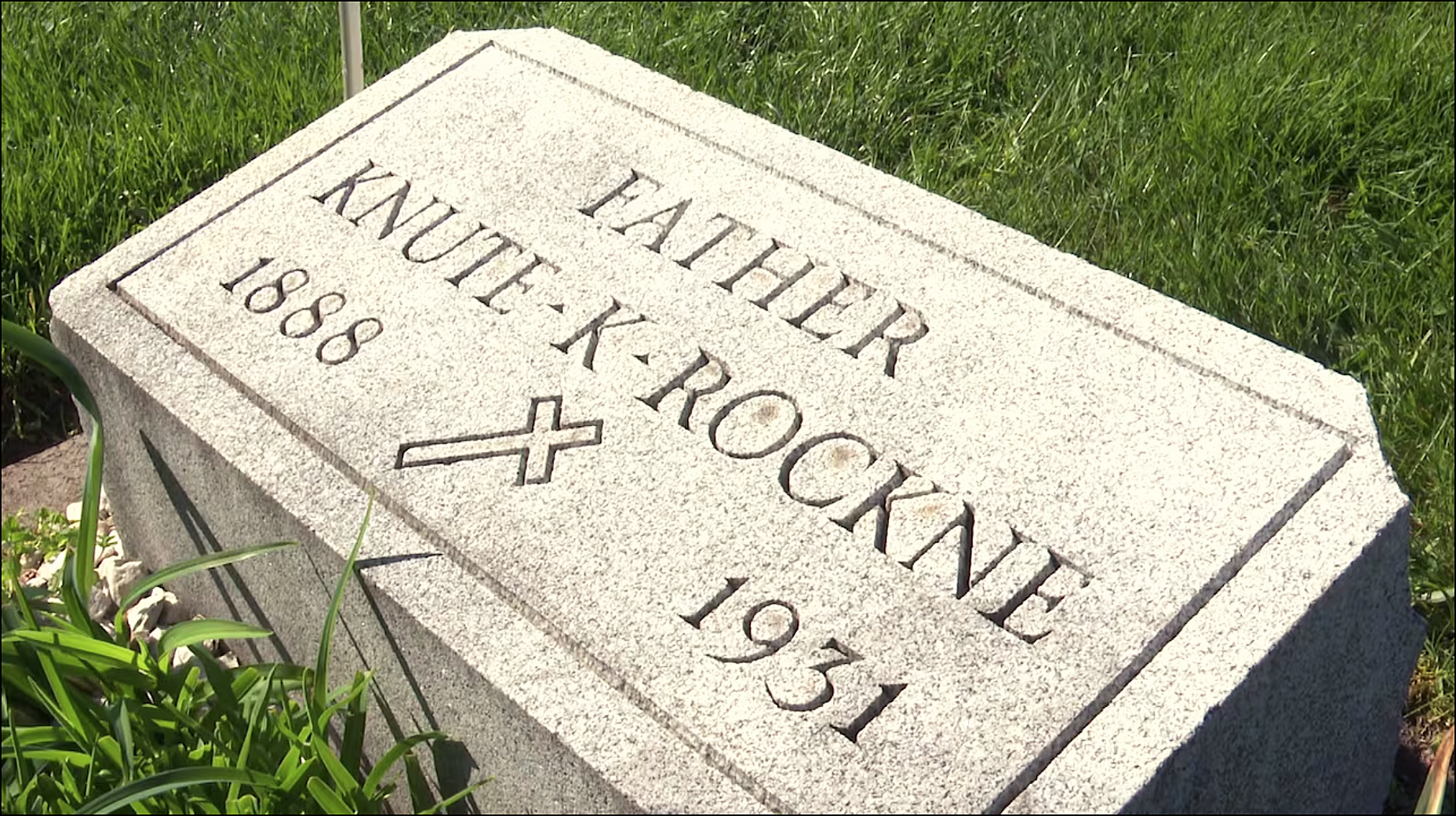
Rockne was buried in Highland Cemetery in South Bend, the city adjacent to the Notre Dame campus. Six of his players from the previous year (Marty Brill, Tom Yarr, Frank Carideo, Marchy Schwartz, Tom Conley, and Larry Mullins) acted as pall bearers who carried him to his final resting place. More than 100,000 people lined the route of his funeral procession. The funeral, which was held at the Basilica of the Sacred Heart, was broadcast live on network radio across the United States and Europe as well as in parts of South America and Asia. In 2024, Rockne was reinterred on the campus of Notre Dame.✪





















▶️ DONATE VIA PAYPAL (DEBIT & CREDIT CARD)
ALL PayPal Transactions Are Encrypted For Card Holder Privacy & Security
▶️ DONATE VIA ZELLE (DIRECT BANK CASH TRANSFER)
ZELLE is the perfect online alternative to PayPal. It’s an incredibly simple, secure, easy, fast and FREE way to send or receive money to recipients directly from your online banking account without a middleman. Best of all, there’s NO fees.
ZELLE is a service provided by your bank and is already built in to your online banking account. You only need to activate it first before using. If you’ve already activated ZELLE in your online bank or credit union account, you can donate to The New Americanist by using our ZELLE address:
vip@thenewamericanist.com
To activate your ZELLE, follow these easy instructions (a simple two minute process):

▶️ DONATE VIA SNAIL MAIL