
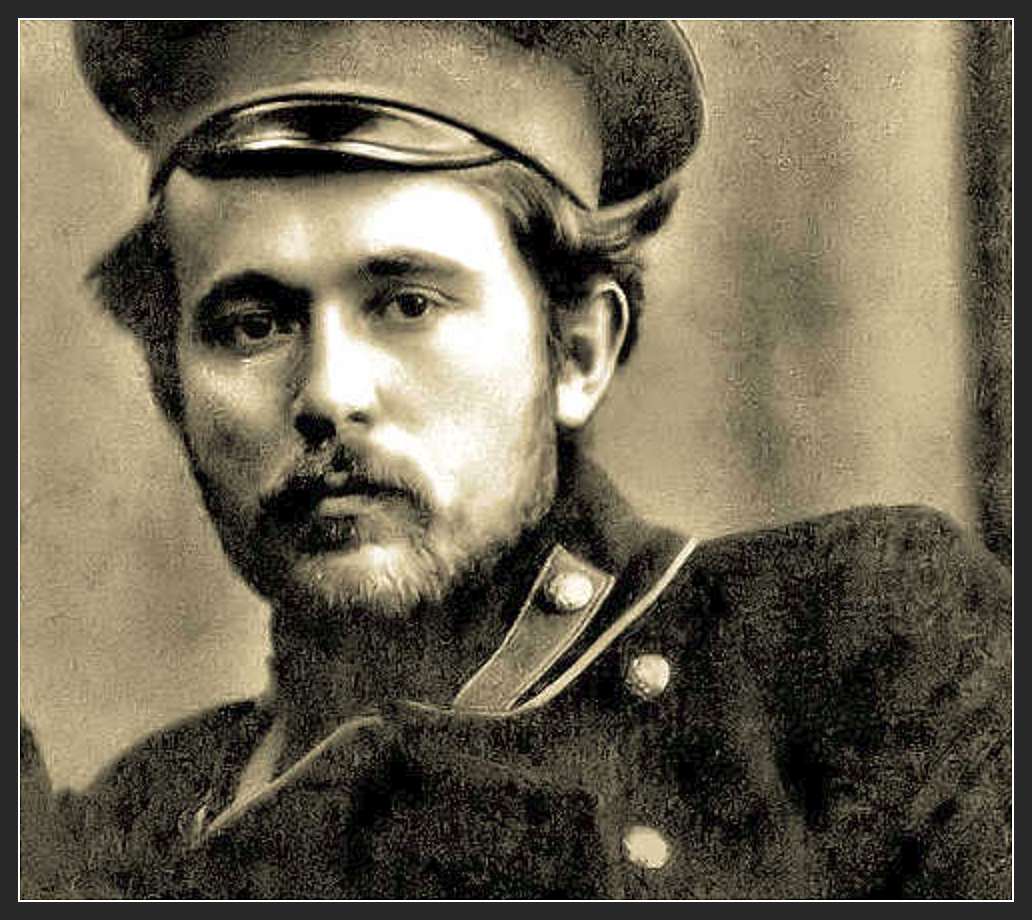

Aleksandr Isayevich Solzhenitsyn: December 11, 1918 – August 3, 2008
✪ Aleksandr Isayevich Solzhenitsyn was a Soviet and Russian author and dissident who helped to raise global awareness of political repression in the Soviet Union, especially in the Gulag prison system. He was awarded the 1970 Nobel Prize in Literature for the “ethical force with which he has pursued the indispensable traditions of Russian literature.” His nonfiction work The Gulag Archipelago is considered to be a head-on challenge to the Soviet state. It has sold tens of millions of copies worldwide since its publication.
Solzhenitsyn was born into a family that defied the Soviet anti-religious campaign in the 1920s and remained devout members of the Russian Orthodox Church. However, he initially lost his faith in Christianity, became an atheist, and embraced Marxism–Leninism. While serving as a captain in the Red Army during World War II, Solzhenitsyn was arrested by SMERSH and sentenced to eight years in the Gulag and then internal exile for calling for the overthrow of the Soviet regime in private correspondence with another field officer. As a result of his experience in prison and the camps, he gradually became a philosophically minded Eastern Orthodox Christian.
In Russia, Solzhenitsyn was an “arch-reactionary,” who argued that the Soviet State “suppressed” traditional Russian and Ukrainian culture. He called for the creation of a united Slavic state encompassing Russia, Ukraine, and Belarus. He was also a fierce opponent of Ukrainian independence. It is well documented that his negative views on Ukrainian independence became more radical over the years.
Solzhenitsyn also argued against the dechristianization of Russian culture, which was most responsible for the Bolshevik Revolution, began in 1666 and grew much worse during the reign of Tsar Peter the Great.
Solzhenitsyn once declared, “Over a half century ago, while I was still a child, I recall hearing a number of old people offer the following explanation for the great disasters that had befallen Russia: Men have forgotten God; that’s why all this has happened.’“
Solzhenitsyn considered the Soviet Union as a police state to be significantly more oppressive than the Russian Empire’s House of Romanov. He asserted Imperial Russia did not censor literature or the media to the extremely systematic style as the Soviet-era Glavlit; and Tsarist era political prisoners were not forced into labor camps to even remotely the same degree and the number of political prisoners and internal exiles under the Romanovs were only one ten-thousandth of the numbers of both following the October Revolution.
In 1983 he met Margaret Thatcher and told her “the German army could have liberated the Soviet Union from Communism but Hitler was stupid and did not use this weapon.”
In 1974, he was stripped of his Soviet citizenship and flown to West Germany. After which he moved to Switzerland and to Vermont in the United States with his family in 1976, where he continued to write. His Soviet citizenship was restored in 1990. He returned to Russia four years later and remained there until his death in 2008.
Solzhenitsyn was born in Kislovodsk (now in Stavropol Krai, Russia). His father, Isaakiy Semyonovich Solzhenitsyn, was of Russian descent, and his mother, Taisiya Zakharovna (née Shcherbak), was of Ukrainian descent.
In 1918, Taisiya became pregnant with Aleksandr. On 15 June, shortly after her pregnancy was confirmed, Isaakiy was killed in a hunting accident. Aleksandr was raised by his widowed mother and his aunt in lowly circumstances. His earliest years coincided with the Russian Civil War. By 1930 the family property had been turned into a collective farm. Later, Solzhenitsyn recalled that his mother fought for survival and that they had to keep his father’s background in the old Imperial Army a secret. His educated mother encouraged his literary and scientific learnings and raised him in the Russian Orthodox faith. She died in 1944 having never remarried.
Solzhenitsyn studied mathematics and physics at Rostov State University. At the same time, he took correspondence courses from the Moscow Institute of Philosophy, Literature, and History; which by this time had become heavily ideological in scope. As he himself makes clear, he did not question the state ideology or the superiority of the Soviet Union until he was sentenced to time in the camps.
On 7 April 1940, while at the university, Solzhenitsyn married Natalia Alekseevna Reshetovskaya. They had just over a year of married life before he went into the army, then to the Gulag. They divorced in 1952, a year before his release because the wives of Gulag prisoners faced the loss of work or residence permits. After the end of his internal exile, they remarried in 1957 and divorced a second time in 1972.
In 1973, Solzhenitsyn married his second wife, Natalia Dmitrievna Svetlova, a mathematician who had a son, Dmitri Turin, from a brief prior marriage. He and Svetlova had three sons.
During the war, Solzhenitsyn served as the commander of a sound-ranging battery in the Red Army; which was involved in major action at the front He was twice decorated. He was also awarded the Order of the Red Star on 8 July 1944 for sound-ranging two German artillery batteries and adjusting counterbattery fire onto them, resulting in their destruction.
A series of writings published late in his life, including the early uncompleted novel Love the Revolution!, chronicle his wartime experience and growing doubts about the moral foundations of the Soviet regime.
While serving as an artillery officer in East Prussia, Solzhenitsyn witnessed war crimes against local German civilians by Soviet military personnel. Of the atrocities, Solzhenitsyn wrote: “You know very well that we’ve come to Germany to take our revenge” for Nazi atrocities committed in the Soviet Union. Noncombatants and the elderly were robbed of their meager possessions and women and girls were gang-raped.
In The Gulag Archipelago, Solzhenitsyn wrote, “There is nothing that so assists the awakening of omniscience within us as insistent thoughts about one’s own transgressions, errors, mistakes. After the difficult cycles of such ponderings over many years, whenever I mentioned the heartlessness of our highest-ranking bureaucrats, the cruelty of our executioners, I remember myself in my Captain’s shoulder boards and the forward march of my battery through East Prussia, enshrouded in fire, and I say: ‘So were we any better?'”
In February 1945, while serving in East Prussia, Solzhenitsyn was arrested by SMERSH. The arrest came after nineteen months of correspondence with a friend, Nikolai Vitkevich, in which they criticized the Soviet state and the conduct of the war by Joseph Stalin, whom Solzhenitsyn called hozyain (‘the boss’), and balabos (Yiddish rendering of Hebrew baal ha-bayit for ‘master of the house’) for the purpose of concealing the political content of the letters and called for the creation of an organization that would topple the Soviet regime.
Solzhenitsyn was convicted of anti-Soviet propaganda under Article 58, Paragraph 10 of the Soviet criminal code, and of “founding a hostile organization” under Paragraph 11. He was taken to the Lubyanka prison in Moscow, where he was interrogated. On 9 May 1945, it was announced that Germany had surrendered and all of Moscow broke out in celebrations with fireworks and searchlights illuminating the sky to celebrate the victory in the Great Patriotic War. From his cell in the Lubyanka, Solzhenitsyn remembered: “Above the muzzle of our window, and from all the other cells of the Lubyanka, and from all the windows of the Moscow prisons, we too, former prisoners of war and former front-line soldiers, watched the Moscow heavens, patterned with fireworks and crisscrossed with beams of searchlights. There was no rejoicing in our cells and no hugs and no kisses for us. That victory was not ours.” On 7 July 1945, he was sentenced in his absence by Special Council of the NKVD to an eight-year term in a labor camp. This was the usual sentence for most crimes under Article 58 at the time.
In 1950, Solzhenitsyn was sent to a “Special Camp” for political prisoners. During his imprisonment at the camp in the town of Ekibastuz in Kazakhstan, he worked as a miner, bricklayer, and foundry foreman. His experiences at Ekibastuz formed the basis for the book One Day in the Life of Ivan Denisovich. One of his fellow political prisoners, Ion Moraru, remembers that Solzhenitsyn spent some of his time at Ekibastuz writing. While there, Solzhenitsyn had a tumor removed. His cancer was not diagnosed at the time.
In March 1953, after his sentence ended, Solzhenitsyn was sent to internal exile for life at Birlik, a village in Baidibek District of South Kazakhstan. His undiagnosed cancer spread until, by the end of the year, he was close to death. In 1954, Solzhenitsyn was finally permitted to be treated in a hospital in Tashkent, where his tumor went into remission. His experiences there became the basis of his novel Cancer Ward.
It was during this decade of imprisonment and exile that Solzhenitsyn developed the philosophical and religious positions of his later life, gradually becoming a philosophically minded Eastern Orthodox Christian as a result of his experiences in the prison and the camps. He repented for some of his actions as a Red Army captain, and in prison compared himself to the perpetrators of the Gulag. His transformation is described at some length in the fourth part of The Gulag Archipelago (“The Soul and Barbed Wire”).
After Khrushchev’s Secret Speech in 1956, Solzhenitsyn was freed from exile and exonerated. Following his return from exile, Solzhenitsyn taught at a secondary school during the day & spendt his nights secretly engaged in writing. In his Nobel Prize acceptance speech he wrote, “during all the years until 1961, not only was I convinced I should never see a single line of mine in print in my lifetime, but, also, I scarcely dared allow any of my close acquaintances to read anything I had written because I feared this would become known.”
In 1960 at age 42, Solzhenitsyn approached Aleksandr Tvardovsky, a poet and the chief editor of the Novy Mir magazine, with his manuscript of One Day in the Life of Ivan Denisovich. It was published in edited form in 1962, with the explicit approval of Nikita Khrushchev, who defended it at the presidium of the Politburo hearing on whether to allow its publication, and added: “There’s a Stalinist in each of you; there’s even a Stalinist in me. We must root out this evil.” The book quickly sold out and became an instant hit.
One Day in the Life of Ivan Denisovich brought the Soviet system of prison labor to the attention of the West. It caused as much of a sensation in the Soviet Union as it did in the West—not only by its striking realism and candor, but also because it was the first major piece of Soviet literature since the 1920s on a politically charged theme, written by a non-party member. Indeed, a man who had been exiled to Siberia for “libelous speech” about the leaders; and yet its publication had still been officially permitted. In this sense, the publication of Solzhenitsyn’s story was an almost unheard of instance of free, unrestrained discussion of politics through literature. However, after Khrushchev was ousted from power in 1964, the time for such raw, exposing works came to an end.
After Khrushchev’s removal in 1964, the cultural climate again became more repressive. Publishing of Solzhenitsyn’s work quickly stopped; as a writer, he became a non-person, and by 1965, the KGB seized some of his papers. Meanwhile, Solzhenitsyn continued to secretly and feverishly work on the most well-known of his writings, The Gulag Archipelago.
In 1969, Solzhenitsyn was expelled from the Union of Writers. The following year in 1970, he was awarded the Nobel Prize in Literature. However, he could not receive the prize personally in Stockholm at that time, since he was afraid he would not be allowed back into the Soviet Union. Instead, it was suggested he should receive the prize in a special ceremony at the Swedish embassy in Moscow. The Swedish government refused to accept this solution because such a ceremony and the ensuing media coverage might upset the Soviet Union and damage Swedish-Soviet relations. Instead, Solzhenitsyn waited to receive his prize at the 1974 ceremony after he had been expelled from the Soviet Union.
The Gulag Archipelago was composed from 1958 to 1967, and has sold over thirty million copies in thirty-five languages. It was a three-volume, seven-part work on the Soviet prison camp system, which drew directly from Solzhenitsyn’s experiences.
It discusses the system’s origins from the founding of the Communist regime, with Vladimir Lenin having responsibility, detailing interrogation procedures, prisoner transports, prison camp culture, prisoner uprisings, revolts and the practice of internal exile.
The Gulag Archipelago’s rich and varied authorial voice, its unique weaving together of personal testimony, philosophical analysis, and historical investigation, and its unrelenting indictment of Communist ideology have made it one of the most influential books of the 20th Century.
On 8 August 1971, the KGB allegedly attempted to assassinate Solzhenitsyn using an unknown chemical agent (most likely ricin) with an experimental gel-based delivery method. The attempt failed and left him seriously ill, but he survived.
Although The Gulag Archipelago was not published in the Soviet Union, it was still extensively criticized by the Party-controlled Soviet press. An editorial published in Pravda on 14 January 1974 accused Solzhenitsyn of supporting “Hitlerites.” The editorial accused Solzhenitsyn of “choking with pathological hatred for the country where he was born and grew up, for the socialist system, and for Soviet people.”
In a discussion of their options in dealing with Solzhenitsyn, the members of the Politburo considered his arrest and imprisonment along with his expulsion to a capitalist country willing to take him. Guided by KGB chief Yuri Andropov, and following a statement from West German Chancellor Willy Brandt declaring Solzhenitsyn could live and work freely in West Germany, it was decided to deport him directly to that country.
On 12 February 1974, Solzhenitsyn was arrested and deported the next day from the Soviet Union to Frankfurt, West Germany and stripped of his Soviet citizenship.
He then next moved to Zürich, Switzerland before Stanford University invited him to stay in the United States to “facilitate your work, and to accommodate you and your family.” He stayed at the Hoover Tower, part of the Hoover Institution, before moving to Cavendish, Vermont, in 1976. In 1978, he was given an honorary literary degree from Harvard University and on 8 June 1978 he gave a commencement address, condemning, among other things, the press, the lack of spirituality, traditional values, and the anthropocentrism of Western culture. Solzhenitsyn also received an honorary degree from the College of the Holy Cross in 1984.
Solzhenitsyn’s warnings about the dangers of Communist aggression and the weakening of the moral fiber of the West were generally well received in Western conservative circles. At the same time, liberals and secularists became increasingly critical of what they perceived as his reactionary preference for Russian nationalism and the Russian Orthodox religion.
Solzhenitsyn criticized the Allies for not opening a new front against Nazi Germany in the west earlier in World War II. This resulted in Soviet domination and control of the nations of Eastern Europe.
Solzhenitsyn was a supporter of the Vietnam War and referred to the Paris Peace Accords as ‘shortsighted’ and a ‘hasty capitulation.’ He also accused the Western news media of left-wing bias, of violating the privacy of celebrities, and of filling up the “immortal souls” of their readers with celebrity gossip and other “vain talk.”
Solzhenitsyn criticized the 2003 invasion of Iraq and accused the United States of the “occupation” of Kosovo, Afghanistan and Iraq.
Solzhenitsyn also harshly criticized what he saw as the ugliness and spiritual vapidity of the dominant pop culture of the modern West: including television and much of popular music: He said, “…the human soul longs for things higher, warmer, and purer than those offered by today’s mass living habits… by TV stupor and by intolerable music.” Despite his criticism of the “weakness” of the West, Solzhenitsyn always made clear that he admired the political liberty which was one of the enduring strengths of Western democratic societies. Solzhenitsyn implored the West not to “lose sight of its own values, its historically unique stability of civic life under the rule of law—a hard-won stability which grants independence and space to every private citizen.“
In 1990, his Soviet citizenship was restored; and in 1994, he returned to Russia with his wife, Natalia, who had become a United States citizen. Their sons remained in the United States.
Once back in Russia, Solzhenitsyn hosted a television talk show program.Its eventual format was Solzhenitsyn delivering a 15-minute monologue twice a month; it was discontinued in 1995.
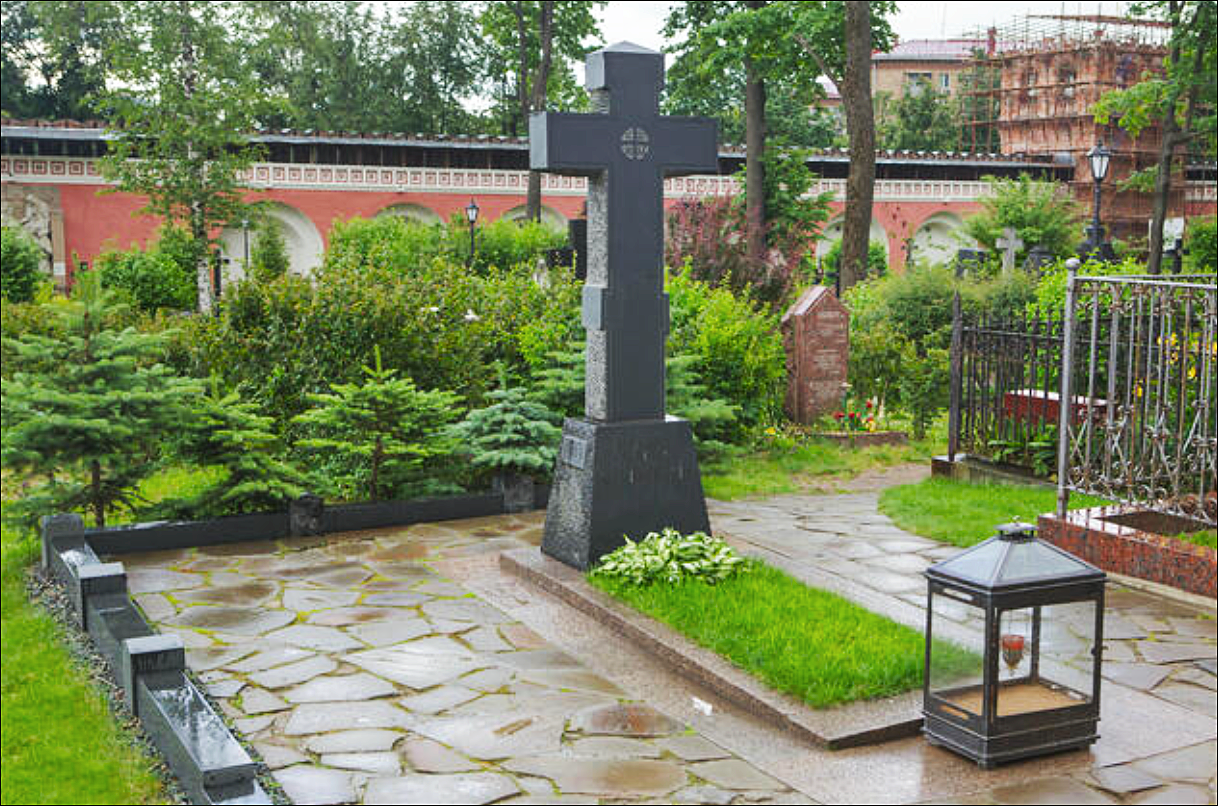
Solzhenitsyn died of heart failure near Moscow on 3 August 2008, at the age of 89. His burial service was held at the Donskoy Monastery in Moscow, on 6 August 2008. He was buried on the same day in the monastery, in a spot he himself had chosen.✪


















▶️ DONATE VIA PAYPAL (DEBIT & CREDIT CARD)
ALL PayPal Transactions Are Encrypted For Card Holder Privacy & Security
▶️ DONATE VIA ZELLE (DIRECT BANK CASH TRANSFER)
ZELLE is the perfect online alternative to PayPal. It’s an incredibly simple, secure, easy, fast and FREE way to send or receive money to recipients directly from your online banking account without a middleman. Best of all, there’s NO fees.
ZELLE is a service provided by your bank and is already built in to your online banking account. You only need to activate it first before using. If you’ve already activated ZELLE in your online bank or credit union account, you can donate to The New Americanist by using our ZELLE address:
vip@thenewamericanist.com
To activate your ZELLE, follow these easy instructions (a simple two minute process):

▶️ DONATE VIA SNAIL MAIL