
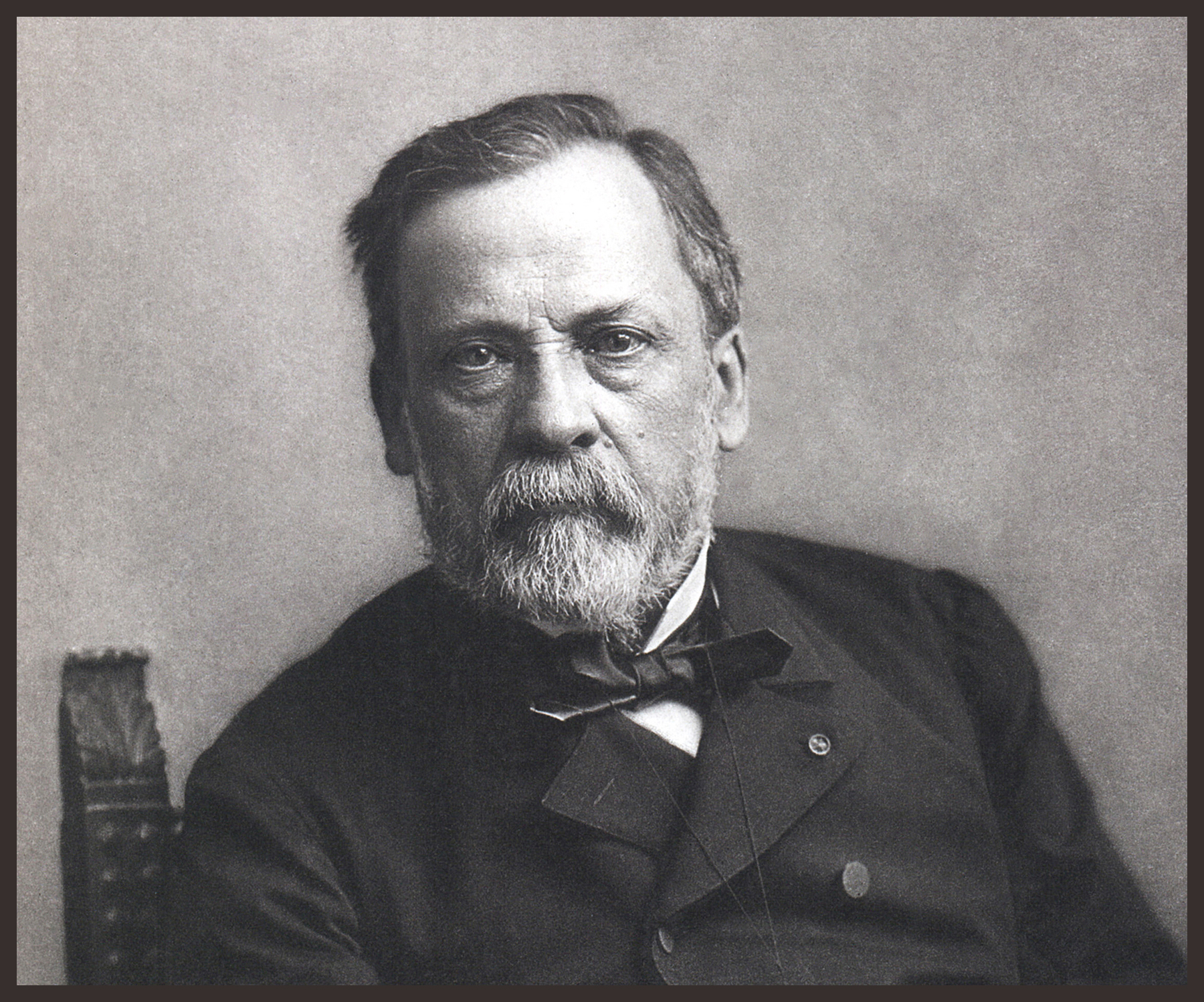

Louis Pasteur: December 27, 1822 – September 28, 1895
✪ Louis Pasteur was a French chemist, pharmacist, and microbiologist renowned for his discoveries of the principles of vaccination, microbial fermentation, and pasteurization; the last of which was named after him. His research in chemistry led to remarkable breakthroughs in the understanding of causes & preventions of diseases, which laid down the foundations of hygiene, public health and much of modern medicine. Pasteur’s works are credited with saving millions of lives through the development of vaccines for rabies and anthrax. He is regarded as one of the founders of modern bacteriology and has also been honored as the “father of bacteriology” and the “father of microbiology.”
Pasteur was also responsible for successfully disproving the doctrine of spontaneous generation. Under the auspices of the French Academy of Sciences, his experiment in sterilized and sealed flasks demonstrated nothing could ever develop or grow. Conversely, in sterilized but open flasks, microorganisms would eventually grow. For this experiment, the academy awarded him the Alhumbert Prize carrying 2,500 francs in 1862.
Pasteur is also regarded as one of the fathers of the germ theory of diseases; which was a minor medical concept at his time. His many experiments showed how diseases could be prevented by killing or stopping germs, thereby directly supporting the germ theory and its application in clinical medicine.
Pasteur is best known to the general public for his invention of the technique of treating milk and wine to stop bacterial contamination, a process now called pasteurization. Pasteur also made significant discoveries in chemistry, most notably on the molecular basis for the asymmetry of certain crystals. Early in his career, his investigation of sodium ammonium tartrate initiated the field of optical isomerism. This work would have a profound effect on modern structural chemistry, with eventual implications in many areas including medicinal chemistry.
Pasteur was the director of the Pasteur Institute, which he established in 1887. A position he held until his death. His body is currently interred in a vault beneath the Institute.
Louis Pasteur was born on 27 December 1822, in Dole, Jura, France, to a Catholic family of a poor tanner. He was the third child of Jean-Joseph Pasteur and Jeanne-Etiennette Roqui. His family moved to Marnoz in 1826 and then to Arbois in 1827. Pasteur entered primary school in 1831.
As a child, Pasteur was dyslexic and dysgraphic. He was at best an average student if not mediocre and not particularly academic. His childhood interests were fishing and sketching. He drew many pastels and portraits of his parents, friends and neighbors. Pasteur attended secondary school at the Collège d’Arbois. In October 1838, he left for Paris to enroll in a boarding school, but became homesick and returned home in November.
In 1839, he entered the Collège Royal at Besançon to study philosophy and earned his Bachelor of Letters degree there in 1840. He was appointed a tutor at the Besançon College while continuing a degree science course with special mathematics. He failed his first examination attempt in 1841. He managed to pass the baccalauréat scientifique (general science) degree from Dijon, where he earned his Bachelor of Science in Mathematics Degree (Bachelier ès Sciences Mathématiques) in 1842, but with a mediocre grade in chemistry.
Later in 1842, Pasteur took the entrance test for the École Normale Supérieure. During the test, he fought off fatigue and only felt comfortable with physics and mathematics. He passed the first set of tests, however, because his ranking was low, Pasteur decided not to continue and wait to try again next year.
In 1843, he finally passed the test with a high ranking and entered the École Normale Supérieure. In 1845 he received the licencié ès sciences degree. In 1846, he was appointed professor of physics at the Collège de Tournon in Ardèche. However, the chemist Antoine Jérôme Balard wanted him to come back to the École Normale Supérieure as a graduate laboratory assistant. He joined Balard and simultaneously started his research in crystallography. In 1847, he submitted his two theses, one in chemistry and the other in physics.
After serving briefly as professor of physics at the Dijon Lycée in 1848, Pasteur became a professor of chemistry at the University of Strasbourg, where he met and courted Marie Laurent, daughter of the university’s rector. They were married on 29 May 1849 and together had five children; only two of whom survived to adulthood. The other three died of typhoid.
Pasteur was appointed professor of chemistry at the University of Strasbourg in 1848, and became the chair of chemistry in 1852.
In this same year 1854, he was named dean of the new faculty of sciences at University of Lille, where he began his studies on fermentation. It was on this occasion that Pasteur uttered his oft-quoted remark: “dans les champs de l’observation, le hasard ne favorise que les esprits préparés” (“In the field of observation, chance favors only the prepared mind”).
In 1857, he moved to Paris to become the director of scientific studies at the École Normale Supérieure where he took control from 1858 to 1867 and introduced a series of reforms to improve the standard of scientific work. The examinations became more rigid, which led to better results, greater competition, and increased prestige. Many of his decrees, however, were rigid and authoritarian, leading to two serious student revolts. During “the bean revolt” he decreed that a mutton stew, which students had refused to eat, would be served and eaten every Monday. On another occasion he threatened to expel any student caught smoking, and 73 of the 80 students in the school immediately resigned.
In 1863, he was appointed professor of geology, physics, and chemistry at the École nationale supérieure des Beaux-Arts, a position he held until his resignation in 1867. In 1867, he became the chair of organic chemistry at the Sorbonne, but he later gave up the position because of poor health. In 1867, the École Normale’s laboratory of physiological chemistry was created at Pasteur’s request, and he was the laboratory’s director from 1867 to 1888. In Paris, he established the Pasteur Institute in 1887 and served as its director for the remainder of his life.
In Pasteur’s early work as a chemist, beginning at the École Normale Supérieure, and continuing at Strasbourg and Lille, he examined the chemical, optical and crystallographic properties of a group of compounds known as tartrates. Some historians consider Pasteur’s work in this area to be his “most profound and most original contributions to science,” and his “greatest scientific discovery.”
While working at Lille, Pasteur became motivated to investigate fermentation. In 1856 a local wine manufacturer, M. Bigot, whose son was one of Pasteur’s students, sought for his advice on the problems of making beetroot alcohol and souring. Pasteur began his research in the topic by repeating and confirming works of Theodor Schwann, who demonstrated a decade earlier that yeast were living organisms.
Pasteur’s research also showed the growth of micro-organisms was predominantly responsible for the spoiling of beverages, such as beer, wine and milk. With this established, he invented a process in which liquids such as milk were heated to a temperature between 60 and 100 °C. This process killed most of the bacteria and moulds already present within them. Pasteur patented the process, to fight the “diseases” of wine, in 1865. The method became known as pasteurization, and was soon applied to beer and milk.
Beverage contamination led Pasteur to the idea micro-organisms infecting animals and humans could be the cause of disease. He proposed procedures to prevent the entry of micro-organisms into the human body, leading Joseph Lister to develop antiseptic methods in surgery
Following his fermentation experiments, Pasteur demonstrated the skin of grapes was the natural source of yeasts; and sterilized grapes and grape juice could never ferment. He drew grape juice from under the skin with sterilized needles, and also covered grapes with sterilized cloth. Both experiments failed to produce wine when kept in sterilized containers.
His findings and ideas were against the current prevailing notion of spontaneous generation. To settle the debate between the eminent scientists, the French Academy of Sciences offered the Alhumbert Prize carrying 2,500 francs to whoever could experimentally demonstrate for or against the doctrine.
Pasteur performed several experiments to disprove spontaneous generation. He placed boiled liquid in a flask and let hot air enter the flask. Then he closed the flask, and no organisms grew in it. In another experiment, when he opened flasks containing boiled liquid, dust entered the flasks, causing organisms to grow in some of them. The number of flasks in which organisms grew was lower at higher altitudes, demonstrating the air at high altitudes contained less dust and fewer organisms. This showed the living organisms which grew in such broths originated from outside, rather than spontaneously generating within the liquid or from the action of pure air.
These were some of the most important experiments disproving the theory of spontaneous generation. Pasteur won the Alhumbert Prize in 1862. He concluded:
Never will the doctrine of spontaneous generation recover from the mortal blow of this simple experiment. There is no known circumstance in which it can be confirmed that microscopic beings came into the world without germs, without parents similar to themselves.
Pasteur’s first work on vaccine development was on chicken cholera. He received the bacteria samples (later called Pasteurella multocida after him) from Henry Toussaint. Being unable to conduct the experiments himself due to a stroke in 1868, Pasteur relied heavily on his assistants Emile Roux and Charles Chamberland. The work with chicken cholera was initiated in 1877; and by the next year, Roux was able to maintain a stable culture using broths. As documented later by Pasteur in his notebook in March 1880, in October 1879, being delayed in returning to the laboratory due to his daughter’s wedding and ill health, he instructed Roux to start a new chicken cholera culture using bacteria from a culture that had sat since July. The two chickens inoculated with this new culture showed some symptoms of infection, but instead of the infections being fatal, as they usually were, the chickens recovered completely.
Pasteur introduced the term “attenuation” for this weakening of virulence as he presented before the academy, saying:
We can diminish the microbe’s virulence by changing the mode of culturing. This is the crucial point of my subject. I ask the Academy not to criticize, for the time being, the confidence of my proceedings that permit me to determine the microbe’s attenuation, in order to save the independence of my studies and to better assure their progress… [In conclusion] I would like to point out to the Academy two main consequences to the facts presented: the hope to culture all microbes and to find a vaccine for all infectious diseases that have repeatedly afflicted humanity, and are a major burden on agriculture and breeding of domestic animals.
Following the results with chicken cholera, Pasteur eventually utilized the immunization method developed for chicken cholera to create a vaccine for anthrax, which affected cattle. When animals were infected with the bacteria, anthrax occurred, proving that the bacteria was the cause of the disease.
Many cattle were dying of anthrax in “cursed fields.” Pasteur was told that sheep that died from anthrax were buried in the field. Pasteur thought that earthworms might have brought the bacteria to the surface. He found anthrax bacteria in earthworms’ excrement, showing that he was correct. He told the farmers not to bury dead animals in the fields.
The notion of a weak form of a disease causing immunity to the virulent version was not new; this had been known for a long time for smallpox. Inoculation with smallpox (variolation) was known to result in a much less severe disease, and greatly reduced mortality, in comparison with the naturally acquired disease.Edward Jenner also studied vaccination using cowpox (vaccinia) to give cross-immunity to smallpox in the late 1790s. By the early 1800s, vaccination had spread to most of Europe.
Pasteur’s laboratory also produced the first vaccine for rabies using a method developed by his assistant Roux, which involved growing the virus in rabbits, and then weakening it by drying the affected nerve tissue.
The vaccine was tested in 50 dogs before its first human trial. This vaccine was first used on 9-year-old Joseph Meister, on 6 July 1885, after the boy was badly mauled by a rabid dog. This was done at some personal risk for Pasteur, since he was not a licensed physician and could have faced prosecution for treating the boy. After consulting with physicians, he decided to go ahead with the treatment. Over 11 days, Meister received 13 inoculations, each inoculation using viruses that had been weakened for a shorter period of time. Three months later when he examined Meister, he found he was in good health. Pasteur was hailed as a hero and no legal matters were ever pursued.
Pasteur next began treatment of Jean-Baptiste Jupille for rabies on 20 October 1885, and the treatment was successful. Later in 1885, people, including four children from the United States, went to Pasteur’s laboratory to be inoculated. In 1886, he treated 350 people, of which only one developed rabies. The treatment’s success laid the foundations for the manufacture of many other vaccines. The first of the Pasteur Institutes was also built on the basis of this achievement.
In The Story of San Michele, Axel Munthe writes of some risks Pasteur undertook in the rabies vaccine research:
Pasteur himself was absolutely fearless. Anxious to secure a sample of saliva straight from the jaws of a rabid dog, I once saw him with the glass tube held between his lips draw a few drops of the deadly saliva from the mouth of a rabid bull-dog, held on the table by two assistants, their hands protected by leather gloves.
Because of his study in germs, Pasteur encouraged doctors to sanitize their hands and equipment before surgery. Prior to this, few doctors or their assistants practiced such procedures.
A French national hero at age 55, in 1878 Pasteur discreetly told his family to never reveal his laboratory notebooks to anyone. His family obeyed, and all his documents were held and inherited in secrecy. Being that Pasteur did not allow others in his laboratory to keep notebooks, this secrecy kept many aspects of Pasteur’s research unknown until relatively recently. Finally, in 1964 Pasteur’s grandson and last surviving male descendant, Pasteur Vallery-Radot, donated the papers to the French National Library. Yet the papers were restricted for historical studies until the death of Vallery-Radot in 1971. The documents were given a catalogue number only in 1985.
Pasteur’s grandson, Louis Pasteur Vallery-Radot, wrote Pasteur had kept from his Catholic background only a spiritualism without religious practice. However, Catholic observers often said that Pasteur remained an ardent Christian throughout his whole life, and his son-in-law wrote, in a biography of him:
Absolute faith in God and in Eternity, and a conviction that the power for good given to us in this world will be continued beyond it, were feelings which pervaded his whole life; the virtues of the gospel had ever been present to him. Full of respect for the form of religion which had been that of his forefathers, he came simply to it and naturally for spiritual help in these last weeks of his life.
The Literary Digest of 18 October 1902 gives this statement from Pasteur that he prayed while he worked:
Posterity will one day laugh at the foolishness of modern materialistic philosophers. The more I study nature, the more I stand amazed at the work of the Creator. I pray while I am engaged at my work in the laboratory.
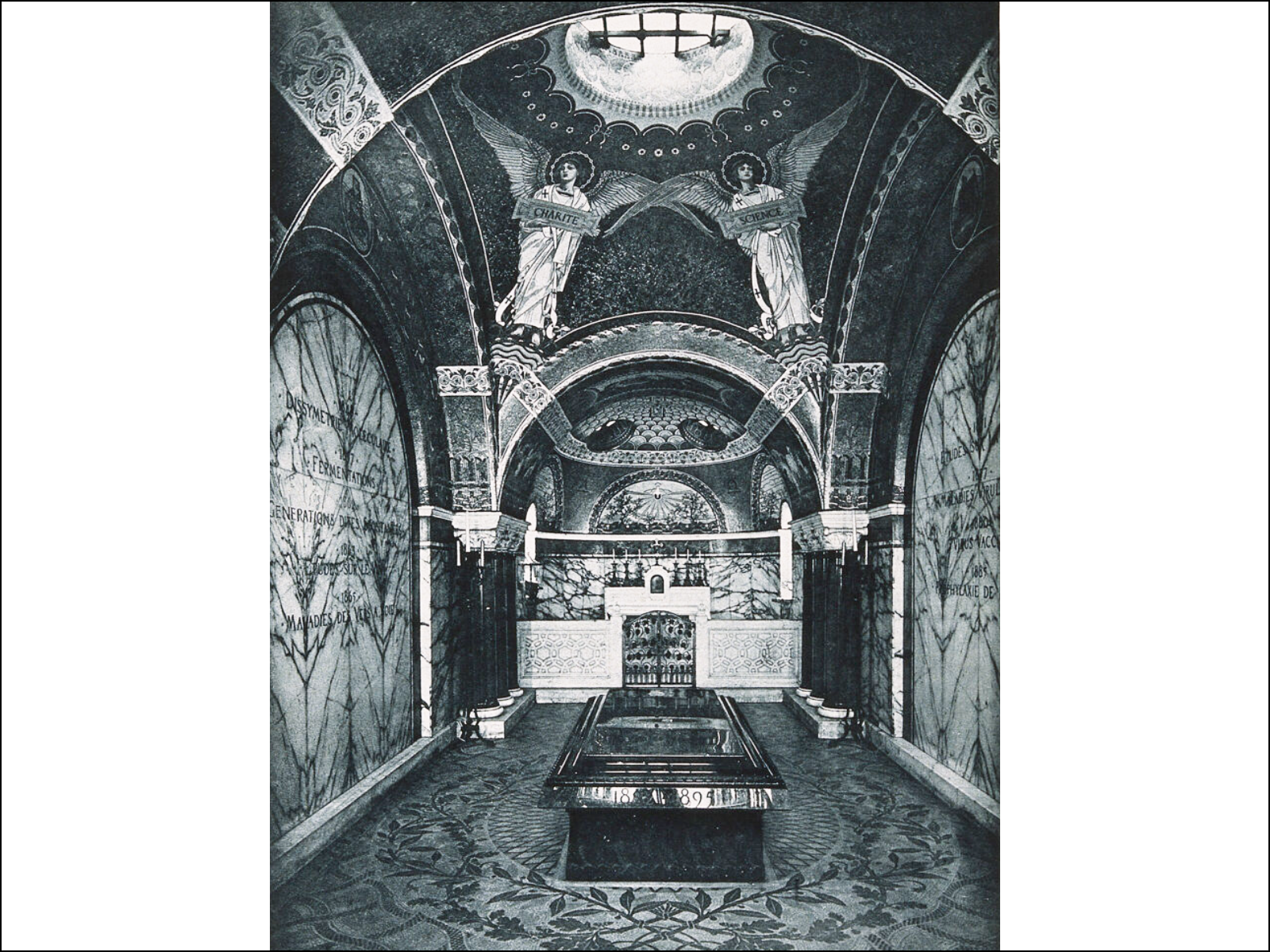
In 1868, Pasteur suffered a severe stroke which paralyzed the left side of his body, however, he recovered. Another stroke or uremia in 1894 severely impaired his health. Failing to fully recover, he died on September 28, 1895, near Paris. He was given a state funeral and was originally buried in the Cathedral of Notre Dame, but his remains were reinterred in the Pasteur Institute in Paris, in a vault covered in depictions of his accomplishments in Byzantine mosaics. ✪


















▶️ ◼️◼️◼️◼️◼️◼️◼️◼️◼️ ✪✪✪ DONATE ✪✪✪ ◼️◼️◼️◼️◼️◼️◼️◼️◼️◼️

▶️ DONATE VIA PAYPAL (DEBIT & CREDIT CARD)
ALL PayPal Transactions Are Encrypted For Card Holder Privacy & Security
▶️ DONATE VIA ZELLE (DIRECT BANK CASH TRANSFER)
ZELLE is the perfect online alternative to PayPal. It’s an incredibly simple, secure, easy, fast and FREE way to send or receive money to recipients directly from your online banking account without a middleman. Best of all, there are NO fees.
ZELLE is a service provided by your bank and is already built in to your online banking account. You only need to activate it first before using. If you’ve already activated ZELLE in your online bank or credit union account, you can donate to The New Americanist by using our ZELLE address:
vip@thenewamericanist.com
To activate your ZELLE, follow these easy instructions (a simple two minute process):

▶️ DONATE VIA SNAIL MAIL