


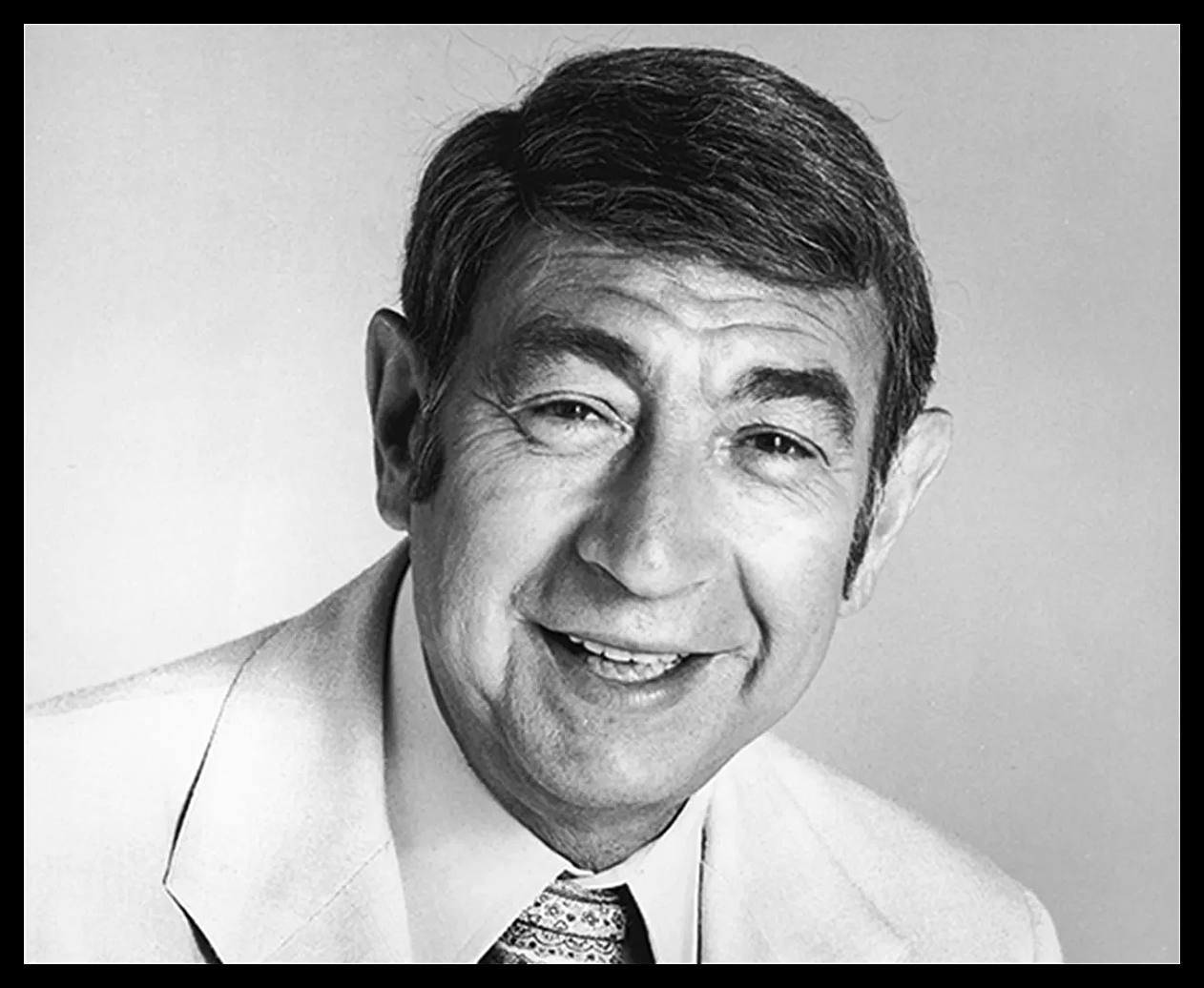

Howard William Cohen: March 25, 1918 – April 23, 1995
✪ Howard William Cohen (widely know by his professional name Howard Cosell) was an American sports journalist, broadcaster and author. Cosell became prominent and influential during his tenure with ABC Sports from 1953 until 1985.
Cosell was widely known for his blustery, confident personality. Cosell said of himself, “I’ve been called arrogant, pompous, obnoxious, vain, cruel, verbose, a showoff. And, of course, I am.” Cosell was sardonically nicknamed “Humble Howard” by fans and his media critics. In its obituary for Cosell, The New York Times described Cosell’s effect on American sports coverage:
“He entered sports broadcasting in the mid-1950s, when the predominant style was unabashed adulation, [and] offered a brassy counterpoint that was first ridiculed, then copied until it became the dominant note of sports broadcasting. In 1993.”
TV Guide named Howard Cosell the all-time best sportscaster.
Cosell was born in Winston-Salem, North Carolina to accountant Isidore Cohen and his wife Nellie Cohen (née Rosenthal). His parents were Jewish. The grandson of a rabbi, Cosell was raised in Brooklyn, New York City.
The name of Cosell’s grandfather was changed when he entered the United States; Howard Cosell said he changed his name from “Cohen” to “Cosell” while he was a law student as a way to honor his father and grandfather by reverting to a version of his family’s original Polish name. He attended New York University School of Law and was admitted to the Bar in 1939.
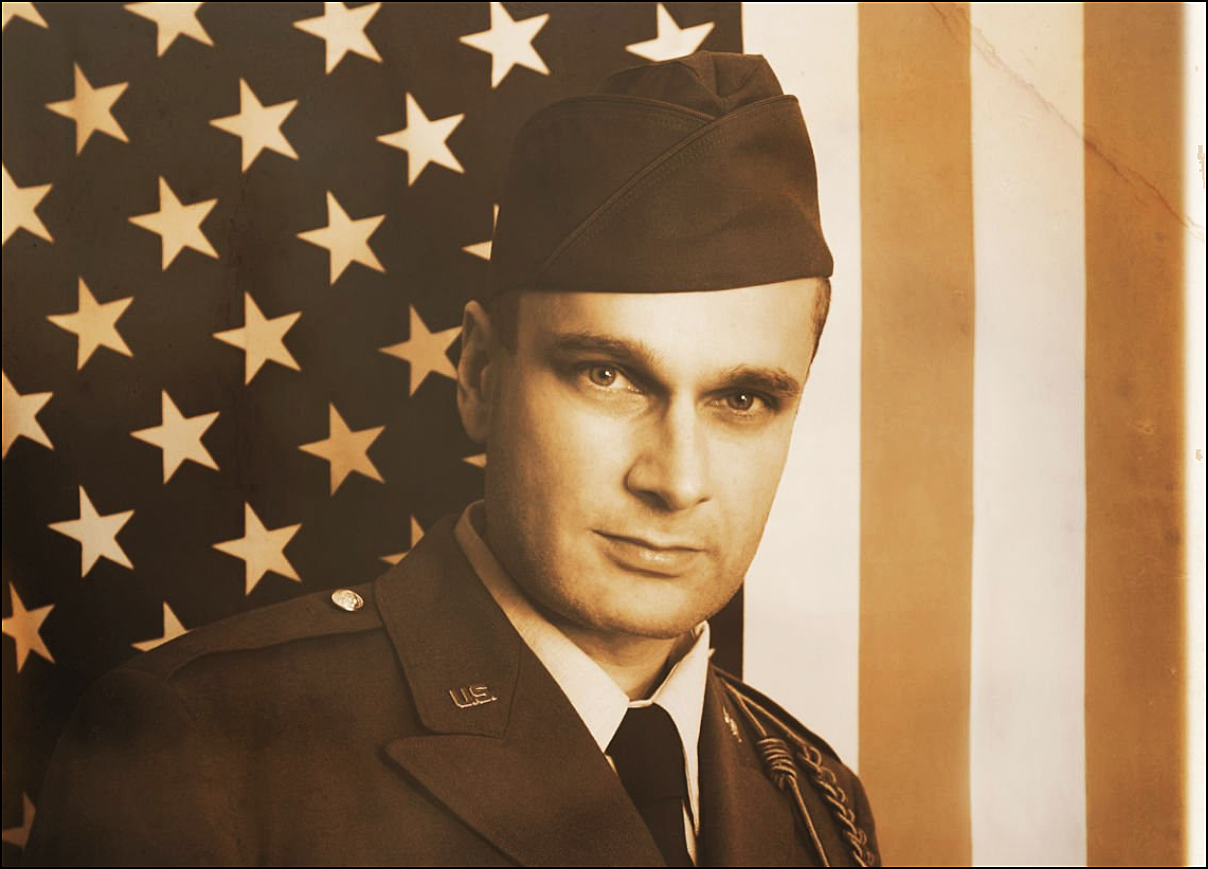
Cosell in 1942
During World War II, Cosell served in the Army Transportation Corps from 1942 to 1945 and was honorably discharged with the rank of major.
In the early 1950s, Cosell began his media career with a sports radio show he would record early in the mornings. Ned Garver recalled doing an interview with Cosell in 1951. Cosell told Garver the sponsor of his show did not provide any gifts to the guests on the show; but Garver later learned there were actually many sponsor gifts and Cosell kept them for himself.
Cosell represented the Little League of New York, when in 1953, Hal Neal (president ABC Radio), then an ABC Radio manager, asked him to host a show on the ABS New York flagship station WABC featuring Little League participants. The show marked the beginning of a relationship with WABC and ABC Radio which would last his entire broadcasting career. Cosell hosted the Little League show for three years without pay before deciding to leave law to become a full-time sports broadcaster.
Cosell developed his famous “tell it like it is” approach when he teamed with the ex–Brooklyn Dodgers pitcher “Big Numba Thirteen” Ralph Branca on WABC’s pre- and post-game radio shows of the New York Mets in their nascent years beginning in 1962. Cosell pulled no punches in taking members of the hapless expansion team to task.
In addition, Cosell did his radio show, Speaking of Sports, as well as sports reports and updates for affiliated radio stations around the country. He continued his radio duties even after he became a prominent figure on television. Cosell then became a sports anchor at WABC-TV in New York, where he served in that role from 1961 to 1974. He expanded his commentary beyond sports to a radio show, Speaking of Everything.
Cosell rose to prominence in the early 1960s, covering boxer Muhammad Ali, beginning from the time he fought under his birth name, Cassius Clay. The two seemed to have an affinity despite their different personalities, and complemented each other in broadcasts. Cosell was one of the first sportscasters to refer to him as Muhammad Ali after he changed his name; and supported him when he refused to be inducted into the military.
Cosell earned his greatest interest from the public when he backed Ali after his heavyweight title was stripped from him for refusing military service during the Vietnam War. Cosell found vindication several years later when he was able to inform Ali that the United States Supreme Court had unanimously ruled in favor of Ali in Clay v. United States.
Perhaps Cosell’s most famous call took place in early 1973 at the fight between heavyweight champion Joe Frazier and top challenger George Foreman in Kingston, Jamaica. When Foreman knocked Frazier to the mat the first of six times, roughly two minutes into the first round, Cosell yelled out: Down goes Frazier! Down goes Frazier! Down goes Frazier!
His call of Frazier’s first trip to the mat became one of the most quoted phrases in American sports broadcasting history. Foreman beat Frazier in that fight by a TKO in the second round to win the World Heavyweight Championship.
Cosell’s signature toupee was once unceremoniously knocked off on national live television when a scuffle broke out after a broadcast match between Scott LeDoux and Johnny Boudreaux. Cosell quickly retrieved his hairpiece and replaced it. During later interviews in studio with Ali, the champion would tease and threaten to remove the hairpiece with Cosell playing along but never allowing it to be touched.
Ali would frequently refer to Cosell’s hairpiece as a squirrel, rabbit or other wild animal. On one of these occasions, Ali quipped, “Cosell, you’re a phony, and that thing on your head comes from the tail of a pony.”
Cosell also was an ABC commentator for the television broadcast of the second of the two famous 1973 “Battles of the Sexes” tennis matches, between Bobby Riggs and Billie Jean King.
In a time when many sports broadcasters avoided touching social, racial, or other controversial issues, and kept a certain level of collegiality towards the sports figures they commented on, Cosell did not; and indeed built a presence and reputation around his catchphrase, “I’m just telling it like it is.”
Cosell’s style of reporting transformed sports broadcasting in the United States. Whereas previous sportscasters had mostly been known for color commentary and lively play-by-play, Cosell took a more an intellectual approach. The use of his analysis and context brought television sports reporting closer to “hard” news reporting. However, his distinctive staccato voice, accent, syntax, and cadence were a unique form of color commentary all their own.
During Cosell’s tenure as a sportscaster, he would frequently clash with longtime New York Daily News sports columnist Dick Young, who rarely missed an opportunity to denigrate the broadcaster in print as an “ass,” a “shill,” or most often, “Howie the Fraud.” Young would sometimes stand near Cosell and shout profanities so that the audio he was taping for his radio show would be unusable.
Writing about Cosell, sportswriter Jimmy Cannon sniped, “This is a guy who changed his name, put on a toupee and tried to convince the world that he tells it like it is.” He further added, “If Howard Cosell were a sport, he’d be roller derby.”
In 1970, ABC executive producer for sports Roone Arledge hired Cosell to be a commentator for Monday Night Football (MNF), the first time in 15 years American football was broadcast weekly in prime time. Cosell was accompanied most of the time by ex-football players Frank Gifford and “Dandy” Don Meredith.
Cosell was openly contemptuous of ex-athletes appointed to prominent sportscasting roles solely on account of their playing fame. He regularly clashed on-air with Meredith, whose laid-back style was in sharp contrast to Cosell’s more critical approach to the games.
▶️ 1 Minute 42 Seconds
However, the Cosell-Meredith-Gifford dynamic helped make Monday Night Football a huge success; it frequently was the number one rated program in the weekly Nielsen ratings. The inimitable style of the group (mostly with Cosell, both loved and hated by the public) distinguished Monday Night Football as a distinct spectacle, and ushered in an era of more colorful broadcasters and 24/7 TV sports coverage. Cosell has been credited for popularizing the term “nachos” during his time in the MNF booth.
During the first half of the September 5, 1983, Monday Night Football game between the Dallas Cowboys and Washington Redskins, Cosell’s commentary on wide receiver Alvin Garrett included “That little monkey gets loose doesn’t he?” Cosell’s references to Garrett as a “little monkey,” ignited a racial controversy that laid the groundwork for Cosell’s eventual departure from MNF. Despite supportive statements by Jesse Jackson, Muhammad Ali, and Alvin Garrett himself, the fallout contributed to Cosell’s decision to leave Monday Night Football following the 1983 season.
Along with Monday Night Football, Cosell worked the Olympics for ABC. He played a key role on ABC’s coverage of the Palestinian terror group Black September’s mass murder of Israeli athletes in Munich at the 1972 Summer Olympics; providing on air reports directly from the Olympic Village.
Cosell is also widely attributed with saying the famous phrase “the Bronx is burning.” Cosell is credited with saying this during Game 2 of the 1977 World Series, which took place in Yankee Stadium on October 12, 1977. For a couple of years, fires had routinely erupted in the South Bronx, mostly because owners of low-value properties would burn their own real estate for insurance money. During the bottom of the first inning, an ABC aerial camera panned a few blocks from Yankee Stadium to a building on fire. The scene became a defining image of New York City in the 1970s. Cosell supposedly stated, “There it is, ladies and gentlemen. The Bronx is burning.” This phrase was later picked up by Republican presidential candidate Ronald Reagan, who then made a special trip to the Bronx, to illustrate the failures of politicians to address the issues in that part of New York City.
On the night of December 8, 1980, during a Monday Night Football game between the Miami Dolphins and the New England Patriots, Cosell shocked the television world by interrupting his regular commentary duties to deliver a news bulletin on the murder of John Lennon in the midst of a live broadcast. Word had been passed to Cosell and Frank Gifford by Roone Arledge, who was president of ABC’s news and sports divisions at the time, near the end of the game.
▶️ 2 Minutes 21 Seconds
Cosell was initially apprehensive about announcing Lennon’s death. On air, Gifford prefaced the announcement saying, “And I don’t care what’s on the line, Howard, you have got to say what we know in the booth.” Cosell then replied:
Yes, we have to say it. Remember this is just a football game, no matter who wins or loses. An unspeakable tragedy confirmed to us by ABC News in New York City: John Lennon, outside of his apartment building on the West Side of New York City—the most famous, perhaps, of all of the Beatles—shot twice in the back, rushed to Roosevelt Hospital, dead on arrival. Hard to go back to the game after that newsflash, which, in duty bound, we have to take.
Lennon had been shot four times and had not been pronounced dead on arrival, but the facts of the shooting were not clear at the time of the announcement. Lennon once appeared on Monday Night Football, during the December 9, 1974, telecast of a 23–17 Washington Redskins win over the Los Angeles Rams, and was interviewed for a short breakaway segment by Cosell.
In the Fall of 1981, Cosell debuted a serious investigative 30-minute magazine show, ABC SportsBeat on ABC’s weekend schedule. He made news and covered topics that were not part of general sports coverage; including the first story about drugs in professional sports, an in-depth look at how NFL owners negotiated tax breaks and incentives for building new stadiums, and together with Arthur Ashe, an investigation into apartheid and sports.Though the show’s ratings were low, it still earned Cosell and his staff three Emmy Awards for excellence in reporting, and broke new ground in sports journalism.
In his 1985 autobiography, Cosell reflected on his highly diverse work, and concluded that the SportsBeat series had been his favorite.
Cosell’s national fame was further boosted in fall 1975 when Saturday Night Live with Howard Cosell aired on Saturday evenings on ABC. This was an hour-long variety show, broadcast live from the Ed Sullivan Theater in New York City and hosted by Cosell; which is not to be confused with the NBC series Saturday Night Live, which premiered in the same year.
Cosell’s show was canceled after three months; the NBC show was officially renamed Saturday Night Live for the succeeding season and has retained the name ever since. Cosell later hosted the 1984–85 season finale of Saturday Night Live.
Beginning in 1976, Cosell hosted a long-running series of specials known as Battle of the Network Stars. The two-hour specials pitted celebrities from each of the three broadcast networks against each other in various athletic competitions, including relay races, swimming relays, tug of war, an obstacle course, and a dunk tank. Some of the specials also featured other events, such as golf, kayak racing, three-on-three touch football, or Frisbee. Cosell conducted short interviews with the participants between events, and was seen laughing, joking, and clearly enjoying himself throughout each show.
In his later years, Cosell briefly hosted his own television talk show, Speaking of Everything, authored his last book (What’s Wrong With Sports), and continued to appear on radio and television, becoming more outspoken about his criticisms of sports in general.
In 1993, Cosell was inducted into the International Jewish Sports Hall of Fame. A year later, in 1994, he was inducted into the Television Hall of Fame. He was also the 1995 recipient of the Arthur Ashe Courage Award. After his wife of 46 years, Mary Edith Abrams Cosell (known as “Emmy”) died from a heart attack in 1990, Cosell largely withdrew from the public eye and his health began failing. A longtime smoker, he was diagnosed with lung cancer in 1991, and had surgery to remove a cancerous tumor in his chest. He also had several minor strokes, and was diagnosed with heart disease, kidney disease and Parkinson’s.

Cosell died at the Hospital for Joint Diseases in Manhattan on April 23, 1995, of a cardiac embolism at the age of 77. He is buried at the Westhampton Municipal Cemetery, Westhampton, New York. ✪

















▶️ ◼️◼️◼️◼️◼️◼️◼️◼️◼️ ✪✪✪ DONATE ✪✪✪ ◼️◼️◼️◼️◼️◼️◼️◼️◼️◼️
▶️ DONATE VIA PAYPAL (DEBIT & CREDIT CARD)
ALL PayPal Transactions Are Encrypted For Card Holder Privacy & Security
▶️ DONATE VIA ZELLE (DIRECT BANK CASH TRANSFER)
ZELLE is the perfect online alternative to PayPal. It’s an incredibly simple, secure, easy, fast and FREE way to send or receive money to recipients directly from your online banking account without a middleman. Best of all, there are NO fees.
ZELLE is a service provided by your bank and is already built in to your online banking account. You only need to activate it first before using. If you’ve already activated ZELLE in your online bank or credit union account, you can donate to The New Americanist by using our ZELLE address:
vip@thenewamericanist.com
To activate your ZELLE, follow these easy instructions (a simple two minute process):

▶️ DONATE VIA SNAIL MAIL





▶️ CLICK HERE TO VIEW
▶️ 1 Hour 17 Minutes 54 Seconds
▶️ 37 Minutes 8 Seconds
▶️ 18 Minutes 9 Seconds
▶️ 1 Hour 37 Minutes 1 Second
▶️ 30 Minutes 15 Seconds
▶️ 1Hour 28 Minutes 48 Seconds
▶️ 14 Minutes 4 Seconds
▶️ 13 Minutes 2 Seconds
▶️ 12 Minutes47 Seconds
▶️ 12 Minutes
▶️ 11 Minutes 28 Seconds
▶️ 1 Hour 13 Minutes 14 Seconds
▶️ 39 Minutes 32 Seconds
▶️ 20 Minutes 18 Seconds
▶️ 17 Minutes 12 Seconds
▶️ 12 Minutes 54 Seconds
▶️ 19 Minutes 40 Seconds
▶️ 26 Minutes 59 Seconds
⭐️ 18 Minutes 58 Seconds
▶️ 29 Minutes 7 Seconds
▶️ 9 Minutes 48 Seconds
▶️ 11 Minutes 21 Seconds
▶️ 13 Minutes 29 Seconds
▶️ 30 Minutes 26 Seconds
▶️ 14 Minutes 51 Seconds
▶️ 13 Minutes 58 Seconds
▶️ 18 Minutes 24 Seconds
▶️ 24 Minutes 1 Second
▶️ 24 Minutes 40 Seconds
▶️ 10 Minutes 36 Second
