




▶️ VIRGINIA SUCCUMBS TO TYRANTS
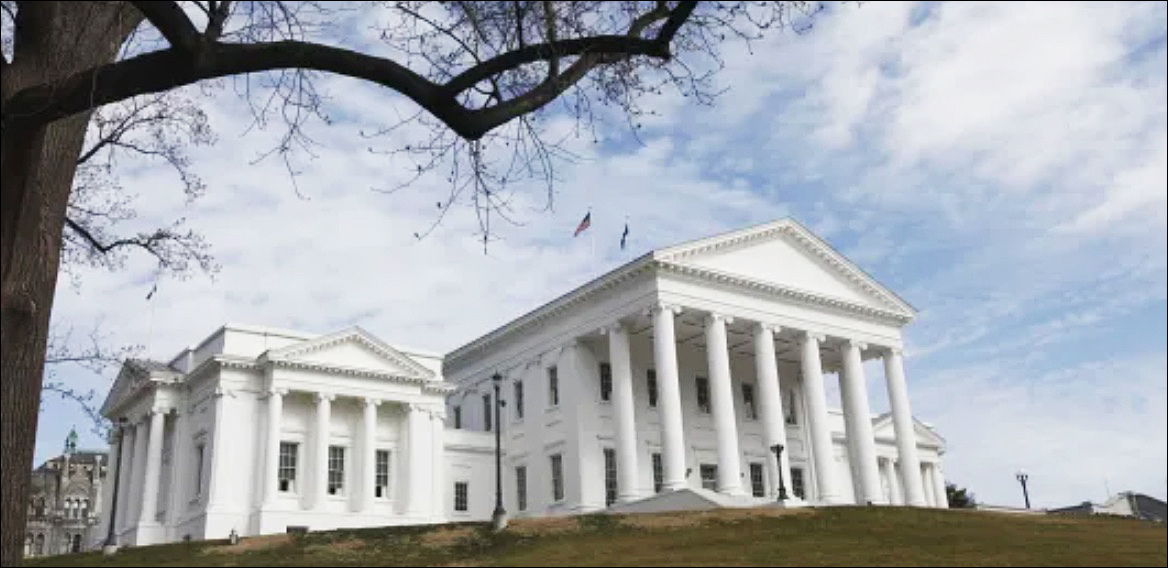
VIRGINIA SUCCUMBS TO TYRANTS

lll
s Virginia falls under one-party Democrat rule and pushes an extreme gerrymander, the Old Dominion’s constitutional order faces its sharpest test in a generation. The motto of Virginia, the Mother of Presidents, one of our founding colonies, and the birthplace of American Republicanism, is Sic Semper Tyrannis (Thus Always to Tyrants), with Lady Liberty standing over one of them in the state coat of arms.
The Commonwealth initially resisted the genius of the Constitutional Convention of 1787. The republican gentry were not keen on swapping a tyrannical king for a tyrannical Federal Government. Virginia became the main battleground for the American Civil War. Virginia served as a major heartbeat for the United States of America, since many of the politicians serving in Congress have their second homes in the Old Dominion.
The last time the state went Republican during a presidential election, Bush won the state 53–47. It’s a Southern state, and one would think Republicans would dominate, but the problems were already breaking out. Bush expanded the surveillance state, then increased the federal bureaucracy with No Child Left Behind, the Department of Homeland Security, and massive spending. Northern Virginia took in more swamp creatures, shifting the state blue in 2008 with no turning back.
Democrats kept chipping away at the once-Republican stronghold: two Democrat US senators, then the executive branches, electing Democrat governors in 2013 and 2017. Virginia was the only state in the South with a Democrat trifecta in 2019, despite Governor Ralph Northam’s abortion depredations and blackface scandal, as well as scandals from the lieutenant governor and the attorney general.
In 2021, Glenn Youngkin turned things around. He, with his Republican executive colleagues, reversed Democrat tyranny and brought some order back to the Commonwealth, cutting the taxes, revoking the DEI madness, and ending the violation of parental rights.
However last year, those four years became a blip on a blue radar. Lieutenant Governor Winsome Sears lost bigly as candidate for governor, throwing away President Trump while uselessly bashing Abigail Spanberger repeatedly over the hateful texts from her attorney general candidate Jay Jones.
Spanberger refused to distance herself from that thug, knowing full well that she could play the long game in an anti-Trump election year. She campaigned on removing ICE from cooperative agreements with state and local law enforcement, but otherwise, she talked a moderate game compared to the craziness of the Biden–Harris Administration.
The VAGOP’s weakened reelection efforts failed. Sears could complain all she wanted, but she lost touch with the parent revolution momentum that had brought her Republican colleagues to power in 2021. Combined with the anti-Trump backlash from the government employees on furlough or fired from the Trump Administration of Washington, DC, Virginia Democrats notched a landslide in 2025, winning a record 64 seats in the House of Delegates while still holding a one-seat majority in the state Senate.
Today, the Commonwealth of Virginia is sickly simping for tyrants, with Democrats dominating all three constitutional offices and the General Assembly. Virginia has been Colorado-ed, or Californicated, since the national Democrat machinations and investments have flipped the state in their column, perhaps for good. Democrats have absolute power, and they are using it absolutely, a perverse template for what national Democrats will do once they regain power in Washington.
Governor Spanberger has repealed the previous governor’s order requiring state law enforcement to work with ICE.
Democrats are raising taxes on everything.
Democrats are gutting gun rights left and right.
Democrats are putting the “rights” of criminals ahead of law-abiding citizens.
The legislature just voted to turn over its electoral votes to the popular vote winner in the next presidential election!
Elections have consequences, and the Democrat DC Swamp has swamped Virginia with a radical left-wing onslaught for the foreseeable future. With the trends in other states over the last decade, it looks as though the Virginia Republican Party has lost its chance to retake power for at least a generation, a (hopefully) similar fate to the Democrats in Florida.
There is a special sorrow to this horrific anti-GOP blowout. The Democrat Party has all but embraced communism and anti-Americanism as its credo, and now they hold all the cards. What’s going to happen to the Jamestown settlements? Monticello? Mount Vernon? I fear for the history of our country. Liberal elements already took down and melted the statue of Robert E. Lee. What’s next?
And the Virginia Democrat tyranny just pushed their latest power grab: gerrymandering. The legislature pushed through this reform, ignoring all constitutional restraints, and put a vote to the people on whether they wanted to transform the current congressional delegation—six Democrats and five Republicans—into a 10-to-1 map favoring Democrats.
This brazen gerrymandering push passed by a bare 1 percent. Virginia voted 52–47 for Kamala Harris, a pretty close vote, and the Democrat presidential nominee has never gotten 55 percent of the vote. How is it fair, just, or democratic to disenfranchise 50 percent of the population in the congressional delegation?
This is not democracy at all. The Democrat Party is in full-on tyrant mode, and they want to ensure that Republicans never forget it.
There is hope, though. A Tazewell County trial judge just struck down the new maps and permanently barred their use. He cited four fundamental constitutional problems with the maps:
- The Virginia General Assembly passed the initiative during a special session, when the legislature can only pass legislation explicitly ordered by the governor. The legislature did not have the authority to pass the gerrymandering initiative.
- The legislature cannot initiate a voter-approved change to the state constitution without passing the reform in two sessions, and the second passage must take place after an election has intervened.
- The referendum vote took place too soon. Those elections must wait 90 days after passage in the General Assembly.
- The ballot question itself was misleading, violating the state’s “plain English rule.”
Here’s the question: “Should the Constitution of Virginia be amended to allow the General Assembly to temporarily adopt new congressional districts to restore fairness in the upcoming elections, while ensuring Virginia’s standard redistricting process resumes for all future redistricting after the 2030 census?”
There is no restoring fairness when nearly half the electorate gets disenfranchised! There is no need to restore fairness to the redistricting process, strictly speaking, since Virginia voters empowered a bipartisan commission to prepare the congressional maps in 2020! They were already fair!
Will the lawsuit stand? Murderous AG Jay Jones has filed an appeal, and the legal challenges are sound. The Virginia Supreme Court initially declined to halt the initiative because it wanted the voters to decide on the matter. The state supreme court should have stopped it since the whole process was flawed from the outset.
There are concerns the state supreme court justices will not step up and stop this naked, anti-constitutional power grab. The state legislature appoints the justices, and four of them were appointed by Republican legislators, but that does not guarantee they will rule correctly once the challenge comes to their court.
The Old Dominion is dominated by Democrats, and Republicans’ last hope of keeping some order in the state depends on the whims of the state supreme court. County sheriffs are standing with President Trump and pledge to work with ICE, but will that be enough to turn back the Democrat tyranny?
Is this the end of Virginia? ✪

▶️ THE ROLE OF RESPONSIBILITY IN A FREE SOCIETY

THE ROLE OF RESPONSIBILITY IN A FREE SOCIETY
gggg
free society is not sustained by a constitution alone. It depends on habits, incentives, and the often-unseen cultural foundations that make liberty workable in practice. Laws may define freedom, but it is behavior that determines whether that freedom will survive.
Responsibility is the flip side of liberty. Liberty requires responsible citizens, yet many of our modern institutions — whether in public policy, education, or criminal justice — systematically erode the incentives for responsible behavior. When irresponsibility grows, so does the argument for restricting freedom.
This is not speculation — it is observable in policy debates. Consider firearms. The vast majority of gun owners never commit crimes. Yet when a minority acts irresponsibly or violently, the political response of the Left is not to isolate the offenders; it is to expand restrictions broadly. American philosopher Lysander Spooner pointed out the absurdity of this notion: “To ban guns because criminals use them is to tell the law-abiding that their rights and liberties depend not on their own conduct, but on the conduct of the guilty and lawless.” Nonetheless, the notion persists among gun control supporters and is routinely the knee-jerk reaction to any and all shooting incidents.
Irresponsibility provides Big Government advocates a rationale to expand state powers by enacting more regulation. It is a precursor to achieving a larger goal, which may explain policies that promote it. The welfare state is a great example of this. Great Society programs were sold to the public as a means of providing temporary help to the vulnerable but put into play incentives that alter behaviors in ways that perpetuate dependency rather than alleviate it.
The welfare state has led to family instability and economic dependence by altering incentives around work, marriage, and child-rearing. Research on welfare policy has long documented these effects. One study found that welfare reforms were associated with increases in certain delinquent behaviors among youth, suggesting that policy changes can influence behavioral outcomes in complex and sometimes counterproductive ways.
When benefits are structured in ways that penalize work, discourage family formation, or subsidize choices that would otherwise carry consequences, they foster precisely the conditions that discourage responsibility and thoughtful behavior. Over time, this creates a population more dependent on state support — and therefore more susceptible to state control.
Data consistently illustrates that cities with higher rates of single-parent households experience significantly higher levels of crime — up to 118% higher violent crime rates and 255% higher homicide rates in some analyses. While correlation does not prove causation, the association is too strong to dismiss lightly.
The welfare state not only traps individuals in dependency, it serves to perpetuate it across generations. It creates a social doom loop. As dependency becomes entrenched, so too does the justification for expanded government oversight. The less capable individuals are of self-governance, the more plausible it becomes to argue that they require governance by others.
The same erosion of responsibility can be seen in education. Over time, grading standards have softened, disciplinary expectations have weakened, and the emphasis on measurable achievement has been largely replaced by an emphasis on self-esteem.
The intention may seem humane: to avoid discouraging students. However the effect is the opposite. When standards fall, the lesson that effort matters is diluted. Students are taught that performance and outcome are only loosely connected.
This does not produce confident, capable citizens; it produces individuals less prepared for the demands of a free society. It produces individuals with high self-esteem and little market value, susceptible to notions that race and other arbitrary factors determine success, rather than effort and hard work.
Criminal justice policy provides another illustration of how incentives can encourage irresponsibility. If laws are not enforced consistently, or if penalties are perceived as minimal or avoidable, the deterrent effect weakens. The justice system does not merely punish behavior; it signals expectations. When the reward of criminal activity is more compelling than the risk, behavior adjusts accordingly. And when accountability is ignored, calls for more comprehensive — and often more intrusive — forms of control inevitably follow.
These trends increase irresponsibility in measurable ways — crime, dependency, and instability. When the social costs of that behavior rise, the public demand for regulation, oversight, and control grows — and liberty contracts.
This cycle is rarely acknowledged because each policy is justified on its own terms — safety, fairness, and compassion. But the cumulative effect is a gradual shift from a system premised on individual responsibility to one premised on institutional management.
If liberty is to flourish, this trajectory must be reversed through a reorientation of incentives. Policies must be evaluated not only by their intentions but also by the behavioral incentives put into motion. A program that alleviates immediate hardship but entrenches long-term dependency does far more harm than good.
Policymakers must look beyond the next election cycle. Institutions must reinforce self-responsibility rather than displace it in favor of feel-goodism. In welfare, this means aligning assistance with work and self-sufficiency. In education, it means restoring standards that reward effort and achievement. In criminal justice, it means ensuring that laws are consistently enforced and that consequences are clear and certain.
Liberty is not merely a legal condition; it is a cultural achievement. It depends on millions of daily decisions made by individuals — decisions to act responsibly even when no one is watching.
Make no mistake, everyone acts in their own perceived self-interest. Rewarding good behavior and discouraging bad behavior encourages self-regulation. A society that cannot rely on the self-discipline of its citizens will inevitably rely on the discipline imposed by the state. That is the quiet trade being made by those who seek to empower the state and weaken individual liberty.
The defense of liberty must begin in the restoration of the incentives and institutions that make responsibility the rule rather than the exception. For in the end, a free society is not defined by how much it permits, but by how much it can trust its citizens to govern themselves. ✪
▶️ THE UAE IS LEAVING OPEC TODAY
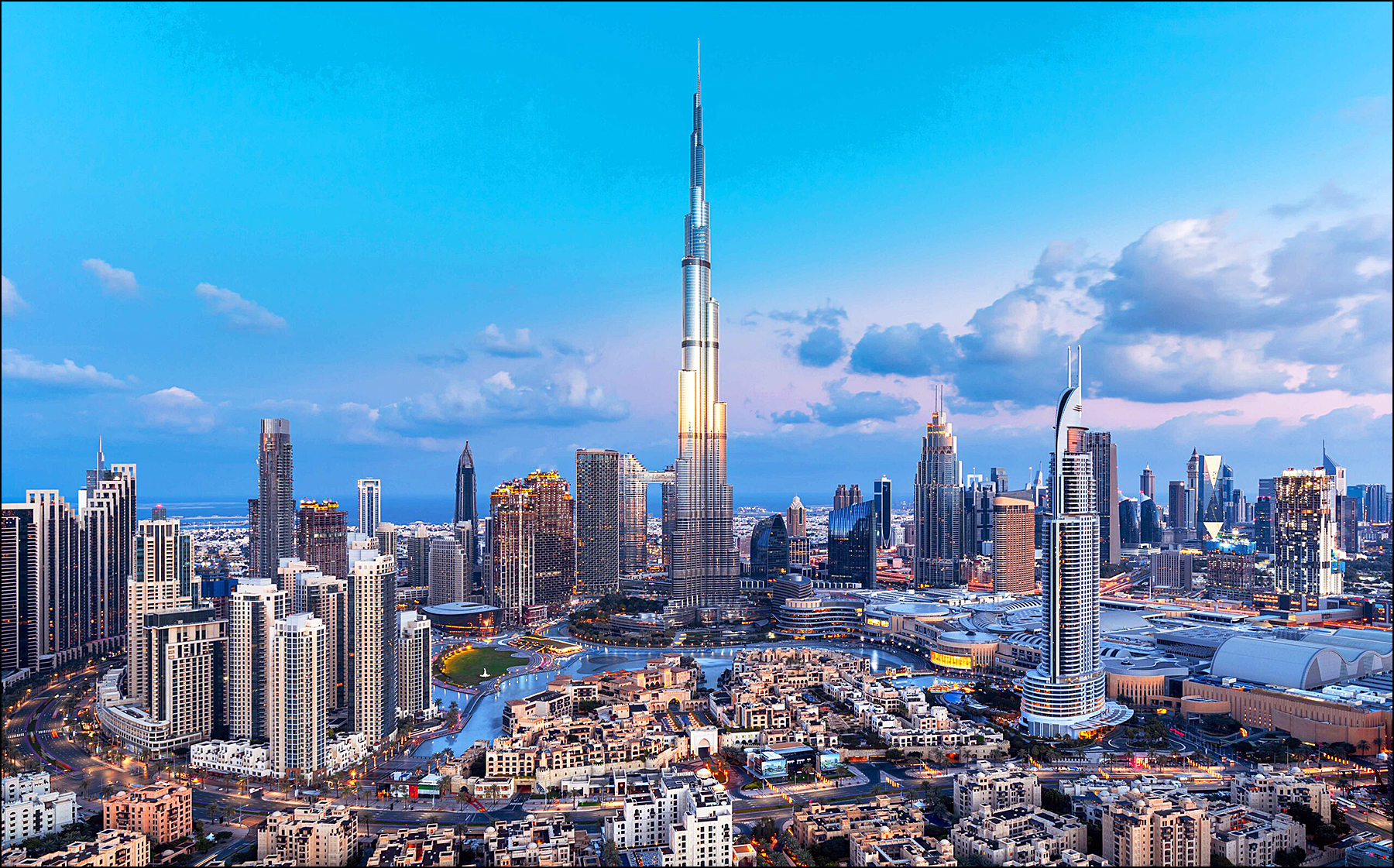
THE UAE IS LEAVING OPEC TODAY

ddd
UBAI, United Arab Emirates (AP) — The United Arab Emirates said Tuesday it will leave OPEC effective May 1, stripping the oil cartel of one of its largest producers and further weakening its leverage over global oil supplies and prices.
The UAE’s decision had been rumored as a possibility for some time, as it pushed back in recent years against OPEC production quotas it felt had been too low; meaning it wasn’t able to sell as much oil to the world as it had wanted.
“Having invested heavily in expanding energy production capacity in recent years, the bigger picture is that the UAE has been itching to pump more oil,” Capital Economics wrote in an analysis. “The ties binding OPEC members together have loosened,” it said, particularly after Qatar withdrew from the cartel in 2019.
Regional politics are also likely at play. The UAE has had increasingly frosty relations with Saudi Arabia, OPEC’s largest producer, over political and economic matters in the Mideast; even after both came under attack by fellow OPEC member Iran during the war.
The UAE’s withdrawal from OPEC won’t necessarily have any immediate effects in markets. That’s because world oil supplies are sharply constrained by the war in Iran, which has closed off the Strait of Hormuz, a waterway through which one-fifth of global oil supplies; including much of the UAE’s, is transported. On Tuesday, Brent crude, the international benchmark, traded above $111 a barrel, or more than 50% above its prewar price.
OPEC’s market power has already been waning in recent years as the United States ramps up its production of crude oil. Saudi Arabia had been pumping over 10 million barrels of oil a day before the war. The U.S. now pumps more than 13 million barrels a day.
U.S. President Donald Trump has been a steady critic of the cartel during his two terms in the White House.
The UAE, which joined OPEC through its emirate of Abu Dhabi in 1967, was been producing around 3.4 million barrels of crude a day just before the U.S.-Israeli war with Iran began on Feb. 28. Analysts say it has capacity to produce roughly 5 million barrels a day.
In its announcement on Tuesday, made via its state-run WAM news agency, the UAE said it also would leave the wider OPEC+ group, which Russia had led to try to stabilize oil prices.
“This decision reflects the UAE’s long-term strategic and economic vision and evolving energy profile, including accelerated investment in domestic energy production,” the UAE said, adding that it would bring “additional production to market in a gradual and measured manner, aligned with demand and market conditions.”
The UAE’s withdrawal removes one of OPEC’s few members with the ability to quickly increase production, said Jorge Leon, head of geopolitical analysis at Rystad Energy.
“A structurally weaker OPEC, with less spare capacity concentrated within the group, will find it increasingly difficult to calibrate supply and stabilize prices,” he said.
Saudi Arabia and the UAE increasingly have competed over economic issues and regional politics, particularly in the Red Sea area. The two countries jointly fought against Yemen’s Iran-backed Houthi rebels in 2015. However, that coalition broke down into recriminations in late December, when Saudi Arabia bombed what it described as a weapons shipment bound for Yemeni separatists backed by the UAE.
As tensions rose in recent months, Saudi broadcasters long based in Dubai, the economic hub of the UAE, have pulled back to the kingdom.
“This exit of OPEC fits into the UAE need for flexibility with key energy consumers as well; including a future relationship with China and a more competitive relationship with Saudi Arabia,” said Karen Young, a senior research scholar at Columbia University’s Center on Global Energy Policy.
While Saudi Arabia and OPEC had no immediate reaction, Emirati Energy Minister Suhail al-Mazrouei insisted his country’s decision did not stem from any dispute with its Gulf neighbor.
“We’ve been working together for years and years. We have the highest respect for the Saudis for leading OPEC,” al-Mazrouei told CNBC.
However, the UAE sent its foreign minister rather than its ruler to a Gulf Arab leaders’ meeting held Tuesday in Jeddah, Saudi Arabia, hosted by Saudi Crown Prince Mohammed bin Salman.
The UAE hosted the United Nations COP28 climate talks in 2023, a conference that ended for the first time with a pledge by nearly 200 countries to move away from planet-warming fossil fuels. But the UAE still plans to increase its production capacity in the coming years, even as it pursues more clean energy at home, a move decried by climate activists.
“The demand for power is going to go up and up and up,” U.S. Interior Secretary Doug Burgum told an Abu Dhabi oil conference in November. “Today’s the day to announce that there is no energy transition. There is only energy addition.” He drew widespread applause from his Emirati hosts. ✪
▶️ WHEN DOES SPEECH BECOME DANGEROUS?

WHEN DOES SPEECH BECOME DANGEROUS?
jjj
mericans love arguing about free speech. We invoke the First Amendment as a kind of political force field: You can say whatever you want, whenever you want, without consequence.
However the First Amendment only restricts government action. It does not guarantee you a career, a platform or immunity from backlash. The real question is not whether certain speech is legal but rather what kind of speech deserves social consequences — and what kind doesn’t.
And if we’re talking about reckless political speech, we should talk about Jimmy Kimmel. Years ago, he abandoned comedy in favor of applause lines, tearful monologues and the occasional performance of empathy. He’s an unfunny late-night scold who treats half the country as a punchline.
As annoying as that is, being unfunny is not a crime. The bigger issue is when media figures cross the line from tastelessness into rhetoric that creates a permission structure for violence.
To understand the difference, it helps to break political speech into three categories.
First: illegal speech. Yes, illegal political speech exists in America. A classic example: “I want to kill the president.” That’s not merely commentary. It is an actionable, direct threat.
There is also incitement. Under the Supreme Court’s Brandenburg standard, speech qualifies as incitement only if it is intended to and likely to produce imminent lawless action.
“Someone should do something about the president” is protected, though irresponsible, speech. “Go kill the president” crosses into territory the law can punish. It’s speech but also an attempt to trigger violence.
Second: typical inflammatory rhetoric. American politics is filled with heated language. “Fight like hell. We’re going to war with the other party.” That sort of rhetoric can be ugly and excessive, but it is also normal.
We’ve seen how absurd it becomes when people try to treat that as literal incitement. After Gabby Giffords was shot, some on the left blamed Sarah Palin because a campaign graphic had “targeted” certain districts. That was ridiculous. Using combative imagery is not the same as directing violence.
Third: the permission structure for violence. A permission structure for violence is created when people repeatedly portray political opponents as monsters.
This is how you create the mental environment where unstable people conclude that violence is justified. If the president is a traitor, rapist, pedophile and mastermind behind a corrupt system, then how else could he be stopped? This kind of rhetoric leads directly to chaos. It is also the kind of rhetoric Kimmel has trafficked in for years.
Recently, Kimmel tastelessly joked that Melania Trump had “the glow of an expectant widow.” It was disgusting, and she has every right to be furious. But it wasn’t a call to violence. It was a cheap, ugly joke suggesting she secretly wants her husband dead.
Kimmel later claimed he rejects violent rhetoric, then immediately pivoted to blaming Donald Trump for rhetoric that supposedly inspires violence. It was the standard modern play: Insult someone, then wrap yourself in moral superiority.
But when it comes to rhetoric that encourages violence, it isn’t the widow joke that should be the focus; it’s the conspiracism.
Kimmel has repeatedly called Trump a pedophile, suggested he is connected to Jeffrey Epstein and involved in a coverup, called him a rapist and accused him of protecting pedophiles, coming after voting rights, enriching billionaires while harming the poor, and manipulating the system to evade accountability.
That is not “normal political speech.” It is speech that turns a political opponent into a movie villain; a figure so corrupt and monstrous that extreme action begins to feel righteous.
This kind of conspiratorial framing has a track record. It fuels ugly episodes of modern political violence: a steady stream of baseless accusations designed to convince audiences that the other side is not merely wrong but evil.
If someone eventually acts on that belief, we shouldn’t pretend it came out of nowhere. So should Kimmel be fired? Firing him for the Melania joke would be punishing the wrong offense. A tasteless, bad joke is not the central issue.
The central issue is rhetoric that treats political opponents as criminals without proof, assigns monstrous motives without evidence, and creates a cultural climate where violence feels justified.
If America wants to lower the temperature, scrutiny should be directed at conspiratorial storytelling that teaches people to hate. ✪
▶️ $65B LITHIUM DISCOVERY COULD POWER THE US FOR CENTURIES

$65B LITHIUM DISCOVERY COULD POWER THE US FOR CENTURIES
ooo
mericans may no longer need to rely on foreign batteries to power their electronics. Geologists have announced that the Appalachian Mountains; which span from Canada to Alabama, could be hiding a sprawling multibillion-dollar cache of lithium that could last the US hundreds of years.
“This research shows that the Appalachians contain enough lithium to help meet the nation’s growing needs,” US Geological Survey (USGS) Director Ned Mamula said in a statement.
According to a map by the institution, the mountain range houses around 2.5 metric tons of the battery precursor, most of which is concentrated in North and South Carolina, Maine and New Hampshire. The total value? Around $US64.4 billion ($90.3bn).
Per Bloomberg, the US imports nearly half of its consumption of lithium, which powers lithium-ion batteries that are used for everything from iPhones to vehicles and even aerospace alloys.
With this recent mineral mother lode, USGS officials estimate America could supply 1.6 million grid-scale batteries; enough to power 130 million electric vehicles or supply 180 billion laptops for a collective thousand years of global use.
It could also fuel 500 billion cellphones, the equivalent of 60 devices for every person on Earth.
All told, this haul is enough to replace 328 years of imports at least year’s level, providing “a major contribution to US mineral security, at a time when global lithium demand is rising rapidly,” Mr Mamula said.
To determine the amount of lithium in the Appalachians, the USGS scientists employed “geologic maps, tectonic history, geochemical sampling, geophysical surveys and records of mineral occurrences”.
By conducting simulations using a global dataset for lithium pegmatites (a highly valuable coarse igneous rock), they were able to estimate how many untapped lithium deposits there were in the study area.
This allowed them to extrapolate how much of the mineral resource they held. In total, the team identified 18 different lithium-rich districts across the region.

Why do the Appalachians harbor such a treasure trove of this invaluable mineral? The USGS explained that these pegmatites in the northern Appalachians formed from the same geologic forces that “built the mountains more than 250 million years ago.”
“The high heat and pressure during the mountain-building caused some of the deeper crustal rocks to melt, and some of these magmas were rich in lithium. Because of their immense age, lithium-rich rocks formed during ancient tectonic plate collisions, when continents slammed together to create the supercontinent Pangaea.”
This lithium mine is crucial given that the world production “capacity for lithium will double by 2029, driven by increasing demand,” the USGS said.
Australia currently leads the charge when it comes to lithium production, supplying nearly half the global supply in 2024. Following close behind is China, which also accounts for the majority of lithium refining and consumption.
This latest discovery has the potential to reshuffle the list. “The US was the dominant world producer of lithium three decades ago, and this research highlights the abundant potential to reclaim our mineral independence,” Mr Mamula said. ✪
▶️ THE 11th MARINE EXPEDITIONARY UNIT (MEU): HURRY UP & WAIT

THE 11th MARINE EXPEDITIONARY UNIT (MEU): HURRY UP & WAIT

lll
ong after the headlines faded, the 11th Marine Expeditionary Unit (MEU) remains on point in the Persian Gulf. A MEU is a coiled spring of amphibious fury ready to strike. They are the Pentagon’s 9-1-1 force on float.
The Marines are still there living in tight quarters, fighting the monotony that comes with waiting for the call. Their days are filled with the unglamorous work that keeps a force ready: cleaning rifles, running drills, maintaining gear, training in narrow passageways, and lifting weights on makeshift benches welded to the ship’s frame — places where OSHA would blow a gasket. All of this is the unreported backbone of readiness.
The fight against boredom, repetition, and routine is as real as any external threat. For at least two generations Marines have labeled it “embracing the suck,” but it’s more than that. It is discipline in its purest form, the willingness to stay sharp and refusing to allow any complacency to take root knowing that the call could come at any time.
Marines spend most of their time training for missions that more often than not will not happen. Deployments come in many forms. A MEU is a months-long hybrid of a penitential retreat, floating storage unit, and team-builder where nothing happens, everything might, and everyone is equally provoked about both.
Marines stand watch on steel decks under blistering heat. They sleep in metal racks stacked three high, breathing air that is immersed in a wet sock funk and shower in a space barely bigger than a broom closet. They eat chow that tastes the same on day ten as it does on day 110. They wait for orders that may never come, but they prepare as if the call comes today.
Weapons maintenance is a daily ritual. You clean things that are already clean. It’s the Corps’s version of a spiritual discipline purification through repetitive motion.
Fire watch is another timeless Marine Corps tradition of being awake when everyone else is asleep, which is challenging especially when you have slept only four hours and the coffee is strong enough to dissolve a spoon. It reminds Marines they are trusted professionals, capable of guarding a hatch that no one has opened since the Reagan Presidency.
Amphibious rehearsals are the Marine Corps version of a fire drill, only with saltwater and no one pretending they didn’t hear the alarm with acoustics that make every briefing sound like it is being delivered from inside a steel drum.
Load the gear. Unload the gear. Load it again. It is a logistical ballet performed in full gear, inside a metal cavern, while a Navy boatswain’s mate yells about safety violations no one cares about. Everyone knows it is important. No one knows why it has to happen at 0500.
There is no applause. No viral videos. No presidential visits. Just the steady hum of engines, the rhythm of drills and the unspoken understanding that their presence alone serves as a deterrent.
A MEU is a unique, cramped, floating paradox: bored, cramped, caffeinated, and undeniably ready. So, when something does go wrong in some corner of the world that most Americans can’t find on a map, Marines can launch in minutes.
In an age when attention spans are measured in seconds, these Marines live in a world measured in watches, rotations, and readiness reports. They don’t get to scroll past their responsibilities. They don’t get to tune out. Marines are the tip of the spear.
Somewhere in the Persian Gulf, a Marine is cleaning his rifle for the third time today. Another is running laps around the flight deck under a punishing sun. Another is writing a letter home. All of them are waiting, training, and preparing.
They may be out of the headlines for now, but they are never off duty. The world is more stable because they are out there, even if no one bothers to say so or remember. Until then, they wait, train, and endure. They are living the Marine Corps motto: Semper Fidelis. ✪
▶️ TRUMP CALLS ON THE SENATE REPUBLICANS TO NUKE FILIBUSTER
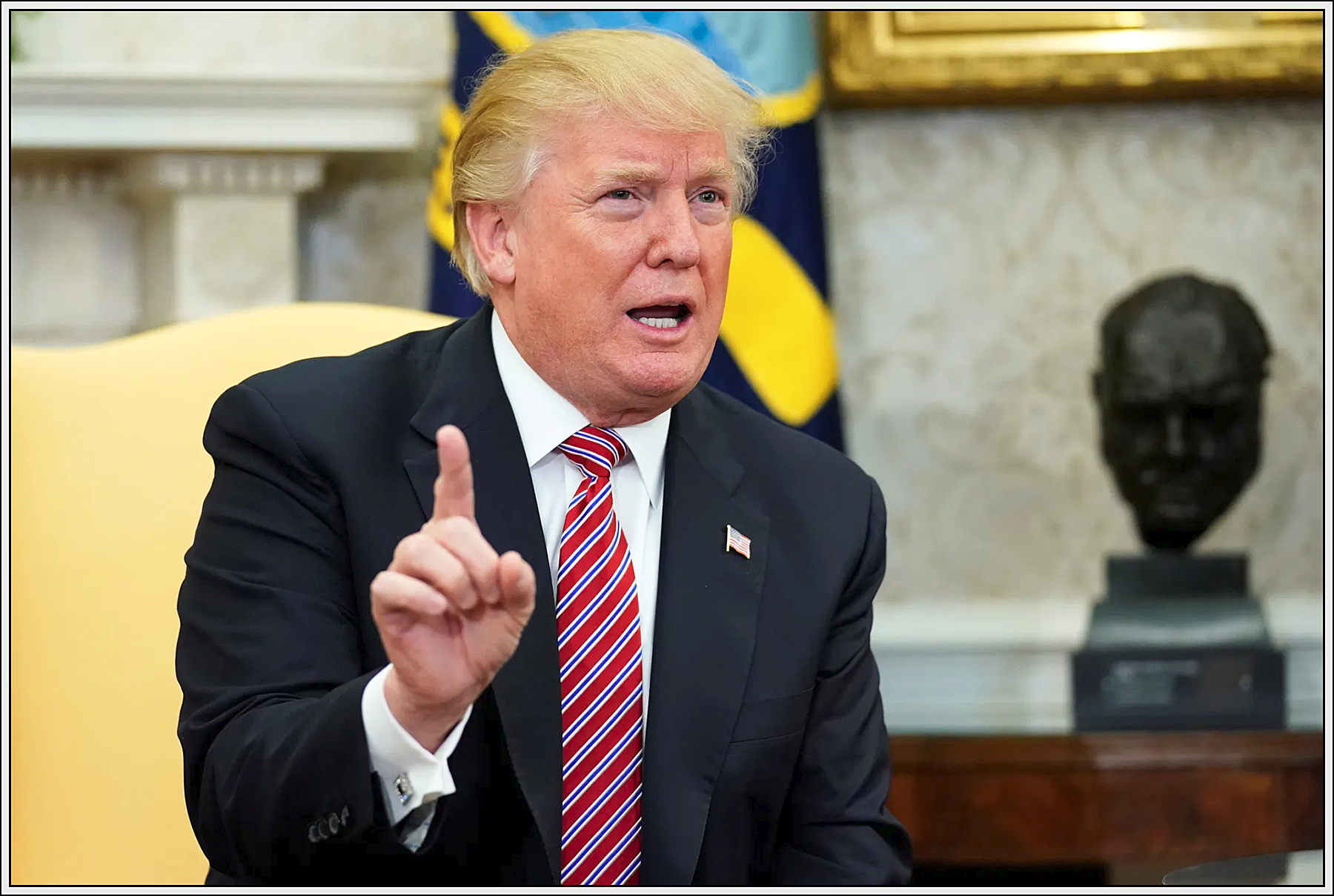
TRUMP CALLS ON THE SENATE REPUBLICANS TO NUKE FILIBUSTER

uuu
resident Donald Trump called on Senate Republicans to lift the filibuster on Thursday so they can pass the Save America Act, which would require proof of American citizenship in order to register to vote.
Trump, who has called on Republicans to bypass the filibuster since October, took to Truth Social to share his message with Senate Republicans. He wrote:
“How much abuse can the Republican Senate take from the Radical Left Lunatics in the form of Democrat Senators, before they BLOW UP (TERMINATE!) THE FILIBUSTER, and approve things at a record clip, including The Save America Act, that would be unthinkable without the Filibuster Termination??? The Dems will do it on the first hour of their first day. DO NOT BE STUPID!!!”
The Save America Act would require citizens to show proof of citizenship when registering to vote and implement nationwide Voter ID. The legislation would also end universal mail-in ballots with exceptions for illness, travel, disability, and military reasons.
The Save America Act also includes measures to codify protections for women’s sports and a ban on transgender surgeries for children, which Trump has already addressed through executive action.
March’s Harvard-Harris poll showed strong support on both sides of the political spectrum for key aspects of the Save America Act.
The poll found 61 percent of Democrat respondents, 90 percent of Republicans, and 73 percent of independents support proof of citizenship to vote. It further found that more than 80 percent of Democrats, Republicans, and Independents believe voting should be exclusive to U.S. citizens.
Sens. Rick Scott (R-FL) and Mike Lee (R-UT) are pushing Senate Republicans to lift the filibuster to allow a simple majority vote to determine the future of the Save America Act. Responding to Trump ‘s message, Scott posted to X that the president “is exactly right.”
Scott added:
“Democrats won’t fund DHS. They won’t pass the SAVE America Act. They don’t care about the country, If we want to get ANYTHING done for the American people, we need to BLOW UP the filibuster and get to work.”
▶️ 29 Seconds
Lee emphasized “Dems are going to nuke the filibuster the next time they get the chance.”✪
▶️ ORBAN VS MAGYAR: THE EUROPEAN UNION GOT PLAYED

ORBAN VS MAGYAR: THE EUROPEAN UNION GOT PLAYED

lll
iktor Orbán, the valiant populist, the restorer of the Christian faith in Hungary; the welcome thorn in the side of the EU establishment, and the strong ally of President Trump since his first bid for office, lost his own re-election bid. I had a feeling it would come to this.
His sixteen years of uninterrupted administration as a strong force for conservative, right-wing nationalist populism have come to an end, at least with Orbán as the head of it.
Sometimes, voters have a strange fatigue when it comes to governments. Fourteen years of a “conservative” UK government ushered in the Labour Party in 2024. However, fatigue doesn’t explain Orbán’s crushing loss. What set that off?
Corruption charges and the argument that his administration had looked the other way when sex abuse scandals broke out at a local school.
Economics reared its ugly head, as well, since the EU was cutting off its funding. Orbán’s supposed lack of judicial reforms, as well as his uniform check on EU policy, frustrated Brussels. Orbán faced a crisis election, and inviting US VP JD Vance to campaign on his behalf didn’t help.
Why would Hungarian voters care what a foreign politician thinks? This desperate move only exacerbated how out of touch the Orbán government had become. Critics also saw him as too close to Russian “president” Vladimir Putin and unhelpful in resolving the Russo-Ukrainian war. The EU had been waiting for this opportunity: an unpopular Orbán facing electoral collapse.
They were salivating for a post-Orbán Hungary, one that would stop its Christian restorationism, welcome more LGBT promotion, tolerate more spending, and open its borders. Would the Orbán replacement accomplish their scheme?
His challenger, Péter Magyar, was trained and prepped as an Orbán acolyte. In 2024, he broke from his party, but not over core policy. Magyar (whose name means “Hungarian,” for what it’s worth) campaigned to end corruption and restore good government in Hungary. He campaigned to the right of Orbán, calling for an end to importing cheap labor into the country. He campaigned on cracking down harder on immigration; illegal and mass, than the incumbent.
His message, if anyone was listening, wasn’t pro-EU. He was still asking the question: “What about us Hungarians?”
Supporters of the cultural restoration Right thought that Orbán was not getting the job done. Was he failing?
April 12, 2026, Magyar’s Tisza Party swept the elections: supermajority status, up to 140 out of 199 seats. Orbán won 56 seats, and another far-right party won the rest.
Of course, EU progressive elites celebrate Orbán’s loss, as did Barack Obama and George Soros. They view the downfall of Orbán as a harbinger for the end of Republican hegemony in Washington later this year.
Yet look again at the results of the Hungarian parliamentary elections. I mentioned three parties that won seats: three right-wing parties. Not one left-wing or centrist element came to power or won seats. A minimum threshold of five percent in the election results is required for a party to place. The left was shut out of the Hungarian Parliament.
The Right Wing won Hungary. Orbán may have lost his premiership, but Orbánism is standing strong. This election focused on personalities, not principles.
Magyar is just as socially conservative as Orbán. He has already pledged to end the foreign permit workers. He wants to give Hungarians in other countries a chance to come back to their own country and thrive again. That’s about as “Hungary First” as it gets!
Magyar has already stated that he will not support fast-tracking Ukraine’s membership into the EU. A huge move for ending the Russo-Ukrainian war!
He announced a diversification plan for energy. Instead of relying predominantly on Russia, he wants to draw oil from the South and the West, as well. This sounds like real economic freedom for Hungary. National populism is great, but it must face economic realities. Too many right-wing populist governments are shoveling out money to voters for school supplies, raising families, and pensions. Where is the money supposed to come from? More taxes?! From whom?
Right-wing socialism is still . . . socialism, and Orbán had a problem here. Eventually, the government runs out of others’ money, or inflation bites whatever purchasing power the government intended for the people. Inflation and tariff pressures weighed down Orbán’s reelection chances.
Orbán’s Hungary was still not the perfect social conservative paradise for other reasons. Prostitution is still legal. Abortion is also still legal. While countries need to encourage their native populations to bear children, that vision will collapse in the face of easy sex and no responsibility. Cultural norms need reinforcement, with no tolerance for deviance.
Orbán and his party imposed vaccine passports and health mandates during COVID. How is this good for the working public? Where is the freedom? Too much state-sponsored anything is bad for a country.
Even now, Hungarians cannot own a gun without passing strict government demands. Czechia made self-defense a right, and in Switzerland everyone owns a gun (though it’s registered with the state).
Throughout his tenure, Orbán strengthened ties with China, joining the deceptive Belt and Road initiative. He even allowed Chinese police to operate in his country! American citizens voiced righteous outrage when the local press exposed former New York City mayor Eric Adams for allowing a CCP-run police station in the Big Apple. Yet no one on the Right complained about Orbán allowing CCP Hungary? That’s wrong.
There’s room for improvement, and Magyar has the opportunity to exceed Orbán’s victories while correcting his mistakes. He is already doubling down on stopping mass migration! He is committed to putting all Hungarians first, and he is fighting for the rights of ethnic Hungarians in other countries.
Magyar must revive and restore Hungary’s economy. One can hope he will place his country in a better position to profit without dependence and root out undue Chinese influence.
▶️ 2 Minutes 18 Seconds
In a media masterstroke, he appeared on state television to discuss his plans for the country. Without missing a beat, he dressed down the reporter interviewing him, castigating theorganization for not allowing him on their program over the last year and a half. He then scolded them for lying about him and his family.
Then came the coup de grace: he announced his government plan to cut their funding and shut them down. Hungary needs honest independent media, he said, not government-funded agitprop that would inspire envy in Joseph Goebbels or North Korea.
▶️ 53 Seconds
He is not hostile to Putin, but he will not engage him aggressively either: he sounds a lot like Trump!
Nor will he participate in the EU migration pact. He is keeping up the border fences, but he has also pledged to find a way for the EU to release the funds that his country needs, too.
He is making inroads with his Slavic neighbors, including the more populist, nationalist leaders in Slovakia and Czechia.
Magyar reminds me of Florida Governor Ron DeSantis. He isn’t just talking the national populist talk. He is walking the walk, and he is sprinting ahead with major reforms.
Orbán was T-800. Magyar may well be T-1000, and the EU Left is going to find that he will be worse for their globalist, leftist, secularist agenda. ✪
▶️ NO, TRUMP SHOULDN’T BAIL OUT SPIRIT AIRLINES
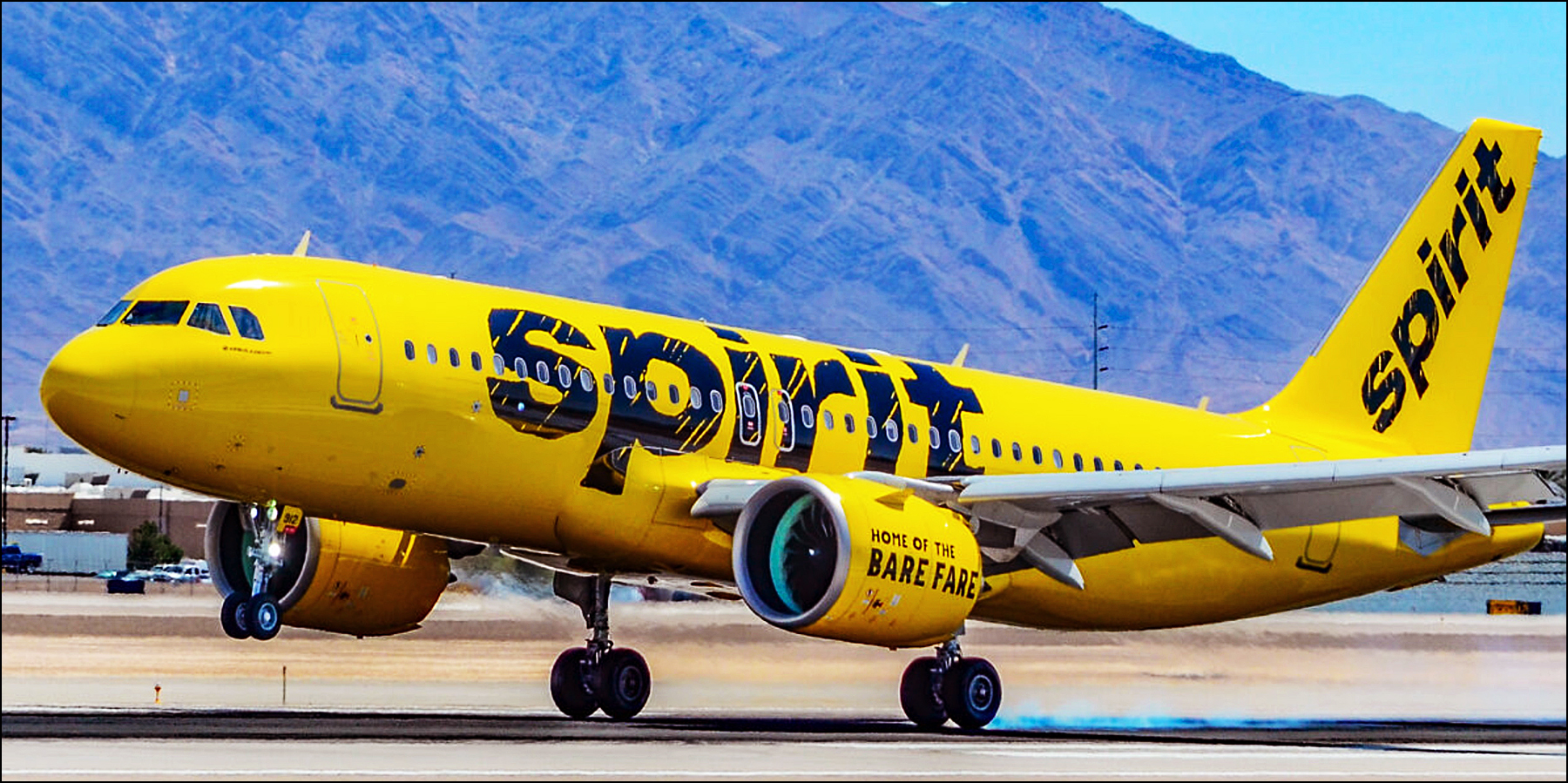
NO, TRUMP SHOULDN’T BAIL OUT SPIRIT AIRLINES
eee
t a time when Republicans in Congress need to generate enthusiasm ahead of the November midterm elections, the Trump Administration is contemplating a move which would undermine conservative support. The President’s talk of a potential $500 million bailout for a budget airline struggling to emerge from bankruptcy might preserve Spirit Airlines, but it would deflate conservative spirit (pun intended) at a critical juncture.
The President spoke last Thursday of “helping them [i.e., Spirit] out, meaning bailing them out, or buying it.” But the government took stakes in private-sector companies during the Obama Administration. It didn’t work out well then, and it won’t work out well now.
✪ Bad Policy
The list of reasons not to bail out Spirit stands as long as an airport runway. Start with the Federal Government’s $39 trillion in debt and counting. With the Federal Government running deficits approaching $2 trillion every year, and lawmakers not showing any signs of taking the actions needed to resolve Medicare and Social Security’s long-term shortfalls, why on Earth should taxpayers throw good money on top of bad to save an airline?
On top of the argument against bailing out airlines in general, this specific carrier doesn’t represent an economically critical business, let alone a company with national security implications. Last year, Spirit flew 3.5 percent of passenger miles domestically, which ranks it only eighth nationwide.
As it pared back services to stay afloat, Spirit has reportedly reduced its scheduled flights from 19,575 last May to an estimated 9,353 next month. Those numbers raise an obvious point: If Spirit could cut more than 10,000 flights in the past 12 months without causing a national calamity; or indeed without generating much notice at all, then the disappearance of its remaining 9,353 flights should not cause any major incident.
But Spirit’s liquidation wouldn’t necessarily lead to the disappearance of all its flights. Other airlines can, and likely would, buy its profitable routes and planes. Contra President Trump’s claim that “I’d love to be able to save those jobs,” letting Spirit go into liquidation would allow other companies to purchase and run its usable assets, including its personnel, without injecting taxpayer dollars into a zombie company to keep it afloat.
✪ Awful Politics
Conservatives have equally solid political reasons to oppose a Spirit bailout. We know how Republicans would react if the political roles were reversed. When President Obama gave bailout funds to American automakers, conservatives derided the actions of “Government Motors” for years, and rightly so.
Moreover, the White House appears not to remember the trap George W. Bush laid for congressional Republicans 18 years ago: the trap of TARP, the Troubled Asset Relief Program. Coming in the fall of a presidential election year, the Wall Street bailout helped transform a middling-to-bad election cycle for congressional Republicans into a wipeout. Republicans’ catastrophic defeat in November 2008 gave Nancy Pelosi and Barack Obama the margins they needed to ram Obamacare down the throats of Congress and a skeptical American people.
With families still struggling under persistent inflation, using more taxpayer dollars to bail out poor choices by airline executives could engender a similar public outrage as TARP among the electorate. Unless Trump has a political death wish, he would steer well clear of this type of golden giveaway.
✪ Golden Rule
Last and most certainly not least, a bailout of Spirit Airlines would beget Washington’s version of the Golden Rule. To wit: He who has the gold makes the rules.
Donald Trump may love the thought of personally rescuing Spirit Airlines now, but it would set a bad precedent that Democrats could use in the future. One can easily see a Democrat administration using the Trump precedent not just to bail out an airline but to attach myriad strings to the taxpayer bailout — e.g., the airline must have a unionized workforce, engage in “sustainability” practices, and/or participate in other government-favored behavior, to receive taxpayer funds.
The Trump Administration has spent the past 15 months trying to eradicate woke practices from the private sector. Setting a precedent for more taxpayer-funded bailouts would allow a Democrat president to leverage bailout funds and undo all that work.
✪ Just Say No!
The Trump Administration rightly identified one major source of Spirit Airlines’ problems. As a White House spokesman noted, “Spirit Airlines would be on a much firmer financial footing had the Biden Administration not recklessly blocked the airline’s merger with JetBlue” in 2023.
However, one bad government action by the Biden Administration should not lead to a second by its successor. Spirit Airlines can liquidate or engage in a quickie merger with JetBlue which does not involve the injection of taxpayer funds. For both good policy and political reasons, Washington should not try to buy or run any of the nation’s airlines. ✪
▶️ IN PURSUIT OF BEAUTY

IN PURSUIT OF BEAUTY

oooo
alking through London nowadays with your gaze raised above the crowd, you may wonder what has become of beauty. Not beauty as a decorative afterthought, nor as a subjective indulgence, but beauty as an ordering principle of the world that we build; a visible testament to our desire to belong, to dwell, and to affirm that life, even in its transience, is worthy of grace. The question is equally aesthetic and moral.
There was a time when London would have answered that very question with unpretentious confidence. Its streets unfolded according to an implicit logic that reached beyond the purely utilitarian, suggesting something unique and infinitely precious: civilization. Proportion, symmetry, and ornament were never imposed as luxuries; they arose from a shared understanding that the built environment is an extension of the human soul. Around St Paul’s Cathedral, before the Blitz, you would encounter not only a masterpiece of architectural composition, but also a setting that truly acknowledged its presence; streets that deferred, facades that conversed, spaces that prepared the eye and the heart for a solemn spectacle.
Like on the continent, the cultural rupture arrived in the wake of WWII. Yet it is essential to speak plainly: the war destroyed buildings, but it did not target beauty. What followed, however, did exactly that. In the name of progress, a generation of planners and architects set aside the accumulated wisdom of centuries, as though it were a burden rather than a gift. The city became not an inheritance to be tended, as it were, but a “problem” to be solved.
In Paris, by comparison, the farsighted guardians of the city—despite modern pressures—understood that beauty is not an obstacle to progress but its precondition. There, the continuity of streets, the discipline of facades, and the deference to historical scale preserve something more than appearances: they preserve a form of life. London, denying itself, embraced rupture. It permitted the insertion of forms that neither recall the past nor anticipate a harmonious future, but exist in a perpetual present of assertion.

30 St Mary Axe, aka “The Gherkin.”
The work of Norman Foster illustrates the state of affairs with particular clarity. His buildings are often praised for their elegance, efficiency, and technological brilliance. And yet, standing before 30 St Mary Axe, you are struck not by a sense of belonging, but by a sense of estrangement. The building does not continue the city; it interrupts it. It is a monolithic artefact to be studied/admired, not a place to be inhabited in the deeper sense.

Similarly, the Millennium Bridge, for all its refinement, offers passage without ceremony. It connects two banks of the Thames, but it does not unite them in a shared narrative. You cross it as you might traverse a diagram—efficiently, perhaps even pleasantly, but without that subtle enrichment that beauty alone can provide.
This, then, is the crux of the matter: modern architecture, even at its most accomplished, has largely abandoned the attempt to create beauty in the full sense of the word. It has substituted for it a series of proxies; novelty, scale, transparency, technical prowess, none of which can satisfy the deeper human need that beauty addresses. For beauty is not merely seen; it is recognized. It speaks to us in a language older than reason, affirming that the place that we inhabit is not hostile or indifferent, but shaped with care—and love.

Nowhere is the abandonment of this ideal more evident than in the Brutalist landscapes that punctuate London’s post-war terrain. The Barbican Estate presents itself as a total environment, a self-contained world of concrete terraces and elevated walkways. It is, in its way, an extraordinary achievement. However, it is also a soulless monstrosity conceived in defiance of beauty rather than in pursuit of it. Its surfaces repel the eye; its spaces resist appropriation; its scale diminishes the individual—the person—to an incidental presence within an overwhelming design.

At the Royal National Theatre, the language of raw concrete reaches a kind of rhetorical climax. The building declares itself with uncompromising force, as though daring the observer to dissent. And dissent you must, if you hold that architecture should invite rather than coerce, should welcome rather than intimidate.

The picture of dystopia, Trellick Tower offers a convincing example. Conceived as a solution to the problem of urban housing, it embodies a conception of life reduced to function. The separation of its service core from its residential block is ingenious; it is also revealing. For it suggests a vision of human existence partitioned into processes, rather than unified in a home.
It would be unjust to deny the intentions behind these aberrations. Supposedly, their creators aimed to build a better world, to provide dignity where there had been squalor, to replace chaos with order. However, in rejecting the language of beauty, they deprived themselves of the very means by which such aspirations might be realized. For beauty is not an ornament added to function; it is the form that function must take if it is to be humanly meaningful.
▶️ 58 Minutes 58 Seconds
Here, the reflections of Roger Scruton are indispensable. He reminds us time and again that beauty creates a sense of home, and that without this sense, we are left in a condition of metaphysical homelessness. A building may shelter us from the elements, but if it does not also situate us within a meaningful world, it fails in its deepest purpose.
The modernist credo, articulated with chilling clarity by Le Corbusier, that the house is “a machine for living in,” reveals the extent of this failure. For a machine, however efficient, cannot love us, cannot remember us, cannot bear witness to our lives. It operates; it does not dwell. To accept such a vision is truly to accept a diminished conception of ourselves.
And yet, even amid this landscape of loss, beauty persists. It survives in the timeless dignity of a Georgian terrace, in the measured rhythm of a Victorian street, in the sudden glimpse of a church spire rising above the urban fabric. These are not relics of a bygone age; they are reminders of what architecture can be when guided by love; love of place, of tradition, of the human presence.
The task before us is therefore not to mourn and criticize, but to recover. To recover the understanding that beauty is a public good, that it belongs not to the architect alone but to all who must live with the consequences of his decisions. To recover the humility that recognizes the city as a shared inheritance, not a canvas for individual expression.
For in the end, architecture is not about buildings, but about belonging. It is about the creation of a world in which the individual—the person, not as an abstract operator but as a being endowed with memory, longing, and affection—can find a place. A world in which the stones themselves seem to say: you are at home here.
Such a world is not beyond our reach at all. However, it will not be achieved through novelty or defiance. It will be achieved only when we once again dare to take beauty seriously—not as a luxury, not as a matter of taste, but as a moral necessity. ✪


















▶️ RSBN LIVESTREAM LINK: Trump Remarks @ The Villages, Florida
⭐️ TokaiseBlessedPatriot
