
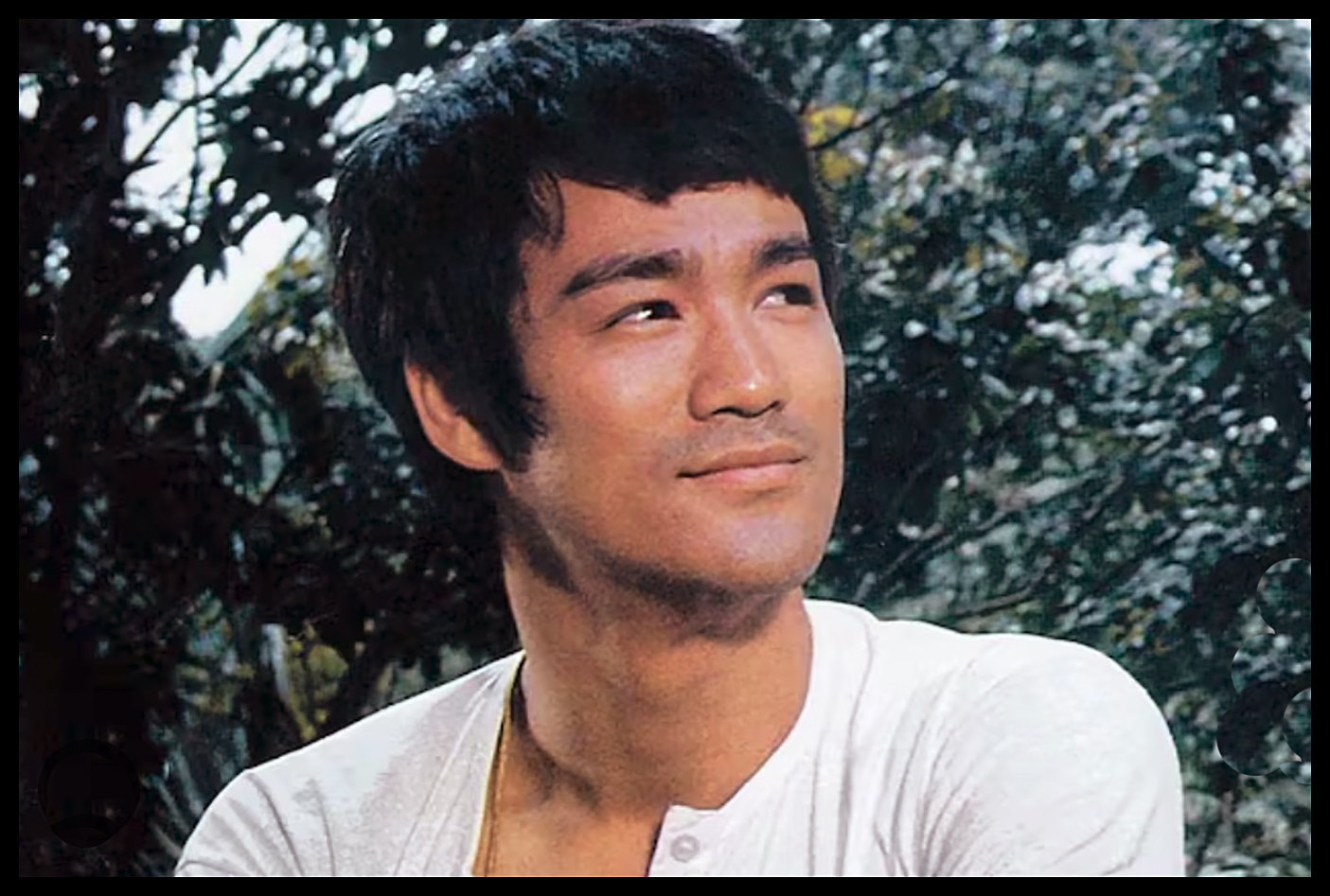

Lee Jun Fan: November 27, 1940 – July 20, 1973
✪ Lee Jun Fan (widely known by his anglisized name, Bruce Lee) was a Hong Kong and American martial artist, actor, director, writer and filmmaker. Lee founded his own hybrid martial art philosophy which he called Jeet Kune Do which he considered to be a new school of martial arts philosophy. Lee’s art of Jeet Kune Do drew heavily from his own personal interests in unarmed fighting and self-defense; as well as Taoist & Zen Buddhist philosophies.
With a professional career spanning both Hong Kong and the United States, Lee is known for his five feature length martial arts films in which he starred as an adult; and is credited with helping to popularize martial arts films in the 1970s by promoting the film genre of Hong Kong action cinema. Lee’s original Cantonese birth name translates to English as “Returns Again.” Lee is widely regarded as the first international Chinese film star and one of the most influential martial artists in the history of cinema. Since his death, Lee has become an international cultural icon.
Lee was born in San Francisco and raised in Hong Kong, where he was introduced into the Hong Kong film industry as a child actor by his father.
Lee’s father, Lee Hoi-chuen, was a popular Cantonese opera singer based in Hong Kong. His mother, Grace Ho, was born in Shanghai, China. Grace was from one of the wealthiest and most powerful families in Hong Kong, the Ho-tungs. As such, the young Bruce Lee grew up in an affluent and privileged environment. Despite the advantage of his family’s status, the neighborhood in which Lee grew up became overcrowded & dangerous; full of gang rivalries due to an influx of refugees fleeing Mainland Communist China to take refuge in Hong Kong; which at that time was a British Crown Colony.
In December 1939, Lee’s parents traveled to California as part of an international opera tour performance in San Francisco’s Chinatown neighborhood where Lee was born on November 27, 1940. Due to the country’s jus soli citizenship laws; his birth there allowed him to claim United States citizenship. When he was four months old in April 1941, the Lee family returned to Hong Kong. However, soon afterwards, they would experienced unexpected hardships under Imperial Japanese occupation during World War II.
Lee’s earliest martial arts training and experience was in the Wing Chun system (under the mentorship of Ip Man), and included Tai Chi, boxing (in which a young Lee won first place a Hong Kong boxing tournament) and frequent street fighting (neighborhood and rooftop fights).
In 1959, Lee moved to Seattle and enrolled at the University of Washington in 1961 taking psychology and philosophy courses. It was during this time Lee first considered earning a living teaching martial arts; even though his greater aspiration remained a career in acting. Lee opened and operated his first martial arts school out of his home in Seattle.
Lee drew significant attention at the 1964 Long Beach International Karate Championships of California by speaking and making personal demonstrations. He subsequently decided to move to Los Angeles where he could teach while continuing to pursue acting. Some of Lee’s first students in his Los Angeles school included Chuck Norris, Sharon Tate and Kareem Abdul-Jabbar.
Lee’s prolific career was cut short by his sudden death in 1973 at the age of 32 from brain edema, believed to have been caused by an allergic reaction to a muscle relaxant.
After gaining a large cult following and being widely imitated and exploited, Lee’s films continue to be popular. After his death, Lee has also remained a prominent influence on modern combat sports; including judo, karate, mixed martial arts, and boxing; as well as a permanent figure in modern popular culture; including film, television, comics, animation, and video games. Time Magazine named Lee as one of the 100 most important people of the 20th Century.
▶️ 4 Minutes 21 Seconds
Lee’s father, Lee Hoi-chuen, was a Cantonese opera star. As a result, Junior Lee was introduced to the world of cinema at a very young age and appeared in several films as a child. Lee’s first film role was as a baby who was carried onto the stage in the film Golden Gate Girl. Lee’s Chinese stage name at this time was 李小龍, (“Lee the Little Dragon”) for the fact he was born in both the hour and year of the Dragon accorded by the Chinese zodiac. Bruce was the fourth of five children in his family.
At age seven, Lee began practicing Tai Chi together with his father. In 1950 as a nine-year-old, he co-starred with his father in The Kid, which was based on a popular comic book character, of the time “Kid Cheung.” The Kid was Lee’s first official leading film role. By the time he was 18, Lee had already appeared in twenty films. After attending Tak Sun School which was several blocks from his home, Lee entered the primary school division of the Catholic La Salle College in Kowloon at age 12.
In the early 1950s, Lee’s father became an opium addict. In 1956, due to poor academic performance (and possibly poor conduct), Lee was transferred to St. Francis Xavier’s College. There, he was mentored by Brother Edward Muss, a Bavarian-born teacher and coach of the school’s boxing team.
In 1953, Lee’s childhood friend William Cheung introduced him to Ip Man. According to Cheung, Lee’s European background on his mother’s side led him to be initially rejected as a Wing Chun Kung Fu student under Ip Man because of a long-standing rule in the Chinese martial arts community not to teach foreigners. After Cheung spoke on his behalf, Lee was finally accepted into the school and began training with Ip Man. Ip tried to prevent his students from fighting in the Hong Kong street gangs by encouraging them instead to fight in organized competitions.
After a year of training with Ip Man, most of the other students refused to train with Lee after they learned of his mixed ancestry. Lee’s sparring partner, Hawkins Cheung, states, “Probably fewer than six people in the whole Wing Chun clan were personally taught, or even partly taught, by Ip Man.” However, Lee persevered by demonstrating a keen interest in Wing Chun. He continued to train privately with Ip Man.
In 1958, Lee won the Hong Kong Schools Boxing Tournament, knocking out the previous champion, Gary Elms, in the final. That same year, Lee who was also a good cha-cha dancer, won Hong Kong’s Crown Colony Cha-Cha Championship.
Lee’s street fighting became more frequent in his late teens and included beating up the son of a feared triad family. In 1958, students from a rival Choy Li Fut martial arts school challenged Lee’s Wing Chun school in a fight on a rooftop. In response to an unfair punch by another boy, Lee beat him so badly one of his teeth was knocked out, leading the boy’s parents to file a complaint with the police for Lee’s arrest.
Lee’s mother was force to sign a document at the police precinct saying she would take full responsibility for her son’s future actions if they released him into her custody. Though she never mentioned this incident to her husband, she suggested her son should return to the United States at the age of eighteen to claim his U.S. citizenship. Lee’s father agreed as Lee’s college prospects were not very promising if he remained in Hong Kong.
In April 1959, Lee’s parents sent him to the United States to live with his older sister, Agnes Lee, who was already living with family friends in San Francisco. After several months, Lee moved to Seattle in 1959 to continue his high school education. While in Seattle, he worked for Ruby Chow in her restaurant as a live-in waiter. Lee’s elder brother Peter Lee eventually joined him in Seattle for a brief stay before moving on to Minnesota to attend college.
Lee completed his high school education and received his diploma from Edison Technical School on Capitol Hill in Seattle. Lee opened his first martial arts school, named the Lee Jun Fan Gung Fu Institute, in Seattle.
In 1959, Lee began teaching martial arts. He first named what he taught Jun Fan Gung Fu (literally Bruce Lee’s Kung Fu). It was his personal approach and interpretation of Wing Chun Kung Fu. Lee first taught his friends he met in Seattle; beginning with Judo practitioner Jesse Glover, who continued to teach some of Lee’s early techniques. Lee’s early student group was the most racially diverse group of practitioners of Chinese martial arts until that time. It was during this time, Lee invented & perfected his one-inch punch. He also became interested in boxing by studying the techniques of Muhammad Ali and Sugar Ray Robinson.
In March 1961, Lee enrolled at the University of Washington. According to a 1999 article in the university’s alumni publication, Lee’s official major was drama rather. In his junior year, he also took two classes in psychology and philosophy. Both of these subjects became core interests for him the rest of his life. While attending the University, lee frequently socialized with wealthy young people, but lived in relative poverty while working as a dishwasher in a Chinese restaurant.
While studying at the University of Washington, Lee also met his future wife Linda Emery, a fellow student studying to become a teacher. Linda & Bruce were married married August 1964 & had two children: Brandon (1965–1993) and Shannon Lee (born 1969).
Lee dropped out of the university in early 1964 and moved to Oakland to live with James Yimm Lee. James Lee was twenty years senior to Lee and a well-known Chinese martial artist in the area. Together, they founded the second Jun Fan Martial Arts Studio in Oakland.
Lee first drew serious national attention by appearing at the 1964 Long Beach International Karate Championships where he performed repetitions of two-finger push-ups, using only the thumb and the index finger of one hand with his feet positioned apart at approximately shoulder-width. At the same Long Beach event, he also performed his infamous “one-inch punch.“
Lee used the Long Beach event as an opportunity to publicly criticize a number of classical Karate and Kung Fu martial art styles and advocated for the modernization of martial arts in general. This highly controversial presentation convinced some spectators, while offending others. Subsequently, he appeared later at the Sun Sing Theatre to present his new approach to the Oakland Chinatown community. Many traditional Kung Fu practitioners in attendance of that demonstration took Lee’s claims as an open challenge.
Att the Long Beach International Karate Championships in 1964 and 1968, Lee is seen demonstrating quick eye strikes before his opponent can block. He also demonstrates chi sao drills while blindfolded against an opponent’ probing for weaknesses in his opponent while scoring with punches and takedowns. Lee then participates in a full-contact sparring bout against an opponent, with both wearing leather headgear.
Lee’s Jeet Kune Do concept of economical motion uses Ali-inspired footwork to keep out of range; while counter-attacking with back fists and straight punches.
By Long Beach, Lee had all but abandoned his thoughts of a film career in favor of pursuing martial arts. However, is presence at Long Beach in 1964 led to the invitation by television producer William Dozier for an audition for a role in the pilot for “Number One Son” about Lee Chan, the son of Charlie Chan. The show never materialized, but Dozier still saw potential in Lee.
From 1966 to 1967, Lee played the role of Kato alongside the title character played by Van Williams in the TV series produced and narrated by William Dozier titled The Green Hornet, based on the radio show by the same name. The show only ran for one season (26 episodes) from September 1966 to March 1967. Lee and Williams also appeared as their characters in three crossover episodes of Batman, another William Dozier-produced television series.
The Green Hornet introduced Bruce Lee to an American audience and became the first popular American show to present Asian-style martial arts. The show’s director wanted Lee to fight in the typical American style using fists and punches. As a professional martial artist, Lee refused, insisting that he should fight in the style of his expertise. At first, Lee moved so fast that his movements could not be caught on film, so he had to slow them down. The American martial arts community promoted the TV show and viewed Lee as their first mainstream star. After the show was canceled in 1967, Lee wrote to Dozier thanking him for starting “my career in show business.”
After filming one season of The Green Hornet, Lee found himself out of work and opened the Jun Fan Gung Fu Institute in Chinatown, Los Angeles. He took the view that traditional martial arts techniques were too rigid and formalized to be practical in scenarios of chaotic street fighting. He started using different training methods such as weight training for strength, running for endurance, stretching for flexibility, and many others, which he constantly adapted, including fencing and basic boxing techniques.
In 1969, Lee made a brief appearance in the Silliphant-penned film Marlowe, where he played a hoodlum hired to intimidate private detective Philip Marlowe, played by James Garner, who uses his martial arts abilities to commit acts of vandalization to intimidate Marlowe. The same year, he was credited as the karate advisor in The Wrecking Crew; the fourth installment of the Matt Helm comedy spy-fi series film starring Dean Martin. Also that year, Lee acted in one episode of Here Come the Brides and Blondie. In 1970, Lee was responsible for producing the fight choreography of A Walk in the Spring Rain, starring Ingrid Bergman and Anthony Quinn, again written by Silliphant.
According to statements made by Lee, and also by Linda Lee Cadwell after Lee’s death, Lee pitched a television series of his own in 1971, tentatively titled The Warrior, discussions of which were confirmed by Warner Bros. During a December 9, 1971, television interview on The Pierre Berton Show, Lee stated both Paramount and Warner Bros. wanted him instead “to be in a modernized type of a thing and that they think the Western idea is out, whereas I want to do the Western.”
Lee’s concept was later retooled and renamed Kung Fu, but Warner Bros. gave Lee no credit and instead claimed they had for some time already been developing an identical concept. According to industry sources, the reason Lee was not cast was because he had a thick accent.
The role of the Shaolin monk in Kung Fu was eventually awarded to then-non-martial artist David Carradine. In an interview with The Pierre Berton Show, Lee stated he understood Warner Bros.’ attitudes towards casting in the series: “They think that business-wise it is a risk. I don’t blame them. If the situation were reversed, and an American star were to come to Hong Kong, and I was the man with the money, I would have my own concerns as to whether the acceptance would be there.”
Producer Fred Weintraub advised Lee to return to Hong Kong and make a feature film that he could showcase to executives in Hollywood. Not happy with his supporting roles in the US, Lee returned to Hong Kong. Unaware The Green Hornet had become wildly successful in Hong Kong and was unofficially referred there to as “The Kato Show.” He was surprised to be recognized as the star of the show. After negotiating with both Shaw Brothers Studio and Golden Harvest, Lee signed a film contract to star in two films produced by Golden Harvest.
▶️ 4 Minutes 56 Seconds
▶️ 4 Minutes 56 Seconds
Lee played his first leading role in The Big Boss (1971), which proved to be an enormous box-office success across Asia and catapulted him to instant stardom in Hong Kong. He followed up with Fist of Fury (1972), which again broke the box office records set previously by The Big Boss, with film critic Blake Howard writing that Lee was “cresting on the wave of international super-stardom.”
Having finished his initial two-year contract, Lee negotiated a new deal with Golden Harvest. Lee would later formed his own company, Concord Production Inc. For his third film, The Way of the Dragon (1972), Lee was given complete control of the film’s production as writer, director, star, and choreographer of the fight scenes.
▶️ 9 Minutes 57 Seconds
In 1964 at Long Beach, Lee also met karate champion Chuck Norris. In The Way of the Dragon Lee introduced Norris to moviegoers as his opponent. Their showdown has been characterized as “one of the best fight scenes in martial arts and film history.”
From August to October 1972, Lee began work on his fourth Golden Harvest film, Game of Death. He began filming some scenes, including his fight sequence with 7 ft 2 in American basketball star Kareem Abdul-Jabbar, one of his former students. Production stopped in November 1972 when Warner Bros. offered Lee the opportunity to star in Enter the Dragon, the first film to be produced jointly by Concord, Golden Harvest, and Warner Bros. Filming began in Hong Kong in February 1973 and was completed in April 1973. However, only a few months after the completion of Enter the Dragon, and six days before its release on July 26, 1973, Lee died.
Enter the Dragon went on to become one of the year’s highest-grossing films and cemented Lee as a martial arts legend. It was made for US$850,000 in 1973, the equivalent of $4 million adjusted for inflation as of 2007.Enter the Dragon is estimated to have grossed over $400 million worldwide, the equivalent of over $2 billion adjusted for inflation as of 2022.
Robert Clouse, the director of Enter the Dragon, together with Golden Harvest, later revived Lee’s unfinished film, Game of Death. Lee shot over 100 minutes of footage, including outtakes, for Game of Death before shooting was stopped to allow him to work on Enter the Dragon. In a controversial move, Robert Clouse finished the film using a Lee look-alike (Kim Tai Chung, with Yuen Biao as a stunt double) and archive footage of Lee from his other films with a new storyline and cast. It was released in 1978. The cobbled-together film contains only fifteen minutes of actual footage of Lee.
▶️ 24 Minutes 38 Seconds
Lee’s films are known for popularizing the side kick, roundhouse kick, grappling, spinning heel kick, armbar, weapons such as the nunchaku, and his distinctive kiai.
Lee greatly favored cross-training between different fighting styles, and had a particular interest in grappling. Lee only found judo ineffective in the action of getting hold of the opponent. While in Seattle, Lee developed his own anti-grappling techniques against opponents trying to tackle him or take him to the ground.
Lee was also influenced by the training routine of The Great Gama, an Indian/Pakistani pehlwani wrestling champion known for his grappling strength. Lee incorporated Gama’s exercises into his daily training routine.
Another major influence on Lee was Hong Kong’s street fighting culture in the form of rooftop fights. In the mid-20th Century, soaring crime in Hong Kong, combined with limited Hong Kong Police manpower, led to many young Hongkongers to learn martial arts for self-defense.
Around the 1960s, there were about 400 martial arts schools in Hong Kong, teaching their distinctive styles of martial arts. In Hong Kong’s street fighting culture, there emerged a rooftop fight scene in the 1950s and 1960s, where gangs from rival martial arts schools challenged each other to bare-knuckle fights on Hong Kong’s rooftops, to avoid crackdowns by British colonial authorities. Lee frequently participated in these Hong Kong rooftop fights.
At only 5 ft 8 in and weighing 141 lbs, Lee was renowned for his physical fitness and vigor, achieved by using a dedicated fitness regimen to become as strong as possible.
Lee felt that many martial artists of his time did not spend enough time on physical conditioning. Lee included all elements of total fitness; muscular strength, muscular endurance, cardiovascular endurance, and flexibility. He used traditional bodybuilding techniques to build some muscle mass, though not overdone, as that could decrease speed or flexibility.
At the same time, concerning balance, Lee maintained that mental and spiritual preparation are fundamental to the success of physical training in martial arts skills. In Tao of Jeet Kune Do he wrote:
“Training is one of the most neglected phases of athletics. Too much time is given to the development of skill and too little to the development of the individual for participation. … JKD, ultimately is not a matter of petty techniques but of highly developed spirituality and physique.”
While best known as a martial artist, Lee also studied drama and Asian and Western philosophy, starting while a student at the University of Washington. He was well-read and had an extensive library dominated by martial arts subjects and philosophical texts. His books on martial arts and fighting philosophy are known for their philosophical assertions, both inside and outside of martial arts circles. His eclectic philosophy often mirrored his fighting beliefs, though he was quick to say that his martial arts were solely a metaphor for such teachings. Lee practiced meditation as the first action of his daily schedule.
Lee believed that any knowledge ultimately led to self-knowledge. He said his chosen method of self-expression was martial arts. He cites important influences including Taoism and Buddhism. However, Lee’s philosophy was very much in opposition to the conservative worldview advocated by Confucianism.
In his notebooks, Lee cites comments on passages from Plato, David Hume, René Descartes, and Thomas Aquinas, from Western philosophy, and Lao-tzu, Chuang-tzu, Miyamoto Musashi, and Alan Watts from Eastern thought. He was particularly interested in the Indian mystic Jiddu Krishnamurti.
Aside from martial arts and philosophy, which focus on the physical aspect and self-consciousness for truths and principles, Lee also wrote poetry which reflected his emotions and a stage in his life collectively. Lee’s principle of self-expression was applied to his poetry as well. His daughter Shannon Lee said, “He did write poetry; he was really the consummate artist.”
After he moved to the United States, Lee started to take nutrition more seriously and developed an interest in health foods, high-protein drinks, and vitamin and mineral supplements. He later concluded that achieving a high-performance body was akin to maintaining the engine of a high-performance automobile. Allegorically, as one could not keep a car running on low-octane fuels, one could not also sustain one’s body on a steady diet of junk food, and with “the wrong fuel,” one’s body would perform sluggishly or sloppily. Lee avoided baked goods and refined flour, describing them as providing empty calories that did nothing for his body.
On May 10, 1973, Lee collapsed during an automated dialogue replacement session for Enter the Dragon at Orange Sky Golden Harvest Film Studio in Hong Kong. Because he was having epileptic seizures and headaches, he was rushed to Hong Kong Baptist Hospital, where doctors diagnosed cerebral edema. He had a high fever and was completely unconscious without any signs of breathing. They were able to reduce the swelling through the administration of mannitol. A brain scan in the United States after this medical incident diagnosed Bruce Lee with a convulsive disorder.
On July 20, 1973, Lee was in Hong Kong planning to have dinner with actor George Lazenby, with whom he intended to make a new film. According to Lee’s wife Linda and testimony at Lee’s coroner’s court, Lee met producer Raymond Chow at 2 p.m. at home to discuss the making of the film Game of Death. Chow left around an hour later to attend a dinner meeting with Lazenby, which Lee was expected to join later.
When Lee did not arrive at the dinner, Chow came to the apartment at around 9:45 p.m., but was unable to wake up Lee. Chu Poh-hwye, a private doctor of Ting, was summoned at 10, as Lee’s doctor was unreachable and spent ten minutes attempting to revive Lee, who by then no longer had any vital signs. Lee was sent by ambulance to Queen Elizabeth Hospital where he was declared dead on arrival at the age of 32.

Donald Teare, a senior British pathologist recommended by Scotland Yard who has overseen over 1,000 autopsies, was assigned to perform Lee’s autopsy. His conclusion was “death by misadventure” caused by cerebral edema due to a reaction to compounds present in the medication Equagesic. According to autopsy reports, Lee’s brain had swollen from 1,400 to 1,575 grams, a 12.5% increase. Lee had taken Equagesic on the day of his death, which contained both aspirin and the sedative meprobamate: although he had taken it many times before. The Coroner’s Court unanimously returned a “death by misadventure” verdict.
In an article in the December 2022 issue of Clinical Kidney Journal, a team of researchers examined the various theories regarding Lee’s cause of death, and concluded his fatal cerebral edema was brought on by hyponatremia, an insufficient concentration of sodium in the blood. The authors noted that several risk factors predisposed Lee to hyponatremia, including excessive water intake, insufficient solute intake, alcohol consumption, and use or overuse of multiple drugs that impair the ability of the kidneys to excrete excess fluids. Lee’s symptoms before his death were also found to closely match known cases of fatal hyponatremia.
In July 2025, the Hong Kong TVB program concluded that Lee died of sudden unexpected death in epilepsy, based on opinions from medical experts, after other causes of death, including cerebral edema caused by aspirin allergy, which had been suspected by the court, were considered unlikely. It was presumed that a lack of professional knowledge or attempts to protect Lee’s legacy were the real reasons the true cause of his death were hidden at the time.
Lee is interred at Lakeview Cemetery in Seattle, next to his son Brandon.✪


















▶️ ◼️◼️◼️◼️◼️◼️◼️◼️◼️◼️ ✪✪✪ DONATE ✪✪✪ ◼️◼️◼️◼️◼️◼️◼️◼️◼️
▶️ DONATE VIA PAYPAL (DEBIT & CREDIT CARD)
ALL PayPal Transactions Are Encrypted For Card Holder Privacy & Security
▶️ DONATE VIA ZELLE (DIRECT BANK CASH TRANSFER)
ZELLE is the perfect online alternative to PayPal. It’s an incredibly simple, secure, easy, fast and FREE way to send or receive money to recipients directly from your online banking account without a middleman. Best of all, there are NO fees.
ZELLE is a service provided by your bank and is already built in to your online banking account. You only need to activate it first before using. If you’ve already activated ZELLE in your online bank or credit union account, you can donate to The New Americanist by using our ZELLE address:
vip@thenewamericanist.com
To activate your ZELLE, follow these easy instructions (a simple two minute process):

▶️ DONATE VIA SNAIL MAIL