


Hi Folks…And Welcome Again To FLAT OUT!
Time To Get Funky & French! By Reader Request, It’s…
The Citroën DS: 1955-1975
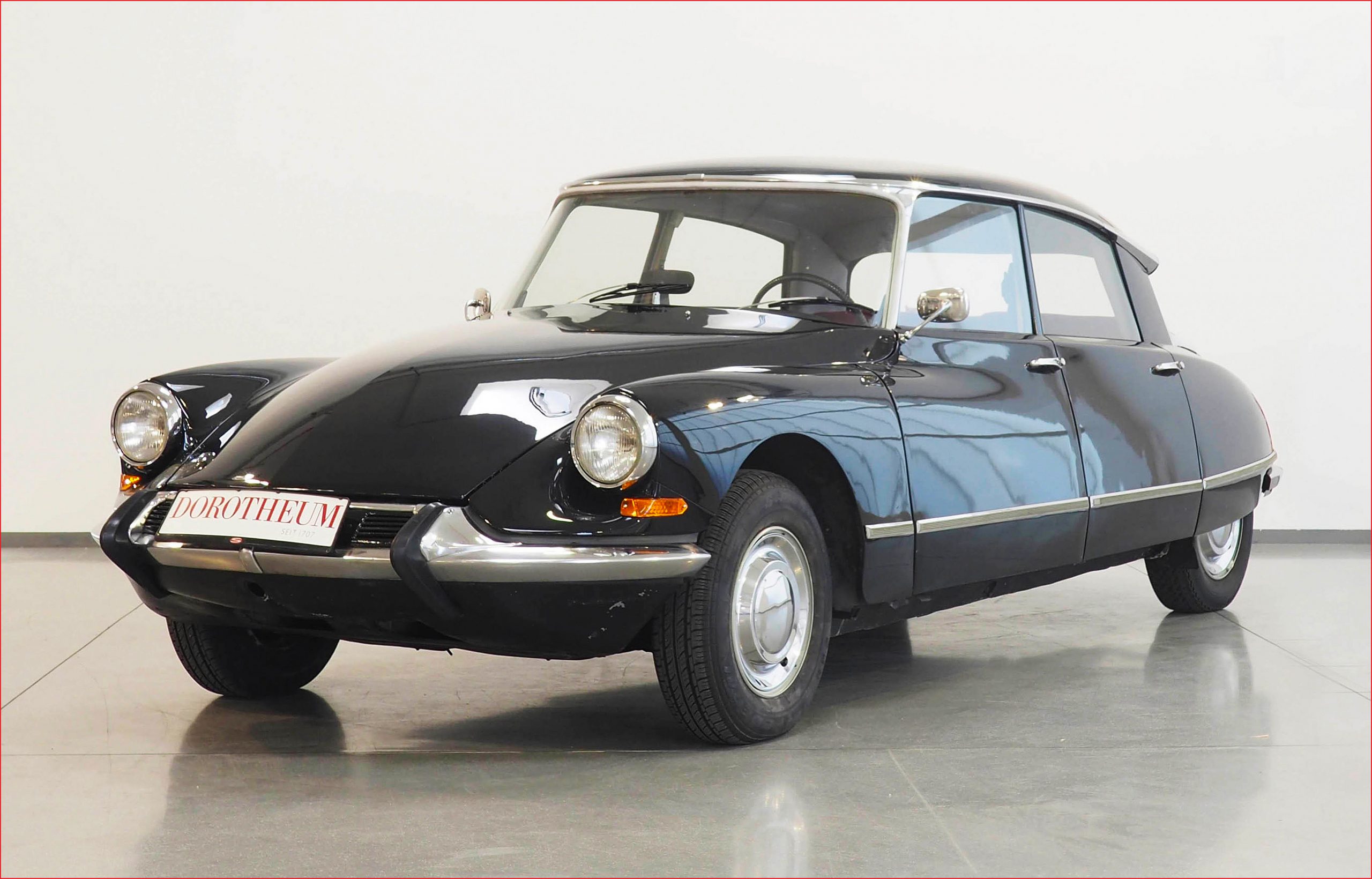
The Citroën DS was a front-engine, front-wheel-drive full-size car manufactured by Citroën and sold in six countries, including the US. The futuristic, space-age body was extremely aerodynamic at a time when not many cars were, it resembled a speedboat or some sort of spaceship more than a passenger car. It was also the first mass-produced car to be equipped with disc brakes and hydro-pneumatic suspension, both innovative technologies in the 1950s. Italian sculptor and industrial designer Flaminio Bertoni and French aerodynamic engineer André René Lefebvre styled and engineered the car. Paul Magès designed the unique self-leveling hydro-pneumatic suspension system. Versions of the DS were also used in rally racing, where the aerodynamic bodied front-wheel drive car won major races from 1959 to 1974. The DS also placed third in the 1999 “Car Of The Century” poll.
Series 1 1955-1961
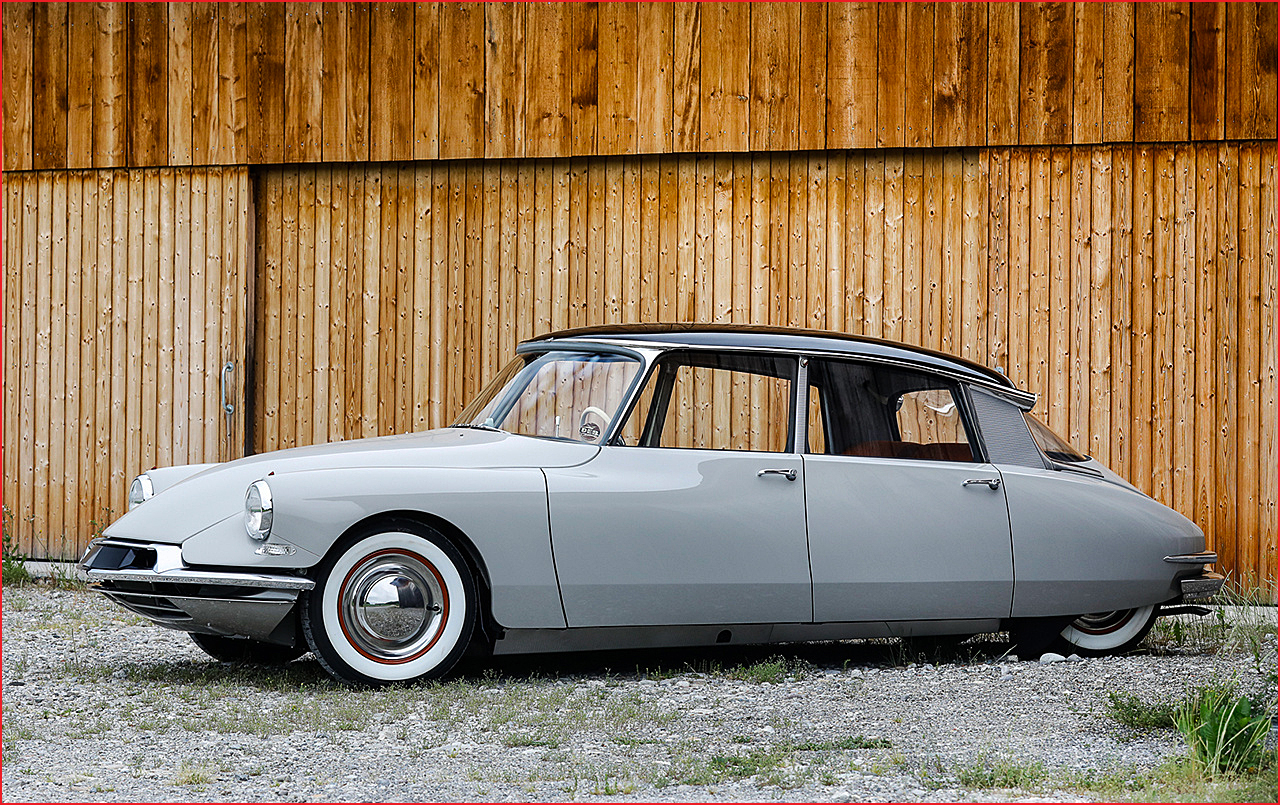
Unveiled in October 1955 at the Paris Auto Show, the DS had been in secret development for 18 years. In the 10 days of the show 80,000 deposits were taken for the car, a record that would stand well into the 21st Century. France was still in reconstruction from WWII and the DS stood as a monument to French ingenuity. Journalists of the time said that the DS pushed the envelope in the ride vs. handling compromise. Citroën being owned by Michelin meant that the car was designed around the then-new radial tire, a trend with Citroëns since the tires were introduced by Michelin seven years earlier.
The technical advances in the car were some of the most innovative of its day. At a time when few cars had independent suspension on all four wheels, the independent hydro-pneumatic suspension of the DS was self-leveling and offered variable ground clearance, which meant that the car could be driven quickly and comfortably over the notoriously poor-quality postwar French roads. The system was powered by an engine-driven pump, which meant that the suspension would lower the car towards the ground when the engine was turned off, and conversely the car would rise when the engine was started and the hydraulic pressure rose. Spheres containing the hydraulic fluid (originally vegetable oil, later a synthetic fluid) accumulated and discharged fluid as needed to keep the suspension level. Unfortunately the hygroscopic (moisture-absorbing) properties of the fluid and the fact that the accumulators went from full to nearly empty with large suspension changes and pulled in more and more moisture led to rusting of the suspension components if the car was not used for long periods of time. Since water can’t be compressed like hydraulic fluid, too much water in the system could lead to seal failures or even a rupture of one of the spherical accumulators.
In DS models sold in the US, the vegetable oil-based fluid was banned by the NHTSA until it could be proven safe to the regulators. Instead of proving the safety of their fluid, Citroën decided to use brake fluid in the system instead. The DS suspension system used much more fluid than a hydraulic braking system and allowed much more moist air in, so brake fluid was no better at keeping rust in the system at bay than the original fluid. Brake fluid also did not provide sufficient viscosity and lubrication for the hydro-pneumatic suspension and components suffered in this area as well. The ride quality was excellent, however, some comparing it to a “magic carpet”. The innovative suspension also made tire changes a breeze; simply run the car to the highest suspension level, insert the adjustable stand into the proper place at whatever wheel needed changing, and lower the suspension. The wheel would retract upwards and float in midair, ready to be changed…no jack required.
Most cars use hydraulics only in the braking and power steering systems. The DS was also equipped with power steering, a rarity in 1955. The power steering was not as precise as some other cars but the DS turned nicely because the suspension had so little roll. The hydraulics also powered a semi-automatic gearbox which required no clutch pedal but still had to be shifted manually, the small gear lever sprouting from the dashboard was connected to the hydraulic shift mechanism rather than being a mechanical linkage to a conventional manual transmission. Shifting was a delicate process if you didn’t want to prematurely wear out the clutch; lift off the throttle, move the gear lever one notch, wait for the engine RPM to settle as the gear slots home, and accelerate again. This made for not-so-quick shifts, fortunately the precise suspension meant that you hardly needed to slow down and downshift for bumps, even speed bumps. The front disc brakes were mounted inboard of the wheels to reduce unsprung weight, unfortunately this meant that even a simple brake pad change required disassembly of the driveshafts, calipers and even the radiator; this was a maintenance-intensive car. The DS also had a fiberglass roof which effectively lowered the center of gravity. The track of the front wheels was significantly wider than the rear ones, this helped to reduce understeer but gave the car a rather odd appearance when viewed from the rear.
It had a very old engine design for such a futuristic car, based on its predecessor the Citroën Traction Avant. The French horsepower tax gave automakers incentive to produce smaller engines, so the 1,911 cc. overhead-valve four-cylinder engine had three main bearings and the cylinder head was an aluminum cross-flow design that enabled the engine to produce 75 HP, unlike the cast-iron reverse-flow head of the Traction Avant which produced only 60 HP. The under-hood design placed the transmission in front of the engine with the differential in between, making the DS a mid-front engine car. The placement of the differential between the two enabled the car to be front-wheel drive. The car was originally designed around an air-cooled flat-six cylinder engine similar to the Porsche 911, but technical and financial issues as well as the horsepower tax forced that idea to be abandoned. The length of the engine compartment allowed the spare tire to be carried under the hood in the very front like the Porsche 911 or Volkswagen Beetle. This was the original DS 19 model.
Series 2 1962-1967
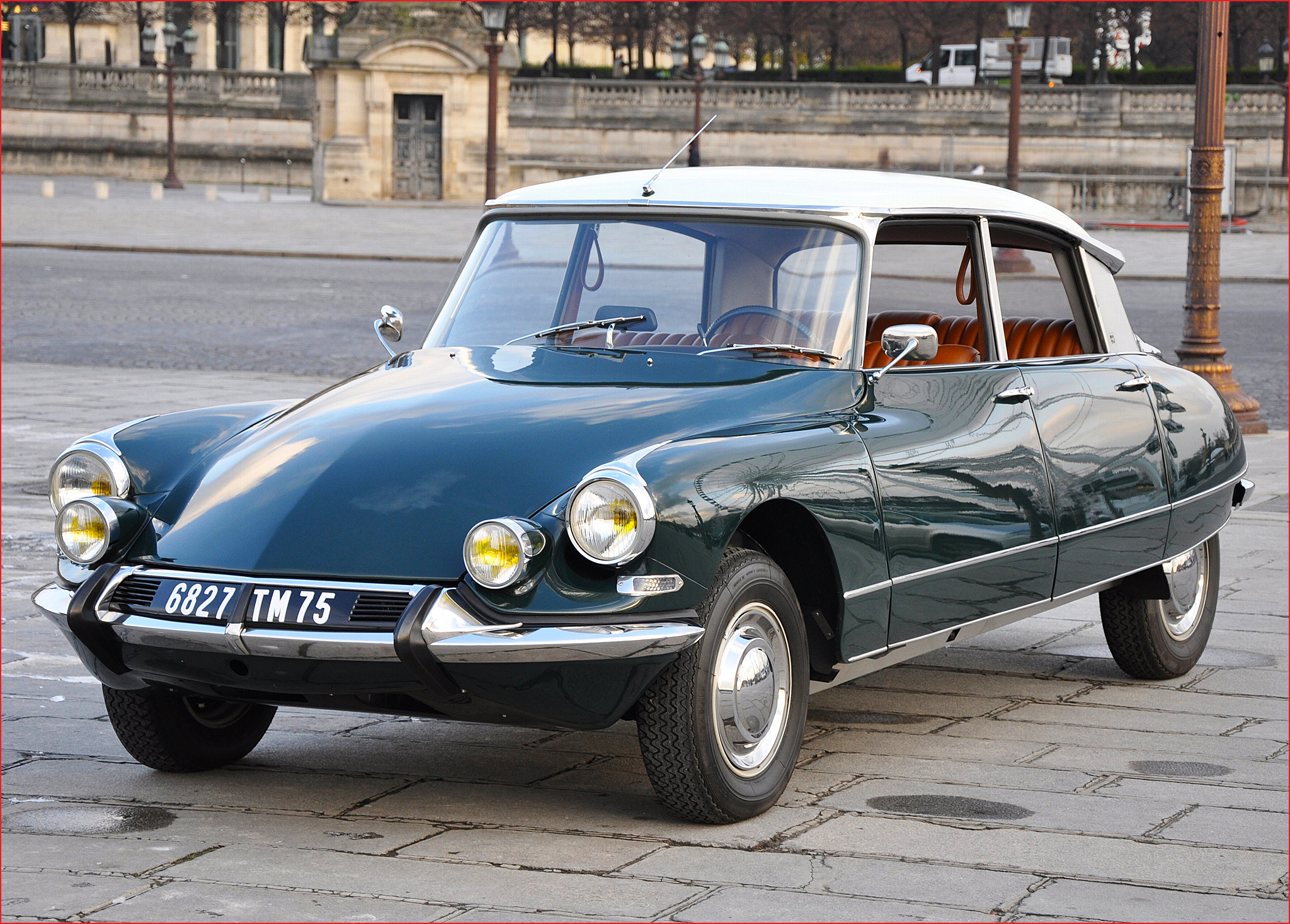
In September of 1962 the DS front end was re-designed to be more aerodynamic. The twin headlights of the previous series remained, but with the addition of optional fender-mounted driving lights. 1965 saw the original 3 main bearing engine get 5 main bearings and the model became known as the DS 19a. 1965 models with an updated 2,175 cc. 109 HP engine, still with 5 main bearings, were designated DS 21.
Series 3 1967-1975
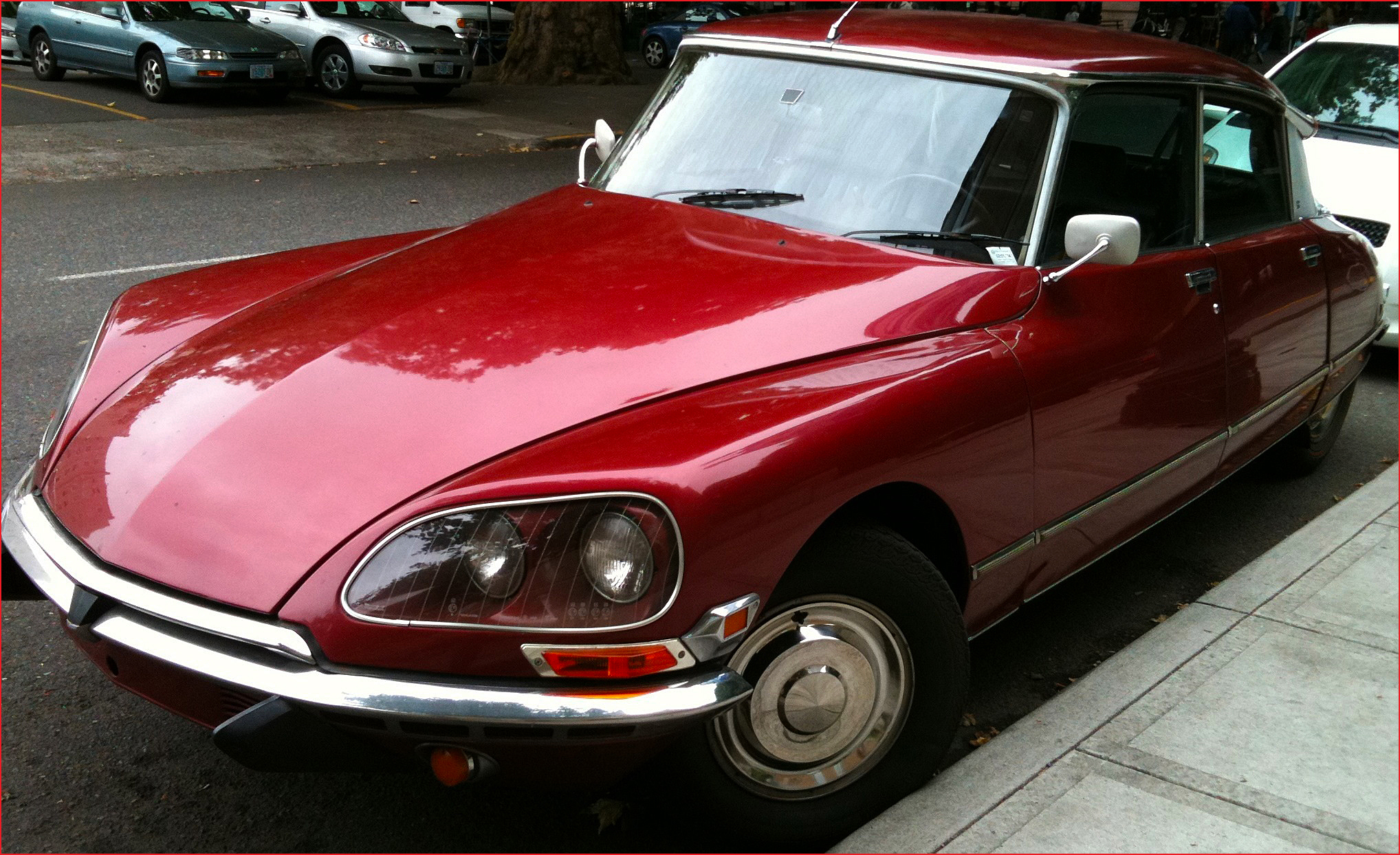
The DS front end was re-styled yet again for 1967 with even more aerodynamic features. Gone were the two round headlights on the end of the fender pods, replaced with four headlights enclosed under glass covers for a cleaner look. The new headlights also came with a new technological innovation: the inner high-beam headlights swiveled up to 80 degrees as the steering wheel turned, enabling the driver to see more of the road in curves. This was accomplished via cables attached to the front wheels. A swiveling headlight was pioneered on the failed Tucker Torpedo almost 30 years earlier, but the DS was the first mass-produced car to incorporate such technology, which would not return to passenger cars until the early 2000s mainly on high-end foreign luxury brands such as BMW, Mercedes-Benz and Lexus. The outboard low-beam headlights were also self-leveling in response to pitching caused by acceleration and braking. US models would not see these headlights, however. Regulations dating to the 1940s mandated round sealed-beam headlights on all cars sold in the US; the new composite headlights of the DS were illegal under the regulations and were replaced with sealed-beam types. The swiveling bright lights were also deemed illegal for use on US roads. The headlight covers also ran afoul of US regulators despite similar covers being used on the US-spec Jaguar E-Type, so the headlight compartment was left open with no covers, increasing drag. Canadian regulators saw no problem with the new headlight system, including the swiveling bright lights, so DS models sold north of the border were Euro-spec.
The fluid for the hydro-pneumatic suspension system was changed in 1967 from the old vegetable oil based fluid to a new synthetic mineral-oil based fluid, which was much less harsh on the system and less hygroscopic. The two fluids were incompatible with each other and the seals for the two systems were of different materials; putting the incorrect fluid in either system would cause the seals to quickly deteriorate. To prevent owners and mechanics from doing this, Citroën added a bright green dye to the new synthetic fluid and painted all hydraulic elements bright green to differentiate the new system. This new synthetic fluid ran afoul of the same US regulations as the old vegetable oil based fluid, so Citroën again used brake fluid in Series 3 DS models sold in the US to comply with the regulations despite its proven unsuitability for the suspension system.
In 1969 the DS 19a became the DS 20, still with the same 5 main bearing 1,911 cc. engine as the DS 19a. The 109-HP DS 21 engine was optional until 1973 when a new 2,347 cc DS 23 engine was introduced, both in carbureted and optional fuel-injected form. The fuel injected version gave the DS a respectable 141 HP, which was a higher output than the four-cylinder engines in new US subcompact models like the Ford Pinto and Chevrolet Vega and on par with the horsepower numbers of the anemic V-8s used in the mid-’70s compact Buick Apollo and Skylark, but still not enough for American full-size luxury car buyers . In 1971 a Borg-Warner 3-speed automatic transmission was available for the first time. Sadly this transmission was never offered in the US where it was sorely needed and may have helped the sagging sales of the DS.
The Citroën DS did not sell well in the US, a mere 38,000 being sold here despite its 20-year run. Sold as a luxury model, parts availability, corrosion of suspension components, and the lack of features found on US-produced luxury cars in the 1960s and 1970s hindered sales. Even the innovative swiveling headlight system of the Series 3 was denied US buyers, leaving only the unique aerodynamic body and innovative suspension as selling points. The size of the car, much smaller than its American luxury competition, price tag and under-powered (by American standards) engine were all strikes against it to American buyers. The price of a 1969 DS was $4,170; that got you a semi-automatic transmission, power steering, manual windows and a 109 HP four-cylinder engine. Contrast that with a 1969 Buick Electra 225 that had an automatic transmission and power windows, brakes, steering and seats, plus a 360 HP V-8 engine…for $4,500, a mere 7 1/2 % more. The Buick was also much larger and more suited to the large expanses of well-maintained open road in the US, as were similar offerings from Lincoln, Cadillac, Oldsmobile and Chrysler.
The DS was quietly discontinued after 1975, the old design having been superseded by the newer, more squared-off yet still aerodynamic SM which had a much more robust 174 HP V-6 engine and the smaller CX model, both of which continued using the innovative Citroën hydro-pneumatic suspension as well as introducing their own technical innovations.✪
Got a Great Car Story? Share it! Reminisce About Your Other Favorite Cars, Too!
Seeyas Again Next Time On FLAT OUT!
It’s President Jeff D. Boofer


