


Hi Folks…And Welcome Again To FLAT OUT!
Let’s Go Teutonic For A While. It’s…
The Porsche 356: 1948-1965
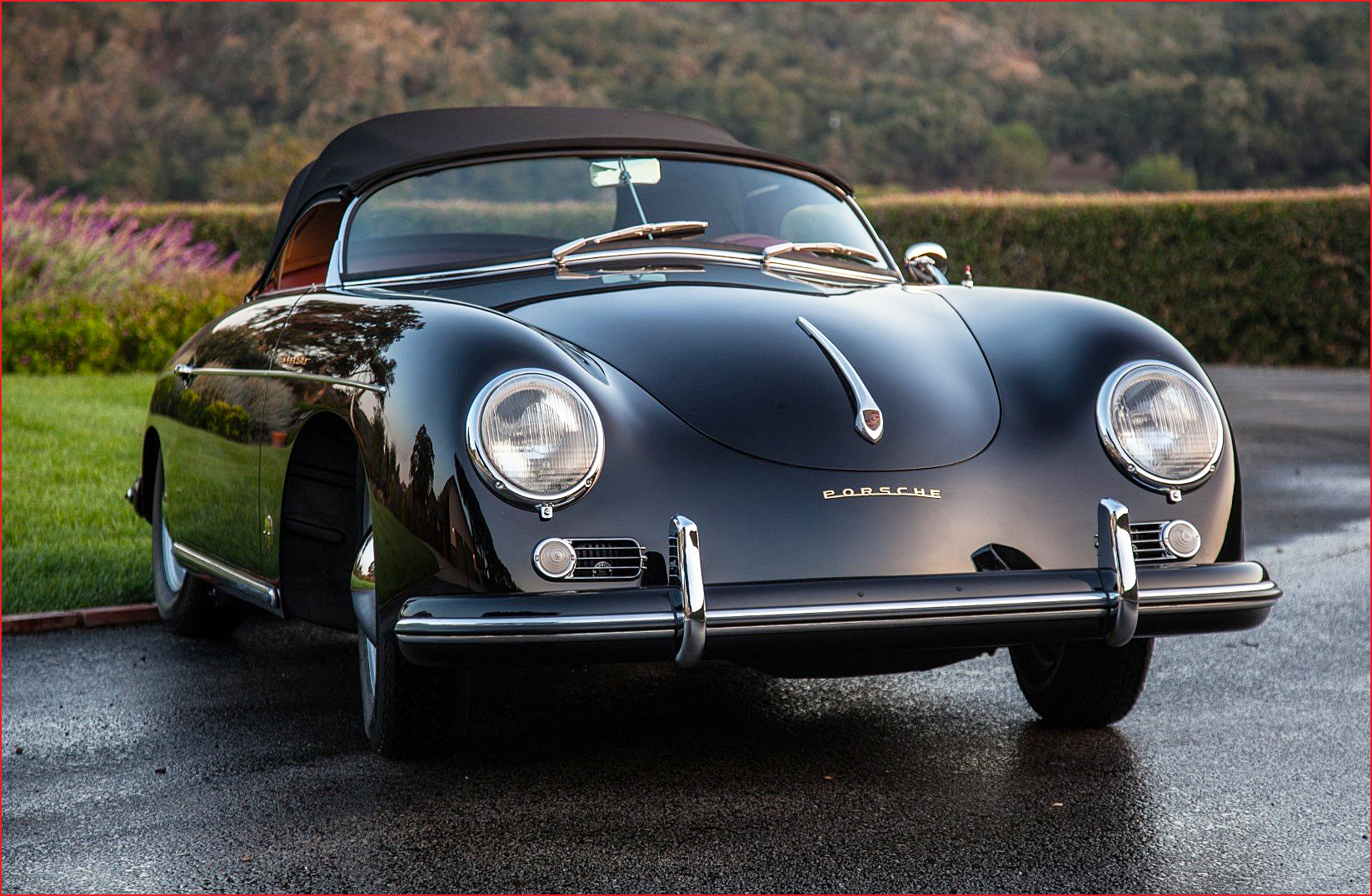
The 356 was Porsche‘s first production vehicle. Building upon the successful wartime Volkswagen Type 1 Beetle, its creator Ferdinand Porsche’s son Ferdinand (known as Ferry) set about to create a sports car based upon the same flat-four cylinder, air-cooled, rear engined, unibody construction. The prototype had a rear-mid engine placement, but production models had the same rear engine configuration as the Beetle. The chassis was a completely new design but the engine case and suspension components were initially sourced from Volkswagen, however as development continued the 356 began to share fewer and fewer parts with its Volkswagen cousin. Initial production was in Gmünd, Austria with the company’s factory relocating to Stuttgart-Zuffenhausen, West Germany in 1950. Only 50 356 models were produced in the Gmünd factory. Those early 356 models produced in Gmünd had hand-crafted aluminum bodies, but Porsche began to use steel bodywork after the move to Zuffenhausen. These steel bodies were not produced by Porsche but contracted out to a coachwork company called Reutter, which was bought out by Porsche in 1963. After the buyout Reutter was able to retain the seat manufacturing part of the business for itself, today we know it as Recaro. Though the build process in Stuttgart was a world away from the primitive conditions of Gmünd, much individual craftsmanship still went into the making of each 356.
Pre-A 1948-1955
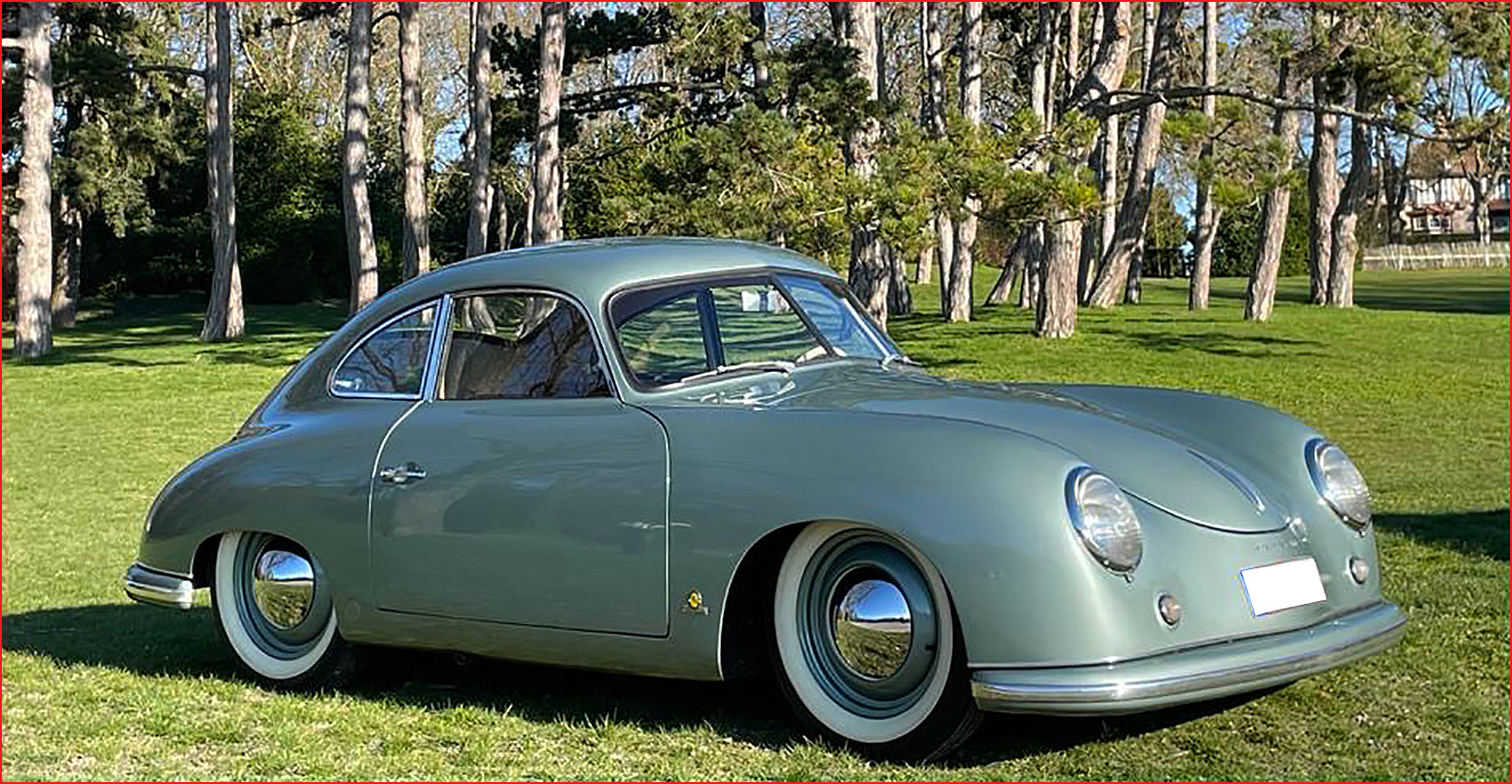
The original 356 was based upon a pre-war race car named Type 64, built for a 1939 Berlin–to-Rome race that was canceled. One can see the genesis of the 356 in this aluminum-bodied streamlined racer, just as one can see the genesis in the Beetle. The initial 40 HP, 1,100 cc single-cam flat-four engine was sufficient to get the 1640 lb. car to 87 MPH, an inauspicious start for a brand that would later be associated with power, speed and handling. in 1953 a larger 1,300 cc engine was introduced with 44 HP, or a “Super” model with 60 HP. These could achieve speeds of 90 and 99 MPH respectively and the 356 was beginning to become a proper sports car. Initially the windshield was a split 2-piece design, by the middle of 1952 it was one piece with a slight V-shape to it. The 356 was initially offered in coupe and cabriolet (convertible) form, at times cabriolets exceeded 50 percent of production.
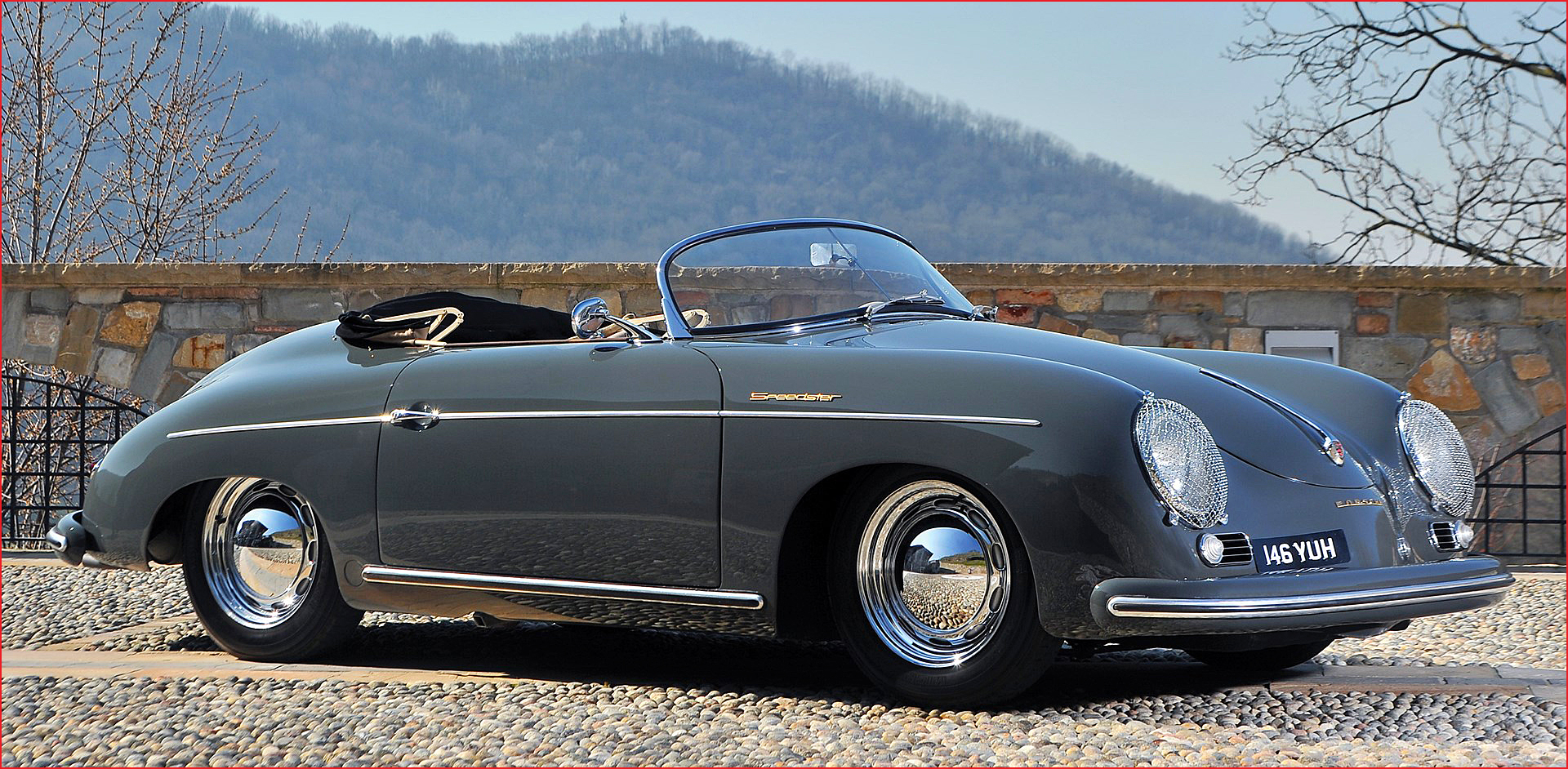
In 1954 Max Hoffman, the sole US importer of Porsches, convinced them to build a stripped-down roadster version with a cut-down removable windshield; this became the Speedster and was an instant hit, especially in Southern California.
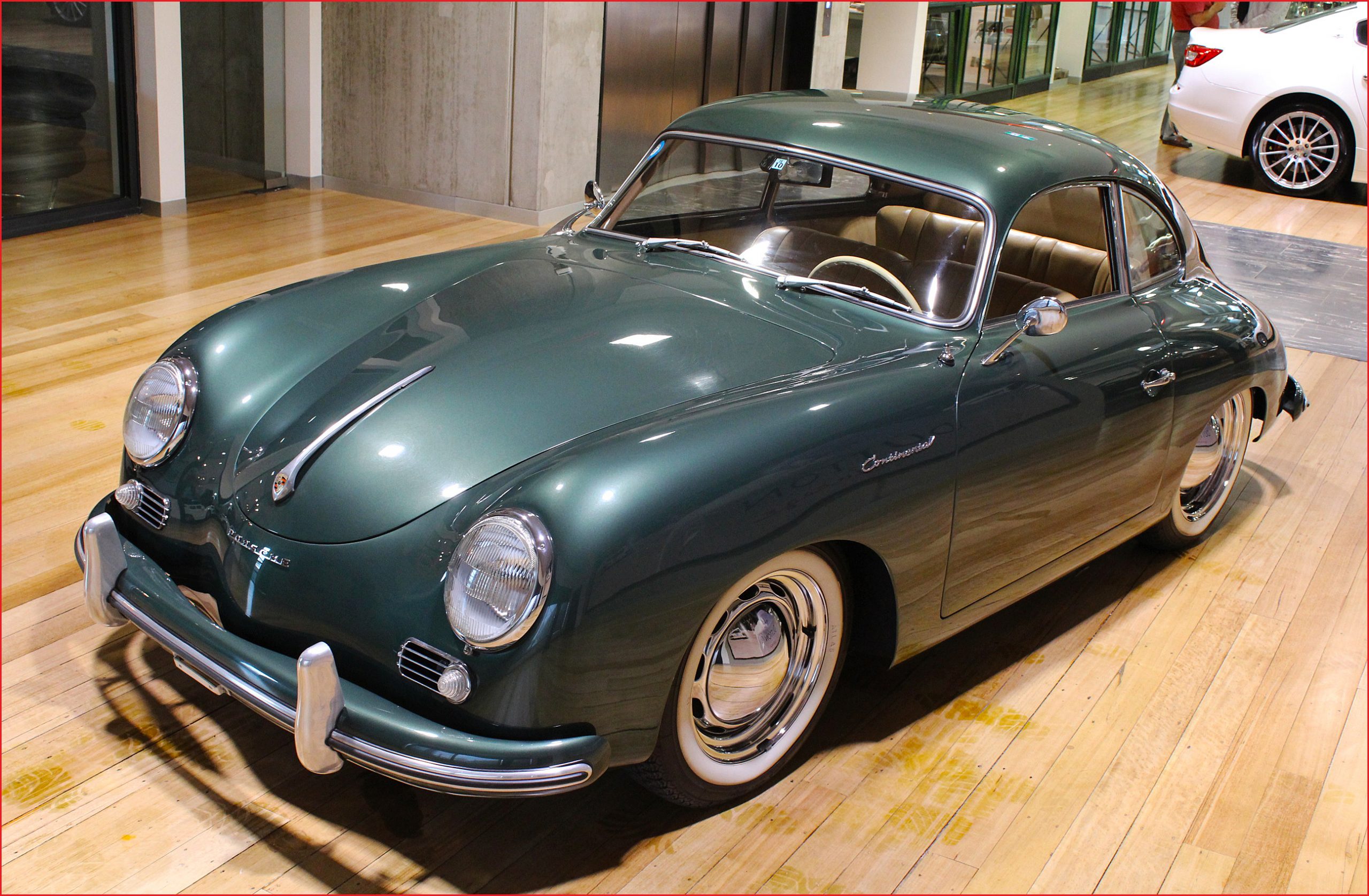
Believing that Americans preferred cars with names instead of numbers, in 1955 he convinced Porsche to rename the 356 models exported to the US to Continental with accompanying script badging on the front fenders. Ford Motor Company took a dim view of this practice by the little German upstart and sued, claiming prior rights based upon the Lincoln model of the same name. Porsche agreed to stop using the name starting in 1956, however the Reutter bodyworks had already pre-drilled holes on a few sets of 1956 fenders for the logos. Rather than waste the pre-drilled fenders or fill the holes they made another script logo that said “European“. These two are some of the rarest 356 models.
356A 1955-1959
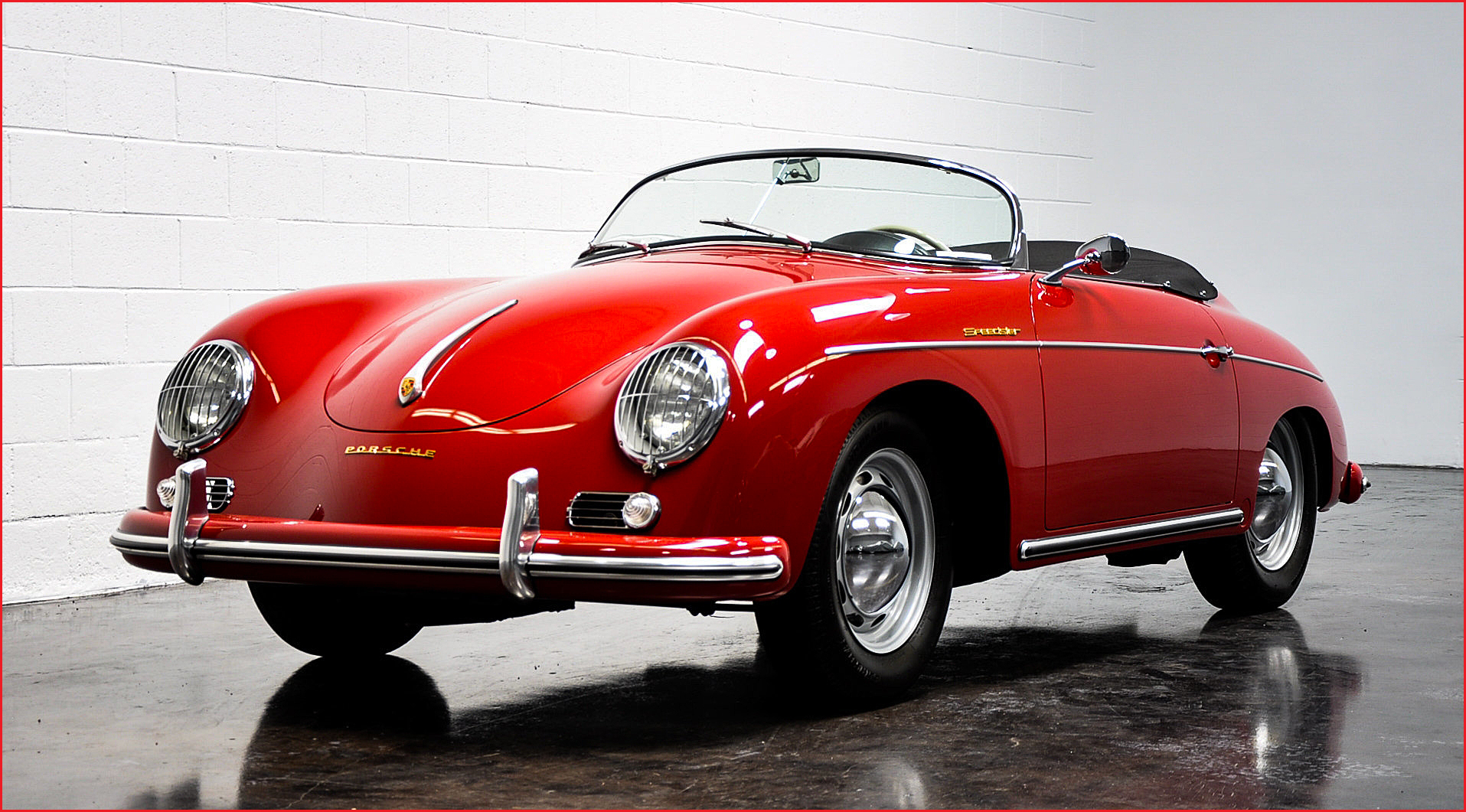
In 1955, the 356 got slight modifications and became the 356A, known internally to Porsche as “Type 1” leading to the “T1” nickname amongst enthusiasts. In 1957 it was further revised and given the internal designation “Type 2,” which enthusiasts re-branded as “T2.” Most came with the 59 HP 1.6 liter boxer-four engine with dual-downdraft Zenith carbs, an upgrade to the 44 HP 1.3 liter from the previous version, although the Super model with 60 HP was still available. A few were equipped with the 1.6 liter Carrera engine from the racing version that put out 100 HP and would top 120 MPH. This was a 4-cam version of the existing 1.6.
356B 1960-1963
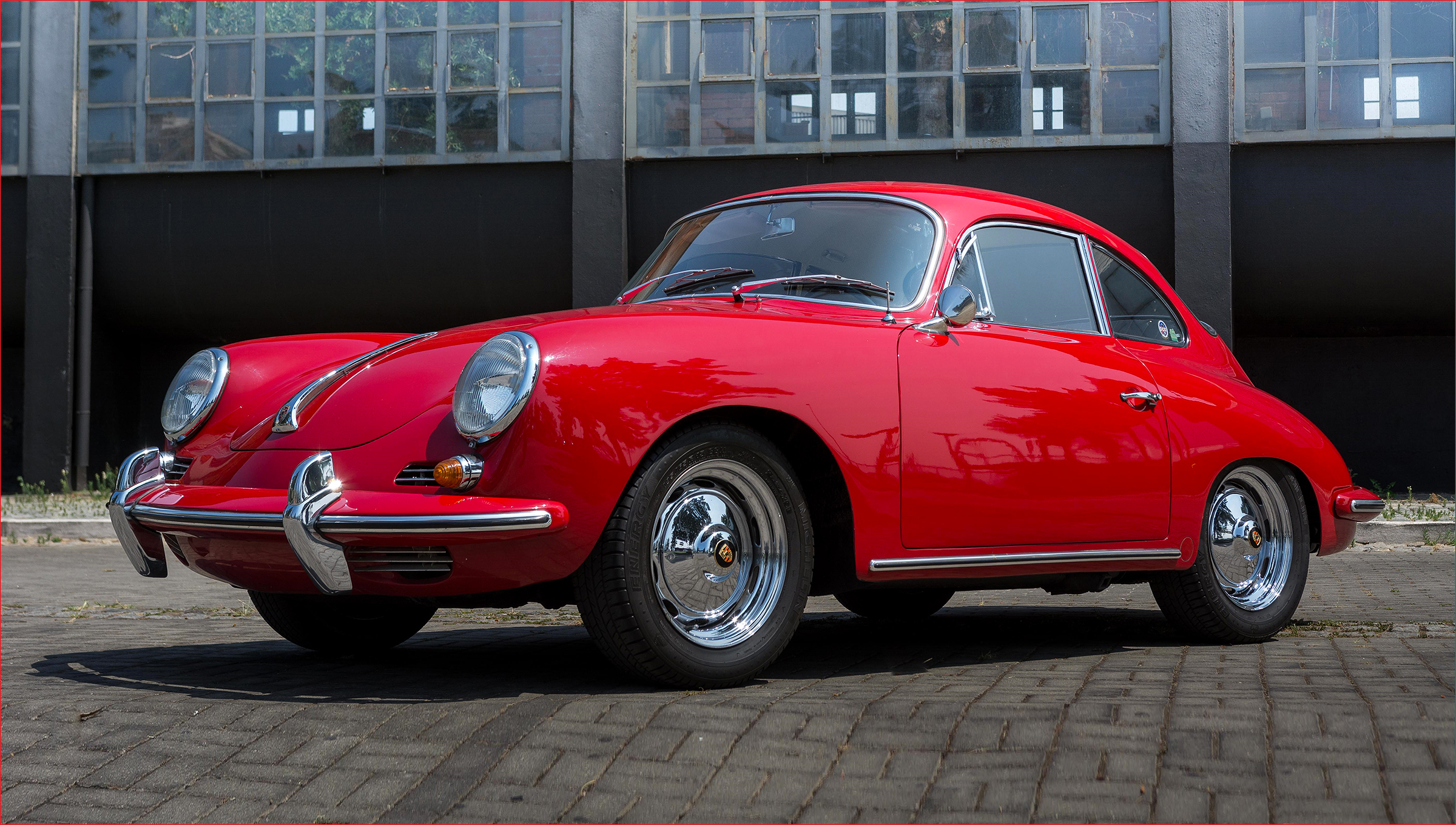
In 1959 more significant styling and technical refinements made their way into the 356 and gave rise to the 356B, or T5 body type. Horizontally finned brakes for better stopping power, a sturdier gearshift lever and synchromesh transmission eased gear changes and re-designed seats enhanced driver comfort. Solex carbs replaced the Zenith models on the upgraded Super 90 and Carrera with a corresponding HP increase to 90 HP and 103 respectively.
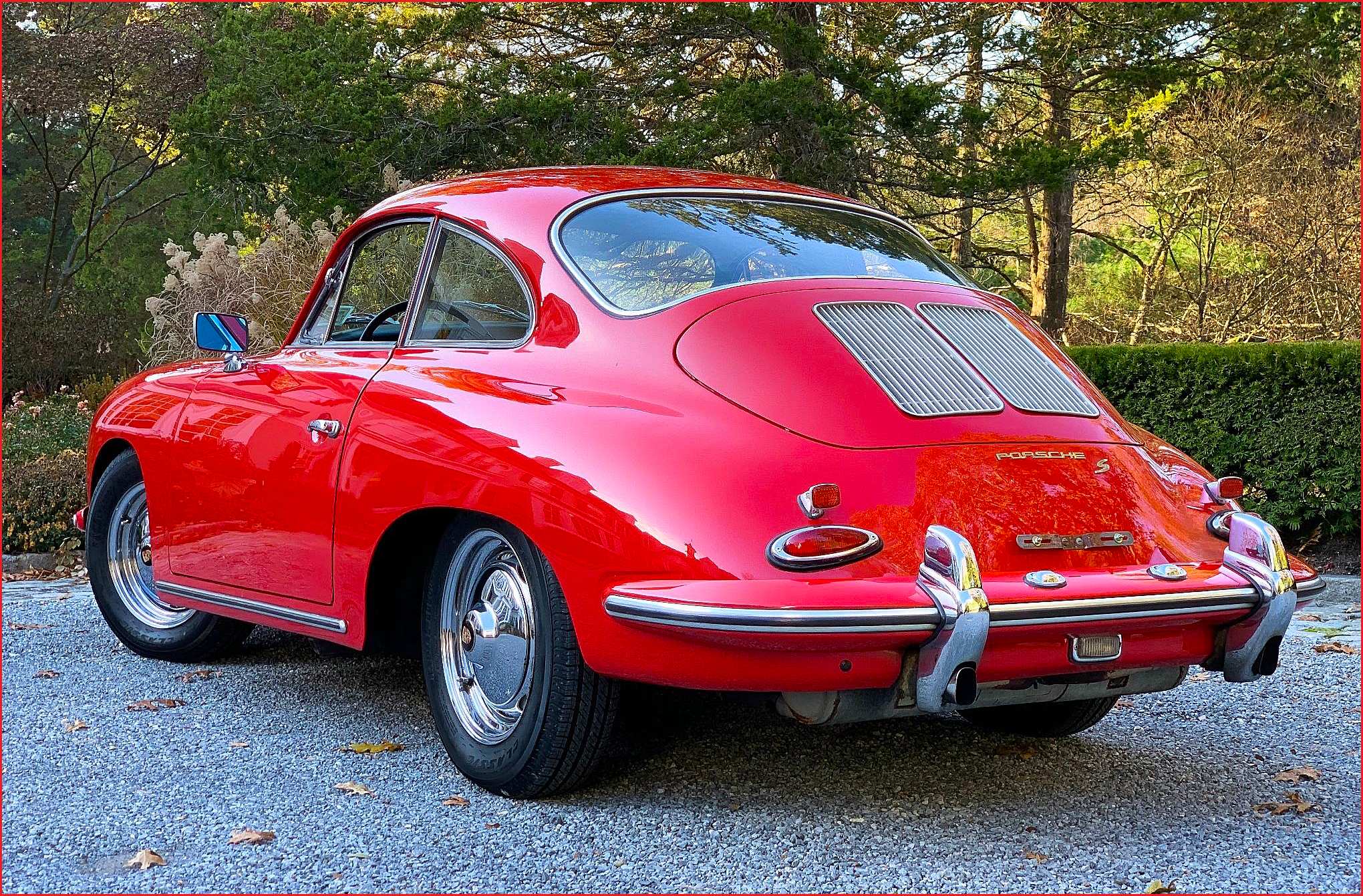
In mid-’62 the “T6” body type, still called 356B, debuted with twin grills on the engine cover replacing the single grill of the A and T5 bodies, an external fuel filler door on the right front fender and a larger rear window in the coupe model.
356C 1964-1965
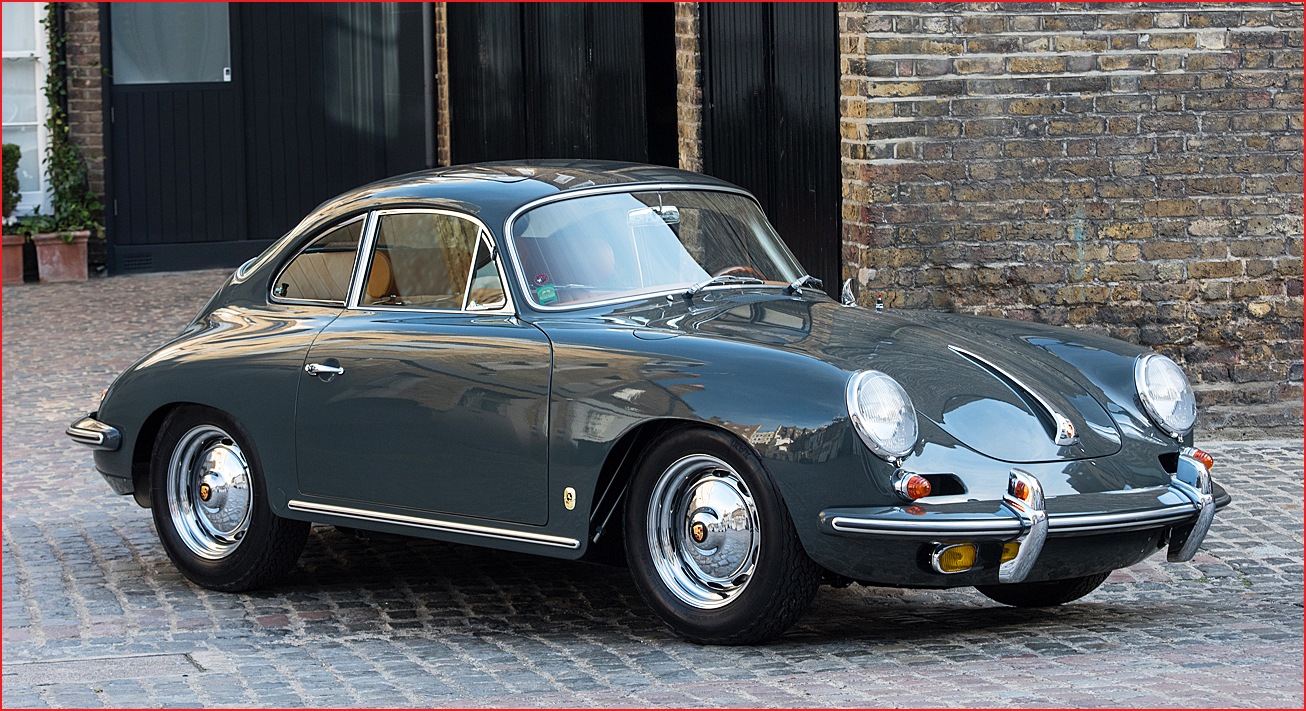
The last revision of the 356 was the 1964 C model, which did away with Porsche’s Volkswagen roots for good. It featured 4-wheel disc brakes under new 15-inch wheels and a 95-HP engine in SC trim. The new Carrera 2 now boasted a 130 HP engine which could propel the little Porsche to over 200 KPH (124 MPH). This was the most powerful engine Porsche had produced to that time and featured enlarged sodium-filled valves to dissipate heat. The 356 soldiered on into 1965 as a new model emerged to replace it. 16,668 356C’s were built.
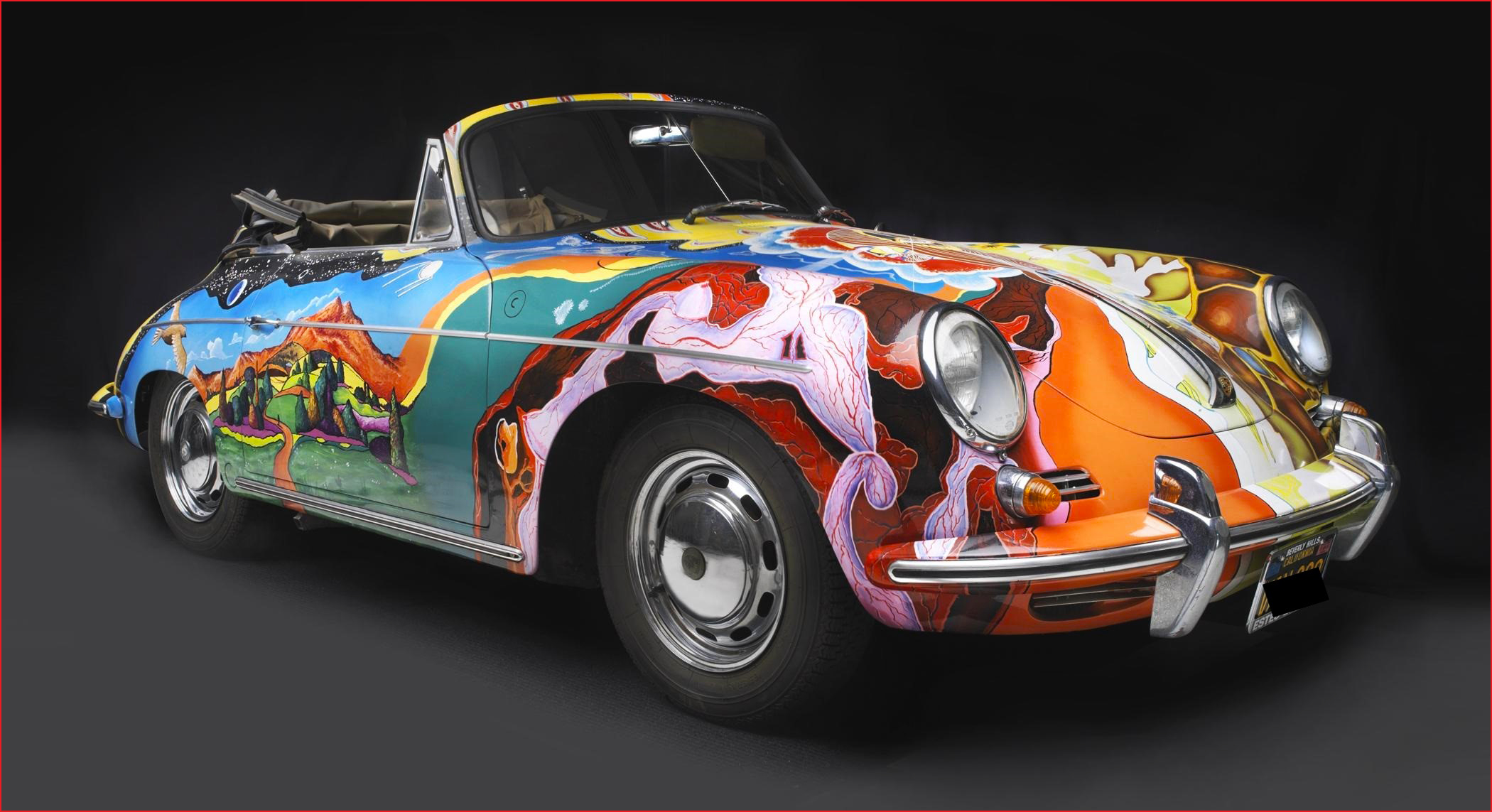
This particular custom-painted 356C Cabriolet was owned by Janis Joplin, who prayed for a Mercedes-Benz because her friends (including her, it seems) all drive Porsches…and she must make amends. (All you old farts will get that!)
The Porsche 356 certainly wasn’t the fastest car of its day, or even the sexiest…those superlatives were reserved for the likes of Jaguar, Ferrari and Aston-Martin. It was, however, a very capable little sports car for the time, especially in Super or Carerra trim, and a stepping-stone towards something greater…one of the most iconic and most long-lived designs ever, the Porsche 911 and its variants, which carries on with very little exterior change to this day.✪
Got a Great Car Story? Share it! Reminisce About Your Other Favorite Cars, Too!
Seeyas Again Next Time On FLAT OUT!


