


Hi Folks…And Welcome Again To FLAT OUT!
The Final Trans Ams Await! Tonight, It’s…
The Pontiac Trans Am (Part 3): 1993-2002
In 1993 the Trans Am, along with the rest of the Firebird line, took its final, more aerodynamic form and gained a beak-like front more representative of the 1988 Banshee IV concept car that was previewed in the 1991 facelift. Nearly 90 percent of the parts were new and the front fenders and fascias were now RIM reaction-injection-molded plastic to save weight and the hatchback, doors and roof were SMC sheet-molding compound. The floorpan and rear suspension remained nearly identical to the 3rd generation. Trim levels remained the same with the base model receiving a 3.1 liter V6 while Formula and Trans Am both got V8s. An overall decline in the sports coupe market and changing tastes of young performance car buyers sealed the fate of not only the Trans Am but Firebird as well, but the 4th Generation Trans Am would evolve into the fastest and most powerful since the glory days of the early 1970s. Sadly, Pontiac would not survive to have the Firebird/Trans Am compete alongside the retro resurgence of the Camaro in 2010.
Fourth Generation 1993- 2002
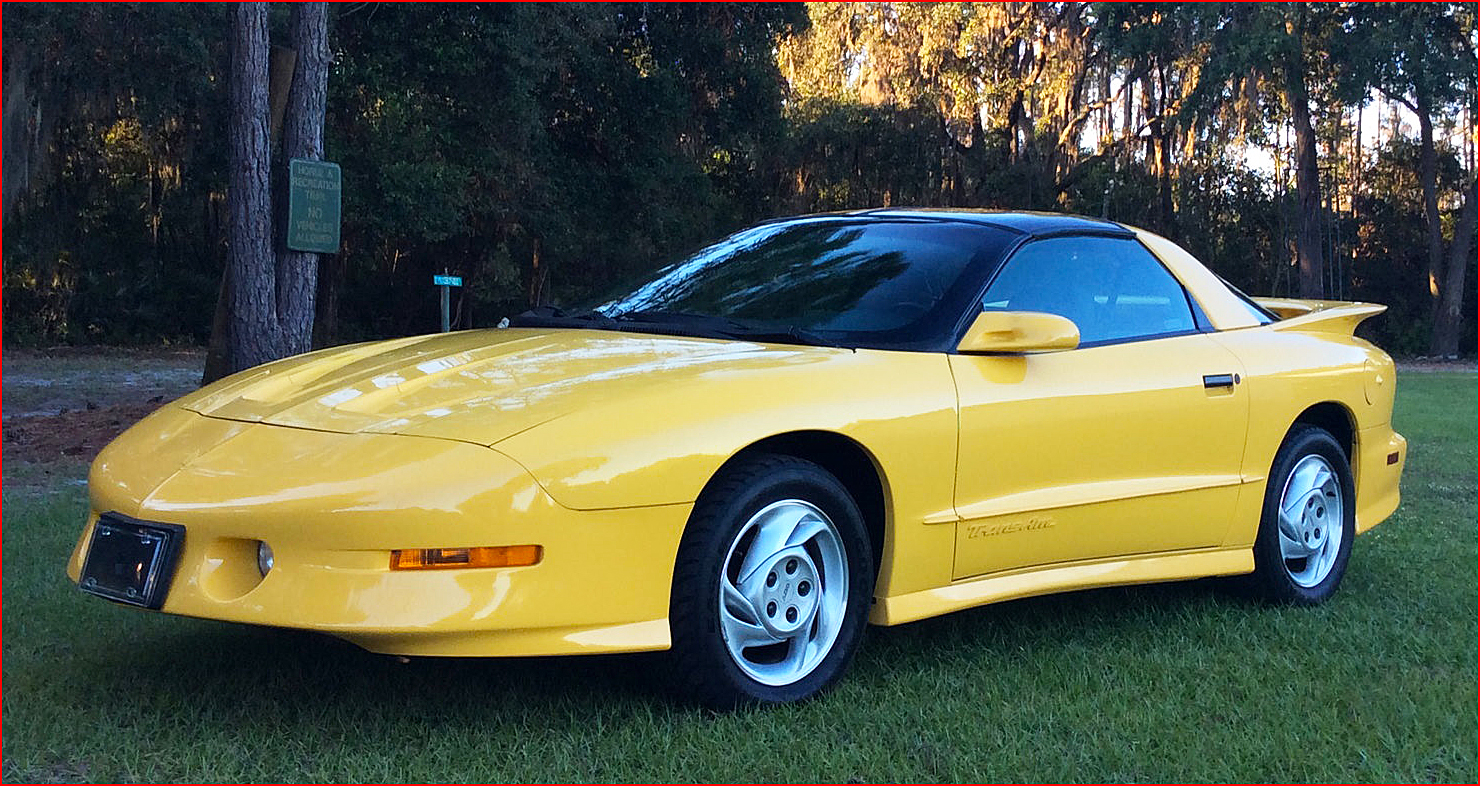
The F-body platform was improved with dual airbags, four wheel disc brakes with an antilock system, power-assisted rack-and-pinion steering, a new short/long arm front suspension as well as 16 inch wheels. New DeCarbon shocks replaced the old MacPherson strut system in previous Firebirds, improving handling. The 1993 Trans Am‘s sole engine would be the 280 HP 5.7 liter LT-1 lifted from the Corvette, but with more flow-restricted intake and exhaust systems than the Chevrolet flagship for a 20 HP deficit to the ‘Vette.’ That deficit in the heavier Trans Am was worse than it sounds; the Corvette was a full second faster to 60 MPH at 4.9 seconds and 0.8 seconds faster through the quarter mile at 13.7. Both Formula and Trans Am could be had with either a Borg-Warner T56 six-speed manual or a 4L60 four-speed automatic transmission. The sound system was upgraded with cassette or compact disc available along with steering wheel audio controls. Motor Trend magazine gave its 1993 Car Of The Year spot to the new, improved Firebird.
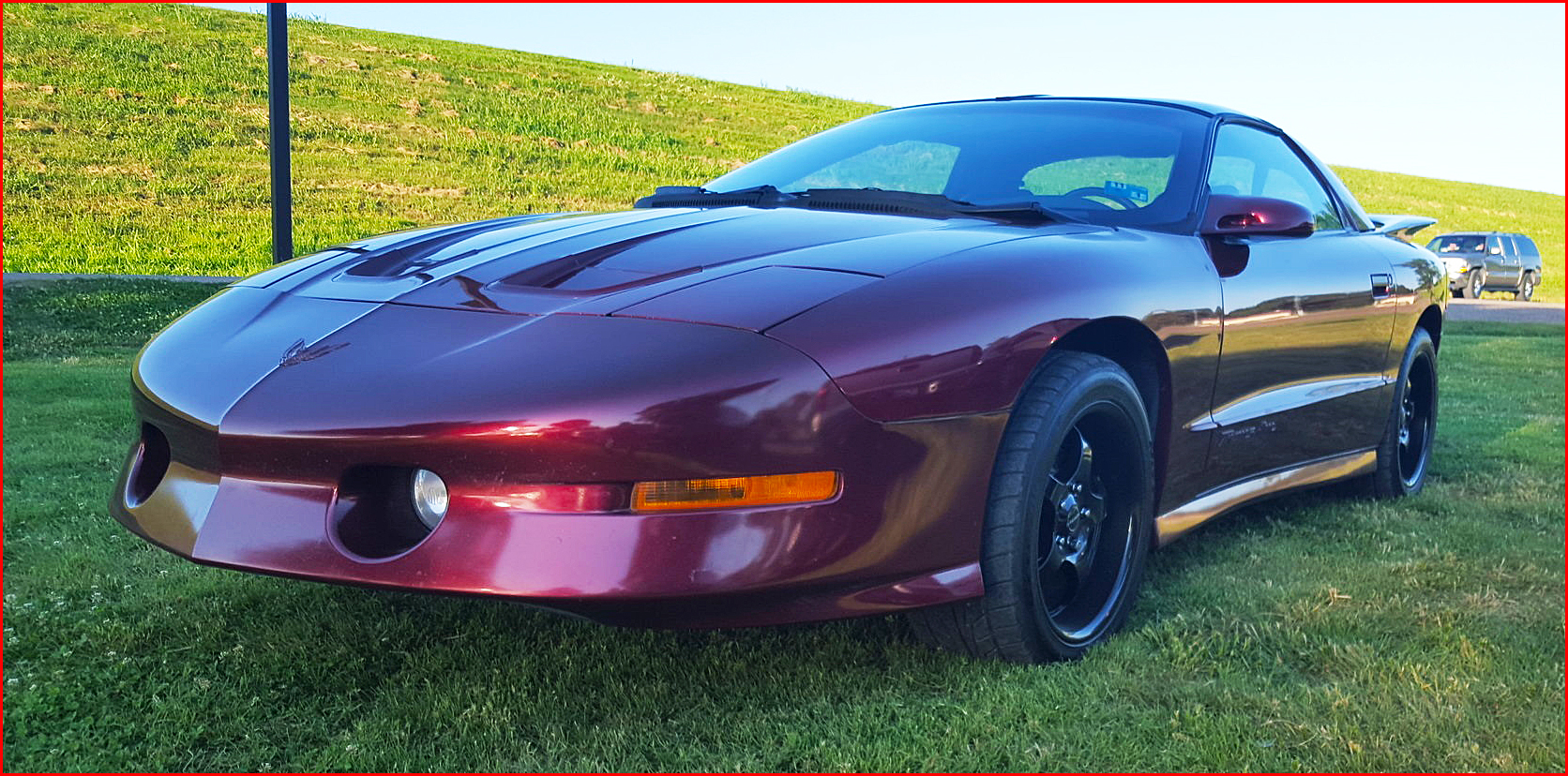
1994 saw the introduction of the 4L60E four-speed automatic with electronic controls, and the six-speed manual also got electronic controls with an annoying “Skip Shift” feature that would, depending upon throttle position, force an upshift from first to fourth gear for better fuel economy. This frustrated buyers and led to a plethora of aftermarket skip shift eliminator kits. New electronic traction control kept the back end in line, but could be turned off via a console button if you wanted to let the big ‘Bird‘s tail feathers slide around a bit. GM also made the switch from speed density to a MAF sensor-wired ECU. What this meant was you could no longer improve the performance of your Trans Am by buying and installing a chip, you now needed a laptop and expensive software to do so, a blow to do-it-yourself enthusiasts. This year also saw the re-introduction of the convertible, so once again open-air flight was possible in your ‘Bird. A new Delco 2001 stereo system with more ergonomically-designed control panels replaced the old stereo. This was not exclusive to the Firebird line but was introduced across the Pontiac lineup. An electric rear-window defroster was now standard.
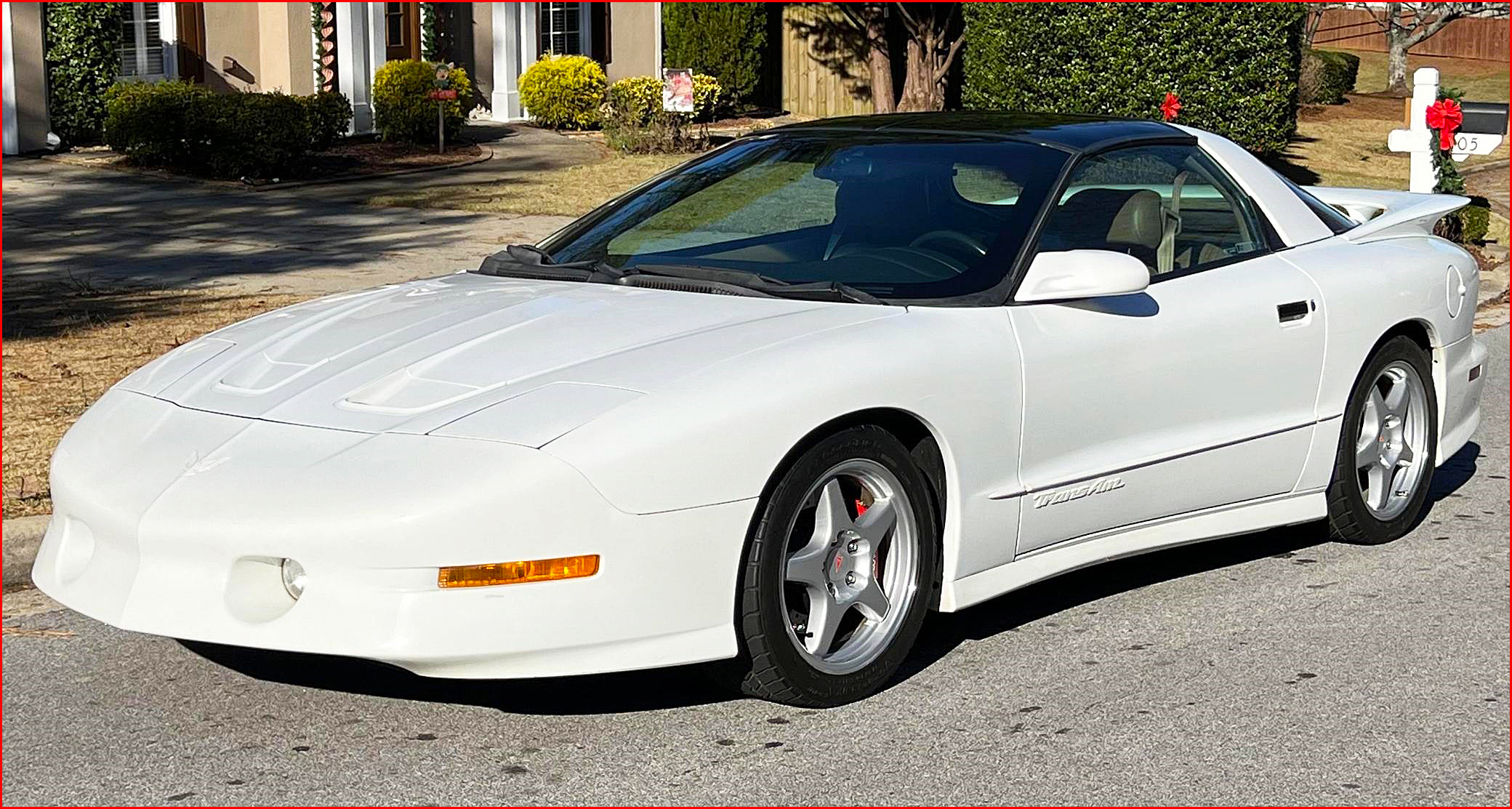
The GT was back, with just about every Trans Am option available as standard. The GT came with a 155 MPH speedometer as opposed to the 110 MPH ones in standard Trans Ams, plus no computer-controlled governor limiting top speed. You needed the higher numbers as the GT had a theoretical top speed of 160. It had a production run of 1800 and included luxury items such as leather seats. The package also included 235/55R16 Goodyear Eagle GS-C performance tires. Most GT’s got the optional “uplevel spoiler” available on all Trans Ams, but it was not part of the package. The GT also outsold the base Trans Am in this year.
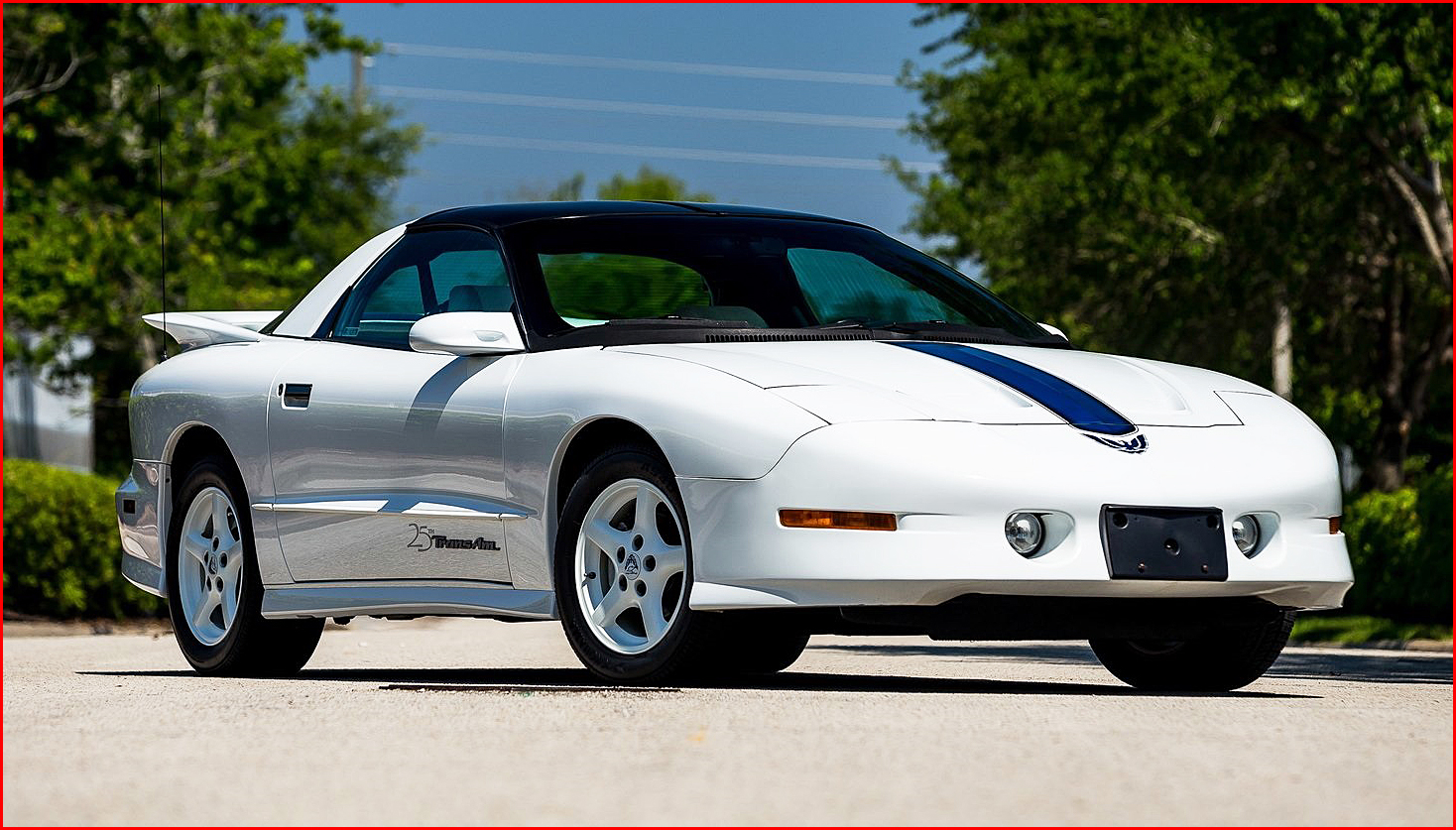
1994 was also Trans Am‘s 25th anniversary, and a special blue and white 25th Anniversary Edition with a single blue stripe down the center was offered. They rode on white-painted five-spoke 16-inch wheels and had white leather seats and door trim with 25th Anniversary embroidery. For less than a grand over the price of a GT, you could own a collectible Trans Am. 2000 were produced, with most (1412) being T-tops, 338 hardtops and 250 convertibles.
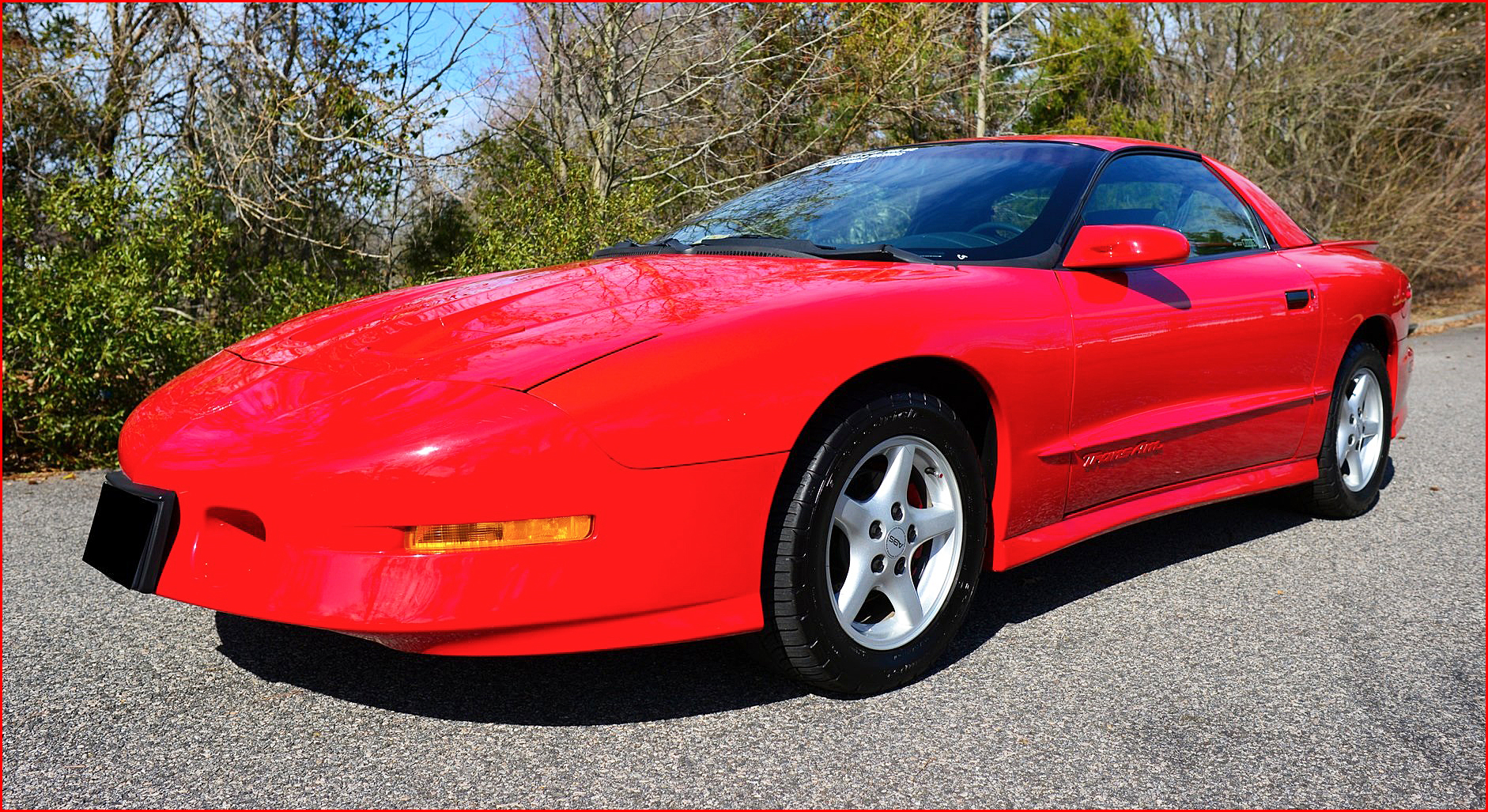
1995 saw minimal changes in the Firebird line other than the fact that the Trans Am GT was dropped after just one year. A tall-profile rear spoiler was new along with 16X8 inch 5-spoke aluminum wheels borrowed from the 25th Anniversary Edition, but in silver. These replaced the much-despised stock “salad shooter” wheels of the previous two years.
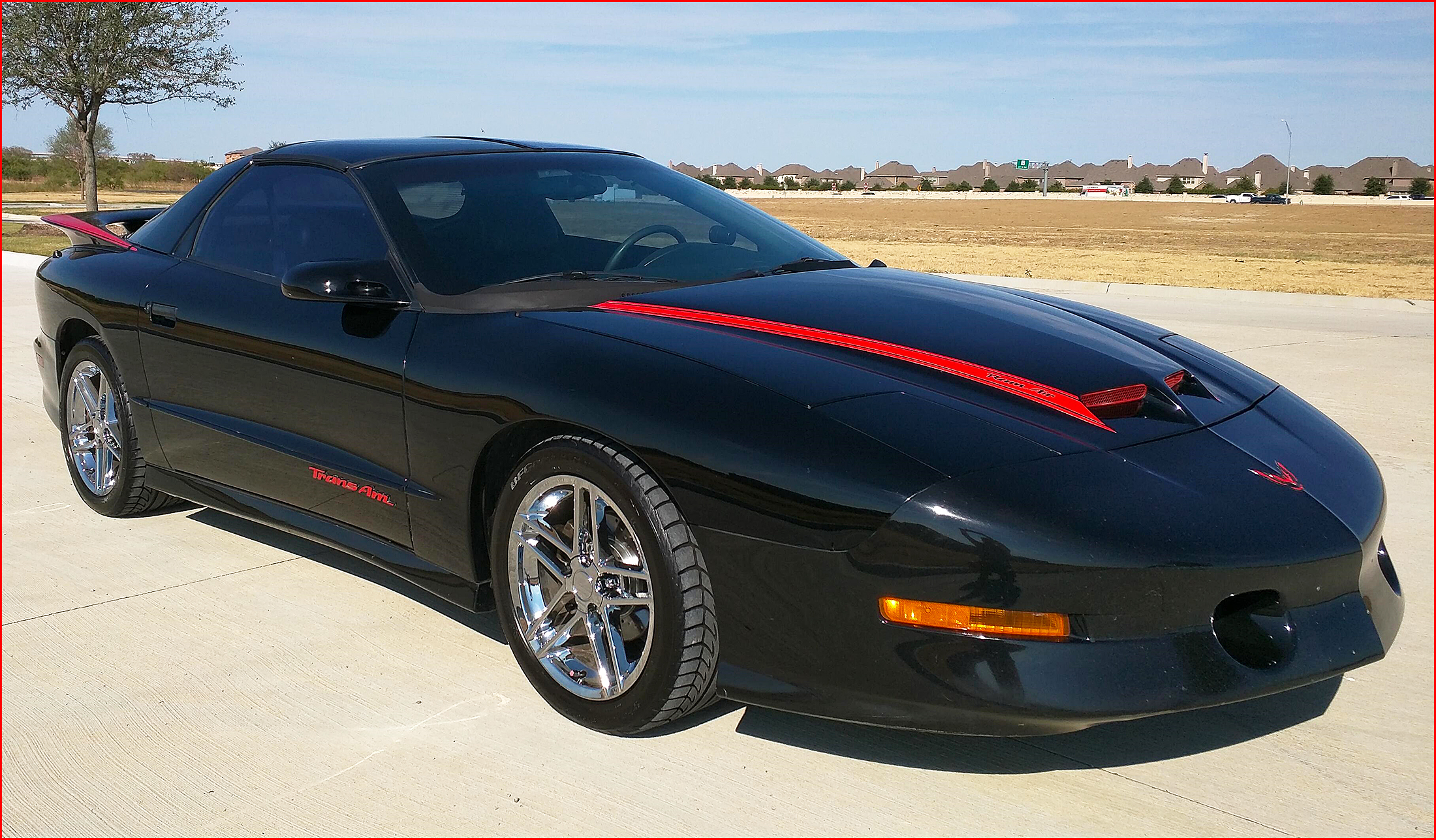
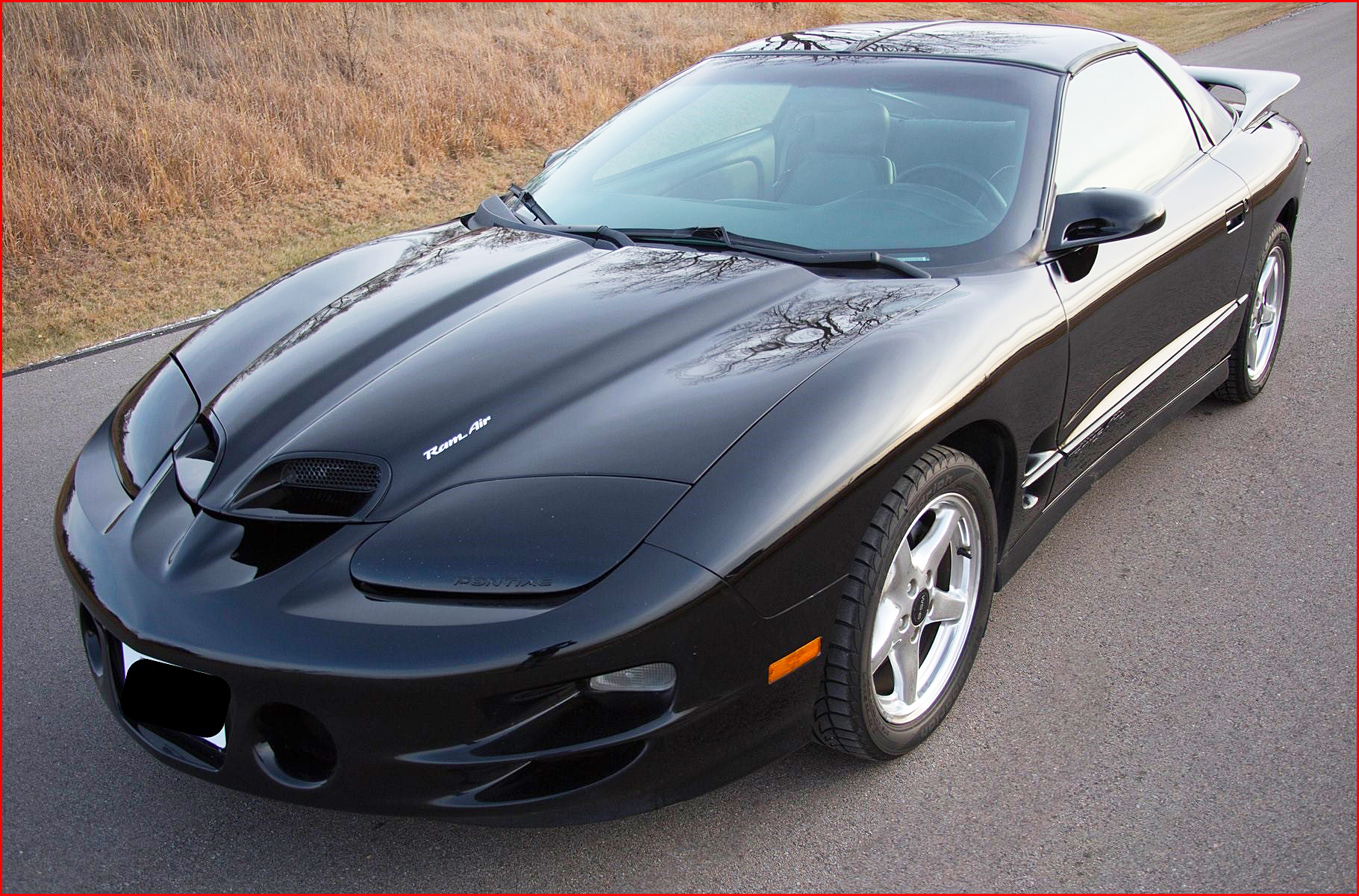
The 5.7 liter V8 in Formula and Trans Am got a 10 HP bump in 1996 thanks to the use of dual catalytic converters that reduced exhaust back pressure, but the big news was the re-introduction of the $2,995 WS6 option “Ram Air” cold air induction system, boosting the 5.7’s output from 285 to 305 HP. This option also added twin nostril intakes on the hood with “Ram Air” decals, a huge air cleaner, dual-outlet exhaust, 17-inch wheels with 275/40R17 Goodyear Eagle rubber and the upgraded 1LE suspension package with stiffer springs and different valve timing on the DeCarbon shocks from stock. The suspension upgrade also included harder Panhard rod bushings, a thicker 32mm front sway bar and a beefier transmission mount. This option was available on Formula and Trans Am coupes, but not convertibles, presumably because of the lessened structural rigidity of the drop-top. 2051 WS6-optioned Trans Ams were sold. Red leather interiors were now available on Formula and Trans Am, which also received standard air conditioning.
Harley-Davidson also equipped 40 identical black WS6 Trans Ams with special Harley-logo embroidered seats and decals on the front fenders, most being sold in Southern California.
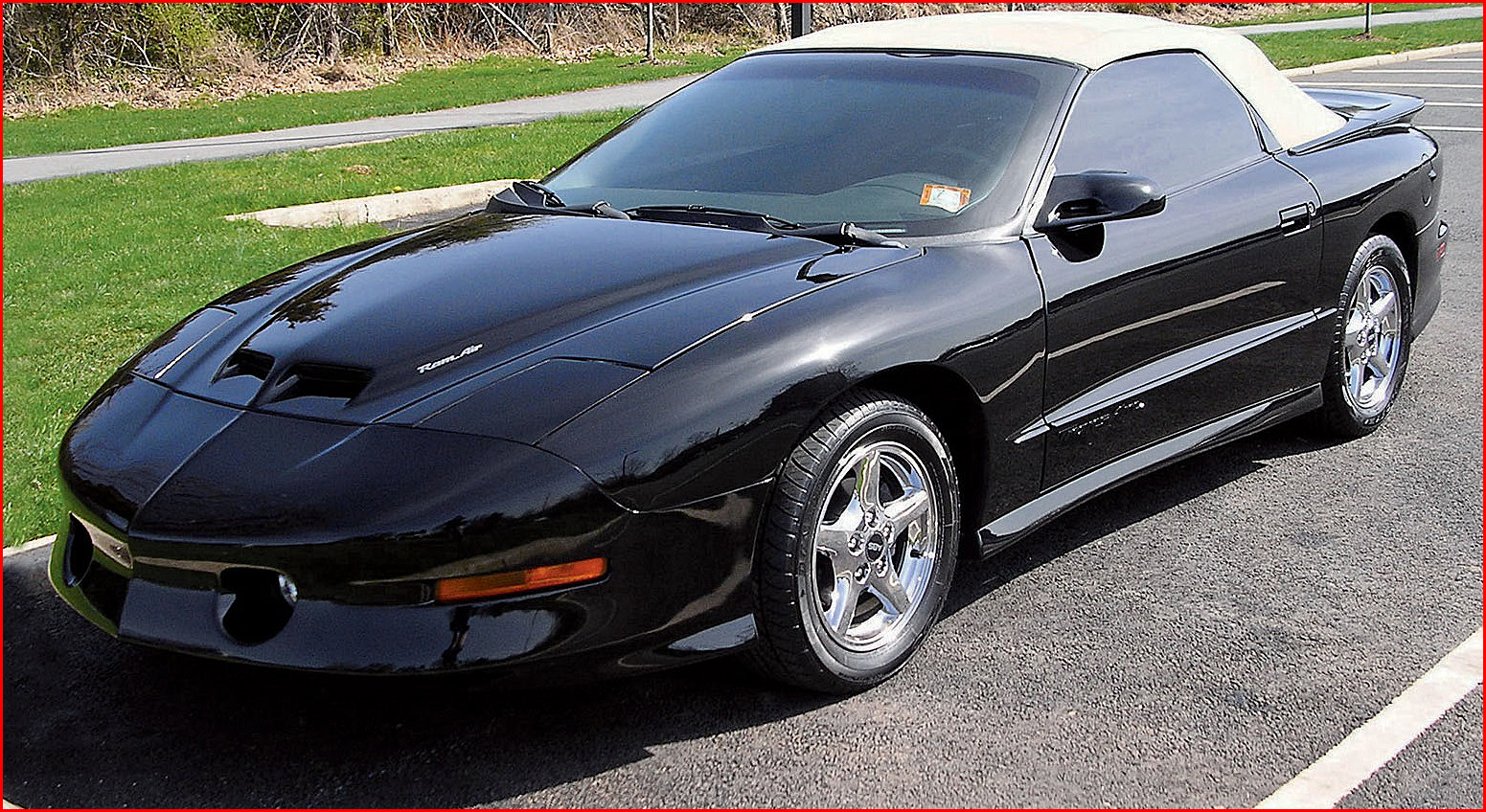
Daytime running lights were introduced for 1997 along with a digital odometer and an optional 500-watt Monsoon cassette or CD stereo. WS6 option buyers could now feel the wind in their hair due to more chassis rigidity in the convertible that could handle the extra HP and torque of the package. The 17-inch rims on WS6 cars also now had a high-polish finish. Despite the popularity of the high-performance Trans Ams overall Firebird sales had begun to slip, causing GM executives to question the future of the F-body ponycars.
40 black WS6 Trans Ams were produced with special commemorative decals for the opening of the Fontana California Speedway. This was an effort by local Pontiac dealers to show support for the new track.
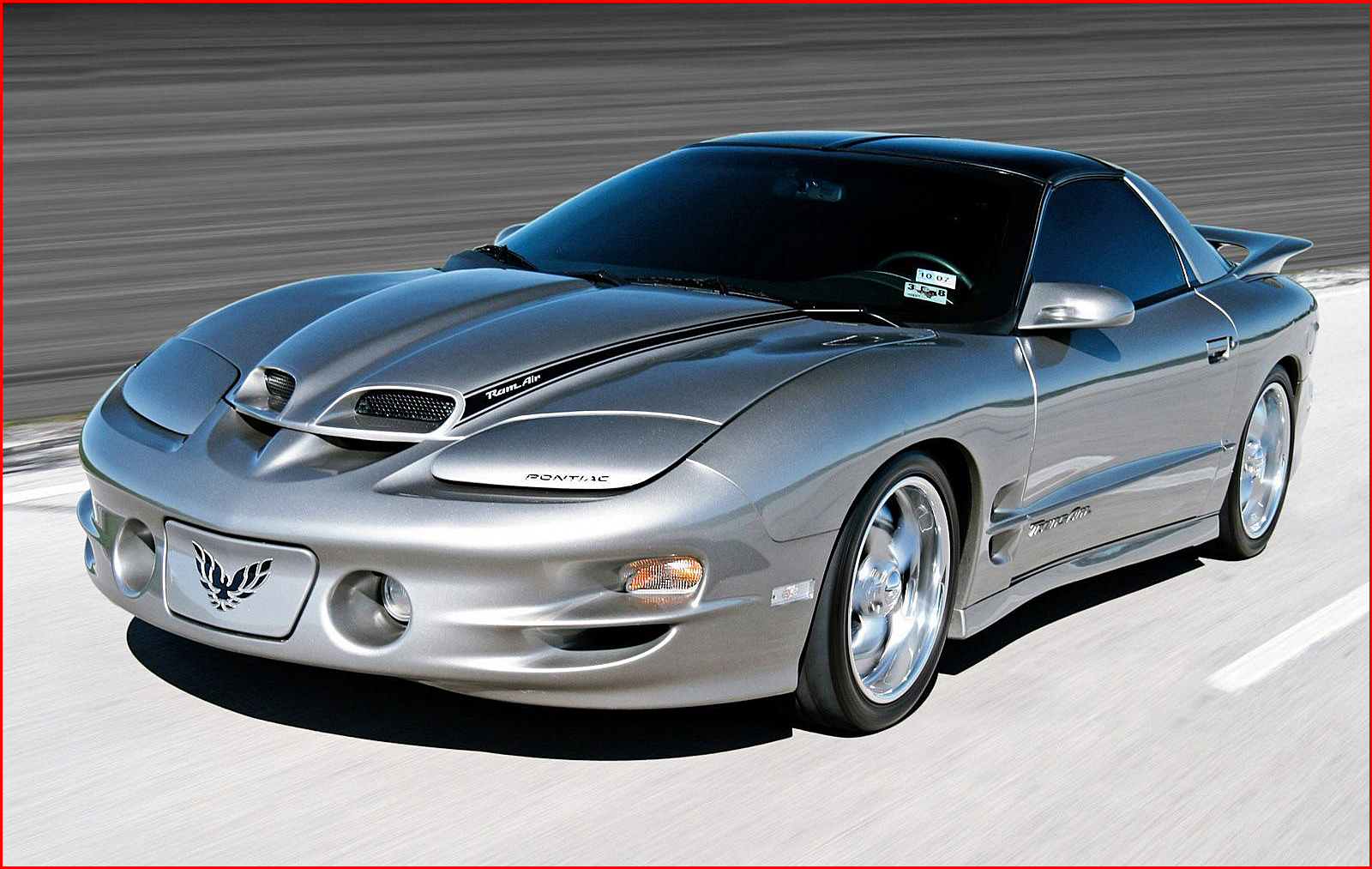
The entire Firebird line received a mid-cycle refresh in 1998, with Trans AM & Formula getting longer intakes in the nose and a new front fascia with twin air ports under the hood line and heat extractors in the front fenders behind the wheels. These also appeared on base Firebirds as part of a Sport Appearance Package, but they retained the V6 with the V8 reserved for the top models. The V8 was also upgraded from the LT-1 to the all-aluminum LS-1, which had debuted in the previous year’s Corvette. The new mill was rated at 305 HP in base trim and 320 HP when outfitted with the WS6 “Ram Air” option. LS-1 equipped Formulas and Trans Ams received an aluminum driveshaft, and all models got four-wheel disc brakes with larger rotors, dual-piston calipers and Bosch anti-lock brakes. A new electronic brake force distribution system (EBD) replaced the old hydraulic proportioning valve for increased brake performance. Handling was improved thanks to softer springs and fine-tuned DeCarbon shocks. Pop-up quad headlights appeared throughout the line, while the Trans Am received fog lights integrated into the front fascia. Leather power-adjustable seats were now standard.
The automotive press took notice, with MotorWeek calling the new Trans Am “brutish compared to the more refined Mustang” but also praising its power and handling, saying that the sub-$27,000 base Trans Am delivered “Corvette performance for a minivan price”. Motor Trend magazine shared the sentiment, again giving the refreshed model its “Car Of The Year” honors. Sports Car International magazine tested a Ram Air model, clocking 0-60 in 5.3 seconds and a 13.45 ¼ mile. Pontiac was quick to capitalize on the improved power of the new LS-1 with the WS6 option, claiming in ads that “The Muscle Car Is Back” with a TV spot showing a sinister-looking black WS6 T/A pouncing on and devouring what looked to be a Lamborghini…and belching.
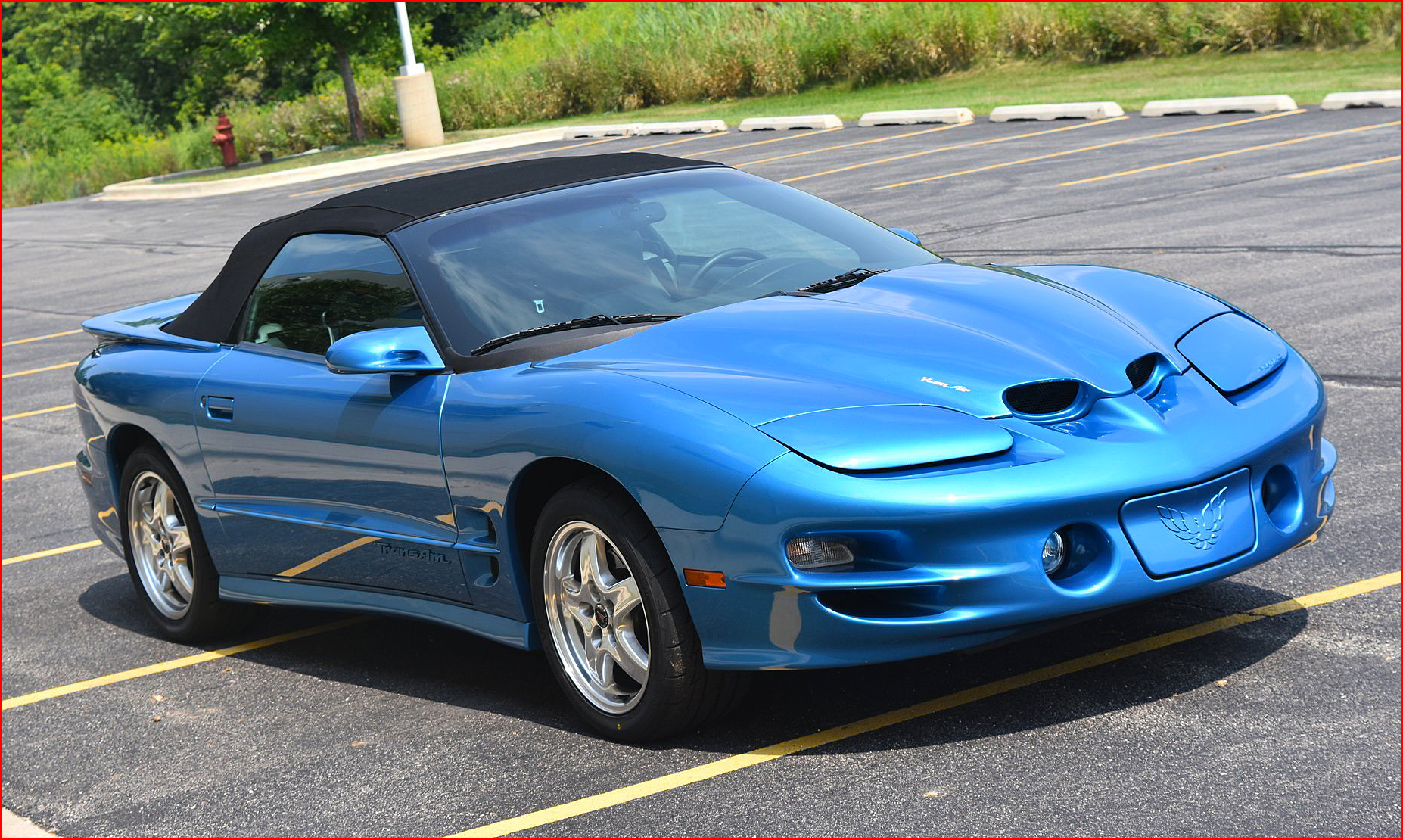
The 1999 model got a more subdued hoodline, toning down the twin tunnels of the previous model a bit. A new Torsen limited-slip differential was added to Formula and Trans Am, as well as optional transmission and power steering coolers and a Hurst shifter for six-speed manual equipped models. The fuel tank was also upped to 16.8 gallons across the line for increased range.
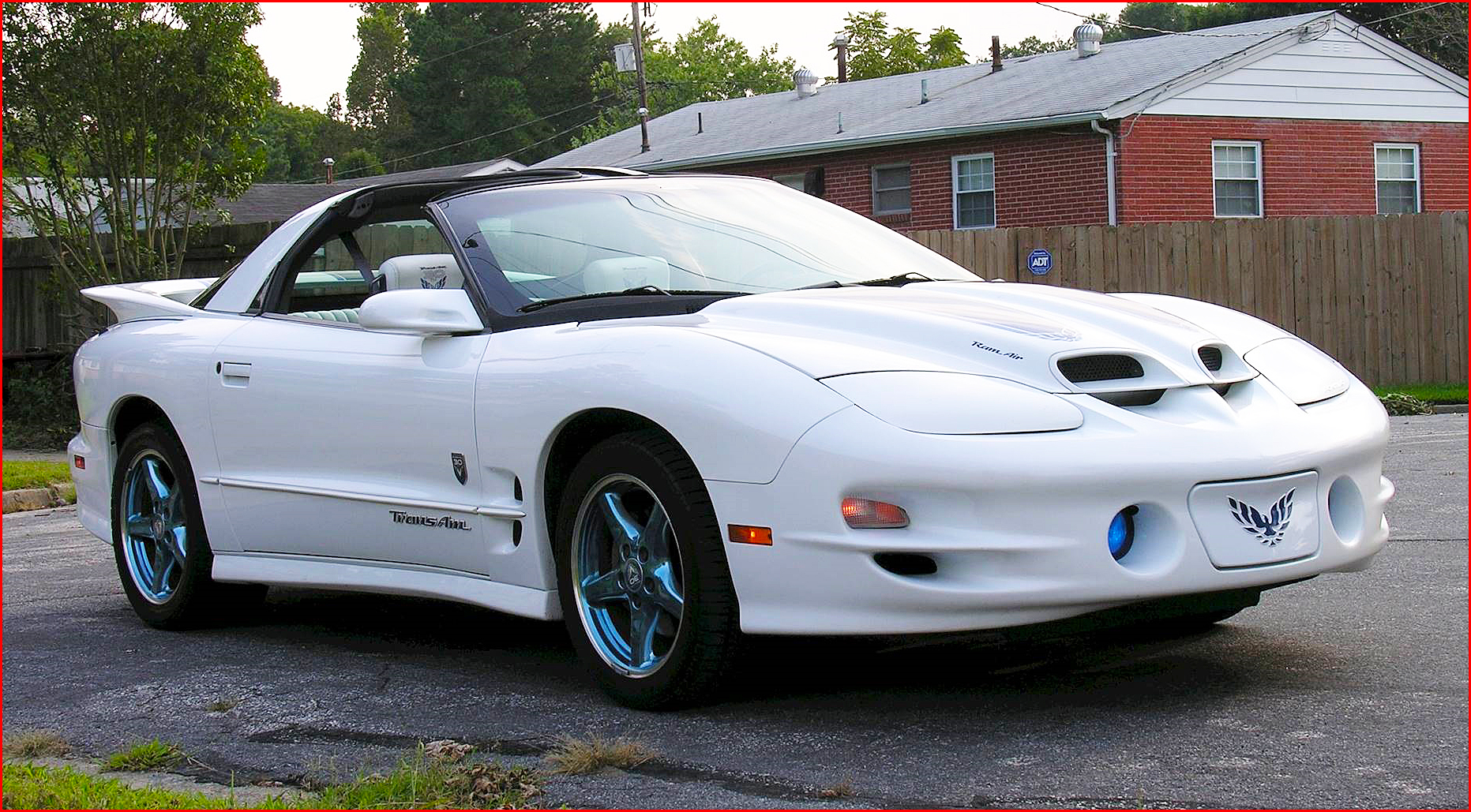
Trans Am‘s 30th Anniversary was celebrated with another model painted white with blue trim, sporting twin blue stripes from beak to tail with blue anodized five-spoke 17-inch alloy wheels shod with Goodyear F1 rubber and a white leather interior sporting 30th Anniversary embroidery. Special exterior badging and a console-mounted numbered dash plaque completed the package. 1065 hardtops and 535 convertibles were produced.
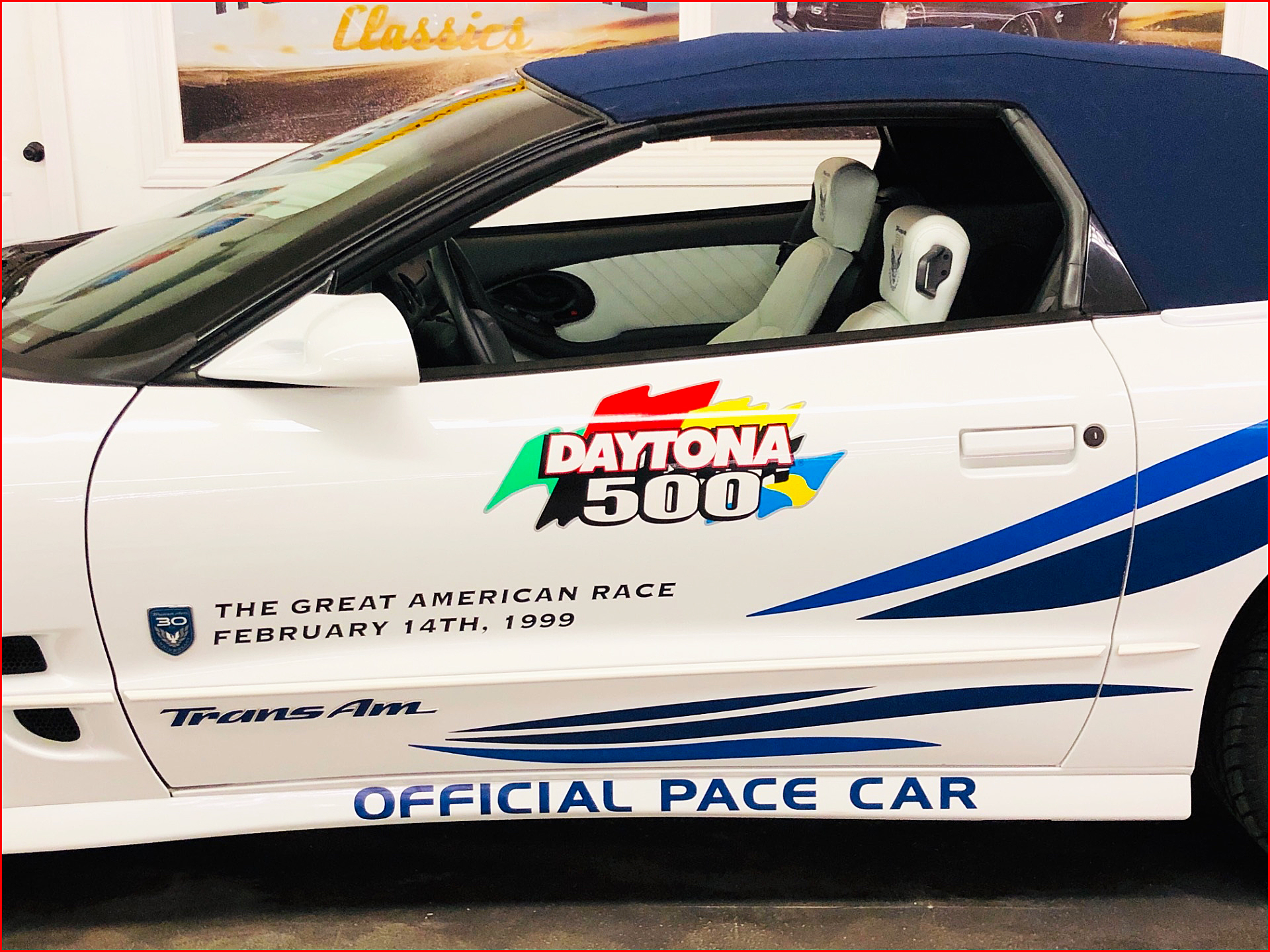
The 30th Anniversary Trans Am was also the Daytona 500 pace car, and a decal package in celebration could be dealer-installed. No Official Pace Car Edition was sold.
The 2000 model was a complete carryover from 1999 except for new cast-iron exhaust manifolds, an improved throttle linkage on six-speed models and a vapor-recovery system. All Firebirds now met California low-emission vehicle rules. Total Firebird production slipped to 31,826 units and fans could see the end was in sight.
However, Pontiac refused to let the big ‘Bird slip away without a bang. 2001 saw another HP boost, to 310 for the improved LS-1 with its new low-profile camshaft, plenum intake from the Corvette Z06 and no EGR valve, and 325 for the WS6 “Ram Air” option, which was now only available on the Trans Am. This was under-rated, as later dyno tests gave numbers closer to 350 HP for the stock WS6-equipped Trans Am. New 17X9 wheels were also part of the WS6 package. Despite the more powerful Trans Am, Firebird sales continued to slide and no one could deny the inevitable now.
2001 was also the 75th anniversary of Pontiac, and the anniversary package for Firebird included power door locks, power windows with one-touch express down on the driver’s side, a power 6-way driver’s seat, dual power sport mirrors and a power antenna. It also included a new ETR/Monsoon 500 10-speaker premium sound system, a leather-wrapped steering wheel with audio controls and a security package with a theft-deterrent alarm and keyless entry. Only two Trans Ams were produced with the 75th Anniversary package, making these the rarest Trans Ams of all.
2002 was the final year for the F-body Firebird and Camaro twins although Camaro would return in another 8 years, after the demise of Pontiac. No significant changes occurred in the final model, but most Firebirds were heavily optioned and the V8 Formula and Trans Am got standard steering coolers. Engines remained the same.
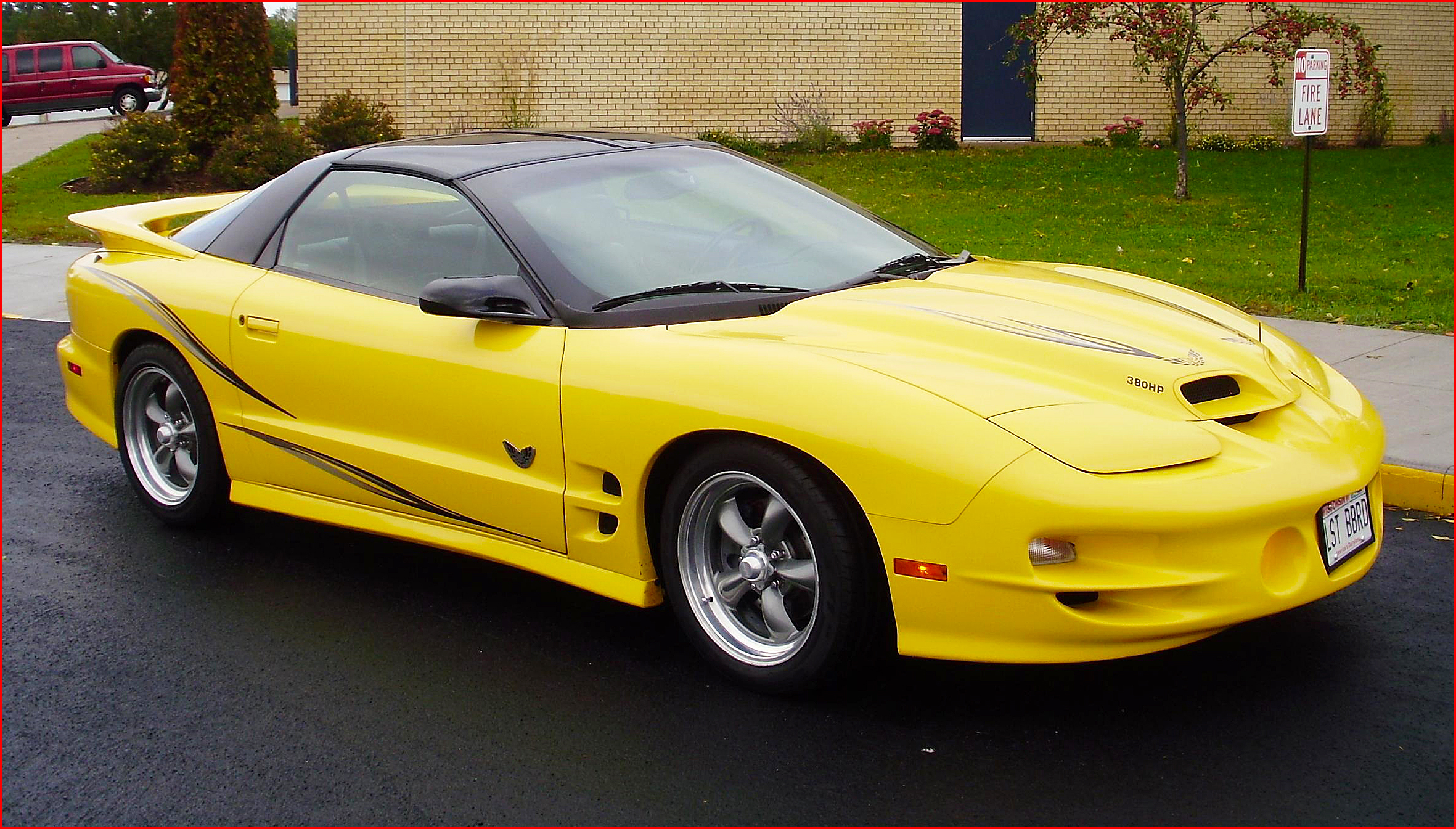
Pontiac decided to honor the Firebird‘s 35th anniversary not with a base Firebird but with a WS6-optioned Collector Edition Trans Am in yellow paint. The package also came with black-painted five-spoke 17 inch alloy wheels with commemorative center caps, black anodized front and rear brake calipers, black painted axles, Collector Edition embroidery on the headrests and floor mats and special graphics with small “Screaming Chicken” decals. One Collector Edition was the Official Daytona 500 Pace Car, but no Official Pace Car Editions were built. This was a fitting send-off to one of the few performance models that stretched their roots uninterrupted back to the heady days of late-’60s muscle.
I never owned a Trans Am, or even a Firebird for that matter. I could not see myself driving a ’70s model with their wild graphics, I’m much more into subtlety now. My Lexus has more ponies than all but the highest HP Trans Ams, with luxury and comfort to boot…but it doesn’t look like a musclecar, and I like it that way. The ’80s and early ’90s Trans Ams were sadly a shadow of their former selves. A ’98-02 would be nice, but prices are creeping up past what they sold for new. Perhaps one day.✪
Got a Great Car Story? Share it! Reminisce About Your Other Favorite Cars, Too!
Seeyas Again Next Time On FLAT OUT!


