


Elizabeth Marie Tallchief (January 24, 1925 – April 11, 2013)
✪ Elizabeth Marie Tallchief (Osage native family name: Ki He Kah Stah Tsa) was an American ballerina considered to be America’s first major prima ballerina. She was also the first Native American (Osage Nation) to hold that rank and is regarded to have revolutionized modern ballet.
Tallchief was involved in dance almost from birth; starting formal lessons at age three. When she was eight, her family relocated from her birth home of Fairfax, Oklahoma to Los Angeles, California. The purpose of the move was to advance the careers of Maria and her younger sister, Marjorie. Both sisters became dance professionals and influential, leading, ballet figures.
Elizabeth Marie Tall Chief (her birth name) was born in Fairfax, Oklahoma, on January 24, 1925, to Alexander Joseph Tall Chief (1890–1959), a member of the Osage Nation, and his wife, Ruth (née Porter), of Scottish-Irish descent.
Elizabeth Tall Chief’s paternal great-grandfather, Peter Bigheart, had helped negotiate for the Osages concerning oil revenues that greatly enriched the Osage Nation. As a result, her father grew up rich, never working “a day in his life.” In her autobiography, Tallchief explained, “As a young girl growing up on the Osage reservation in Fairfax, Oklahoma, I felt my father owned the town. He had property everywhere. The local movie theater on Main Street and the pool hall opposite belonged to him. Our 10-room, a terracotta-brick house stood high on a hill overlooking the reservation.” The family routinely spent their summers in Colorado Springs to escape the Oklahoma heat. However, life was far from perfect as her father was a binge drinker and her parents often fought about money.
As a child, Tallchief’s mother, Ruth Porter had dreamed about becoming a performer herself, but her family could not afford dance or music lessons. She was determined her daughters would not suffer the same fate. Betty Marie was enrolled in summer ballet classes in Colorado Springs at the age of 3. She and other family members often performed at rodeos and other local events. Tall Chief also studied piano and contemplated becoming a professional concert pianist.
In 1930, a ballet teacher from Tulsa, Mrs. Sabin, visited Fairfax looking for students and took on Betty Marie and her sister Marjorie as students. Looking back on Sabin many years later, Tallchief wrote, “She was a wretched instructor who never taught the basics and it’s a miracle I wasn’t permanently harmed.”
At age five, Tall Chief was enrolled at the nearby Sacred Heart Catholic School. Impressed by her reading ability, the teachers allowed her to skip the first two grade levels. Between piano, ballet, and school work, Tall Chief had little free time but loved the outdoors. In her autobiography, she reminisced about time spent “wandering around our big front yard” and “rambling around the grounds of our summer cottage hunting for arrowheads in the grass.”
In 1933, the family moved to Los Angeles with the intent of getting the children into Hollywood musicals. The day they arrived in Los Angeles, her mother asked the clerk at a local drugstore if he knew of any good dance teachers. The clerk recommended Ernest Belcher, father of dancer Marge Champion. Tall Chief later recalled, “An anonymous man in an unfamiliar town decided our fate with those few words.”
Bored with school, Tall Chief completely devoted herself to dance in Belcher’s studio. In addition to ballet, which she had previously been doing all wrong and went back to square one, she learned tap, Spanish dancing, and acrobatics. She found tumbling very difficult and eventually quit the class, but later in life put the skills to good use. Next, the family moved to Beverly Hills, where schools offered better academics. At Beverly Vista School, Tall Chief experienced what she described as “painful” discrimination and took to spelling her last name as one word, Tallchief. She continued to study piano, appearing as a guest soloist with small symphony orchestras throughout high school.
At age 12, Tallchief began to work with Bronislava Nijinska, a renowned Russian choreographer who had recently opened her own studio in Los Angeles. Nijinska “was a personification of what ballet was all about,” Tallchief recalled. “I looked at her, and I knew this was what I wanted to do.” Nijinska imparted a strong sense of discipline and the belief that being a ballerina was a full-time task. “We didn’t concentrate only for an hour and a half a day,” Tallchief recalled. “We lived it.” It was under Nijinska that Tallchief decided ballet was what she wanted to devote her life to. Tallchief also received instruction from various distinguished teachers during their visits to Los Angeles.
Tallchief graduated from Beverly Hills High School in 1942. Afterwards, she won a bit part in Presenting Lily Mars, an MGM musical with Judy Garland. Dancing in the movie was “not gratifying” and Tallchief decided against making a career of it. That summer, family friend Tatiana Riabouchinska asked if Tallchief would like to go to New York. With Riabouchinska chaperoning, she set off for the big city in 1942 at the age of 17.
Within her first two months in New York City, Tallchief had joined Ballet Russe de Monte Carlo and appeared in seven different ballet productions as part of the corps de ballet. In the spring of 1944, well known choreographer George Balanchine was hired by Ballet Russe de Monte Carlo to work on a new production called Song of Norway. This production would mark a turning point in both Tallchief’s and Balanchine’s careers. She was drawn to Balanchine from the start. Describing one of her first experiences with him, she wrote, “When I saw what he had done, I was astonished. Everything seemed so simple yet perfect: An elegant ballet fell into place before my eyes.” At first, she was not sure if he was paying much attention to her, but she quickly found out he was. Balanchine assigned Tallchief a solo lead in Song of Norway.
As the season wore on, Balanchine grew more fond of her both professionally – The Washington Post called Tallchief his “crucial artistic inspiration” – and personally. Tallchief was ignorant of his personal attraction towards her for a long time and their relationship remained mostly platonic on a professional level. However, he found himself becoming more attracted to Tallchief personally. She was unaware he felt this way: “It never occurred to me that there was anything more than dancing on his mind … It would have been preposterous to think there was anything personal.” As their working relationship slowly became more intimate, it was a shock to Tallchief when Balanchine asked her to marry him. “Maria, I would like you to become my wife.” Later she recalled, “I almost fell out of my seat and was unable to respond.” She eventually replied, “But, George, I’m not sure I love you. I feel I hardly know you.” He answered that it did not matter; and, if the marriage only lasted a few years, that was all right with him. After a day to think it over, Tallchief accepted his proposal.
Tallchief and Balanchine were married on August 16, 1946. She was 21 years old and he was 42. Her parents opposed the marriage and did not attend the ceremony. The couple also did not have a traditional honeymoon: “For both of us, work was more important.” She described Balanchine as “a warm, affectionate, loving husband.” Nonetheless, their marriage was annulled in 1952, when both parties became attracted to other people.
In 1946, Balanchine joined with arts patron Lincoln Kirstein to establish the Ballet Society, a direct forerunner to the New York City Ballet. Tallchief had six months remaining on her contract with Ballet Russe de Monte Carlo, so she continued to stay with the company until 1947. After her contract expired, she joined Balanchine in France as guest choreographer at the Paris Opera Ballet. During her time in Paris, Tallchief became the first American to perform with the Paris Opera Ballet.
When the couple returned to the States, Tallchief quickly became one of the first dance stars and first prima ballerina of the New York City Ballet, which opened in October 1948. Balanchine “revolutionized ballet” by creating roles that demanded athleticism, speed, and aggressive dancing like nothing before. Of her “Firebird” debut, Kirstein wrote “Maria Tallchief made an electrifying appearance, emerging as the nearest approximation to a prima ballerina that we had yet enjoyed.” The role created a sensation and launched her to the top of the ballet world, granting her the prima ballerina title. Her fiery, athletic performances also helped to establish Balanchine as the era’s most prominent and influential choreographer.
Tallchief remained with the New York City Ballet until February 1960, but also took time off to work with other companies. She made guest appearances with the Chicago Opera Ballet, the San Francisco Ballet, the Royal Danish Ballet and the Hamburg Ballet, among others. Working for the Ballet Russe de Monte Carlo in 1954–55, she was paid $2,000 a week; reportedly the highest salary ever paid to a dancer at that time.
After leaving the New York City Ballet, Tallchief joined the American Ballet Theatre, first as a guest dancer then as prima ballerina. She also became the first American dancer to perform at Moscow’s famed Bolshoi Theater.
▶️ 8 Minutes 50 Seconds
Tallchief’s dancing was not confined to the stage as she appeared on multiple TV shows, including The Ed Sullivan Show. She portrayed Anna Pavlova in the 1952 movie musical Million Dollar Mermaid. In 1962, Tallchief was chosen as Rudolf Nureyev’s partner of choice for his American debut which was broadcast on national television. Her final dance performance in America was in 1966 on television’s “Bell Telephone Hour.”
After retiring from dancing, Tallchief moved to Chicago. She served as director of ballet for the Lyric Opera of Chicago from 1973 to 1979. In 1974, she founded Lyric Opera’s ballet school, where she taught the Balanchine technique. Explaining her teaching philosophy she wrote “New ideas are essential, but we must retain respect for the art of ballet–and that means the artist too–or else it is no longer an art form.”
Tallchief was known for “dazzling audiences with her speed, energy and fire.” She was said to exhibit both “electrifying passion” and great technical ability. She combined precise footwork with athleticism. Ashley Wheater, artistic director of the Joffrey Ballet remarked,
“When you watch Tallchief on video, you see that aside from the technical polish there is a burning passion she brought to her dancing. In her interpretation of Balanchine’s ‘Firebird,’ she was consumed both inside and out. She was not just a great dancer, but a real artist—a true interpreter who brought her personality to bear on the dancing. She realized who and what she was, but she didn’t flaunt it. She was unpretentious.”
In December 2012, Tallchief broke her hip. She died on April 11, 2013 from complications stemming from the injury. She remained closely tied to her Osage history until her death. Tallchief was involved with America for Indian Opportunity and was a director of the Indian Council Fire Achievement Award. However, she wished to be judged on the merits of her dance alone. “Above all, I wanted to be appreciated as a prima ballerina who happened to be a Native American, never as someone who was an American Indian ballerina,” she wrote.
In Oklahoma, Tallchief was honored by the governor for both her ballet achievements and her pride in her American Indian heritage. The State Legislature declared June 29, 1953, as “Maria Tallchief Day.” In 1996, Tallchief received a Kennedy Center Honor for lifetime achievements.
Tallchief is an inductee of the National Women’s Hall of Fame and was twice named “Woman of the Year” by the Washington Press Club. In 1999, Tallchief was awarded the American National Medal of Arts by the National Endowment of the Arts, In 2011, she received the Chicago History Museum’s Making History Award for Distinction in the Performing Arts.
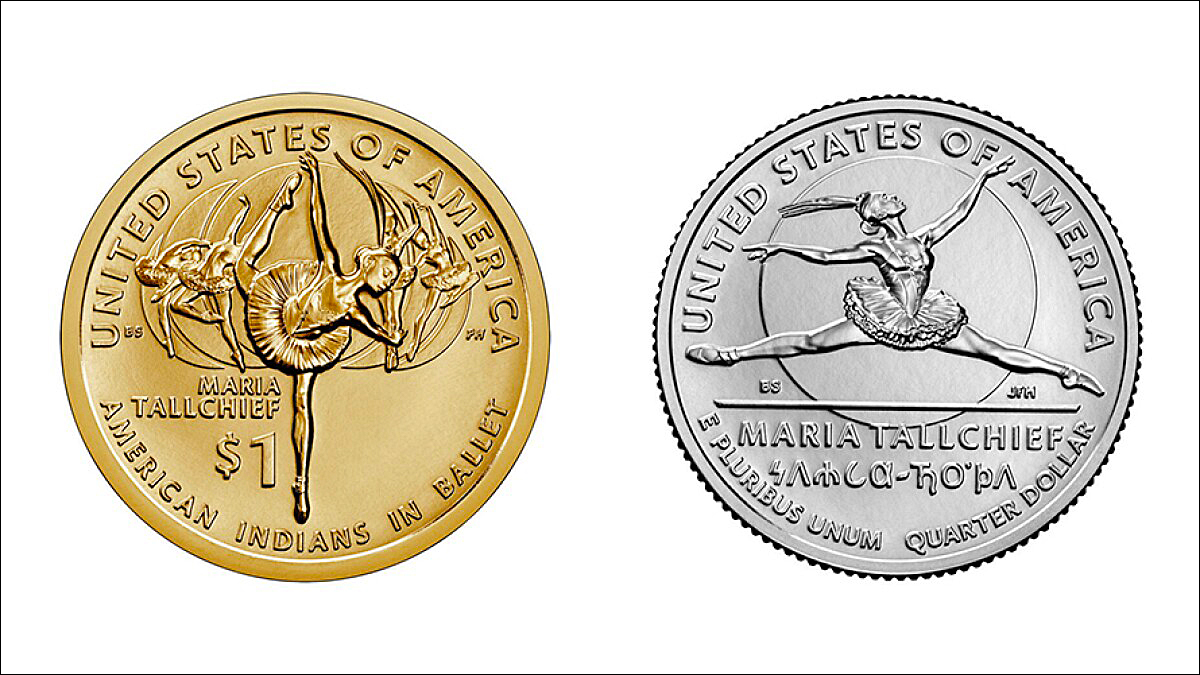
In 2023, Tallchief will be honored on an American Women quarter. The quarter, designed by Benjamin Sowards and sculpted by Joseph Menna, will show her on the reverse side opposite a depiction of Liberty scuplted by Laura Gardin Fraser. She also appears on the 2023 Sacagawea dollar.
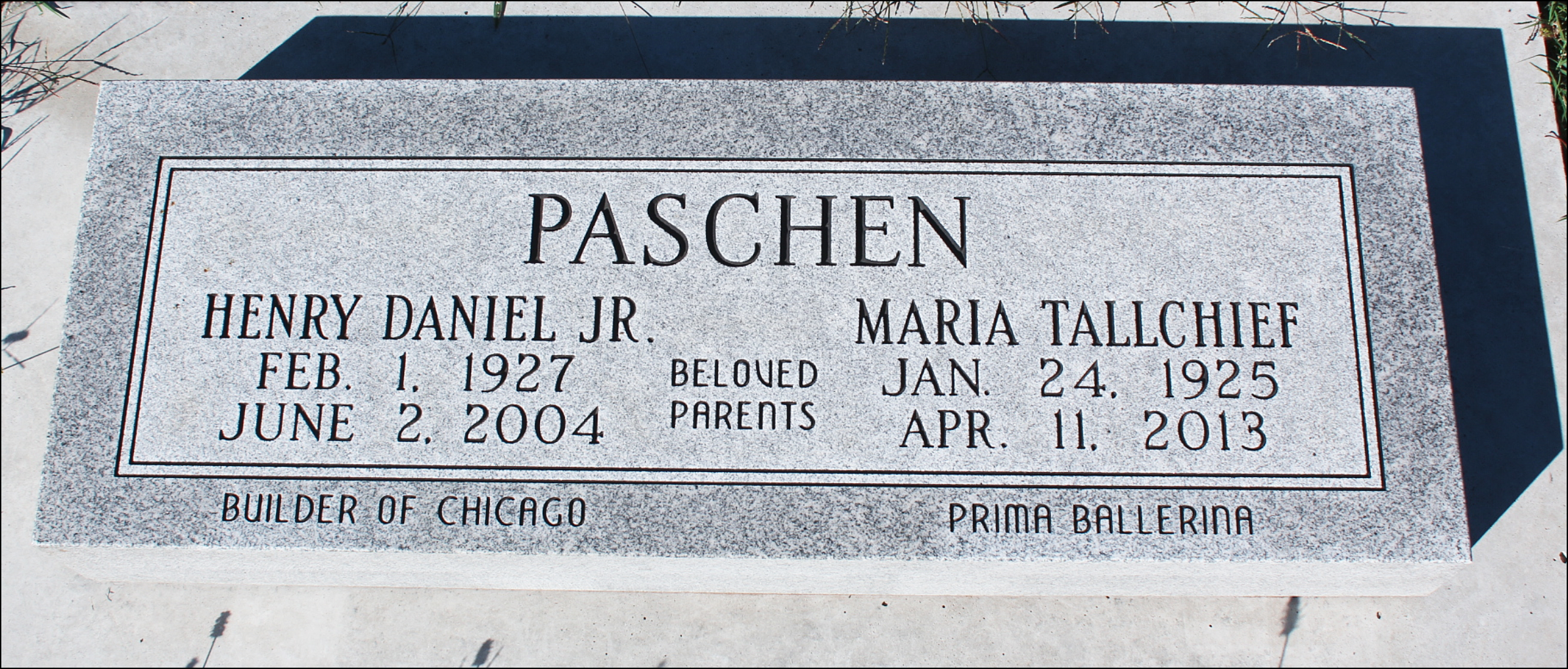
Maria Tallchief is interred at Fairfax Cemetery in Fairfax, Oklahoma on the Osage Nation Reservation. ✪

Header text
Header text


▶️ CLICK HERE TO VIEW
▶️ 1 Hour 16 Minutes 30 Seconds ⭐️ Joan
▶️ 14 Minutes 20 Seconds ⭐️ Gary Brown
▶️ 6 Minutes 43 Seconds ⭐️ louisiana_mom
▶️ 12 Minutes 51 Seconds
▶️ 10 Minutes 16 Seconds
▶️ 24 Minutes 8 Seconds
▶️ 11 Minutes 18 Seconds ⭐️ Michael Brower
