


Howard Robard Hughes Jr. (December 24, 1905–April 5, 1976)
✪ Howard Robard Hughes Jr. was an American business magnate, record-setting pilot, engineer, film producer and philanthropist, known during his lifetime as one of the most influential and richest people in the world. He first became prominent as a film producer and then as an important figure in the aviation industry. Later in life, he became known for his eccentric behavior and reclusive lifestyle; oddities that were caused in part by his worsening obsessive-compulsive disorder (OCD), chronic pain from a near-fatal plane crash, and increasing deafness.
Howard Hughes Jr. was the son of Allene Stone Gano (1883–1922) and of Howard R. Hughes Sr. (1869–1924), a successful inventor and businessman from Missouri. He was of English, Welsh and some French Huguenot ancestry and was also a descendant of John Gano (1727–1804), the minister who allegedly baptized George Washington. Hughes’s uncle was the famed novelist, screenwriter, and film director Rupert Hughes.
Hughes Sr. patented the two-cone roller bit in 1909, which made possible rotary drilling for petroleum in previously inaccessible places. The senior Hughes made the shrewd and lucrative decision to commercialize the invention by leasing the bits instead of selling them and obtained several early patents. Hughes Sr. founded the Hughes Tool Company in 1909.
At a young age, Hughes Jr. showed an exceptional interest in science and technology. In particular, he possessed great engineering aptitude and built Houston’s first “wireless” radio transmitter at age 11. He went on to be one of the first licensed ham-radio operators in Houston, having the assigned callsign W5CY (originally 5CY). At 12 years of age, Hughes was photographed for the local newspaper, which identified him as the first boy in Houston to have a “motorized” bicycle, which he had built from parts of his father’s steam engine. However, he was an indifferent student, with a liking for mathematics, flying and mechanics. He took his first flying lesson at 14 and attended Fessenden School in Massachusetts in 1921.
After a brief stint at The Thacher School, Hughes attended math and aeronautical engineering courses at Caltech. The red-brick house where Hughes lived as a teenager at 3921 Yoakum Blvd. in Houston, still stands and is now known as Hughes House on the grounds of the University of St. Thomas.
Hughes’ mother Allene died in March 1922 from complications of an ectopic pregnancy. Howard Hughes Sr. died of a heart attack in 1924. Their deaths apparently inspired Hughes to include the establishment of a medical research laboratory in the will that he signed in 1925 at age 19. Howard Sr.’s will had not been updated since Allene’s death and Hughes Jr. inherited 75% of the family fortune. On his 19th birthday, Hughes was declared an emancipated minor, enabling him to take full control of his life.
From a young age, Hughes became a proficient and enthusiastic golfer. He often scored near-par figures, playing the game to a two-three handicap during his 20s, and for a time aimed for a professional golf career. He golfed frequently with top players. Hughes rarely played competitively and gradually gave up his passion for the sport to pursue other interests.
Hughes withdrew from Rice University shortly after his father’s death. On June 1, 1925, he married Ella Botts Rice, daughter of David Rice and Martha Lawson Botts of Houston, and great-niece of William Marsh Rice, for whom Rice University was named. They moved to Los Angeles, where he hoped to make a name for himself as a filmmaker.
They moved into the Ambassador Hotel and Hughes proceeded to learn to fly a Waco, while simultaneously producing his first motion picture, Swell Hogan.
Hughes enjoyed a highly successful business career beyond engineering, aviation and filmmaking; many of his career endeavors involved varying entrepreneurial pursuits.
Ralph Graves persuaded Hughes to finance a short film, Swell Hogan, which Graves had written and would star in. Hughes himself produced it. However, it was a disaster. After hiring a film editor to try to salvage it, Hughes finally ordered that it be destroyed. His next two films, Everybody’s Acting (1926) and Two Arabian Knights (1927) achieved financial successes; the latter won the first Academy Award for Best Director of a comedy picture. The Racket (1928) and The Front Page (1931) were also nominated for Academy Awards.
He produced another hit, Scarface (1932), but production was delayed by the censors’ concerns over its violence.
From the 1940s to the late 1950s, the Hughes Tool Company ventured into the film industry when it obtained partial ownership of the RKO companies, which included RKO Pictures, RKO Studios, a chain of movie theaters known as RKO Theatres and a network of radio stations known as the RKO Radio Network.
In 1948, Hughes gained control of RKO, a struggling major Hollywood studio, by acquiring the 929,000 shares owned by Floyd Odlum’s Atlas Corporation, for $8,825,000 ($107,165,160 equivalent in 2023). Within weeks of acquiring the studio, Hughes dismissed 700 employees and production dwindled to 9 pictures during the first year of Hughes’s control. Previously, RKO had averaged 30 film projects per year.
Hughes shut down production at the studio for six months, during which time he ordered investigations into the political leanings of every remaining RKO employee. Only after ensuring that the stars under contract to RKO had no suspect affiliations would Hughes approve completed pictures to be sent back for re-shooting. This was especially true of the women under contract to RKO at that time. If Hughes felt that his stars did not properly represent the political views of his liking or if a film’s anti-communist politics were not sufficiently clear, he would pull the plug.
On July 11, 1936, Hughes struck and killed a pedestrian named Gabriel S. Meyer with his car at the corner of 3rd Street and Lorraine in Los Angeles. After the crash, Hughes was taken to the hospital and certified as sober, but an attending doctor made a note that Hughes had been drinking. A witness to the crash told police that Hughes was driving erratically and too fast and that Meyer had been standing in the safety zone of a streetcar stop. Hughes was booked on suspicion of negligent homicide and held overnight in jail until his attorney, Neil S. McCarthy, obtained a writ of habeas corpus for his release pending a coroner’s inquest.
By the time of the coroner’s inquiry, however, the witness had changed his story and claimed that Meyer had moved directly in front of Hughes’s car. Nancy Bayly (Watts), who was in the car with Hughes at the time of the crash, corroborated this version of the story. On July 16, 1936, Hughes was held blameless by a coroner’s jury at the inquest into Meyer’s death. Hughes told reporters outside the inquiry, “I was driving slowly and a man stepped out of the darkness in front of me.”
By the end of 1954, Hughes had gained near total control of RKO at a cost of nearly $24 million, becoming the first sole owner of a major Hollywood studio since the silent-film era. Six months later Hughes sold the studio to the General Tire and Rubber Company for $25 million. Hughes retained the rights to all the pictures that he had personally produced, including those made at RKO.
For Howard Hughes, this was the virtual end of his 25-year involvement in the motion-picture industry. However, his reputation as a financial wizard emerged unscathed. During that time period, RKO became known as the home of classic film noir productions, thanks in part to the limited budgets required to make such films during Hughes’s tenure. Hughes reportedly walked away from RKO with $6.5 million in personal profit.
In 1932 Hughes founded the Hughes Aircraft Company, a division of Hughes Tool Company, in a rented corner of a Lockheed Aircraft Corporation hangar in Burbank, California to build the H-1 racer.
Shortly after founding the company, Hughes used the alias “Charles Howard” to accept a job as a baggage handler for American Airlines. He was soon promoted to co-pilot. Hughes continued to work for American Airlines until his real identity was finally discovered.
According to Noah Dietrich Lifelong Hughes friend, business partner and biographer who wrote Howard: The Amazing Mr. Hughes, “Land became a principal asset for the Hughes empire.” Hughes acquired 1200 acres in Culver City for Hughes Aircraft, bought 7 sections [4,480 acres] in Tucson for his Falcon missile-plant, and purchased 25,000 acres near Las Vegas. In 1968, the Hughes Tool Company purchased the North Las Vegas Air Terminal.
Another portion of Hughes’s commercial interests involved aviation, airlines, and the aerospace and defense industries. A lifelong aircraft enthusiast and pilot, Hughes survived four serious airplane accidents: one in a Thomas-Morse Scout while filming Hell’s Angels, one while setting the airspeed record in the Hughes Racer, another at Lake Mead in 1943 and the near-fatal crash of the Hughes XF-11 in 1946. Hughes learned to fly from pioneer aviators at Rogers Airport in Los Angeles.
On September 13, 1935 flying the H-1, Hughes set the land plane airspeed record of 352 mph over his test course near Santa Ana, California.
This marked the last time in history that an aircraft built by a private individual set the world airspeed record. A year and a half later, on January 19, 1937, flying the same H-1 Racer fitted with longer wings, Hughes set a new transcontinental airspeed record by flying non-stop from Los Angeles to Newark in seven hours, 28 minutes, and 25 seconds (beating his own previous record of nine hours, 27 minutes). His average ground-speed over the flight was 322 mph.
On July 14, 1938, Hughes set another record by completing a flight around the world in just 91 hours (three days, 19 hours, 17 minutes), beating the previous record of 186 hours (7 days, 18 hours, 49 minutes) set in 1933 by Wiley Post in a single-engine Lockheed Vega by almost four days. Hughes returned home ahead of photographs of his flight. Taking off from New York City, Hughes continued to Paris, Moscow, Omsk, Yakutsk, Fairbanks and Minneapolis before returning to New York City.
During and after World War II Hughes turned his company into a major defense contractor. The Hughes Helicopters division started in 1947 when helicopter manufacturer Kellett sold their latest design to Hughes for production. Hughes Aircraft became a major U.S. aerospace and defense contractor; manufacturing numerous technology-related products that included spacecraft vehicles, military aircraft, radar systems, electro-optical systems, the first working laser, aircraft computer systems, missile systems, ion-propulsion engines (for space travel), commercial satellites and other advanced electronics systems.
In the spring of 1943 Hughes spent nearly a month in Las Vegas, test-flying his Sikorsky S-43 amphibious aircraft, practicing touch-and-go landings on Lake Mead. On May 17, 1943, Hughes flew the Sikorsky from California, carrying two Civil Aeronautics Authority (CAA) aviation inspectors, two of his employees, and actress Ava Gardner. Hughes dropped Gardner off in Las Vegas and proceeded to Lake Mead to conduct qualifying tests in the S-43. The test flight did not go well. The Sikorsky crashed into Lake Mead, killing CAA inspector Ceco Cline and Hughes’s employee Richard Felt. Hughes suffered a severe gash on the top of his head when he hit the upper control panel and had to be rescued by one of the others on board. Hughes paid divers $100,000 to raise the aircraft and later spent more than $500,000 restoring it.
Hughes was also almost killed on July 7, 1946 while performing the first flight of the XF-11 near Hughes Airfield at Culver City, California. Hughes extended the test flight well beyond the 45-minute limit decreed by the USAAF, possibly distracted by landing gear retraction problems. An oil leak caused one of the contra-rotating propellers to reverse pitch, causing the aircraft to yaw sharply and lose altitude rapidly. Hughes attempted to save the aircraft by landing it at the Los Angeles Country Club golf course, but just seconds before reaching the course, the XF-11 started to drop dramatically and crashed in the Beverly Hills neighborhood surrounding the country club.
▶️ 12 Minutes 43 Seconds
When the XF-11 finally came to a halt after destroying three houses, the fuel tanks exploded, setting fire to the aircraft and a nearby home at 808 North Whittier Drive owned by Lt Col. Charles E. Meyer. Hughes managed to pull himself out of the flaming wreckage but lay beside the aircraft until he was rescued by U.S. Marine Corps Master Sergeant William L. Durkin, who happened to be in the area visiting friends. Hughes sustained significant life threatening injuries in the crash, including a crushed collar bone, multiple cracked ribs, crushed chest with collapsed left lung, shifting his heart to the right side of the chest cavity and numerous third-degree burns.
Despite his physical injuries, Hughes took pride that his mind was still working. As he lay in his hospital bed, he decided that he did not like the bed’s design. He called in plant engineers to design a customized bed, equipped with hot and cold running water, built in six sections, and operated by 30 electric motors, with push-button adjustments. Hughes designed the hospital bed specifically to alleviate the pain caused by moving with severe burn injuries. However, he never used the bed that he designed. Hughes’s doctors considered his recovery almost miraculous.
Many attribute Hughes’ long-term dependence on opiates to his use of codeine as a painkiller during his convalescence. Yet Dietrich asserts that Hughes recovered the “hard way—no sleeping pills or opiates of any kind.”
The Hercules, most famously known as “The Spruce Goose,” was the world’s largest flying boat and the largest aircraft ever made from wood. At 319 feet 11 inches, the Hercules had the longest wingspan of any aircraft (the next-largest wingspan was about 310 ft.) On November 2, 1947, the Hercules only flew once for a distance of one mile at 70 feet above the water, with Hughes at the controls.
▶️ 2 Minutes 59 Seconds
In 1939, at the urging of Jack Frye, president of Transcontinental & Western Airlines, the predecessor of Trans World Airlines (TWA), Hughes began to quietly purchase a majority share of TWA stock (78% of stock, to be exact). By 1944, he has acquired a controlling interest in the airline. Although he never held an official position with TWA, Hughes handpicked the board of directors, which included Noah Dietrich and often issued orders directly to airline staff. The Hughes Tool Co. purchased the first six Boeing manufactured Stratoliners. Hughes used one personally as his private aircraft and he let TWA operate the other five.
Hughes is also commonly credited as the driving force behind the Lockheed Constellation airliner, which Hughes and Frye ordered in 1939 as a long-range replacement for TWA’s fleet of Boeing 307 Stratoliners. Hughes personally financed TWA’s acquisition of 40 Constellations for $18 million, the largest aircraft order in history up to that time.
In 1953, Hughes launched the Howard Hughes Medical Institute in Miami (currently located in Chevy Chase, Maryland near Washington, D.C.), with the expressed goal of basic biomedical research, including trying to understand, in Hughes’s words, the “genesis of life itself.” Due to his lifelong interest in science and technology. Hughes’ first will, which he signed in 1925 at the age of 19, stipulated that a portion of his estate should be used to create a medical institute bearing his name.
After his death in 1976, many thought that the balance of Hughes’s estate would go to the institute, although it was ultimately divided among his cousins and other heirs, given the lack of a will to the contrary. As of 2007, the HHMI was the fourth largest private organization and one of the largest devoted to biological and medical research; with an endowment of $20.4 billion as of June 2018.
In 1929, Hughes’s wife of four years, Ella, returned to Houston and filed for divorce.
Hughes dated many famous women, including Joan Crawford, Debra Paget, Billie Dove, Faith Domergue, Bette Davis, Yvonne De Carlo, Ava Gardner, Olivia de Havilland, Katharine Hepburn, Hedy Lamarr, Ginger Rogers, Janet Leigh, Pat Sheehan, Gloria Vanderbilt, Mamie Van Doren and Gene Tierney. He also proposed to Joan Fontaine several times, according to her autobiography No Bed of Roses. Jean Harlow accompanied him to the premiere of Hell’s Angels, but Noah Dietrich wrote many years later that the relationship was strictly professional, as Hughes disliked Harlow personally.
On January 12, 1957, Hughes married actress Jean Peters at a small hotel in Tonopah, Nevada. The couple first met in the 1940s, before Peters became a film actress. They had a highly publicized romance in 1947 and there was talk of marriage, but she said she could not combine it with her career. Some later claimed that Peters was “the only woman Hughes ever loved,” and he reportedly had his security officers follow her everywhere even when they were not in a relationship.
Hughes was widely considered eccentric and suffered from severe obsessive-compulsive disorder (OCD). Dietrich wrote that Hughes always ate the same thing for dinner; a New York strip steak cooked medium rare, dinner salad, and peas, but only the smaller ones, pushing the larger ones aside. For breakfast, he wanted his eggs cooked the way his family cook, Lily, made them. Hughes had a “phobia about germs,” and “his passion for secrecy became a mania.”
In 1958, Hughes told his aides that he wanted to screen some movies at a film studio near his home. He stayed in the studio’s darkened screening room for more than four months, never leaving. He ate only chocolate bars and chicken and drank only milk, and was surrounded by dozens of boxes of Kleenex that he continuously stacked and re-arranged. He wrote detailed memos to his aides giving them explicit instructions neither to look at him nor speak to him unless spoken to. Throughout this period, Hughes sat fixated in his chair, often naked, continuously watching movies. When he finally emerged in the summer of 1958, his hygiene was terrible. He had neither bathed nor cut his hair and nails for weeks.
After the screening room incident, Hughes moved into a bungalow at the Beverly Hills Hotel where he also rented rooms for his aides, his wife, and numerous girlfriends. He would sit naked in his bedroom with a pink hotel napkin placed over his genitals, watching movies. This may have been because Hughes found the touch of clothing painful due to allodynia.
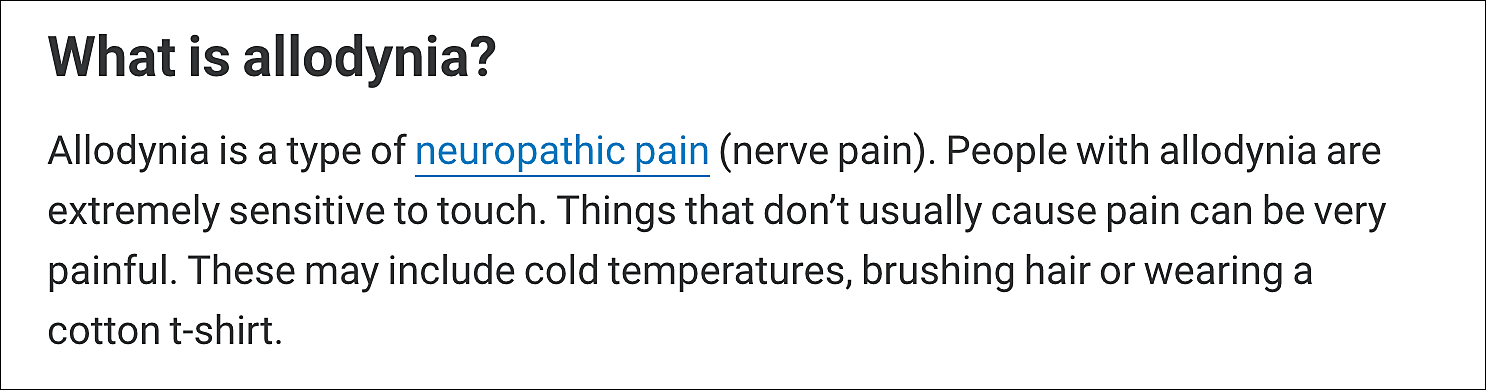
He may have watched movies to distract himself from his pain—a common practice among patients with intractable pain, especially those who do not receive adequate treatment. In only one year, he spent an estimated $11 million at the hotel.
Another time, he became obsessed with the 1968 film Ice Station Zebra and had it run on a continuous loop in his home. According to his aides, he watched it more than 150 times.
Hughes insisted on using tissues to pick up objects to insulate himself from germs. He would also notice dust, stains, or other imperfections on people’s clothes and demand that they take care of them. Once one of the most visible men in America, Hughes ultimately vanished from public view, although tabloids continued to follow rumors of his behavior and whereabouts. He was reported to be terminally ill, mentally unstable, or even dead. Injuries from numerous aircraft crashes caused Hughes to spend much of his later life in pain, and he eventually became addicted to codeine, which he injected intramuscularly.
The wealthy and aging Hughes, accompanied by his entourage of personal aides, began moving from one hotel to another, always taking up residence in the top floor penthouse. In the last ten years of his life from 1966 to 1976, Hughes lived in hotels in various cities including Beverly Hills, Boston, Las Vegas, Nassau, Freeport and Vancouver.
On November 24, 1966 (Thanksgiving Day), Hughes arrived in Las Vegas by railroad car and moved into the Desert Inn. Because he refused to leave the hotel and to avoid further conflicts with the owners, Hughes bought the Desert Inn in early 1967. The hotel’s eighth floor became the center of Hughes’ empire and the ninth-floor penthouse became his personal residence. Between 1966 and 1968, he bought several other hotel-casinos, including the Castaways, New Frontier, the Landmark Hotel and Casino, and the Sands. He also bought the small Silver Slipper casino for the sole purpose of removing its trademark neon silver slipper which was visible from his bedroom, and had apparently kept him awake at night.
Hughes wanted to change the image of Las Vegas to something more glamorous. He wrote in a memo to an aide, “I like to think of Las Vegas in terms of a well-dressed man in a dinner jacket and a beautifully jeweled and furred female getting out of an expensive car.” Hughes bought several local Las Vegas television stations (including KLAS-TV).
Eventually, the brain trauma from Hughes’s previous accidents, the effects of neurosyphilis diagnosed in 1932 and undiagnosed obsessive-compulsive disorder eventually considerably affected his decision-making.
Hughes once became fond of Baskin-Robbins’ banana nut ice cream, so his aides sought to secure a bulk shipment for him, only to discover that Baskin-Robbins had discontinued the flavor. They put in a request for the smallest amount the company could provide for a special order, 350 gallons (1,300 L), and had it shipped from Los Angeles. A few days after the order arrived, Hughes announced he was tired of banana nut and wanted only French vanilla ice cream. The Desert Inn ended up distributing free banana nut ice cream to casino customers for a year. In a 1996 interview, former Howard Hughes Chief of Nevada Operations Robert Maheu said, “There is a rumor that there is still some banana nut ice cream left in the freezer. It is most likely true.”
As an owner of several major Las Vegas businesses, Hughes wielded much political and economic influence in Nevada as well as elsewhere. During the 1960s and early 1970s, he disapproved of underground nuclear testing at the Nevada Test Site. Hughes was concerned about the risk from residual nuclear radiation and attempted to have the tests halted.
Hughes is reported to have died on April 5, 1976, at 1:27 p.m. on board a private aircraft, a Learjet 24B N855W, owned by Robert Graf and piloted by Roger Sutton and Jeff Abrams. He was en route from his penthouse at the Acapulco Princess Hotel (now the Fairmont Acapulco Princess) in Mexico to the Methodist Hospital in Houston.
His reclusiveness and possibly his drug use had made him practically unrecognizable. His hair, beard, fingernails, and toenails were long—his tall 6 ft 4 in frame now weighed barely 90 pounds and the FBI had to use fingerprints to conclusively identify the body.
An autopsy recorded kidney failure as the cause of death. During an eighteen-month study investigating Hughes’s drug abuse for the estate, it was found “someone administered a deadly injection of the painkiller to this comatose man … obviously needlessly and almost certainly fatal.” He suffered from severe malnutrition and was covered in bedsores. Although his kidneys were damaged, his other internal organs, including his brain, which had no visible damage or illnesses, were deemed perfectly healthy.
Following his death, Hughes was subject to several widely rebuked conspiracy theories that he had faked his own death. A notable allegation came from retired Major General Mark Musick, Assistant Secretary of the Air Force, who claimed Hughes went on to live under an assumed identity, dying on November 15, 2001, in Troy, Alabama.
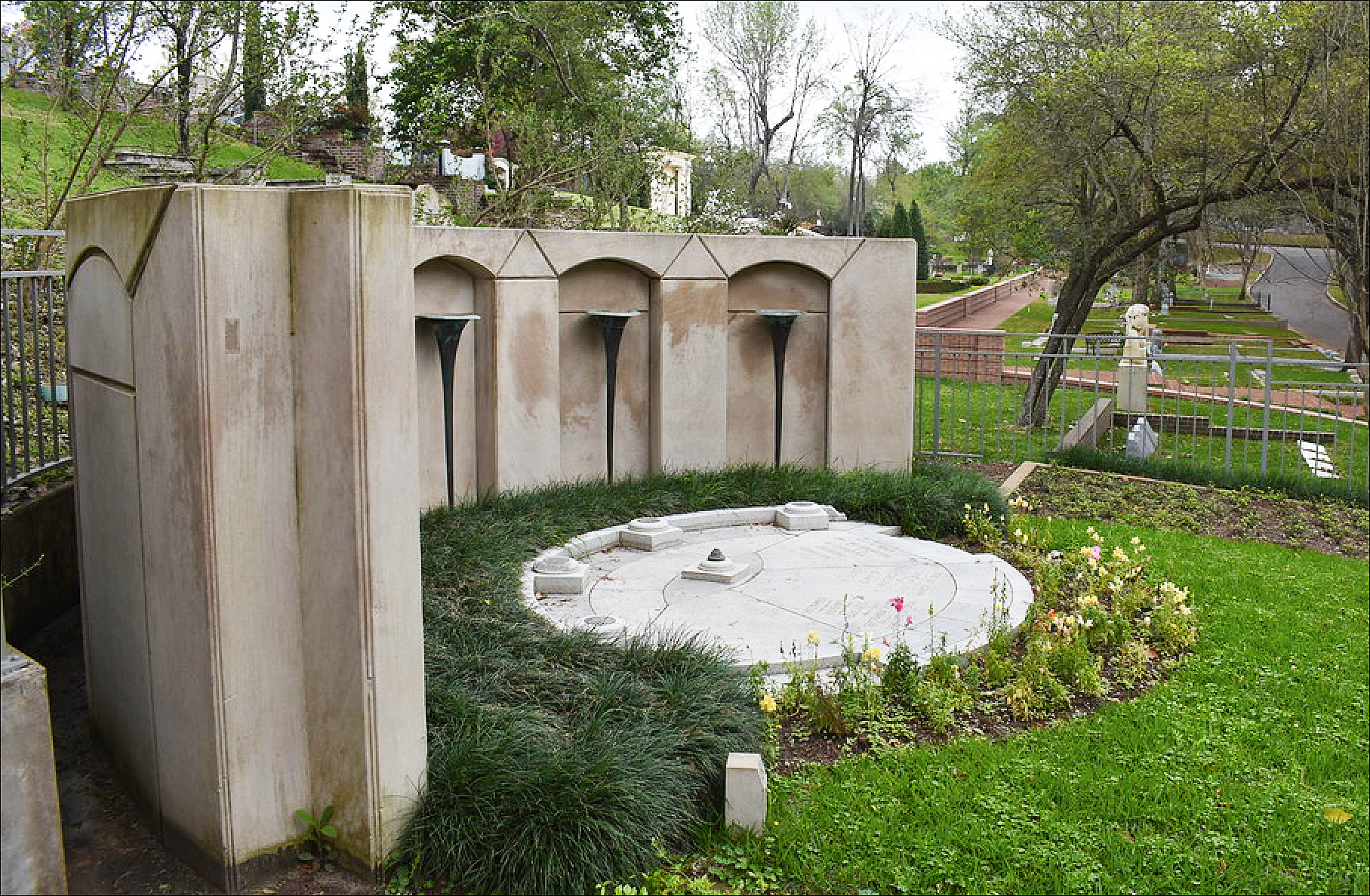
Approximately three weeks after Hughes’s death, a handwritten will was found on the desk of an official of the Church of Jesus Christ of Latter-day Saints in Salt Lake City, Utah. The so-called “Mormon Will” gave $1.56 billion to various charitable organizations (including $625 million to the Howard Hughes Medical Institute), nearly $470 million to the upper management in Hughes’s companies and to his aides, $156 million to first cousin William Lummis, and $156 million split equally between his two ex-wives Ella Rice and Jean Peters.
A further $156 million was endowed to a gas station owner, Melvin Dummar, who told reporters that in 1967, he found a disheveled and dirty man lying along U.S. Route 95 just 150 miles north of Las Vegas. The man asked Dummar for a ride to Vegas. Dropping him off at the Sands Hotel, Dummar said the man told him that he was Hughes. Dummar later claimed that days after Hughes’s death a “mysterious man” appeared at his gas station, leaving an envelope containing the will on his desk. In 1978, a Nevada court ruled the Mormon Will was a forgery and officially declared that Hughes had died intestate (without a valid will).
Hughes’s $2.5 billion estate was eventually split in 1983 among 22 cousins, including William Lummis, who serves as a trustee of the Howard Hughes Medical Institute. The Supreme Court of the United States later ruled that Hughes Aircraft was owned by the Howard Hughes Medical Institute, which sold it to General Motors in 1985 for $5.2 billion. The court rejected suits by the states of California and Texas that claimed they were owed inheritance tax by the Hughes Estate. ✪


▶️ CLICK HERE TO VIEW
NOTE: This feature module is currently under construction. More podcast/series channels links will be added in the coming days & weeks. If there’s a podcast or video link you’d like to see posted here, please email your suggestions to vip@thenewamericanist.com


▶️ CLICK HERE TO VIEW
▶️ 9 Minutes 15 Seconds ⭐️ Gary Brown
▶️ 9 Minutes 52 Seconds
▶️ 14 Minutes 6 Seconds
▶️ 21 Minutes 28 Seconds
▶️ 4 Minutes 42 Seconds
