Hi Folks…Welcome To The 50th FLAT OUT
For The Conclusion Of The FLAT OUT Ferrari Fest, It’s …
The Ferrari Daytona: 1968-1973
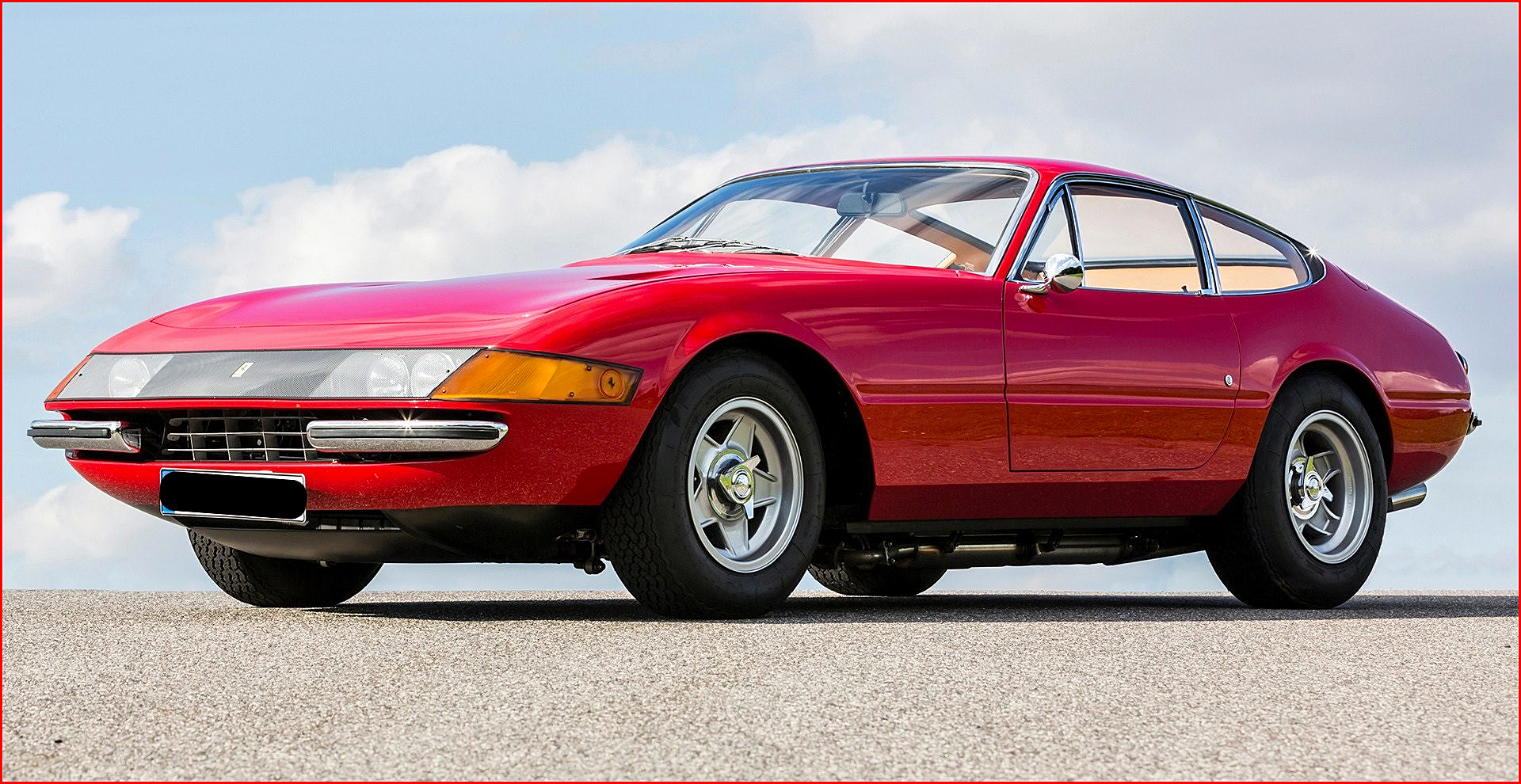
The Daytona is a 2-seat Grand Touring car produced by Ferrari. Introduced at the Paris Auto Salon in 1968, it was the successor to the 275 GTB/4 and used that car’s 4-camshaft Columbo V12 bored out to 4,390 cc. It was offered in Berlinetta and Spider versions, the 365 GTB/4 and 365 GTS/4 respectively. The name “Daytona” was not an official Ferrari designation, but rather a name that the automotive press applied to the car commemorating Ferrari’s 1-2-3 win at the 1967 24 Hours of Daytona with their 330 P3, 330 P4 and 412 P race cars.
365 GTB/4 1968-1973
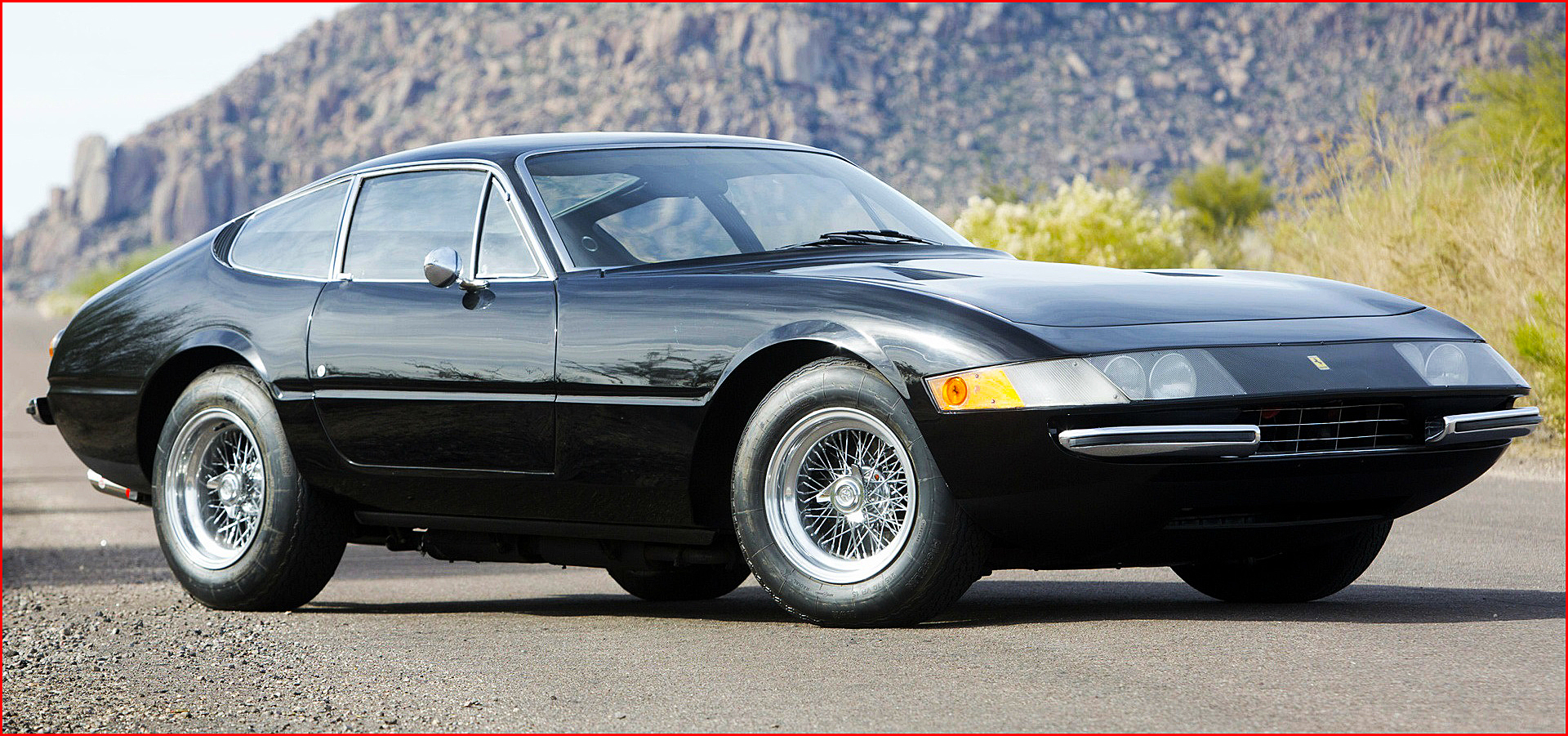
The Daytona was a real step ahead for Ferrari, both in terms of performance and modernity, and helped modernize the design language of Ferrari cars from then on. Designed by Leonardo Fioravanti at Pininfarina, who also worked on the design of the Dino, it was a departure from the traditional Ferrari styling with rounded curves to a more contemporary, sharp-edged look that would influence future Ferrari designs as well as sportscars in general. Fioravanti described the design process thusly: “I worked for seven days without taking a break and then showed my ideas to Sergio Pininfarina. He liked them, as did Enzo Ferrari, and that’s how it came about.”
He further states that the design was “the best I have ever done and the one I am most proudest of” (sic). Pininfarina was careful in adapting Fioravanti’s lines to avoid the aerodynamic shortcomings of the original “short-nose” 275. A long, wide upswept nose flowed through a characteristic set-back cabin and culminated in a fastback profile with an abruptly cut-off “Kamm” tail. An indent line running from the front wheel arches all the way around the car was another distinctive feature. All Daytonas except the first prototype were built by Italian coachbuilder Scaglietti, who already had a well-established record of producing Ferrari bodies. Early Daytonas featured fixed headlights behind acrylic glass covers, but new US safety regulations banning headlight covers resulted in a move to retractable pop-up headlights in 1971, to Ferrari’s dismay.
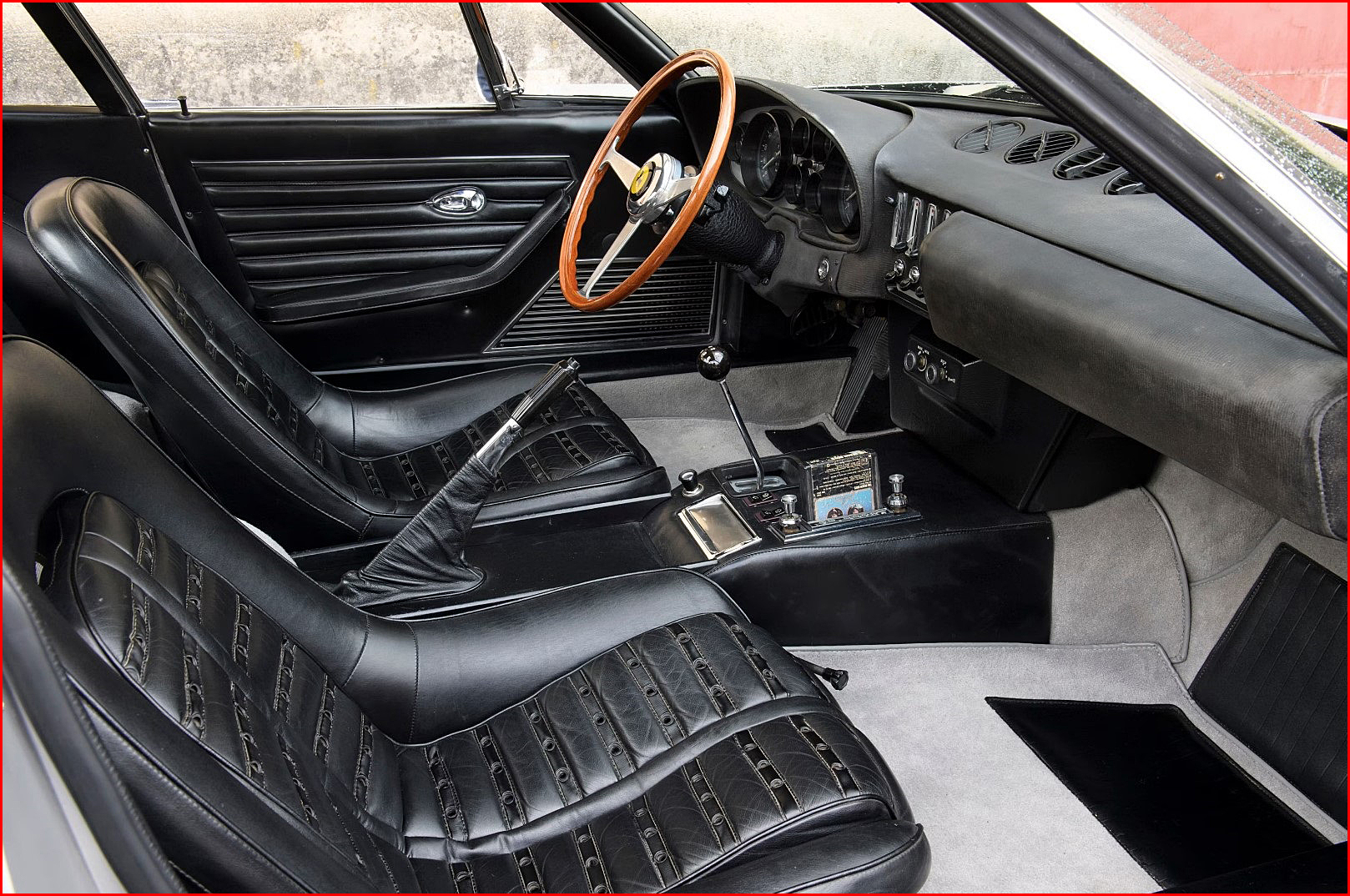
In the interior, perforated leather seats cradled driver and passenger, and a binnacle full of gauges sat behind a traditional thin wood-rimmed three-spoke steering wheel. Leather-wrapped wheels would appear in later models. The center console was home to the traditional Ferrari gated five-speed shifter with a dogleg-left reverse, an ashtray and cigarette lighter, the parking brake handle and the radio, which you didn’t really need if you love the sweet sound of a Ferrari V12.
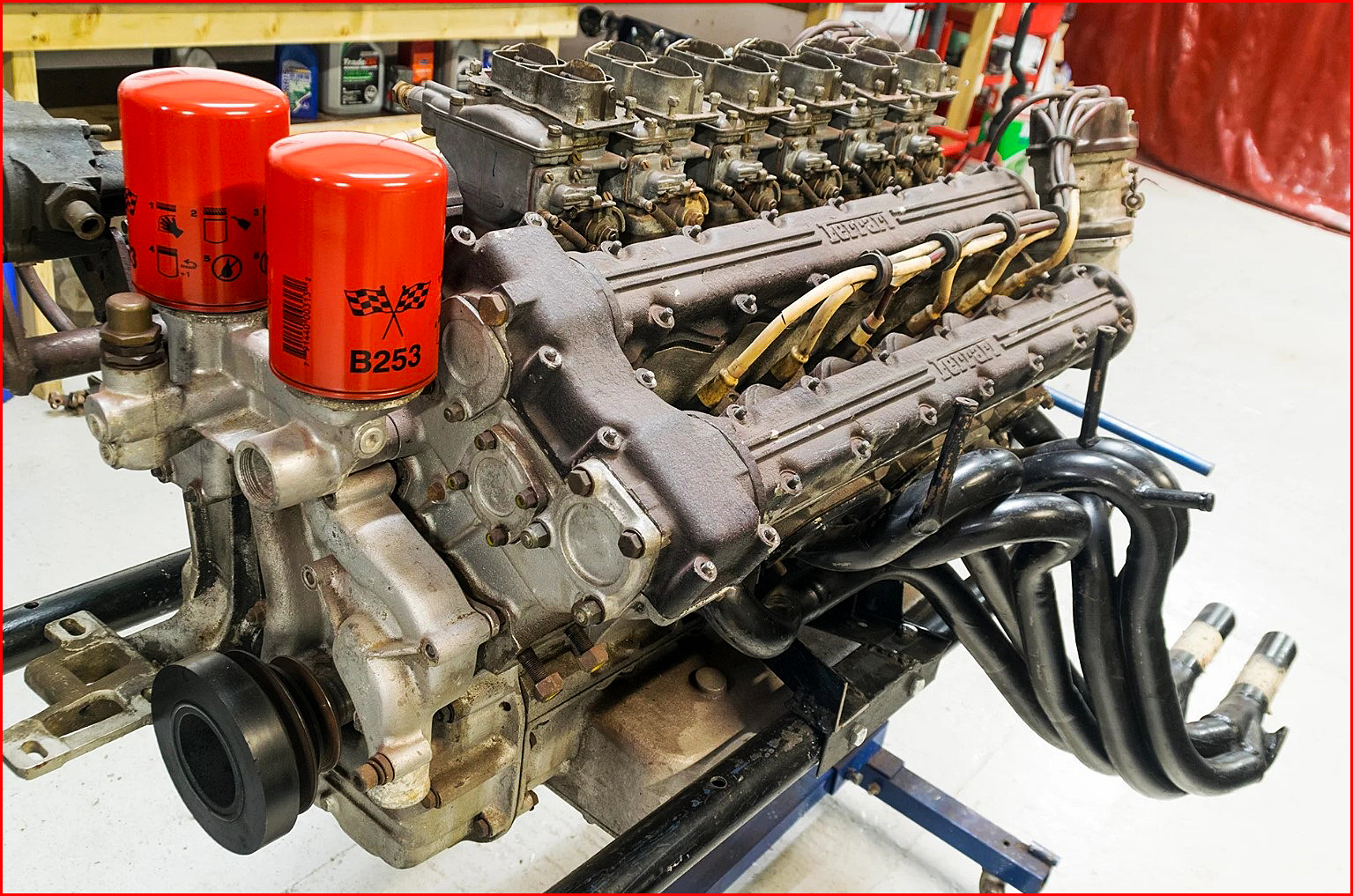
The Daytona was a traditional front-engine, rear-wheel drive car, unlike its rival from Lamborghini the Miura, which was a mid-engine car. The Daytona seemed outdated in this regard compared to the Lamborghini, but in 1968 Enzo Ferrari still did not believe that his customers could handle a V12 mid-engine car. However, it excelled in driveability and performance and took the title of “World’s Fastest Car” back from the Miura. The underlying architecture of the 365 GTB/4 is a direct evolution of its predecessor, the 275 GTB/4. The Columbo-derived 60 degree V12, designated Tipo 251, utilized six Weber 2-barrel 40 mm DCN/20 carbs for fuel delivery, although some Daytonas were built utilizing six 40mm Solex twin carbs. The extra displacement and a 9.3:1 compression ratio allowed the V12 to produce 352 HP, quite a bit more than the same lower-displacement engine in the 275 GTB/4, with the maximum torque of 318 ft. lbs. being produced at 5,500 RPM.
The 365 GTB/4 was said to have a bit of a split personality. Under 120 MPH the car felt heavy with a harsh suspension ride, but above 120 it was light and responsive. This was clearly a car designed to be driven fast and hard. In the September 1971 issue of the British magazine Autocar they road-tested the 365 GTB/4 and recorded a 0-60 time of 5.4 seconds, ¼ mile time of 13.4 seconds and a top speed of 174 MPH. Road & Track magazine performed a track test of a competition version in 1974, recording a slightly higher 0-60 and ¼ mile of 5.8 seconds and 14.5 seconds respectively, but also a higher top speed of 186 MPH. The improvement in lap times for the competition version came about through stiffer suspension, wider wheels and racing tires, but the numbers show just how good the road-going Daytona actually was.
These numbers are for the Euro-spec version, of course. The American version was different due to regulations placed on automobiles here, with a lowered compression ratio of 8.8:1 and a large central muffler added, but surprisingly this only robbed a few horsepower. As in the 275 GTB/4, a rear-mounted 5-speed transaxle was used for optimum weight distribution and the four-wheel independent unequal-length wishbone suspension utilized coil springs over telescopic shock absorbers and anti-roll bars. Disc brakes again appeared on all four wheels, standard five-spoke “star” pattern knock-off alloy models or the optional Borrani wire wheels.
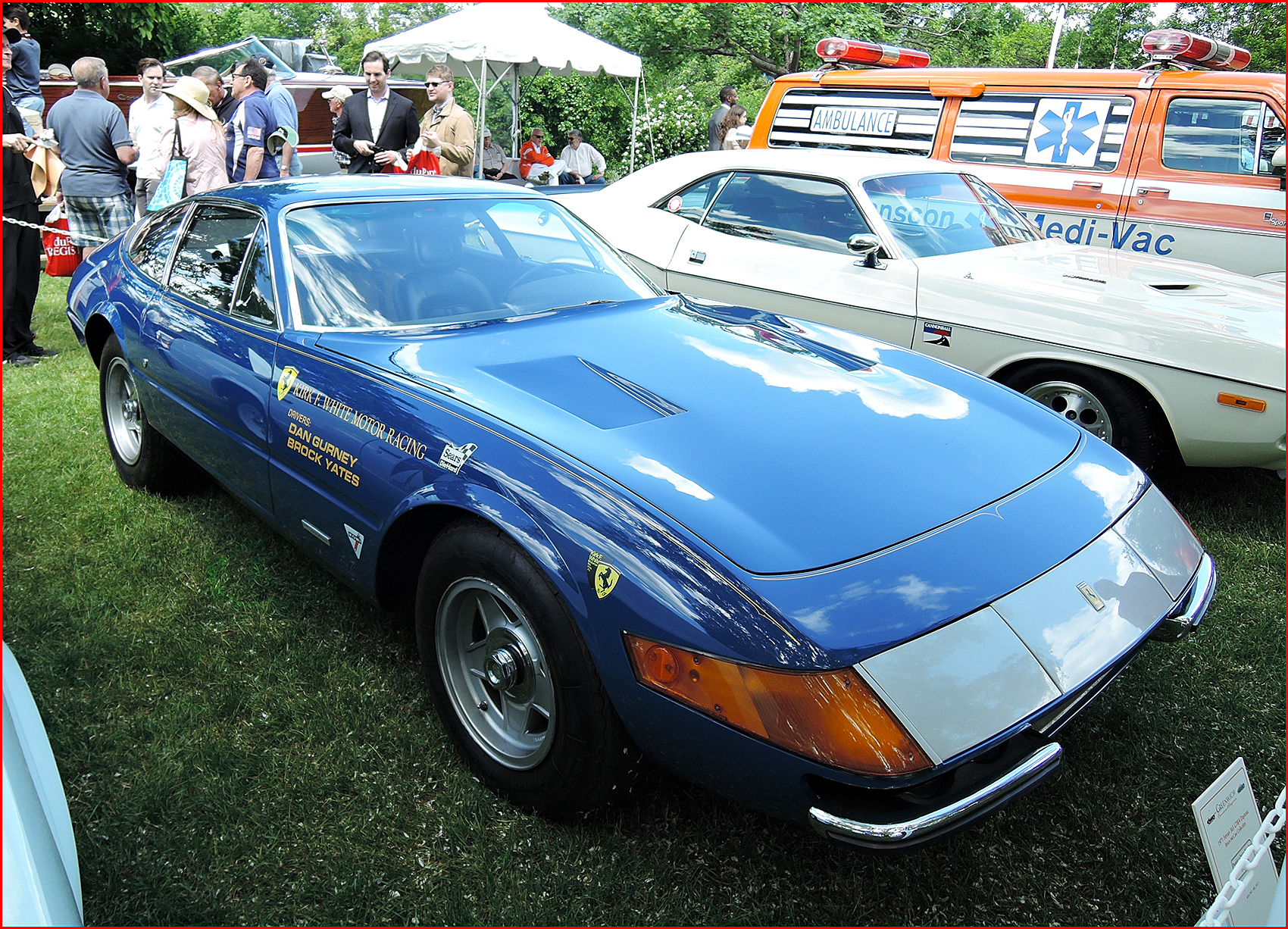
The Daytona also gained fame in 1971 when one was driven by Dan Gurney and Brock Yates in the inaugural Cannonball Baker Sea-to-Shining Sea Memorial Trophy Dash, more informally known as the Cannonball Run. The pair won with an average speed of 80.1 MPH, completing the 2,876-mile run from New York City to Los Angeles in 35 hours and 54 minutes. Dan Gurney was later quoted as saying “We never once exceeded 175 miles per hour” (the top speed of the 365 GTB/4 was 174 MPH), and both reported afterward that the car’s stability was rock-solid the entire trip, even at top speed. The Daytona was voted top sportscar of the 1970s by Sports Car International magazine in 2004, and Motor Trend Classic placed it at number two in their list of “ten Greatest Ferraris of all time.”
365 GTS/4 1968- 1973
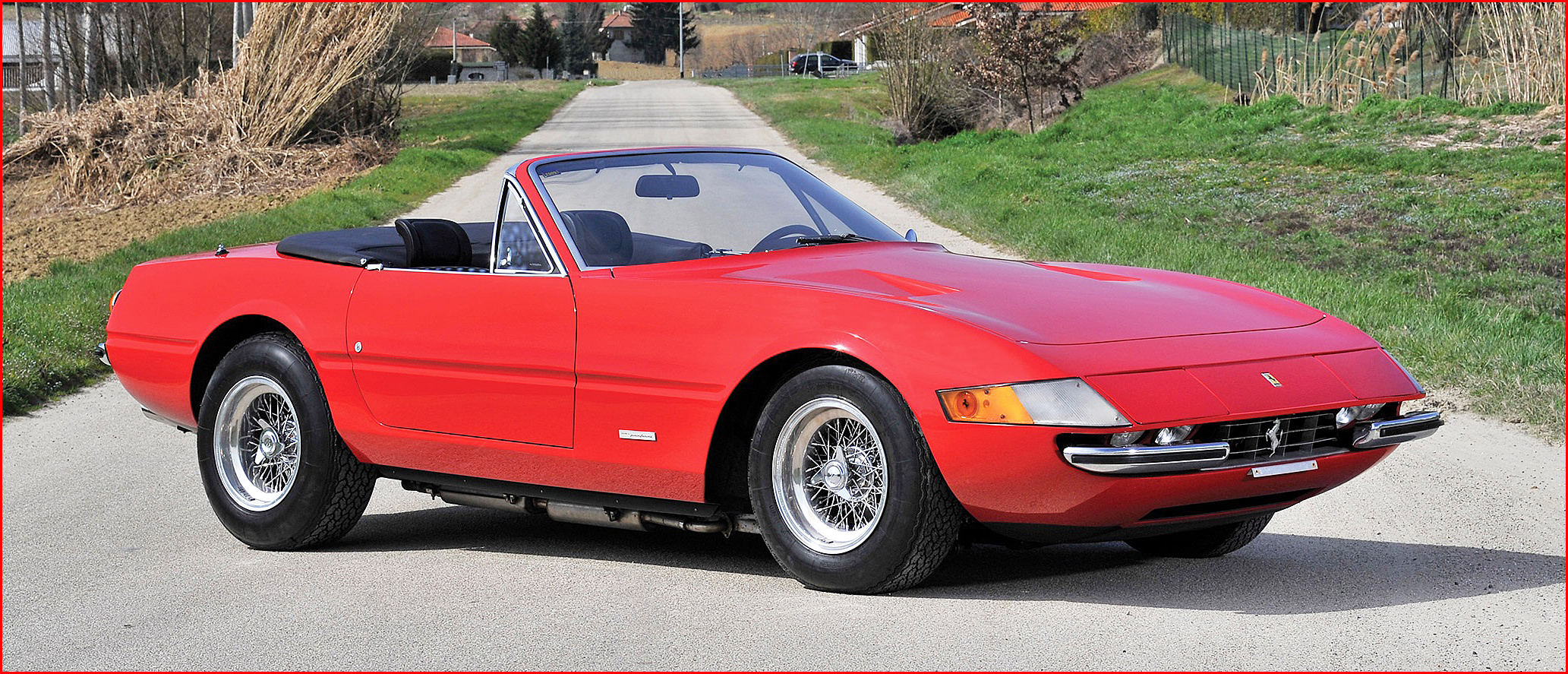
The GTS/4 Spider model is a rarity, with only 122 genuine Spiders built out of the 1,426 Daytonas produced, continuing a line that includes the 275 GTB/4 Spider & the 250 GT California Spider before it. It had a flat trunk area to accommodate the soft-top roof which folded into it rather than the fastback design of the 365 GTB/4. The factory claimed the same 174 MPH top speed for the Spider version, although this is doubtful due to the differences in aerodynamic flow between the Spider and Berlinetta. Scaglietti was careful in the transformation from Berlinetta to Spider, requiring several modifications including replacing the fiberglass inner fenders and rear bulkhead with steel for more rigidity. There were also supports that connected the front firewall to the front fenders and the footwells to the side sills. This extra bracing was necessary in the absence of a roof.
Since the mid-’80s there has been a considerable market price difference between a real Berlinetta and a real Spider. Some Berlinettas were converted to Spiders by owners to increase their market value, but the conversions can be identified from true Spiders by their more slanted windshields. Some conversions have been alleged to have been done by Scaglietti, but since Scaglietti is wholly owned by Ferrari the allegations are false.
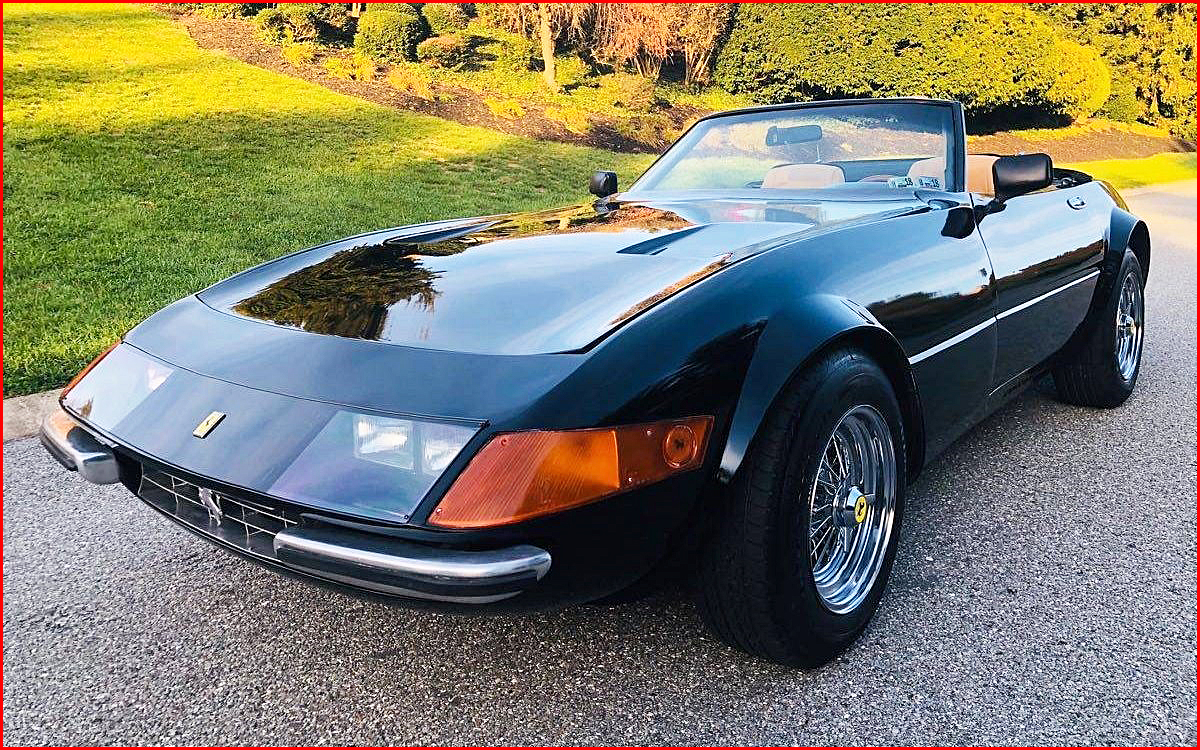
Two black replica Daytona Spiders built on 1980 C3 Corvette chassis’ with fiberglass replica bodies were prominently featured in the first two seasons of the hit 1980s TV show Miami Vice, driven by the main character Detective Sonny Crockett played by Don Johnson. The interior shots and paint swirls on the hood visible under theatrical lighting were a giveaway that this was not an actual Daytona. The show raised the profile of the 365 GTS/4 as well as the GTB/4 and the value of the cars increased dramatically, making the far less expensive turnkey replicas an attractive alternative. Ferrari were not pleased that they and one of their products were being represented on a TV show by an imitation car and sued the manufacturer of the kit car for trademark infringement and trademark dilution. One replica was retired and the other was destroyed on camera at the beginning of the show’s third season, replaced by two new white Testarossas, Ferrari’s flagship model at the time, donated by Ferrari so that their cars could be represented properly on the show. I’m sure that Ferrari didn’t mind the free publicity, either. Ferrari actively monitors the manufacture and sale of these replicas, prompting manufacturers to stop placing Ferrari badges on them and not to market them as replica Ferraris. In recent years eBay Motors has made efforts to delete auctions in which Daytona replicas are being advertised as genuine Ferraris.
Competition 365s
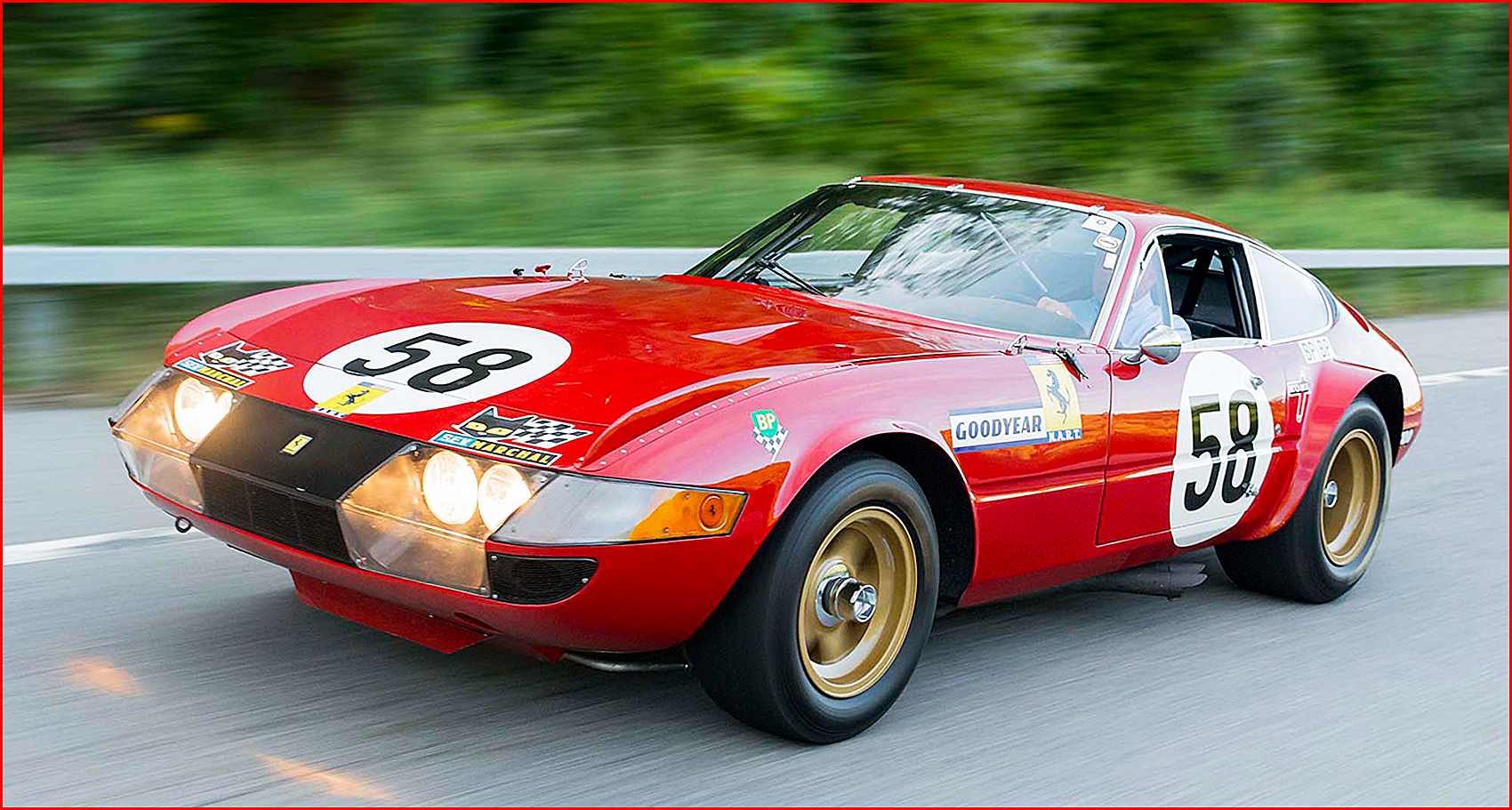
The Daytona also went racing for Ferrari, quite successfully. The robust engineering of the car gave it great reliability, very important in endurance racing. Daytonas occupied the top five spots in their class at the 1972 24 Hours of Le Mans. The 1973 and 1974 races would also see class wins for the 365 GTB/4. It also did well in its namesake race, the 24 Hours of Daytona, with an overall second in 1973 and 1979, by which time the car had been out of production for six years.
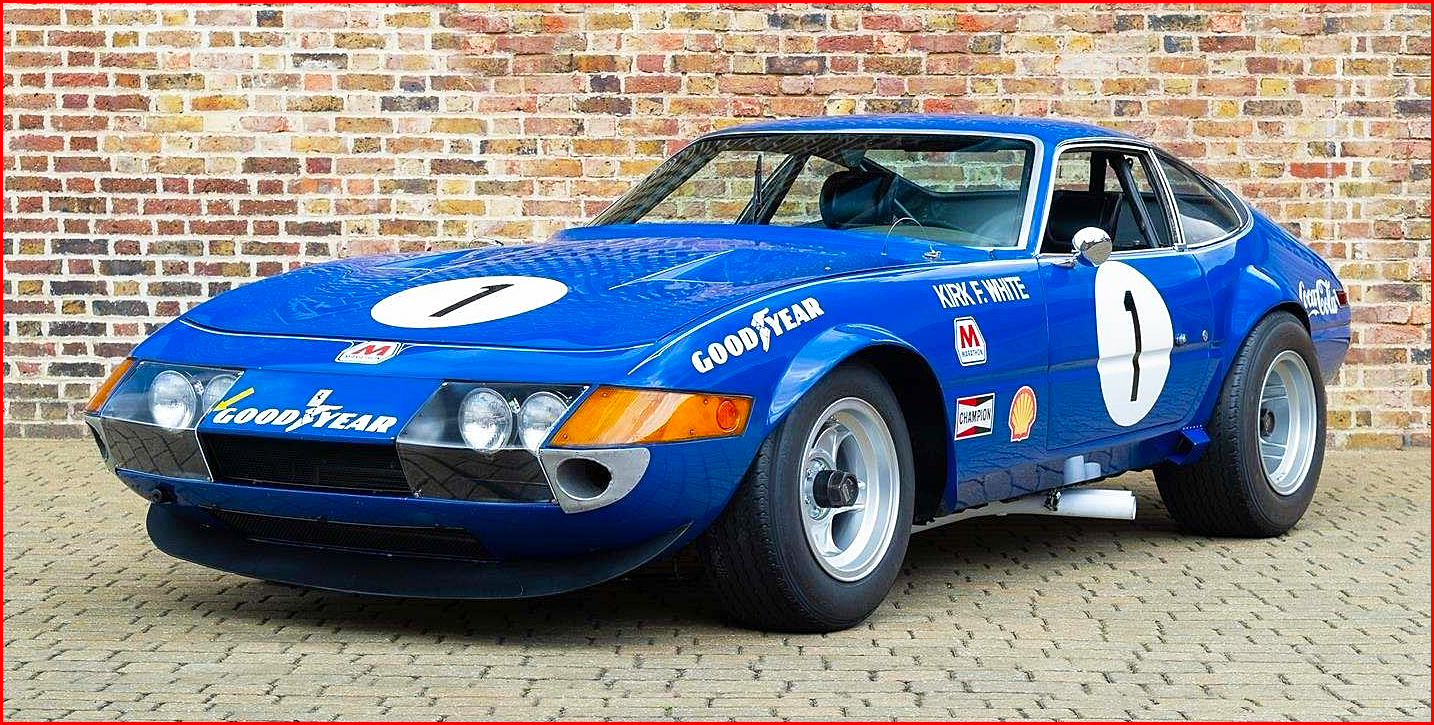
There were three series’ of competition Daytonas. First, five cars were built in 1971 with all-aluminum bodies, slightly flared wheel arches with wider wheels, aerodynamic “fences” on the front wings, a small chin spoiler and no bumpers. in 1972, the second series had the same steel bodies and aluminum hood, trunk and doors of the road car but with much wider wheel arches to accommodate even wider tires. Series 3 cars were similar to the Series 2 cars, but with steel doors rather than aluminum. All racers received carefully built and balanced racing engines, with special parts not found on road cars homologated in for racing over the three series,
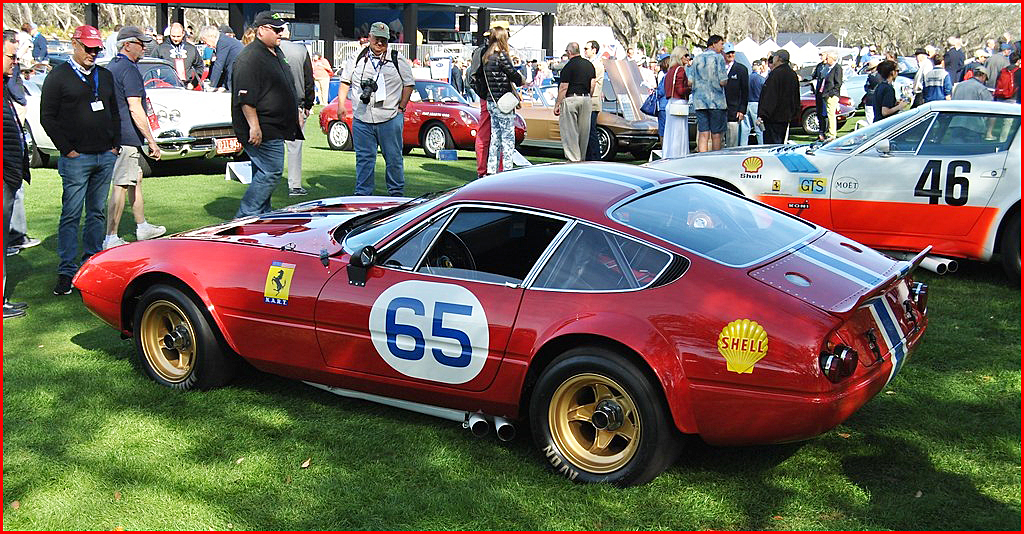
The Daytona was honored with a special class all its own at the 23rd Annual Amelia Island Concours d’Elegance in 2018 to mark the 50th anniversary of this storied Ferrari.
The 365 GTB/4 and GTS/4 were replaced in the Ferrari lineup by the mid-engined, Flat-12 365 GTB Berlinetta Boxer once Enzo Ferrari finally capitulated on the mid-engine 12-cylinder issue and began producing cars in that configuration, although no Spider version of the 365 BB was built due to the lack of room to stow a convertible top with the mid-engine configuration. There were also no mid-engine V12 Ferraris produced, only the Flat-12 Berlinetta Boxer and Testarossa. The rest of the mid-engined lineup going forward would be comprised of V8s like the 308 GTB/GTS and 360 Modena. The Daytona represents the last of the great front-engined Ferrari GTs before Fiat acquired a 40% stake in Ferrari and began taking control of their road car production. Until the arrival of the 550 Maranello in 1996, the Daytona was the last front-engine 2-seat V12 Ferrari to be sold new in the US, although front-engine V12 2+2 models like the 365 GT4, 2+2, 400, 400i, 412 and 456 continued to be produced in the interim.✪
Got a Great Car Story? Share it! Reminisce About Your Other Favorite Cars, Too!
Seeyas Again Next Time On FLAT OUT!