Hi Folks…And Welcome Again To FLAT OUT!
The Porsche That Zigged! It’s …
The Porsche 928: 1978-1995
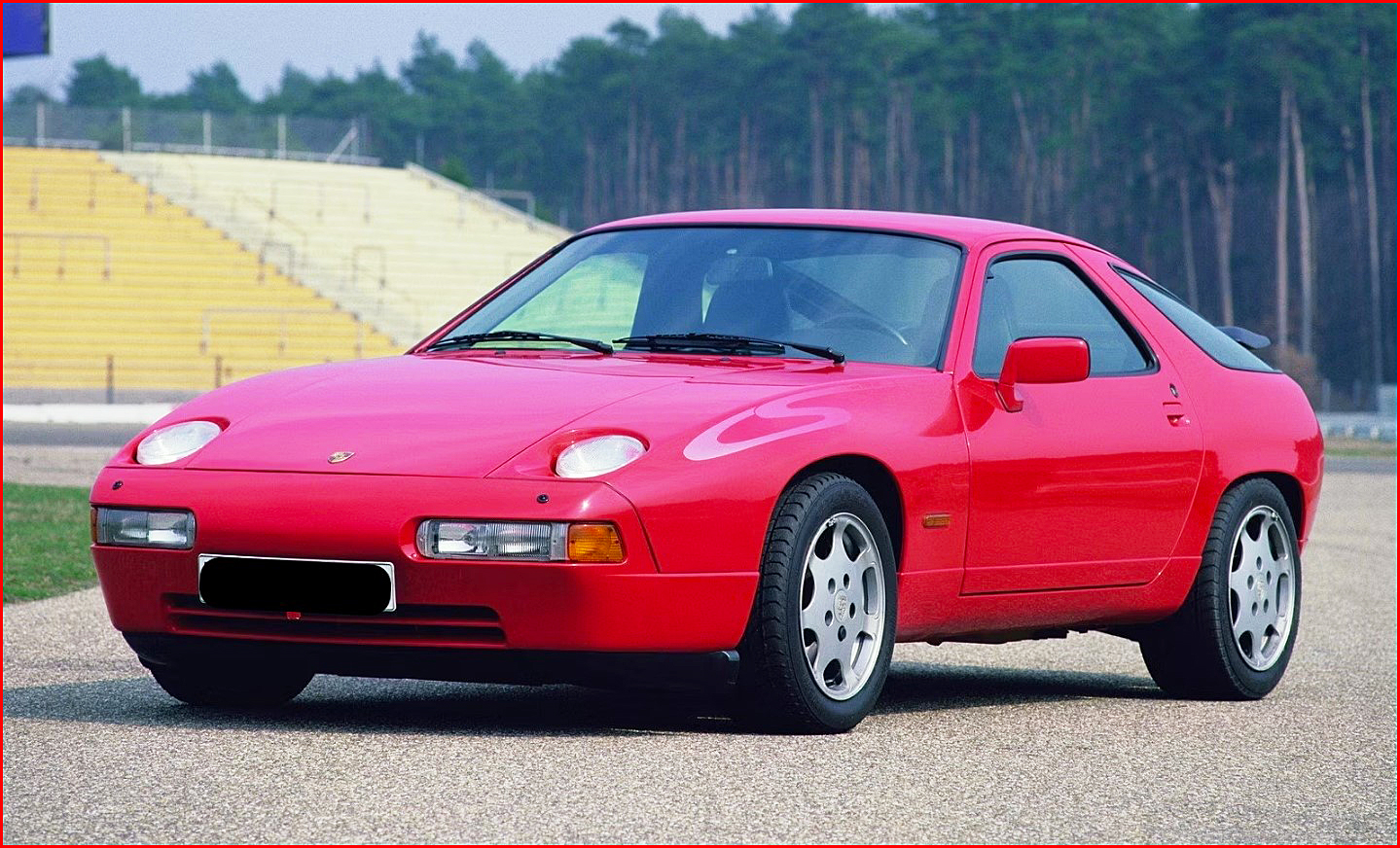
The 928 is a 2+2 Grand Touring car manufactured by Porsche, initially conceived to replace the 911 as the company’s flagship car, although that never really happened and the 911 and its variants remain on top of the Porsche heap. It blends the performance and handling characteristics of a sports car with the comfort, spaciousness and ride quality of a luxury car.
First Generation 1978-1986
Sales of the 911 were declining by the mid-1970s, possibly due to its unconventional configuration, and Porsche executives believed that the 928 would have a broader appeal than the compact, slow-selling, rather outdated 2-seat 911 with its air-cooled rear engine and the handling quirks that came with that design. It was the company’s first front-engined V8-powered car and was supposed to herald a new direction for the company away from the VW Beetle heritage of the 911. Designed during the oil crisis of the 1970s, it was also meant to be more fuel-efficient than the thirsty, high-revving 6-cylinder boxer engine of the 911, which was nearing its performance limits at that time. Managing Director Ernst Fuhrmann advocated for the car, believing that it and other front-engined cars would be essential to Porsche‘s future, expanding beyond the one model with subtle variants that they produced. Fuhrmann envisioned the new range-topping grand tourer as a blend of sports coupe and luxury sedan, distinguishing it from the pure sports car 911 with its rather utilitarian interior.
With the US market a very important concern, it was made with a front-engined V8 like American muscle cars and had two real child seats in the rear rather than the glorified package shelf in the back of the 911. The goal was to create a model that could compete with offerings from BMW and Mercedes while also appealing to the US market. A fear of US legislative restrictions on rear-engine vehicles in the wake of Ralph Nader’s book Unsafe At Any Speed and its targeting of the rear-engined Chevrolet Corvair was also a motivating factor in the shift to a front-engine design, a factor also considered by Volkswagen in the development of the front-engined Golf and its derivatives.
Company owner Ferdinand Porsche ordered the development of a production-feasible concept of the new model in 1971, and Fuhrmann commenced a design study. This would be Porsche‘s first clean-sheet design for its own model; previous models had been iterations or collaborations. The 356 evolved from the VW Beetle and the 911 evolved from the 356, the 914 was a joint venture between Porsche and VW to replace the VW Karmann Ghia and Porsche 912, and the 924, Porsche‘s first front-engined offering, came from an aborted project between Porsche and Audi. The 924 sold so well that it laid the groundwork for the more powerful 928.
During early development various drivetrain layouts were considered; rear-engined like the 911 or mid-engined like exotic supercars of the day such as the Lamborghini Miura and Ferrari 308, but technical and regulatory challenges reared their ugly heads. A mid-engine design would lack the rear-seat room required and cramming a new engine design with sufficient power, a transaxle and catalytic converters into a rear-engine compartment would cause noise and exhaust concerns in what was supposed to be a luxury GT. The 928 had to be more refined, comfortable and luxurious than any prior Porsche to compete with the likes of Mercedes-Benz and BMW. Porsche finally opted for the tried-and-true: a front-engine, rear-wheel-drive design. Engineers sought a large-displacement engine from outside the company like the 4.6 liter 90-degree V10 used in the Lamborghini Gallardo that was derived from the Audi inline five-cylinder engine, but this proposal was rejected by the Porsche board of directors as it might fuel rumors of a new 911 model with a front-mounted VW-based engine.
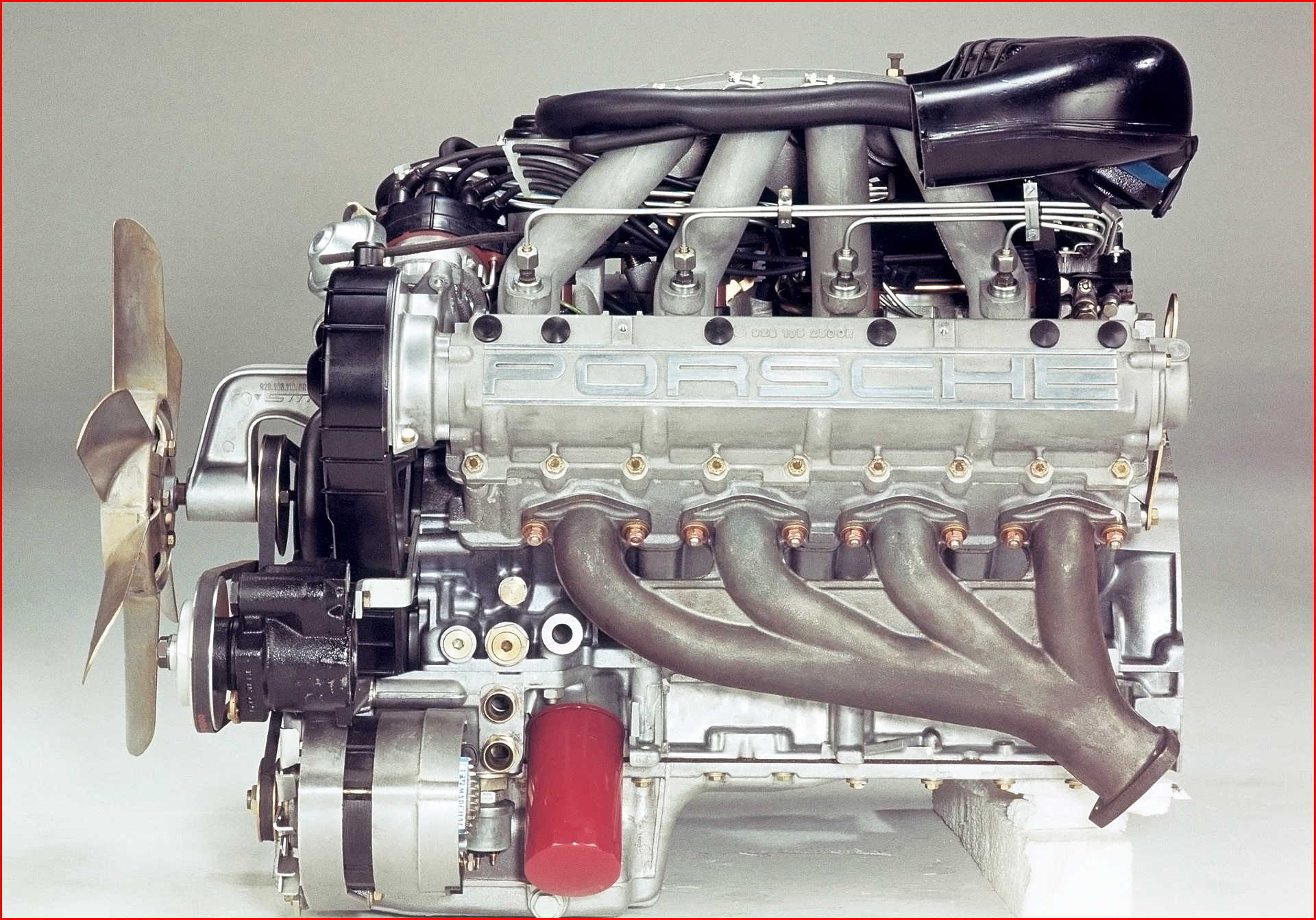
Prototype units were fitted with a 300 HP, 5 liter V8 as work progressed on Porsche‘s own in-house M28 V8. The all-alloy engine had several distinctive features such as the 122mm bore spacing (as opposed to 88mm in the Audi-derived V10), indicating the use of thick, all-aluminum cylinder barrels without steel liners. The water jackets were also unusually large, hinting at the engine’s potential for racing applications. The engine prioritized airflow to maintain a low hoodline, resulting in spark plugs placed at the top of the cylinder head rather than to the side as was common practice. The four-bolt bearings were quite substantial and received oil via grooves in the block’s bottom surface, supported by a one-piece structure forming the lower block with a cast-aluminum oil pan bolted to it. Oil and water pumps were driven by a timing belt. The first two prototypes used a single four-barrel carburetor, but production models used the Bosch K-Jetronic fuel injection system that had been decided in the planning stages. As the Oil Crisis grew, discussions emerged regarding the feasibility of smaller engines to improve fuel economy like a 3.3 liter 180 HP model suggested by Fuhrmann, but this met with strong resistance from Porsche engineers. Eventually a consensus was reached between management and engineering for a 4.5 liter, single overhead cam 16-valve V8 producing 240 HP (219 HP in North America due to emissions regulations), striking an acceptable balance between performance and fuel efficiency. Instead of a conventional transmission behind the engine, Porsche went with a transaxle design close to the rear wheels for a 50/50 front-to-rear weight distribution, which also benefited handling. This was either a dogleg 5-speed manual or a Mercedes-Benz derived 3-speed automatic, with the majority of 1978 and 1979 models being built with the manual transaxle. As the 928 evolved, this trend reversed and by the end of the run 80% of all 928s produced would feature automatics. The car also incorporated the “Weissach Axle”, a variant of the semi-trailing arm suspension. It was a passive rear-wheel steering system aimed at enhancing stability when turning and braking by eliminating lift-off oversteer and allowing the rear suspension to adjust itself during cornering maneuvers.
By 1973 the initial development was finished, but then the Arab-Israeli war broke out and brought the threat of an Oil Crisis with it. Sales of cars with large, thirsty V8s began to nosedive. This was a huge blow to both Porsche in general and the 928 in particular, so the project was put in to low gear and production was postponed until 1977. The finished car finally made its debut at the 1977 Geneva Motor Show and was released for sale later that year as a 1978 model. Despite early acclaim for its comfort, power and futuristic design, sales were initially sluggish. It commanded a considerably higher base price than a top-of-the-line 911, and traditional Porsche enthusiasts were confused and upset about the front-engine, water-cooled design, believing that the rear-engined 911 was the only “true” Porsche. These die-hards began buying 911s in increasing numbers. Oddly enough, excellent sales of the lowly 924 proved that Porsche buyers would in fact accept a front-engine, rear-drive configuration despite the 911 faithful, and it laid the groundwork for the 928. After Fuhrmann’s departure, his successor Peter Schulz opted to continue selling the 911 alongside the 928, believing that the 911 still had a place in the company’s lineup. Legislative restrictions against rear-engined cars never materialized and the 911 has evolved. It continues to be sold to this day.
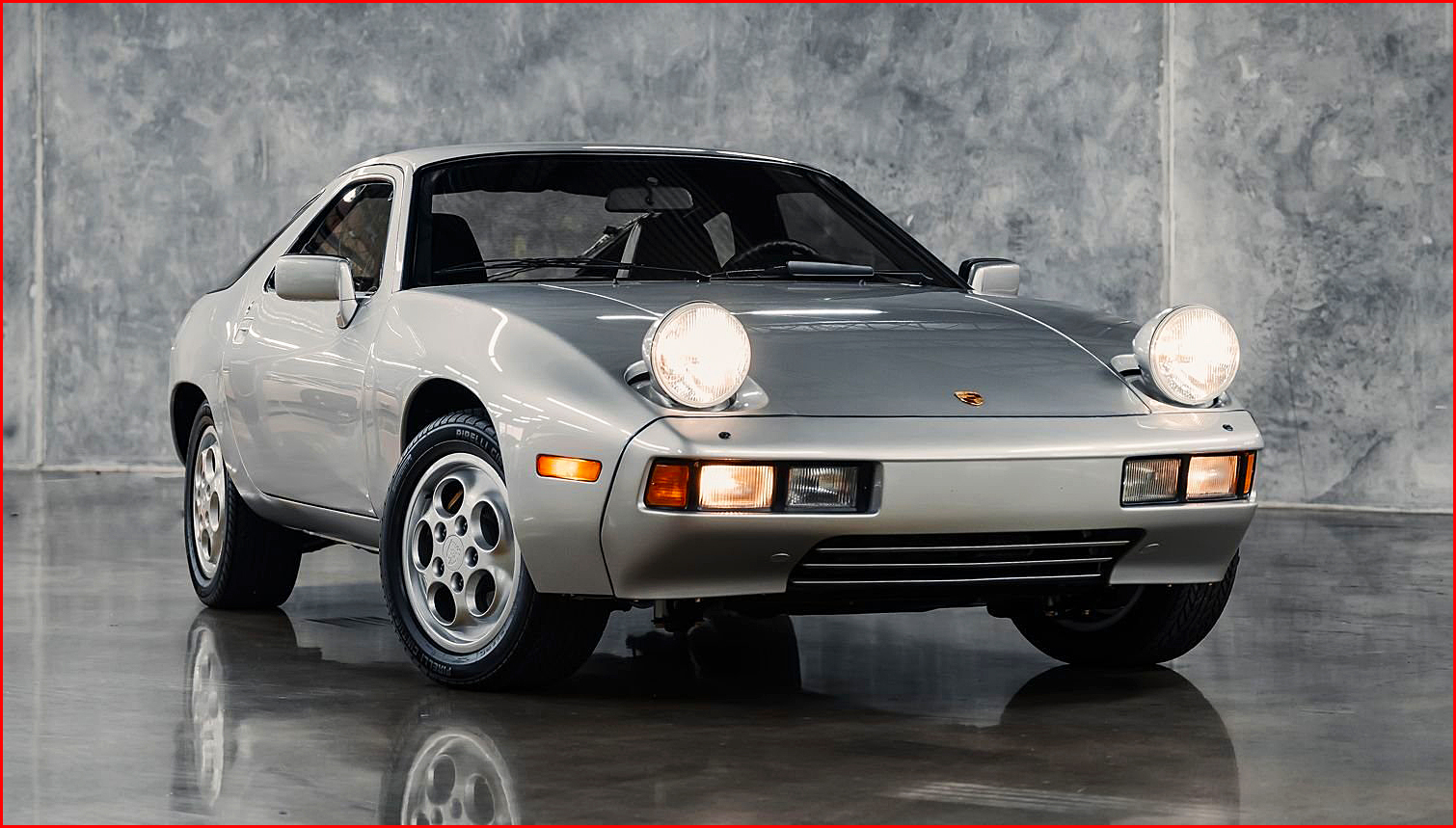
The original futuristic-looking 928 body design by Wolfgang Möbius was seen on the 1978 and 1979 models, with no front or rear spoilers and a sharp, angular “Shark Nose” profile. To save weight, the doors, front fenders, hood and front spoiler (on S and S2 models) were made of aluminum. The rest of the body was conventional sheetmetal and rested on a galvanized steel chassis, except for flush-mounted polyurethane bumpers front and rear covered in body-colored plastic, an advanced feature for that time that enhanced the look of the car while also reducing drag. Distinctive pop-up headlights that remained visible even when retracted completed the shark-like appearance and were based upon the ones found on the Lamborghini Miura. These had the added bonus of being able to be washed even when they were retracted.
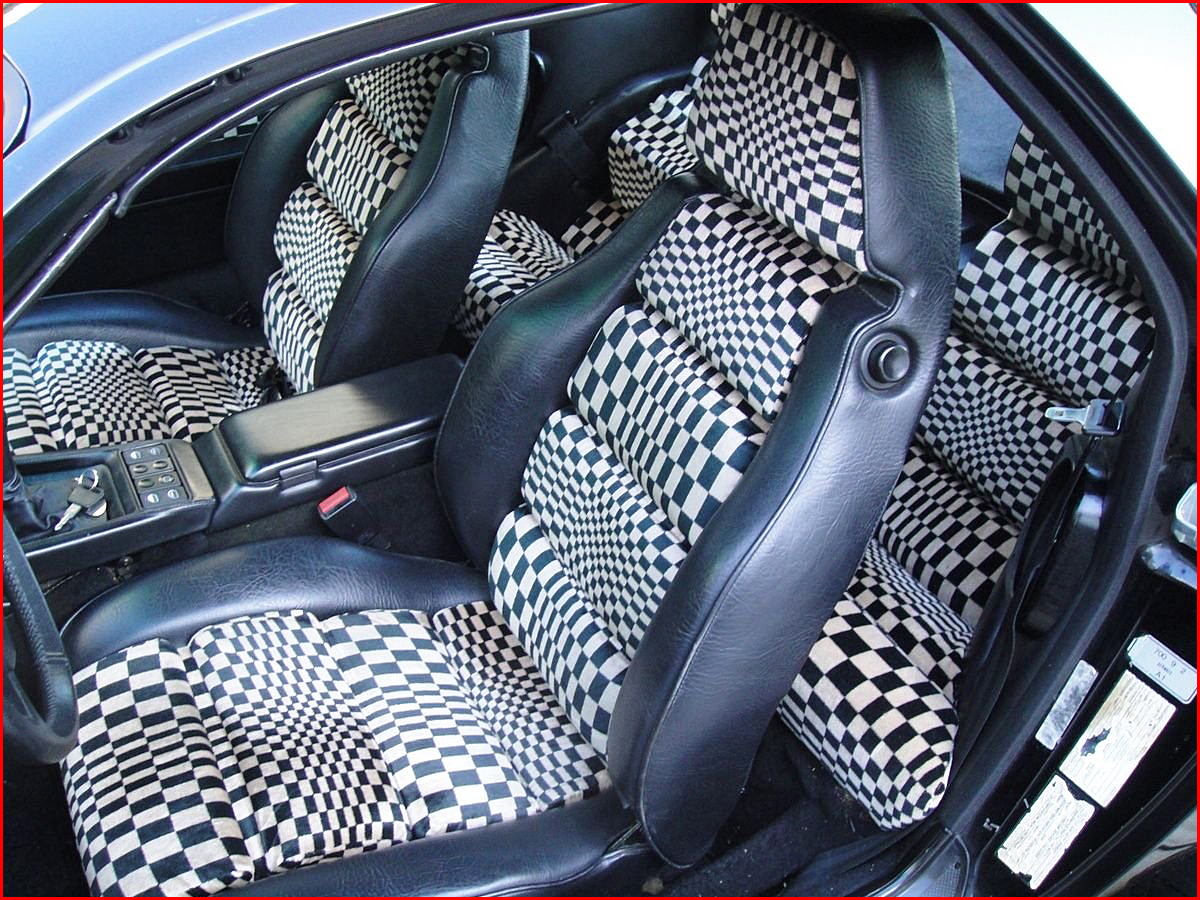
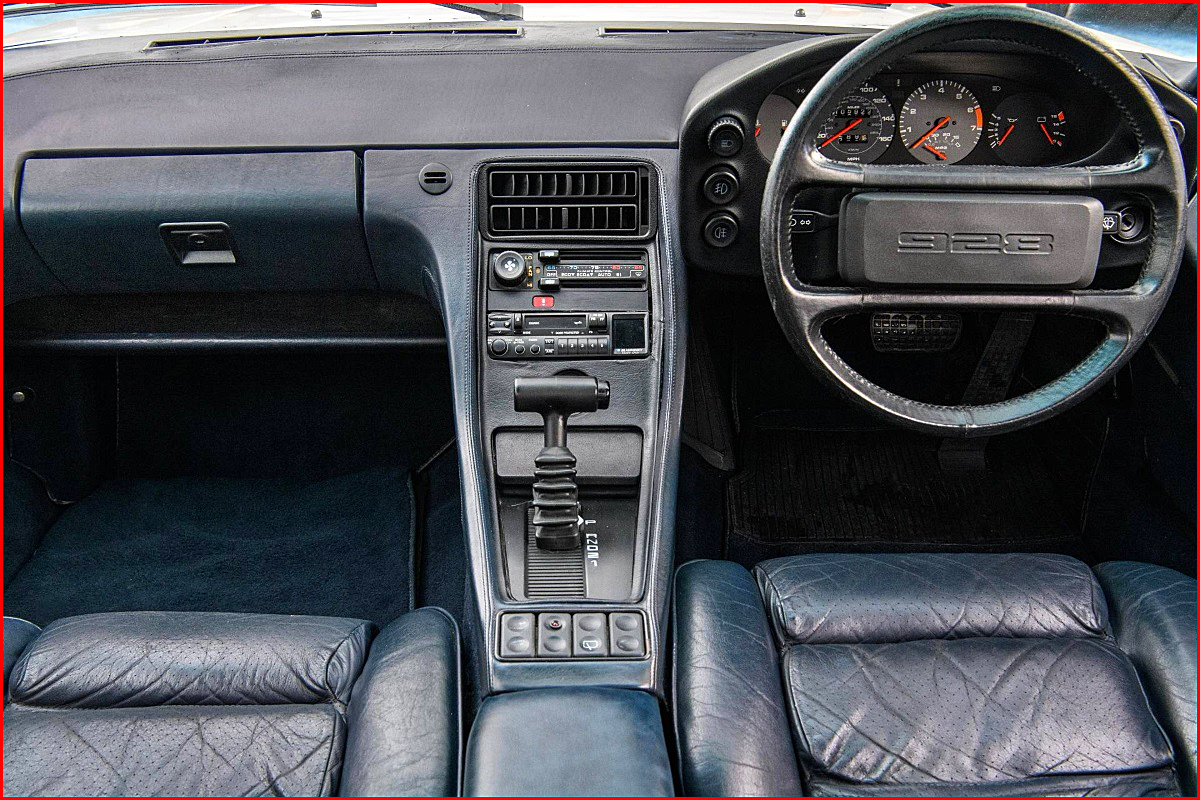
The 928 was classified as a 2+2, meaning that there were 2 small seats in the rear that would accommodate children rather than adults. These were limited in size due to the transaxle hump and offered only minimal legroom. Both rear seats could fold down, extending the space in the hatchback luggage area, and sun visors were available for both front and rear passengers. One notable feature was the instrument cluster, which moved along with the adjustable steering wheel, ensuring maximum visibility of the gauges for the driver. It also featured power windows, central-locking doors and cruise control. Optional additional air cooling was available for the rear of the car and oddly enough, the glove compartment. Porsche‘s design and development efforts were recognized when the 928 won the European Car of the Year award, surpassing such competitors as the BMW 7-Series and Ford Granada. It remains the only sportscar to have received this accolade. It was well-received by both the motoring press and driving enthusiasts alike, one common commendation being that it was safer to drive fast than the often-tricky handling 911. Despite the glowing press coverage the 928 was not an instant sales success, in part because the 911 was still on sale at just over ⅓ the 928’s price.
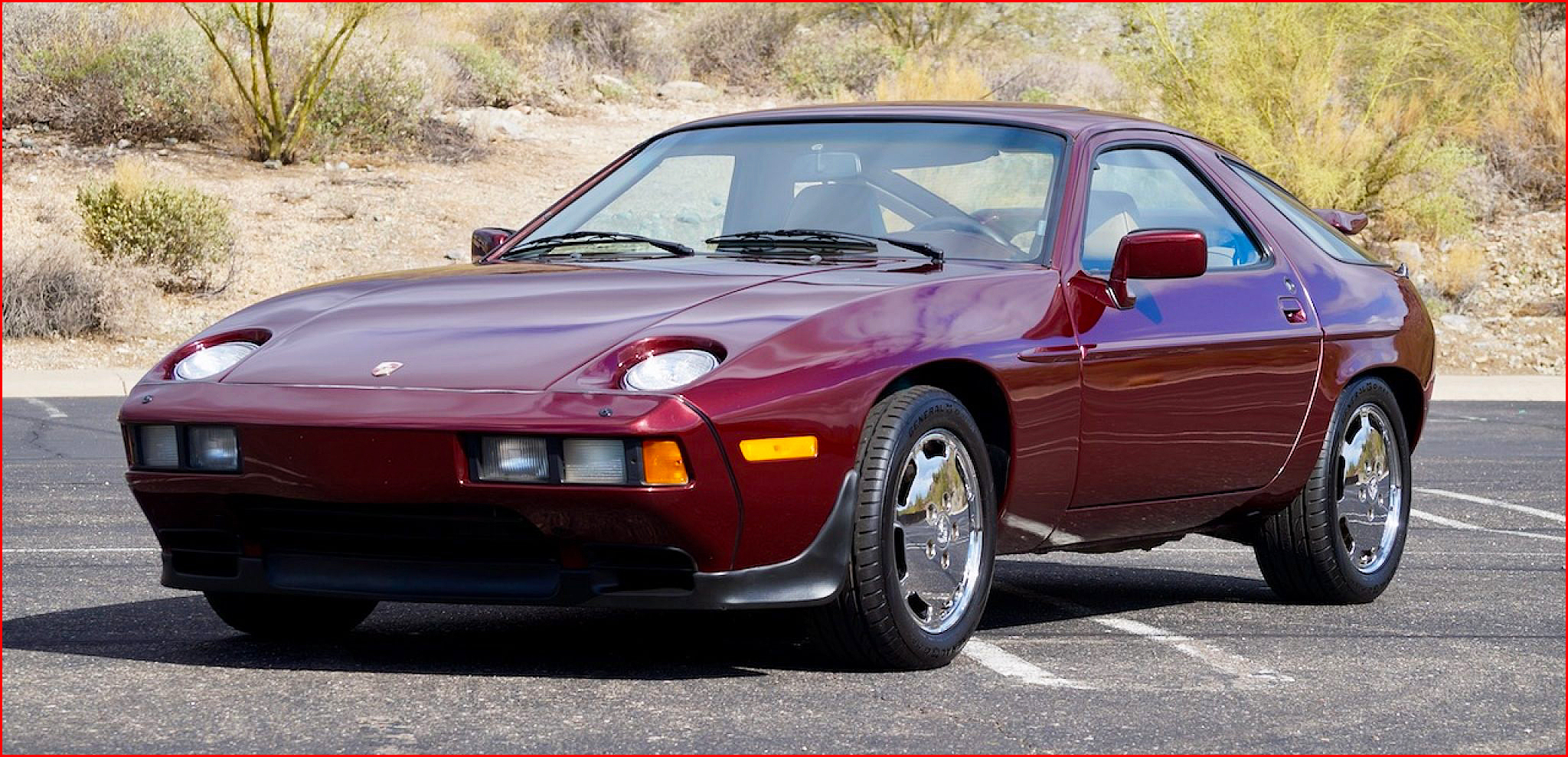
Performance of these early 928s was similar to that of the pure sportscar 911, despite the car being considerably heavier. A 0-60 time of 7.3 seconds and a 143 MPH top speed put it somewhat below contemporaries like the Ferrari 308 and de Tomaso Pantera in terms of performance, however. From 1980 (1983 in North America) front and rear spoilers made their way into the S and S2 models, with the rear spoiler being integrated into the fastback. The 928 S was introduced to the European market in 1980 and the North American market three years later.
In addition to the spoilers the S had wider wheels and tires than the base model, but the real change was under the hood. The displacement was bumped to 4.7 liters with a 10.4:1 compression ratio and initially made 296 HP, upgraded to 306 HP in 1984. The fuel injection was upgraded to a Bosch LH-Jetronic system and the ignition system was also upgraded to a purely electronic Bosch unit. 1983 and ‘84 North American-spec S models used smaller valves, milder camshafts, smaller diameter intake manifolds and US-regulated emissions equipment, and as such the power was reduced to 234 HP, quite a drop from their European cousins. This resulted in stunted performance vs. Euro-spec models, with a 6.4 second 0-60 time and 146 MPH top speed rather than 0-60 in 5.6 seconds and 159 MPH top speed for Europe.
Since the 928 S was not available in North America until 1984, in 1980 Porsche offered a “Competition Group” package that mimicked the appearance of an S, with the handling upgrades such as 16-inch wheels, sport seats, sport springs and Bilstein shock absorbers but without the performance upgrades. This was discontinued in 1983 with the introduction of the S in North America. Over time, many cars have been modified by subsequent owners to include S model features, making original “Competition Group” cars harder to identify without checking the option codes. Due to the low-grade fuel available in Australia, Aussie S models used lower 9.3:1 compression ratio pistons, but retained the larger valves, larger intake manifold and high-lift camshaft of the European engines.
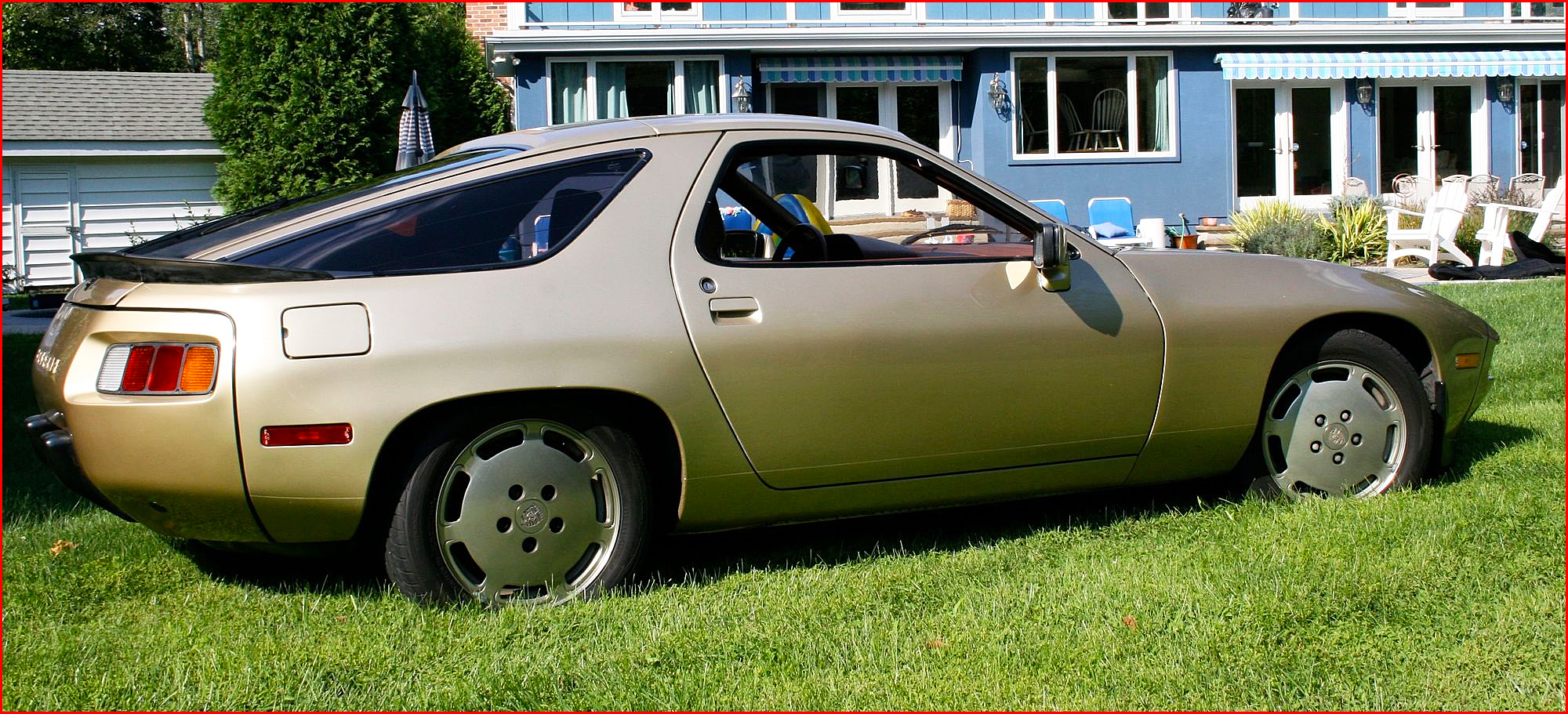
In 1982, two special models were introduced for different markets. The “Weissach Edition” featured champagne gold metallic paint, matching brushed gold flat disc wheels, a two-tone leather interior, a production number plaque on the dashboard and a 3-piece Porsche luggage set. These cars did not have S spoilers despite their availability in the US as part of the “Competition Group” option. A “Weissach Edition” option for the 911 was available in 1980 and for the 924 in 1981. 141 special “50th Jubilee” 928 S models were available outside the US and Canada, sometimes referred to as the “Ferry Porsche edition” due to his signature being embroidered into the front seats. This edition features meteor metallic paint, flat disc wheels, a wine red leather interior and special striped fabric seat centers. Like the “Weissach Edition”, similar special 911 and 924 specials were made. Also in 1982, the 928 S set a 24-hour world speed record for production cars on the Nardo track In Italy, averaging 156 MPH despite making 30 refueling stops.
At the request of Porsche‘s test drivers, one 928 S was converted to a race car, with suspension upgrades and an engine tuned to produce 336 HP instead of the stock 296 HP. The weight was lowered from 3,196 lbs. to 2976 lbs. despite having a heavy roll cage installed. This was used in a few races, but in 1983 it did not meet the European Touring Car Championship requirement of 5,000 production cars sold in a year, so it could no longer compete. However, at a 24-hour race for amateurs in stock cars held at the Snetterton race track in England, a 928 S and its four drivers won the race.
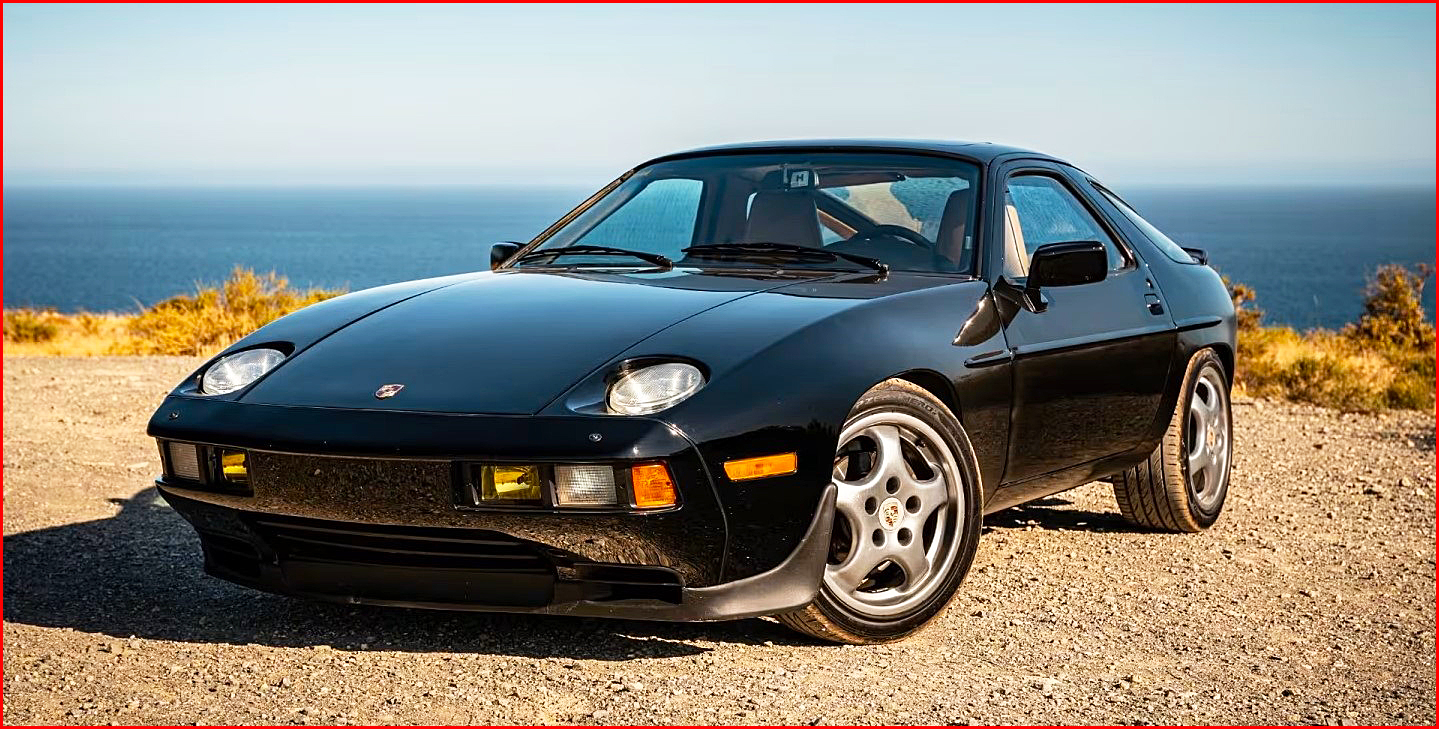
Porsche updated the 928 S for the North American market in 1985, replacing the 4.7 liter with a 5.0 liter mill with four valves per cylinder and producing 288 HP. This gave the North American car a 5.5 second 0-60 time and 153 MPH top speed. The seats were also updated to a new style. These are sometimes called “S3” to distinguish them from the 16-valve S models. European models kept the 4.7 liter engine as it still produced more power than the new 5.0, but the new engine with its lower 9.3:1 compression ratio and catalytic converters became an option in some European countries and Australia beginning in 1986. Also in 1986 all 928s had revised suspension settings, larger brake discs with 4-piston calipers and a modified exhaust system from the 928 S4 that would debut a few months later. The first 1000 1986 cars had the old specs, after that the new equipment was installed and these cars are sometimes referred to as 1986 ½ models even though ¾ of 1986 production had the upgrades.
Second Generation 1987-1995
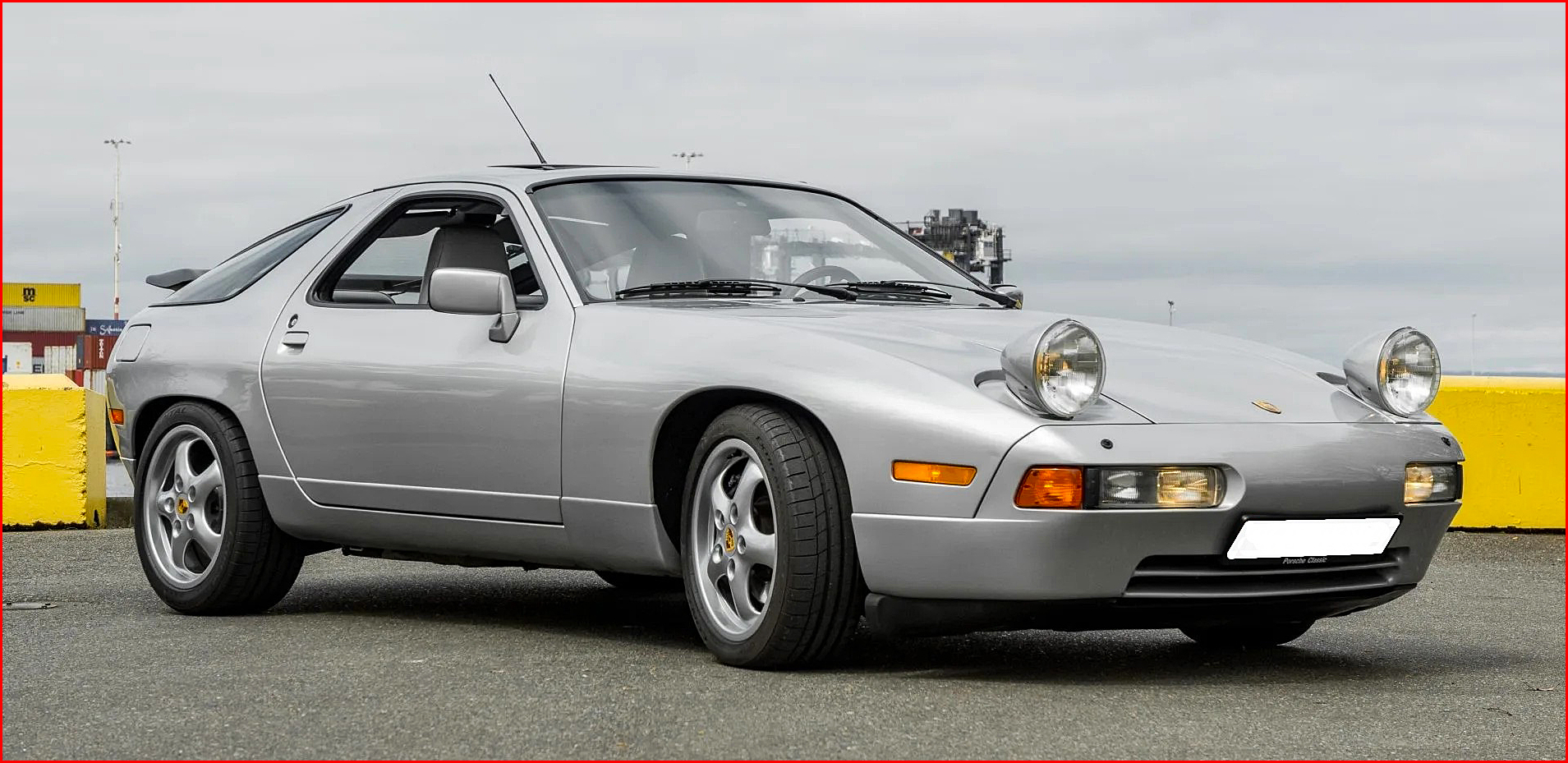
The 928, 928 S and “S3” were replaced in 1987 by the S4 variant with an updated version of the 5.0 liter 32-valve V8 producing 316 HP in all markets. This gave the North American version the same 5.6 second 0-60 and 163 MPH top speed as the rest of the world. A new single-disc clutch in manual cars and a larger torque converter in automatic cars beefed up the drivetrain. A rounded front end with air intakes, a slope between the wide, flush-fitting rear lights and a new black rear spoiler that stood up from the body were significant styling updates. This generation was more of a true world car as the differences between home market and export versions were minimal. Instrumentation changes (Kmh/MPH) lighting, front and rear bumper shocks and catalytic converters were all that differentiated exports except for Australia, which had a 296 HP version of the V8 in preparation for lower-grade fuel. To hammer home just how fast the S4 was, Porsche sent a pre-production model to the Bonneville Salt Flats, where driver Al Holbert took it to a new speed record of 171.926 MPH, making it the fastest non-turbocharged production car in the world.
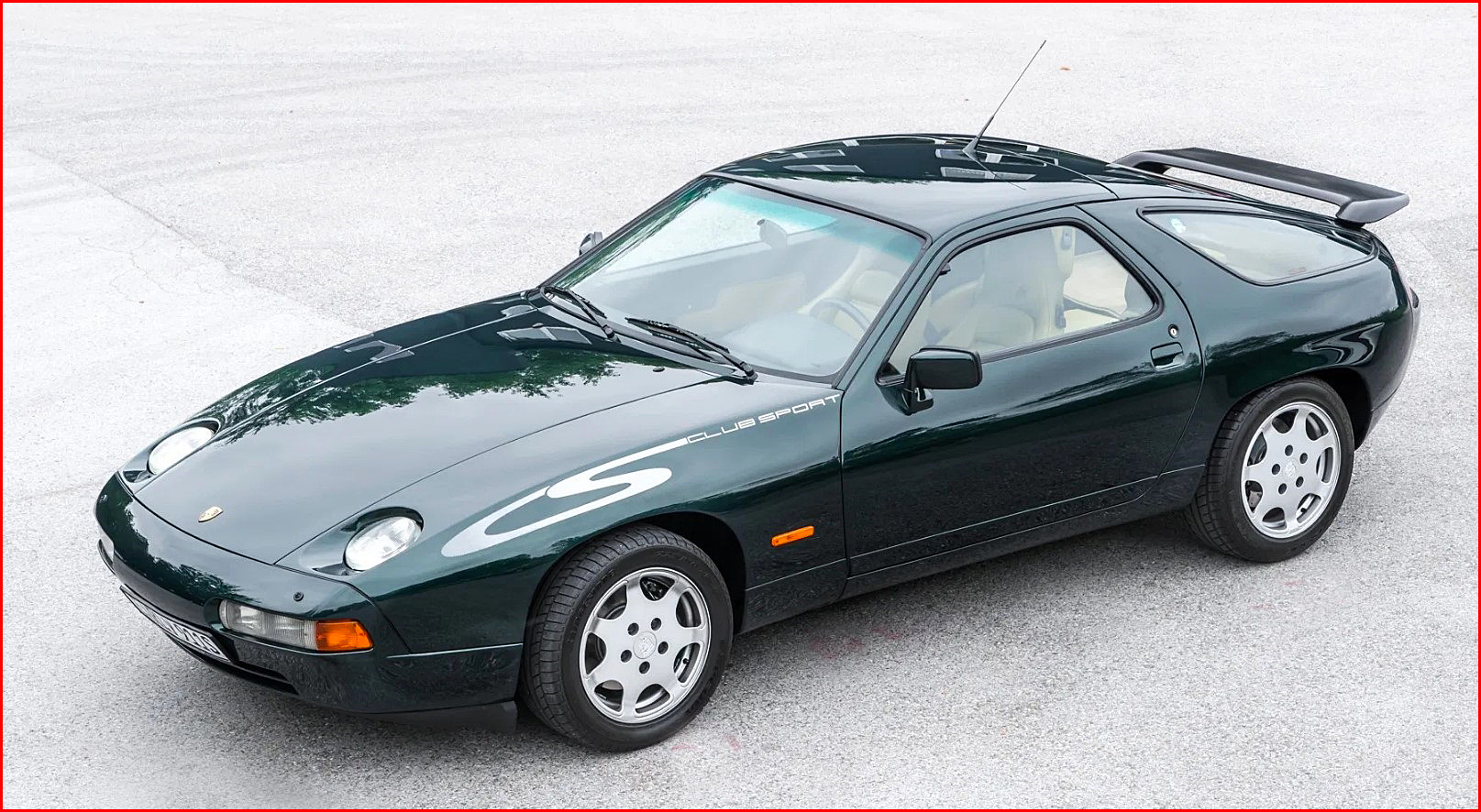
In 1988 a Club Sport variant that was 220 lbs. lighter and had wider 8” front and 9” rear wheels became available, a toned down version of a lightened 1987 factory prototype that would accelerate to 60 in 4.7 seconds and top out at 168 MPH. The same year the factory made five lightweight S4 versions with a manual transmission for racecar drivers Derek Bell, Jochen Mass, Hans Stuck, Bob Wallek and Jacky Ickx, who were on the Porsche Racing payroll at the time.
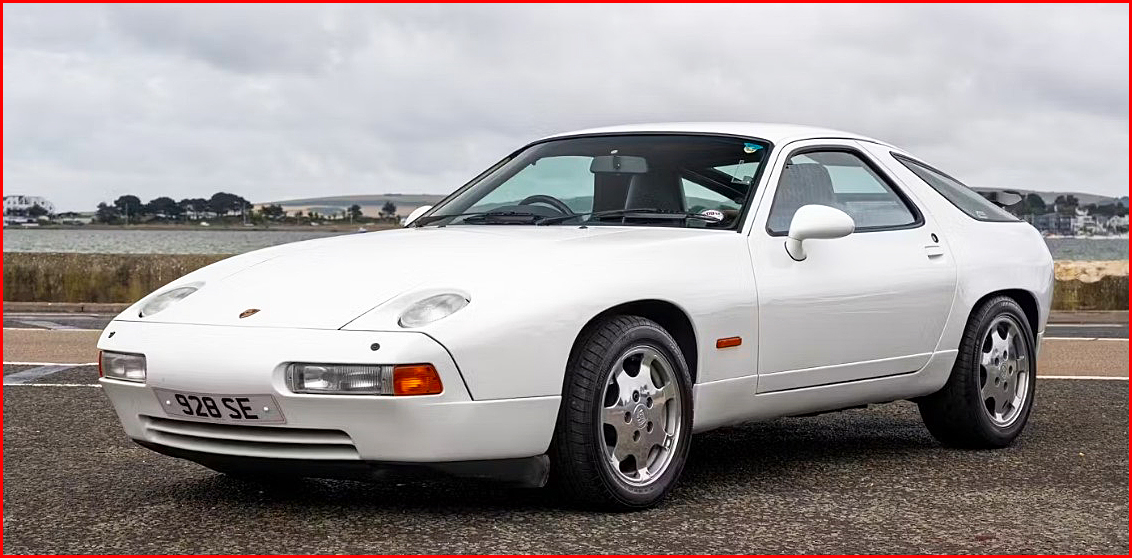
An SE version, sometimes called S4 Sport due to that designation on the rear bumper, became available as a middle ground between a normal S4 and the more race-oriented Club Sport. This version had more HP than an S4 but less than the Club Sport, and utilized different engine ECU programs and parts that later became known as GT pistons and cams. Some were outfitted with stronger, short ratio manual transmissions. There was no automatic transmission available with the SE.
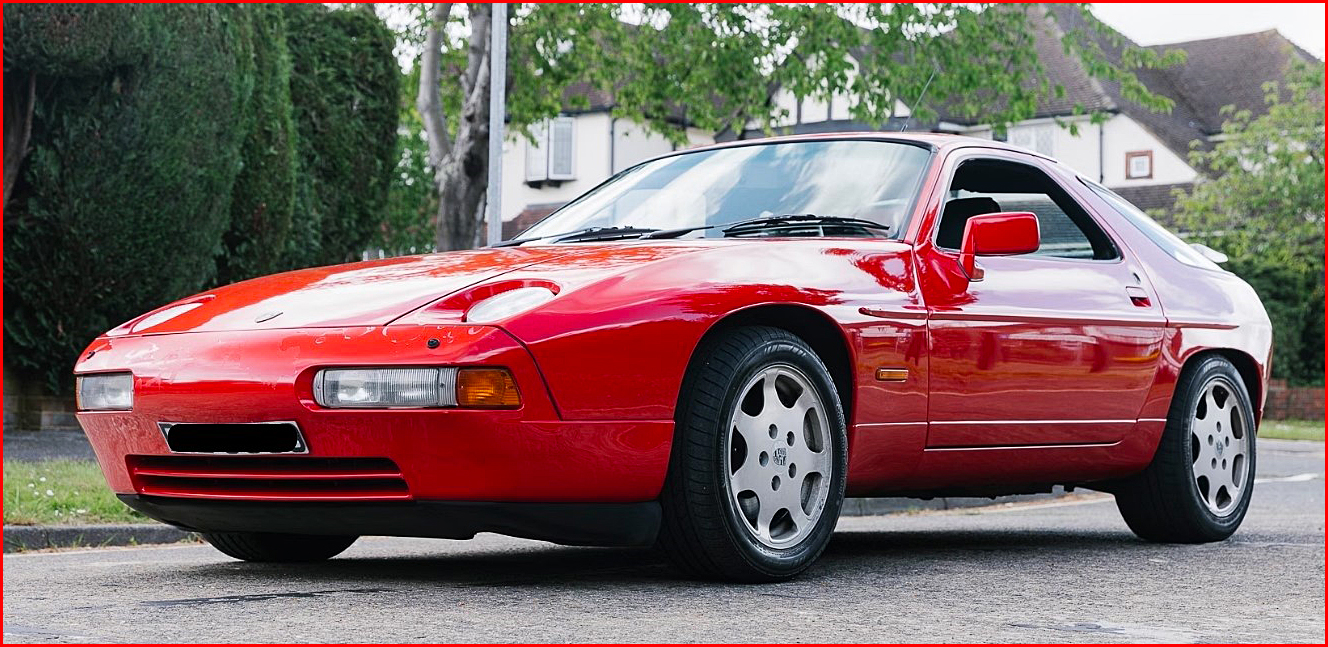
1989 saw the addition of a digital trip computer and warning display in the dashboard (PIDS, Porsche Information and Diagnosis System) that also included an early version of tire pressure monitoring, and Australian models received the same 316 HP engine management setup as the rest of the world. The slow-selling Club Sport and SE models were dropped, replaced by the 928 GT which was equipped like an SE but less equipped than an S4. This dropped the 0-60 time to 5.3 seconds and upped top speed to 171 MPH. It was also not available with an automatic transmission, but had a ZF 40% limited-slip differential. For 1990 this was replaced by a 0-100% limited-slip differential called PSD (Porsche Sperr Differential).
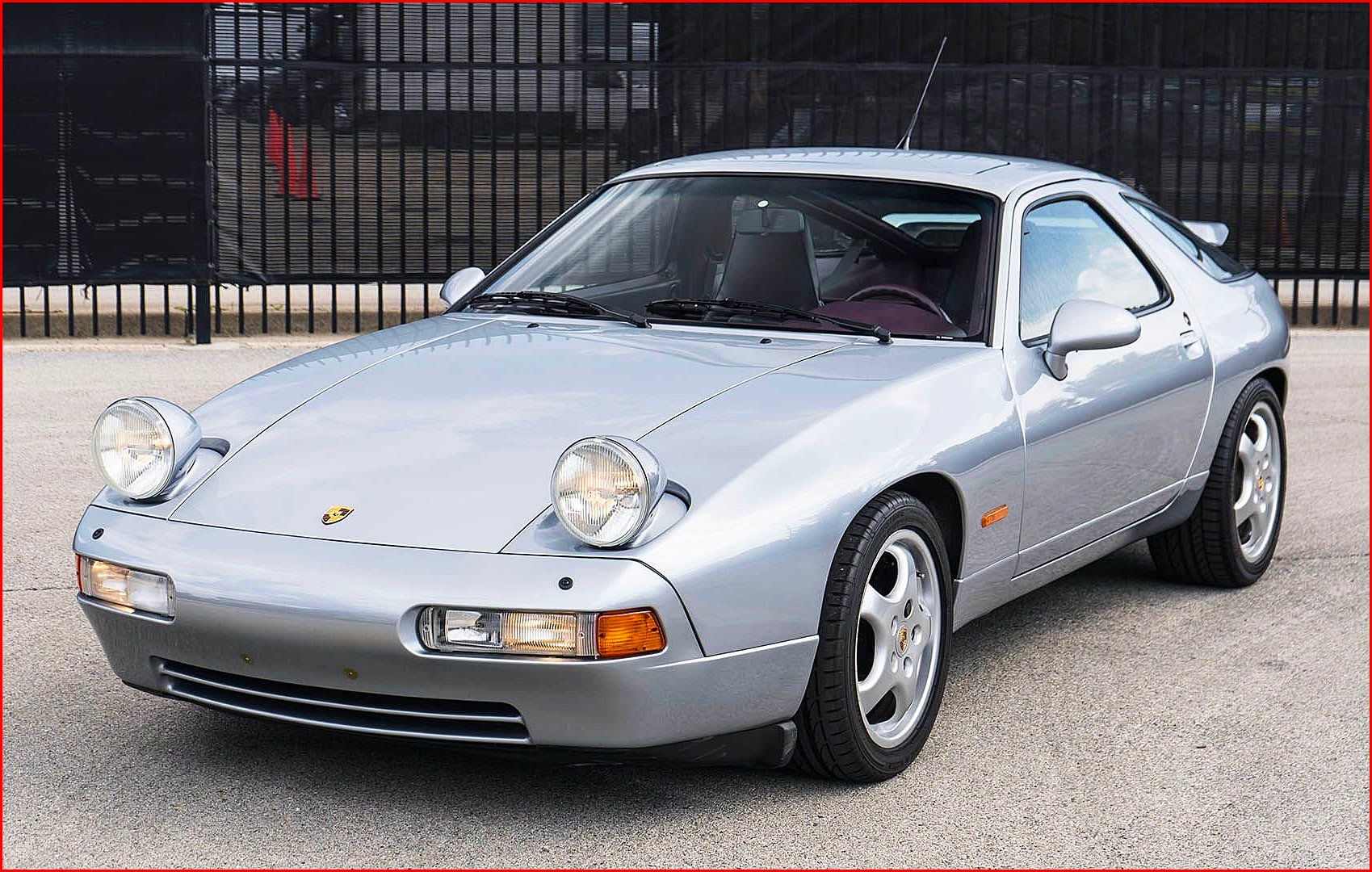
At the end of the 1991 model year the S4 and GT variants were dropped to make way for the final iteration of the 928, the GTS. This variant was released in late 1991 as a 1992 model in Europe, but would not arrive on North American shores until the following year. The bodywork was changed to accommodate the new 17-inch wheels and a new, more powerful 5.4 liter V8 with 345 HP now lurked under the hood. This propelled the GTS to 60 MPH in 4.7 seconds with a top speed exceeding 170 MPH. Those were the changes that Porsche touted in its advertising, what they didn’t advertise was the price; loaded GTS models could top $100,000, making them some of the most expensive cars on the road at the time. This severely hampered sales and Porsche discontinued the GTS after shipping only 77 models to the United States. The value of second-hand GTS models decreased rapidly due to the high maintenance costs associated with very expensive parts. The GTS did best the 24-hour world speed record that had been held by the 928 S for 11 years, averaging 165 MPH at the same Italian Nardo track.
The 928 was retired after 1995, but a speculative piece in the April 2006 issue of Road & Track magazine hinted at its return on a shortened version of the Panamera platform in 2011 or 2012. Porsche, however, denied the possibility of any such model reaching production.
The 928 proved to be a powerful, very capable, very luxurious GT that set the bar high for others to follow. It foreshadowed the front-engined, rear-drive trend of Porsche cars such as the 944 that debuted four years later with essentially half of the 928 engine and was arguably the best-handling 4-cylinder sports coupe of the 1980s, and the modern four-door Panamera. Porsche realized that it was never going to survive on just sales of the 911 alone, and the 928 offered buyers something new that they could park next to their 911s or other cars in the garage and use as a daily driver. This was the vehicle that saved the company from being absorbed by competitors like Mercedes-Benz or going bankrupt.
I saw several 928s during my second time in Germany in the mid-1980s, and the shape of the car and the throaty growl of the V8 was like no other Porsche before it. The shape spoke to me and I loved the exposed pop-up headlights like another of my favorites, the Lamborghini Miura. Alas, it was beyond my price range or that of any of my circle of friends, costing about $50,000 at that time. That was only $10,000 less than the price of my first house some seven years later. I have attended a lot of car shows since then, some rather large with many exotic cars, and I have seen exactly TWO 928s at all of those shows. It is a rare beast, with only 61,056 produced and sold worldwide in its 17-year run. Perhaps if I win the lottery I can finally buy my 928 and set aside a pile of cash to keep it in good running order. It will be high on my to-do list. ✪
Got a Great Car Story? Share it! Reminisce About Your Other Favorite Cars, Too!
Seeyas Again Next Time On FLAT OUT!