




▶️ VICTOR DAVIS HANSON: IRAN, A LONGER VIEW
⭐️ HelloKitty’sGotAHairTrigger

VICTOR DAVIS HANSON: IRAN, A LONGER VIEW

jjjj
he prognosis of the Iran War is now so couched in politics and so warped by the American Left that the public has grown tired and wants it all to go away. But in truth, the situation is so fluid that any accurate prediction is impossible. Yet there is good reason to believe in an eventual outcome quite favorable to the U.S. and one far better than the status quo ante bellum.
✪ The Strait Of Hormuz
Prior to President Trump’s most recent announcement that the United States would first blockade and then reopen and control traffic through the Strait, only a few ships were going through, mostly those aligned with Iran, opposed to the United States, or neutral.
Thus, the Strait was disrupted to a far greater degree than during Iran’s earlier efforts at closure during the “Tanker War” phase of the Iran–Iraq War, as well as its chronic harassment of shipping in 2018–19. And now?
If Trump quickly clears and secures control of the Strait, and if allowable traffic reaches, say, 60–70 percent of prewar levels and if the U.S. avoids a full-scale war, instead responding disproportionately to any renewed Iranian attempts to close it—then, within one to two months, oil prices will begin to taper off.
The American challenge with the war is not military but political. This time, the U.S. is not sending Marines to fight house to house in Fallujah or to scour villages on the ground in Helmand Province—losing hundreds in casualties and fighting in circumstances favorable to jihadists and terrorists.
Instead, the administration is restrained in its use of force only by concerns about the war’s effects on the U.S. economy, global oil prices, domestic gas prices, the midterm elections, and the political fortunes of vulnerable Republican members of Congress.
Militarily, the U.S. has choices. The Navy can continue demining the Strait, rotate patrols of U.S. and allied warships through it, allow allied and neutral shipping to pass while blocking Iranian-bound ships, and periodically strike Iran whenever it attempts to disrupt shipping—including clearing its coasts of missiles and drones. In other words, Trump can flip the Iranian strategy of selective entrance to the Strait, with the key difference that he has the wherewithal to carry out such a calibrated blockade, and Iran does not. World opinion will be with him, for economic reasons and, should Iran seek to stop him, for its breaking the ceasefire and thus justifying the rain of retaliatory bombs that will descend upon it.
Or if Iran restarts missile and drone attacks on U.S. military and allies in the region, the administration can warn Iran that it will lose its oil facilities on Kharg Island as well as dual-use generation plants—until it relents.
But in the long term, no one will forget Iran’s third—and most egregious—effort to hijack the Strait, despite its failure to do so completely and for any sustained period.
The Gulf exporters will double down on their Red Sea and Gulf of Oman pipelines, which bypass the Strait of Hormuz. Saudi Arabia and others will explore more routes, perhaps even through Jordan to Israel and Haifa on the Mediterranean.
In the end, Iran will be Left with an inert asset—if not a liability—since the United States can ensure that no oil flows from Kharg Island through the patrolled Strait, which the West may ultimately render irrelevant anyway. Importers will quietly begin shifting toward increased output from Venezuela, the United States, and perhaps a soon-to-be unsanctioned Russia. Iran’s attacks on 11 Muslim nations in the Middle East will not be lost on the people of the region. Many of the sheikdoms will continue to press Israel and the U.S. to ensure Iran does not rearm. A sane Gulf would not give any more money to Hamas, given its hostile and hated lunatic patron.
✪ Regime Change
Iran lost most of its 47-year-old, multibillion-dollar investment in weapons as well as its military-industrial complex. To rearm will cost the regime dearly—and that vast expense will be unpopular with a restive populace short of food and fuel.
It will be hard for whoever is running the country to reestablish its military arsenals and multibillion-dollar subsidies to Arab terrorists. Indeed, Iran’s subsidized proxies—Hezbollah, Hamas, and the Houthis—may be left orphaned, despised by the Iranian people, and perhaps even more hated by some of their former Gulf co-sponsors. The odd myth of Iranian military invulnerability is shattered. And that loss of face, too, will have consequences soon at home and abroad. The Iranian people will further grow angry that the one nationalist argument made by the Iranian mullahs—that at least its half-century, half-trillion-dollar military buildup sent shivers throughout the Middle East, terrified the West, and gave global cred to Iran—has now also imploded.
It is one thing for the people to be ruled by globally feared autocrats armed to the teeth, but quite another to be governed by humiliated, now-impotent incompetents and buffoons.
Once the Berlin Wall fell, it took weeks and sometimes months for Eastern Europeans to overthrow their communist oppressors. And it required more than two years after the wall went down for its full effects to ripple out and dissolve the Soviet Union. On that basis, then, no one should expect regime change merely days after the cessation of the war.
The West has little real idea who is currently running Iran or who or even what they represent. All that is known is that second- or third-tier theocrats, military officers, politicos, and the Islamic Revolutionary Guard Corps thugs are vying for power. Each cadre has likely become terrified that it will either be seen as too accommodating and attacked by the hard-liners—or that rivals will defect and cut a deal with the Iranian people to serve as transitional figures, thereby avoiding the noose. The worst of the worst know that if they are not killed by drones or missiles in any renewed hostilities, they may instead be killed by the Iranian people if and when the regime collapses.
✪ Winners And Losers
The eventual beneficiaries and casualties of the war will become clear over the next three or four weeks, hinging on whether the U.S. concludes that those in charge are worthless negotiators who, if Iran persists in attacks, will have to be persuaded by further force.
But on the larger map, the once anti-Western bloc—Russia’s Assad regime in Syria, China’s Iran satellite, and Iran’s own proxies, Hezbollah, Hamas, and the Houthis—is either gone, tottering, humiliated, or increasingly isolated.
Russia’s brief advantage from higher oil prices will end soon. It will remain stuck in a Somme-like quagmire in Ukraine, and its weapons corridor to and from Iran will be hard to restore to prewar levels. If Putin were smart, he would cut a deal with Ukraine, seek relief from sanctions on Russian oil, and then pump like crazy.
China has lost its exclusive oil concessions with Venezuela and may have forfeited a similar sweetheart deal with Iran, now or in the near future. If the regime falls, Beijing will likely be hated by any subsequent transitional government. It may instead seek to come to some arrangement with the U.S. to send its tankers through the Strait—if Iran does not provoke the U.S. and lose Kharg Island.
The display of American air power and the evolving nature of 21st-century tactics and munitions will also likely give China pause regarding Taiwan. The specter of a sea of smart mines, surface and submarine drones, and showers of airborne drones and missiles from Taiwan—combined with an allied fleet similarly equipped—cannot be reassuring to the Chinese.
China would likely face a bloodbath transporting hundreds of thousands of soldiers across 110 miles of open and contested sea. At the acme of French power in 1804–5, Napoleon was still wise enough not to press his luck transporting soldiers across the 26-mile English Channel. Hitler sat atop what is now the entire European Union by late summer 1940, but was also savvy enough not to contest the Royal Navy in the channel.
In sum, Beijing watches the once-feared Russian army mired in death and incompetence in Ukraine. In contrast, the U.S. and Israel, in a matter of days, wiped out the Iranian navy, air force, and most of its missiles and drones. The obvious conclusion is that China will be less likely to press its luck invading Taiwan.
Western Europe is a big loser. Almost all of our old Western European allies embarrassed themselves. For weeks, the U.K. lacked a single ship seaworthy enough to reach its base at Akrotiri, Cyprus, which had been targeted by the Iranians.
Had the U.S. once treated Margaret Thatcher’s 1982 unilateral expeditionary flotilla to the Falklands the way Keir Starmer did the U.S. effort to disarm Iran and prevent its acquisition of long-range nuclear-tipped missiles, the Falklands would still be Argentinian. (One wonders today whether Argentina or Britain is the more open society, the more pro-U.S., and the more stable nation. And who knows whether a single British destroyer could even make it all the way to the islands today?)
France talked tough—but has little intention of sending ships to the Strait or aiding postcolonial Lebanon to free itself from even a weakened Hezbollah. Instead, France only seems energized enough to deny the U.S. access to French airspace.
Spain was even worse. It seemed at times pro-Iranian—downgrading its Israeli embassy while reopening its Iranian one. It sent a message to the U.S. that the shared NATO bases in Spain and its airspace were worthless as far as the U.S. operations were concerned. If this is indeed true, then Spain is insignificant as an ally and has now chosen the status of a hostile neutral.
NATO may remain in name, but at least for the near future, the U.S. will likely ostracize the Spanish, be cooler toward Meloni’s Italy, which refused landing rights in Sicily, be curt with Germany, which talked out of both sides of its mouth, and may more or less consider NATO de facto a largely Eastern European bilateral alliance with the U.S.
At any rate, the next time France wishes logistical and intelligence support for its doomed adventures in postcolonial Africa, or a NATO “coalition of the willing” begs the U.S. to lead a “moral” crusade to bomb the ports and communications of Libya or blow up the bridges and power grid of Belgrade, it will be politically impossible in the U.S. to assent. As for the U.K., let us hope it has no need for anything like another Falklands adventure, because next time the U.S. will likely smile and echo Prime Minister Starmer: “This is not our war . . . we’re not going to get dragged into it!”
The Democrat-media nexus, far more so than was true of the Iraq War, was not so much hysterical as nuts. On Monday following Easter, they damned Trump as a warmongering Nazi criminal; by the next night, he was an appeasing naif, a resurrected Neville Chamberlain for 2026.
The Party’s base was openly rooting for Trump and—by poorly disguised association—the U.S. to fail. As for the midterms, they traditionally hinge on the economy. While it is likely the war has impaired it for months, no one knows what its status in November will be. If there is resolution within two or three weeks, ending with an open Strait, lower oil prices, and an Iran neutered for years, then the public may feel that better times are coming at home and abroad.
Most European and Asian democracies for a half-century have had an unspoken, implicit understanding that they would not overtly alienate Iran or condemn it for its Middle East terrorism, in exchange for free passage through the Strait and exemptions from Iranian terrorist proxies. The residual policy remains. So, despite their greater dependency on Middle East oil than is true of the U.S., they until recently felt they could continue their silent understanding and finesse free passage—rather than assemble an armada of warships, help to blast through the straits, and to clean the northern shore of missiles and drones.
The U.S. can open the Strait rather easily, either by direct means, sending tactical aircraft and drones to patrol the coast, providing air cover for the fleet, demining the waters, and escorting ships through, with the proviso that if Iran attacks, it will take out Kharg Island facilities and then resume the air campaign.
Trump is not yet at that point. Given the hysteria of his political enemies, who smell a takeover of Congress in November, impeachment for Trump, trials for his family members, and the end of the Trump counterrevolution, the stakes are high. To avoid all that, he needs a booming economy based on a steady stock market, lower interest rates, and a return to historically low oil prices—but in the next seven months.
The American people also expect a “win” in Iran, defined now by the inability of Iran to close the straits, to launch missiles at U.S. and allied targets, and the surrender of fissionable nuclear material. Iran feels they can delay, harangue, barter, and passively-aggressively stall until the midterms. So the window on the military solution is closing fast.
Trump might point out that the long-term outlook is not good for Iran. Saudi Arabia will expand its pipeline capacities to the Red Sea. The UAE will do the same and expand its existing pipeline to the Gulf of Oman. There is even some talk of Saudi Arabia building a new massive line across Jordan to the Israeli Mediterranean port of Haifa. These Gulf agendas will eventually make the Strait irrelevant to oil exporters like Iran and flip its advantage to the disadvantage of Iran’s vulnerable dependency on the Strait.
In sum, we should ignore the periodic 24-hour schizophrenia of the Left and the media, and instead examine the reality of the war so far, and what will be its likely long-term effects. ✪

▶️ JB SHURK: WWI + WWII = WWIII?
⭐️ HelloKitty’sGotAHairTrigger

JB SHURK: WWI + WWII = WWIII?

hhh
ritain’s civilizational collapse bothers me. As much as we Americans enjoy defining ourselves by the whooping our ancestors gave to the Crown, Brits and Yanks share a common language, enjoy similar beliefs, and broadly relate to one another. Rebelling against the British Empire is one thing. Watching foreign peoples conquer what’s left of that empire in another thing altogether. Every day the United Kingdom becomes less united and more likely to collapse upon itself.
The U.K.’s media Establishment used popular actor Idris Elba to promote a documentary last year entitled, “Our Knife Crime Crisis.” Elba spent twelve months trying to understand why there’s a “stabbing epidemic” in his country. He concluded that it mostly had to do with unregulated social media, corporate profits, and not enough Big Government. The actor then suggested to his countrymen they hand over sharp kitchen knives or perhaps apply for permit licenses. Nobody had the guts to say, “Hey, maybe we should stop inviting Islamic terrorists to live inside our borders, rape our daughters, and stab and murder our people in the name of Allah.” It’s as if the U.K. Establishment is going to wait for civil war to begin before considering the possibility that its open borders policies are killing people. Or maybe civil war is what the British Government wants. That’s certainly what it looks like from this side of the pond.
Everybody understands what’s happening because similar happenings are occurring throughout the civilizational West. Economic and political “elites” have spent the post WW-II decades engineering a new kind of global order. They didn’t ask for our advice or permission. We were never allowed to vote for or against their long-term plans to reshape our worlds. They just decided to topple over this thing we once affectionately called home. That malevolent cabal we often call “the powers that be” decided to end the “nation state” for good, and that’s what we’ve watched unfold for three-quarters of a century.
We’re all familiar with George Santayana’s warning: “Those who cannot remember the past are condemned to repeat it.” — but, frankly, that hasn’t stopped most of us from forgetting everything. From one generation to the next, we ignore the consequential lessons immediately behind us, as we stumble forward into similar mistakes once again.
The first generation of the Twentieth Century witnessed technological marvels that most thought impossible. With the advent of radio, electricity, light bulbs, and automobiles, the world turned upside down in a matter of years. Instead of enjoying the luxuries of the “modern world,” that generation endured rolling waves of death from the Great War, famines, pandemics, and economic depression. The survivors marked Armistice Day each year as a concerted reminder never to unleash so much destruction again. Twenty years later, WWII’s mechanized slaughter and annihilation of whole cities made its predecessor look small.
So what were some of the lessons that we learned from those two catastrophic global wars? We learned “elites” walk us into big wars. They use propaganda to get us riled up and ready to fight. They are willing to sacrifice tens of millions of us for their own aims.
These aren’t great secrets. You can walk into history museums in Germany, the United Kingdom, and the United States and see colorful posters from both wars depicting enemies as animals, rapists, and murderers. You can play audio recordings of fake news stories meant to convince citizens that the citizens of other nations are evil. Most of us see and listen to these artifacts from just last century and enjoy our chance to step back in time and experience a little history. How many of us stop to wonder, “If German, British, and American leaders were willing to lie back then, what’s stopping them from lying right now?”
Military historian Hew Strachan’s magnificent first volume on the lead-up to WWI showed how military alliances, miscommunications, aristocratic egos, and legal treaties led the world to unnecessary carnage. An unmistakable argument in Strachan’s work is that mutual defense obligations between nations can turn small conflicts into huge wars. Let me repeat that: Expansive military alliances led directly to the First World War.
Given Strachan’s scholarly conclusion, I have always found it intriguing that former defense secretary and retired four-star Marine Corps General Jim Mattis has often referred to Strachan’s book as a seminal exposition on military strategy. Why? Because Mattis has also been a staunch defender of the North Atlantic Treaty Organization. How a man could love Strachan’s masterpiece while simultaneously promoting NATO’s expansion seems an inherent contradiction.
Before his death, Senator John McCain was working to fast-track the admission of little Moldova into NATO. While Moldova can provide no military support for the United States, its integration into NATO’s military alliance would have added yet another country on the Russian Federation’s border that the U.S. was obliged to defend. And while Ukraine is not a member of NATO, Europe’s NATO members continue to insist that the United States should nonetheless directly tangle with Russia today — the exact kind of nuclear power brinkmanship that we spent the entire Cold War avoiding.
This willful blindness; where prominent American leaders can recognize the dangers of foreign entanglements in one speech while arguing for new foreign entanglements in the very next speech, is confounding. If we are condemned to repeat what we cannot remember, shouldn’t we all work really hard to remember the lessons of WWI and II?
So what were two of the biggest lessons of the global wars? (1) Culturally-similar populations desire self-determination. No matter how much pressure a government places on disparate groups of people to remain a single nation, when divisions become too numerous, nations do not survive. (2) Totalitarian governments provoke bloodshed and civil unrest. When enough people feel the boot of government on their necks, the desire for revolution becomes greater than the desire for peace.
How have post-WWII Western powers used the last eighty years to transform their nations? (1) They have opened their borders and intentionally instigated the greatest mass migration of peoples in human history. (2) At the same time, Western governments have accrued more power over their national populations than ever before. They have ignored the lessons of last century’s great wars and led us back to the beginning.
Western governments promote censorship, viewpoint discrimination, and the criminalization of religious beliefs. They do this, they say, in defense of “democracy.” Western governments spy on their citizens, track their purchases, and create thousands of new bureaucratic regulations each year. They do this, they say, to “protect” the people. Western governments demonize Western civilization while promoting “multiculturalism.” They do this, they say, because “diversity is our strength.”
Meanwhile, nobody says out loud what is plain to see: The same conditions that preceded both world wars have returned with a vengeance. Western nations are overflowing with peoples from incompatible cultures. Economic stability is collapsing, as people struggle to support themselves. As governments read everything we write and watch everything we do, today’s totalitarians have far greater powers than last century’s dictators ever possessed. Instead of recognizing that the world is on the cusp of great conflict, Western governments tell us that everything is okay. In Great Britain, the Establishment would rather pretend that “knife crime” is an inexplicable crisis than admit that society is quickly deteriorating.
Westerners alive today may prefer to forget the past. It’s so much easier to live for the moment. It’s also easy to predict what our descendants will one day ask: “How on Earth did our ancestors ignore the lessons of WWI and II? Why did they sleepwalk right into WWIII?” Ignorance is bliss, but it comes with costs. Let’s hope our ignorance doesn’t end up costing us everything. ✪
▶️ DON SURBER: THE BRITS ARE NOW POORER THAN MISSISSIPPIANS
⭐️ Jorline

DON SURBER: THE BRITS ARE NOW POORER THAN MISSISSIPPIANS

ggg
ississippi Mom to her picky eater: Eat your hush puppies. People in Britain are starving. The Internet was abuzz with a story that showed every state in the union has a higher per capita income than Britain.
Governor Tate Reeves tweeted:
As we say in Mississippi, “Bless Your Heart.” Or as you say in the UK, “As-Salamu Alaykum.”
Look for Ofcom (Britain’s HOA of the Internet) to send him a nasty letter and a demand a fine of 10,000 pennies—or whatever they use for money these days.
The Institute of Economic Affairs, a British think tank on the economy, kicked things off with a tweet:
We asked Brits where the UK ranks vs US states in income per person. Average answer: 7th. Wealthier than 43 states. The reality: 51st. Dead last. Below Mississippi. Below Arkansas. Below every single US state. When people find out the truth, the reaction speaks for itself. 27% shocked. 22% concerned. 15% disappointed or embarrassed. 14% motivated for change. That emotional jolt is exactly why this data matters — it opens the door to reform. Most Brits think they are as wealthy or wealthier than the average American, Swiss, Singaporean and German. They are wrong on every single one. The UK is poorer than all of them—and most people had no idea. When asked unprompted what the main strengths of the UK economy are—40% of Brits said there are none. Rising to 55% among those who rate the economy as poor. That is a devastating verdict on fifteen years of stagnation.
This has to be embarrassing news ahead of King Charles III’s state visit. While British monarchs act as if they are above the political fray, Chuck’s embrace of Islam does give one pause. He is the “Supreme Governor of the Church of England.” However this year he issued a statement about Ramadan but not Easter.
The King must deal with the damage done by Keir Starmer’s Mean Girl refusal to allow the United States to use its bases in Operation Epic Fury. England may believe it has a special relationship with the United States, but Americans don’t.
The reaction on X (hardly reflective of the nations as a whole) saw Americans bragging about air conditioning and Brits bragging about free health care.
What they save in money they pay in time. In the USA, specialist referrals take a few weeks. In Britain, it takes a few months. Canada’s wait times are twice as long as Britain’s.
However, give the Brits credit for eschewing Medical Aid in Dying, which Canada adopted. It saves a paltry $150 million a year (if that). It is the cause of 1 in every 20 deaths in Canada. Yes, people are dying for free health care in Canada.
Britain’s situation isn’t really news. People have known about it just like journalists and Democrat insiders knew about the pervy nature of Eric Swalwell.
12 years ago, Tim Worstall wrote in Forbes, “Britain Is Poorer Than Any US State: Yes, Even Mississippi.” He cited the Luxembourg Income Study and noted something else, which is related:
As an example of output from the LIS they had a wonderful paper a decade ago showing that the bottom 10% in the US have the same incomes (yes, PPP adjusted) as the bottom 10% in either Sweden or Finland. While the top 10% have very much larger incomes than the top 10% in either country. All that redistribution hasn’t made the Nordic poor richer than the American poor but it has made the rich poorer.
The USA has roughly twice as many billionaires as the entire EU, despite the EU having a larger overall population (~450 million vs. ~340 million in the USA).
Billionaires matter because their wealth reflects the success of enterprise. As Jack Kennedy said of a successful economy, a rising ocean lifts all boats. Small wonder the Democrats hate him now.
Elon Musk likely will become the world’s first trillionaire as he sets upon his goal of colonizing Mars. NASA failed to capitalize on landing on the moon because public opinion swung against it, manipulated no doubt by a socialist media and Democrats.
England is not alone in falling behind Mississippi. The Magnolia State also does better than France, Greece, Italy, Spain, Portugal, Slovenia, the Czech Republic, Estonia, Cyprus, Malta, Latvia, Lithuania, Slovakia, Hungary, Croatia, Romania, Bulgaria, and Poland.
In the case of Slovenia, Czech Republic, Estonia, Latvia, Lithuania, Slovakia, Hungary, Croatia, Romania, Bulgaria, and Poland, recovering from communism takes a long time. The other nations are rushing to communism.
Mississippi may be poor but a kid growing up there has an advantage he would not have in Europe—being an American. ✪
▶️ JAMES TALARICO: A WOLF IN SUNDAY CLOTHING
⭐️ stillrules
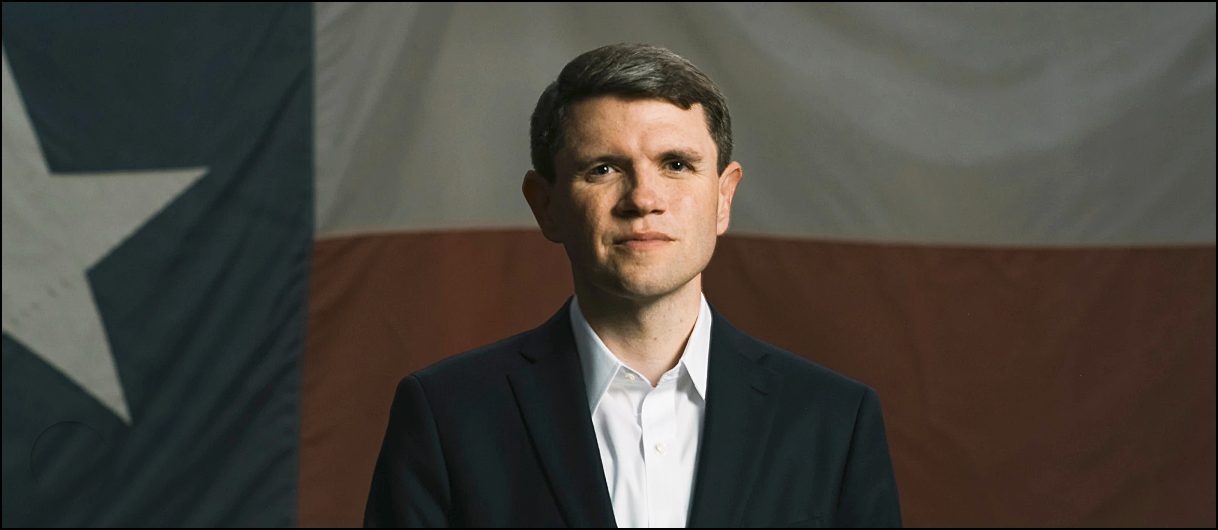
JAMES TALARICO: A WOLF IN SUNDAY CLOTHING

fff
n the wake of President Trump’s decisive second-term victory, the Democrat Party finds itself in full retreat mode. The old playbook, full of shoving Woke extremism, drag queen story hours, and open borders down America’s throat; has backfired spectacularly. So now they’re trying a new tactic: pretending to be one of us. No more rainbow flags and “defund the police” chants in public. Instead, they’re courting centrists, independents, and — most brazenly — the very heart of the MAGA base: churchgoing white Christians, Baptists, Evangelicals, and everyday folks who still believe in the God of the Bible.
Nowhere is this deception more obvious than in the 2026 Texas U.S. Senate race. Texas hasn’t sent a Democrat to statewide office since 1994, yet the party is all-in on James Talarico, their freshly minted nominee for the Class II seat currently held by Sen. John Cornyn. Talarico, a 36-year-old state representative and Presbyterian seminarian, is being sold as a “man of deep faith,” a Lord-begging, Scripture-quoting Texan who supposedly shares the values of Sunday-morning pew-sitters across the Lone Star State. Don’t buy it. This is classic wolf-in-sheep’s-clothing territory, straight out of Matthew 7:15.
Talarico doesn’t hide his church membership. He’s been at St. Andrew’s Presbyterian in Austin since he was a toddler, and he frames every policy through a distorted Christian lens. “Love thy neighbor” becomes his justification for open borders and taxpayer-funded abortion. He preaches that Jesus was a “feminist” and twists the Annunciation story to claim Mary’s consent somehow endorses abortion rights. He’s called God “non-binary,” insisted trans kids are “God’s children,” and defended access to abortion for transgender minors. His home church flies rainbow flags, pushes reproductive “justice,” and has a long track record of ordaining gay clergy and sheltering illegal immigrants.
This is not the Christianity that built Texas or America. Baptists & Evangelicals — the most populous faith groups in the country — overwhelmingly reject these positions. They believe life begins at conception, marriage is between one man and one woman, and biological sex is not a social construct. Talarico’s brand of faith is mainline Presbyterian progressivism: heavy on social justice rhetoric, light on actual biblical orthodoxy. He rails against “Christian nationalism” while hijacking Jesus’ words to bless every item on the Democrat wish list; everything from gender ideology to wealth redistribution.
The broader Democrat strategy here is clear. After years of alienating religious voters, party operatives have decided to “faith-wash” their agenda. They’re flooding church-adjacent spaces with talk of compassion and neighborly love while quietly advancing policies that shred the family, redefine human dignity, and mock traditional morality. In Texas, this isn’t subtle. Talarico’s viral clips quote Scripture to defend LGBTQ+ causes and abortion access — exactly the issues ordinary believers see as direct assaults on God’s design. It’s lip service wrapped in a seminarian’s collar.
Make no mistake: this is a trap. Democrats aren’t converting to traditional values; they’re co-opting the language of faith to peel off just enough church voters to flip a red state purple. They know Texas remains a GOP stronghold. They know the Christian base decides elections here. So they’re donning the sheep’s clothing, hoping believers won’t notice the ravenous policy wolf underneath.
Texas Christians have seen this movie before. Progressive “faith leaders” have spent decades whitewashing tombs — beautiful on the outside, full of dead men’s bones inside (Matthew 23:27). Talarico’s campaign is the latest chapter: a Trojan horse rolled straight into the sanctuary, promising “higher values” while delivering the same radical agenda that lost them the White House.
The 2026 Senate race is still months away, but the warning lights are flashing. Real faith doesn’t bend Scripture to fit the latest Woke fad. Real American Christian heritage; forged by Baptists, Evangelicals, and generations of believers, defends life, family, and liberty without apology. Don’t let the Democrats’ new church tour fool you. They aren’t coming to pray with you. They’re coming to convert you — to their side.
Texas voters, keep your eyes open. The wolves are in the flock, and they’re wearing clerical collars this time.✪
▶️ IRAN REGIME POLITICAL EXECUTIONS HIT THREE DECADE HIGH

IRAN REGIME POLITICAL EXECUTIONS HIT THREE DECADE HIGH
uuu
he European non-governmental organizations (NGOs) published a report this week that found Iran conducted 1,639 executions in 2025; an increase of 68 percent over the previous year, and the largest number of executions since 1989.
The report was the latest edition of the “Annual Report on the Death Penalty in Iran” prepared by Iran Human Rights (IHR) and Together Against the Death Penalty (EPCM), which are based in Norway and France, respectively. The report has been produced every year since 2012.
The two groups are generally opposed to the death penalty, but find Iran’s practices to be particularly objectionable, as the Islamic regime is usually “ranked first worldwide in executions per capita” — it sometimes takes second place after China — and has a much lower threshold for capital punishment than most other nations.
In her forward to the report, human rights lawyer Nasrin Sotoudeh said the “worst form of execution” practiced by Iran are its political killings, which are often carried out at the behest of bloodthirsty pressure groups. “This is precisely why death sentences should never be issued under the influence of public opinion,” she said.
Sotoudeh had a bad feeling that if the weakened Iranian regime falls, then “whichever group replaces the Islamic Republic may once again resort to widespread executions in order to consolidate its authority, thereby perpetuating this inhuman punishment.”
The Islamic Republic, of course, has been no slouch in the execution department, so its successor would need to shed a great deal of blood to catch up.
The data was compiled with the assistance of IHR members inside Iran, who slipped information past the regime’s firewalls and blackouts at great personal risk to themselves. Tehran is happy to admit to a large number of public executions, but it kills far more of its citizens than it admits.
IHR and EPCM found that Iran only took official responsibility for 113 executions last year, a mere seven percent of the total killings uncovered by researchers.
Almost half of the death sentences were handed down for drug-related offenses. The bulk of the remaining executions were qisas, a term in Islamic law that essentially means “retribution.” Qisas executions are demanded by the families of murder victims, and the execution is sometimes performed by aggrieved family members.
Human rights groups say qisas killings tend to be particularly brutal, often seeking to match the brutality of the original offense. Sometimes the condemned is able to escape death at the last minute by paying compensation to the victim’s family, a practice known as diyat.
The year 2025 set a 20-year record for the number of women executed in Iran, with 48 executions discovered by researchers; a 55-percent increase over 2024.
Relatively few of the executions in 2025 were for “armed rebellion, crimes against God,” or Iran’s other euphemisms for resistance to the regime, but since last year was a lull between the “Women, Life, Freedom” protests and January’s massive uprising, the numbers may look very different when the 2026 report is compiled & released. IHR and EPCM warned of this in a sobering forward that said their 2025 report was being “published at a time when the Iranian people were subjected to the largest mass killings of protesters in the Islamic Republic’s history.”
Still, almost half of the executions in 2025 were ordered by Iran’s “revolutionary courts,” which practice “grossly unfair trials” and have little patience for “due process.”
These revolutionary courts ordered so many executions for drug offenses last year that IHR/EPCM advised the United Nations to investigate them as crimes against humanity. Iranian courts have a tendency to hand down death sentences for even first-time drug offenders, and to execute everyone involved in a suspected drug trafficking conspiracy. If drugs are discovered on a property in Iran, the owner is probably going to see his life expectancy shrink dramatically, even if there is little evidence to suggest complicity in the drug scheme.
Another group opposed to the death penalty, Harm Reduction International (HRI), released a report on Wednesday that found executions for drug offenses reached an all-time high in 2025, “primarily driven by Iran and Saudi Arabia,” along with notable surges in Singapore and Vietnam. HRI found that drug-related executions made up over 46% of the worldwide total last year.
The Iran report noted that executions continued trending upward in 2025 despite the change from hardline Islamist President Ebrahim Raisi to his successor, the purportedly “moderate” Masoud Pezeshkian. In fact, Pezeshkian’s appointment was followed by a surge of executions that far exceeded anything under his three immediate predecessors.
The report concluded with a call for Iranian officials to stop imposing the death penalty, fix 18 years as the age of majority for both boys and girls, crack down on the practices of qisa and diyat, and cooperate more fully with the United Nations and other international monitors. ✪
▶️ DEMOCRATS ARE GOING ALL IN ON SOCIALISM

DEMOCRATS ARE GOING ALL IN ON SOCIALISM

ttt
inesh D’Souza posed a chilling rhetorical question in his 2020 book, “United States of Socialism:” Think how insane it would be if someone said, ‘Let’s try slavery again. Slavery didn’t work in the past because we didn’t have the right people to implement it. But this time we’re going to have the right people, and this time we’re going to get it right.’ Yet this is exactly what the socialists say about socialism.
He is still correct six years later. However, Democrats and their fellow travelers seem to have doubled down on this backward thinking and are proceeding full steam ahead into socialist waters.
The ultra-progressive Democratic Socialists of America (DSA) released a new poll — their first formal poll, in fact, a telling sign of their extending tentacles into the mainstream; showing that 53% of Democrat voters prefer politicians described as similar to Senator Bernie Sanders, Rep. Alexandria Ocasio-Cortez, and New York City Mayor Zohran Mamdani, while only 33% favored those similar to Senator Chuck Schumer, House Minority Leader Hakeem Jeffries, and Rep. Nancy Pelosi.
These numbers aren’t an anomaly; they are a trend. Since 2016, rank-and-file Democrats have grown increasingly hostile toward the system that built this country. According to recent Gallup data, the gap has expanded to a staggering 24 points, with 66% of Democrats viewing socialism favorably compared to just 42% for capitalism.
What exactly do these voters find agreeable about the ultra-left, socialist wing of their party? For starters, the lofty ideals that big government should be in control, that billionaires are evil, that corporations and high-income earners should be taxed into oblivion, that Congress should enact more regulations on workers and consumers, and that housing, healthcare, and utilities should fall under the purview of the public sector.
To conservatives, most Independents, and even some Democrats, these goals portend only bureaucratic bloat, delays, and the stifling of innovation. Most proponents of capitalism believe the private sector is best equipped to improve Americans’ lives. They generally support lower taxes, oppose government regulation of businesses, and want the private sector to own key industries — like housing, healthcare, and utilities — as confirmed by the DSA’s own poll.A staggering 74% of likely Democrat voters said democratic socialism comes closest to their viewpoint.
That means America will be seeing a rise in the Bernie, Mamdani, and AOC types; and with it, a severe stifling of growth and innovation, a rapid spike in taxation, and an influx of leftist agenda items into the mainstream.
Bernie Sanders — the unproductive socialist Senator from Vermont, and a man who has added precious little of significance to his state or his country in his decades in office — is now using the socialist wave to push his latest agenda item: a federal moratorium on the construction of new AI data centers, with his collectivist companion AOC in tow. This moratorium, like so many of the policies this pair champion, would erect burdensome bureaucratic roadblocks that frustrate innovation and squander entrepreneurism. In Bernie’s world, we should fear millionaires — no wait, billionaires (he’s now a millionaire himself) — technology, and climate change at all times.
Better yet? Just stay in your home until further notice.This new wave of socialism will also bring suffocating taxes and a collectivist mindset; because, as comrade Mamdani proclaimed, the blanket of collectivism is so warm and cozy. Bernie and his proletariat wouldn’t just tax the billionaire class; they would enact wealth taxes across the board. Taxing “unrealized gains” or net wealth forces billionaires to sell their stocks, which can crash market prices and reduce the capital available for businesses to expand and hire.
IRS data shows that the top 1% already pay roughly 40% of all federal income taxes. The Democratic Socialists want you to believe that poor people pay all the taxes and the wealthy get off scot-free; they have it completely backward. They would simply like to take $10 billion from a technology company or its founder and pour it into a government black hole of bureaucracy, where Sanders and his friends reside.
Leave that money with founders, entrepreneurs, and innovators, and it goes into rockets, electric cars, and global internet access. As Margaret Thatcher wisely noted; and Elon Musk has echoed, eventually, they run out of other people’s money, and then they come for yours.
The final and perhaps most alarming aspect of this modern socialist resurgence is its Trojan Horse delivery system. Under the banner of the DSA, we see a conglomerate of radicalism; where traditional Marxists, climate extremists, and anti-western agitators coalesce into a single political force. By quietly installing hundreds of activists into local school boards, city councils, and state legislatures, they are executing a long march through the institutions. This isn’t just a policy shift; it’s a calculated, multi-level erosion of the capitalist fabric our Founders painstakingly cultivated.
Apparently, they didn’t anticipate the “watermelon coalition” growing so rapidly, or that its mission — to dismantle the American capitalist empire from within the “belly of the beast” — would find willing participants at every level of government.
The good news is that Democrats have tried their socialist playbook before, and while it performs reasonably well at the local level, the national stage has been another story entirely — as 2024 made clear. But that isn’t stopping them. “What the mainstream of the party wants is both democratic socialism as a value system and democratic socialist politicians,” said Gabe Tobias, executive director of the Democratic Socialists of America Fund, to POLITICO.
Democratic socialism is a pretty way of blending class-based Marxism with modern identity politics. It is no longer just about the proletariat — it’s about mobilizing a coalition of the oppressed to overthrow the oppressor and pave the way for state-sponsored redistribution. It won’t work. It never does. But it looks like the American Left is going to have to find that out the hard way. ✪
▶️ THE LOST HALF CENTURY

THE LOST HALF CENTURY

333
n December 14, 1972, the last humans left the surface of the Moon. It would take more than half a century before astronauts ever came close to the Moon again; flying once more into its vicinity. For conspiracy theorists who have long claimed that the six Moon landings between 1969 and 1972 were staged in a television studio, this hiatus seemed like probable confirmation. Yet such theories have long been debunked; and in any case, the Soviets would have exposed a hoaxed Moon landing immediately in 1969.
Why this lost half-century? First, once the race between the United States and the Soviet Union had been decided, there was no compelling incentive to return to the Moon.
Second, America’s state-led space efforts in the decades that followed; when it came to human spaceflight, centered on the Space Shuttle program, proved deeply disappointing. After the program ended in 2011, the U.S. was no longer even capable of sending its own astronauts to the International Space Station on American rockets. Instead, it depended on Russia’s aging Soyuz spacecraft, with Moscow charging handsomely for its monopoly.
The breakthrough came only with the rise of genuinely private spaceflight. Since 2020, American rockets have once again carried American astronauts into orbit from American soil; this time on vehicles developed and operated by the private company SpaceX according to its own design and business model, rather than government-designed systems built by contractors under close NASA direction.
The difference is dramatic. Launch costs have declined by around 90 percent compared with the Space Shuttle, thanks in part to Musk being the first to build a reusable rocket.
What comes next? A new race to the Moon has begun, this time between the United States and China. The next race—far more consequential—will also be between these two powers: the race to Mars.
However, national prestige and the desire to win a race will not suffice as long-term motivations. After the Moon landing, Wernher von Braun, the chief architect of Apollo, was asked about the future of space exploration. His answer was clear: spaceflight must prove useful—and even profitable—for people on Earth. Space exploration, he argued, should ultimately pay for itself.
Without economic incentives, the next great steps in space exploration will not happen. These incentives are largely absent today because the question of property rights in space remains unresolved. Under the Outer Space Treaty, states are prohibited from claiming sovereignty over celestial bodies or their land. Whether this restriction also applies to private individuals and companies remains disputed among space lawyers, as the treaty does not explicitly address the issue specifically.
Yet without private property, there is neither the incentive nor the financial framework to support projects such as building cities on the Moon or even Mars. Elon Musk has spoken of settling one million people on Mars. But even establishing a settlement of 1,000 or 10,000 people would be inconceivable if funded solely by taxpayers.
On Earth, economic systems without private property have never succeeded. Why should it be different on the Moon or Mars?
So who should have the right to acquire property in space? The answer is straightforward: those who have the financial means to reach, develop, and use it. If SpaceX succeeds in reaching Mars and begins building permanent settlements, then ownership of land should initially go to the company—not of the entire planet, of course, but of a manageable area, perhaps the size of Singapore. Given that Mars has a surface area roughly 200,000 times larger than Singapore, this would amount to just 0.0005 percent of the planet—enough to build multiple settlements without excluding others.
Such a framework would also make financing possible. SpaceX, for example, could place Martian land into a real estate investment trust, allowing market forces to determine its value. Anyone could become a shareholder.
The same principle applies to future industries such as space mining, particularly on asteroids. If celestial bodies belong to no one—or, as some suggest, to “all humanity”—then space will be used no more productively than in Antarctica, where the absence of property rights has largely precluded any economic development.
We must move beyond viewing space merely as an object of curiosity and research. Just as satellites have already transformed the near-Earth environment into an economic domain, so too must we extend economic activity deeper into space; fulfilling the vision von Braun articulated more than half a century ago.
A half-century pause in spaceflight wasn’t technological—it was economic; without property rights and profit incentives, the path from the Moon to Mars will remain grounded. ✪
▶️ ATTICUS FINCH STRIKES AGAIN

ATTICUS FINCH STRIKES AGAIN
kkk
t is intellectually dishonest and cowardly to go out of your way to excise the word black from an article or your speech if the word black describes quite fittingly the culprit in the news story.
I wrote recently about a reporter, Yasmeen F., who must scour the internet to report on stories of “white people behaving badly” for the Atlanta Black Star. The fact that most of her stories seem to be pure fiction is not my point. Instead, I want the reader to contrast Yasmeen’s reporting with the journalistic style of Fox News in the following article entitled, “Rowdy teenagers swarm DC Navy Yard in waterfront takeover despite police juvenile curfew zone.” Do you see it? Yesss… Fox News reporters judiciously avoid the use of the adjective “black” in their descriptions of “rowdy teenagers” or a “teen takeover.”
What is that exactly? Fox News is not alone. All the media outlets do it. They self-censor, but for what purpose? It is obviously not for the purpose of deceiving anyone. One look at the video and you know it is not a flash mob with a bunch of theater kids singing “Seasons of Love.”
▶️ 3 Minutes 12 Seconds
So, what is the reason? I believe it is just another facet of what I call the Atticus Finch complex (a reference to the role played by Gregory Peck in the movie, To Kill a Mockingbird). But you may ask, how does one mentally place themselves in front of that fictional Southern courthouse, standing up to a mob hellbent on lynching an innocent black man, by leaving the word “black” out of an article about black rowdy teenagers?
This is my guess; by leaving out the descriptor “black,” the reporter is making a token gesture toward defusing any white anger directed at blacks that the article might incite. In essence, doing as Atticus Finch would have done in telling the white mob to calm down and go home — the “Great White Father” keeping his children in line. It works equally well in cases of teen takeovers or mass transit stabbings. The problem is not havoc in the street, but the reaction to that havoc.
My objection to all of it is simple. It is intellectually dishonest and cowardly to go out of your way to excise the word black from an article or your speech if the word black describes quite fittingly the “rowdy teenagers.” ✪



















▶️ ◼️◼️◼️◼️◼️◼️◼️◼️◼️ ◼️✪✪✪ DONATE ✪✪✪ ◼️◼️◼️◼️◼️◼️◼️◼️◼️

▶️ DONATE VIA PAYPAL (DEBIT & CREDIT CARD)
ALL PayPal Transactions Are Encrypted For Card Holder Privacy & Security
▶️ DONATE VIA ZELLE (DIRECT BANK CASH TRANSFER)
ZELLE is the perfect online alternative to PayPal. It’s an incredibly simple, secure, easy, fast and FREE way to send or receive money to recipients directly from your online banking account without a middleman. Best of all, there are NO fees.
ZELLE is a service provided by your bank and is already built in to your online banking account. You only need to activate it first before using. If you’ve already activated ZELLE in your online bank or credit union account, you can donate to The New Americanist by using our ZELLE address:
vip@thenewamericanist.com
To activate your ZELLE, follow these easy instructions (a simple two minute process):

▶️ DONATE VIA SNAIL MAIL







▶️ CLICK HERE TO VIEW
▶️ 1 Hour 23 Minutes 16 Seconds
▶️ 37 Minutes 36 Seconds
▶️ 1 Hour 15 Minutes 7 Seconds
▶️ 28 Minutes 19 Second
▶️ 12 Minutes 59 Seconds
▶️ 17 Minutes 23 Seconds
▶️ 16 Minutes 13 Seconds
▶️ 35 Minutes 37 Seconds
▶️ 12 Minutes 8 Seconds
▶️ 10 Minutes 20 Seconds
▶️ 10 Minutes 38 Seconds
▶️ 1 Hour 5 Minutes 51 Seconds
▶️ 11 Minutes 45 Seconds
▶️ 20 Minutes 18 Seconds
▶️ 22 Minutes 21 Seconds
▶️ 14 Minutes 52 Seconds
▶️ 20 Minutes 27 Seconds
⭐️ 18 Minutes 15 Seconds
▶️ 10 Minutes 53 Seconds
▶️ 12 Minutes 36 Seconds
▶️ 13 Minutes 48 Seconds
▶️ 44 Minutes 15 Seconds
▶️ 7 Minutes 15 Seconds
▶️ RSBN LIVESTREAM LINK: Trump & TPUSA Build The Red Wall Rally
⭐️ TokaiseBlessedPatriot
