



Hi Folks…And Welcome Again To FLAT OUT!
In Celebration Of TWO Years Of FLAT OUT
I’m Going With A Three Parter This Time, It’s…
The Ford Mustang (Part 1) – 1965-1978
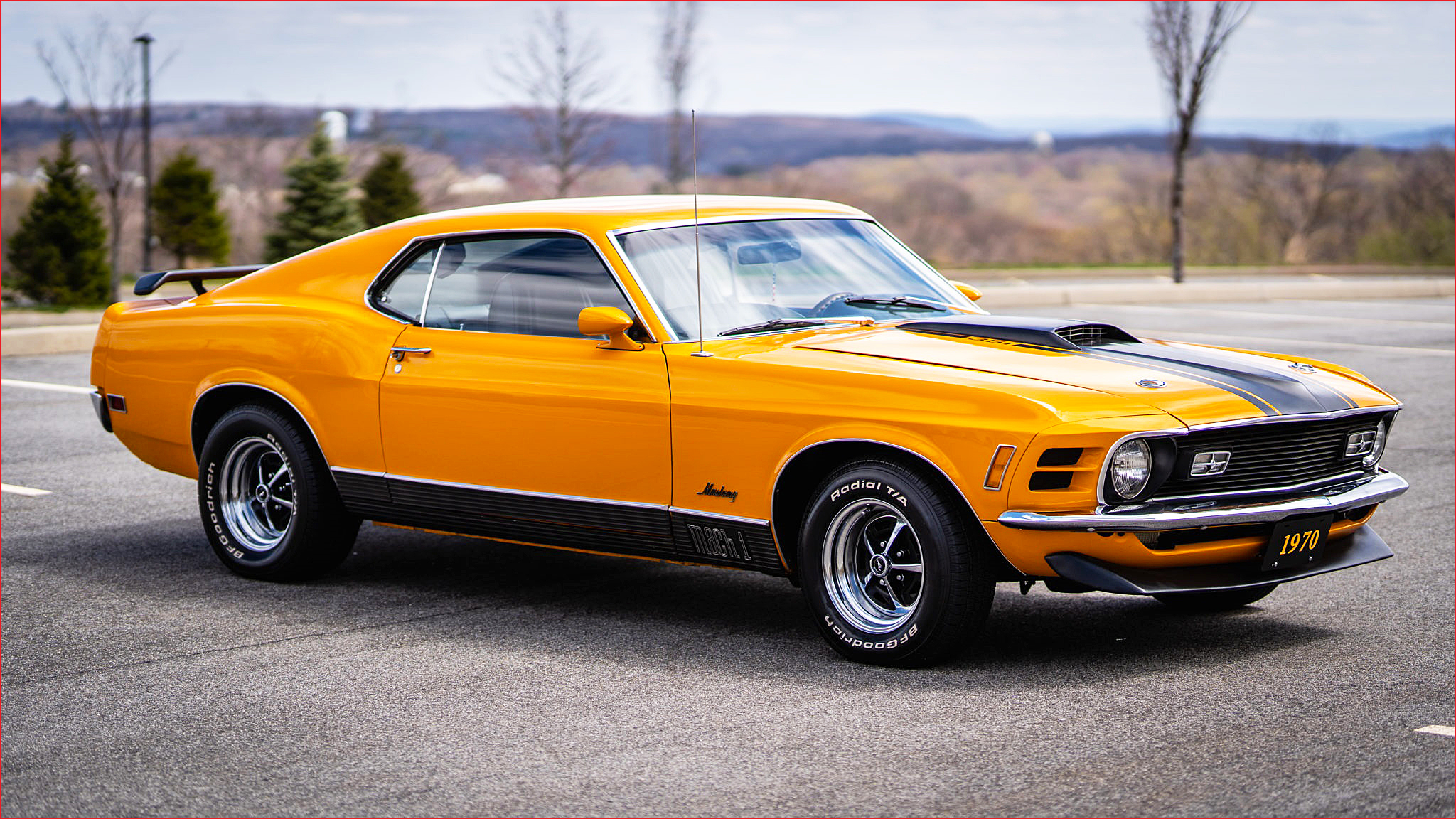
I know you were wondering when I’d get around to the Mustang…well, it’s this month and the next two months, because there’s a lot to cover in 57 years. Enjoy! The Shelbys are absent as I covered them in-depth in Volume 5.
The original “pony car,” Mustang, along with the Plymouth Barracuda and sports cars like the Corvette and Jaguar E-Type, originated the long hood/short rear deck style that persists on sporty cars to this day. Ford thought that they might sell 100,000 Mustangs a year. In reality it was the most successful car launch since the Model A, with over 400,000 cars sold in its first year alone; the one million mark would come just two years in. The 10-millionth Mustang was produced in August 2018, the car being produced every year since the debut in April of 1964. The success of Mustang prompted responses from all three of its competitors; the Chevrolet Camaro/Pontiac Firebird, Dodge Challenger and AMC Javelin all followed the long hood/short rear deck model, as did a host of other GM cars in the 1968 re-styling frenzy. That styling cue was not lost on foreign competitors, either; the Toyota Celica, Ford‘s own European Capri (later produced by Mercury) and to some extent the Datsun Z cars all borrowed from the look of the Mustang. It remains rear-wheel drive to this day even as most cars have transitioned to front-wheel drive.
First Generation 1965- 1973
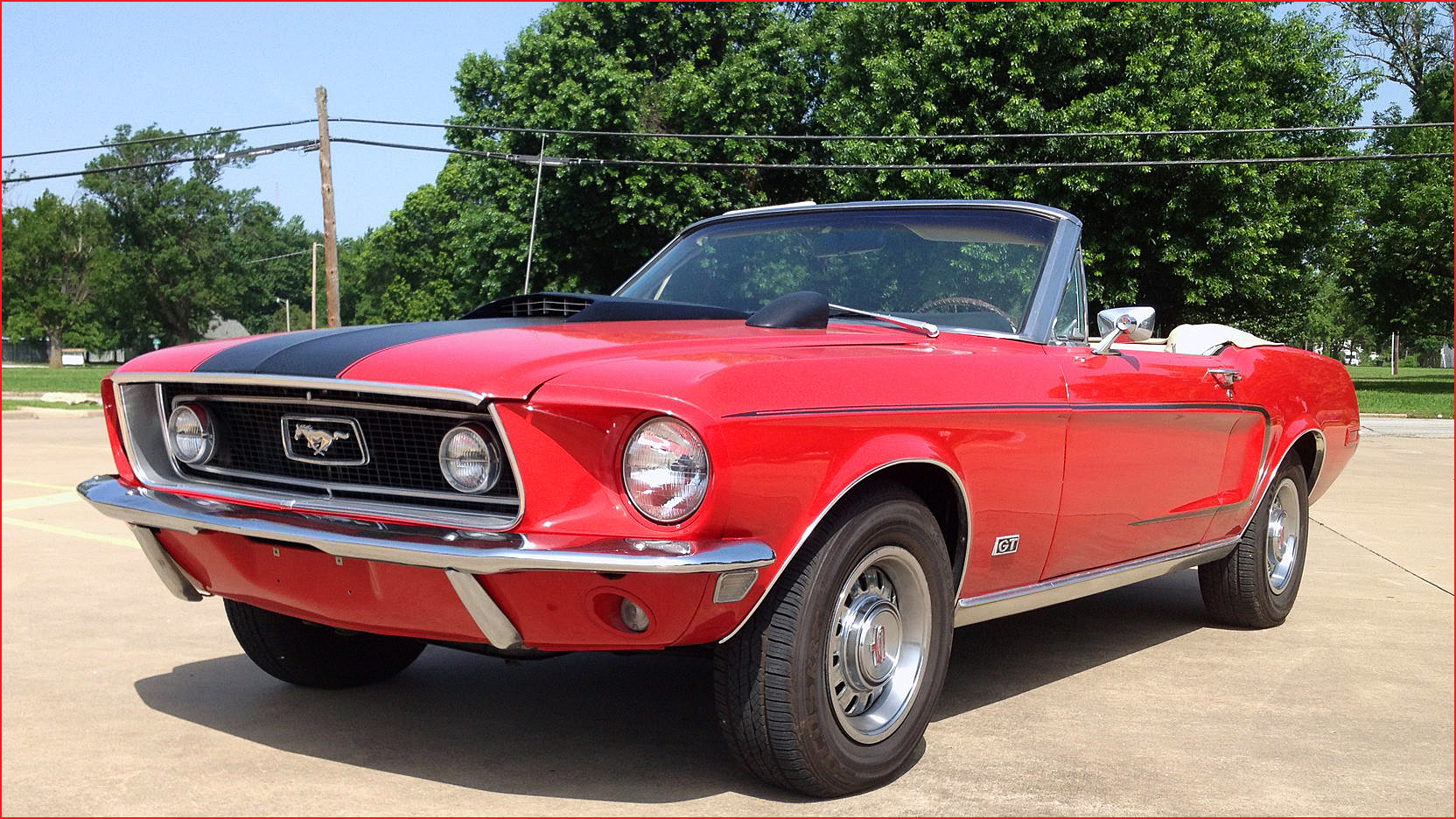
The Mustang was based upon Ford‘s compact Falcon platform, just as Plymouth‘s Barracuda, released 16 days before the Mustang, was based upon the Valiant. It shared platforms with other Ford vehicles until the 2005 re-design when it finally got a its own unique platform. Ford executive stylist John Najjar is credited with introducing Mustang into the list of potential names for the new car, which included Torino, Cougar (which became Mustang‘s Mercury stablemate in 1967) and T-Bird II, preferred by Henry Ford II. Lee Iacocca, later of Chrysler fame, was the Ford Division general manager and championed the car into a mere 18 month development. It’s rumored that Iacocca attended some early (and illegal) drag races where his Pontiac rival John Z DeLorean ran a test mule of the GTO to gauge its power and get feedback from hot-rodders, and decided that Ford needed a sporty car to sell to the Baby Boom generation that was coming of age. The first Mustangs are described as 1964 1/2 due to the car’s mid-year release, despite being VIN-coded as 1965 models. Minor styling changes for the official 1965 models led to Ford tracking pre-August 1964 models (the official start of the new car “year”) separately from post-August 1964 models, giving rise to the “1964 1/2” naming. Changes to the “official” 1965 model included back-up lights, alternators instead of generators, an upgrade of the base inline-six cylinder engine from 170 to 200 cu. in (with an accompanying HP boost from 101 to 120) and enlarging the optional V-8 from 260 cu. in. to the more familiar 289, also with a HP increase from 164 to 210.
Two models were available at the debut, a 2-door hardtop and convertible. A “2+2″ fastback wasn’t added until September 1964; there are no ’64 1/2 fastbacks. Most components save for the body, including engine, transmission, suspension, brakes and interior, were common with the Falcon and Fairlane to keep costs down and shorten the learning curve for automotive workers. Mustang‘s base price was only $2,368 when it debuted; a full-size base 1965 Ford Galaxie was about 15% more. Interiors differed from the Falcon, with adjustable driver and passenger bucket seats and a floor-mounted shifter. There was a “Pony Interior” package that added embossed running ponies on the seats, armrests, woodgrain applique accents and a round gauge cluster. Sun visors, mechanical remote mirrors and a floor console around the shifter were also options. as well as under-dash factory air conditioning later in the 1965 model year. The vinyl with cloth insert seat option was discontinued midway through the 1965 model year. Another option was the “Rally-Pac,” a combination tachometer and clock mounted on the steering column and 14-inch wheels. The GT Equipment Group (Mustang GT) gave a V-8 engine with optional 4-barrel carb, most often the 225 HP 289, grill-mounted fog lamps, rocker panel stripes and disc brakes. GTs had a different instrument cluster than regular Mustangs with speedometer, temp and fuel gauges and an ammeter and oil pressure gauge in five round dials.
There were minor styling changes for 1966 such as a different grill and side ornamentation and different wheel covers. The gas cap also differed from 1965. Ford’s C4 “Cruise-O-Matic” automatic transmission was an option for 1966, but with stronger internals for the high-revving K-code “HiPo” 271 HP 289. A monophonic AM/FM radio became optional as well as an 8-track player (remember those?). New paint colors were also available for 1966.
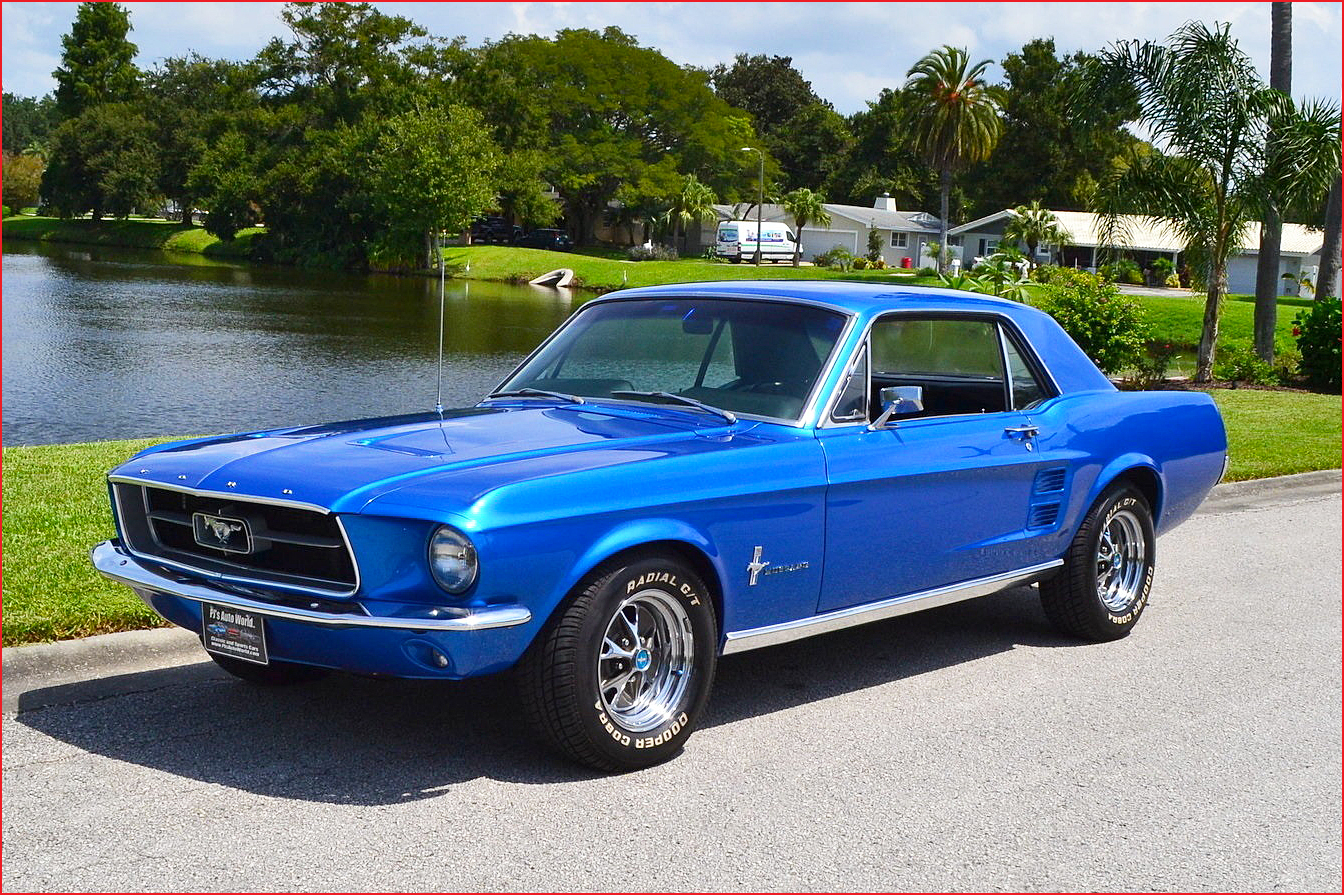
1967 saw the first major re-styling of the Mustang; It was larger inside and out. The classic 3-bar taillights, straight on the ’64 1/2 to ’66, gained a concave shape and a side scoop replaced the ornamentation behind the door. The rear-view mirror became square and the wheel covers and gas cap changed. The size increase was mainly to accommodate the high-performance, 4-barrel carb equipped 335 HP big-block 390 engine borrowed from the Thunderbird, although the 210 HP, 225HP and 271HP HiPo 289 were still available. A 428 cu. in. Cobra Jet engine, laughably rated at the same 355HP as the 390, was introduced mid-year. The Deluxe Interior was revised, discontinuing the running pony seat inserts, but adding new color options, brushed aluminum or woodgrain dashboard trim and special door panels. The “Rally-Pac” option was discontinued as well because the new instrument cluster could house an optional tach and clock.

A 2-spoke, energy-absorbing steering wheel and shoulder belts for non-convertibles were some of the safety features introduced in 1968. The GT/CS California Special, visually similar to the Shelby GT350, was introduced and only sold in Western states. GT/CS models sold in Colorado were dubbed High Country Specials. The package included racing stripes on the sides with die-cut GT/CS logos, fog lights mounted in the grill, side scoops and twist-type hood pins like the Shelby. The GT package was available for this model, but not all GT/CS models were GTs. The majority of California Specials were sold with the base 2-barrel 289. Only a handful of California Specials were shipped with the 390 or 428 Cobra Jet engines, these remain prized by collectors today.
Another re-styling came about in 1969, with an almost 4 inch increase in length and a half-inch increase in width. Mustang got porkier, too; up some 364 pounds from the ’68 model. Visually there were now four headlights, two in their normal place and two in the grill area, the two outboard lights being set well back from the grill lights for a pointier look to the front end. The “corralled pony” grill ornament was replaced with a pony atop three bars, offset to the driver’s side. The concave doors and side panels, a fixture since the original ’64 1/2 model, were replaced with convex ones. The side scoops were re-located to the top of the rear quarter-panel as well, and body-colored side mirrors were available.
Some new engines came with the ’69 re-design. A 220 HP 302 cu. in. made its debut as well as the 351 cu. in. Windsor with 290 HP and 250 HP Cleveland engines, the Cleveland having a 2-barrel carb while the Windsor had the 4-barrel. A new 250 cu. in. “Thriftpower” inline-six with 155 HP was used in the Limited Edition Mustang E (for Economy). Only 50 of these were produced. The 4-barrel 320HP 390 was still available, but the 2-barrel version was dropped.
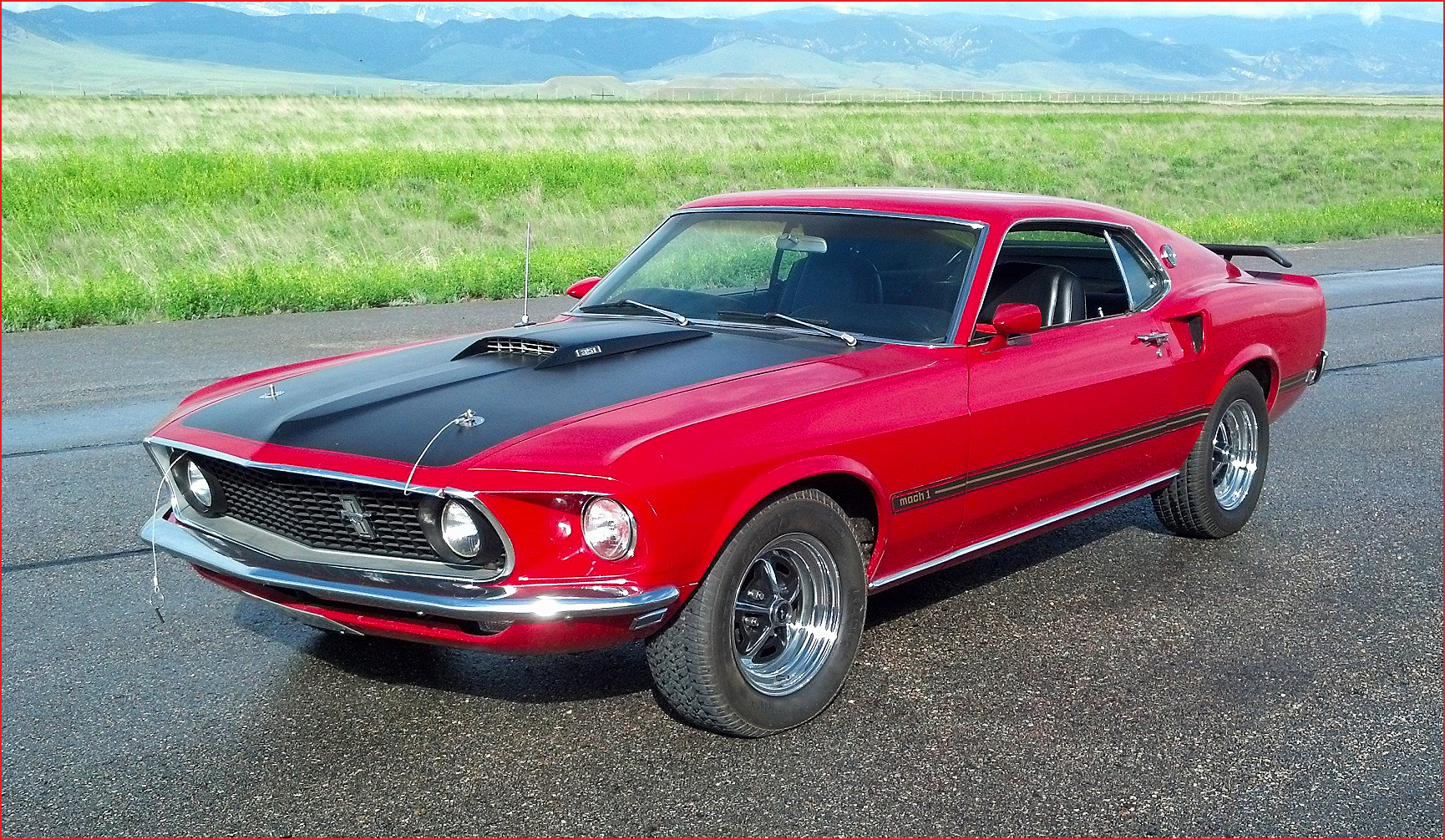
Due to poor sales the GT option was gone, replaced by the Mach 1. A pop-open gas cap, matte-black hood with NASCAR-style hood pins and cable tie-downs, a simulated air scoop in the hood and side stripes with a “Mach 1” logo differentiated the model from ordinary Mustangs. A functional “shaker” hood scoop that was mounted to the air cleaner and protruded through a hole in the hood was available, as were front and rear spoilers. Inside it sported a deluxe interior with simulated wood trim, high-backed bucket seats, remotely adjustable side mirrors and extra sound deadening. Mach 1 could be ordered with any of the performance engines. Transmissions were the standard 3-speed manual or optional 4-speed manual and 3-speed automatic.
A new, fancy hardtop “Grande” edition was introduced with a deluxe interior similar to the Mach 1, but without the performance upgrades. This had a vinyl roof, new wheel covers, a new two-spoke steering wheel, an electric clock, bright exterior moldings, dual outside paint stripes and luxury foam bucket seats for a $231 premium over the stock Mustang.
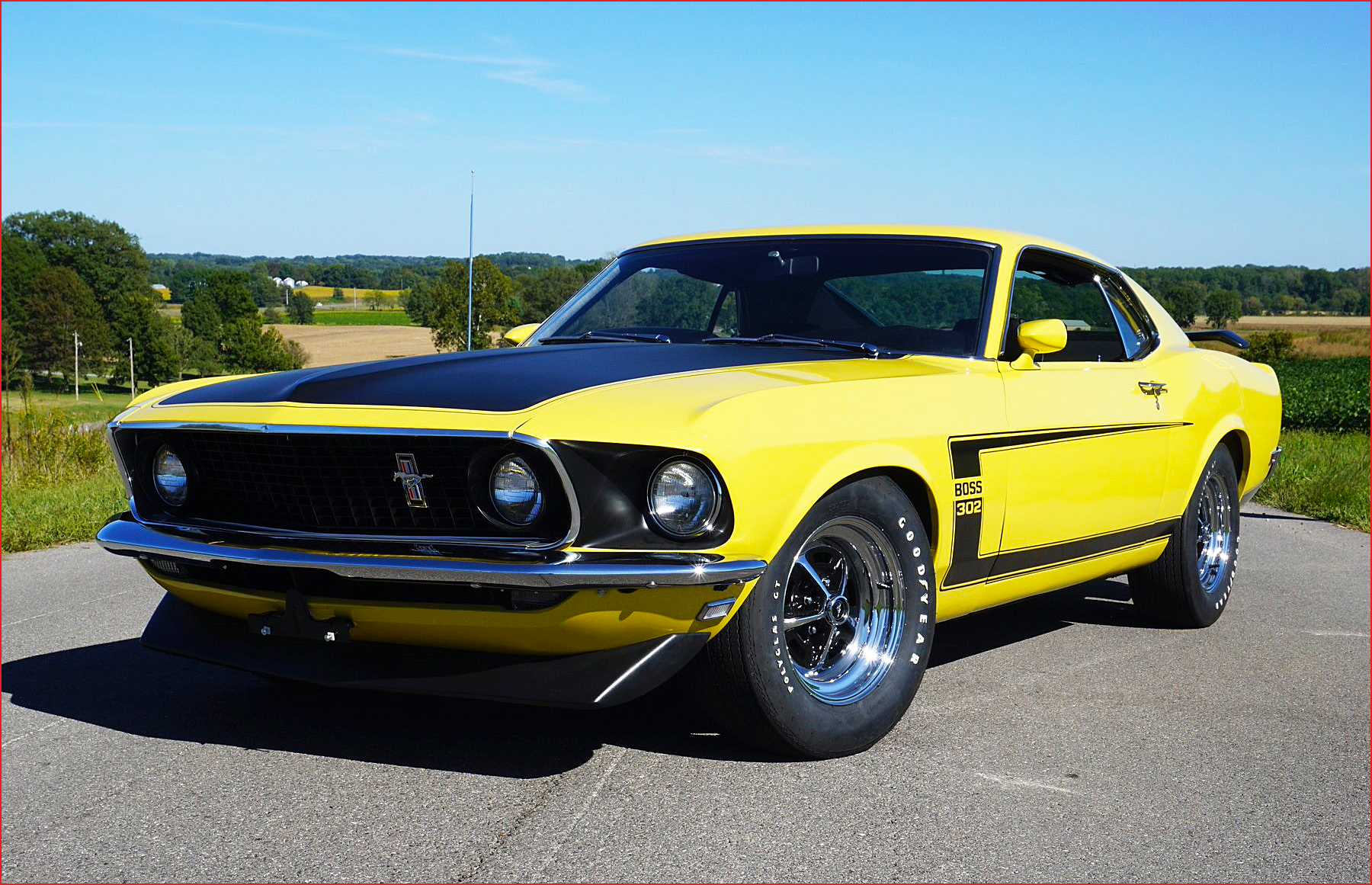
Two new models were also available. The Boss 302 was created to meet Trans Am racing rules with a new 302 cu. in. engine, as Trans Am rules limited engine displacement to 5 liters. The Boss got the high-output 4-barrel version of the 302, rated for 290HP but dyno tests measured the actual output at 320HP. Ford wanted enough performance out of the engine to beat the 305 cu. in. engines in the Camaro and Firebird Trans Am entries, and achieved this partly by fitting the stock Windsor block with higher-flowing specialty Cleveland heads that featured a canted valve design, good for a 10.5:1 compression ratio. An 780 CFM Holley 4-barrel carb sat atop a dual-plane aluminum intake manifold. Inside, a solid-lifter camshaft ran the valves through high-rate valve springs. The small-block engine produced so much power that a rev limiter was mounted inside the fender and limited the engine to 6,150 RPM to avoid engine failure through repeated over-revving. This mill drove the wheels through the customer’s choice of a close-ratio (2.23:1 first gear) or a wide-ratio (2.78:1 first gear) Ford Toploader 4-speed transmission. The package also came with Ford‘s Competition Suspension with heavy-duty Gabriel shock absorbers, shock tower braces and a front anti-roll bar. A quick-ratio steering box and 11.3 in. disc brake rotors with floating front calipers rounded out the Boss 302. Special striping with a “BOSS 302” logo marked this as no ordinary Mustang. Inside, options abounded including high-back bucket seats, a center console, tilt steering wheel, wood-grain dash, special door trim and different gauge clusters than the stock Mustang. The Boss 302 was available only in the fastback 2+2 style, now called “Sportsroof.”
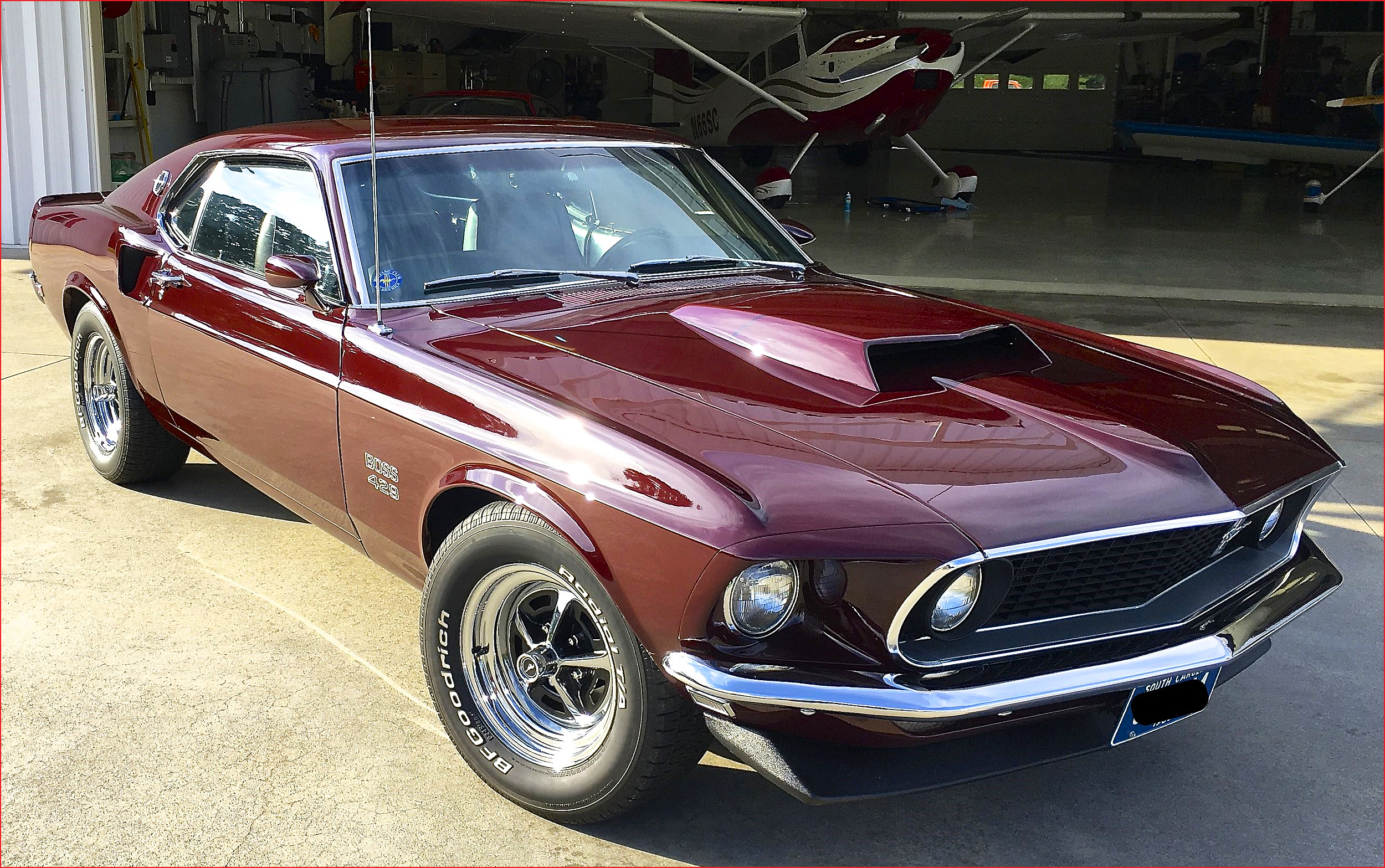
The other Boss on the block was the Boss 429. This model feature the monster Boss 429 cu. in. big-block engine, rated at 375HP and 450 ft. lbs. of torque. The first 279 engines produced used NASCAR-type forged connecting rods, the rest used beefed-up production rods, still forged, sitting on a forged crankshaft. Aluminum heads were freer-breathing thanks to the angle of the valves. There were no conventional head gaskets, rubber o-rings sealed the cylinders and water and oil passages. A Holley 735 CFM carb sat atop and aluminum intake manifold. Valve covers were either magnesium or aluminum depending upon when they were produced. It was optioned similarly to the Boss 302 and also only available in the Sportsroof model.
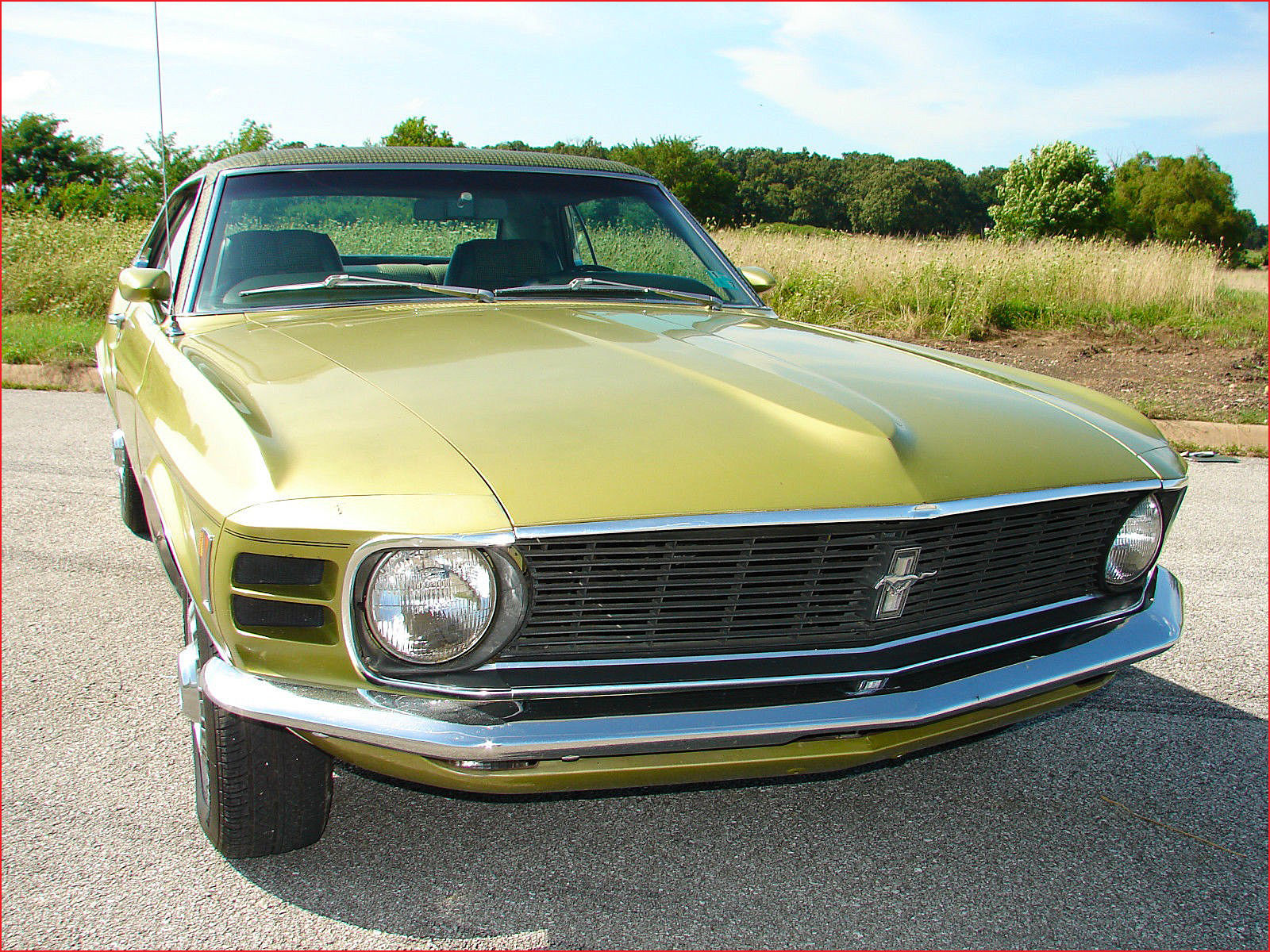
The 1970 models were re-styled yet again to be less aggressive-looking, returning to single headlamps, this time inside the grill, and “fins” where the outboard headlamps had been on the ’69. The rear scoops were also deleted and the taillight panel was flat instead of the concave 1969 panel. These changes were due to a drop in sales of the ’69 model because Ford assumed that the aggressive exterior styling was to blame, however the ’69 actually sold more than the ’70. Engine options remained the same except that the 351 Windsor was dropped although a few early examples with this engine were produced, replaced by an improved 351 Cleveland engine with either 2 or 4-barrel carbs. This mill was re-designed to incorporate features from the previous year’s Boss 302 engine such as poly-angle combustion chambers with canted valves and thin-wall casting. these changes allowed the 4-barrel version to produce 300HP whereas the 2-barrel version still produced 250HP despite the changes. Shaker hood scoops were still available on the Boss 302, Mach 1 and base Mustang equipped with the 351 and 428 Cobra Jet.
The Grande was back, equipped similarly to the ’69. So was the Mach 1, which came equipped with either the base 351 2-barrel or an optional 351 4-barrel or 428 Cobra Jet 4-barrel rated at either 335HP or 375HP fro the Super Cobra Jet. The non-functional hood scoop was standard and the “Shaker” functional hood scoop was again optional. Interior appointments were similar to 1969. The wide rocker panel now had performance valve cover-like flutings with a larger “mach 1” logo behind the front wheel well. The Bosses were back as well, with different striping. The 302 engine was again rated at 290HP, but again that figure was short of the actual power output by a good 30HP. A re-designed exhaust system, competition suspension and a standard Hurst shifter were upgrades from the 1969 model and enabled Camaro-killing performance; 0-60 in 6.9 seconds and a 14.6-second quarter-mile at 98MPH. The Boss 429 was faster and more powerful as a big-block should be; 0-60 in 6.8 seconds, 0-100 in 13.7 seconds and a flat 14-second quarter-mile at 103MPH. Boss 429 was a rare bird, only 499 ’70 models were produced compared to 7,013 Boss 302s.
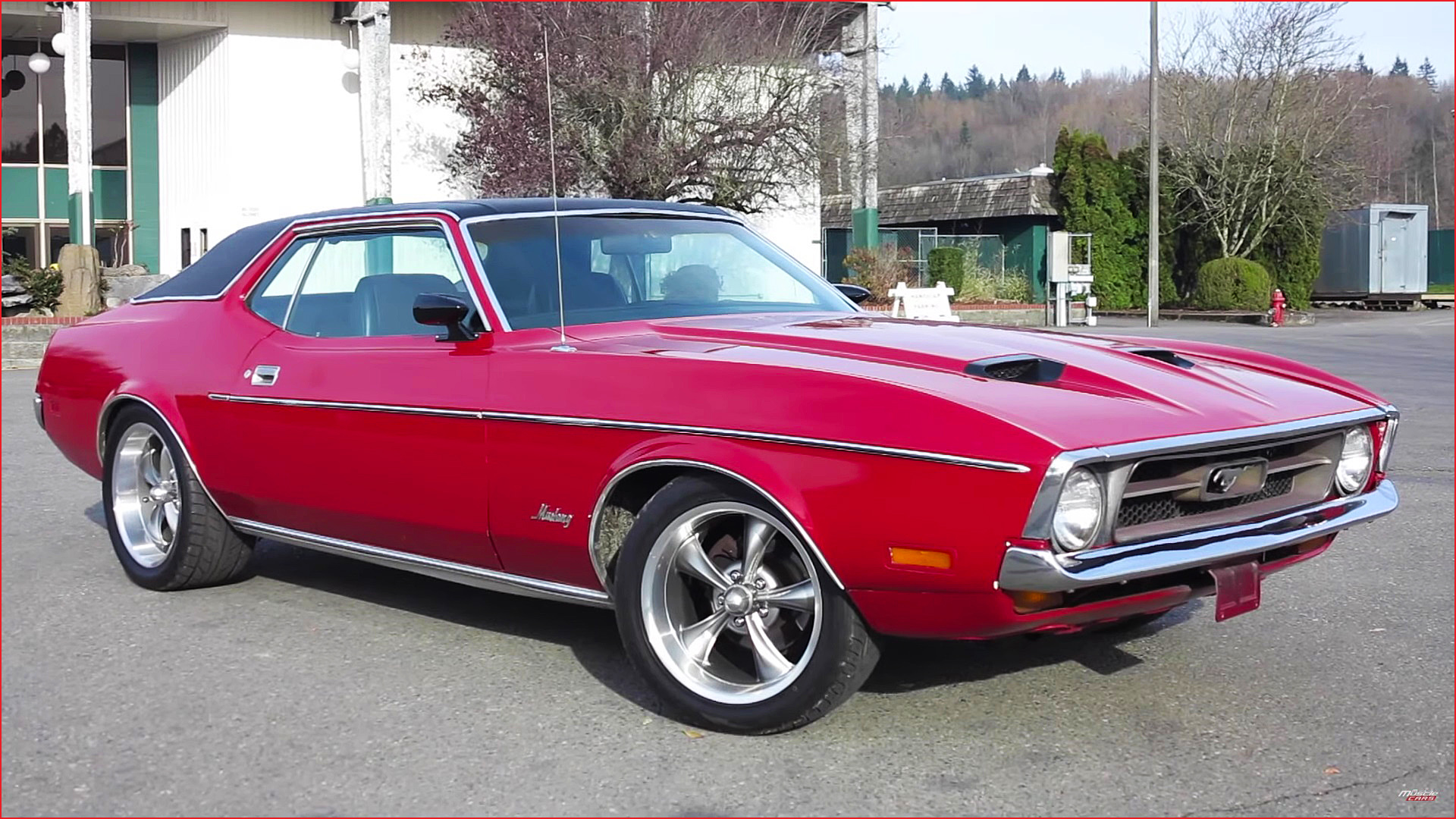
1971: Another year, another re-design, the last for the first-generation Mustang. The body was widened three inches and lengthened two inches. For the first time since its inception the wheelbase was lengthened, by one inch to 109. Its front end was now more sloped with a back-set grill similar to the Shelby. 2 parking lights/turn signals below the bumper and a corralled-pony logo making a comeback in the center. The hardtop models now featured a flying-buttress “tunnelback” design with an inset rear window. Mustang got even heavier, up some 400 lbs. from the ’65 model to 3,560 for the fastback and 3,590 for the hardtop. This was due to changes to accommodate the new 370HP 429 Super Cobra Jet engine, but sadly lesser engines had to suffer with the additional weight as well. The ’65 model had a curb weight of 2,465 lbs., so Mustang gained 1,125 lbs in a mere six years. Other engine options included a 210HP 302 Windsor and four different 351 Clevelands that made from 240 to 330HP (in the Boss 351).
The Grande edition again featured a vinyl roof with “Grande” badges on the C-pillars. The Mach 1 had an optional stripe nearly as wide as the hood and the hood itself now featured twin NACA ducts for air intake, making the front end more aerodynamic. The parking lights/turn signals were re-located to the grill and the tri-bar and pony logo was in the center, replacing the base Mustang‘s corralled-pony. The rocker panels were now chrome with a large “mach 1” decal above the rocker panel and behind the front wheel well with “MUSTANG” below it.
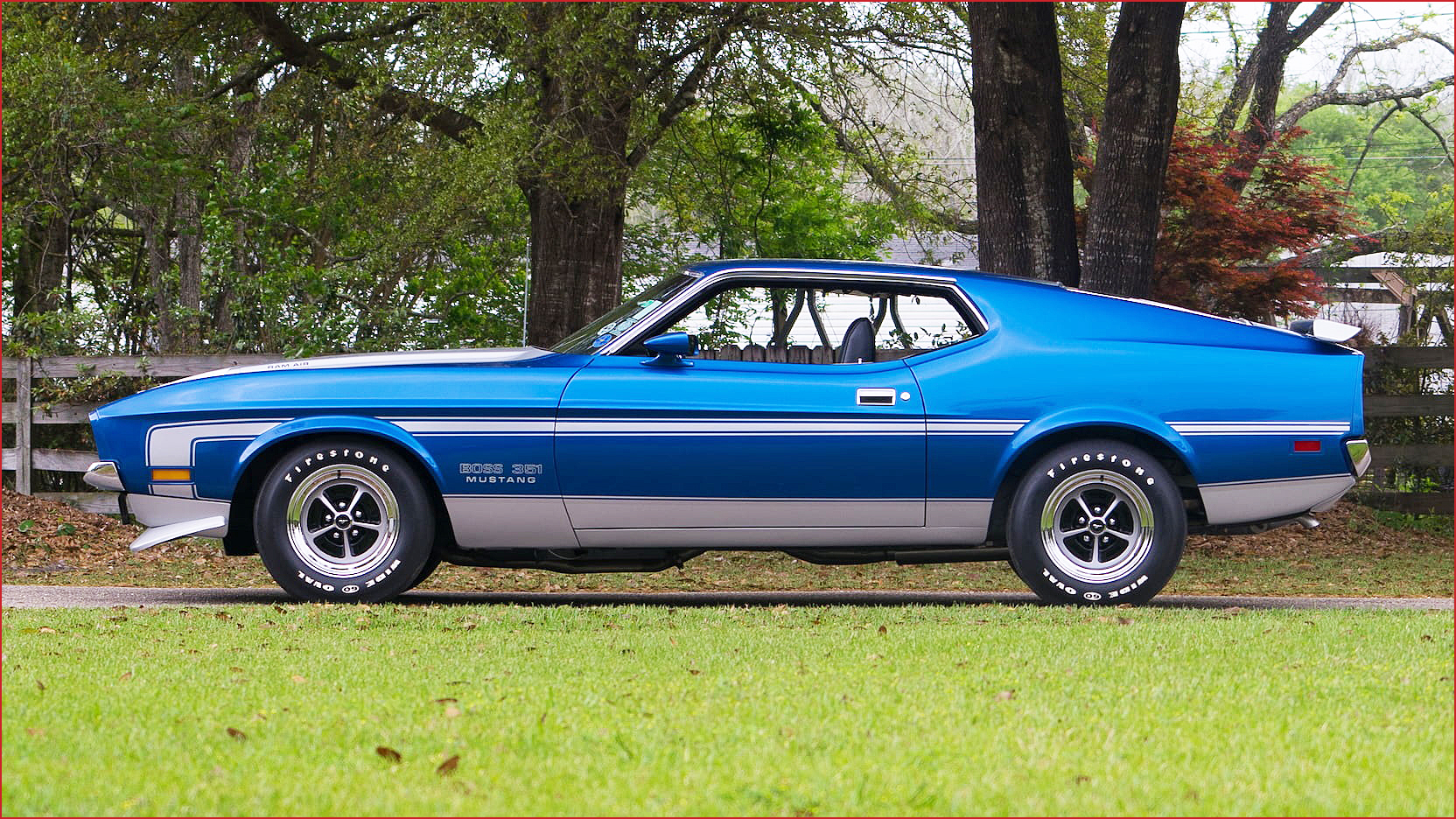
The Boss 302 and Boss 429 were gone after only two years, replaced by the Boss 351. From the front it was hard to distinguish from the Mach 1, it had the same wide hood stripe, NACA ducts and grill arrangement. A large “BOSS 351” decal adorned the fender, painted the same color as the stripes. A 330HP 351 Cleveland powered the Boss 351 to a 5.7 second 0-60 time and a 14.9 second quarter mile. This was a better 0-60 time than either the Boss 302 or Boss 429, but slower in the quarter-mile than even the Boss 302.
No major styling changes came for 1972. Higher gas prices and increasing emission regulations started sapping the power from musclecar engines in 1972, and Mustang was no exception. The Boss 351 and Super Cobra Jet 429 engines were dropped, although a de-tuned 275 HP Boss 351 engine was brought back mid-year. Other engine choices besides the anemic six-cylinder were a now 136HP 302, a 168HP 2-barrel 351 Cleveland and its 248HP 4-barrel cousin or the new 351HO engine, essentially a low-compression version of the Boss 351 making 266HP. None of these pushed the bloated Mustang anywhere near as quickly as even the year before. Mach 1 soldiered on with the lower-powered 302 or the 351HO.
1973 marked the end for the first-generation Mustang. Engine choices were essentially the same except for the deletion of the 351HO engine, so the Mach 1 no longer had its own engine option and was available with any engine. A single Ram Air hood scoop replaced the NACA ducts on the previous two models, but due to emissions regulations the only 351 available with Ram Air was the 2-barrel carb version. The Grande version was still around with the same options as the ’71 and ’72 models.
The new compact Maverick was outselling the porky, under-powered pony car stalwart and the writing was on the wall. Something had to change, and change it did.
Second Generation (Mustang II) 1974- 1978
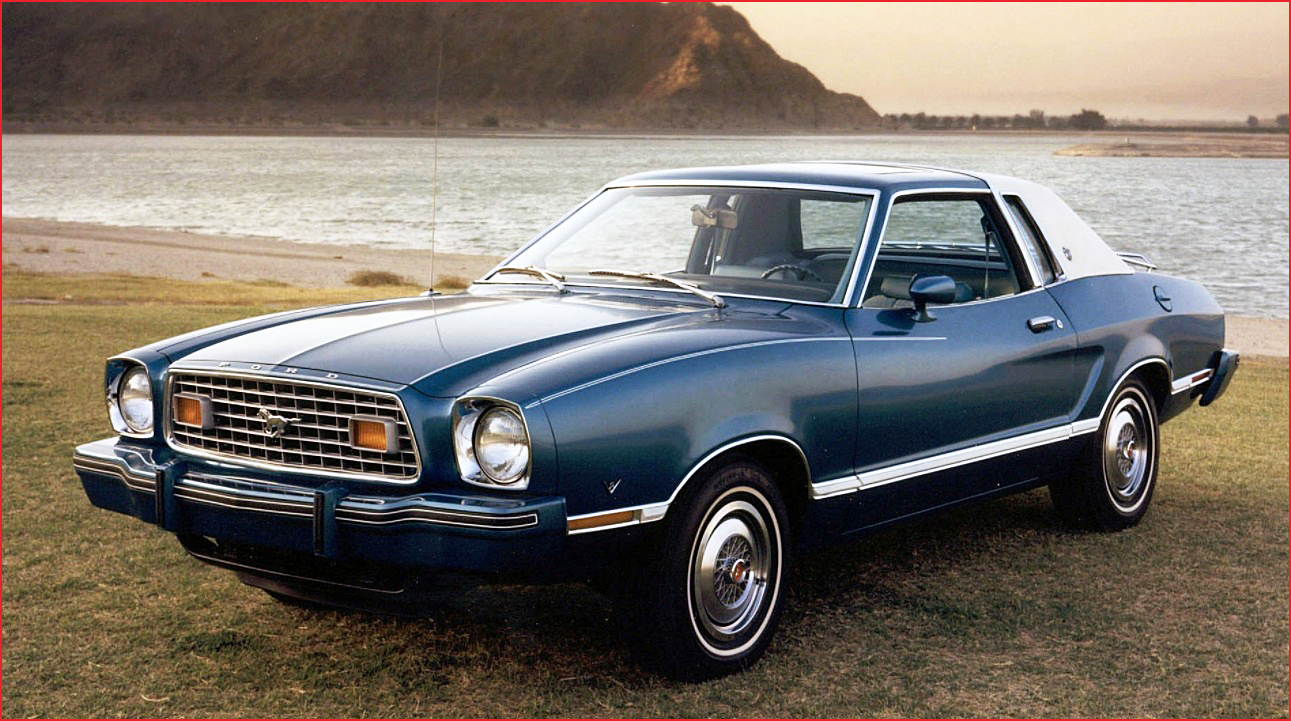
Ahh, the Mustang II…the car we love to hate. It is truly the unloved stepchild of Mustangdom. By 1973 the Mustang had become bloated to over 3,500 lbs. and thirsty without the power to back it up. The top-line 4-barrel 351 Cleveland only put out 243 HP and consumed a gallon of gas every 11.5 miles, and the 2-barrel 302 wasn’t all that much better: 14 MPG for a paltry 135 HP. My modern midsize Lexus GS350 with a 3.5 liter V-6 has 306 HP and gives me over twice the gas mileage of the 351 even if I stomp on the loud pedal every day, and it’s 200 lbs. heavier than the 351-equipped ’73 Mustang. The “energy crisis” was upon the nation when Mustang II debuted thanks to the Arab Oil Embargo and Ford, seeing declining sales of the once-loved Mustang and muscle cars in general, decided to re-imagine the Mustang rather than let it be a casualty of rising gas prices and insurance rates. The initial idea was to downsize it to a compact based upon the Maverick introduced in 1970, as the original was based upon the compact Falcon, but ultimately the new Mustang would be based upon the unibody subcompact Pinto platform and utilize its 140 cubic inch four-cylinder engine as a base, producing an anemic 88 HP but returning 19 MPG with a manual transmission and 17.5 with an automatic. This was enough to get the 2,800 lb. car going, just not in any hurry. 0-60 times for the four-banger-equipped Mustang II looked like quarter-mile times for a 1970 Mustang Boss 429: 13.8 seconds, a tenth slower than the Boss’s 0-60 with a dismal 20 second 1/4 mile. There was a 2.8 liter V-6 option that produced 105 HP and still gave 17 MPG with a manual. It was more spritely than the pitiful four-cylinder, 0-60 in 11.5 seconds, but certainly nothing that would make the pulse quicken. Clearly Ford‘s new direction for the Mustang was the sporty subcompact economy class where it would compete with the likes of the upcoming badge-engineered foursome from GM (Buick Skyhawk, Oldsmobile Starfire, Pontiac Sunbird and Chevrolet Monza) as well as imports like the Toyota Celica, Mazda RX-3 and Datsun 240Z, which by itself far outclassed any similar offering from Detroit. The 140 Cubic inch 4-cylinder versions of the GM cars offered similar power to the Mustang‘s four, but GM‘s Buick-derived 3.8 liter V-6 was a liter larger and much punchier even though it only bested the Mustang by 5 HP. I owned a 1977 Sunbird with the 3.8 liter V-6 in the early ’80s, and drove a shipmate’s V-6 Mustang II around the same time frame. Neither would win a drag race against a pre-’74 Mustang, but there’s no comparison; the Pontiac won hands down. Crappy as it was in the performance department, the Mustang II was still named Motor Trend‘s 1974 Car Of The Year.
The new Mustang did have some features absent from its predecessor like rack & pinion steering and a separate engine subframe that reduced noise, vibration and harshness. The V-6 improved power, but at the expense of being nose-heavy; 58% of the V-6 Mustang II‘s weight was on the front wheels. It was available in two flavors, a 2-door coupe or a 3-door hatchback. An upscale Ghia model was available with a half-vinyl roof, opera windows and fancier trim. Despite its lack of performance and engine and underpinnings from the lowly Pinto, it was the 6th-best selling Mustang.
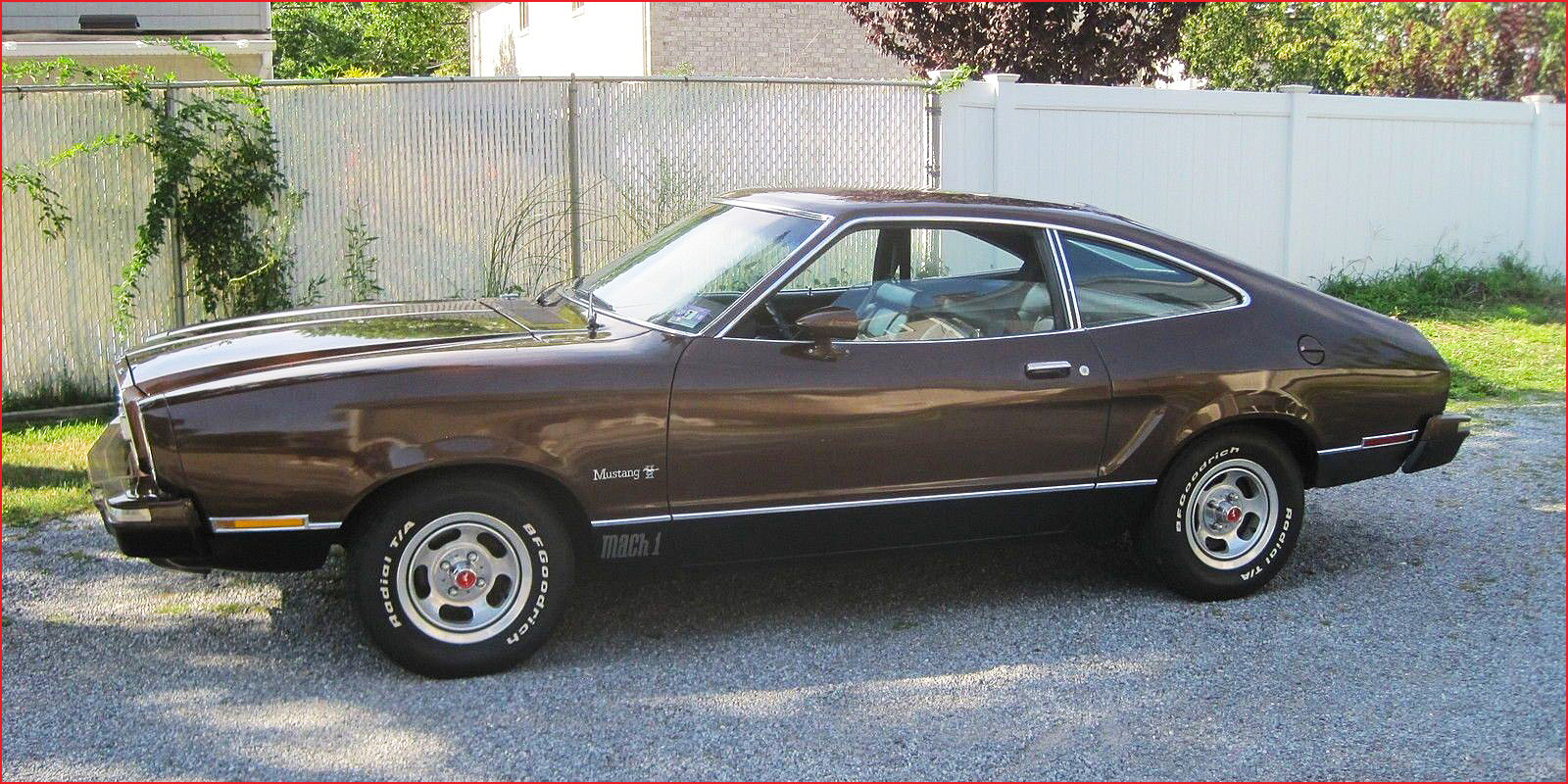
By 1975 the oil crisis had abated somewhat and Ford wanted to return the Mustang to “respectable” performance levels. The engine bay was re-engineered to accept the 302 V-8, and the hood and header panel were revised as well. At 140HP due to emissions requirements like a catalytic converter it had more HP than the 105HP V-6, but outperformed it in the torque department; 213 ft. lbs. vs. the V-6’s 140. The Mach 1 name was brought back for 1975 with the Rallye Package which included extra engine cooling, heavy-duty front and rear springs with a rear stabilizer bar and adjustable shocks, color-keyed remote side mirrors, leather-wrapped steering wheel and stylish steel wheels with trim rings. Performance was good, if not great; 10.5 second 0-60 times and a top speed of 105MPH were better than the four or six-cylinder models but still far short of even the 1973 Mustang. The Mach 1 was only available in the Hatchback body style. The Ghia returned with all the luxury appointments of the previous model, and a new Special Paint Edition debuted with two-tone paint, sport wheels, bumper guards, color-keyed body side moldings, color-keyed sport mirrors and interior upgrades. An MPG model with lower gearing for more fuel economy debuted in 1975 also.
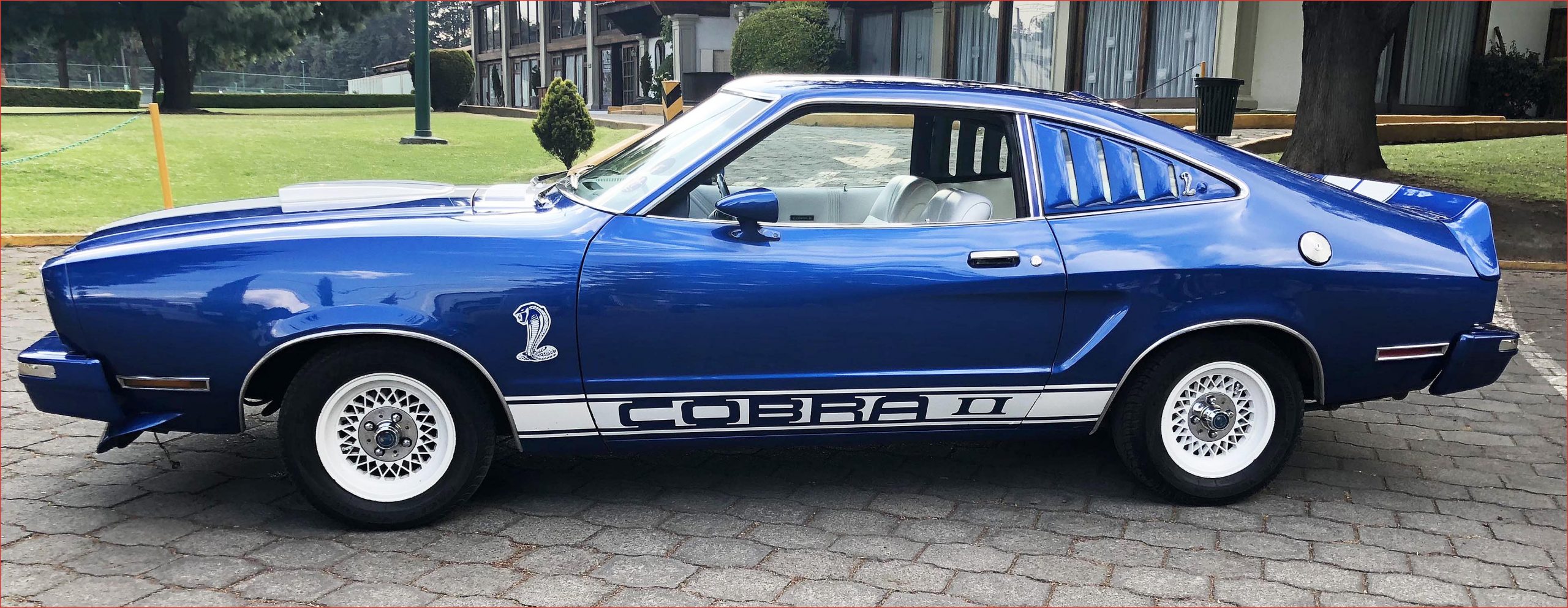
Mach I returned for 1976, now simply an appearance and suspension package if ordered without the V-8. Another appearance package, the Cobra II, debuted this year. Unlike the subtle and muted Mach I, the Cobra II‘s graphics were loud and in your face. Dual racing stripes, low stripes on the body that read “COBRA II” with an accompanying snake decal above and front and rear spoilers echoed Shelby GTs of the past. Performance was, unlike the Shelby, not in your face. It had the same performance as the V-8-equipped Mach I, good by mid-’70s standards but not up to par with the first generation. However, the V-8 equipped Mach I and Cobra II were the best of the bunch when it came to performance. Cobra II could be had in white with blue stripes, blue with white stripes or black with gold stripes like the 1966 GT350H Hertz Shelby. The Cobra II gained a bit of notoriety when Farrah Fawcett drove a 1976 model in the ’70s TV show Charlie’s Angels.
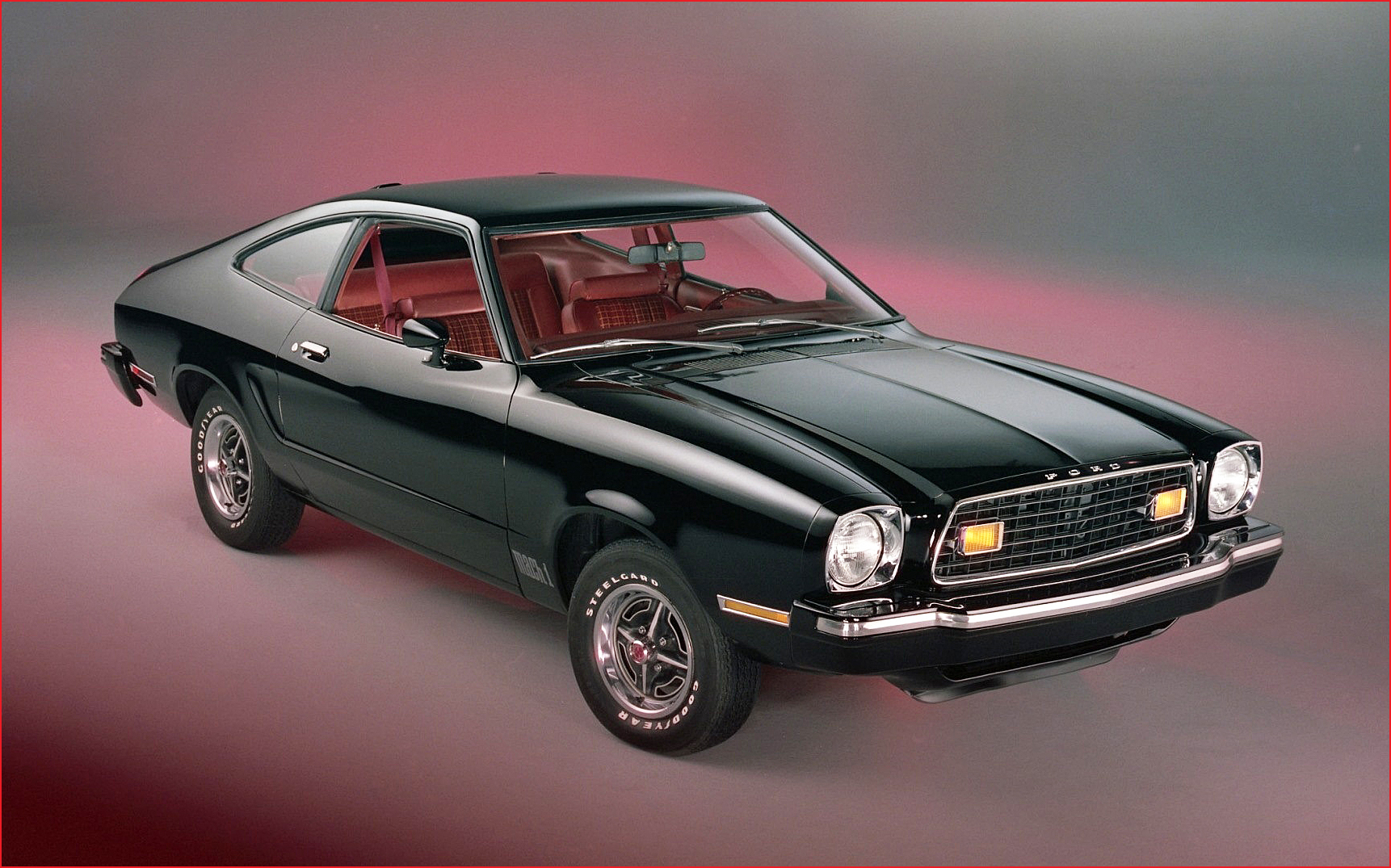
The luxury-oriented Ghia returned along with the new Stallion with its blacked-out grill, black rocker panels and Stallion graphic on the rear of the front fender and the new Shadow, also with a blacked-out grill but featuring black paint, black or bright red interior, a brushed aluminum instrument panel applique, black grill, window molding and wiper arms. This was no mere appearance package like the Stallion, it had all the Mach I options including competition suspension and Traction-Lok differential. It looked badass, and with the V-8 installed it was every bit as badass (by mid-’70s standards) as the Mach I or Cobra II. If you wanted an understated and subtle Mustang in ’76 that looked mean, this was your car.
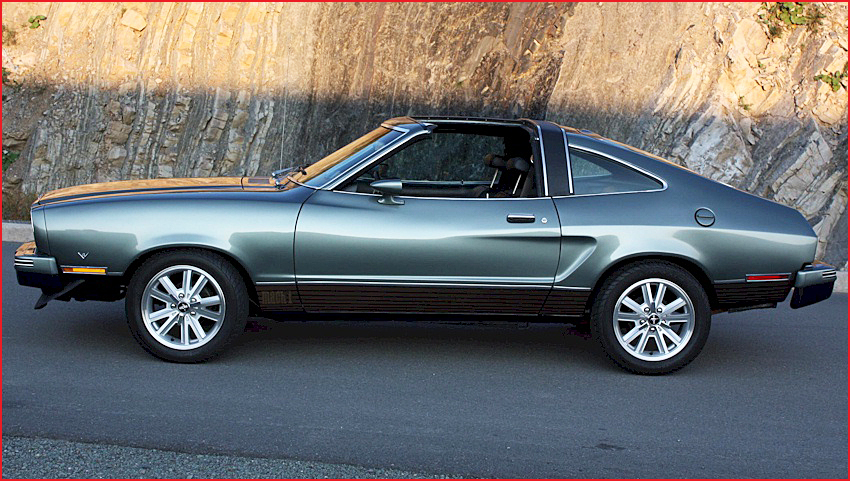
The 1977 Mustang received minor trim changes to make it look more sporty. A T-Roof was added since there was no convertible option, and a “Targa Band” that wrapped from the rear quarter-panel over the roof behind the T-Roof was available with it on all hatchback models except the Cobra II. Engine power dropped across the board, the four-cylinder to 89HP, V-6 to 93HP and the 302 V-8 to 134HP. As fuel shortages and the “energy crisis” faded, the MPG model was dropped for 1977, as was the Shadow and Stallion, making them one-year only models. Mach I returned also with some engine and suspension upgrades as well as a new front spoiler, 4-way adjustable front seats and optional forged aluminum wheels. Cobra II got two new color schemes, white with either red or green stripes. Early ’77 models had the same graphics as before, but mid-year the new 1978 styling came into effect. The twin stripes were replaced with one wide stripe, the sides stripe was also single and mid-side with “COBRA” in the center and no snake decal. The hood scoop was reversed so the opening faced the windshield. Louvers were added to the rear window and the side panel louvers only came in black, and all window and glass molding was black as well.
1978 was the last gasp for the Mustang II. Ghia was back, little changed from the previous year. Mach I also returned, the last year the name would be used for 23 years. Base engine was the V-6, but it could be ordered with the 302. Different color lower body-side paint, new wheels and raised white letter tires distinguished it from the ’77 model. Cobra II continued to be a sheep in wolf’s clothing, with its loud(er) new graphics, and all 3 engines were available. Imagine how ridiculous driving a Cobra II with the 89HP four-cylinder would be.
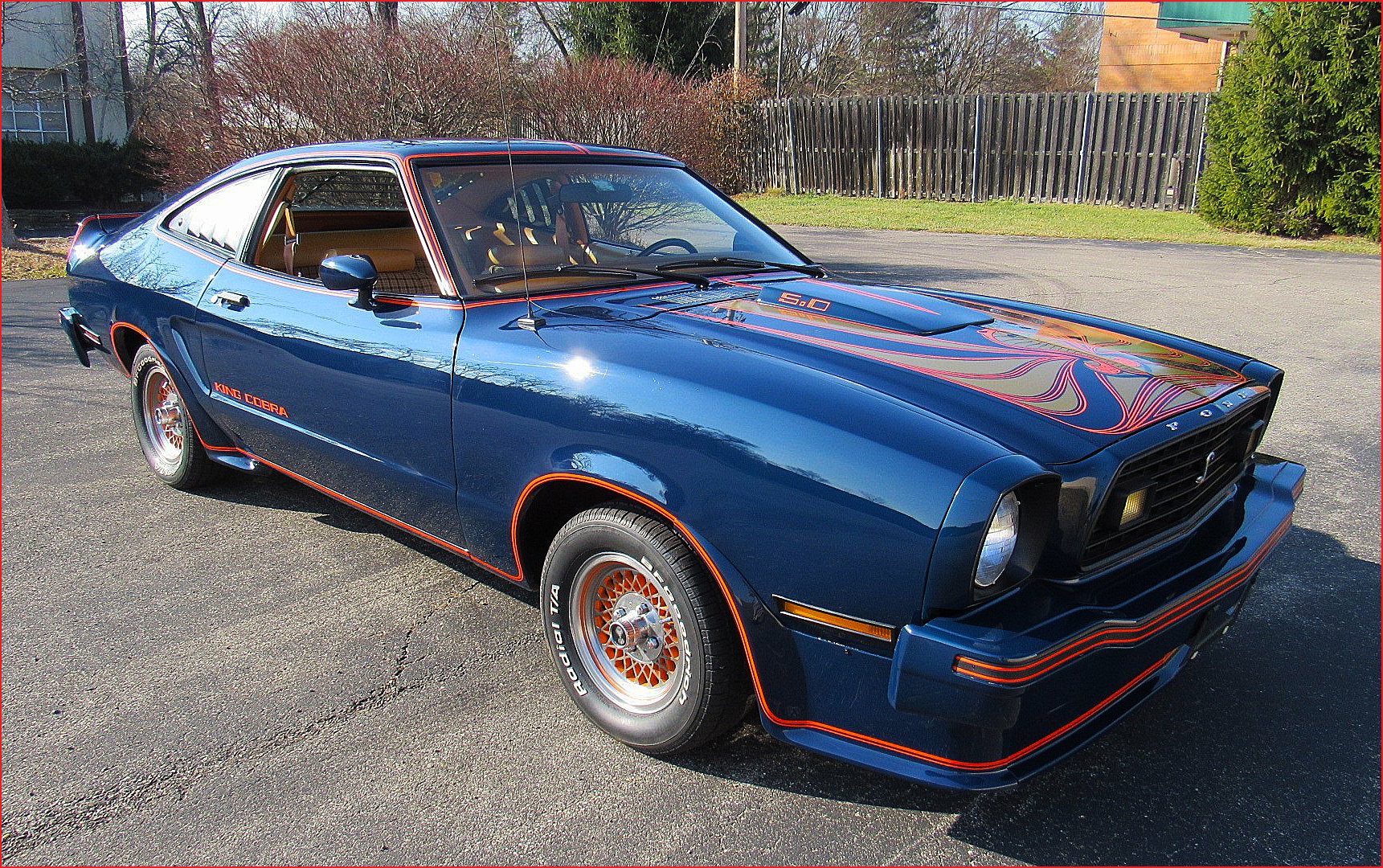
The King Cobra was a new appearance package, but it was all flash and little dash. Flared fenders, unique chin and rear spoilers, unique wheels, a “5.0” graphic on the hood scoop and a large snake graphic on the hood reminiscent of the “screaming chicken” on the hood of mid-’70s Pontiac Trans-Ams distinguished the model. At least it could only be ordered with the 302. That option would cost you $1,277, or somewhere between a quarter and a third the price of a base Mustang II with a four-cylinder.
Many more changes were in store for the third generation Mustang. Tune in next month to see if the changes were good…or bad!
Got a Great Car Story? Share it! Reminisce About Your Other Favorite Cars, Too!
Seeyas Again Next Time On FLAT OUT!
It’s President Jeff D. Boofer


