


Hi Folks…And Welcome Again To FLAT OUT!
This Week We’re Going Back To The Future! It’s...
The DMC DeLorean 1981-1983
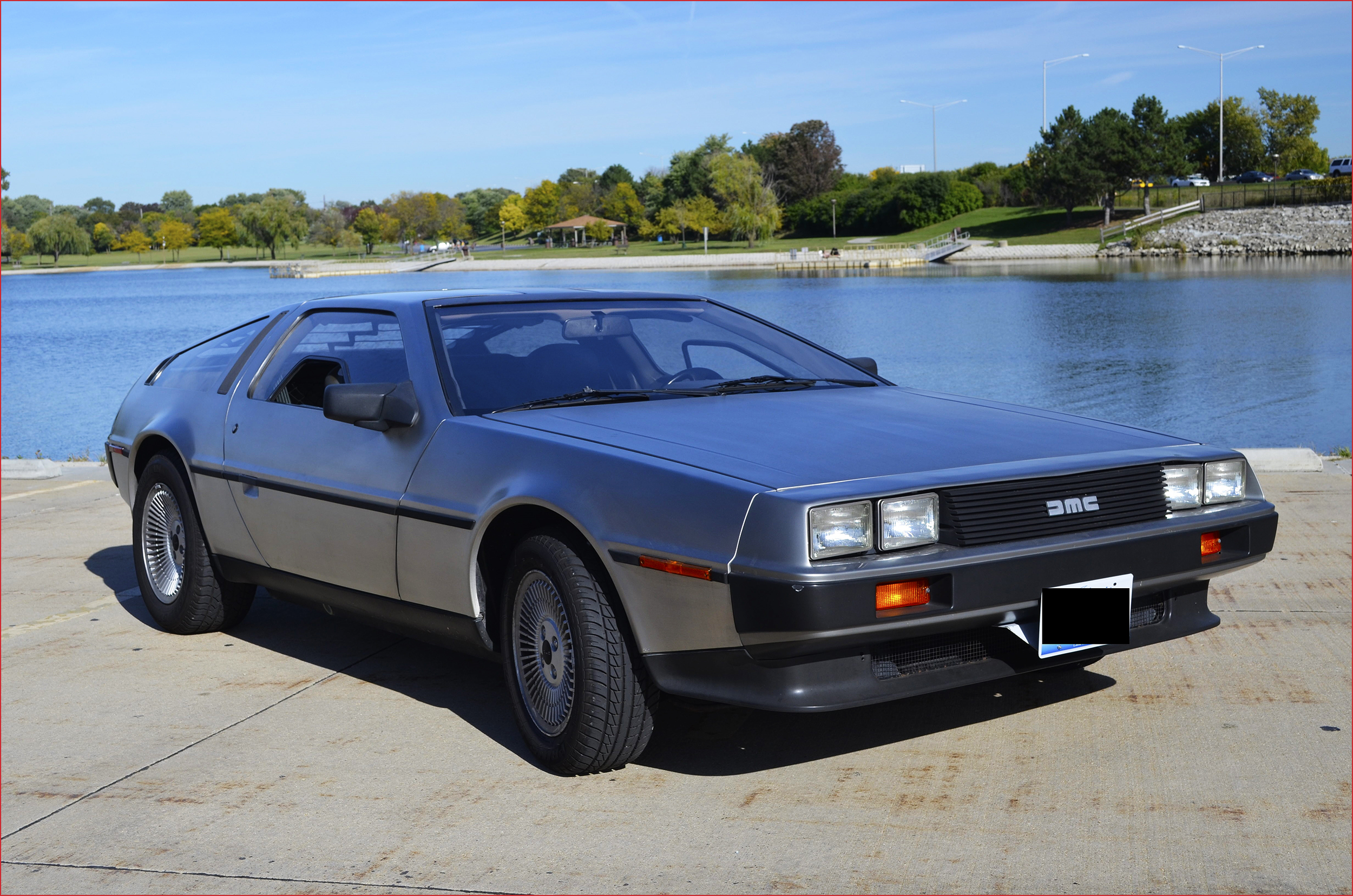
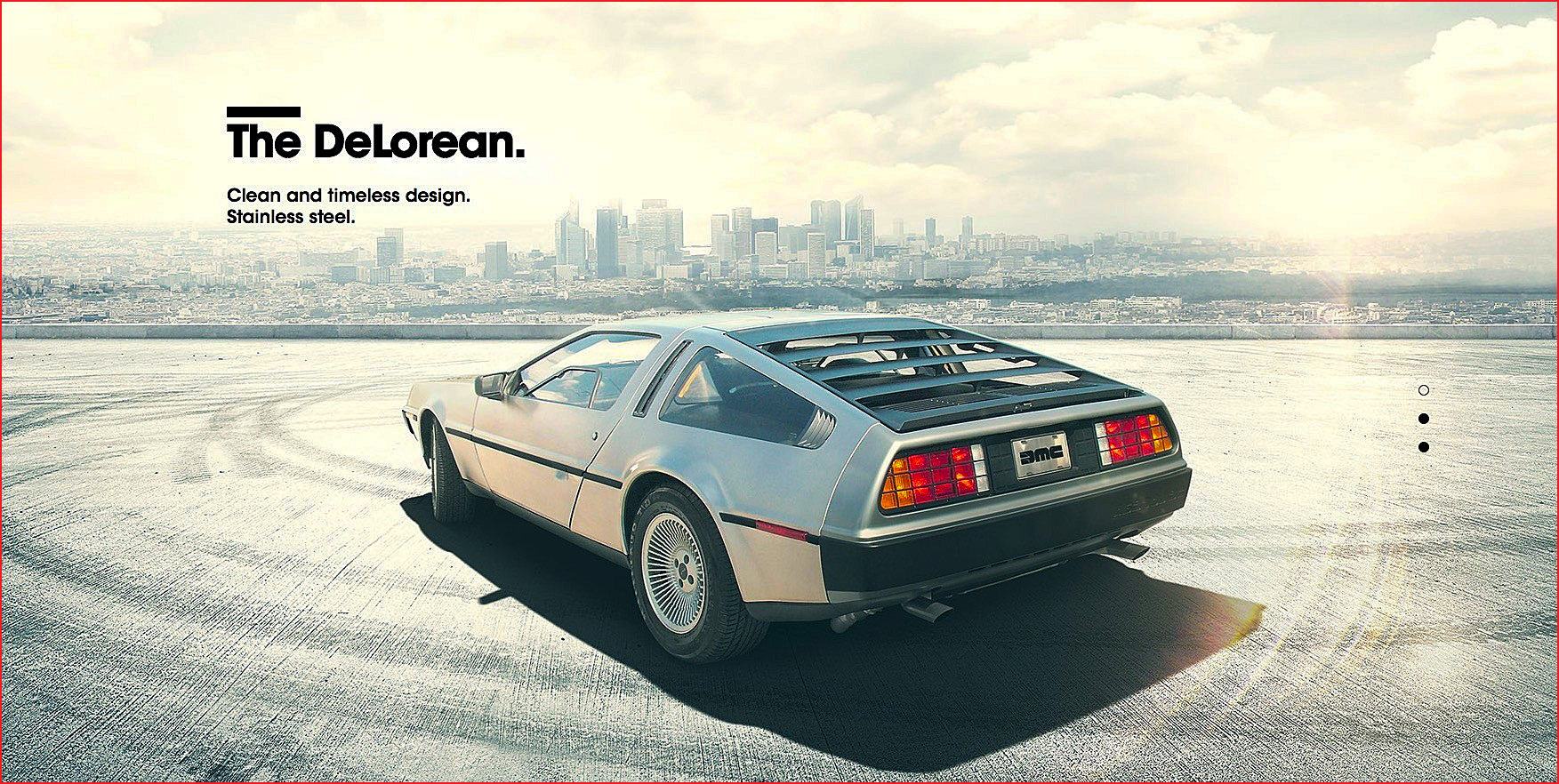
The DeLorean was a rear-engine, 2-seat sports car produced by the DeLorean Motor Company, the brainchild of former General Motors executive John Z. DeLorean. Designed by Giorgetto Giugario, formerly of Italian styling house Bertone but working for his own firm Italdesign Giugario by the 1970s, the car was visually stunning with its brushed stainless steel outer body panels and gull-wing doors. However, the car ultimately turned out to be all flash and no dash, with an under-powered 132 HP engine not able to propel the 2,700 lb. car fast enough.
GM’s Rising Star
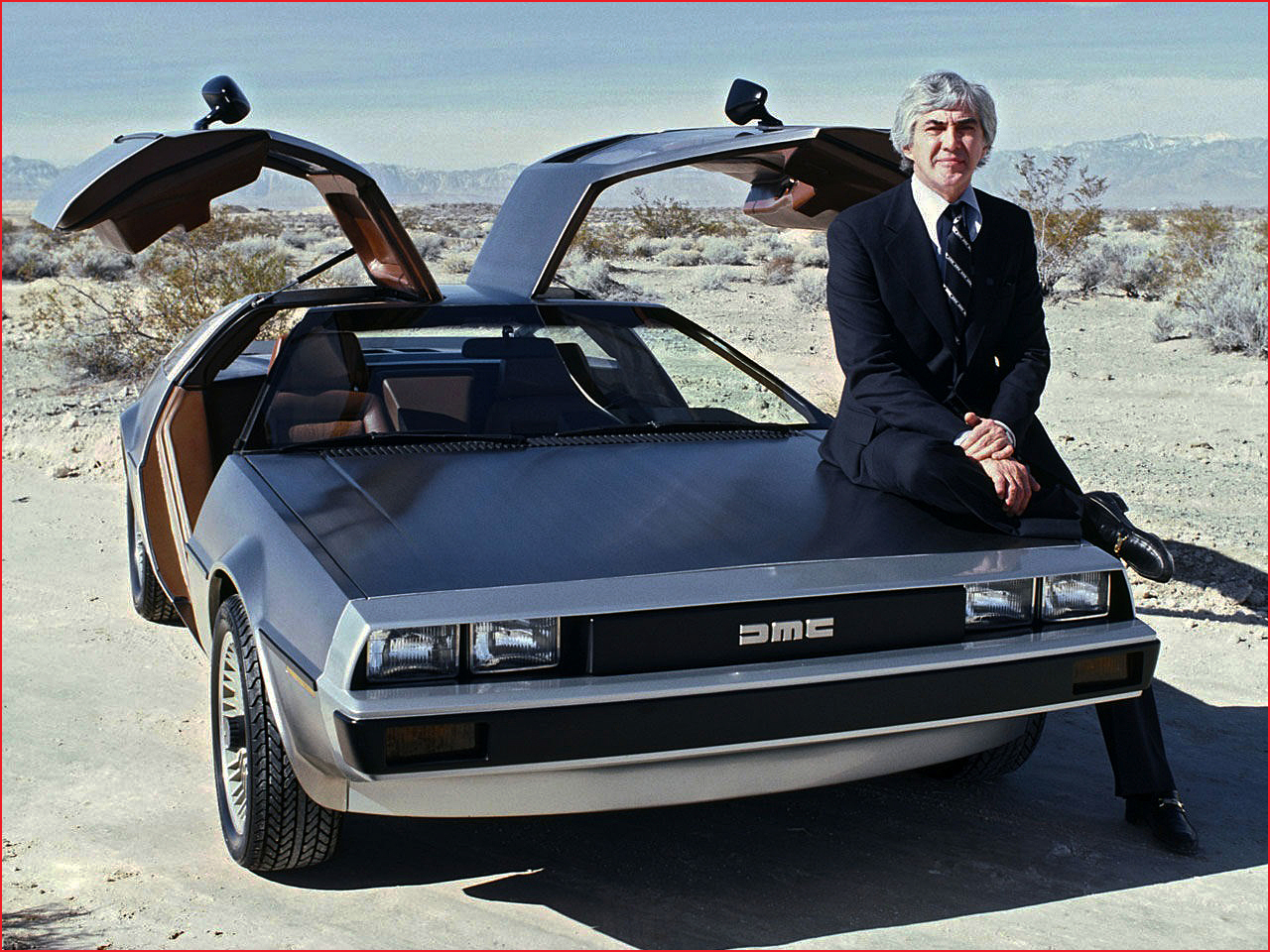
John Z. DeLorean was the former division head at Pontiac, at 40 the youngest person to ever head a GM division, and was largely responsible for the development of the Pontiac GTO that kicked off the muscle car era in the mid-60s before moving to head up Chevrolet in 1969. He frequently clashed with upper GM management as his modern style of dress and radical ideas did not sit well with the suit-wearing, button-down old-guard GM executives. Despite this, three years later he was appointed Vice President of car and truck production for the entire GM line and seemed destined for the President’s seat, much to the chagrin of those same old-guard GM execs. Just a year later, clashes with management and his sharp criticism of the direction GM was taking at the beginning of the 1970s led to him leaving the company and forming the DeLorean Motor Company.
Innovative Safety Features…Or Not
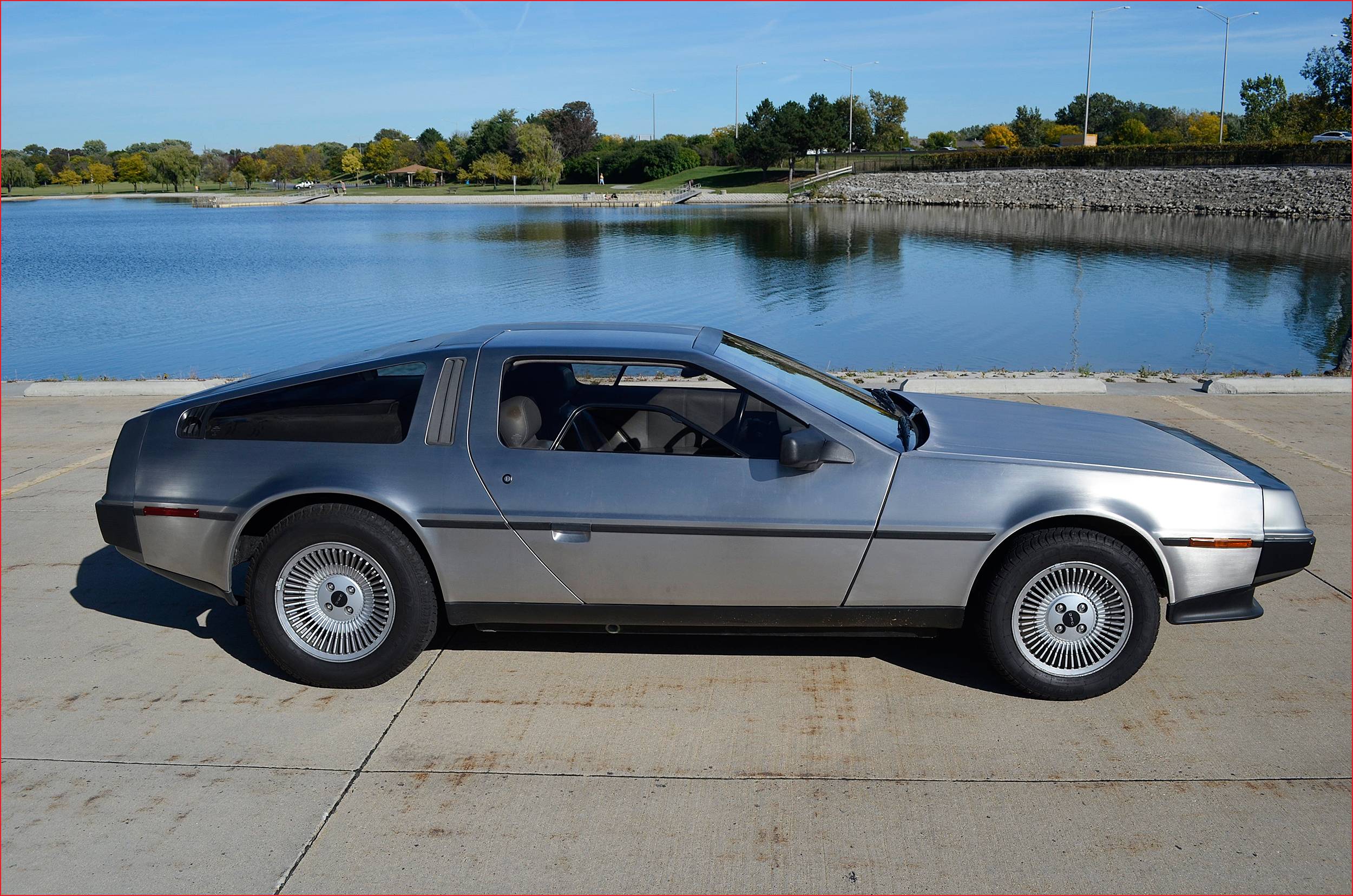
There were rumors (and also legitimate plans) that the DeLorean would have a number of advanced features such as a plastic Elastic Reservoir Molding unibody chassis, mid-engine layout, an airbag, 10-MPH bumpers and ultra-wide Pirelli P7 tires. Sadly none of these features made it into the production vehicle. The car was also to have a Wankel rotary engine like the Mazda RX-7 released in 1978, sourced by the company Comotor, however Comotor ended production of the Wankel, and the favored engine became the Ford Cologne V6. The Ford engine would be abandoned in favor of the more reliable complete drivetrain from the Citroën CX 2000. The 2-liter Citroën engine would also be abandoned as it was very under-powered for the DeLorean. Engineers finally settled on the fuel-injected 2.85 liter PRV (Peugeot-Renault-Volvo) V6, however this meant moving the engine from its mid-engine location on the first prototype to the rear-engine location on the second prototype and ultimately all production vehicles. This was a development of the 2.7 liter V6 used in the Renault 30 and used Bosch K-Jetronic fuel injection. A five-speed manual or three-speed automatic transmission was available. The car featured an uncommon for the time four-wheel independent suspension with conventional coil springs and shock absorbers with a dual-wishbone front suspension and a multi-link rear. However, the front and rear springs had the same spring rate, and the lack of weight in the front end compared to the heavy rear-engine gave the car a nose-high look. Rack-and-pinion steering and power-assisted disc brakes on all four wheels were also uncommon features in the early 1980s.
The innovative Elastic Reservoir Molding (ERM) chassis was chosen to save weight and lower production costs. DeLorean purchased patents for the then-untested technology, but engineers found the process unsuitable for an automobile chassis and the idea was scrapped in favor of a conventional steel backbone chassis. The ERM process probably would have enabled the DeLorean to reach its projected $12,000 sales price had it worked. The internal prototype designations DSV-12 (for DeLorean Safety Vehicle) and DMC-12 were named after this price point. The initial DSV designator was because of the advanced safety features the car was to have such as an airbag, 10-MPH bumpers and a central warning system that would check various fluid levels and even brake pad thickness and warn the driver if they went below set parameters monitored by sensors. The original design had to be re-engineered to accommodate the steel backbone chassis as well as other changes. The re-engineering was turned over to Colin Chapman of Lotus, who scrapped the unproven material and manufacturing techniques in favor of a steel double-Y frame inspired by his own Lotus Esprit, re-designing the chassis and bodywork.
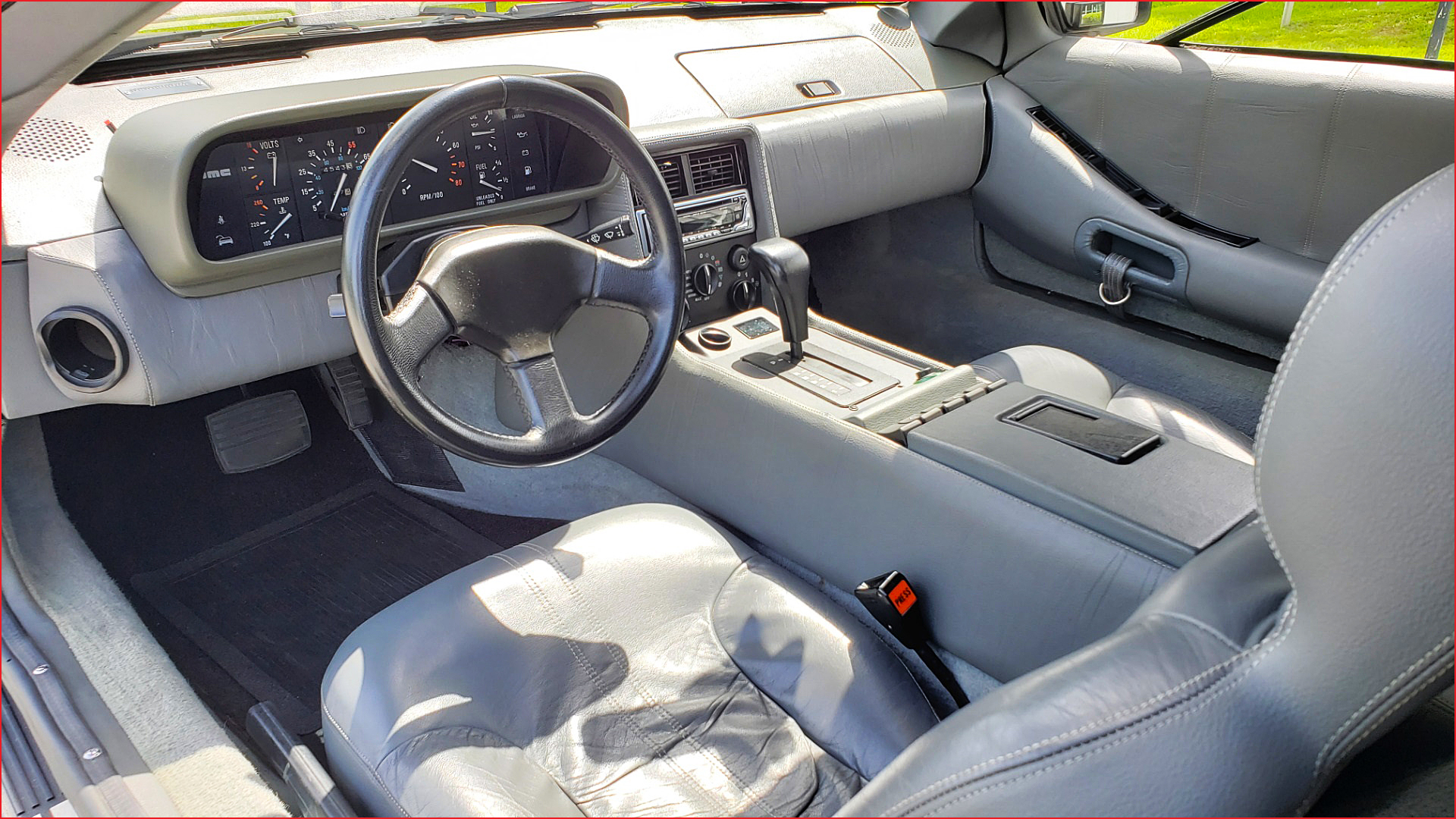
The interior, while featuring leather upholstery, was a rather Spartan affair that was not uncommon in the early 1980s. The gauge cluster was better than most cars, with a voltmeter and an oil pressure gauge in addition to the fuel gauge, engine temperature reading and the usual assortment of “idiot lights.”
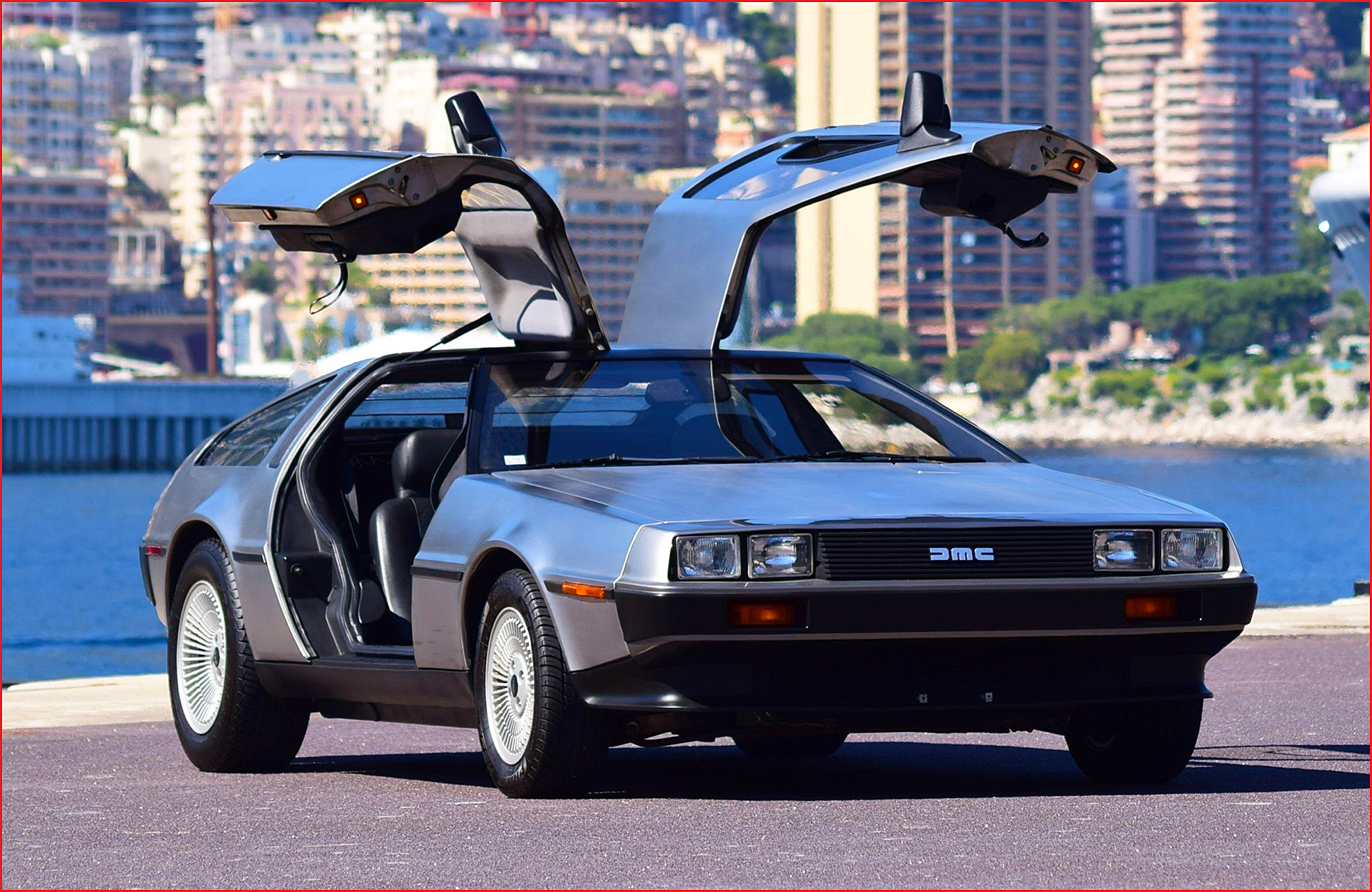
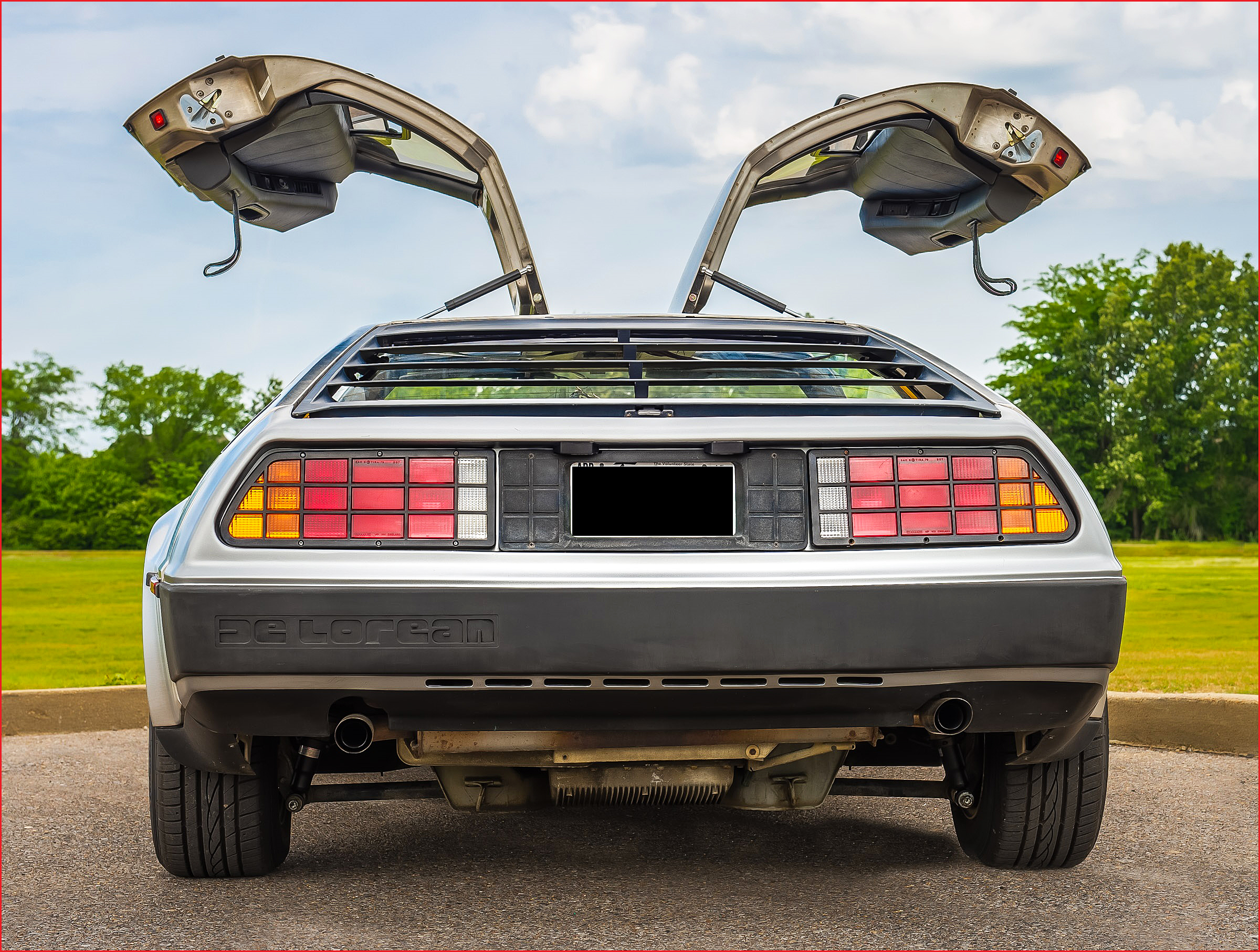
The gull-wing doors remained as a distinctive feature. They were very heavy and supported by cryogenically preset torsion bars developed by Grumman Aerospace and nitrogen-charged struts. They featured red and amber lights to mark their edges at night and small cut-out windows because full-sized roll-down windows would not work in the short door panels.
Production And Marketing Woes
Renault was contracted to build the DeLorean factory in Dunmurry, a suburb of Belfast, Northern Ireland, with considerable financial incentives from the Northern Ireland Development Agency in 1978. The factory employed 2,000 workers at its peak and produced about 9,000 cars before going into receivership and eventually being seized by the British government. Production was scheduled to begin in 1979, but delays meant that the factory would not begin production until early 1981, in the midst of the early ’80s recession when the new car market was in a slump. There was a waiting list of early buyers before the car was released, many of whom paid over MSRP for the chance to own one of the first DeLoreans. The exuberance faded quickly and soon output from the Dunmurry factory exceeded sales.The DeLorean received a lukewarm reception from the press and the public, who felt that the unique styling did not make up for the high $25,000 price tag and lack of horsepower compared to other sports cars such as the Corvette, which sold in record numbers in 1980-1981 despite the recession. The motoring press praised the car’s fuel economy, but argued that the DeLorean was more of a GT than a sports car given it’s lackluster performance. An 8.8-second 0-60 time with a manual transmission was hardly Corvette territory, even the under-powered early 80s ‘Vettes. There were also quality issues with the early production cars as the Dunmurry workforce was inexperienced at auto manufacturing. This did not help the car’s already sinking reputation. The quality issues were eventually worked out, but the reputation stood.
Financial Collapse
Lack of demand for the car, cost overruns and an unfavorable exchange rate between the dollar and the British Pound began to take their toll on DMC‘s cash flow by late 1981. In response, the company was re-structured so that a new DeLorean Motors Holding Company would be corporate parent to DMC and new manufacturing, distribution and research & development arms. The re-structuring was ultimately for naught, and by February of 1982, little more than a year after cars went to dealerships, half of the roughly 7,000 DeLoreans produced up to that time remained unsold and the DeLorean Motor Company was $175 million in debt. In January of 1982 the Securities and Exchange Commission questioned the viability of the company and they were forced to cancel the stock issue for the Delorean Motors Holding Company, which would have raised about $27 million for the struggling automaker. The company went into receivership and produced 2,000 more cars before DeLorean’s arrest, at which point the British government seized the company and began liquidation proceedings.
A Last-Ditch Effort To Save DeLorean Goes Horribly Wrong
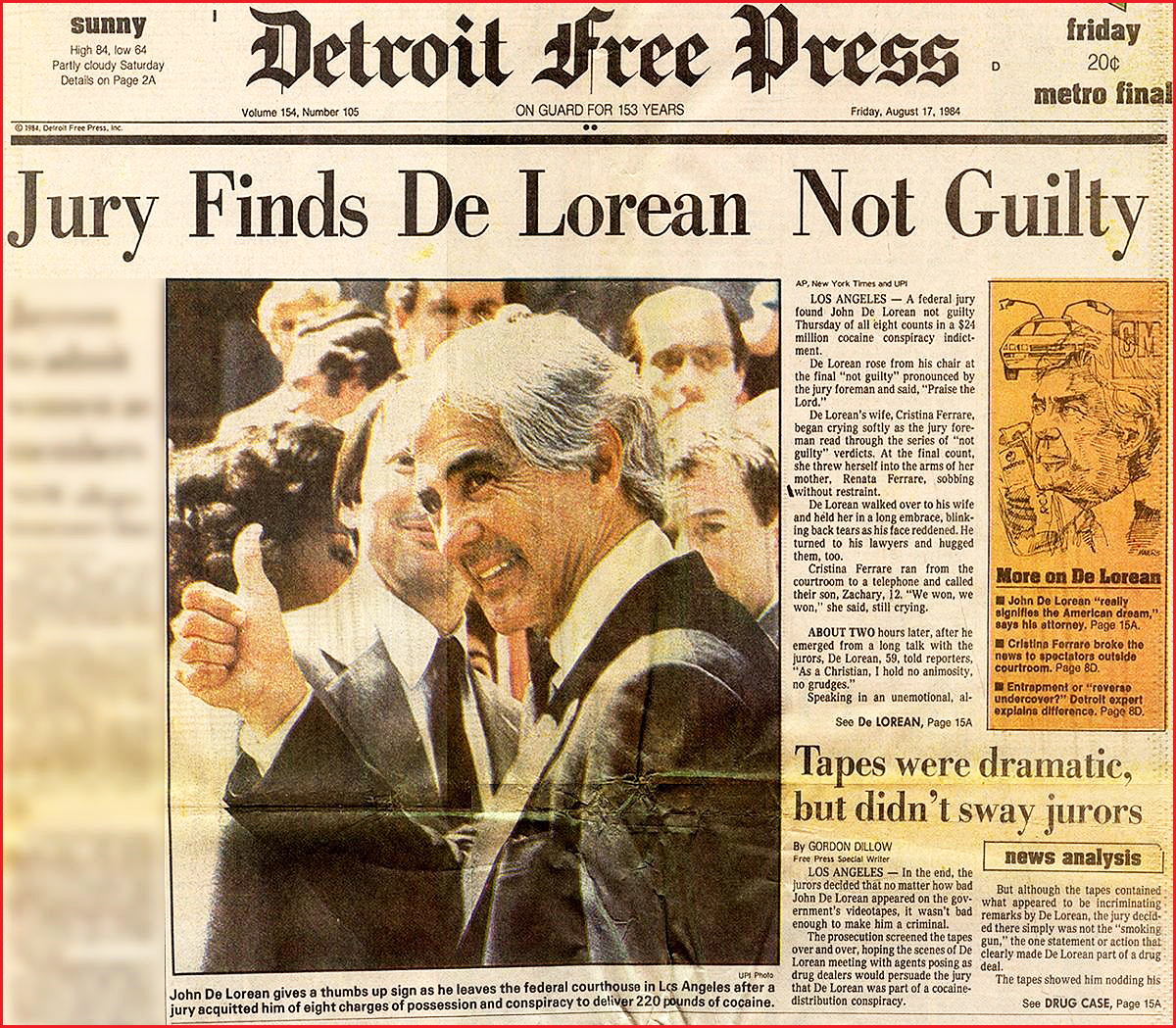
In October of 1982 John Z. DeLorean was arrested on cocaine trafficking charges after an FBI sting operation in which the FBI agreed to bankroll a cocaine smuggling operation for DeLorean. The scheme involved the potential sale of 100 kilos of cocaine worth an estimated $24 million at the time. A former neighbor of DeLorean’s turned FBI informant contacted him about the potential deal. Since DeLorean did not initiate contact, he was able to successfully defend himself by claiming police entrapment. He was acquitted of all charges in August of 1984, but by that time his company had already collapsed into bankruptcy. He was indicted again in September of 1985 on charges that he defrauded investors and committed tax evasion by diverting millions of dollars raised for the company to himself. He was again acquitted of all charges.
Resurrection…Sort Of

The DeLorean was poised to be tossed upon the scrap heap of automotive history like failed North American automakers before it such as Tucker and Bricklin. However, interest in the car was renewed after the film Back To The Future was released in 1985. The film used the DeLorean as a time-travel device created by eccentric inventor Doc Brown in this and two subsequent sequels. This helped boost prices of used DeLoreans, which can range today from $50,000-$100,000, or over $150,000 for cars converted to Back To The Future replicas.
Got a Great Car Story? Share it! Reminisce About Your Other Favorite Cars, Too!
Seeyas Again Next Time On FLAT OUT!


