




✪ President Donald Trump’s executive order banning birthright citizenship for illegal aliens tees up a major Supreme Court case that could become a historic Trump win which finally fixes a growing, decades-long problem…
▶️ FEATURED ARTICLE: CLICK HERE TO READ

ooo
everal of Trump’s the executive orders (EOs) and presidential actions on Inauguration Day — January 20 — dealt with immigration and the southern border. Trump has repeatedly declared what is happening on our southern border is a foreign invasion of the United States. He issued a proclamation banning the entry of those illegal aliens into the country.
In Executive Order 14160 — dealing with birthright citizenship — President Trump also ordered his administration not to issue citizenship documents to children of women who are already illegal aliens, in the U.S. on a temporary visa and whose fathers are not U.S. citizens or lawful permanent residents (LPRs, also called green card holders).
Democrats and their allies wasted no time filing at least ten federal lawsuits challenging the constitutionality of EO14106. One challenge was brought by eighteen Democrat state attorneys general in Massachusetts. Another four states filed in the state of Washington.
Leftists have long claimed everyone born in the United States is automatically a U.S. citizen. However, that’s not really the law; and it has never been the law.
All of these Democrat lawsuits assert the language of the Citizenship Clause of Section 1 of the Fourteenth Amendment to the U.S. Constitution, which provides, “All persons born or naturalized in the United States, and subject to the jurisdiction thereof, are citizens of the United States and of the State wherein they reside.”
This politically motivated incorrect interpretation of the 14th Amendment all started with possibly the worst Supreme Court case in American history, Dred Scott v. Sanford. A Black man who was a slave but was then taken to a free state sued in federal court seeking a court judgment that he would remain a free man. In that 1857 case, the court held that because a Black person was not a U.S. citizen, and no federal court even had jurisdiction to decide his case.
While the Civil War was ending, Congress proposed the Thirteenth Amendment to end slavery. That amendment included Section 2, empowering Congress to pass additional legislation to fully enforce the complete end of slavery.
After the Thirteenth Amendment was ratified by the states in 1866, Congress passed the Civil Rights Act of 1866, claiming the authority of Section 2. It included a clause on federal citizenship, which provided, “All persons born or naturalized in the United States, and not subject to any foreign power, are citizens of the United States and of the State wherein they reside.”
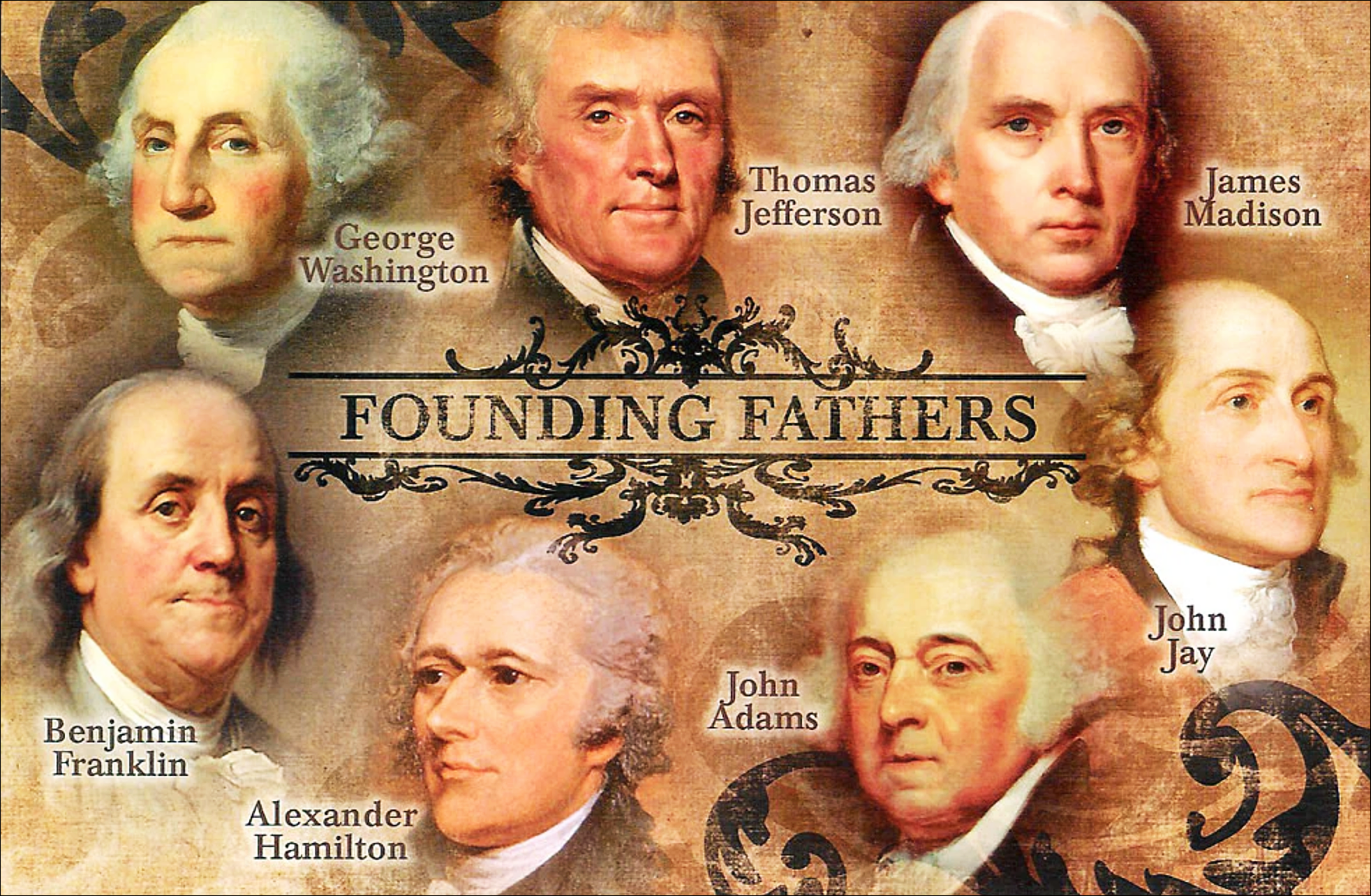
However, some leading legal minds in Congress at the time, such as Congressman John Bingham (R-OH), believed that citizenship was not fully covered by Section 2. He and several others believed another constitutional amendment was needed to cover specific issues like citizenship, due process, and equal protection of the laws. They took language from the Civil Rights Act, and repackaged it as another amendment. In 1868, the states ratified that proposal as the Fourteenth Amendment to the Constitution.
When Congress rewrote the citizenship provision, they changed “not subject to any foreign power” to “and subject to the jurisdiction thereof.”
Senator Jacob Howard (R-MI) explained that this reference to what some called “complete jurisdiction” meant:
… that the word “jurisdiction,” as here employed, ought to be construed so as to imply a full and complete jurisdiction on the part of the United States, coextensive in all respects with the constitutional power of the United States, whether exercised by Congress, by the executive, or by the judicial department; that is to say, the same jurisdiction in extent and quality as applies to every citizen of the United States now.
Sen. Lyman Trumbull (R-IL) added that the phrase excluded anyone who owed “partial allegiance” to “some other Government” outside the United States. The list of other members making similar statements continues: such as Congressman John Broomall’s (R-PA) explanation, “Civilized man must of necessity be a citizen somewhere.” That was not possible for a Black man under Dred Scott, but nonetheless that man “must owe allegiance to some Government.”
The Citizenship Clause was thus written into the Constitution to overrule Dred Scott and to guarantee Black people born and raised in America would be recognized as fully human, had the right to call this nation their home and federal courts would be available to them in order to protect their rights.
The ongoing legal debate therefore focuses on the six words, “and subject to the jurisdiction thereof.” Federal law has always recognized that some persons are excluded by that phrase. The children of foreign ambassadors, foreign dignitaries, and foreign soldiers are not U.S. citizens by birth.
The legal question becomes who else falls within that category of exclusion. President Trump asserts children of illegal aliens fit into that category. A pair of Supreme Court cases have already set precedents for that discussion.
The first was Elk v. Wilkins, in which the Supreme Court held in 1884 that a man born on an Indian reservation was not guaranteed citizenship by the Fourteenth Amendment because Indian nations are quasi-sovereign, and therefore Elk was not fully subject to the political jurisdiction of the United States.
The Elk ruling discusses much of the history and quotations listed above, and went on to reason that Indians not covered by the Citizenship Clause are on the same footing as “the children of foreign subjects,” who are in the United States on a temporary basis, and that both groups have the same constitutional citizenship rights as “the children of ambassadors” – meaning that the Constitution did not promise them citizenship at all.The second case is U.S. v. Wong Kim Ark, where the Supreme Court held in 1898 that the Constitution did secure citizenship for the child of two Chinese nationals living in California. Their son, born in America in 1873, had visited China and was denied reentry because he was not treated as a citizen, until the Supreme Court declared that he was.
While Wong Kim Ark might seem problematic, the court there reasoned that the parents had renounced all ties and allegiance to China and were living permanently in the United States, which is important because an illegal alien has no permanent status in this country. And they were here lawfully. Immigrants from China were not able to become American citizens at that time because of the Chinese Exclusion Act, so these parents had become as close to citizens as the law allowed, and they lived here legally and permanently when their son was born in the U.S.
There is also broader language contained in the court’s opinion that would cover the children of other non-citizens as well. However, that language is what courts call “dicta” instead of the “holding” of the court. That term refers to words in a court’s opinion which are not legal reasoning necessary to answer the original question before the court. Dicta is not binding precedent entitled to stare decisis protection as settled precedent that would constrain the Supreme Court in the future.
But lower courts usually treat dicta from the Supreme Court as binding precedent, so the Justice Department’s strategy will likely be to get these challenges to the Supreme Court as quickly as possible, especially as liberal judges on lower courts will readily cite Wong Kim Ark to rule against EO 14160.
In some regards, these cases are similar to President Trump’s first term policy restricting travel from countries with terrorist vetting problems, which ran into obstacles in the lower courts in 2017 but ultimately prevailed in the Supreme Court in 2018 in Trump v. Hawaii.
As noted above, a key aspect of President Trump’s EO 14160 is that it is coupled with another EO declaring a national emergency at the southern border. He has also issued a presidential proclamation designating the entry of foreign nationals illegally crossing the southern border is contrary to the national interests of the United States; invoking authority Congress conferred to any president under 8 U.S.C. § 1142(f) to restrict or deny entry to any class of noncitizens.
The president is also invoking his inherent authority under Article II of the Constitution to supervise who can enter the country, as the Supreme Court recognized in U.S. ex rel. Knauff v. Shaughnessy, and the Federal Government’s Article IV’s obligation to protect the states from invasion. By declaring an invasion, President Trump is bringing additional legal authorities to bear on the birthright citizenship issue.
So to succeed in court, the Trump Administration will need to show how invaders are the constitutional equivalent of foreign soldiers. Official U.S. policy is that any person crossing the Mexican border illegally is part of an invasion and is defying a lawful presidential proclamation barring their entry into this nation.
It makes no difference if illegal aliens are not committing any crimes or violent acts. A foreign soldier can serve in that foreign military as a cook, or a military construction worker, or a dentist. His or her children born on U.S. soil would not be entitled to U.S. citizenship as a constitutional right, and it makes no difference if the parents were not carrying weapons.
That reasoning could also be extended to China as a geopolitical adversary of the United States. Although it is one step further removed from a soldier, a person entering this country illegally from a foreign power that is taking a hostile posture against this nation can still be equivocated to a foreign soldier for purposes of citizenship.
The numbers at stake are staggering. There are almost 300,000 children born each year in this country who, under EO 14160, should not be recognized as citizens. These so-called “anchor babies” lead to everything from illegal border crossings to “birth tourism” seeking to take advantage America’s immigration system.
There’s more than one way President Trump can win this legal fight. First, the Supreme Court could rule that the president is able to issue this EO consistent with current statutory language; combining both immigration law and the other constitutional and statutory provisions listed above. The justices can brush aside dicta in Wong Kim Ark that could otherwise be cited by the other side.
But if there are not five justices on the court holding to that position, the other route is that some justices might say that Congress could fix this by tweaking the language in the relevant statutory section, 8 U.S.C. § 1401. Polling suggest that a solid majority of Americans would support such a commonsense clarification of federal law to make explicit that words that were designed to overrule Dred Scott do not create a loophole for illegal aliens. A president with the wind to his back should hope to pass such a statutory fix.
Birthright citizenship is a major challenge facing America today, and President Trump is rightly claiming a mandate to do something about it with his series of EOs and proclamations. Whether through an outright legal victory at the Supreme Court or the combination of legal victories and a political victory in a Republican-controlled Congress, there thus appears to be a clear path for the president to deliver on that promise. ✪














▶️ DONATE VIA PAYPAL (DEBIT & CREDIT CARD)
ALL PayPal Transactions Are Encrypted For Card Holder Privacy & Security
▶️ DONATE VIA ZELLE (DIRECT BANK CASH TRANSFER)
ZELLE is the perfect online alternative to PayPal. It’s an incredibly simple, secure, easy, fast and FREE way to send or receive money to recipients directly from your online banking account without a middleman. Best of all, there’s NO fees.
ZELLE is a service provided by your bank and is already built in to your online banking account. You only need to activate it first before using. If you’ve already activated ZELLE in your online bank or credit union account, you can donate to The New Americanist by using our ZELLE address:
vip@thenewamericanist.com
To activate your ZELLE, follow these easy instructions (a simple two minute process):

▶️ DONATE VIA SNAIL MAIL






▶️ CLICK HERE TO VIEW
▶️ 36 Minutes 53 Seconds
▶️ 15 Minutes 49 Seconds
▶️ 19 Minutes 16 Seconds
▶️ 28 Minutes 18 Seconds
▶️ 9 Minutes 41 Seconds
▶️ 17 Minutes 48 Seconds
▶️ 1 Hour 25 Minutes 12 Seconds
▶️ 1Hour 19 Minutes 54 Seconds
▶️ 15 Minutes 45 Seconds
▶️ 31 Minutes 12 Seconds
▶️ 22 Minutes 39 Seconds ⭐️ Deplorables Know Libs Suck
