
⭐️ ihatediscus2


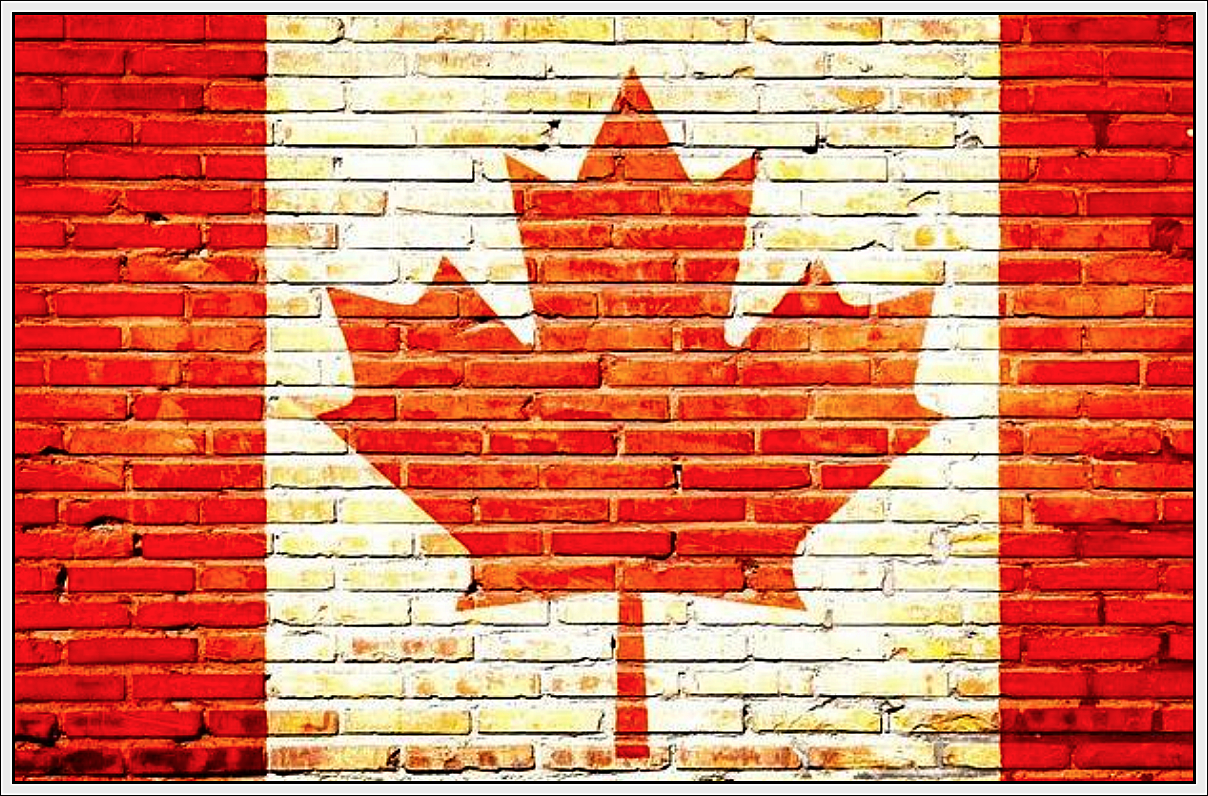

✪ President Trump’s tariffs on Canadian imports triggered the usual response from Ottawa. First under Justin Trudeau and now under his successor, Mark Carney, Canada’s political class didn’t just protest, they retaliated, slapping on symbolic countermeasures and accusing the United States of economic aggression...
▶️ FEATURED ARTICLE: CLICK HERE TO READ

lll
anada has basked in American economic and military protection for years while shirking its own national responsibilities. Regarding trade, defense, energy and foreign policy; successive Liberal governments have treated the U.S.-Canada relationship as a one-way arrangement—Washington provides the muscle and Ottawa collects the perks. That period of indulgence is over.
✪ Tariffs Are Long Overdue
The 25% tariffs on Canadian imports into the U.S. are no longer hypothetical—they’re real and biting. Trudeau’s last-minute border pledges bought a brief reprieve, but Mark Carney now inherits the fallout.
These tariffs aren’t a response to one slight—they’re the compounded interest on years of strategic freeloading by Canadian leaders, made worse by Washington’s past reluctance to demand any accountability.
Canada has dodged NATO spending commitments, neglected Arctic defense, appeased Beijing, and let its military atrophy into a paper force. The Canadian Armed Forces are in such disrepair they can barely police their airspace—much less contribute meaningfully to any allied operations abroad.
This is the legacy Carney inherits: a hollowed-out defense posture, a strained trade relationship, and a shrinking diplomatic profile. And now, with tariffs active and patience exhausted, the burden is his to reverse; at least for now.
Canada’s sudden gestures of cooperation earlier this year weren’t born of an alliance. They were squeezed out by economic pressure. That’s the lesson here: U.S. leverage works.
✪ Strategic Friction, Not Spite
Trump’s tariff strategy isn’t some fit of whimsy; it is deliberate. He’s using economic pressure not just to check rivals but to realign allies. The message is clear: You cannot enjoy American protection while freeloading off the American taxpayer.
Canada remains among NATO’s worst defense underperformers. The alliance’s 2% GDP defense spending benchmark has become a punchline in Ottawa, where defense outlays hover near 1.3% despite repeated warnings.
Carney may talk about reform, but his party authored the neglect—and it will soon fall to the Canadian people to decide whether he represents change or merely Trudeauism in a tailored suit.
The rot in Canada goes deeper than defense. Chinese influence permeates all of Canadian politics, universities, and critical infrastructure. Intelligence services have confirmed Beijing’s election interference. Huawei lingered in Canada long after other democracies cut ties. Yet, Canada’s government has pledged to advance relations with Beijing rather than confront the CCP’s malign reach.
Some U.S. policymakers continue to misplace their outrage. Senator Tim Kaine, for example, recently lamented, “There’s no reason to treat an ally and neighbor and friend like they’re an enemy”—failing to grasp that Canada’s chronic strategic dereliction, not diplomatic tone, is the problem.
Canada stopped acting like a reliable partner & neighbor long ago. Trump is only ending decades of unreciprocated American subsidization” military, economic, and diplomatic.
✪ Arctic Absenteeism, Maritime Neglect & Pacific Indifference
If geography is destiny, then Canada is uniquely situated: an Arctic, Pacific, and Atlantic nation with enormous strategic potential. However, the good fortune has instead become a liability.
Canada’s leaders squandered every Arctic advantage, and the country is now vulnerable to exploitation—posing not only sovereignty risks but direct threats to U.S. security.
This decline was not inevitable. The Royal Canadian Navy—once a credible force and symbol of national resolve—has withered into a ceremonial fleet. Aging hulls, recruitment shortfalls, and procurement debacles have left Canada incapable of patrolling its own coastline, much less projecting power abroad.
This is not the Canada of Juno Beach. In 1944, Canadian troops were entrusted with one of five assault sectors during the D-Day invasion—a testament to their value and martial competence.
That legacy has since crumbled beneath the weight of a failing welfare state and a political class more eager to draft climate pledges than confront the complex demands of modern defense doctrine. The decline has been slow, deliberate, and entirely self-inflicted.
As Arctic sea lanes open and Russian militarization intensifies, Canada has failed to meet the moment. The Kremlin has reactivated Soviet-era military bases and expanded its icebreaker fleet. China, declaring itself a “near-Arctic state,” has poured resources into research outposts and economic beachheads.
Canada’s response? Hesitation, hollow rhetoric, and empty gestures. Instead of asserting Arctic leadership, Ottawa has chosen dependency—outsourcing its defense to the United States while posturing for a tighter alliance with continental Europe, itself a patchwork of military dependents propped up by the very American power the Canadian government seeks to snub.
Even NATO has sounded the alarm. Yet Ottawa continues to delay, dither, and deflect.
Under Trudeau, Canada even balked at allowing NATO military exercises on its own Arctic territory. According to CBC reporting, Trudeau was noncommittal when then–Secretary General Jens Stoltenberg requested Canadian participation in critical Arctic drills.
That kind of indecision doesn’t just erode Canada’s credibility—it reveals the strategic incoherence of its leadership while jeopardizing both North American and European collective security.
The Indo-Pacific tells the same story. As the U.S., Japan, Australia, and India deepen cooperation to counter Beijing, Canada is nowhere to be found. Like Trudeau before him, Mark Carney treats the region as a rounding error—an afterthought of little strategic or logistical consequence.
✪ Canada Has Chosen A Different Relationship
After an emergency cabinet meeting, Prime Minister Carney announced the end of “deepening integration” and the birth of a “fundamentally different relationship” with the United States. “It’s clear the U.S. is no longer a reliable partner,” he claimed.
However, that statement infers backward causality. The relationship hasn’t change because Washington stopped being reliable—it changed because Ottawa stopped being serious.
Carney even floated the idea of a new “like-minded” world order that would exclude the United States. “The 80-year period when the United States embraced global economic leadership… is over,” he declared, lamenting that Canada would now have to “lead” this new alignment. That’s not a strategy—it’s a delusion.
No “like-minded club” can patrol 151,000 miles of Canadian coastline. Brussels cannot defend four million square miles of North American airspace. And Europe’s hollowed-out militaries cannot replace the American security umbrella Ottawa has relied on for generations.
Carney’s statement is not a vision for Canadian leadership. It’s an abdication masquerading as aspiration—proof that Canada’s failed political class and institutional hauteur have drifted into strategic hallucination.
✪ What Washington Should Demand
The tariffs now in place are not punitive—they are overdue leverage. They should remain until Canada:
- Commits 2% of GDP to NATO-aligned defense spending.
- Launches a real Arctic security initiative aligned with American interests—including U.S. basing cooperation if necessary.
- Dismantles Chinese political and technological influence in national institutions.
- Reengages the Indo-Pacific with meaningful military and diplomatic investment.
- Recognizes that American protection is not—and never was—unconditional.
- Hardens its borders and ports of entry to stem the flow of fentanyl, transnational crime, and foreign subversion.
✪ The Free Ride Ends Now
Mark Carney may speak with a banker’s composure, but his government inherits Trudeau’s failures—and the runway is nearly gone.
Canada has failed in trade, defense, and alliance credibility. Now, it is being held to account for the first time in decades. That’s the new reality in U.S.-Canadian relations. And it’s long overdue. Real allies don’t ride for free.
It’s time for Canada to pull its weight—or be treated not as the partner it once was, but as the liability it has become.✪














▶️ DONATE VIA PAYPAL (DEBIT & CREDIT CARD)
ALL PayPal Transactions Are Encrypted For Card Holder Privacy & Security
▶️ DONATE VIA ZELLE (DIRECT BANK CASH TRANSFER)
ZELLE is the perfect online alternative to PayPal. It’s an incredibly simple, secure, easy, fast and FREE way to send or receive money to recipients directly from your online banking account without a middleman. Best of all, there’s NO fees.
ZELLE is a service provided by your bank and is already built in to your online banking account. You only need to activate it first before using. If you’ve already activated ZELLE in your online bank or credit union account, you can donate to The New Americanist by using our ZELLE address:
vip@thenewamericanist.com
To activate your ZELLE, follow these easy instructions (a simple two minute process):

▶️ DONATE VIA SNAIL MAIL







▶️ CLICK HERE TO VIEW
▶️ 1 Hour 13 Minutes 21 Seconds ⭐️ Long Version
▶️ 22 Minutes 14 Seconds ⭐️ Short Version
▶️ 33 Minutes 33 Seconds
▶️ 3 Minutes 51 Seconds
▶️ 5 Minutes 44 Seconds
▶️ 15 Minutes
▶️ 19 Minutes 57 Seconds
▶️ 16 Minutes 48 Seconds
▶️ 2 Hours 15 Minutes 51 Seconds
▶️ 11 Minutes 8 Seconds
▶️ 11 Minutes 14 Seconds
▶️ 5 Minutes 49 Seconds
▶️ 8 Minutes 7 Seconds
▶️ 11 Minutes 10 Seconds ⭐️ Groucho
▶️ 29 Minutes 18 Seconds ⭐️ The New Logical Show
A NEW video podcast produced by TNA’s very own bet125. Make certain you SUBSCRIBE & LIKE.
Let’s all support new Conservative Media. 😎
▶️ RSBN LIVESTREAM LINK: Trump Easter Prayer Service
⭐️ TokaiseBlessedPatriot
