
? NEXT: OFFICIAL SATURDAY OPEN THREAD @ 05:00 PST ?



Hi Folks…And Welcome Again To FLAT OUT!
For The 1 Year Anniversary Of FLAT OUT, I’m Going To Tackle One Of The Longest Running American Car Models In Two Parts. Today, It’s…
The Chevrolet Corvette Part One (C1-C4)
Most cars are separated by generation, Generation 1, Generation 2, etc. Corvettes are generally referred to by generation as C1, C2, C3, etc. The Corvette isn’t a muscle car, it’s a 2-seat sports car in the post-war European tradition, especially the early convertible C1 models. GM’s chief designer Harley Earl saw GIs returning from WWII with MG, Jaguar and Alfa Romeo sports cars and wanted to design an all-American 2-seat sports car to compete.
C1 1953-1962 – The Little Sports Car That Could…Eventually
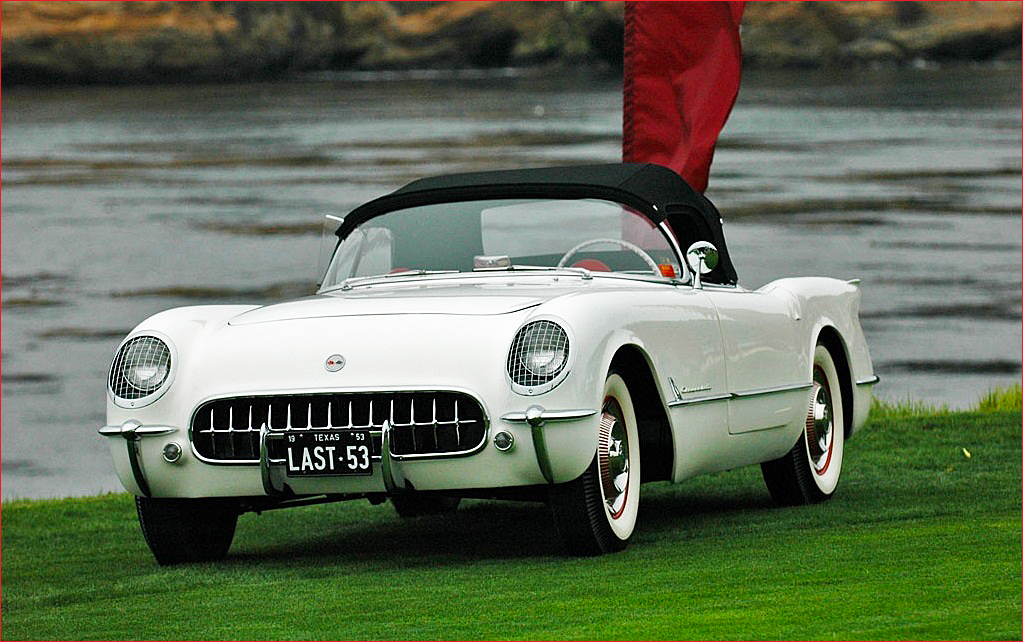
It’s 1953 and America is seven years into the post-war boom, and Chevrolet unveils what would be known as “America’s Sports Car” at the GM Motorama. Later that year production of the Corvette, named after the fast, maneuverable ships of WWII, would begin. GM management insisted that off-the-shelf components be used to keep costs down, so a 235 cubic inch inline-six cylinder engine was used that was a staple of other Chevrolets of the era. However, the Corvette engine was given a higher compression ratio, a higher-lift camshaft with mechanical lifters and three Carter side-draft carbs to boost the horsepower to 150 from 136 for the ordinary “Blue Flame” 235. No manual transmission in the Chevrolet inventory at the time could handle that much horsepower so a 2-speed Powerglide automatic was used. This combination propelled the Corvette from 0-60 in 11.5 seconds, rather lackluster even for the day.
Initially the 2-seat Corvette was to have a conventional steel body, but engineers at GM were captivated by the idea of a then-revolutionary fiberglass body, so they made it, and it was much lighter than a comparable steel body…perfect for a sports car.
The underwhelming performance and lack of a manual transmission or roll-up windows hampered early Corvette sales. Only 300 1953 models were produced. 3,640 1954 models were produced with many being unsold at the end of the model year, but 1955 saw sales drop to 800 and GM considered shelving the project. 3 things kept Corvette alive: the 1955 introduction of the 195 HP 265 cubic inch small-block V-8, the influence of Russian immigrant engineer Zora Arkus-Duntov on the project, and the appearance of Ford’s 2-seat Thunderbird in 1955. Arkus-Duntov was responsible for the introduction of the V-8 and 3-speed manual transmission into the project, and is known as the “father of the Corvette” even though he did not take part in the early engineering.
The 1955 Corvette with the V-8 turned the Corvette into a credible performer, with sales back up to 3,467.
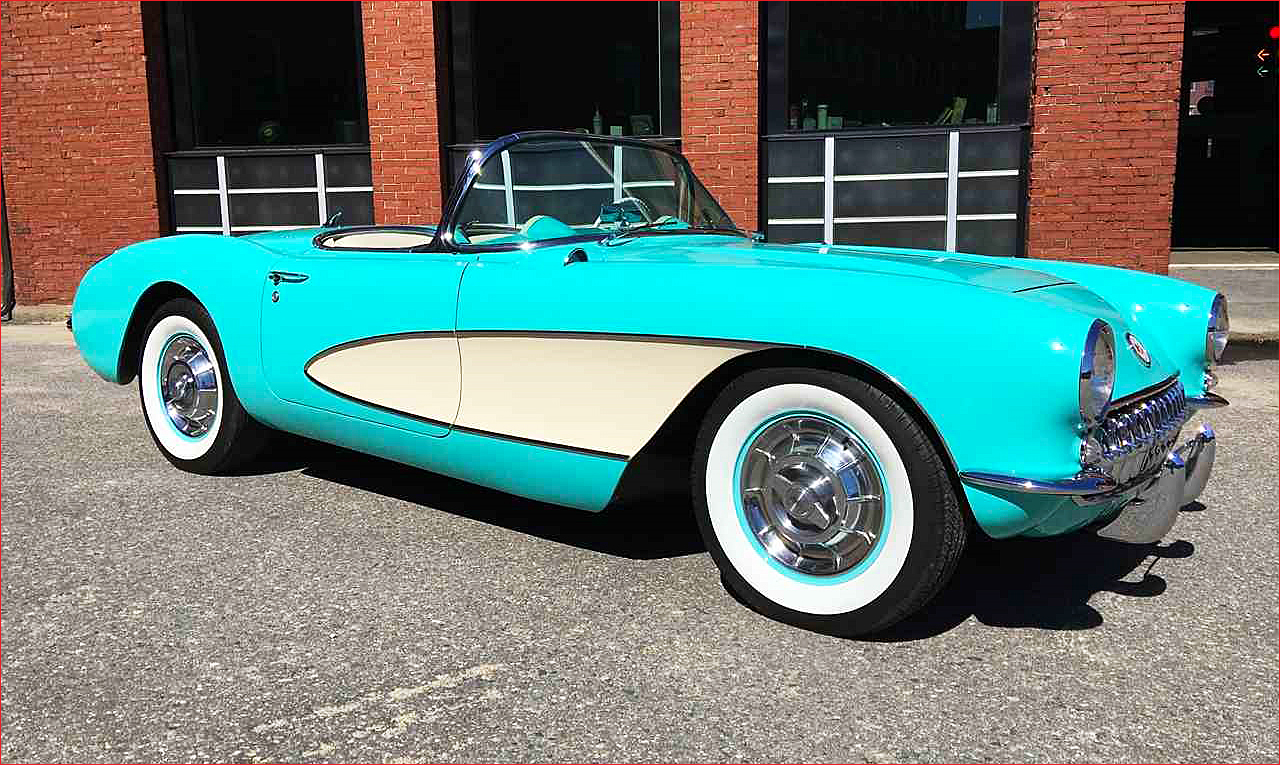
Corvette was restyled in 1956 with side scallops, often painted differently for the 2-tone effect popular in the mid-’50s, and actual roll-up windows. The 235 six-cylinder was dropped, leaving the 265 V-8 as the only engine with a choice of 210 HP or a 240 HP version with a high-performance camshaft. A power-assisted convertible top, removable hardtop and power windows were options.
Styling remained the same for 1957, but the mechanicals did not. The V-8 got a displacement bump to 283 cubic inches. A mechanical fuel injection system was an expensive option but gave the Corvette 290 HP, and a 4-speed manual transmission was optional.
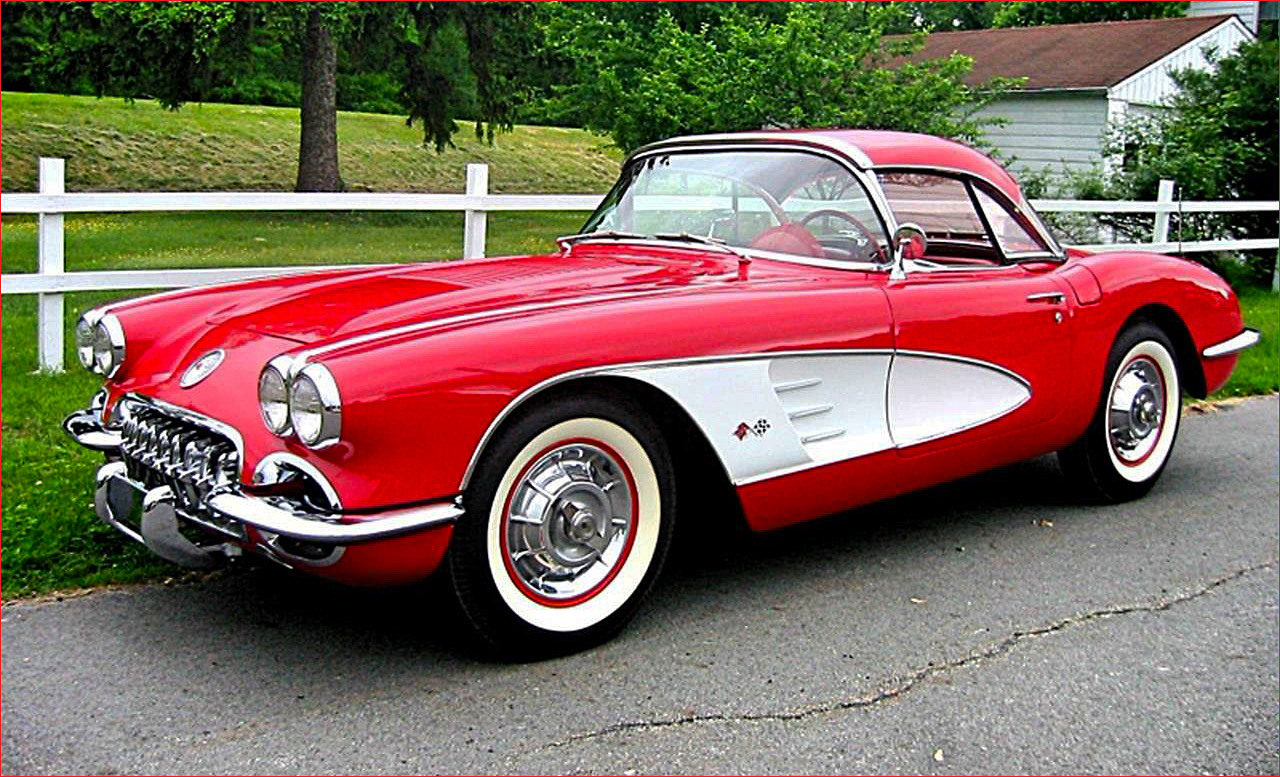
In 1958 Corvette adopted the four-headlight look popular at the time, and added more chrome trim bits including spears on the trunk. The hood now had faux louvers, but these were unique to the ’58. Interior and instruments were updated with a tachometer now in front of the driver. Factory-installed seatbelts appeared for the first time, previously these had been a dealer-installed option. Engine displacement remained the same but 2 carbureted and 2 fuel injected options were offered. The highest-HP carb model was 270, with the 290 HP fuelie being the most powerful.
Little changed for 1959 except a positive-lockout reverse shifter with a T-handle was offered in the 4-speed. Heavy-duty brakes and suspension, metallic brakes and 15-inch wheels were rare options.
In 1960 the tail lamps were molded into the rear fenders and the grill teeth were fewer and heavier. The 270 and 290 HP engines now featured aluminum radiators. The rarest Corvette color, Cascade Green, was unique to the 1960 model year.
1961 saw four taillights appear for the first time on the Corvette, a tradition that continues to this day. The 2 fuelie engines got power bumps to 275 and 315, and while the dual four-barrel models remained at the same output this was the last year for those. It was also the last year for factory contrasting paint colors in the cove scallops. A boat-tail rear design appeared for the first time, continuing into the C2 model.
In 1962 rocker-panel trim was seen for the first time, and it was the last year for an optional power convertible top, it became standard after this model year. Displacement again got a bump to the venerable 327 cubic inch V-8, giving 250, 300 and 340 HP in carbureted form and 360 HP with fuel injection.
C2 -1963-1967 – Sting Ray!
The new Sting Ray body style was a radical shift from the C1, sleeker and more aerodynamic with hidden pop-up headlights and a new fastback boat-tail design.
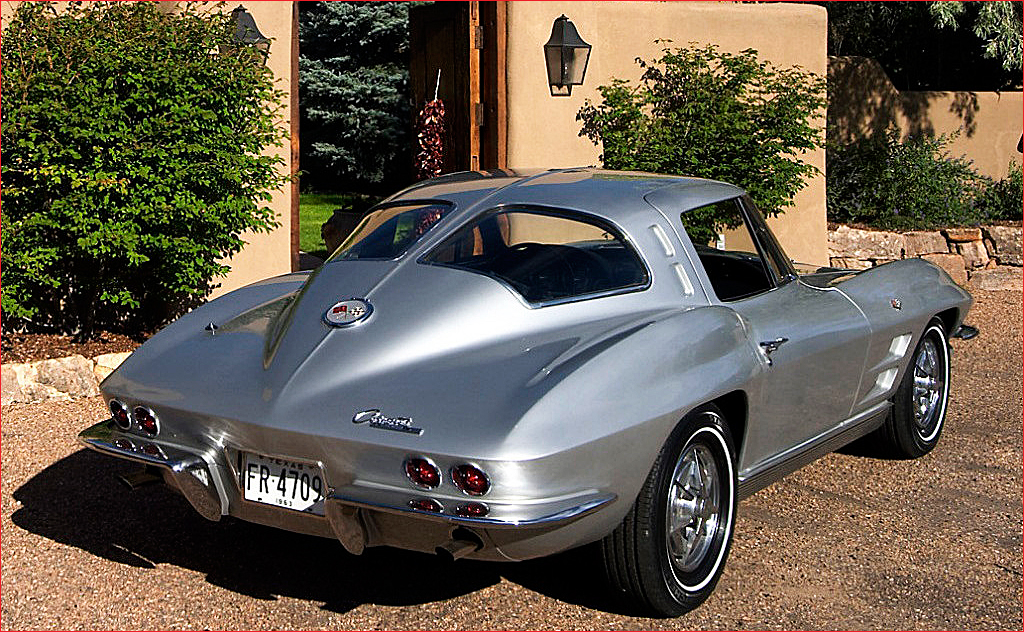
The 1963 model with its unique split rear window is instantly recognizable. This feature is attributed to Bill Mitchell, creator of the racing Sting Ray upon which the C2 is based. As stunning as the design was, this limited rearward visibility and was dropped after the 1963 model year.
The C2 had nearly twice the steel support in its central structure, yet was lighter than the C1 roadster. The doors were cut into the roof of the coupe, easing entry and exit in this low-slung car. Production numbers for the coupe and convertible were nearly evenly divided. Braking and steering were also much improved from the C1, as was handling. A more efficient alternator now replaced the C1’s generator.
Power brakes, power steering and air conditioning were optional in the C2, although few cars were so equipped. Electronic ignition was also optional for the first time as were cast aluminum knock-off wheels.
The 1963 model kept the same 327 engines with the same HP output as the ’62, but a Borg-Warner 4-speed manual was now optional.
1964 saw the split-window replaced with a one-piece glass affair that retained the same profile. The non-functional hood air intakes were gone, but the indentations remained. The front coil springs were changed from constant-rate to variable-rate and rear leaf springs had altered thickness, producing a more comfortable ride without compromising handling.
The solid-lifter 327 gained a high-lift, long-duration camshaft and a four-barrel Holley carb for a HP increase to 365 and the fuelie got a 15-HP bump to 375.
In 1965 the styling cleaned up a bit, the simulated air intakes were gone from the hood, but three functional exhaust vents appeared in the front fenders. The big news, however, was the mid-year introduction of the big-block engine to the Corvette lineup, specifically the 396 cubic inch version that produced 425 HP. Unfortunately the coming of the carbureted 396 with its massive horsepower also meant the end of the small-block fuelies as that option was nearly twice as expensive. The L79 327/350 HP option also appeared in 1965 as well as four-wheel disc brakes.
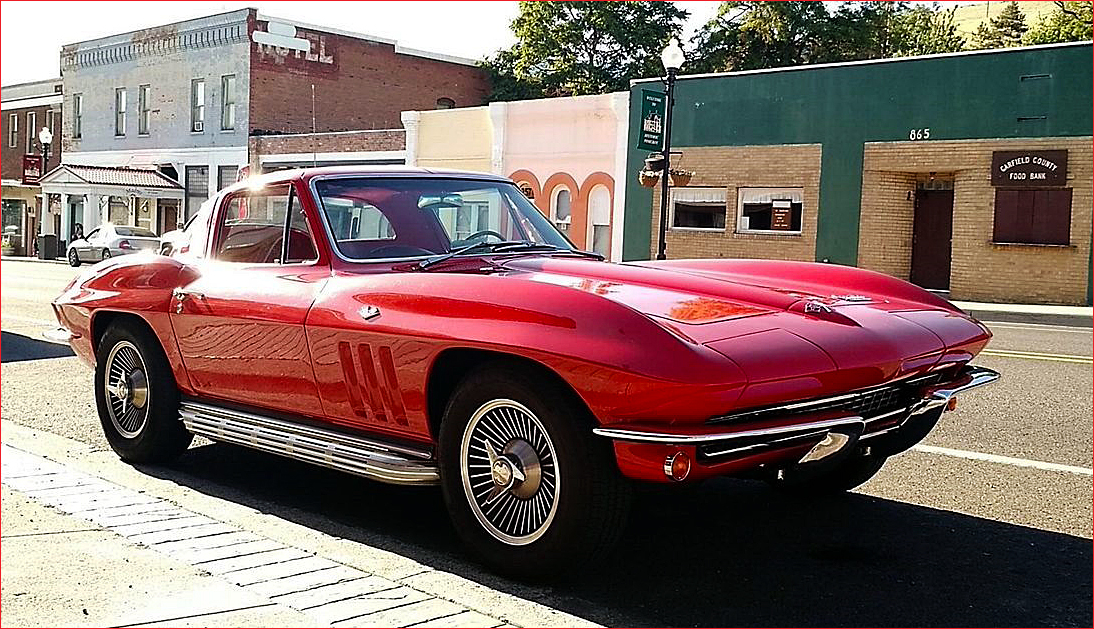
Two big-blocks were offered in ’66, the 425 HP 396 and a 425 HP 427. The difference was torque, with the 427 delivering a massive 460 ft. lbs. The HP number was likely understated, estimates are that the 427 actually packed an additional 25 ponies that Chevrolet were unwilling to admit.
An egg crate grill replaced the previous horizontal bars and the coupe lost the roof-mounted extractor vents which had proven inefficient. Headrests were an option this year as well.
The ’67 model was the last C2 and the last of the Sting Rays. Not much changed, the three fender vents became five smaller ones, and flat rocker panels without ribs created a lower appearance. The 427 now had an available Tri-Power option with 3 2-barrel Rochester carbs which gave it an additional 10 HP over the four-barrel version. The ’67 also got the L88 427 option. This was as close to a racing engine as was ever put in a Chevrolet: lightweight heads, bigger ports, a hotter camshaft, 12.5:1 compression ratio, aluminum radiator, small-diameter flywheel and a Holley 4-barrel carb combined to give the L88 an advertised 430 HP at 4600 RPM, but the actual number was about 560 HP at 6400 RPM, a monster number for a street car in 1967. The high-output engine required 103 octane fuel available only at select service stations. Sunoco was one such station, offering their Sunoco 260 103-octane fuel. Only 20 L88-equipped ’67 Corvettes were sold as they had mandatory options like Positraction rear ends, transistorized ignition systems, heavy-duty suspension, power brakes, and the deletion of the radio and heater system to save weight and discourage street use. All the options for the L88 package added up to $1,500, over a third of the base $4,240 Corvette.
This is my favorite Corvette generation, but it’s probably everybody’s favorite as well. If I had millions of dollars I would have a ’63 split-window, a ’64 fuelie AND a ’67 convertible with the L88 engine in my garage.
C3 – 1968-1982 – Mako Shark
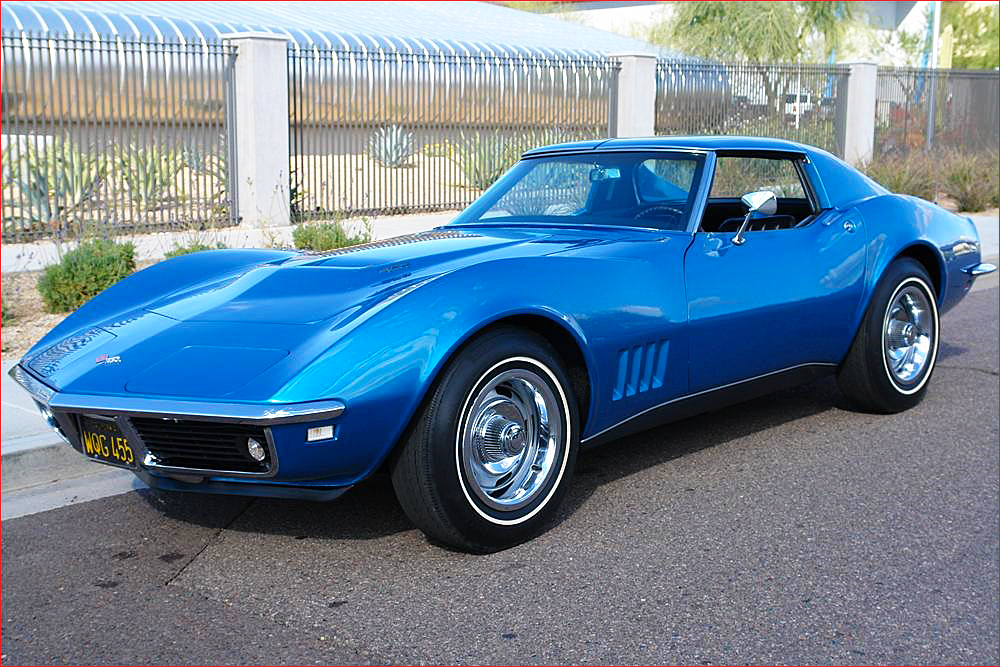
1968 saw the Corvette become much more muscular-looking as the fender bumps over the wheels grew taller and wider and the nose became more shovel-shaped. Four exhaust vents on the lower fenders that again resembled gills completed the “Mako Shark” look. The coupe model, instead of being a fastback as in the C2, became a “notchback” with a near-vertical, removable rear window. T-Tops were also optional beginning in ’68. The door handles were now located on the top of the doors, flush-mounted. The four pop-up headlights were vacuum-operated, replacing the electrically-operated C2 units and the windshield wipers were now hidden behind the hood.
Inside, auxiliary gauges monitoring oil pressure, coolant temperature, voltage, and fuel were mounted above the dashboard end of the console. The battery was relocated from under the hood to behind the seats to improve weight distribution.
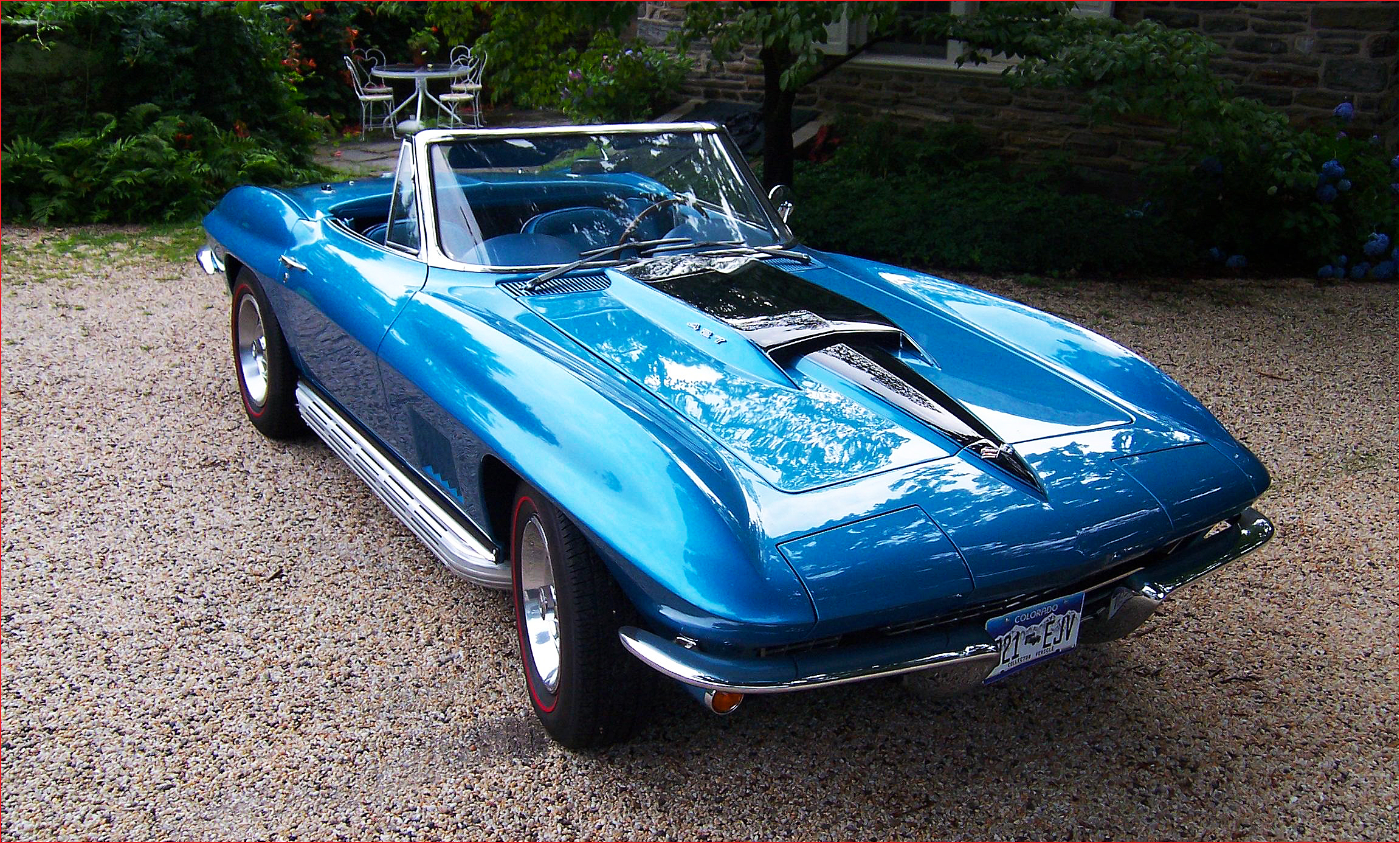
Underneath the chassis remained unchanged from the C2 and under the hood the engine options remained the same as ’67, including the mighty L88 option. The small-block cars had low-profile hoods and the big-block ones had domed hoods for clearance purposes with twin simulated vents and “427” emblems.
In October 1968, Car & Driver Magazine wrote of the new Corvette: “The small-engine Corvettes are marginally faster and extraordinarily civilized. The big-engine Corvettes are extraordinarily fast and marginally civilized.”
In 1969 the 327 was dropped as the base engine in favor of a 350 cubic inch small-block with the same 300 HP output. A 350 HP L46 350 was optional. All other engine options remained the same except for the addition of the ZL-1 all-aluminum 427, rated at 430 HP, the only year this was offered. This was also the last year for the mighty L88 427.
Even though this was the “Mako Shark” model, the Stingray name was back, except all one word as opposed to the 2-word C2 Sting Ray, and was featured in script badges on the front fenders above the “gills”.
Inside, headrests were standard, the ignition switch was moved from the dash to the steering column to comply with new Federal mandates and the steering wheel was reduced to 15 inches from 16 to ease entry and exit.

The 1970 models had fender flares designed into the body contours to reduce wheel-thrown debris damage. The grills were now egg crate with fender vents to match, replacing the four “gill” vents.
The L88 was no longer available but Chevrolet sort of made up for it by the addition of the LT-1, a 370 HP small-block 350 featuring solid lifters, a forged steel crankshaft, 4-bolt main, 11:1 compression ratio, impact-extruded pistons, high-lift camshaft, low-restriction exhaust, aluminum intake manifold, 4-barrel carb and finned rocker arm covers. The LT-1 could not be ordered with air conditioning. A domed hood with “LT-1” decals rounded out the package. A ZR-1 package was available with the LT-1 and added racing suspension, racing brakes, stabilizer bars and other high-performance components. Big-block offerings were down to one, and not a 427. The LS5 was a 390 HP, 454 cubic inch engine and accounted for 25% of 1970 Corvette sales.
1971 Corvettes were essentially the same in appearance as the 1970 models, however the engines were de-tuned and had reduced compression ratios to operate on the new Federally-mandated unleaded fuel without knocking. As a result the base small-block 350 dropped to 270 HP, while the LT-1 dropped 40 HP to 330 and the LS5 now produced only 365 HP, a 25 HP deficit from the previous year. Air conditioning was installed on most Corvettes now, which further hindered the performance. The only engine rated above 400 HP was the 425 HP LS6 454, offered for 1971 only.
1972 was the final year for chrome bumpers front and rear and the removable rear window. Corvette was now offered with a standard key-activated alarm system and most were sold with automatic transmissions. Horsepower numbers were now figured in SAE Net instead of Gross, taking into account headers and exhaust systems rather than measuring output at the flywheel. This partially accounts for the base 350 engine’s dismal 200 HP rating as well as the 255 HP number for the LT-1 in its final year. The LT-1 could now be ordered with air conditioning, which was prohibited for the 2 years prior. The LS5 454 had reduced numbers as well, producing a mere 270 HP. The 1972 Corvette could not be ordered with the LS5 option in California because of the state’s California Air Resources Board smog restrictions which were more stringent than the Federal regulations, a trend which continued for some time.
1973 started the trend of Corvette being more touring car than muscle car. Chevrolet’s advertising at the time stated “We gave it radials, a quieter ride, guard beams and a nose job.” Indeed, the Corvette was now 40% quieter due to the radial tires, new body mounts and increased sound dampening. The “nose job” Chevrolet referred to was the urethane cover to hide the Federally-mandated 5MPH bumper underneath, which added 35 lbs. to the front end.
Engine output was down again as well, 190 HP for the base 350 and 250 HP for the L82 350 that replaced the LT-1. The 454 offering (LS4) was actually up 5 HP for 1972 to 275.
1974’s horsepower ratings were up a bit as well, with the L48 350 up to 195 HP. The horsepower deficit was a bit misleading as the L48 equipped Corvettes could do 0-60MPH in 6.8 seconds, only 3/10ths of a second off of the 6.5 second 0-60 time of the 1968 300 HP small-block 327. Resonators were added to the dual-exhaust system to further quiet the interior. Sadly, the 1974 model would be the last with a true dual exhaust for quite some time, the last without a catalytic converter and the last with the 454 engine.
1975’s horsepower dropped even further, with the base 350 producing a mere 165 HP and the only option, the L82 350 only managing 205 HP. Even so, the Corvette was still one of the fastest cars of 1975 with a 7.7 second 0-60 time.
Corvette soldiered along with only 2 engine choices with similar horsepower numbers until 1982 when the L82 was dropped leaving only one engine, the base 350. The 1978 25th year anniversary model gained a new fastback rear window which gave the aging body style a fresh look. Silver Anniversary nose and fuel filler emblems graced all ’78s. A special Silver Anniversary edition had silver paint on the upper body and gray paint on the lower, the first 2-tone paint scheme since 1961. An Indianapolis Pace Car replica with a silver and black 2-tone paint job was also offered.
1982 saw the introduction of a throttle-body “Cross-Fire Injection” system onto the base 350 engine which gave a 10 HP boost over the 1981 190 HP base engine. This consisted of 2 computer-controlled throttle bodies and not the L-Jetronic manual fuel injection of the C1 and C2 era. This was mated to a new 4-speed automatic transmission that replaced the old 3-speed Turbo-Hydromatic unit. The 4-speed had lower first and second gears for improved acceleration and an overdrive fourth gear that lowered engine RPM by 30% at highway speeds for better fuel economy.
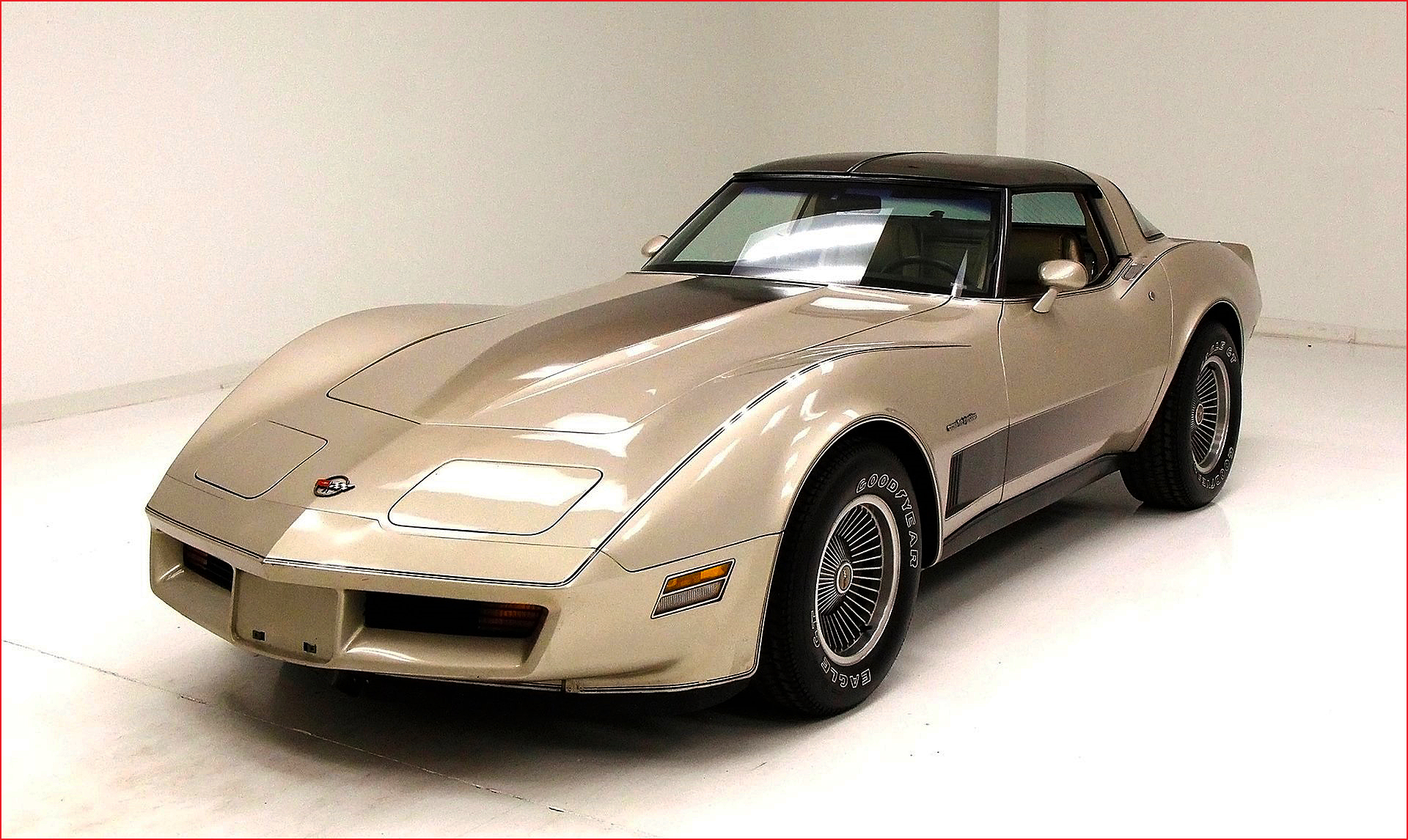
This being the last year of the “Mako Shark” body style, Chevrolet offered a Collector’s Edition with separate serial number sequencing, silver-beige paint, wheels patterned after the ’68 model and an operable hatchback rear window, foreshadowing the C4.
C4 – 1984 – 1996
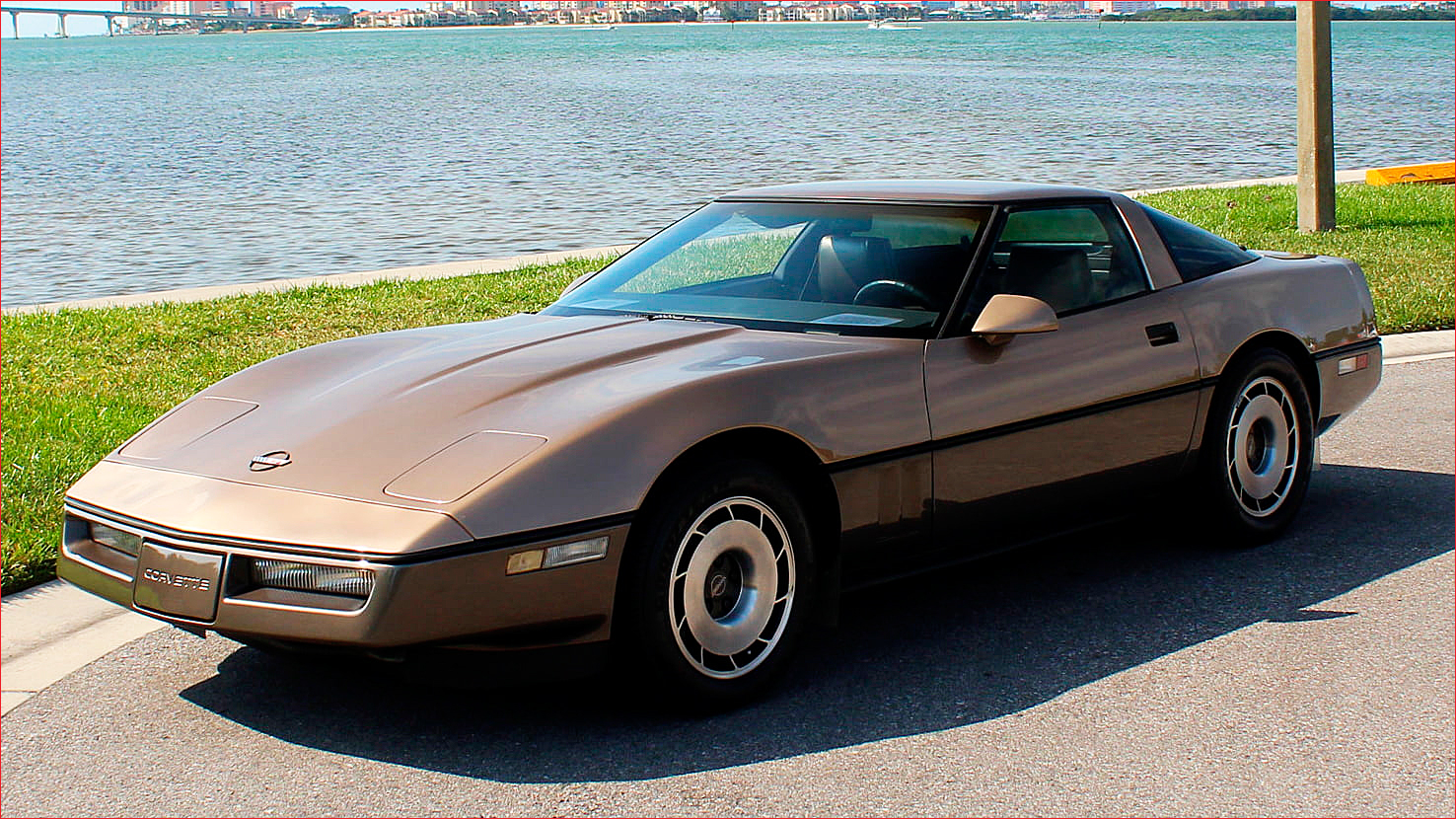
C4 production was slated to begin in 1983 but quality issues and parts delays resulted in the production of only 43 prototypes that were not sold to the public. All were destroyed with the exception of one white with blue interior model that resides in the Corvette Museum in Bowling Green, Kentucky, still owned by GM.
This was the first complete re-design of the Corvette since the ’63 model. An all-new chassis underpinned a sleeker, more ’80s body style that was noticeably less muscular and aggressive than the C2 or C3. This was not the traditional body-on-frame chassis, nor was it a unibody that used body panels as structural members, but what GM termed a “uniframe” with a traditional perimeter frame and the door posts, windshield frame, a U-shaped frame overhead behind the seats and the rear portion of the floor pan welded into one integrated unit. A glass hatchback that opened graced the rear as seen on the Collector Edition 1982 Corvette. The rear bumper assembly was now plastic instead of fiberglass. Front suspension was handled by a fiberglass transverse mono-leaf spring that was 1/3 the weight of the previous model’s coil springs and had an anti-roll bar effect as well.
Emissions regulations were still in a state of flux in the mid-’80s, performance suffered across the board…and Corvette was not immune. The 350 cubic inch L-98 engine was only good for 250 HP, and it stayed that way until 1992 when the 300 HP return of the LT1 arrived. In the C4’s final year 1996 the LT4 engine producing 330 HP was introduced, coupled with the 6-speed ZF manual transmission introduced in 1989. Through 1988 Corvette was fitted with a Doug Nash “4+3” transmission, a 4-speed manual coupled to automatic overdrive in the top 3 gears.
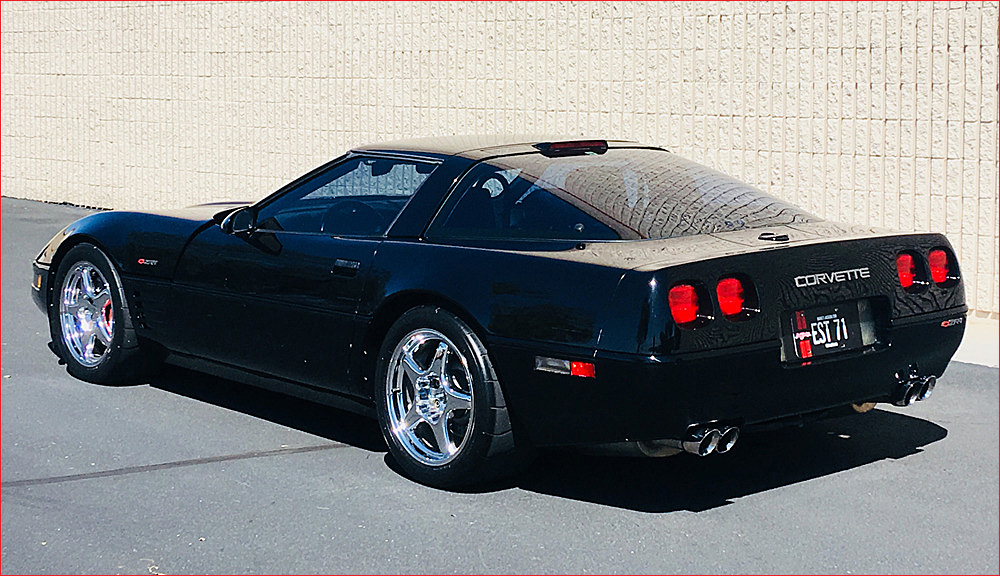
Starting in 1990 Corvette owners looking for performance could opt for the ZR-1 model, with its Lotus-designed (GM had acquired Lotus by that time) LT5 engine. The LT5 was an aluminum-block V8 with the same bore centers as the L98 but with four overhead camshafts and 32 valves. Four and six bolt cast-iron main bearing caps held the forged-steel crankshaft in place, while the four camshafts were driven by a roller chain that actuated hydraulic lifters that eliminate valve lash adjustment. Central spark plugs resided in the 4-valve heads and along with dished pistons gave an 11:1 compression ratio not seen since the heyday of the C3s’ LT1 engine. Lotus also designed a unique air-management system that shut off 8 of the 16 intake runners and fuel injectors at part-throttle while still producing 375 HP at full throttle. The engine required special assembly, which was done not by Chevrolet in their Bowling Green facility but by Stillwater, OK-based Mercury Marine due to their experience in working with aluminum engines.
Larger tires and bigger ventilated disc brakes were also fitted. The suspension was engineered by Bilstein with modifications from Lotus’ Formula One division and was similar to the one in the Porsche 959 supercar. The entire package enabled the ZR-1 to reach 60 MPH in 4.9 seconds with a top speed of 179 MPH as measured by Road & Track Magazine. The ZR-1 was available through 1995.
This is my least-favorite Corvette generation, at least from a styling standpoint. A friend once described it this way: “The C4 is Steve Rogers before the Super-Soldier serum, skinny and picked-on. The C3 is Captain America.”. Gone were the sexy curves of the Sting Ray or the broad-shouldered muscle look of the Mako Shark, replaced by a bland ’80s styling that really doesn’t appeal to me. I’m not alone in my view; check out prices for a C4 versus a C3. A C3…any C3, even the much-maligned, weak engined late ’70s/early ’80s models in good condition will out-price a C4 in the same condition…the exception being the C4 ZR-1 option. Those still go for north of 50K.
Stay tuned for next month’s FLAT OUT…when Corvette gets its groove back with rounder, more bold styling for the late ’90s and well into the new millennium, and later changes the game completely to keep up with the European supercars!
Got a Great Car Story? Share it! Reminisce About Your Other Favorite Cars, too!
Seeyas Again Next Time On FLAT OUT!
It’s Jeff Despicable Boofer


