


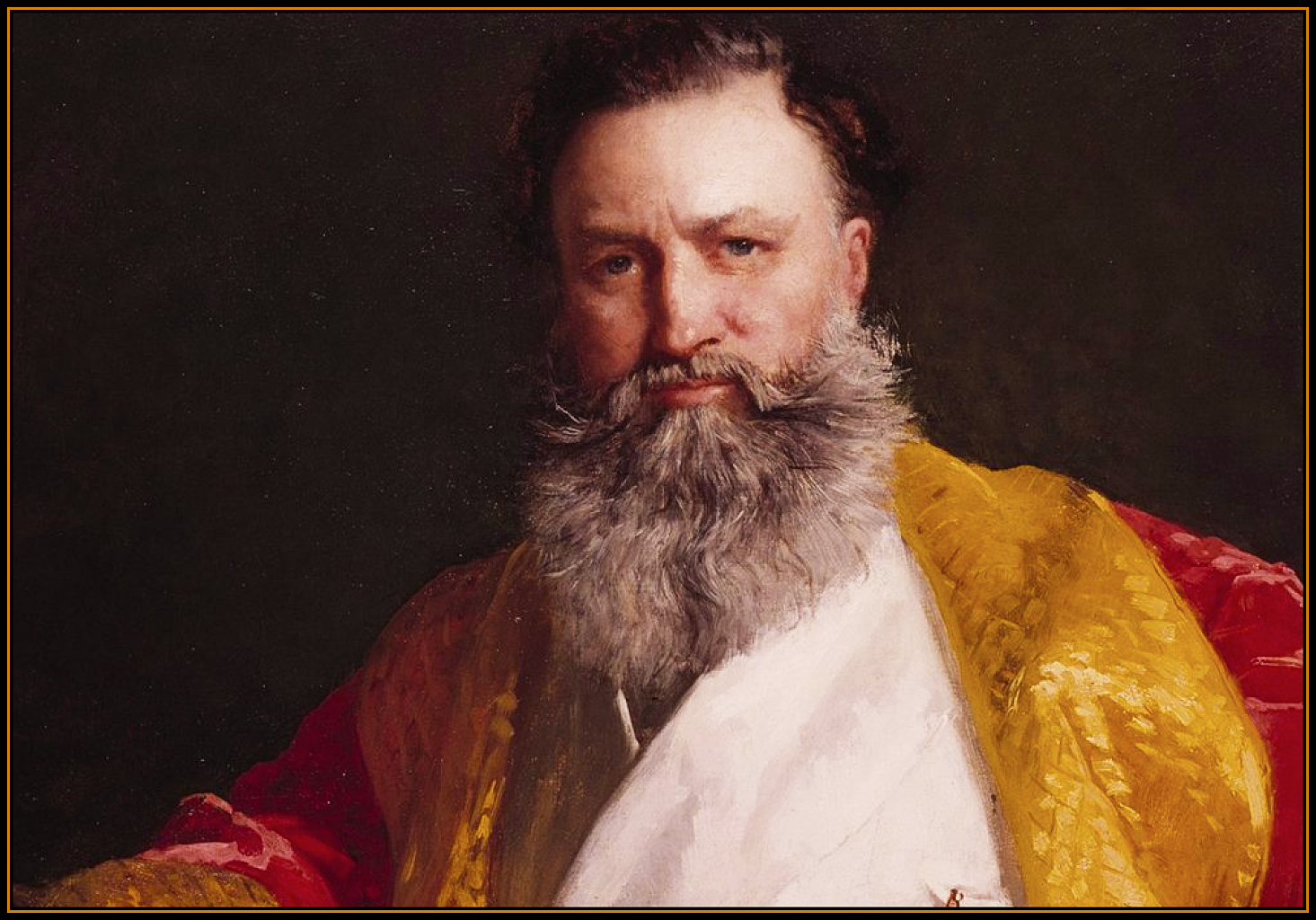

Isaac Merritt Singer: October 27, 1811–July 23, 1875
✪ Isaac Merritt Singer was an American inventor, actor and businessman. He made important improvements in the design of the sewing machine and was first to standardize the manufacturing process. He was the founder of what would became one of the first American multi-national businesses, the Singer Sewing Machine Company.
Many others, including Walter Hunt and Elias Howe, patented sewing machines before Singer; however, Singer’s success was based on the simplified functionality of his machine, the ease with which it could be adapted to home use and its availability on an installments payment basis which was an innovative development at the time.
\When Singer died in 1875, he left a $13 million fortune which was divided unequally among twenty of his living children by several wives and various mistresses.
Isaac Merritt Singer was born on October 27, 1811, in Pittstown, Schaghticoke, New York. He was the youngest of eight children born to a German father, Adam Singer (né Reisinger 1772–1855) and his American wife, Ruth (née Benson) Singer.
In 1821, Singer’s parents divorced and his mother abandoned Isaac. At twelve, he ran away from home to join a traveling stage act, called the Rochester Players, after finding bits of work as a joiner and lathe operator.
In 1830, at nineteen, Isaac Singer married fifteen-year-old Catherine Maria Haley (1815–1884). The couple had two children before he left her to join the Baltimore Strolling Players. In 1860, Singer divorced Catherine.
In 1836, while still married to Catherine, Singer began a 25-year affair with Mary Ann Sponsler (1817–1896). Together, Mary Ann and Isaac had ten children, two of whom died at birth.
By 1860, Isaac had fathered and acknowledged twenty children, sixteen of them still then living, by four women.
In 1839, Singer obtained his first patent, for a machine to drill rock, selling it for $2,000 (or over $150,000 in 2024 dollars) to the I & M Canal Building Company. With this financial success, he opted to return to his career as an actor. He went on tour, forming a troupe known as the “Merritt Players,” appearing onstage under the name “Isaac Merritt,” with Mary Ann Sponsler (one of his mistresses) also appearing onstage, calling herself “Mrs. Merritt.” The tour lasted five years.
On April 10, 1849, Singer patented a “machine for carving wood and metal.”
At 38, with Mary Ann and eight children, Issac packed up his family and moved to New York City, hoping to market his wood-block cutting machine. He obtained an advance to build a working prototype, and constructed one in the A. B. Taylor & Co shop, where he met G. B. Zieber, who became Singer’s financier and partner. However, not long after the machine was built, the steam boiler blew up at the shop, destroying the prototype. Zieber persuaded Singer to make a new start in Boston, a center of the printing trade. Singer went to Boston in 1850 to display his invention at the machine shop of Orson C. Phelps. However, orders for Singer’s wood cutting machine were not forthcoming.
Around this time, Lerow & Blodgett sewing machines were being constructed and repaired in Phelps’ shop. Phelps asked Singer to look at his sewing machines, which were overly complex to use and difficult to produce. Singer concluded that the sewing machine would be more reliable if the shuttle moved in a straight line rather than a circle, with a straight rather than a curved needle. Singer was able to obtain US Patent number 8294 for these improvements on August 12, 1851.
In 1856, manufacturers Grover & Baker, Singer, Wheeler & Wilson, all accusing each other of patent infringement, met in Albany, New York to pursue their suits. Orlando B. Potter, a lawyer and president of the Grover and Baker Company proposed rather than squander their profits on litigation, they should instead pool their patents. This was the first official patent pool, a process which enables the production of complicated machines by different manufacturer’s without legal battles over patent rights. They agreed to form the Sewing Machine Combination, but for this to be of any use, they had to secure the cooperation of Elias Howe, who still held certain vital uncontested patents. Terms were arranged and Howe received a royalty on every sewing machine manufactured.
Shortly after the patent pooling agreement, Singer began to mass produce sewing machines. In 1856, the IM Singer & Company manufactured 2,564 machines. In 1860, a new plant on Mott Street in New York manufactured 13,000 machines. Later, another massive manufacturing facility was built near Elizabeth, New Jersey.
Until this time, sewing machines had been strictly industrial machines, made for garments, shoes, bridles and for tailors. However in 1856, smaller machines began to be marketed for personal home use at the then enormous price of over $100 ($3,391 in 2023 dollars). Very few were sold at this price point. Singer invested heavily in mass production utilizing the concept of interchangeable parts developed by Samuel Colt and Eli Whitney for their firearms. He was successful cutting the consumer price in half, while at the same time increasing his profit margin by 530%. Singer was the first to put a family machine, “the turtle back,” on the market. Eventually, he was able to lower the price down to $10 ($339 in 2023 dollars). According to historians, “Singer’s partner, Edward Cabot Clark, pioneered installment purchasing plans and accepted trade-ins, causing sales to soar.”
With a Singer machine, women were finally able to make items in their homes for family or for sale. Charitable groups began to support poorer women to help them find useful skills and respectable employment in the expanding sewing & garment field. Organizations such as The Ladies Work Society (1875), The Association for the Sale of Works of Ladies of Limited Means, The Co-operative Needlewoman’s Society sprang up overnight. An affordable, personal Singer machine also sparked the creation of a cottage industry of associated skill magazines, pattern books and group classes to support women who also wanted to participate in some form of useful, economic activity, which the home sewing machine made possible.
IM Singer next expanded his business into the European market, first starting in Bonnybridge, Stirlingshire, next to the iron foundries that supplied the castings for the chassis until their expansion was hindered by the expansion of the foundries around them and they then moved to Clydebank, establishing the world’s largest sewing machine factory, built between 1882 and 1885, by George McKenzie in Kilbowie, Clydebank, near Glasgow. The Clydebank plant consisted of two main manufacturing buildings on three levels (one building for making the domestic machines, the other for industrial model production), with a 200 ft (over 60meters) high tower with the ‘Singer’ name logo and four clock faces which was the largest four-sided clock tower at the time. Singer originally opened the factory at Clydebank with 3,500 people and manufactured 8,000 sewing machines a week. The factory was linked directly to railway lines via stations in Dumbarton and Helensburgh to assist in distribution. Later improvements included a two more levels for the production blocks and integrated power stations and sawmills.
The factory later supplied military and home sewers, and made munitions during World War II. In 1941, the factory and area was severely damaged (losing 390,000 sq ft ) in the ‘Clydebank Blitz’ when at least 35,000 homes were damaged and 500 people, including 39 Singer workers were killed.
Even as early as 1880, Singer machines compared favorably with their nearest competitors as information articles becoming their primary marketing tool. By the 1900s, the Clydebank factory, controlled by the parent company, was making an average 1.5million machines sold around the world; helping the Singer company in becoming one of the first American-based multinational corporations, with agencies and offices in Paris and Rio de Janeiro.
Later as The Singer Manufacturing Company and its competitors expanded, due to its affordability (or purchase plan terms) by the 1940s there were 24,000 sewing classes a year running in the UK alone, and the 1944 Education Act made practical dressmaking a compulsory subject for girls in all state schools. By the 1950s, there were Singer Teen-Age Sewing Classes and advertising campaigns to encourage girls to make their own fashions.
In 1863, IM Singer & Co. was dissolved by mutual consent with Edward Cabot Clark seeing Singer’s reputation as a risk to growth; but the business continued with Singer owning 40% of shares and still sitting on the board, as “The Singer Manufacturing Company,” in 1887.
Singer’s prototype sewing machine became the first to work in a practical way. It could sew 900 stitches per minute, far better than the 40 of an accomplished seamstress on simple work. This started the industrialization of garment and textile manufacturing, as a shirt took an hour to make compared to fifteen hours previously.
In 1911, most of the mainly female workforce at the Clydebank Singer factory went on strike in support of 12 workers who had objected to increased workloads and lower pay conditions imposed (by this time there were 11,500 employees). Although the strike did not succeed, Singer fired 400 workers including all the union leaders.
In the 1960s, Japanese production efficiency brought aluminium body machines and products at lower pricing which outsold the cast iron Singer machines.
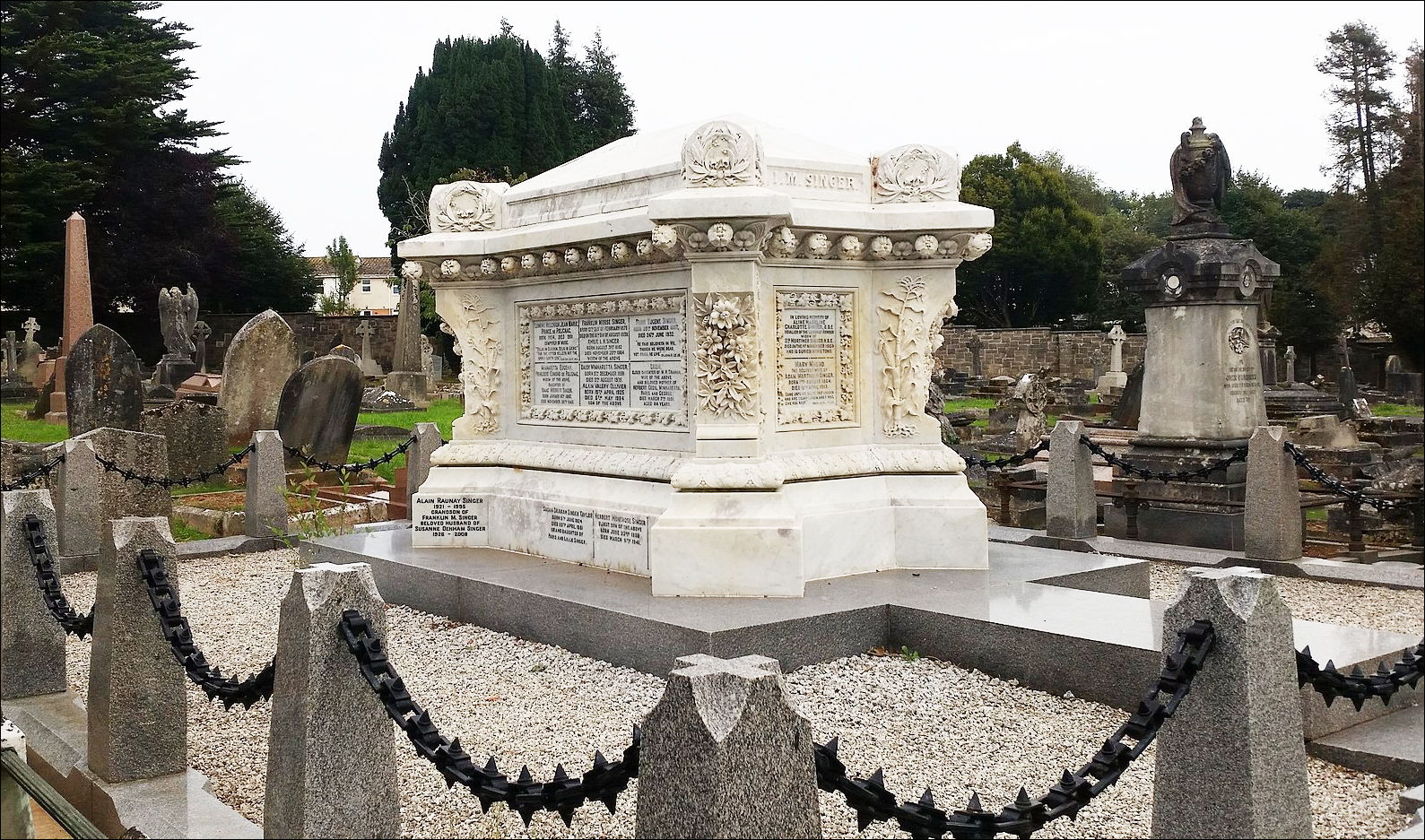
Isaac Singer died in 1875, shortly after the wedding of his daughter by Mary Eastwood Walters, Alice, whose dress had cost as much as a London apartment. His funeral was an elaborate affair with eighty horse-drawn carriages, and around 2,000 mourners, to see him buried locally in Torquay Cemetery. At his request, he was buried in three layers of coffin (cedar lined with satin, lead, English oak with silver decoration) and a marble tomb. ✪




















▶️ CLICK HERE TO VIEW


▶️ CLICK HERE TO VIEW
▶️ 1 Hour 41 Minutes 39 Seconds
▶️ 1 Hour 32 Minutes 45 Seconds
▶️ 22 Minutes 48 Seconds
▶️ 5 Minutes 7 Seconds
▶️ 11 Minutes 16 Seconds
▶️ 2 Minutes 32 Seconds
▶️ 22 Minutes 20 Seconds
▶️ 16 Minutes 19 Seconds
▶️ 26 Minutes 18 Seconds
▶️ 12 Minutes 41 Seconds
▶️ 39 Seconds
▶️ 1 Minute 42 Seconds
▶️ 3 Minutes 21 Seconds
