


Guglielmo Giovanni Maria Marconi (April 25, 1874 July 20, 1937)
✪ Guglielmo Giovanni Maria Marconi, 1st Marquess of Marconi was an Italian electrical engineer, inventor and politician known for his creation of a practical radio wave-based wireless telegraph system. This led to Marconi being largely credited as the inventor of radio and sharing the 1909 Nobel Prize in Physics with Ferdinand Braun “in recognition of their contributions to the development of wireless telegraphy.” His work laid the foundation for the development of radio, television, and all modern wireless communication systems.
Marconi was also an entrepreneur and businessman who founded the Wireless Telegraph & Signal Company (which became the Marconi Company) in the United Kingdom in 1897. In 1929, Marconi was ennobled as a marquess (Italian: marchese) by Victor Emmanuel III. In 1931, he set up Vatican Radio for Pope Pius XI.
Guglielmo Giovanni Maria Marconi was born on 25 April 1874 at Palazzo Marescalchi in Bologna, Italy, the son of Giuseppe Marconi, an Italian aristocratic landowner and his Irish wife Annie Jameson, granddaughter of John Jameson, the founder of Jameson Irish Whiskey.
Alfonso, Marconi’s older brother, was born in 1865. Between the ages of two and six, Marconi and Alfonso lived with their mother in the English town of Bedford. Having an Irish mother helped explain Marconi’s many activities in Great Britain and Ireland. When Guglielmo was three years old, on 4 May 1877, Giuseppe Marconi decided to obtain British citizenship. Marconi could have thus also opted for British citizenship anytime, as both his parents had British citizenship.
Marconi did not attend school as a child and did not go on to formal higher education. Instead, he learned chemistry, mathematics, and physics at home from a series of private tutors hired by his parents.
From youth, Marconi was interested in science and electricity. In the early 1890s, he began working on the idea of “wireless telegraphy” – i.e., the transmission of telegraph messages without connecting wires as used by the electric telegraph. This was not a new idea; numerous investigators and inventors had been exploring wireless telegraph technologies and even building systems using electric conduction, electromagnetic induction and optical (light) signalling for over 50 years, but none had proved technically and commercially successful.
There was a great deal of interest in radio waves in the physics community, but this interest was in the scientific phenomenon, not in its potential as a communication method. Physicists generally looked on radio waves as an invisible form of light that could only travel along a line of sight path, limiting its range to the visual horizon like existing forms of visual signalling.
At the age of 20, Marconi began to conduct experiments in radio waves, building much of his own equipment in the attic of his home at the Villa Griffone in Pontecchio (now an administrative subdivision of Sasso Marconi), Italy, with the help of his butler, Mignani. In the summer of 1894, he built a storm alarm made up of a battery, a coherer, and an electric bell, which went off when it picked up the radio waves generated by lightning.
Late one night, in December 1894, Marconi demonstrated a radio transmitter and receiver to his mother; a set-up that made a bell ring on the other side of the room by pushing a telegraphic button on a bench.
He eventually developed devices, such as portable transmitters and receiver systems, that could work over long distances, turning what was essentially a laboratory experiment into a useful communication system. In the summer of 1895, Marconi moved his experiments outdoors on his father’s estate in Bologna. He tried different arrangements and shapes of antenna but even with improvements he was able to transmit signals only up to half a mile.
A breakthrough came in the summer of 1895, when Marconi found that a much greater range could be achieved after he raised the height of his antenna; and, borrowing from a technique used in wired telegraphy, grounded his transmitter and receiver. With these improvements, the transmission range of the system was exteneded up to 2 miles and over hills.
At this point, he concluded a device could be capable of spanning greater distances, with additional funding and research, and would prove valuable both commercially and militarily. Marconi’s experimental apparatus proved to be the first engineering-complete, commercially successful radio transmission system.
In 1896, Marconi spoke with his family friend Carlo Gardini, Honorary Consul at the United States Consulate in Bologna, about leaving Italy to go to Great Britain. Gardini wrote a letter of introduction to the Ambassador of Italy in London, Annibale Ferrero, explaining who Marconi was and about his extraordinary discoveries. In his response, Ambassador Ferrero advised them not to reveal Marconi’s results until after a patent was obtained. He also encouraged Marconi to come to Britain, where he believed it would be easier to find the necessary funds to further develop his experiments into practical use.
Marconi travelled to London in early 1896 at the age of 21, accompanied by his mother, to seek support for his work. (He spoke fluent English in addition to Italian.) When Marconi arrived at Dover, the Customs officer opened his case to find various apparatuses. The customs officer immediately contacted the Admiralty in London. With worries in the UK about Italian anarchists and suspicion Marconi was importing a bomb, his equipment was destroyed.
Marconi formally applied for a patent on 2 June 1896. British Patent number 12039 titled “Improvements in Transmitting Electrical impulses and Signals, and in Apparatus therefor,” which became the first patent ever for a communication system based on radio waves.
Marconi made the first demonstration of his system for the British government in July 1896. A further series of demonstrations for the British followed; and by March 1897, Marconi succeeded in transmitting Morse code signals over a distance of about 3 miles across Salisbury Plain.
On 13 May 1897, Marconi sent the first ever wireless communication over the open sea – a message was transmitted over the Bristol Channel from Flat Holm Island to Lavernock Point near Cardiff, a distance of 3 miles. The message read “Are you ready?”
▶️ 16 Minutes 57 Seconds
Numerous additional demonstrations followed, and Marconi began to receive international attention. A transmission across the English Channel was accomplished on 27 March 1899, from Wimereux, France to South Foreland Lighthouse, England.
In December 1898, the British lightship service authorized the establishment of wireless communication between the South Foreland lighthouse at Dover and the East Goodwin lightship, twelve miles distant. On 17 March 1899, the East Goodwin lightship sent the first wireless distress signal, a signal on behalf of the merchant vessel Elbe which had run aground on Goodwin Sands.
In 1899, Marconi sailed to the United States at the invitation of The New York Herald newspaper to cover that year’s America’s Cup international yacht races off Sandy Hook, New Jersey.
Marconi left for England on 8 November 1899 on the American Line’s SS Saint Paul, and he and his assistants installed wireless equipment aboard the ship during the voyage. On 15 November the SS Saint Paul became the first ocean liner to report her imminent return to Great Britain by wireless when Marconi’s Royal Needles Hotel radio station contacted her 66 nautical miles off the English coast.
At the turn of the 20th century, Marconi began investigating a means to signal across the Atlantic to compete with the transatlantic telegraph cables. On 17 December 1902, a transmission from the Marconi station in Glace Bay, Nova Scotia, Canada, became the world’s first radio message to cross the Atlantic from North America. In 1901, Marconi built a station near South Wellfleet, Massachusetts, that sent a message of greetings on 18 January 1903 from United States President Theodore Roosevelt to King Edward VII of the United Kingdom. However, consistent transatlantic signaling remained difficult to establish.
The role played by Marconi Co. wireless in maritime rescues raised public awareness of the value of radio and brought fame to Marconi, particularly the sinking of RMS Titanic on 15 April 1912 and the RMS Lusitania on 7 May 1915.
RMS Titanic radio operators Jack Phillips and Harold Bride were not employed by the White Star Line but instead by the Marconi International Marine Communication Company. After the sinking of the ocean liner, survivors were rescued by the RMS Carpathia of the Cunard Line. Carpathia took a total of 17 minutes to both receive and decode the SOS signal sent by Titanic. There was a distance of 58 miles between the two ships. When Carpathia docked in New York, Marconi went aboard with a reporter from The New York Times to talk with Bride, the surviving operator. After this incident, Marconi gained popularity and was more recognized for his contributions to the field of radio and wireless technology.
Britain’s Postmaster-General summed up, referring to the Titanic disaster: “Those who have been saved, have been saved through one man, Mr. Marconi … and his marvellous invention.” Marconi was offered free passage on Titanic before she sank, but had instead decided to take the Lusitania three days earlier.
In 1920, the New Street Works factory in Chelmsford became the transmitting location for the first entertainment radio broadcasts in the United Kingdom; employing a vacuum tube transmitter and featuring Dame Nellie Melba. In 1922, regular entertainment broadcasts commenced from the Marconi Research Centre at Great Baddow, forming the prelude to the BBC. In 1924, the Marconi Company also co-established the Unione Radiofonica Italiana (now known as RAI).
In 1914, Marconi was made a Senator in the Senate of the Kingdom of Italy and appointed Honorary Knight Grand Cross of the Royal Victorian Order in the UK. During World War I, Italy joined the Allied side of the conflict, and Marconi was placed in charge of the Italian military’s radio service. He attained the rank of lieutenant in the Italian Royal Army and of commander in the Regia Marina. In 1929, he was made a marquess by King Victor Emmanuel III.
Marconi joined the National Fascist Party in 1923. In 1930, Italian dictator Benito Mussolini appointed him President of the Royal Academy of Italy, which made Marconi a member of the Fascist Grand Council.
In 1931, Marconi personally introduced the first radio broadcast of a Pope, Pius XI, and announced at the microphone: “With the help of God, who places so many mysterious forces of nature at man’s disposal, I have been able to prepare this instrument which will give to the faithful of the entire world the joy of listening to the voice of the Holy Father.”
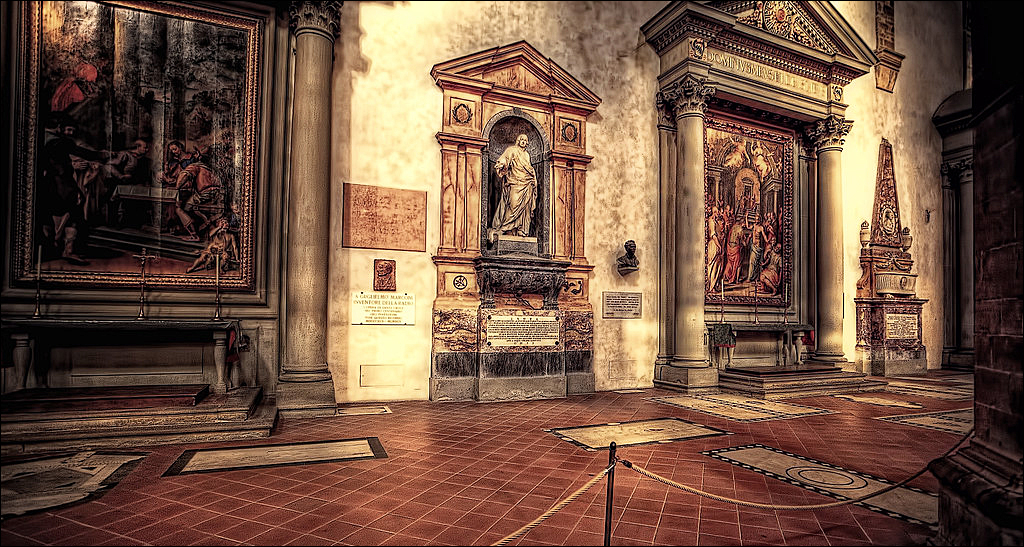
While working on projects to develop microwave technology, the Marconi suffered a series of nine heart attacks in the span of three years preceding his death. Marconi died in Rome on 20 July 1937 at age 63 following the ninth & fatal heart attack. Italy held a state funeral for him. His remains are now interred in the Mausoleum of Guglielmo Marconi in the grounds of Villa Griffone at Sasso Marconi, Emilia-Romagna, which assumed that name in his honour in 1938. ✪


















▶️ DONATE VIA PAYPAL (DEBIT & CREDIT CARD)
ALL PayPal Transactions Are Encrypted For Card Holder Privacy & Security
▶️ DONATE VIA ZELLE (DIRECT BANK CASH TRANSFER)
ZELLE is the perfect online alternative to PayPal. It’s an incredibly simple, secure, easy, fast and FREE way to send or receive money to recipients directly from your online banking account without a middleman. Best of all, there’s NO fees.
ZELLE is a service provided by your bank and is already built in to your online banking account. You only need to activate it first before using. If you’ve already activated ZELLE in your online bank or credit union account, you can donate to The New Americanist by using our ZELLE address:
vip@thenewamericanist.com
To activate your ZELLE, follow these easy instructions (a simple two minute process):

▶️ DONATE VIA SNAIL MAIL