
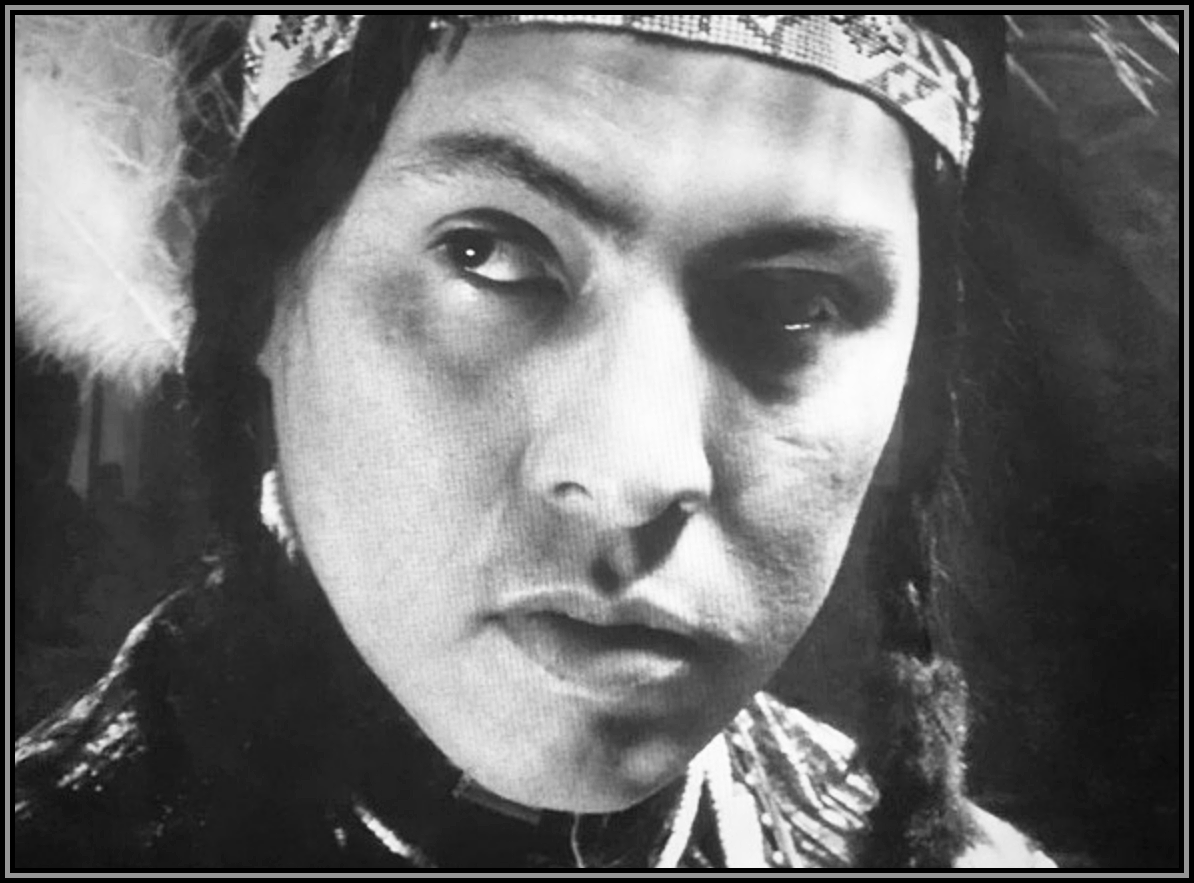

Joseph Medicine Crow: October 27, 1913–April 3, 2016
✪ Joseph Medicine Crow was a Native American writer, historian, scholar, soldier and war chief of the Crow Tribe. His writings on Native American history and reservation culture are considered seminal works, but he is best known for his writings and lectures concerning the Battle of the Little Bighorn of 1876. Medicine Crow was the last living recipient of the oral tradition concerning eyewitness accounts of the Battle Of the Little Big Horn handed down to him by his step grandfather White Man Runs Him who was actually present & participated in the battle as a scout for General George Armstrong Custer.
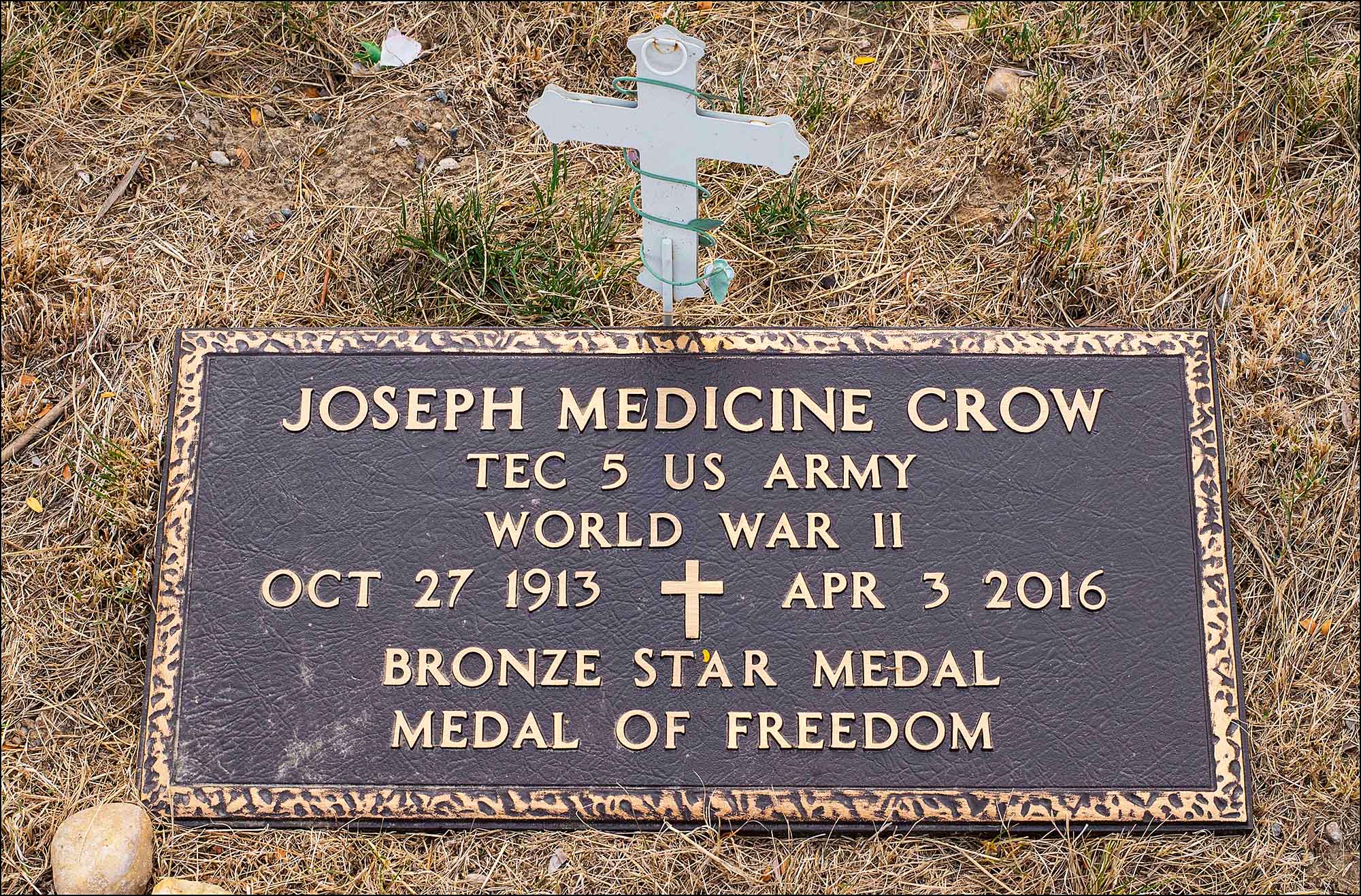
Medicine Crow was also a highly decorated World War II veteran, serving as a scout in the 103rd Infantry Division of the U.S. Army. He received the Bronze Star Medal and the Légion d’honneur for his service during World War II. In 2009, he was awarded the Presidential Medal of Freedom.
Medicine Crow was a founding member of the Traditional Circle of Indian Elders and Youth. He was the last of the Crow Tribe warrior chief lineage and the last Plains Indian war chief.
Joseph Medicine Crow (his Crow name meant High Bird) was born in 1913 on the Crow Indian Reservation near Lodge Grass, Montana, to Amy Yellowtail and Leo Medicine Crow. As the Crow kinship system was matrilineal, he was considered born for his mother’s people; and gained his social status from her family line. in the Crow Tribe, property and hereditary positions were passed through the maternal line. Chief Medicine Crow, Leo’s father, was a highly distinguished and honored chief in his own right, who at the age of 22 became a war chief. He set a standard for aspiring warriors and was his son’s mentor.
Throughout his youth, Medicine Crow was raised in the warrior tradition of the Crow tribe. Ironically, during the Plains War, the Crow Nation sided with the US, most likely because they felt it would aid them in their battles against their traditional enemies the Lakotas, Sioux and Cheyenne tribes. It was his paternal grandfather, the great Medicine Crow (now considered the greatest of all the Plains warrior chiefs) who became Joseph’s mentor training him all the ways of becoming a warrior chief.
Beginning in 1929, when he was in eighth grade, Medicine Crow attended Bacone College in Muskogee, Oklahoma, which also had preparatory classes for students of high school age. There, he studied until he completed an Associate of Arts degree in 1936. He went on to study sociology and psychology for his bachelor’s degree from Linfield College in 1938. In 1939, he earned a master’s degree in anthropology from the University of Southern California in Los Angeles. He was the first member of the Crow tribe to obtain a master’s degree. His thesis, The Effects of European Culture Contact upon the Economic, Social, and Religious Life of the Crow Indians, has become a well-respected work regarding Crow culture and history. He began work toward a doctorate, and by 1941 had completed the required coursework. However, he did not complete his Ph.D., due to the United States’ entry into World War II.
Medicine Crow taught at Chemawa Indian School for a year in 1941, then took a defense industry job in the shipyards of Bremerton, Washington in 1942.
After spending the latter half of 1942 working in the naval ship yards, Medicine Crow joined the U.S. Army in 1943. He became a scout in the 103rd Infantry Division. Whenever he went into battle, he wore his war paint (two red stripes on his arms) beneath his uniform and a sacred yellow painted eagle feather, provided by a “sundance” medicine man, beneath his helmet.
Medicine Crow was taught in order to become a warrior chief, one must accomplish four deeds: 1. Physically touch an enemy without killing them. 2. Take an enemy’s weapon 3. Lead a victorious war party. 4. Steal an enemy’s horse. In a village on the Siegfried line, also known as the “Westwall,” Medicine Crow began climbing the ladder of his warrior success when he led a squad carrying explosive into action against German encampments During that mission, on entering the village, Joseph literally ran into a German soldier, bumping heads with him. Using his rifle, he knocked the other soldier’s weapon out of his hands. Instead of shooting him, filled with adrenaline, he threw his rifle down and began fisticuffs and wrestling with the German. At one point, the German had him pinned to the ground but Joseph was able to flip him over and began strangling him, until…hearing the words, “Momma! Momma!” coming from the German’s mouth. He then relented and allowed the German to escape. Later Medicine Crow rejoined his company and eventually captured the village. By leading his squad in a victorious war party, taking the soldier’s weapon and physically touching him, Joseph had already accomplished three of the four rites to become a warrior chief.
All that remained was for him to steal a horse, but in the age of modern warfare, what were the odds of that opportunity? While leading a scouting party he spied a group of German soldiers on horse back. He left his squad and followed them to a farmhouse they had taken over, where he discovered some fifty horses pastured in a nearby field. On returning to his company, they surrounded the farm house with plans of capturing it on the following morning. The next morning, before the attack, Joseph approached his Captain with an idea. He asked for five minutes before attack jump-off so he could sneak in and stampede the horses. Taking a squad, they snuck in through a gate and he crept around a guard post, got a horse and put on a jury-rigged, double half-hitched bridle and then proceeded to stampede the entire herd.
Medicine Crow completed all four traditional warrior tasks required to become a war chief: touching an enemy without killing him (counting coup), taking an enemy’s weapon, leading a successful war party, and stealing an enemy’s horse. He touched a living enemy soldier and disarmed him after turning a corner and finding himself face to face with a young German soldier.
After serving in the Army, Medicine Crow returned to the Crow Agency. In 1948, he was appointed official tribal historian and anthropologist. He worked for the BIA beginning in 1951. In 1953, the “Custer Battlefield” (Little Bighorn Battlefield) Museum was established and dedicated to its founding members, Medicine Crow among them. He served as a board member or officer on the Crow Central Education Commission almost continuously since its inception in 1972 until his death. In 1999, he delivered an address before the United Nations General Assembly.
Medicine Crow was a founding member of Little Bighorn College and of the Buffalo Bill Historical Center in Cody, Wyoming beginning in 1976.
Medicine Crow was a frequent guest speaker at Little Big Horn College and the Little Big Horn Battlefield Museum. He also was featured in several documentaries about the battle, because of his family’s associated oral history. He wrote a script which has been used at the reenactment of the Battle of Little Big Horn held every summer in Hardin since 1965.
As historian, Medicine Crow was the official “keeper of memories” of his tribe. He preserved all the stories and photographs of his people in an archive in his house and garage. His published books include Crow Migration Story, Medicine Crow, the Handbook of the Crow Indians Law and Treaties, Crow Indian Buffalo Jump Techniques, and From the Heart of Crow Country. He also wrote a book for children entitled Brave Wolf and the Thunderbird.
Medicine Crow received honorary doctorates from Rocky Mountain College in 1999; and, from his alma mater the University of Southern California in 2003 and Bacone College in 2010. He was an ambassador and commencement speaker at the latter, a college established exclusively for Native Americans, for more than 50 years.
On June 25, 2008, Medicine Crow received two military decorations: the Bronze Star for his service in the U.S. Army, and the French Legion of Honor Chevalier medal, both to honor service during World War II. His other military awards include the Combat Infantryman Badge, Army Good Conduct Medal, American Campaign Medal, European-African-Middle Eastern Campaign Medal, and World War II Victory Medal.
▶️ 2 Minutes 31 Seconds
Medicine Crow continued to write and lecture at universities and public institutions until his death, at the age of 102, on April 3, 2016 while he was in hospice care in Billings, Montana. He is also distinguished as the first Native American veteran to be laid to rest at the Apsaalooke Veteran’s Cemetery. ✪














▶️ DONATE VIA PAYPAL (DEBIT & CREDIT CARD)
ALL PayPal Transactions Are Encrypted For Card Holder Privacy & Security
▶️ DONATE VIA ZELLE (DIRECT BANK CASH TRANSFER)
ZELLE is the perfect online alternative to PayPal. It’s an incredibly simple, secure, easy, fast and FREE way to send or receive money to recipients directly from your online banking account without a middleman. Best of all, there’s NO fees.
ZELLE is a service provided by your bank and is already built in to your online banking account. You only need to activate it first before using. If you’ve already activated ZELLE in your online bank or credit union account, you can donate to The New Americanist by using our ZELLE address:
vip@thenewamericanist.com
To activate your ZELLE, follow these easy instructions (a simple two minute process):

▶️ DONATE VIA SNAIL MAIL