


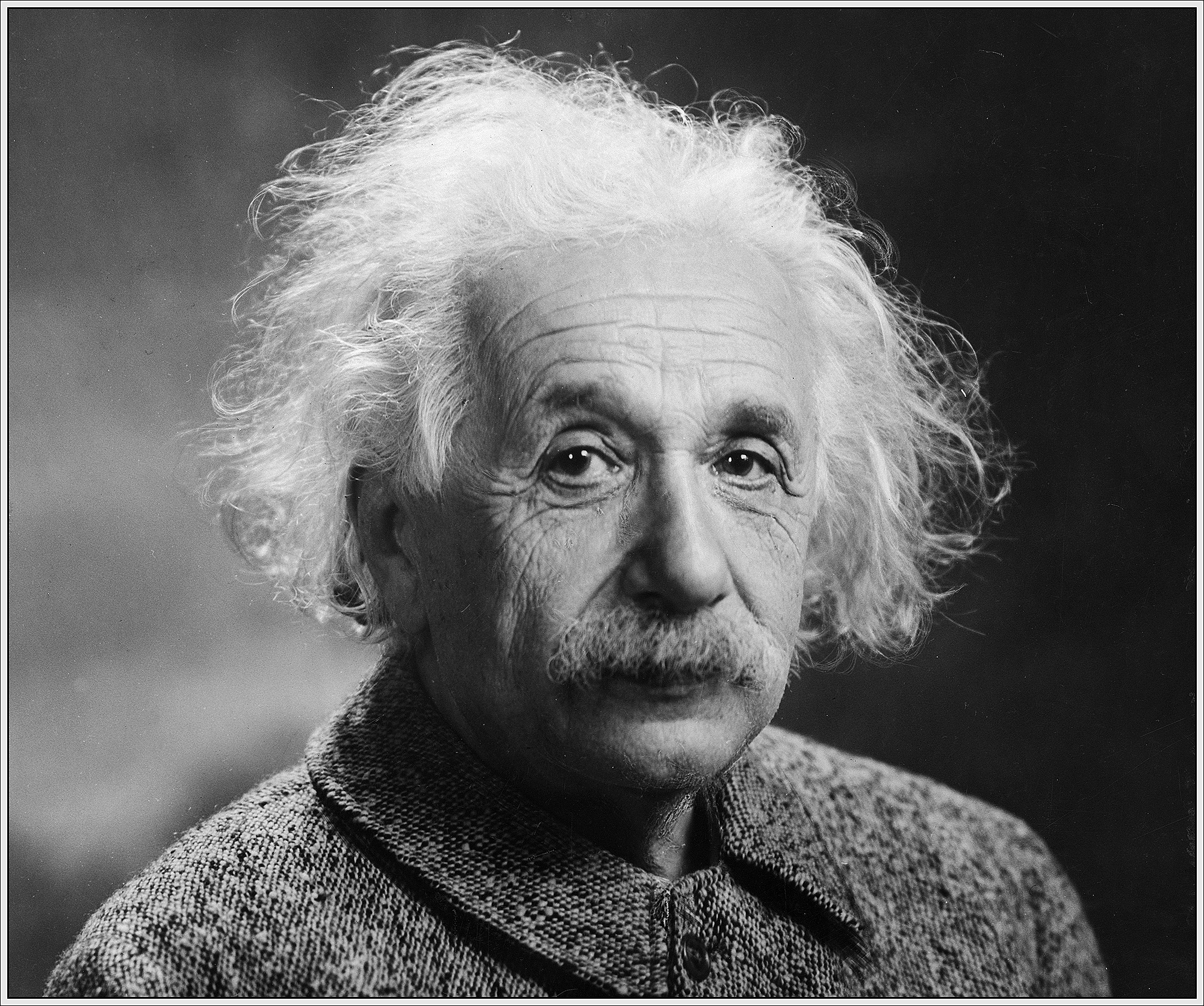

Albert Einstein: March 14 1879–April 18 1955
✪ Albert Einstein was a German-born theoretical physicist who is best known for developing the Theory of Relativity. Einstein also made important contributions to quantum mechanics. His mass–energy equivalence formula E = mc2, which arises from special relativity, has been called “the world’s most famous equation.” In 1921, he received the Nobel Prize in Physics.
During 1905, sometimes described as his annus mirabilis (miracle year), he published four groundbreaking papers. In them, he outlined a theory of the photoelectric effect, explained Brownian motion, introduced his special Theory of Relativity; and demonstrated that if the special theory is correct, then mass and energy are equivalent to each other. In 1915, he proposed a general Theory of Relativity that extended his system of mechanics to incorporate gravitation. A cosmological paper he published the following year detailed the implications of general relativity for the modeling of the structure and evolution of the Universe as a whole.
Throughout his life, Einstein published hundreds of books and articles. He published more than 300 scientific papers and 150 non-scientific ones. On 5 December 2014, universities and archives announced the release of all of Einstein’s papers, comprising more than 30,000 unique documents.
Albert Einstein was born in Ulm in the Kingdom of Württemberg in the German Empire, on 14 March 1879. His parents, secular Ashkenazi Jews, were Hermann Einstein, a salesman and engineer, and Pauline Koch. In 1880, the family moved to Munich, where Einstein’s father and his uncle Jakob founded Elektrotechnische Fabrik J. Einstein & Cie, a company which manufactured electrical equipment based on direct current.
Einstein often related a formative event from his youth, describing when he was once sick in bed and his father brought him a compass. This sparked his lifelong fascination with electromagnetism when he suddenly realized that “Something deeply hidden had to be behind all things.”
Albert attended St. Peter’s Catholic Elementary School in Munich from the age of five. When he was eight, he was transferred to the Luitpold Gymnasium, where he received advanced primary and then secondary school education.
In 1894, Hermann and Jakob’s company tendered for a contract to install electric lighting in Munich, but without success. They lacked sufficient capital which was needed to update their technology from direct current to the more efficient alternating current alternative. The failure of their bid forced them to sell their Munich factory and search for new opportunities elsewhere. The Einstein family next moved to Italy. First to Milan and a few months later, to Pavia.
Einstein, then fifteen, stayed behind in Munich in order to finish his schooling. His father wanted him to study electrical engineering, but he was a fractious pupil who found the Gymnasium’s regimen and teaching methods far from congenial. He later wrote that the school’s policy of strict rote learning was harmful to creativity. At the end of December 1894, a letter from a doctor persuaded the Luitpold’s authorities to release him from its care, and he joined his family in Pavia. While in Italy as a teenager, he wrote an essay entitled “On the Investigation of the State of the Ether in a Magnetic Field.”
Einstein excelled at physics and mathematics from an early age and soon acquired the mathematical expertise normally only found in children several years his senior. He began teaching himself algebra, calculus and Euclidean Geometry when he was only twelve. He made such rapid progress that he discovered an original proof of the Pythagorean theorem before his thirteenth birthday.
Einstein recorded that he had “mastered integral and differential calculus” while still only fourteen years old. His love of algebra and geometry was so great that at twelve, he was already confident that nature could be interpreted & understood as a “mathematical structure.”
At thirteen, his range of enthusiasms & interests broadened to include music and philosophy. Kant became his favorite philosopher. At the time he was still a child, only thirteen years old, yet Kant’s works, incomprehensible to ordinary mortals, seemed to be perfectly clear to him.
In 1895, at the age of sixteen, Einstein sat the entrance examination for the Federal Polytechnic School (later the Eidgenössische Technische Hochschule, ETH) in Zurich, Switzerland. He failed to pass the required standard in the general part of the test, but performed with distinction in physics and mathematics.
In January 1896, with his father’s approval, Einstein renounced his citizenship of the German Kingdom of Württemberg in order to avoid conscription into military service.
At seventeen, he enrolled in the four-year mathematics and physics teaching diploma program at the Federal Polytechnic School.
The five other polytechnic school freshmen following the same course as Einstein included just one woman, a twenty year old Serbian, Mileva Marić. Over the next few years, the pair spent many hours discussing their shared interests and learning about topics in physics that the polytechnic school’s lectures did not cover. In his letters to Marić, Einstein confessed that exploring science with her by his side was much more enjoyable than reading a textbook in solitude. Eventually the two students became not only friends but also lovers.
Einstein and Marić married in January 1903. In May 1904, their son Hans Albert was born in Bern, Switzerland. Their son Eduard was born in Zurich in July 1910. However, in letters Einstein wrote in the months before Eduard’s arrival, he described his love for his wife as “misguided” and mourned the “missed life” of single independence.
In 1912, Einstein entered into a relationship with Elsa Löwenthal, who was both his first cousin on his mother’s side and his second cousin on his father’s side. Einstein and Marić were granted a divorce on February 14, 1919 on the grounds of having lived apart for five years.
Einstein then married Löwenthal in 1919. In 1923, he began a relationship with a secretary named Betty Neumann, the niece of his close friend Hans Muhsam. Löwenthal nevertheless remained loyal to him, accompanying him when he emigrated to the United States in 1933. In 1935, she was diagnosed with heart and kidney problems. She died in December 1936.
Following an episode of acute mental illness at about the age of twenty, Einstein’s son Eduard was diagnosed with schizophrenia. He would spend the remainder of his life either in the care of his mother or in temporary confinement in an asylum.
In 1900, Einstein graduated from the Federal Polytechnic School, duly certified as competent to teach mathematics and physics. His successful acquisition of Swiss citizenship in February 1901 was not followed by the usual conscription requirement; as Swiss authorities deemed him too medically unfit for military service.
Eventually he secured a position in Bern at the Swiss Patent Office as an assistant examiner: level III. Patent applications which landed on Einstein’s desk for his evaluation included ideas for a gravel sorter and an electric typewriter. His employers were pleased enough with his work to make his position permanent in 1903, although they did not think that he should be promoted until he had “fully mastered machine technology.”
Einstein’s first paper, “Folgerungen aus den Capillaritätserscheinungen” (“Conclusions drawn from the phenomena of capillarity”), in which he proposed a model of intermolecular attraction that he afterwards disavowed as worthless, was published in the journal Annalen der Physik in 1901.
in 1908 he secured a junior teaching position at the University of Bern. Promotion to a full professorship position followed in April 1911, when he accepted a chair at the German Charles-Ferdinand University in Prague, a move which required him to become an Austrian citizen of the Austro-Hungarian Empire. During his time in Prague Einstein wrote eleven research papers.
In the spring of 1913, two German visitors, Max Planck and Walther Nernst, called upon Einstein in Zurich in the hope of persuading him to relocate to Berlin. They offered him a membership in the Prussian Academy of Sciences, the directorship of the planned Kaiser Wilhelm Institute for Physics and a chair at the Humboldt University of Berlin which would allow him to pursue his research supported by a professorial salary but with no teaching duties to burden him. He duly joined the Academy on July 24, 1913 and moved into an apartment in the Berlin district of Dahlem on April 1, 1914.
The outbreak of the First World War in July 1914 marked the beginning of Einstein’s gradual estrangement from the nation of his birth. In 1922, he was awarded the 1921 Nobel Prize in Physics “for his services to Theoretical Physics, and especially for his discovery of the law of the photoelectric effect.”
Britain’s closest equivalent of the Nobel award, the Royal Society’s Copley Medal, would not be awarded to Einstein until 1925. He would be elected an International Member of the American Philosophical Society in 1930.
Einstein resigned from the Prussian Academy in March 1933. His accomplishments in Berlin had included the completion of the general Theory of Relativity, proving the Einstein–de Haas Effect, contributing to the quantum theory of radiation, and the development of Bose–Einstein statistics.
Einstein began his new life as an intellectual icon in America, where he arrived on April 2, 1921. He was welcomed to New York City by Mayor John Francis Hylan, and then spent three weeks giving lectures and attending receptions. He spoke several times at Columbia University and Princeton; and in Washington. He also visited the White House with representatives of the National Academy of Sciences.
In July 1921, he published an essay, “My First Impression of the U.S.A.” in which he sought to sketch the American character, much as had Alexis de Tocqueville in Democracy in America (1835). He wrote of his transatlantic hosts in highly approving terms, What strikes a visitor is the joyous, positive attitude to life … The American is friendly, self-confident, optimistic and without envy.
From 1922 until 1932, with the exception of a few months in 1923 and 1924, Einstein was a member of the Geneva-based International Committee on Intellectual Cooperation of the League of Nations, a group set up by the League to encourage scientists, artists, scholars, teachers and other people engaged in the life of the mind to work more closely with their counterparts in other countries.
In December 1930, Einstein began another significant sojourn in the United States, drawn back to the US by the offer of a two month research fellowship at the California Institute of Technology.
After arriving in New York City, Einstein was escorted to various places and events, including Chinatown, a lunch with the editors of The New York Times, and a performance of Carmen at the Metropolitan Opera, where he was cheered by the audience on his arrival. During the days following, he was also given the keys to the city by Mayor Jimmy Walker and met Nicholas Murray Butler, the president of Columbia University, who described Einstein as “the ruling monarch of the mind.”
In February 1933, during a visit to the United States, Einstein realized he could not return to Germany with the rise to power of the Nazis under Germany’s new chancellor, Adolf Hitler.
While at American universities in early 1933, he undertook his third two-month visiting professorship at the California Institute of Technology in Pasadena. In February and March 1933, the Gestapo repeatedly raided his family’s apartment in Berlin.
Later on, they heard that their cottage had been raided by the Nazis and Einstein’s personal sailboat confiscated. Upon landing in Antwerp, Belgium on 28 March, Einstein immediately went to the German consulate and surrendered his passport, formally renouncing his German citizenship. The Nazis later sold his boat and converted his cottage into a Hitler Youth camp.
A month later, Einstein’s works were among those targeted by the German Student Union in the Nazi book burning campaigns, with Nazi propaganda minister Joseph Goebbels proclaiming, “Jewish intellectualism is dead.” One German magazine included Einstein on a list of enemies of the German regime with the phrase, “not yet hanged,” and offered a $5,000 bounty on his head.
In late July 1933, Einstein visited England for about six weeks at the invitation of the British Member of Parliament Commander Oliver Locker-Lampson, who had become friends with him in the preceding years. Locker-Lampson invited him to stay near his Cromer home in a secluded wooden cabin on Roughton Heath. Locker-Lampson took Einstein to meet Winston Churchill at his home, and later, Austen Chamberlain and former Prime Minister Lloyd George.
Einstein then accepted an earlier offer from the Institute for Advanced Study, in Princeton, New Jersey, US, to become a resident scholar. At this time, Einstein was still undecided about his future. He received offers from several European universities, including Christ Church, Oxford, where he stayed for three short periods between May 1931 and June 1933 and was offered a five-year research fellowship. However, in 1935, he arrived at the decision to remain permanently in the United States and apply for citizenship.
In 1939, a group of Hungarian scientists that included émigré physicist Leó Szilárd attempted to alert Washington, D.C. to ongoing Nazi atomic bomb research. The group’s warnings were initially discounted by the US Government.
Einstein and Szilárd, along with other refugees such as Edward Teller regarded it as their responsibility to alert Americans to the possibility that German scientists might win the race to build an atomic bomb; and to warn Hitler would be more than willing to resort to such a weapon.
To make certain the US was fully aware of the danger, in July 1939, a few months before the beginning of World War II in Europe, Szilárd and Wigner visited Einstein to discuss the possibility of atomic bombs; which Einstein, a pacifist, said he had never considered. Einstein was asked to lend his support by writing a letter with Szilárd, to President Roosevelt, recommending the US pay attention and initiate its own nuclear weapons research.
The letter (now known as the Einstein-Szilard Letter) is believed to be the key stimulus and catalyst which prompted further investigation before the United State’s entry into World War II by the US Government into the possible production of an atomic bomb.
Einstein was a pacifist who held war is a disease. During the course of his life, Einstein frequently called for resistance to war. Some historians argue by signing the letter to Roosevelt, he went against his pacifist principles. In 1954, a year before his death, Einstein told his old friend, Linus Pauling, I made one great mistake in my life—when I signed the letter to President Roosevelt recommending that atom bombs be made
However, Einstein also admitted there was some important purpose, as there was a very real danger the Germans may first develop an atomic bomb.
Horrified by the Nazi persecution of his fellow Jews, Einstein decided to remain in the United States, and formally became an American citizen in 1940. Not long after settling into his career at the Institute for Advanced Study in Princeton, New Jersey, he expressed his appreciation of the meritocracy in American culture compared to Europe. He recognized the “right of individuals to say and think what they pleased” without social barriers or government limitations. As a result, individuals were encouraged, he said, to be more creative, a trait he valued from his early education. In 1946, Einstein visited Lincoln University in Pennsylvania, a historically black college, and was awarded an honorary degree.
Einstein offered and was asked to give his judgments and opinions on matters often unrelated to theoretical physics or mathematics. He strongly advocated for the idea of a democratic global government which would check the power of nation-states in the framework of a world federation. He wrote, I advocate world government because I am convinced that there is no other possible way of eliminating the most terrible danger in which man has ever found himself.
The FBI created a secret dossier on Einstein in 1932; and by the time of his death in 1955, it was 1,427 pages long.
Einstein was deeply impressed by Mahatma Gandhi, with whom he corresponded. He described Gandhi as a role model for future generations. Einstein was also a figurehead leader in the establishment of the Hebrew University of Jerusalem, which opened in 1925.
Einstein was not a nationalist and initially opposed the creation of an independent Jewish state. The state of Israel was established without his help in 1948. In November 1952, Prime Minister David Ben-Gurion offered Einstein the largely ceremonial position of President of Israel. Einstein wrote that he was “deeply moved,” but “at once saddened and ashamed” that he unfortunately could not accept it.
Physicist Lee Smolin wrote:
I believe what allowed Einstein to achieve so much was primarily a moral quality. He simply cared far more than most of his colleagues that the laws of physics have to explain everything in nature coherently and consistently.
Einstein expounded his spiritual outlook in a wide array of writings and interviews. He did not believe in a personal god who concerns himself with fates and actions of human beings, a view which he described as naïve. However, he often clarified he was not an atheist. He wrote:
An intelligent spirit is manifest in all the the laws of the universe—a spirit vastly superior to that of man; and one in the face of which we with our modest powers must feel humble. In this way the pursuit of science leads to a religious feeling of a special sort
.
Einstein developed an appreciation for music at an early age. In his late journals he wrote:
“If I were not a physicist, I would probably be a musician. I often think in music. I live my daydreams in music. I see my life in terms of music …I get most joy in life out of music.“
His mother played the piano reasonably well and wanted her son to learn the violin, not only to instill in him a love of music but also to help him assimilate into German culture. According to conductor Leon Botstein, Einstein began playing when he was five; however, he did not enjoy music yet at that early an age.
Although the idea of becoming a professional musician himself was not on his mind at any time, Chamber music became a regular part of his social life while living in Bern, Zurich and Berlin, where he played with Max Planck and his son, among others.
On 17 April 1955, Einstein experienced internal bleeding caused by the rupture of an abdominal aortic aneurysm, which had previously been reinforced surgically in 1948. He took the draft of a speech he was preparing for a television appearance commemorating the state of Israel’s seventh anniversary with him to the hospital, but did not live long enough to complete it.
Einstein refused surgery, saying, I want to go when I want. It is tasteless to prolong life artificially. I have done my share; it is time to go. I will do it elegantly.
He died in the Princeton Hospital early the next morning at the age of 76, continuing to work until near the end.
▶️ 4 Minutes 56 Seconds
During his autopsy, pathologist Thomas Stoltz Harvey removed Einstein’s brain for preservation without the permission of his family, in the hope the neuroscience of the future would be able to discover what had made Einstein so intelligent. Einstein’s remains were cremated in Trenton, New Jersey and his ashes were scattered at an undisclosed location. Einstein bequeathed that all of his personal archives, library, and intellectual assets be given to the Hebrew University of Jerusalem in Israel.✪

















▶️ DONATE VIA PAYPAL (DEBIT & CREDIT CARD)
ALL PayPal Transactions Are Encrypted For Card Holder Privacy & Security
▶️ DONATE VIA ZELLE (DIRECT BANK CASH TRANSFER)
ZELLE is the perfect online alternative to PayPal. It’s an incredibly simple, secure, easy, fast and FREE way to send or receive money to recipients directly from your online banking account without a middleman. Best of all, there’s NO fees.
ZELLE is a service provided by your bank and is already built in to your online banking account. You only need to activate it first before using. If you’ve already activated ZELLE in your online bank or credit union account, you can donate to The New Americanist by using our ZELLE address:
vip@thenewamericanist.com
To activate your ZELLE, follow these easy instructions (a simple two minute process):

▶️ DONATE VIA SNAIL MAIL




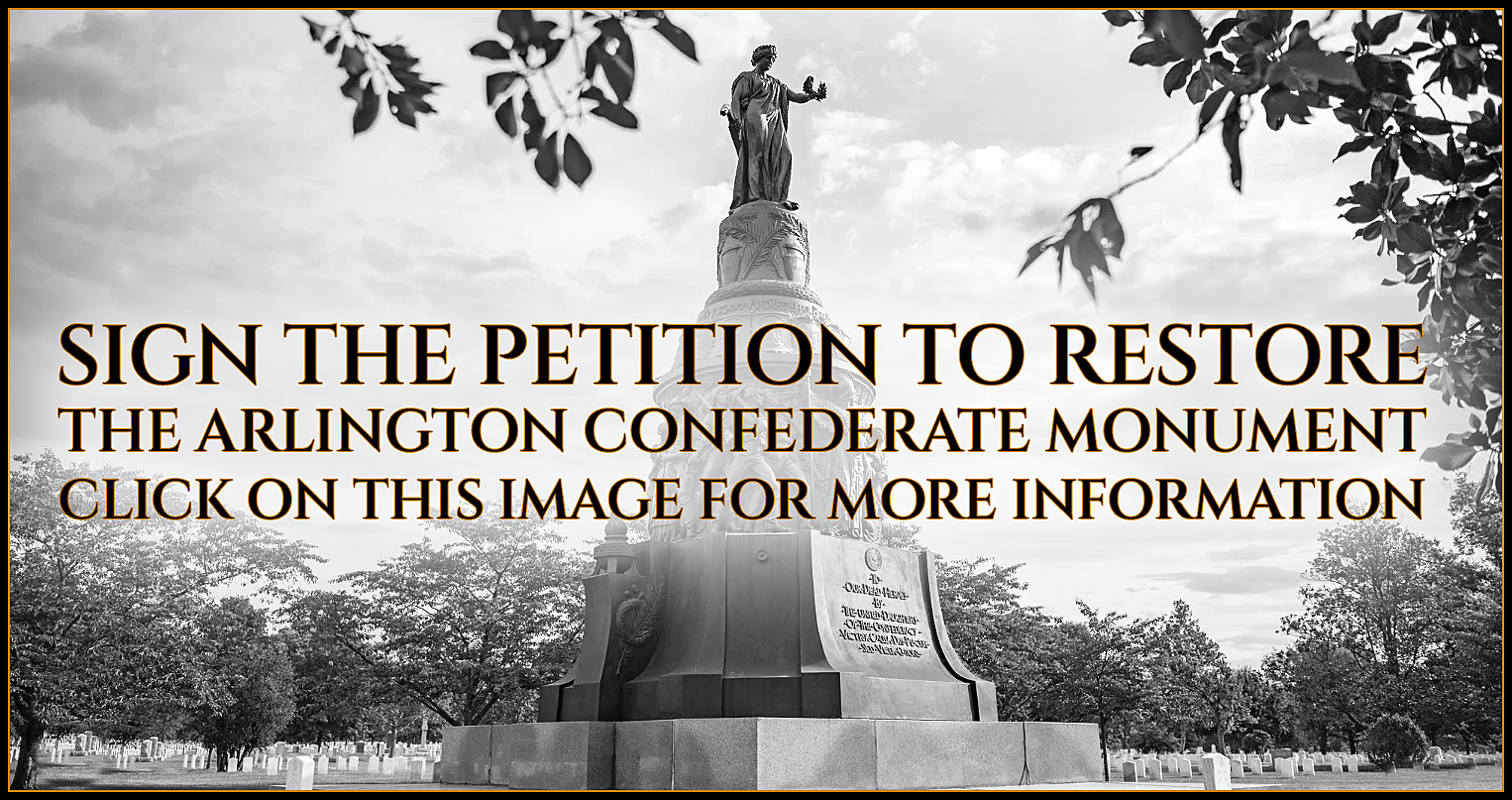




▶️ CLICK HERE TO VIEW
▶️ 9 Minutes 34 Seconds
▶️ 18 Minutes 03 Seconds
▶️ 14 Minutes 34 Seconds
▶️ 32 Minutes 34 Seconds
▶️ 5 Minutes 44 Seconds
▶️ 15 Minutes
▶️ 41 Minutes 15 Seconds ⭐️ Navajo Nation
▶️ 13 Minutes 18 Seconds
▶️ 20 Minutes 05 Seconds
▶️ 6 Minutes 12 Seconds
▶️ 6 Minutes 42 Seconds
▶️ 12 Minutes 20 Seconds
▶️ 11 Minutes 20 Seconds
▶️ 13 Minutes 32 Seconds
▶️ 7 Minutes 48 Seconds
▶️ Premiere
▶️ 16 Minutes 49 Seconds
▶️ 29 Minutes 18 Seconds ⭐️ The New Logical Show
A NEW video podcast produced by TNA’s very own bet125. Make certain you SUBSCRIBE & LIKE.
Let’s all support new Conservative Media. 😎
