⭐️ warpmine


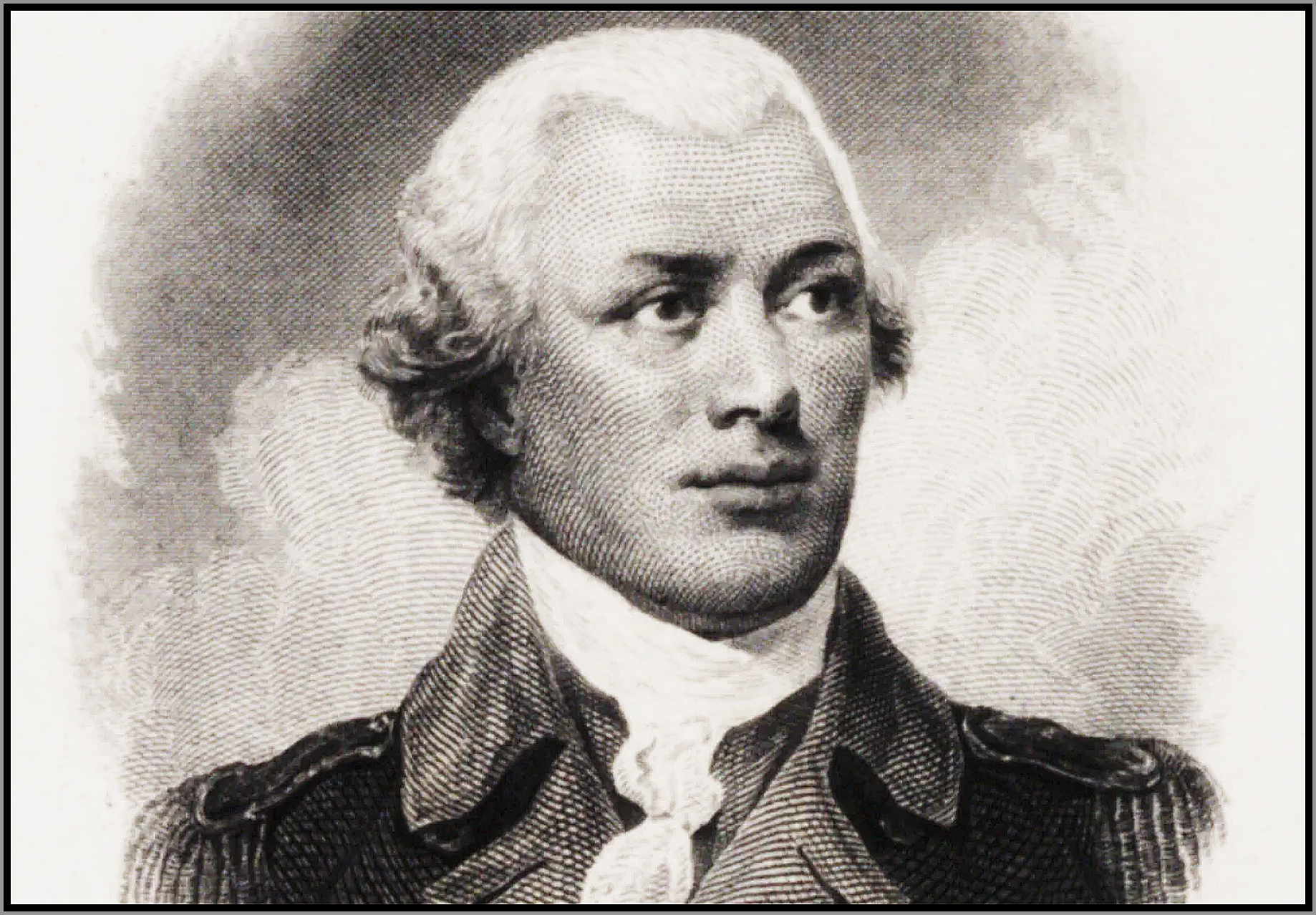

Nathanael Greene (August 7, 1742–June 19, 1786)
✪ Major General Nathanael Greene was an American military officer and planter who served in the Continental Army during the American Revolutionary War. He emerged from the war with a reputation as one of George Washington’s most talented and dependable officers, He is known for his successful command in the Southern Theater of the conflict.
He is also known by his historical nicknames: “The Savior of the South” and “The Fighting Quaker.”
Born into a prosperous Quaker family in Warwick, Rhode Island, Greene became active in the colonial opposition to British revenue policies in the early 1770s and helped establish the Kentish Guards, a state militia unit. After the April 1775 Battles of Lexington and Concord, the legislature of Rhode Island established an army and appointed Greene to command it. Later in the year, Greene became a general in the newly established Continental Army. Greene served under George Washington in the Boston Campaign, the New York and New Jersey Campaign, and in the Philadelphia Campaign before being appointed quartermaster general of the Continental Army in 1778.
▶️ 4 Minutes 15 Seconds
In October 1780, Washington appointed Greene as the commander of the Continental Army in the southern theater, where he was involved in several engagements, primarily in Virginia, Georgia, and South Carolina. After taking command, Greene engaged in a successful campaign of guerrilla warfare against a numerically superior British force led by Charles Cornwallis.
After the war, he settled down to a career as a plantation owner in Georgia, but his rice crops mostly failed. He died from heat stoke at the age of forty three in 1786 at the Mulberry Grove Plantation in Chatham County, Georgia. Numerous locations in the United States are named for him.
Greene was born in 1742 on Forge Farm at Potowomut in the township of Warwick, Rhode Island, which was then part of the Colony of Rhode Island and Providence Plantations in British America.
Greene was the second son of Mary Mott and Nathanael Greene Sr., a prosperous Quaker merchant and farmer. Greene was descended from John Greene and and Samuel Gorton, both of whom were founding settlers of Warwick.
Due to religious beliefs, Greene’s father discouraged book learning, as well as dancing and other activities. Nonetheless, Greene convinced his father to hire a tutor, and he studied mathematics, the classics, law, and various works of the Age of Enlightenment. At some point during his childhood, Greene gained a slight limp that would remain with him for the rest of his life.
In 1770, Greene moved to Coventry, Rhode Island, to take charge of the family-owned foundry. He built a house in Coventry called Spell Hall. Later in the year, Greene and his brothers inherited the family business after their father’s death. Greene also began to assemble a large library at Spell Hall which included military histories by authors such as Julius Caesar, Frederick the Great and Maurice de Saxe.
In July 1774, Greene married the nineteen-year-old Catharine Littlefield, a niece by marriage of his distant cousin, William Greene, an influential political leader in Rhode Island. Greene and Catherine’s first child was born in 1776 and they had six more children between 1777 and 1786.
After the French and Indian War (1754–1763), the British parliament began imposing new policies designed to raise revenue from British America for a war which colonists had played a pivotal role in instigating. After British military official William Dudington seized a vessel owned by Greene and his brothers, Greene filed an ultimately successful lawsuit against Dudington for damages. While the lawsuit was pending, Dudington’s vessel was torched by a Rhode Island mob in what became known as the Gaspee Affair. In the aftermath of the Gaspee Affair, Greene became increasingly alienated from the British.
At the same time, Greene began to drift away from his father’s Quaker faith. He was officially suspended from attending Quaker meetings in July 1773. Greene helped organize a state militia unit known as the Kentish Guards. Because of his limp, Greene was not selected as an officer in the militia.
The American Revolutionary War broke out with the April 1775 Battles of Lexington and Concord. In early May, the legislature of Rhode Island established the Rhode Island Army of Observation and appointed Greene to command it.
During that same month, the Second Continental Congress established the Continental Army and appointed George Washington to command all colonial forces. In addition to Washington, Congress appointed sixteen generals, and Greene was appointed as a brigadier general in the Continental Army.
Washington would establish his headquarters in Manhattan, and Greene was tasked with preparing for the invasion of nearby Long Island. Unable to raze Manhattan, Washington initially wanted to fortify the city, but Greene joined with several officers in convincing Washington that the city was indefensible. During the withdrawal from Manhattan, Greene saw combat for the first time in the Battle of Harlem Heights, a minor British defeat that nonetheless represented one of the first American victories in the war.
Greene commanded part of Washington’s army in the December 1776 Battle of Trenton and the January 1777 Battle of Princeton, both of which were victories for the Continental Army. In March 1778, Greene reluctantly accepted the position of quartermaster general, making him responsible for procuring supplies for the Continental Army. However, as quartermaster general, Greene continued to attend Washington’s councils-of-war, an unusual arrangement for a staff officer.
In July 1778, Washington granted Greene temporary leave as quartermaster general so that he could take part in an attack on British forces stationed in his home state of Rhode Island. Greene fought in the subsequent Battle of Rhode Island, an inconclusive battle that ended with a British retreat from the American position.
After mid-1778, the Northern Theater of the war became a stalemate, as the main British force remained in New York City and Washington’s force was stationed nearby on the Hudson River. The British turned their attention to the Southern Theater of the war, launching an ultimately successful expedition to capture Savannah.
▶️ 2 Minutes 43 Seconds
By October 1780, the Continental Army had suffered several devastating defeats in the South leaving the United States at a major disadvantage in the Southern Theater of the war. On October 14, 1780, Washington, acting on the authorization of Congress, appointed Greene as the commander of the Southern Department of the Continental Army. By the time Greene took command, the British were already in control of key portions of Georgia and South Carolina.
Outnumbered and under-supplied, Greene settled on a strategy of guerrilla warfare rather than pitched battles in order to prevent the advance of the British into North Carolina and Virginia. His strategy would heavily depend on riverboats and cavalry to outmaneuver and harass British forces.
While Greene campaigned in South Carolina and Georgia, Lafayette led the Continental resistance to Cornwallis’s army in Virginia. Lafayette heeded Greene’s advice to avoid combat, but his force only narrowly escaped destruction at the July 1781 Battle of Green Spring. In August, Washington and French general Rochambeau left New York for Yorktown, intent on inflicting a decisive defeat against Cornwallis. Washington laid siege to Cornwallis at Yorktown, and Cornwallis surrendered on October 19.
Yorktown was widely regarded as a disastrous defeat for the British, and many considered the war to have effectively ended in late 1781. In late 1781, Greene declined an appointment to the newly created position of secretary of war, which was charged with overseeing the Continental Army.
No further major military actions occurred in 1782, and the British evacuated Savannah and Charleston before the end of that year. Congress officially declared the end of the war in April 1783, and Greene resigned his commission in late 1783.
According to the Association of the United States Army, Nathanael Greene’s Quaker upbringing, while fostering his initial interest in self-education and strategic thinking, also presented a conflict with the Quaker doctrine of pacifism. This conflict would eventually led him to choose the path of military service and actively participate in the American Revolution.
Some potential indirect influences of Greene’s background on his military strategies include:
I. The value of self-reliance and resourcefulness.
2. Quakerism emphasizes individual conscience & rejects external authority.
This fostered the qualities of self-reliance and independent thought in Greene which manifested in his unconventional strategies; such as using guerrilla warfare and adapting offensive tactics to the terrain and available resources.
Quakers were known for their commitment to peaceful conflict resolution. While Greene chose military action, his Quaker background may have instilled a belief in diplomacy and negotiation, even during war. He later advocated for peace and stability rather than taking revenge against Loyalists after the war.
Quakers were wary of hierarchical structures and favored a more egalitarian approach. This may have influenced Greene’s willingness to delegate authority and empower his subordinate officers, who played crucial roles in the Southern Campaign.
In essence, Greene’s Quaker background, while not directly shaping his military strategies, likely contributed to his broader approach to military leadership; including resilience, adaptability and a long-term perspective that ultimately contributed to his campaign successes.
Nathanael Greene’s military strategies, particularly in the Southern Campaign of the Revolutionary War, were characterized by adaptability, a keen understanding of logistics and terrain, and the effective use of unconventional warfare tactics.
Greene recognized that he was often outnumbered and outgunned by the British forces under Lord Cornwallis. Instead of engaging in direct, pitched battles, which could have been disastrous for the weaker Continental Army, Greene opted for a “fugitive war,” or petite guerre. This involved strategic retreats, drawing the British away from their supply lines and forcing them to expend resources to wear themselves down through constant pursuit.
The “Race to the Dan” is a prime example of this tactic, where Greene skillfully retreated across the Dan River, leaving Cornwallis overextended and frustrated.
Greene was a master of logistics, meticulously planning the placement of supply depots along key rivers and routes.
He also placed a high value on intelligence gathering, utilizing scouts, local residents, and partisan networks to gain detailed information about British movements, terrain, river conditions, and potential hiding places. This allowed him to make informed decisions about when to retreat, when to engage, and how to best position his forces.
Though Greene suffered tactical defeats in battles like Guilford Courthouse, these engagements nonetheless inflicted heavy losses on the British and significantly hindered their efforts. Greene’s strategic brilliance played a key role in paving the way for the eventual American and French victory at Yorktown, which effectively ended the war.
After resigning his commission, Greene returned to Newport. Facing a large amount of debt, he relocated to the South to focus rice farming. He made his final home at the “Mulberry Grove” Plantation outside of Savannah.
On June 12, 1786, Greene fell ill and died at Mulberry Grove on June 19, 1786, at the age of 43. The official cause of death was recorded as sunstroke.
For over a century, his remains were interred at the Graham Vault in Colonial Park Cemetery in Savannah. However, on November 14, 1902, through the efforts of Rhode Island Society, President Asa Bird Gardiner, his remains were moved to a monument in Johnson Square in Savannah.
Defense analyst Robert Killebrew writes that Greene was “regarded by peers and historians as the second-best American general” in the Revolutionary War, only after Washington. The historian Russell Weigley believed that “Greene’s outstanding characteristic as a strategist was his ability to weave the maraudings of partisan raiders into a coherent pattern, coordinating them with the maneuvers of a field army otherwise too weak to accomplish much, and making the combination a deadly one…. He remains alone as an American master developing a strategy of unconventional war.”
Greene was also highly respected by his opponents. Cornwallis wrote that Greene was “as dangerous as Washington. He is vigilant, enterprising, and full of resources–there is but little hope of gaining an advantage over him.”
Numerous places and locations have been named after Greene across the United States. Fourteen counties are named for Greene, the most populous of which is Greene County, Missouri. Municipalities named for Greene include Greensboro, North Carolina; Greensboro, Georgia; Greensburg, Pennsylvania; Greenville, North Carolina; Greenville, South Carolina; Greeneville, Tennessee; and Greensboro, Pennsylvania.
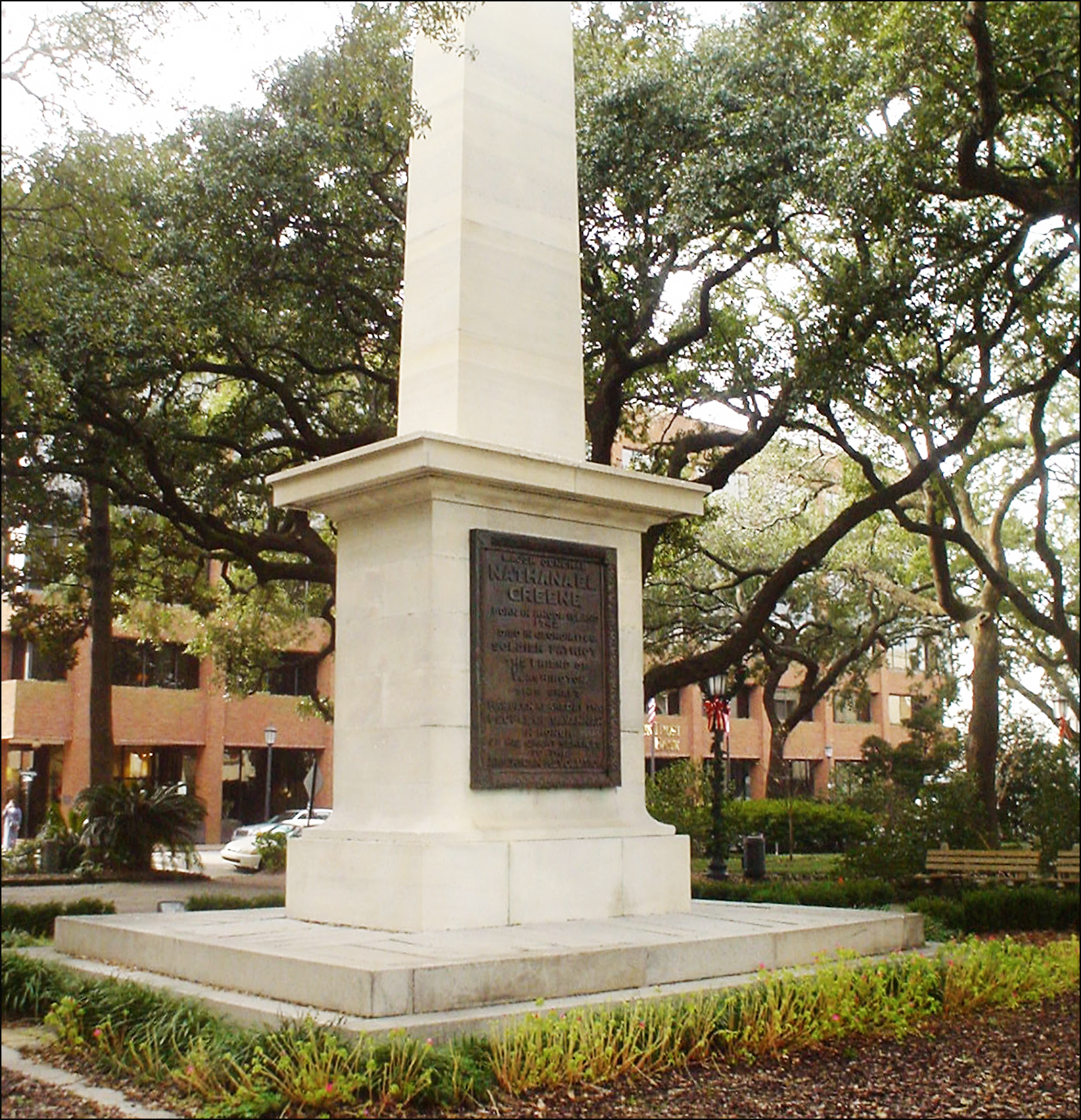
Greene is also memorialized by numerous statues in or near Philadelphia, Valley Forge National Historical Park, Greensboro, North Carolina, Greensburg, Pennsylvania, and Greenville, South Carolina. The Nathanael Greene Monument in Savannah, Georgia, now serves as his current burial resting place.✪
















▶️ DONATE VIA PAYPAL (DEBIT & CREDIT CARD)
ALL PayPal Transactions Are Encrypted For Card Holder Privacy & Security
▶️ DONATE VIA ZELLE (DIRECT BANK CASH TRANSFER)
ZELLE is the perfect online alternative to PayPal. It’s an incredibly simple, secure, easy, fast and FREE way to send or receive money to recipients directly from your online banking account without a middleman. Best of all, there’s NO fees.
ZELLE is a service provided by your bank and is already built in to your online banking account. You only need to activate it first before using. If you’ve already activated ZELLE in your online bank or credit union account, you can donate to The New Americanist by using our ZELLE address:
vip@thenewamericanist.com
To activate your ZELLE, follow these easy instructions (a simple two minute process):

▶️ DONATE VIA SNAIL MAIL