

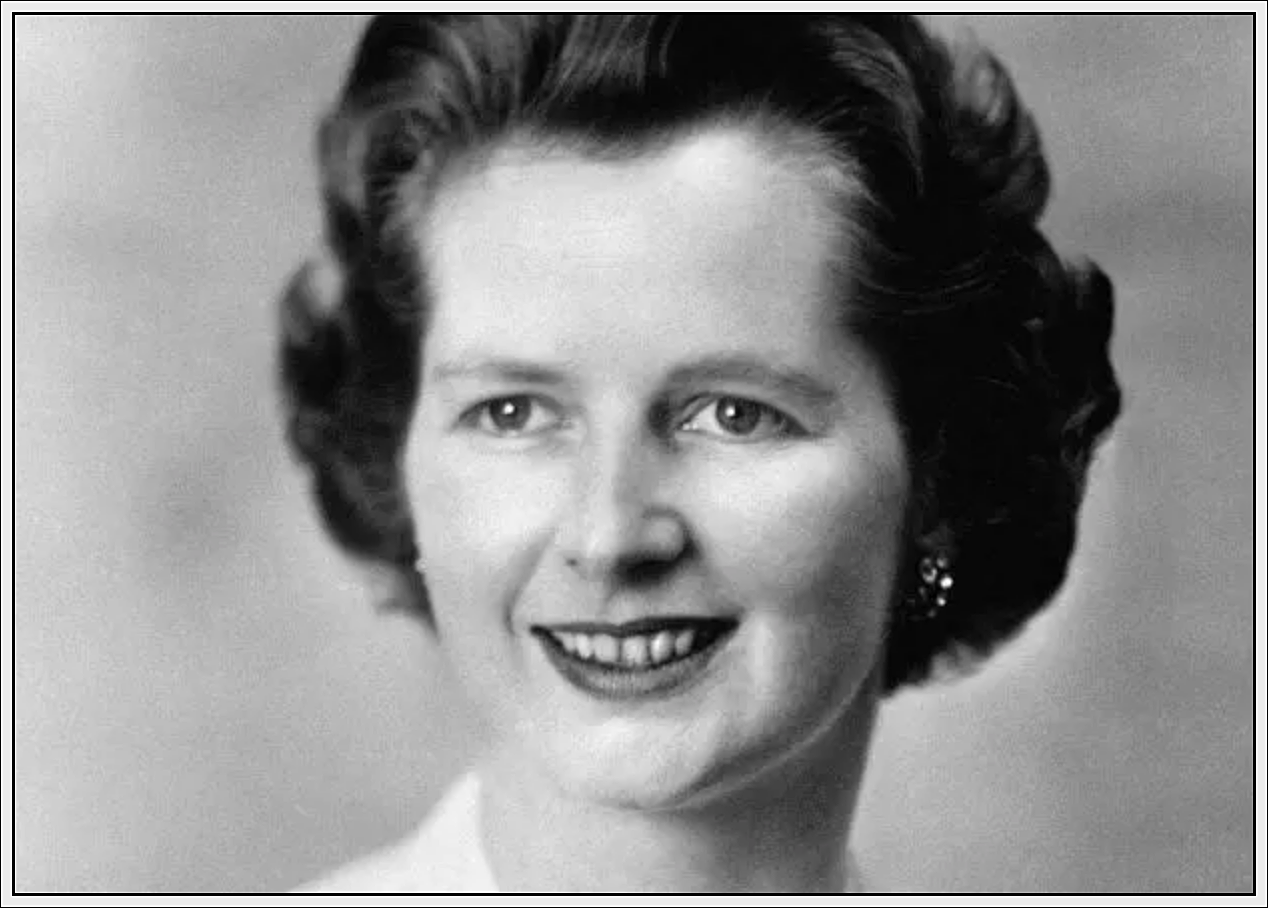

Margaret Hilda Roberts Thatcher: October 13, 1925–April 8, 2013
✪ Margaret Hilda Thatcher, Baroness Thatcher (née Roberts), was a British stateswoman and Conservative politician who served as Prime Minister of the United Kingdom from 1979 to 1990 and Leader of the Conservative Party from 1975 to 1990. She was the longest-serving British prime minister of the 20th Century and the first woman to hold the position. As prime minister, she implemented economic policies known as Thatcherism.
Thatcherism represented a systematic overhaul and decisive departure from the post-war consensus held by the major political parties; which included the central themes of Keynesianism, welfare state entitlement, nationalized industry, high taxation and close government regulation of the economy.
Having led the Conservative Party to victory in three consecutive general elections, twice in a landslide, Thatcher ranks among the most popular party leaders in British history regarding votes cast for the winning party; over 40 million ballots were cast in total for the party under her leadership.
A Soviet journalist dubbed her the “Iron Lady,” a nickname that became associated with her uncompromising politics and leadership style.
On becoming prime minister after winning the 1979 general election, Thatcher introduced a series of economic policies intended to reverse high inflation and Britain’s struggles in the wake of the Winter of Discontent and an approaching recession. Her political philosophy and economic policies emphasized greater individual liberty, the privatization of state-owned companies, and reducing the overall power and influence of trade unions.
Thatcher defined her political philosophy, in a major and controversial break with the one-nation conservatism of her predecessor Edward Heath, in a 1987 interview published in Woman’s Own magazine:
“I think we have gone through a period when too many children and people have been given to understand “I have a problem, it is the Government’s job to cope with it!” or “I have a problem, I will go and get a grant to cope with it!” “I am homeless, the Government must house me!” and so they are casting their problems on society and who is society? There is no such thing! There are individual men and women and there are families and no government can do anything except through people and people look to themselves first. It is our duty to look after ourselves and then also to help look after our neighbour and life is a reciprocal business and people have got the entitlements too much in mind without the obligations.”
Victory in the 1982 Falklands War and the recovering economy brought a resurgence of support, resulting in her landslide re-election in 1983. She survived an assassination attempt by the Provisional IRA in the 1984 Brighton hotel bombing and achieved a political victory against the National Union of Mineworkers in the 1984–85 miners’ strike. In 1986, Thatcher oversaw the deregulation of UK financial markets, leading to an economic boom, in what came to be known as the Big Bang.
A highly polarizing figure in British politics, Thatcher is nonetheless viewed favorably in historical rankings and public opinion of British prime ministers.
Margaret Hilda Roberts was born on 13 October 1925 in Grantham, Lincolnshire. Her parents were Alfred Roberts (1892–1970), from Northamptonshire, and Beatrice Ethel Stephenson (1888–1960), from Lincolnshire. Her father’s maternal grandmother, Catherine Sullivan, was born in County Kerry, Ireland. Alfred was an alderman and a Methodist local preacher. He brought up his daughter as a strict Wesleyan Methodist, attending the Finkin Street Methodist Church.
Roberts spent her childhood in Grantham, where her father owned a tobacconist’s and a grocery shop. In 1938, before the Second World War, the Roberts family briefly gave sanctuary to a teenage Jewish girl who had escaped Nazi Germany.
Roberts attended Huntingtower Road Primary School and won a scholarship to Kesteven and Grantham Girls’ School, a grammar school. Her school reports showed hard work and continual improvement; her extracurricular activities included the piano, field hockey, poetry recitals, swimming and walking. She was head girl in 1942–43, and during the Second World War, she voluntarily worked as a fire watcher in the local ARP service.
Roberts was accepted for a scholarship to study chemistry at Somerville College, Oxford, and entered Oxford in October 1943. Roberts graduated in 1947 with a second-class honours degree in chemistry; and, in 1950 also received the degree of Master of Arts.
During her time at Oxford, Roberts was noted for her isolated and serious attitude. Her coursework involved subjects beyond chemistry as she was already contemplating a future entry into law and politics. Roberts became President of the Oxford University Conservative Association in 1946. She was influenced at university by reading such political works such as Friedrich Hayek’s The Road to Serfdom (1944), which condemns economic intervention by government as a precursor to an authoritarian state.
After graduating, Roberts secured a position as a research chemist for British Xylonite (BX Plastics) following a series of interviews arranged by Oxford. While with the firm, she joined the Association of Scientific Workers. In 1948, she applied for a job at Imperial Chemical Industries (ICI) but was rejected after the personnel department assessed her as “headstrong, obstinate and dangerously self-opinionated.”
At a dinner following her formal adoption as Conservative candidate for Dartford in February 1949, she met divorcé Denis Thatcher, a successful and wealthy businessman, who drove her to her Essex train. After their first meeting, she described him to Muriel as “not a very attractive creature – very reserved but quite nice” Roberts married Denis at Wesley’s Chapel and their children were baptized there, but she and her husband began attending Church of England services and would later convert to Anglicanism.
Thatcher’s talent and drive caused her to be mentioned as a future prime minister in her early 20s although she herself was more pessimistic, stating as late as 1970: “There will not be a woman prime minister in my lifetime – the male population is too prejudiced.”
In 1967, the United States Embassy chose Thatcher to take part in the International Visitor Leadership Program (then called the Foreign Leader Program), a professional exchange programme that allowed her to spend about six weeks visiting various US cities and political figures as well as institutions such as the International Monetary Fund.Thatcher meet with prominent people during a busy itinerary focused on economic issues.
In 1968, Enoch Powell delivered his “Rivers of Blood” speech in which he strongly criticised Commonwealth immigration to the United Kingdom and the then-proposed Race Relations Bill. In a 1991 interview for Today, Thatcher stated that she thought Powell had “made a valid argument, if in sometimes regrettable terms.”
During her first months in office, she attracted public attention due to the government’s attempts to cut spending. She gave priority to academic needs in schools, while administering public expenditure cuts on the state education system, resulting in the abolition of free milk for schoolchildren aged seven to eleven. She also argued that she was simply carrying on with what the Labour Government had started since they had stopped giving free milk to secondary schools. Milk would still be provided to those children that required it on medical grounds, and schools could still sell milk.
Her decision provoked a storm of protest from Labour and the press, leading to her being notoriously nicknamed “Margaret Thatcher, Milk Snatcher.” She reportedly considered leaving politics in the aftermath and later wrote in her autobiography: “I learned a valuable lesson. I had incurred the maximum of political odium for the minimum of political benefit.”
Thatcher became Conservative Party leader and Leader of the Opposition on 11 February 1975. Television critic Clive James, writing in The Observer prior to her election as Conservative Party leader, compared her voice of 1973 to “a cat sliding down a blackboard” Thatcher intended to promote neoliberal economic ideas at home and abroad. Despite setting the direction of her foreign policy for a Conservative government, Thatcher was distressed by her repeated failure to shine in the House of Commons.
Thatcher toured the United States in 1975 and met President Gerald Ford, visiting again in 1977, when she met President Jimmy Carter. Among other foreign trips, she met Shah Mohammad Reza Pahlavi during a visit to Iran in 1978.
In 1976, Thatcher gave her “Britain Awake” foreign policy speech which lambasted the Soviet Union, saying it was “bent on world dominanc.” The Soviet Army journal Red Star reported her stance in a piece headlined “Iron Lady Raises Fears,” alluding to her remarks on the Iron Curtain. The Sunday Times covered the Red Star article the next day and Thatcher embraced the epithet a week later. The “Iron Lady” metaphor followed her throughout ever since, and would become a generic moniker for other strong-willed female politicians.
Thatcher became prime minister of the UK on May 4, 1979. Upon her arrival at Downing Street she paraphrased the Prayer of Saint Francis:
Where there is discord, may we bring harmony;
Where there is error, may we bring truth;
Where there is doubt, may we bring faith;
And where there is despair, may we bring hope.
In office throughout all of the 1980s, Thatcher was frequently referred to as the most powerful woman in the world.
As prime minister, Thatcher met weekly with Queen Elizabeth II to discuss government business, and their relationship came under scrutiny. Michael Shea, the Queen’s press secretary said that the Queen felt Thatcher’s policies were “uncaring, confrontational and socially divisive.”
Thatcher’s economic policy was influenced by monetarist thinking and economists such as Milton Friedman. Her policies lowered direct taxes on income and increased indirect taxes. She increased interest rates to slow the growth of the money supply, and thereby lower inflation.
During the 1982 Conservative Party Conference, Thatcher said: “We have done more to roll back the frontiers of socialism than any previous Conservative Government.” She said at the Party Conference the following year that the British people had completely rejected state socialism and understood “the state has no source of money other than money which people earn themselves […] There is no such thing as public money; there is only taxpayers’ money.”
Thatcher believed that the trade and labor unions were harmful to both ordinary trade unionists and the public. She was committed to reducing the power of the unions, whose leadership she accused of undermining parliamentary democracy and economic performance through strike action. According to the BBC’s political correspondent in 2004, Thatcher “managed to destroy the power of the trade unions in Britain for almost a generation.”
The policy of privatization has also been called “a crucial ingredient of Thatcherism.” After the 1983 election, the sale of state utilities accelerated; more than £29 billion was raised from the sale of nationalized industries, and another £18 billion from the sale of council houses. The process of privatization, especially the preparation of nationalized industries for privatization, was associated with marked improvements in performance, particularly in terms of industry productivity.
Thatcher narrowly escaped injury & death in an IRA assassination attempt at a Brighton hotel early in the morning on October 12, 1984. Five people were killed, including the wife of minister John Wakeham. Thatcher was staying at the hotel to prepare for the Conservative Party conference, which she insisted should open as scheduled the following day.
Thatcher’s first foreign-policy crisis came with the 1979 Soviet invasion of Afghanistan. However, Thatcher was one of the first Western leaders to respond warmly to reformist Soviet leader Mikhail Gorbachev. Following Reagan–Gorbachev summit meetings and reforms enacted by Gorbachev in the USSR, she declared in November 1988 that “we’re not in a Cold War now” but rather in a “new relationship much wider than the Cold War ever was.” She went on a state visit to the Soviet Union in 1984 and met with Gorbachev.
Thatcher bonded quickly with US president Ronald Reagan. She provided strong support to the Reagan Administration’s Cold War policies based on their shared distrust of communism. During her first year as prime minister, she supported NATO’s decision to deploy US nuclear Cruise and Pershing II missiles in Western Europe.
In April 1986 she permitted US F-111s to use Royal Air Force bases for the bombing of Libya in retaliation for the Libyan bombing of a Berlin discothèque. Thatcher was in the US on a state visit when Iraqi leader Saddam Hussein invaded Kuwait in August 1990. During her talks with President George H. W. Bush, who succeeded Reagan in 1989, she recommended intervention and put pressure on Bush to deploy troops in the Middle East to drive the Iraqi Army out of Kuwait.
In September 1982, she visited China to discuss with Deng Xiaoping the sovereignty of Hong Kong after 1997. China was the first communist state Thatcher visited as prime minister, and she was the first British prime minister to visit China. After the two-year negotiations, Thatcher conceded to the PRC government and signed the Sino-British Joint Declaration in Beijing in 1984, agreeing to hand over Hong Kong’s sovereignty in 1997.
Sharing the concerns of French president François Mitterrand, Thatcher was initially opposed to German reunification; telling Gorbachev that it “would lead to a change to postwar borders, and we cannot allow that because such a development would undermine the stability of the whole international situation and could endanger our security.” She expressed concern that a united Germany would align itself more closely with the Soviet Union and move away from NATO.
In 1998, Thatcher called for the release of former Chilean dictator Augusto Pinochet when Spain had him arrested and sought to try him for human rights violations. She cited his help he gave Britain during the Falklands War. In 1999, she visited him while he was under house arrest near London. Pinochet was released in March 2000 on medical grounds .
Following several small strokes, her doctors advised her not to engage in further public speaking engagements. In March 2002 she announced that, on doctors’ advice, she would cancel all planned speaking engagements and accept no more.
On 11 June 2004, Thatcher (against doctors’ orders) attended the state funeral service for Ronald Reagan. She delivered her eulogy via videotape; in view of her health, the message had been pre-recorded several months earlier.Thatcher flew to California with the Reagan entourage, and attended the memorial service and interment ceremony for the president at the Ronald Reagan Presidential Library.
In February 2007 Thatcher became the first living British prime minister to be honored with a statue in the Houses of Parliament. The bronze statue stood opposite that of her political hero, Winston Churchill, and was unveiled on 21 February 2007 with Thatcher in attendance. She remarked in the Members’ Lobby of the Commons: “I might have preferred iron – but bronze will do […] It won’t rust.”
After collapsing at a House of Lords dinner, Thatcher was admitted to St Thomas’ Hospital in central London suffering low blood pressure on 7 March 2008 for tests. In 2009 she was hospitalized again when she fell and broke her arm.
On july 4, 2011, Thatcher was scheduled to attend a ceremony for the unveiling of a 10 ft statue of Ronald Reagan outside the US embassy in London, but was unable to attend due to her frail health. She last attended a sitting of the House of Lords on july 19, 2010. On July 30, 2011 it was announced that her office in the Lords had been closed.
Thatcher died on 8 April 2013, at the age of 87, after suffering a stroke. She had been staying at a suite in the Ritz Hotel in London since December 2012 after having difficulty with stairs at her Chester Square home in Belgravia. Her death certificate listed the primary causes of death as a “cerebrovascular accident” and “repeated transient ischaemic attack.” Secondary causes were listed as a “carcinoma of the bladder” and dementia.
▶️ 2 Minutes 19 Seconds
The details of Thatcher’s funeral were planned with her in advance. She received a ceremonial funeral, including full military honors, with a church service at St Paul’s Cathedral on April 17. Queen Elizabeth II and the Duke of Edinburgh attended her funeral, marking only the second and final time in the Queen’s reign that she would attend the funeral of any of her former prime ministers, after that of Churchill, who received a state funeral in 1965.
After the service at St Paul’s, Thatcher’s body was cremated at Mortlake, where her husband’s had been cremated. On September 28, a service for Thatcher was held in the All Saints Chapel of the Royal Hospital Chelsea’s Margaret Thatcher Infirmary. In a private ceremony, Thatcher’s ashes were interred in the hospital’s grounds, next to her husband’s.✪













COUNTDOWN TO INAUGURATION DAY 2025




▶️ CLICK HERE TO VIEW
▶️ 17 Minutes 56 Seconds
▶️ 19 Minutes 12 Seconds Part One
▶️ 27 Minutes 13 Seconds
▶️ 7 Minutes 13 Seconds
▶️ 7 Minutes 13 Seconds
▶️ 16 Minutes 47 Seconds
▶️ 4 Minutes 6 Seconds
▶️ 8 Minutes 20 Second ⭐️ Gary Brown
▶️ 4 Minutes 6 Seconds
▶️ 18 Minutes 15 Seconds
▶️ 2 Minutes 2 Seconds ⭐️ Bet1125
▶️ 3 Minutes 41 Seconds
