


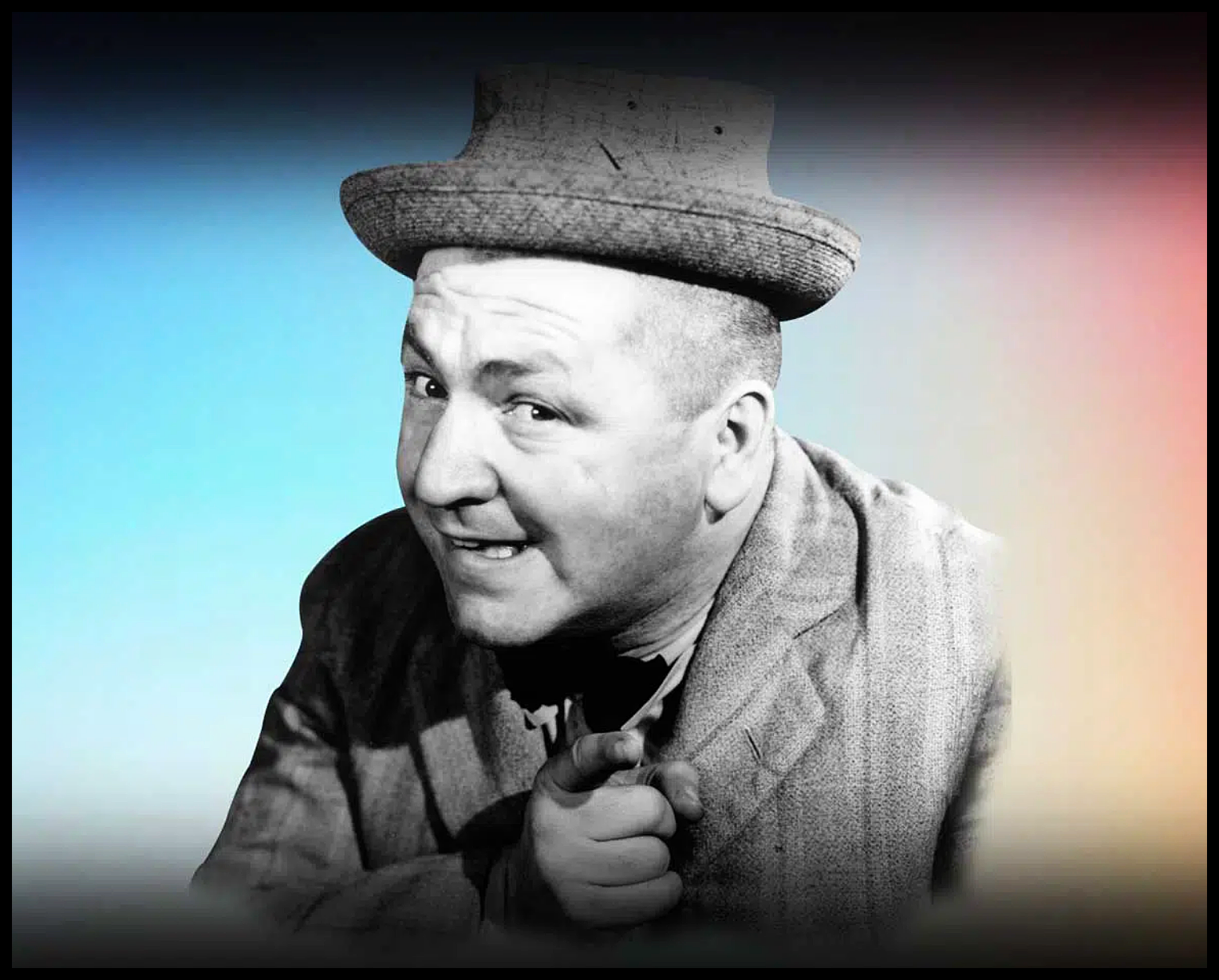

Jerome Lester Horwitz: October 22, 1903 – January 18, 1952
✪ Jerome Lester Horwitz, better known by his stage name Curly Howard, was an American comedian and actor. He was a member of the comedy team The Three Stooges, which also featured his elder brothers Moe and Shemp Howard, as well as actor Larry Fine. In early shorts, he was billed as Curly.
Howard was generally considered the most popular and recognizable of the Stooges. He was well known for his high-pitched voice and vocal expressions as well as for his extreme, physical style of comedy, improvisations and athleticism.
Howard’s mannerisms, behavior and personality along with his catchphrases have become a part of American popular culture. Steve Allen called him one of the “few true but seldom recognized comedy geniuses.”
Aa an untrained actor, Howard borrowed heavily (and significantly exaggerated) the “woo woo” from “nervous” comedian Hugh Herber. Howard left the Three Stooges act in May 1946 when a massive stroke ended his film & show business career. He suffered serious health problems and several more strokes afterwards until his death in 1952 at age 48.
Howard was born Jerome Lester Horwitz in the Bensonhurst section of the Brooklyn borough of New York City, on October 22, 1903. Howard was of Lithuanian Jewish ancestry and the youngest of the five sons of Jennie (Gorovitz) and Solomon Horwitz. Because he was the youngest, his brothers nicknamed him “Babe” to tease him. The name “Babe” stuck with him all his life. However, when his elder brother Shemp Howard married Gertrude Frank, who was also nicknamed “Babe,” the brothers called him “Curly” to avoid confusion. His full & formal Hebrew name was Yehudah Leib bar Shlomo Natan HaLevi.
Howard was a quiet child and rarely caused problems for his parents (something in which older brothers Moe and Shemp excelled). He was a mediocre student in school, but excelled as an athlete on the school basketball team. He never graduated high school; but instead, kept himself busy with odd jobs and constantly following his older brothers, whom he idolized. He was also an accomplished ballroom dancer and singer who regularly turned up at the Triangle Ballroom in Queens.
When Howard was 13, he accidentally shot himself in the left ankle while cleaning a rifle. Moe rushed him to the hospital, saving his life, but the wound resulted in a noticeably thinner left leg and a slight limp. Howard was so afraid of surgery that he never had the limp corrected. During his time with the Stooges, he developed his famous exaggerated walk to conceal the limp on screen.
Howard was interested in music and comedy, and grew up watching his older brothers Shemp and Moe perform as stooges in Ted Healy’s Vaudeville act. He also enjoyed hanging around backstage, although he never participated in any of his brother’s Vaudeville routines.
Howard’s first on-stage appearance was in 1928 as a comedy musical conductor for the Orville Knapp Orchestra. Howard would conduct the ensemble with his arms flailing in the air, unaware that he was losing his pants. Moe later recalled that his performances usually overshadowed those of the band. Though he enjoyed the gig, he watched as brothers Moe and Shemp with partner Larry Fine made it big as some of Ted Healy’s “Stooges.”
Vaudeville star Healy had a very popular stage act, in which he would try to tell jokes or sing, only to have his noisy assistants (or “stooges,” in show-business parlance) wander on stage and interrupt or heckle him and cause disturbances from the audience. Healy and company appeared in their first feature film, Rube Goldberg’s Soup to Nuts (1930).
However, Shemp soon grew tired of Healy’s abrasiveness, bad temper and alcoholism. In 1932, Shemp left the Stooges after he was offered a contract at the Vitaphone Studios in Brooklyn. With Shemp gone, Moe suggested that their kid brother Jerry could fill the role of the third-stooge. Jerry auditioned for the part with his Orville Knapp conductor act but Healy was unimpressed: “Is that all he can do? Let his pants fall down? Get me a real comedian, not this amateur. He doesn’t even look right!” Healy felt that Howard, with his thick, chestnut hair and elegant waxed mustache, looked too good to be a low comedian. Howard left the room and returned minutes later with his head shaven (the mustache remained very briefly). Moe and Larry started improvising with this new character:
Moe: Hey, Curly!
Larry: What did you call him?
Moe: Curly.
Larry: That’s all right. I thought you said girlie!
That exchange sold the act to Healy, and Jerry Horwitz became Curly Howard. In one of the few interviews Howard gave in his lifetime, he complained about the loss of his hair: “I had to shave it off right down to the skin.”
In 1934, MGM was promoting Healy up as a solo comedian in feature films, and Moe saw the writing on the wall. Only Healy alone was under contract to the studio. His Stooges answered to Healy, who paid each of them only $100 a week. When Healy’s lucrative MGM contract was up for renewal on March 6, 1934, Moe proposed that Healy and his stooges should split: “Let’s just break up. No hard feelings, no sneaking around. Just a good, clean split.” Healy agreed, and left to pursue his own career. That same year, with “The Three Stooges” as the act’s new name, they signed to appear in two-reel comedy short subjects for Columbia Pictures. Their third short, Men in Black, was nominated for the 1934 “Best Short Subject” Academy Award.
Columbia would go on to pay each of the Stooges $2,500 per short subject (an exceptional sum at that time; as Columbia usually paid $500 to $1,000 per short). The Stooges soon became the studio’s most popular short-subject attraction, with Curly playing an integral part in the trio’s work.
Howard’s childlike mannerisms and natural comedic charm made him an instant hit with audiences, particularly children. He was particularly known in the act for having an “indestructible” head, which always won out by breaking anything that assaulted it, including saws and hammers (resulting in his characteristic quip, “Oh, look!” when the item is shown damaged while his head is intact). Although Howard had no formal acting training, his comedic skills were exceptional. Often, directors let their cameras roll freely while Howard improvised. Screenwriter Jules White, in particular, left gaps in his Stooge scripts where Howard would be free to improvise for several minutes.
By the time the Stooges hit their peak in the late 1930s, their films had almost become vehicles exclusively for Howard’s unbridled comic performances. Classics such as A Plumbing We Will Go (1940), We Want Our Mummy (1938), An Ache in Every Stake (1941), Cactus Makes Perfect (1942), and their most violent short, They Stooge to Conga (1943), all display Howard’s ability to take inanimate objects (food, tools, pipes, etc.) and turn them into ingenious comic props.
On several occasions, Moe Howard became convinced that rising star Lou Costello (a close friend of Shemp’s) was stealing material from his brother. Costello was known to acquire prints of the Stooges’ films from Columbia Pictures on occasion, presumably to study him. Inevitably, some of Curly Howard’s routines found their way to appear in Abbott and Costello feature films, much to Moe’s chagrin.
Offscreen, Howard’s demeanor stood in stark contrast to his exuberant onscreen persona. A quiet, reserved and introspective individual, he largely avoided social interactions unless under the influence of alcohol, a habit that became more pronounced as the pressures of his career intensified. Howard rarely exhibited the boisterous behavior that defined his public image, except in the presence of family, while performing, or during episodes of inebriation. He was, however, widely recognized for his compassion, particularly his tendency to care for stray dogs. Howard had four marriages and two children.
Howard’s first marriage was short-lived, ending in divorce within five months and preceding his rise to fame with the Three Stooges. On June 7, 1937—the twelfth anniversary of his brother Moe’s marriage to Helen—Howard wed Elaine Ackerman. The union produced one daughter, Marilyn, in 1938, but the couple divorced in June 1940.
Howard struggled with deep insecurities related to his shaved head, which he believed made him unattractive to women. To manage his feelings of inadequacy, he increasingly resorted to excessive drinking and acting out with indulgent social behavior. In public, he often wore a hat to project an image of masculinity, lamenting that his bare head made him feel juvenile. Despite his personal self-esteem issues, Howard was extremely popular with women, though many sought to exploit his fame, generosity and affable nature.
Moe’s son-in-law Norman Maurer noted “He was a pushover for women. If a pretty girl walked up to him and gave him a spiel, Curly would marry her. Then she would take his money and run off. It was the same when a real estate agent would come up and say ‘I have a house for you;’ Curly would then sell his current home and buy another one.”
▶️ 5 Minutes 52 Second
During World War II, the Stooges’ filming schedule was suspended for seven months each year to facilitate tours of personal, live appearances. During these periods, the trio frequently performed for service members, a demanding schedule that exacerbated Curly’s deteriorating health. While Howard abstained from alcohol during these performances, as Moe strictly prohibited it, his post-work activities often involved excessive indulgence in nightclubs, where he ate, drank and socialized to cope with the professional stress. Howard’s financial habits were equally extravagant. He spent lavishly on wine, food, women, and real estate, frequently finding himself in precarious financial situations, often nearing bankruptcy. Moe Howard ultimately intervened to manage his brother’s finances, assisting with budgeting and even preparing Curly’s income tax returns.
Howard found comfort & solace in the companionship of dogs, frequently forming bonds with stray animals during the Stooges’ travels. He often adopted homeless dogs he encountered on tour, transporting them from town to town until suitable homes for them could be secured. When not engaged in performances, Howard maintained several pet dogs at his residence, reflecting his enduring affection for animals.
By 1944, Howard’s vitality begun to decline markedly. His performances in films such as Idle Roomers (1944) and Booby Dupes (1945) reveal a noticeable deepening of his voice and a diminution of his physical agility. It is plausible that Howard experienced the initial of several strokes during the interval between the production of Idiots Deluxe (October 1944) and If a Body Meets a Body (March 1945). Following the completion of the feature-length Rockin’ in the Rockies (December 1944), he was persuaded by Moe Howard to seek medical attention and was admitted to Cottage Hospital in Santa Barbara, California, on January 23, 1945. There, he received diagnoses of severe hypertension, retinal hemorrhage, and obesity, necessitating a period of convalescence.
The team was afforded a hiatus of five months between August 1945 and January 1946, during which they undertook a demanding two-month live performance engagement in New York City, performing daily. During this period, Howard met Marion Buxbaum, whom he married on October 17, 1945, after a brief courtship of two weeks.
Upon returning to Los Angeles in late November 1945, Howard’s health had deteriorated significantly. Despite two months of relative rest, the team’s 1946 production schedule at Columbia resumed in late January, involving only 24 days of filming between February and early May. Even with an additional eight weeks of respite during this timeframe, Howard’s physical and mental state continued to decline.
By early 1946, Howard’s voice had grown increasingly coarse and he struggled to recall even the most rudimentary dialogue. He exhibited significant weight loss and pronounced facial lines, reflecting the toll of his deteriorating health.
Half-Wits Holiday, released in 1947, was Howard’s final appearance as an official member of The Three Stooges. During filming on May 6, 1946, he suffered a severe stroke while sitting in director Jules White’s chair, waiting to film the last scene of the day. When called by the assistant director to take the stage, he did not answer. Moe looked for his brother; he found him with his head dropped to his chest. Moe later recalled that his mouth was distorted, and he was unable to speak, only able to cry. Curly was rushed to the hospital, where Moe joined him after the filming. Howard spent several weeks at the Motion Picture Country House in Woodland Hills before returning to his home for further recovery.
After Howard’s stroke, Shemp agreed to step in and replace him in the Columbia shorts, but only until his younger brother was well enough to rejoin the act. An extant copy of the Stooges’ 1947 Columbia Pictures contract was signed by all four Stooges and stipulated that Shemp’s joining “in place and stead of Jerry Howard” would be only temporary until Curly recovered sufficiently to return to work full-time. However, Curly’s health continued to worsen and it became clear that he would not be returning. As a result, Shemp’s involvement became permanent.
Howard, partially recovered and with his hair regrown, made a brief cameo appearance in January 1947 as a train passenger barking in his sleep in the third film after brother Shemp’s return, Hold That Lion! (1947). It was the only film which featured Larry Fine and all three Howard brothers – Moe, Shemp, and Curly – simultaneously
In June 1948, Howard filmed a second cameo as an angry chef for the short Malice in the Palace (1949), but due to his illness, his performance was not deemed good enough, and his scenes were cut. A lobby card for the short shows him with the other Stooges, although he never appeared in the final release
Still not fully recovered from his stroke, Howard met Valerie Newman and married her on July 31, 1947. A friend, Irma Leveton, later recalled, “Valerie was the only decent thing that happened to Curly and the only one that really cared about him.”Although his health continued to decline after the marriage, Valerie gave birth to a daughter, Janie, in 1948.
Later that year, Howard suffered a second massive stroke, which left him partially paralyzed. He used a wheelchair by 1950 and was fed boiled rice and apples as part of his diet to reduce his weight (and blood pressure). Valerie admitted him into the Motion Picture & Television Fund’s Country House and Hospital on August 29, 1950.
In February 1951, Howard entered a nursing home, where he suffered another stroke a month later. In April, he went to live at the North Hollywood Hospital and Sanitarium.
In December 1951, the North Hollywood Hospital and Sanitarium supervisor told the Howard family that Curly was becoming a problem to the nursing staff at the facility because of his mental deterioration. They admitted they could no longer care for him and suggested he be placed in a mental hospital. Moe refused and relocated him to the Baldy View Sanitarium in San Gabriel, California.
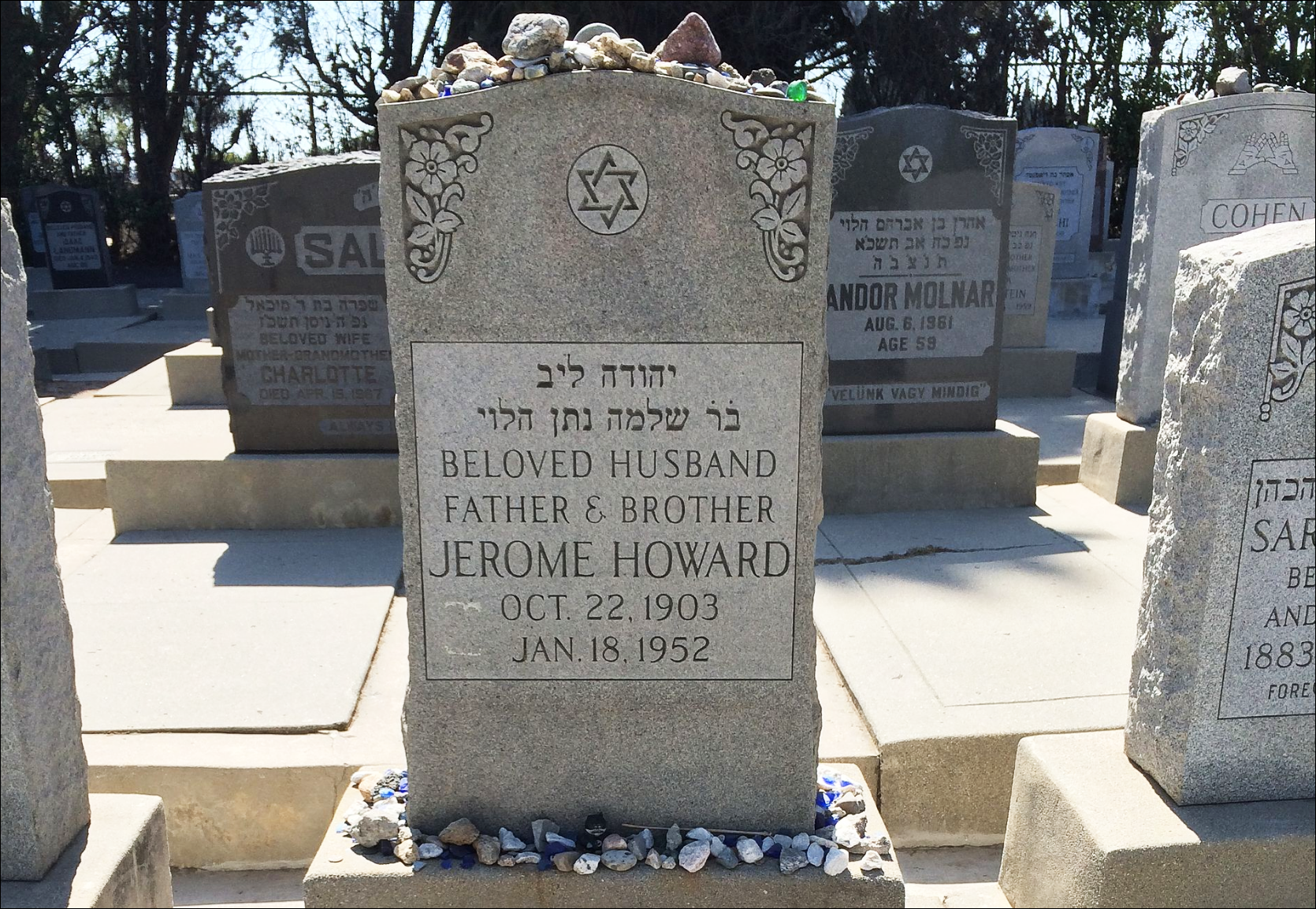
On January 7, 1952, Moe was contacted on the Columbia set while filming He Cooked His Goose to help move Curly for what would be the last time. This proved unsuccessful, and Curly died eleven days later, on January 18, 1952. Hid life was the shortest of all the Stooges, dying at the age of 48. He was given a Jewish funeral and interred in the Western Jewish Institute section at the Home of Peace Cemetery in East Los Angeles. His older brothers Shemp and Benjamin would also be interred there in 1955 and 1976 respectively, near their parents Jennie and Solomon.✪














COUNTDOWN TO INAUGURATION DAY 2025






▶️ CLICK HERE TO VIEW
▶️ 59 Minutes 57 Seconds
▶️ 1 Hour 48 Minutes 57 Seconds
▶️ 15 Minutes 22 Seconds
▶️ 8 Minutes 1 Second ⭐️ Gary Brown
▶️ 14 Minutes 35 Seconds
▶️ 10 Minutes 5 Seconds
▶️ 14 Minutes51 Seconds
▶️ 9 Minutes 01 Seconds
