⭐️ BHF Covfefe


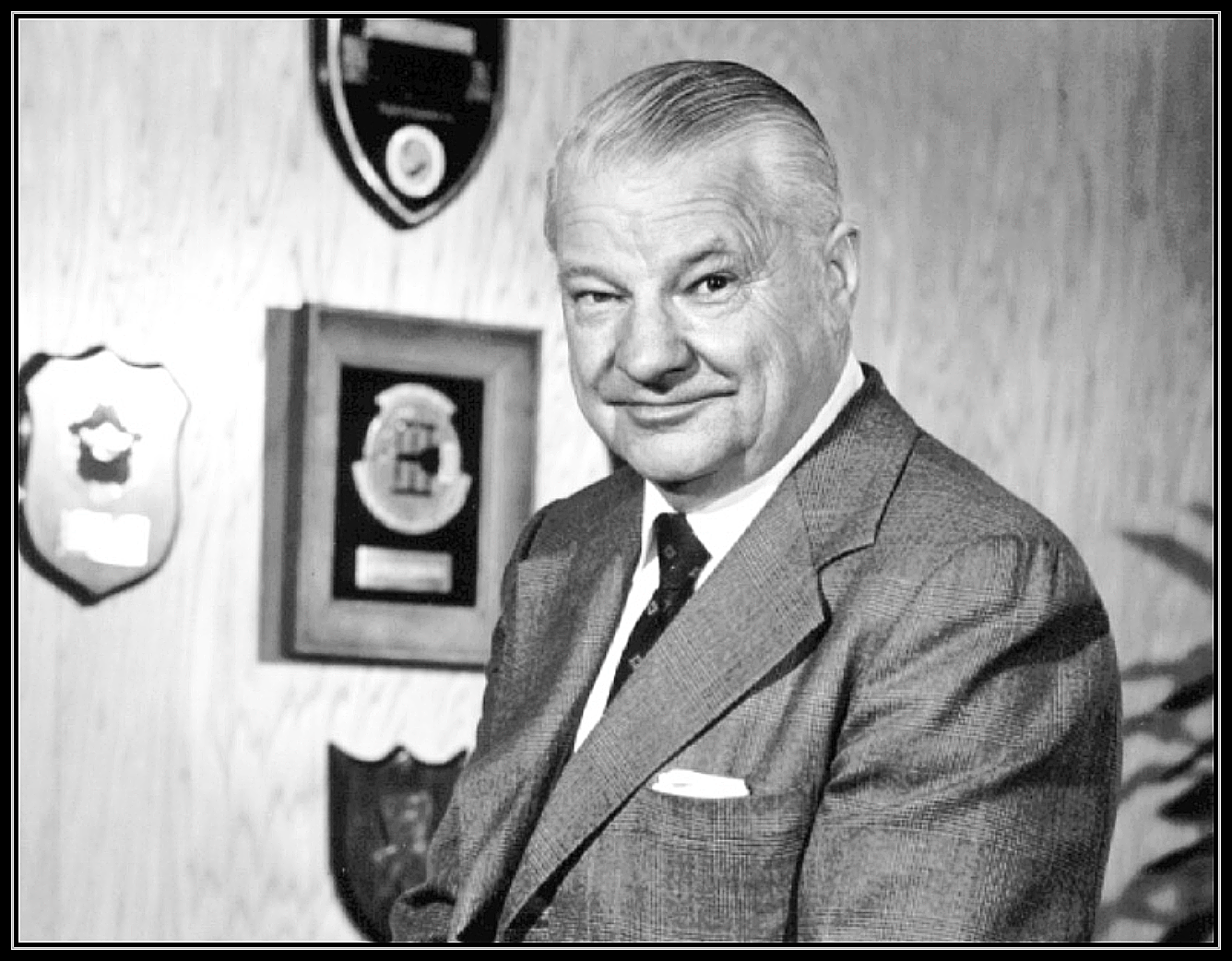

Clarence Leonard Johnson: (February 27, 1910 – December 21, 1990)
✪ Clarence Leonard “Kelly” Johnson was an American aeronautical and systems engineer; recognized for his contributions to a series of important aircraft designs, most notably the Lockheed U-2 and SR-71 Blackbird. Besides the first production aircraft to exceed Mach 3, he also produced the first fighter capable of Mach 2, the United States’ first operational jet fighter, as well as the first fighter to exceed 400 mph, and many other contributions to various aircraft platforms.
As a member and first team leader of the Lockheed Skunk Works, Johnson worked for more than four decades and is said to have been an “organizing genius.” He played a leading role in the design of over forty aircraft, including several honored with the prestigious Collier Trophy, and acquired a reputation as one of the most talented and prolific aircraft design engineers in the history of aviation.
Kelly Johnson was born in the remote mining town of Ishpeming, Michigan to parents who were Swedish immigrants who came from the city of Malmö, county of Scania. His father ran a construction company. When Johnson was 13 years old, he won a prize for his first aircraft design. He attended Flint Central High School and graduated in 1928, then went on to Flint Junior College, now known as Mott Community College, and finally to the University of Michigan in Ann Arbor, where he received a Bachelor’s and Master’s Degree in Aeronautical Engineering.
While attending grade school in Michigan, Johnson was often ridiculed for his first name, Clarence. Some boys started calling him “Clara.” One morning while waiting in line to get into a classroom, one boy started with the normal routine of calling him “Clara.” Johnson tripped him so hard the boy broke a leg. The boys then decided that he was not a “Clara” after all; and instead started calling him “Kelly.” The nickname stuck and Johnson carried it for the remainder of his life. The name came from the popular song at the time, “Has Anyone Here Seen Kelly? (Kelly from the Emerald Isle)”. Henceforth, he was always known as “Kelly” Johnson.
In 1937, Johnson married Althea Louise Young, who worked in Lockheed’s accounting department; she died in December 1969. In May 1971, he married his secretary Maryellen Elberta Meade of New York; she died after a long illness on October 13, 1980, aged 46. He married Meade’s friend Nancy Powers Horrigan in November 1980.
At the University of Michigan, Johnson conducted wind tunnel tests of Lockheed’s proposed Model 10 airliner. He found the aircraft did not have adequate directional stability, but his professor felt it did and told Lockheed so. Upon completing his master’s degree in 1933, Johnson joined Lockheed as a tool designer on a salary of $83 a month. Shortly after starting, Johnson convinced Hall Hibbard, the chief engineer at Lockheed, the Model 10 was unstable.
Hibbard sent Johnson back to Michigan to conduct more tests. Johnson eventually made multiple changes to the wind tunnel model, including adding an “H” tail, to address the problem. Lockheed accepted Johnson’s suggestions and the Model 10 went on to be a success. This brought Johnson to the attention of company management, and he was promoted to aeronautical engineer.
After assignments as flight test engineer, stress analyst, aerodynamicist, and weight engineer, Johnson became chief research engineer in 1938. In 1952, he was appointed chief engineer of Lockheed’s Burbank, California plant, which later became the Lockheed-California Company. In 1956 he became Vice President of Research and Development there.
In 1958, Johnson became Vice President of Advanced Development Projects (ADP). The first ADP offices were Johnson & the site where his secretive team built the first P-38 was nearly uninhabitable; a smelly former bourbon distillery. Moving from the distillery to a larger building, the stench from a nearby plastic factory was so vile that Irv Culver, one of the engineers, began answering the intra-Lockheed “house” phone “Skonk Works!”
In Al Capp’s comic strip Li’l Abner, Big Barnsmell’s Skonk Works — spelled with an “o” — was where the Kickapoo Joy Juice was brewed. When the name leaked out, Lockheed ordered it changed to “Skunk Works” to avoid potential legal trouble over use of a copyrighted term. The term rapidly circulated throughout the aerospace community, and became a common nickname for the Lockheed research and development offices.
Johnson led or contributed to the development of a number of aircraft. A few examples illustrate the influence of his work. In the late 1930s, Johnson led the team that developed the advanced twin-engine fighter, the P-38 Lightning. Eventually, almost 10,000 Lightnings were built and they played a significant role in World War II. Johnson also worked on the development of the Constellation for Howard Hughes’ TWA airline
▶️ 13 Minutes 48 Seconds
▶️ JOHNSON INFLUENCED THE FOLLOWING AIRCRAFT DESIGN:
- Model 9D Orion, First airliner with retractable landing gear, faster than any known military aircraft of the time. Won 1937 Harmon Trophy.
- Model 10 Electra, flown by Amelia Earhart on her ill-fated around-the-world expedition in 1937. First aircraft to perform round-trip commercial flight over Atlantic Ocean.
- Model 12 Electra Junior, upgraded version of the Model 10. Used to prove wing deicing using engine exhaust, as well as testing of twin-engine aircraft aboard aircraft carriers. Used by British intelligence to spy on pre-war Nazi Germany. Won 1937 Bendix Trophy.
- Model 14 Super Electra Upgrade variant of Model 10. In 1938, completed a world-record flight of 15,441 miles.
- Model 18 Lodestar, competitor to famous DC-3. Similar operating cost, superior performance, smaller passenger capacity
- PV-1 Ventura, militarized version of Model 18. Would often lead B-24 bomber formations, due to being equipped with its own search radar unit. Used in both Pacific and European theater, including bombing raids on Germany, and hunting enemy submarines.
- P-38 Lightning, the first fighter to exceed 400 mph, and the aircraft which killed Admiral Isoroku Yamamoto. Holds the record for the longest interception mission of World War II.
- Constellation family, first family of pressurized airliners. Used in various military roles, including transporting President Eisenhower, and General MacArthur.
- L-049 Constellation First version of Constellation, first four engine aircraft produced by Lockheed. Upon its first flight, the chief test pilot remarked, “This machine works so well that you don’t need me anymore!”
- L-149 Constellation, designation given to L-049 aircraft refitted with a larger fuel capacity
- C-69 Constellation, military transport version of the Constellation. Only one served during World War II, as a troop and VIP carrier.
- L-649 Constellation, improved L-049 which included overhead sleeping berth, as well as a removable cargo bay, the “Speedpak”.
- L-749 Constellation, improved L-649. Larger fuel capacity, strengthened landing gear, and eventually weather radar.
- C-121/R7O/R7V Constellation, military version of L-749. Used as radar warning AWACS aircraft. President Dwight Eisenhower and General Douglas MacArthur both used the C-121A as their personal VIP transports. Also used as a freighter.
- PO-1W/WV-1 Warning Star, airborne early warning (AEW) variant of the C-121, used to supplement the Distant Early Warning Line. EC-121s were also used for intelligence gathering.
- L-1049 Super Constellation, stretched version of the Constellation, modified into several military variants.
- PO-2W/WV-2/WV-3/EC-121 Warning Star. AEW variant, used along with picket ships to warn of incoming Soviet bomber attacks.
- YC-121F/R7V-2 Constellation, experimental turboprop military transport.
- L-749 Constellation, improved L-649. Larger fuel capacity, strengthened landing gear, and eventually weather radar.
- L-049 Constellation First version of Constellation, first four engine aircraft produced by Lockheed. Upon its first flight, the chief test pilot remarked, “This machine works so well that you don’t need me anymore!”
- F-80 Shooting Star, the first successful American jet fighter. First west-to-east Atlantic crossing by single-engined jet.
- T-33 and TV-2, trainer versions of F-80.
- P2V Neptune, anti-submarine bomber. Temporarily kept aboard aircraft carriers to use as a stop gap, one use, nuclear bomber. Incapable of landing on aircraft carrier after launch.
- XF-90, prototype penetration fighter. First USAF jet with an afterburner and the first Lockheed jet to fly supersonic.
- F-94 Starfire, first operational USAF fighter equipped with an afterburner and the first jet-powered all-weather fighter to enter combat.
- X-7, testbed for ramjet engines and missile guidance technology. Dropped from B-52 and assisted by rocket on initial flight phase, exceeded Mach 4.
- F-104 Starfighter, first Mach 2 fighter to enter service. With its GE J79 engine, it won the 1958 Collier Trophy for its Lockheed and GE technical achievement.
- F-117A Nighthawk, first operational stealth aircraft.
- C-130 Hercules, turboprop military transport. Longest continuous production run of any military aircraft in history. Over 40 models serving in at least 60 nations.
- U-2, high altitude intelligence gathering aircraft.
- Blackbird family: A-12, YF-12, SR-71, M-21, and D-21. First family of operational Mach 3 aircraft. Composed almost entirely of titanium. The CIA M-21 was capable of launching a Mach 3 drone, known as the D-21. The YF-12 interceptor version was capable of launching a Mach 4 version of the AIM-47 Falcon missile, capable of hitting bombers flying at extremely low altitude. Johnson’s second Collier Trophy (1963).
- JetStar/C-140, first dedicated business jet to enter service.
Johnson is sometimes cited as the originator of the KISS principle: and his famed “down-to-brass-tacks” management style was summed up by his motto, “Be quick, be quiet, and be on time.” He ran Skunk Works by “Kelly’s 14 Rules:”
▶️ KELLY’S FOURTEEN RULES
- The Skunk Works manager must be delegated practically complete control of his program in all aspects. He should report to a division president or higher.
- Strong but small project offices must be provided both by the military and industry.
- The number of people having any connection with the project must be restricted in an almost vicious manner. Use a small number of good people (10% to 25% compared to the so-called normal systems).
- A very simple drawing and drawing release system with great flexibility for making changes must be provided.
- There must be a minimum number of reports required, but important work must be recorded thoroughly.
- There must be a monthly cost review covering not only what has been spent and committed but also projected costs to the conclusion of the program. Don’t have the books 90 days late, and don’t surprise the customer with sudden overruns.
- The contractor must be delegated and must assume more than normal responsibility to get good vendor bids for subcontract on the project. Commercial bid procedures are very often better than military ones.
- The inspection system as currently used by the Skunk Works, which has been approved by both the Air Force and Navy, meets the intent of existing military requirements and should be used on new projects. Push more basic inspection responsibility back to subcontractors and vendors. Don’t duplicate so much inspection.
- The contractor must be delegated the authority to test his final product in flight. He can and must test it in the initial stages. If he doesn’t, he rapidly loses his competency to design other vehicles.
- The specifications applying to the hardware must be agreed to well in advance of contracting. The Skunk Works practice of having a specification section stating clearly which important military specification items will not knowingly be complied with and reasons therefore is highly recommended.
- Funding a program must be timely so that the contractor doesn’t have to keep running to the bank to support government projects.
- There must be mutual trust between the military project organization and the contractor with very close cooperation and liaison on a day-to-day basis. This cuts down misunderstanding and correspondence to an absolute minimum.
- Access by outsiders to the project and its personnel must be strictly controlled by appropriate security measures.
- Because only a few people will be used in engineering and most other areas, ways must be provided to reward good performance by pay not based on the number of personnel supervised.
Johnson had a 15th rule that he passed on by word of mouth. According to the book Skunk Works the 15th rule is: “Starve before doing business with the damned Navy. They don’t know what the hell they want and will drive you up a wall before they break either your heart or a more exposed part of your anatomy.”
In 1943, responding to United States Army Air Forces’ concerns about Nazi Germany’s development of high performance jet fighters, Johnson proposed to develop a jet airplane in six months. The result was the P-80 Shooting Star, which was completed on time and was America’s first operational jet fighter.
In 1955, at the request of the Central Intelligence Agency, Johnson initiated construction of the airbase at Groom Lake, Nevada, later known as Area 51. This project provided a secret location for flight testing the Lockheed U-2.
▶️ 8 Minutes 35 Seconds
Johnson also helped to design the Lockheed AQM-60 Kingfisher a decade before the famous SR-71. The Kingfisher was a highly successful single-engine Mach 4.3-capable ramjet aircraft composed mainly of steel, which was used to test American air defenses against nuclear missiles. The information and experience Johnson gained was later used to produce the A-12 spy plane for the Central Intelligence Agency. Johnson then used the combined knowledge of the Kingfisher and A-12 to produce the SR-71 Blackbird.
Johnson also led the development of the entire SR-71 Blackbird family of aircraft. Through a number of significant innovations, Johnson’s team was able to create an aircraft that flew so high and fast that it could be neither intercepted nor shot down. No other jet airplane design since has matched the Blackbird’s performance.
Johnson served on Lockheed’s board of directors from 1964 to 1980 & became a senior vice president in 1969. He officially retired from Lockheed in 1975, but continued as a consultant at the Skunk Works. In June 1983, the Lockheed Rye Canyon Research and Development Center in Santa Clarita was renamed Kelly Johnson Research and Development Center, Lockheed-California Company, in honor of Johnson’s 50 years of service to the company.
A number of factors contributed to Johnson’s extraordinary career. He was a naturally talented designer and engineer who could quickly and accurately estimate design characteristics such as mass, characteristics which usually were determined through lengthy calculations. He was also ambitious and an excellent salesman, aggressively promoting ideas while also earning others’ trust. In addition, he created teams and a work environment where creativity and productivity were encouraged to flourish.
In 2003, as part of its commemoration of the 100th anniversary of the Wright Brothers’ flight, Aviation Week & Space Technology ranked Johnson eighth on its list of the top 100 “most important, most interesting, and most influential people” in the first century of aerospace. Hall Hibbard, Johnson’s Lockheed boss, referring to Johnson’s Swedish ancestry, once remarked: “That damned Swede can actually see air.”
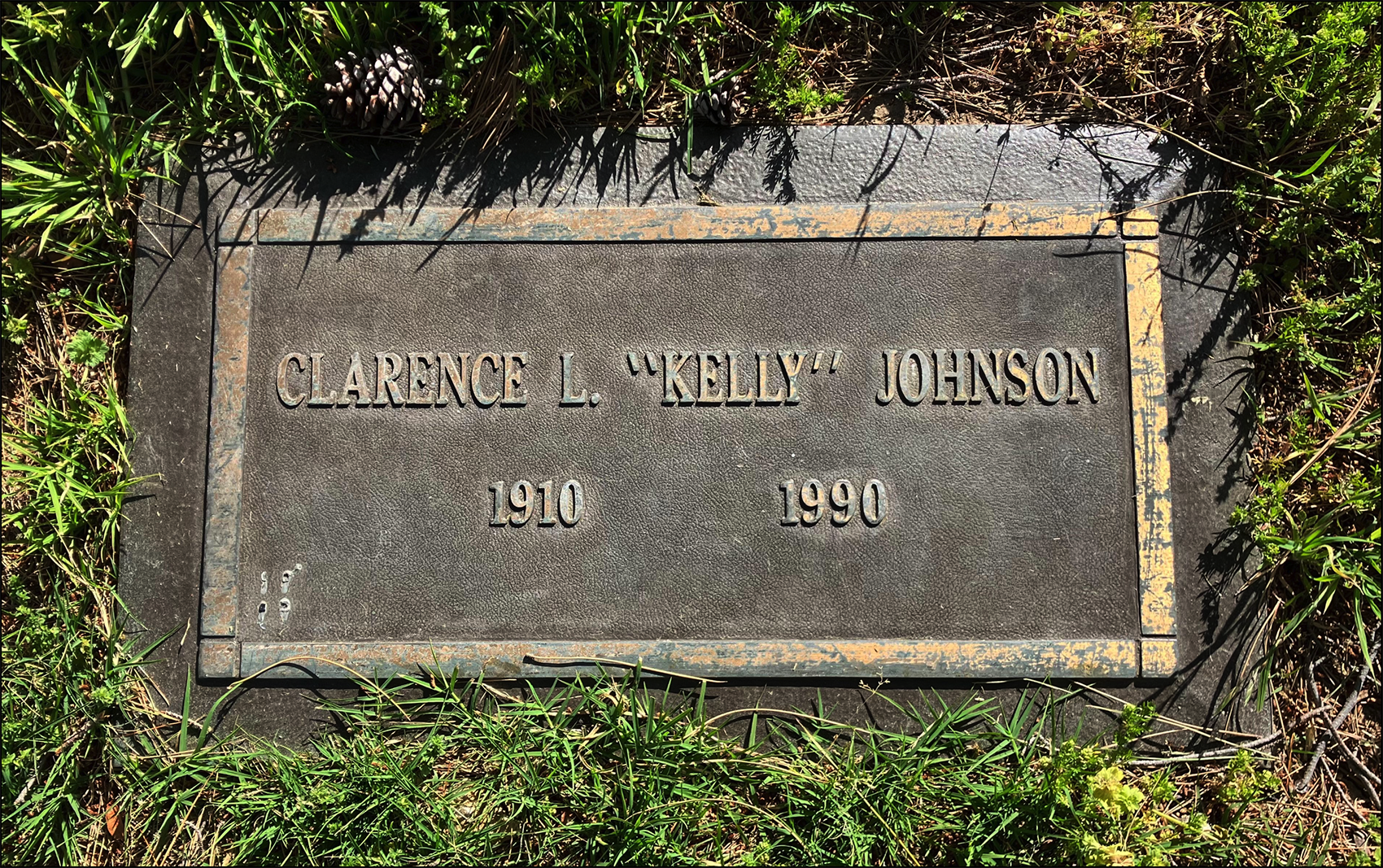
Johnson died at the age of 80 at St. Joseph Medical Center in Burbank due to natural causes brought on by the onset of senility. He is interred at Forest Lawn Cemetery in Los Angeles, California.✪




















▶️ DONATE VIA PAYPAL (DEBIT & CREDIT CARD)
ALL PayPal Transactions Are Encrypted For Card Holder Privacy & Security
▶️ DONATE VIA ZELLE (DIRECT BANK CASH TRANSFER)
ZELLE is the perfect online alternative to PayPal. It’s an incredibly simple, secure, easy, fast and FREE way to send or receive money to recipients directly from your online banking account without a middleman. Best of all, there’s NO fees.
ZELLE is a service provided by your bank and is already built in to your online banking account. You only need to activate it first before using. If you’ve already activated ZELLE in your online bank or credit union account, you can donate to The New Americanist by using our ZELLE address:
vip@thenewamericanist.com
To activate your ZELLE, follow these easy instructions (a simple two minute process):

▶️ DONATE VIA SNAIL MAIL