
Calvin Coolidge Worthington: November 27, 1920 – September 8, 2013
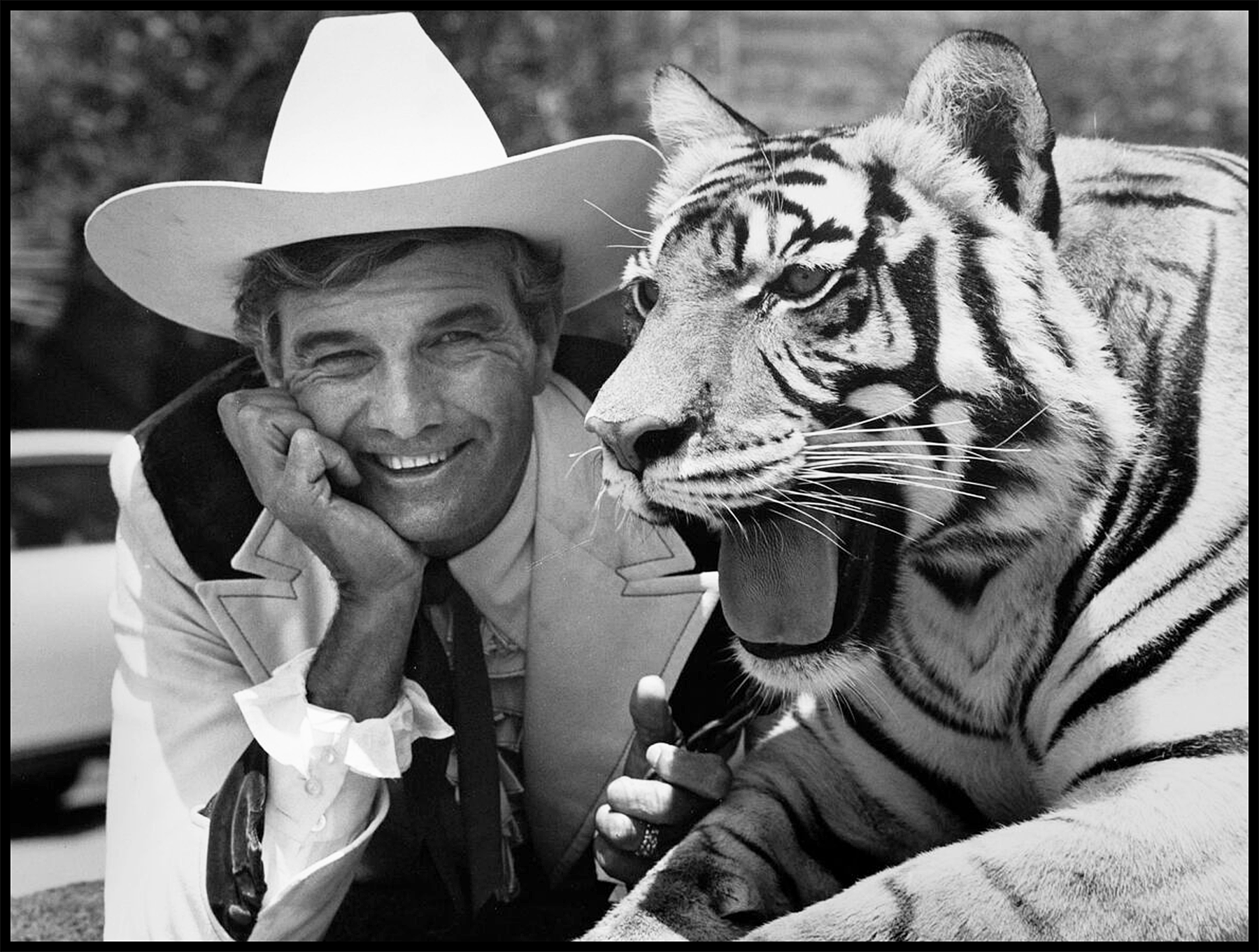
✪ Calvin Coolidge Worthington was an American car dealer, best known in Southern California and other parts of the West Coast of the United States for his offbeat radio and television advertisements for the Worthington Dealership Group. At its peak, the dealership chain spanned the western and southwestern United States. He also made minor appearances and was parodied in various films and television programs.
Worthington became widely recognized for his commercials, often introduced with the catchphrase, “Here’s Cal Worthington and his dog Spot!” Despite the phrase, “Spot” was never a dog, but rather an exotic animal; or even a vehicle featured in the commercial. The campaign became a regional cultural fixture.
A 1990 profile in The Sacramento Bee noted that Worthington grossed $316.8 million in 1988, making him the largest individual owner of a car dealership chain at the time. His advertising agency, Spot Advertising, handled a $15 million commercial budget—reportedly the largest of any U.S. auto dealer. Worthington sold automobiles from 1945 until his death and also owned a 24,000-acre (38 sq mi) ranch near Orland, California.
Calvin Coolidge Worthington was born on November 27, 1920, in the now-defunct town of Bly, Oklahoma. He was named after President Calvin Coolidge, who had been elected Vice President of the United States three weeks earlier.
One of nine children, Worthington left school at 13 and worked as a water boy on a road crew for 15 cents an hour. He later joined the Civilian Conservation Corps at age 15.
At the start of World War II, Worthington enlisted in the United States Army Air Corps. He became an aerobatics champion at Goodfellow Field in San Angelo, Texas, and served as a Boeing B-17 Flying Fortress pilot in the 390th Bomb Group, flying 29 missions over Germany. He was awarded the Air Medal five times and the Distinguished Flying Cross, which was presented by General Jimmy Doolittle. He was discharged with the rank of captain.
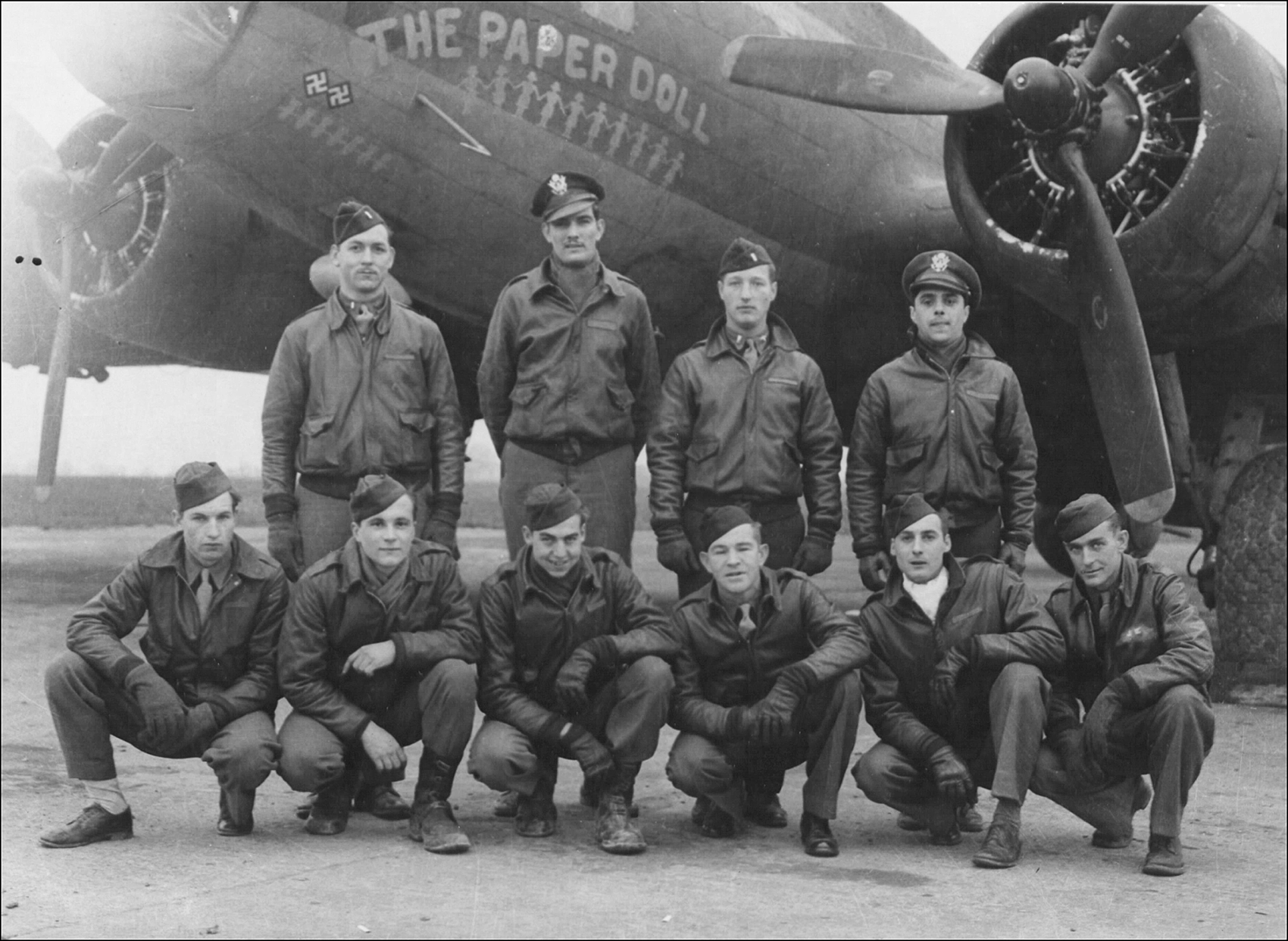
Worthington with his B17 Crew on February 2, 1944 (he is standing, second from the left)
Worthington remained a notable figure in aviation circles for his role in training pilots who later became some of America’s first astronauts.
In 1949, Worthington relocated to Huntington Park, California, where he opened a Hudson dealership. He was an early adopter of television advertising, buying airtime for a three-hour live country music show on Los Angeles station KTLA every weekend. The program eventually became known as Cal’s Corral. A regular performer was singer and lap steel guitar player Jenks “Tex” Carman.
When full-program sponsorships became unfeasible, Worthington switched to 30- and 60-second commercials and became a Ford dealer. By the 1970s, his advertisements saturated late-night movie broadcasts on four of Los Angeles’s seven TV stations, airing from midnight to 6 a.m.
One of Worthington’s rivals in the 1960s was Chick Lambert of Brand Motors Ford City, who often appeared in commercials with a German Shepherd named Storm. Storm was used as a prop: lounging on car hoods, sitting behind the wheel, or walking with Lambert. By the mid-1960s, Lambert was working at Ralph Williams Ford and began his commercials with, “Some people call this a commercial; I call it an invitation.” Worthington responded by launching his “dog Spot” series of ads, which began with a roaring gorilla and grew into a hallmark of his advertising style.
The Worthington Dealership Group eventually expanded across much of the Southwest & Western United States, operating 29 dealerships at its peak. Locations included Anchorage, Alaska; Phoenix, Arizona; Carlsbad, Claremont, Folsom, Long Beach, Sacramento, and South Gate, California; Reno, Nevada; Houston, Sugar Land, Texas; and Federal Way, Washington. The group entered the Anchorage market in 1976, during the peak of the Trans-Alaska Pipeline System construction boom.
By the early 2000s, Worthington was among the first to adopt the “auto mall” concept, shifting away from traditional standalone dealerships. As of 2002, he also owned three shopping centers and an office tower, with reported gross revenues of $600 million annually.
The company’s final dealership, located in Long Beach, California, closed in February 2023, marking the end of the Worthington auto retail era.
From the 1960s through the 1990s, Worthington produced a series of unconventional television and radio ads loosely inspired by Earl “Madman” Muntz’s “oddball” style. The campaign began as a parody of a competitor who featured a dog adopted from a pound. Each commercial opened with the line, “Here’s Cal Worthington and his dog Spot!”—but “Spot” was never a dog. Instead, it might be an exotic animal such as a tiger, elephant, or bear. One early ad featured a roaring gorilla; in others, Worthington stood on a flying airplane wing or appeared alongside a hippopotamus.
These commercials were a response to Chick Lambert’s ads, which always included his German Shepherd, Storm. Worthington’s parody proved so popular that the “dog Spot” motif became a staple of his brand.
▶️ 1 Minute 1 Second
The ads aired heavily in the overnight hours and were accompanied by a jingle set to the tune of “If You’re Happy and You Know It,” with lyrics such as:If you want a car or truck, go see Cal,If you want to save a buck, go see Cal,Give a new car to your wife, she will love you all your life,Go see Cal, go see Cal, Go see Cal.
Worthington reportedly wrote the lyrics and recorded the jingle himself, with help from country-western singer Sammy Masters. The commercial’s popularity was such that many children believed Worthington’s name was “Go See Cal.”
Animals featured as “Spot” included a killer whale from SeaWorld, lion, elephant, goose, bull, various snakes, rhinoceros, skunk, bear, a roller-skating chimpanzee, carabao, and hippopotamus. Even NFL player Deacon Jones once played “Spot” and sang the jingle. Worthington sourced animals from local circuses and professional handlers in the Hollywood area.
In some ads, Worthington claimed he would perform stunts to make a sale—such as “eating a bug” or “standing on his head until his ears turned red.” According to the Television Bureau of Advertising, Worthington was “probably the best-known car dealer pitchman in television history.”
Worthington was married and divorced four times. He had his last child in his early eighties. Notably, he never owned a personal car; instead, he drove used vehicles that were for sale at his dealerships. In a 2007 interview, Worthington stated that he disliked selling cars but “just kind of got trapped in it after the war. I didn’t have the skills to do anything else. I just wanted to fly.”
In May 2010, he appeared in a political advertisement for California State Assembly candidate Larry Miles. The commercial, a throwback to the “My Dog Spot” era, featured Worthington and “Spot” alongside the candidate. Worthington maintained both his pilot certificate and medical certification until two years before his death and was type-rated on the Learjet.
Worthington died of natural causes on September 8, 2013, at the age of 92, at his ranch in Orland, California. He was cremated and his ashes spread by his family at an undisclosed location.✪















▶️ DONATE VIA PAYPAL (DEBIT & CREDIT CARD)
ALL PayPal Transactions Are Encrypted For Card Holder Privacy & Security
▶️ DONATE VIA ZELLE (DIRECT BANK CASH TRANSFER)
ZELLE is the perfect online alternative to PayPal. It’s an incredibly simple, secure, easy, fast and FREE way to send or receive money to recipients directly from your online banking account without a middleman. Best of all, there’s NO fees.
ZELLE is a service provided by your bank and is already built in to your online banking account. You only need to activate it first before using. If you’ve already activated ZELLE in your online bank or credit union account, you can donate to The New Americanist by using our ZELLE address:
vip@thenewamericanist.com
To activate your ZELLE, follow these easy instructions (a simple two minute process):

▶️ DONATE VIA SNAIL MAIL