

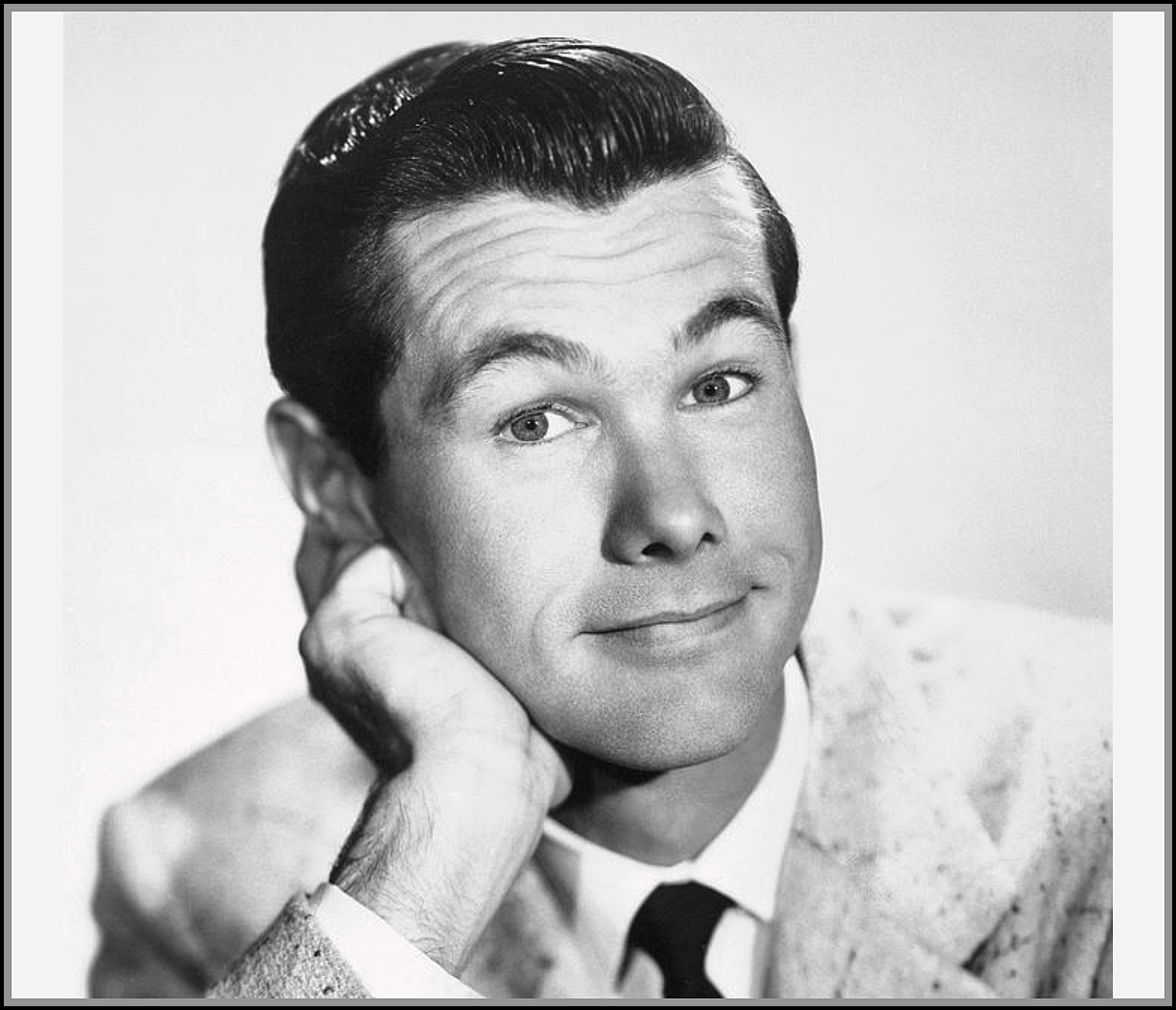

John William Carson: October 23, 1925–January 23, 2005
✪ John William Carson was an American television host, comedian, and writer best known as the host of NBC’s The Tonight Show Starring Johnny Carson (1962–1992). During his career, Carson received six Primetime Emmy Awards, the Television Academy’s 1980 Governor’s Award and a 1985 Peabody Award. He was inducted into the Television Academy Hall of Fame in 1987. Carson was also awarded the Presidential Medal of Freedom in 1992 and received a Kennedy Center Honor in 1993.
Carson has remained an American cultural icon even after his retirement in 1992 and death in 2005. His forte was a casual, conversational approach with extensive interaction with guests; an approach pioneered by Arthur Godfrey and previous Tonight Show hosts Jack Paar and Steve Allen; but enhanced by Carson’s lightning-quick wit. Carson remains a cultural icon in the United States and is widely regarded as the king of late-night television.
Carson was born on October 23, 1925, in Corning, Iowa to Ruth Elizabeth Carson (née Hook; 1901–1985) and Homer Lloyd “Kit” Carson (1899–1983), a power company manager. Carson was the second of three children and had an older sister and a younger brother.
Growing up in Iowa, Carson lived in the towns of Avoca, Clarinda and Red Oak before moving to Norfolk, Nebraska, at the age of eight. There, Carson began to develope his talent for entertaining. At age 12 he found a book on magic at a friend’s house and immediately purchased a small, mail-order magician’s kit. After purchasing the kit, Carson would practice his performance skills on card tricks with family members. He was known to follow his family members around saying, “Pick a card, any card.”
Carson’s mother sewed him a cape, and his first performance was staged in front of the local Kiwanis Club. He debuted at age 14 as “The Great Carsoni” and was paid $3 a show. Many other performances at local picnics and county fairs soon followed.
After graduating high school, Carson hitchhiked to Hollywood, California. There he was arrested and fined $50 for impersonating a midshipman.
Carson joined the United States Navy on June 8, 1943, and received V-12 Navy College Training Program officer training at Columbia University and Millsaps College. Commissioned an ensign late in the war, Carson was assigned to the USS Pennsylvania in the Pacific; serving as a communications officer in charge of decoding encrypted messages. While in the Navy, Carson posted a 15–0-1 amateur boxing record, with most of his bouts fought on board Pennsylvania. He was en route to the combat zone aboard a troop ship when the war ended.
Taking advantage of educational opportunities from the Navy, Carson attended the University of Nebraska–Lincoln, where he joined the Phi Gamma Delta fraternity and continued performing magic (then paid $25 per appearance). Carson majored in journalism with the intention of becoming a comedy writer, but instead switched his major to speech and drama a few months later because he wanted to become a radio performer. In 1949, Carson graduated with a Bachelor of Arts degree in radio and speech with a minor in physics.
Carson began his broadcasting career in 1950 at WOW-AM (now KXSP) and WOW-TV (now WOWT-TV) in Omaha, Nebraska. There, he hosted a morning television program called The Squirrel’s Nest. One of his routines involved interviewing pigeons on the roof of the local courthouse that would report on the political corruption they had seen. Carson supplemented his income by serving as master of ceremonies at local church dinners—attended by some of the same politicians and civic leaders he lampooned on his radio show.
In 1951, Carson joined CBS-owned Los Angeles television station KNXT (now KCBS-TV). In 1953, comic Red Skelton—a fan of Carson’s low-budget sketch comedy show, Carson’s Cellar (1951-1953) on KNXT—asked Carson to join his show as a writer. The following year, Skelton accidentally knocked himself unconscious during a rehearsal an hour before his live show began. Carson successfully filled in for him.
Carson hosted several shows besides Carson’s Cellar, including the game show Earn Your Vacation (1954) and the variety show The Johnny Carson Show (1955–1956). He was also a guest panelist on the original To Tell the Truth beginning in 1960 and became a regular panelist from 1961 to 1962.
Carson moved to New York City to host ABC’s Who Do You Trust? (1957–1962). It was on Who Do You Trust? that Carson would meet his future sidekick and straight man, Ed McMahon. Although Carson believed moving to daytime television would hurt his career, Who Do You Trust? was a huge success. It was the first show where he was completely free to ad lib and interview guests: and because of his on-camera wit, the show became “the hottest item on daytime television” during his six years at ABC.
NBC’s Tonight was the late-night counterpart to its early-morning show Today. Originating in 1954 with host Steve Allen, Tonight was a somewhat experimental early television concept at the time; as until then the only previous network late-night program was NBC’s Broadway Open House (1950-51).
Steve Allen moved to primetime comedy-variety shows in 1957 when Jack Paar became host of Tonight. Paar left the show in 1962 and Carson’s success on Who Do You Trust? led NBC to invite him to take over Tonight a few months before Paar’s departure. Carson originally declined the offer because he feared the difficulty of interviewing celebrities for 105 minutes each night. Bob Newhart, Jackie Gleason, Groucho Marx and Joey Bishop also declined the hosting opportunity.
Although he continued to have doubts about his new job, Carson eventually became the host of Tonight (later called The Tonight Show Starring Johnny Carson) on October 1, 1962. After a difficult first year, he overcame his fears. While Tonight under its previous hosts had been successful, especially under Paar, Carson’s version eventually did very well in the ratings. Billy Wilder later said of Carson:
“By the simple law of survival, Carson is the best. He enchants the invalids and the insomniacs as well as the people who have to get up at dawn. He is the Valium and the Nembutal of a nation. No matter what kind of dead-asses are on the show, he has to make them funny and exciting. He has to be their nurse and their surgeon. He has no conceit. He does his work and he comes prepared. If he’s talking to an author, he has read the book. Even his rehearsed routines sound improvised. He’s the cream of middle-class elegance, yet he’s not a mannequin. He has captivated the American bourgeoisie without ever offending the highbrows, and he has never said anything that wasn’t liberal or progressive. Every night, in front of millions of people, he has to do the salto mortale [circus parlance for an aerial somersault performed on the tightrope]. What’s more, he does it without a net. No rewrites. No retakes. The jokes must work tonight.“
McMahon followed Carson from Who Do You Trust? as his announcer and sidekick. McMahon’s famous introduction, “Heeeeere’s Johnny!!!” was always followed by a brief by Carson. This was often followed by additional comedy sketches, interviews with celebrities and live music performances. Carson’s trademark was a phantom golf swing at the end of his monologues, aimed stage left toward the orchestra.
The Tonight Show was originally produced at NBC’s headquarters at 30 Rockefeller Plaza in New York City, with occasional stints in California.
On May 1, 1972, The Tonight Show moved from 30 Rockefeller Plaza to the NBC Studios in Burbank, California because of the studio’s proximity to celebrities. In 1980 and onward, Carson stopped hosting five shows per week. Instead, Mondays featured a guest host, leaving Carson to host the other four weeknights.
The Tonight Show remained so successful Carlson’s compensation from NBC continued to rise. By the mid-1970s, he had become the highest-paid personality on television, earning about $4 million a year ($18,686,000 2023 equivalent). This amount did not including nightclub appearances or his other business interests. Carson refused many offers to appear in films, including title roles in The Thomas Crown Affair and Gene Wilder’s role in Blazing Saddles.
In recognition of his 25th anniversary on The Tonight Show, Carson received a personal Peabody Award, the board saying he had “become an American institution, a household word, [and] the most widely quoted American.” They also said they “felt the time had come to recognize the contributions that Johnny has made to television, to humor, and to America.”
▶️ 2 Minutes 56 Seconds
Carson played several continuing characters on sketches during the show, including:
✪ Art Fern, the “Tea Time Movie” announcer, whose theme song was “Hooray for Hollywood.” Carson once admitted on camera that this was his favorite character, based on late-afternoon and evening TV movie hosts who would deliver commercials throughout the movie. Actress Carol Wayne became famous for her 100-plus appearances (1971–1984) as Art’s buxom assistant, the Matinée Lady. While Art gave his spiel, she would enter the stage behind him. Art would react to her attractive body by wincing, loudly shouting “Ho — leeeee!” and turning almost everything she said into a sexual double entendre.
✪ Carnac the Magnificent, a turbaned psychic, could answer questions before seeing them. Carnac had a trademark entrance in which he always turned the wrong direction when coming onstage and then tripped on the step up to Carson’s desk. (In one episode, technicians rigged Carson’s desk to fall apart when Carnac fell into it.) These comedic missteps were an indication of Carnac’s true prescient abilities. McMahon would hand Carson a series of envelopes containing questions, said to have been “hermetically sealed and kept in a mayonnaise jar on Funk & Wagnalls’ porch since noon today.” Carson would place each envelope against his forehead and predict the answer, such as “Gatorade.” Then, he would read the question: “What does an alligator get on welfare?”
McMahon would always announce near the end, “I hold in my hand the last envelope,” at which time the audience would applaud wildly, prompting Carnac to pronounce a comedic “curse” upon the audience, such as, “May a flock of wild geese leave a deposit on your breakfast!, May your sister elope with a camel!, May a diseased yak take a liking to your sister.” or the most famous: “May the bird of paradise fly up your nose!”
✪ Floyd R. Turbo American (with no pause between words) was a stereotypical common working man, wearing a plaid hunting coat and cap, who offered “editorial responses” to left-leaning causes or news events. Railing against women’s rights in the workplace, for example, Turbo would shout: “This raises the question: kiss my Dictaphone!”
✪ Aunt Blabby, a cantankerous and sometimes amorous old lady, was invariably interviewed by straight man Ed McMahon about elder affairs. McMahon would innocently use a common expression like “check out,” only to have Aunt Blabby warn him: “Don’t say ‘check out’ to an old person!” Aunt Blabby was an obvious copy of Jonathan Winters’ most famous creation, Maude Frickert, including her black spinster dress and wig.
✪ El Mouldo, a mentalist, would attempt to perform mind-reading and mind-over-matter feats, all of which failed. Often, his tricks would include an attempt to bilk money from Ed McMahon or would end with his begging the audience for a dollar, or at least bus fare.
✪ The Maharishi, whose theme song was “Song of India,” was a frizzy-haired “holy man” who spoke in a high-pitched, tranquil tone, greeted announcer McMahon with a flower, and often answered comedic, philosophical questions. This sketch was a lampooning of Maharishi Mahesh Yogi.
On February 27, 1982, Carson was arrested for drunk driving on La Cienega Boulevard, near Beverly Hills; he was released on his own recognizance. Carson pleaded no contest to the charges, and in October 1982, received a sentence of three years probation with a fine of $603 and was required to attend a driver’s education alcohol program. Carson’s driving privilege was restricted to driving only to and from work and alcohol education classes for a period of 90 days.
Carson reportedly loathed what he perceived as disloyalty, and he was furious when former frequent Tonight Show guest hosts John Davidson and Joan Rivers began hosting their own talk shows. Rivers’ show on the Fox Network directly competed with Carson during the 1986–1987 season before finally being cancelled. On June 24, 2009, following Ed McMahon’s death, Rivers lauded McMahon on Larry King Live, but said that after she got her own show, Carson refused to ever speak to her again.
In December 1973, Carson joked on Tonight about an alleged shortage of toilet paper. Viewers believed the story to be true and panic buying and hoarding of toilet paper began across the United States as consumers emptied stores, creating a real shortage that lasted for several weeks. Stores and toilet paper manufacturers had to ration supplies until the panic ended.
Carson successfully sued a manufacturer of portable toilets that wanted to call its product “Here’s Johnny.”
In 1979, Carson invested $500,000 (equivalent to $2,099,037 in 2023) in the DeLorean Motor Company. Additionally, Carson was head of a group of investors who purchased and operated two television stations. The first was KVVU-TV in Henderson, Nevada, an independent station serving Las Vegas, acquired by the Carson Group in 1979.
Carson’s other business ventures included the extremely successful Johnny Carson Apparel, Inc.—his turtlenecks and sportswear became fashion trends—and a failed restaurant franchise.
Carson retired from show business on May 22, 1992 at the age of 66, when he stepped down as host of The Tonight Show. His farewell show was a major media event and often emotional for Carson, his colleagues and the audience. In tribute to Carson and his enormous influence, several networks that had late-night variety talk shows “went dark” for the entire hour as he did the last show. After 13 tries, The Tonight Show finally won the Emmy for Outstanding Variety, Music or Comedy Series later that year. Johnny’s final two Tonight Show guests were Robin Williams and Bette Midler.
At the end of his final Tonight Show episode, Carson indicated that he might, if so inspired, return with a new project. Instead, he chose to go into full retirement, rarely giving interviews and declining to participate in NBC’s 75th-anniversary celebrations. He made occasional cameo appearances, including voicing himself on the May 13, 1993, episode of The Simpsons (“Krusty Gets Kancelled”), telephoning David Letterman on a November 1993 episode of Late Show with David Letterman, and appearing in the 1993 NBC special Bob Hope: The First 90 Years. Carson played tennis throughout his retirement.
Despite his on-camera demeanor, Carson was actually introverted and extremely shy off camera. He was known for avoiding most large parties and was called “the most private public man who ever lived.” Screenwriter George Axelrod once said of Carson, “Socially, he doesn’t exist. The reason is that there are no television cameras in living rooms. If human beings had little red lights in the middle of their foreheads, Carson would be the greatest conversationalist on Earth.”
In his book, Carson’s former lawyer Henry Bushkin stated, he “was by instinct and upbringing definitely Republican, but of an Eisenhower sort that we don’t see much of anymore … Overall, you’d have to say he was anti-big: anti-big government, anti-big money, anti-big bullies, anti-big blowhards.” Carson served as MC for Ronald Reagan’s inaugural gala in 1981 at the request of Frank Sinatra.
Carson routinely refused to discuss politics, social controversies, his childhood or details of his private life with interviewers. He offered a list of pre-written answers to journalists who tried to ask him questions. Among those answers were “Yes, I did,” “No, I didn’t,” and “No, kumquats.”
Carson avoided explicitly mentioning his views of politics on The Tonight Show, saying he “hated to be pinned down” as that would “hurt me as an entertainer, which is what I am.” He also seldom invited political figures onto the Tonight Show because he “didn’t want it to become a political forum” and did not want the show used, by himself or others, to influence the political opinions of the viewers.
In October 1949, Carson married Jody Wolcott in North Platte, Nebraska. The marriage was volatile, with infidelities committed by both parties and ended in divorce in 1963.
Carson then married Joanne Copeland the same year, on August 17. After a second protracted divorce in 1972, Copeland received a settlement of $6,000 per month in alimony until she remarried or until Carson’s death (she received it until his death in 2005).
At the Carson Tonight Show‘s 10th-anniversary party on September 30, 1972, Carson announced that former model Joanna Holland and he had been secretly married that afternoon, shocking his friends and associates. On March 8, 1983, Holland filed for divorce. The divorce case finally ended in 1985 with an 80-page settlement, in which Holland received $20 million in cash and property (equivalent to $56,658,416 in 2023).
On June 20, 1987, Carson married Alexis Maas. That marriage lasted until his death in 2005.
In 1981, Carson created the John W. Carson Foundation, dedicated to supporting children, education and health services. In August 2010, his charitable foundation reported receiving $156 million (equivalent to $243,369,569 in 2023) from a personal trust established by the entertainer years before his 2005 death, thus becoming by far the largest Hollywood charity. The foundation currently continues to support charitable causes.
In November 2004, Carson also announced a $5.3 million gift to the University of Nebraska Foundation to support the Hixson–Lied College of Fine and Performing Arts Department of Theater Arts, which created the Johnny Carson School of Theater and Film.
Carson also donated to worthwhile charitabe causes in his hometown of Norfolk, including the Carson Cancer Center at Faith Regional Health Services, the Elkhorn Valley Museum, and the Johnny Carson Theater at Norfolk Senior High School. Carson also donated to the Northeast Community College Lifelong Learning Center in honor of his favorite teacher, Miss Fay Gordon who appeared on his show a number of times. His last known visit to Norfolk was to throw the 100th-birthday party for Miss Gordon, which Carson had promised to do several years earlier.
Carson was an avid amateur astronomer and a close friend of astronomer Carl Sagan, who often appeared on The Tonight Show. Carson was also an amateur drummer and was shown on a 1979 segment of 60 Minutes practicing at home on a drum set given to him by his close friend Buddy Rich, who was the jazz musician who made the most appearances on The Tonight Show.
Carson was an avid tennis player. When he sold a Malibu house to John McEnroe and Tatum O’Neal, the escrow terms required McEnroe to give Johnny six tennis lessons. Carson was also a private pilot; his flight logbook and jacket were donated after his death to the Experimental Aircraft Association in Oshkosh, Wisconsin.
▶️ 1 Minute 59 Seconds
Carson’s show launched the careers of many performers, especially comedians and musicians. For a comedian appearing on the show, getting Carson to laugh and being invited to the guest chair were considered the highest honors.
On March 19, 1999, Carson suffered a severe heart attack at his home in Malibu, California and was hospitalized in nearby Santa Monica, where he underwent a quadruple-bypass surgery proceedure.
Carson was a heavy chain smoker for decades. In the early days of his tenure on The Tonight Show, he often smoked on-camera, at one point smoking four packs of unfiltered Pall Mall cigarettes a day. It was reported that as early as the mid-1970s, he would repeatedly say, “These things are killing me.” His younger brother recalled that during their last conversation, Carson kept saying, “Those damn cigarettes.”
In September 2002, Carson revealed that he had emphysema but denied he was terminally ill. On January 23, 2005, Carson died at Cedars-Sinai Medical Center in Los Angeles of respiratory failure arising from emphysema. His body was cremated and his ashes were given to his wife, Alexis Maas. In accordance with his family’s wishes, no public memorial service was held. A park is named in his memory in Burbank, across from the former NBC Studios.✪













COUNTDOWN TO INAUGURATION DAY 2025



▶️ CLICK HERE TO VIEW
▶️ 1 Hour 20 Minutes 50 Seconds
▶️ 2 Hours 43 Minutes 51 Seconds
▶️ 1 Hour 48 Minutes 57 Seconds
▶️ 14 Minutes 35 Seconds
▶️ 5 Minutes42 Second ⭐️ Gary Brown
▶️ 12 Minutes
▶️ 18 Minutes 15 Seconds
▶️ 3 Minutes 41 Seconds
