
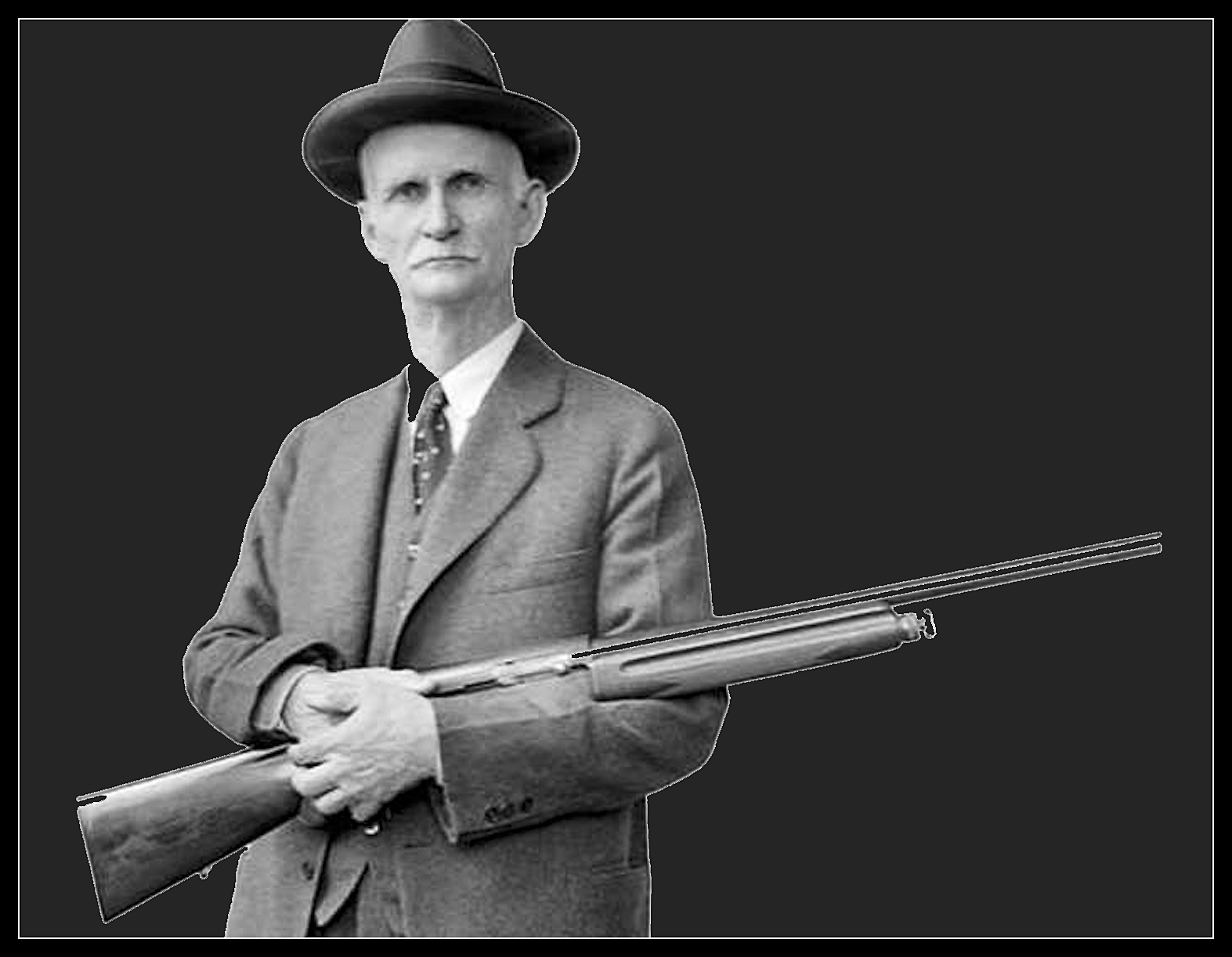

John Moses Browning (January 23, 1855 – November 26, 1926)
✪ John Moses Browning was an American firearm designer who developed many varieties of military and civilian firearms, cartridges, and gun mechanisms, many of which are still in use around the world today. Browning constructed his first firearm at the age of 13 in his father’s gun shop and was awarded the first of his 128 firearm patents on October 7, 1879, at the age of 24. He is regarded as one of the most successful firearms designers of the 19th and 20th centuries and a pioneer of modern repeating, semi-automatic, and automatic firearms.
John Moses Browning was born on January 23, 1855, in Ogden, Weber County in what was then the Utah Territory. Browning’s father Jonathan was among the original group of thousands of pioneers of the Church of Jesus Christ of Latter-day Saints who made an exodus from Nauvoo, Illinois, to Utah. Jonathan Browning established a gunsmith shop in Ogden in 1852. As was common in the Mormon church community at the time, Jonathan Browning was a polygamist who took three wives and fathered 22 children, including John Moses, and raised two stepdaughters with his wife Elizabeth Caroline Clark.
Like his father, Browning was also a member of The Church of Jesus Christ of Latter-day Saints, and served a two-year mission in Georgia beginning on March 28, 1887.
He married Rachel Theresa Child (September 14, 1860 – September 30, 1934) on April 10, 1879, in Ogden. Together, the couple had 10 children, two of whom died in infancy.
Browning stands as one of the most prolific and influential firearms designers in history. Considered by historians to be the “Father of Modern Firearms.” Browning’s designs & inventions revolutionized both military and civilian weaponry to dominate the modern era of firearms. Over his lifetime, Browning secured 128 patents; many of which remain foundational to modern gun mechanisms used worldwide today. His designs spanned rifles, shotguns, pistols, machine guns, and even cartridges, influencing conflicts from the Spanish-American War to World War II and beyond.
Browning’s life was marked by his humble beginnings in a pioneering Mormon family, relentless innovation, and collaborations with major arms manufacturers. Despite his modest demeanor and lack of formal engineering education, his practical genius consistently produced weapons which emphasized reliability, efficiency, and power.
Browning’s professional career began in earnest with his first patent at the age of 24 on October 7, 1879, for a self-cocking single-shot rifle. This Model 1878 Single Shot Rifle drew attention from the Winchester Repeating Arms Company, who sent an agent visit Browning. Winchester subsequently purchased the design for $8,000 in the early 1880s and relocated production to Connecticut. This transaction initiated a productive partnership between Browning & Winchester starting in 1883, during which Browning designed iconic lever-action and pump-action firearms for Winchester; including the Model 1886, 1892, 1894, 1895 rifles, and the Model 1897 shotgun.
Browning’s innovations influenced nearly all categories of firearms design, especially autoloading ammunition. He invented, or made significant improvements to single-shot, lever-action and pump-action rifles and shotguns. Browning also developed the first reliable and compact autoloading pistols with his invention of the telescoping bolt, then integrating the bolt and barrel shroud into what is now known as the pistol slide. Browning’s telescoping bolt design is now found on nearly every modern semi-automatic pistol, as well as several modern fully automatic weapons.
Browning’s most successful designs include the M1911 pistol, the water-cooled M1917, the air-cooled M1919, and heavy M2 machine guns, the M1918 Browning Automatic Rifle, and the Browning Auto-5; the first semi-automatic shotgun. Some of these arms are still manufactured, often with only minor changes in detail and cosmetics to those assembled by Browning or his licensees. The Browning designed M1911 and Hi-Power are some of the most copied and widely produced firearms in the world.
Browning began working in his father’s Ogden gunsmith shop at the age of seven; where he learned basic engineering and manufacturing principles, and was encouraged to experiment with new concepts. He developed his first rifle, a single-shot falling block action design while he was still his father’s apprentice. In 1878, in Browning created a partnership with his younger brother to co-found the John Moses and Matthew Sandefur Browning Company, which would later be renamed the Browning Arms Company. The company produced the brothers’ designs and other non-military firearms.
Browning’s father Jonathan father was a true frontier Renaissance man ; always encouraging John and his brothers to continue experimenting and testing their concepts to improve their products and tools. especially firearms. John developed his first rifle, the Single Shot Browning at his father’s shop. It differed greatly from the popular Sharps rifle of the day in that the hammer was centered on the action and ingeniously dropped down, out of the way to load a new cartridge. About 600 of these Single Shots were produced before John Moses Browning caught the attention of the Winchester Repeating Arms Company.
Impressed by the Browning’s innovation & inventiveness, Winchester asked Browning to design a lever-action-repeating shotgun. Browning could and did, but his efforts convinced him that a pump-action mechanism would work better, and he patented his first pump model shotgun in 1888.
Fundamentally, all of Browning’s manually-operated repeating rifle and shotgun designs were aimed at improving one thing: the speed and reliability with which gun users could fire multiple rounds. Lever and pump actions allowed the operator to fire a round, operate the lever or pump to quickly eject the spent shell, insert a new cartridge, and then fire again in only seconds.
By the late 1880s, Browning had perfected the manual repeating weapon. To make guns which could fire any faster would require somehow eliminating the need for slow human operation to actually work the mechanisms. However, what force could ever replace that of an operator working a lever or pump? Browning discovered the answer during a local shooting competition when he noticed reeds between a man firing and his target were violently blown aside by gases escaping from the gun muzzle. Browning would later incorporate the force of that escaping gas to automatically work the repeating mechanism.
Browning began experiment with his idea in 1889. Three years later, he received a patent for the first crude fully automatic weapon which captured the gases at the muzzle and used them to power the mechanism which automatically reloaded and chambered the next bullet. In subsequent years, Browning would continue to refine this automatic weapon design. When U.S. soldiers were deployed to Europe during WWI, many of them carried Browning Automatic Rifles, as well as Browning’s deadly machine guns.
Winchester bought Browning’s Single Shot design for $8,000 and moved production of the rifle to their Connecticut factory. From 1883, Browning worked in partnership with Winchester to design a series of rifles and shotguns; most notably the lever action Winchester Model 1887 and the Model 1897 pump shotgun, the falling-block single-shot Model 1885, and the lever-action Model 1886, Model 1892, Model 1894, and Model 1895 rifles.
After dispute with Winchester involving financial compensation, Browning designed the long recoil operated semi-automatic Remington Model 8 rifle. Many of the models are still in production today in some form. As of 1983, over six million Model 1894s had been produced; more than any other sporting rifle in history.
For decades in the late 19th and into the early 20th centuries, Browning designs and Winchester firearms were synonymous and their collaboration was highly successful. This came to an end when Browning proposed a new long recoil operated semi-automatic shotgun design, a prototype finished in 1898, to Winchester management, which ultimately became the Browning Auto-5 shotgun.
As was the custom of the time, Browning’s earlier designs had been sold exclusively to Winchester for a single lump fee payment. However, with this new product, Browning and his brother Matthew sought royalties based upon unit sales, rather than a single front-end fee payment. If the new shotgun became highly successful, the Browning company stood to make substantially more income. Winchester management, which had agreed to royalties for an earlier Browning shotgun design which was never manufactured, refused to accept the Brownings’ terms. Remington Arms also was approached but the president of the company died of a heart attack while the Brownings were waiting to offer him the gun. Remington would later produce a copy of the Auto-5 as the Model 11 which was widely used by the US Military and also sold to the civilian market.
Having recently successfully negotiated firearm licenses with Fabrique Nationale de Herstal of Belgium (FN), Browning took the new shotgun design to FN; where his offer was accepted and FN manufactured the new shotgun, honoring its inventor, as the Browning Auto-5. The Browning Auto-5 was continuously manufactured as a highly popular shotgun throughout the 20th Century. In response, Winchester shifted reliance away from John Browning designs when it adopted a shotgun design of Thomas Crossley Johnson for the new Winchester Model 1911 SL and the new Model 1912 pump shotgun, which was based in small part upon design features of the earlier Browning-designed Winchester Model 1897 shotgun. This shift officially marked the end of an era of Winchester-Browning collaboration.
The premium-priced Browning Superposed shotgun, an over-under shotgun design, was Browning’s last completed firearm design. It was marketed originally with twin triggers; but a single trigger modification was later completed by his son, Val Browning. Commercially introduced in 1931 by FN, Browning Superposed shotguns, and their more affordable cousins, the Browning Citore made in Asia, continue to be manufactured into the 21st century and come with varying grades of fine hand engraving and premium quality wood.
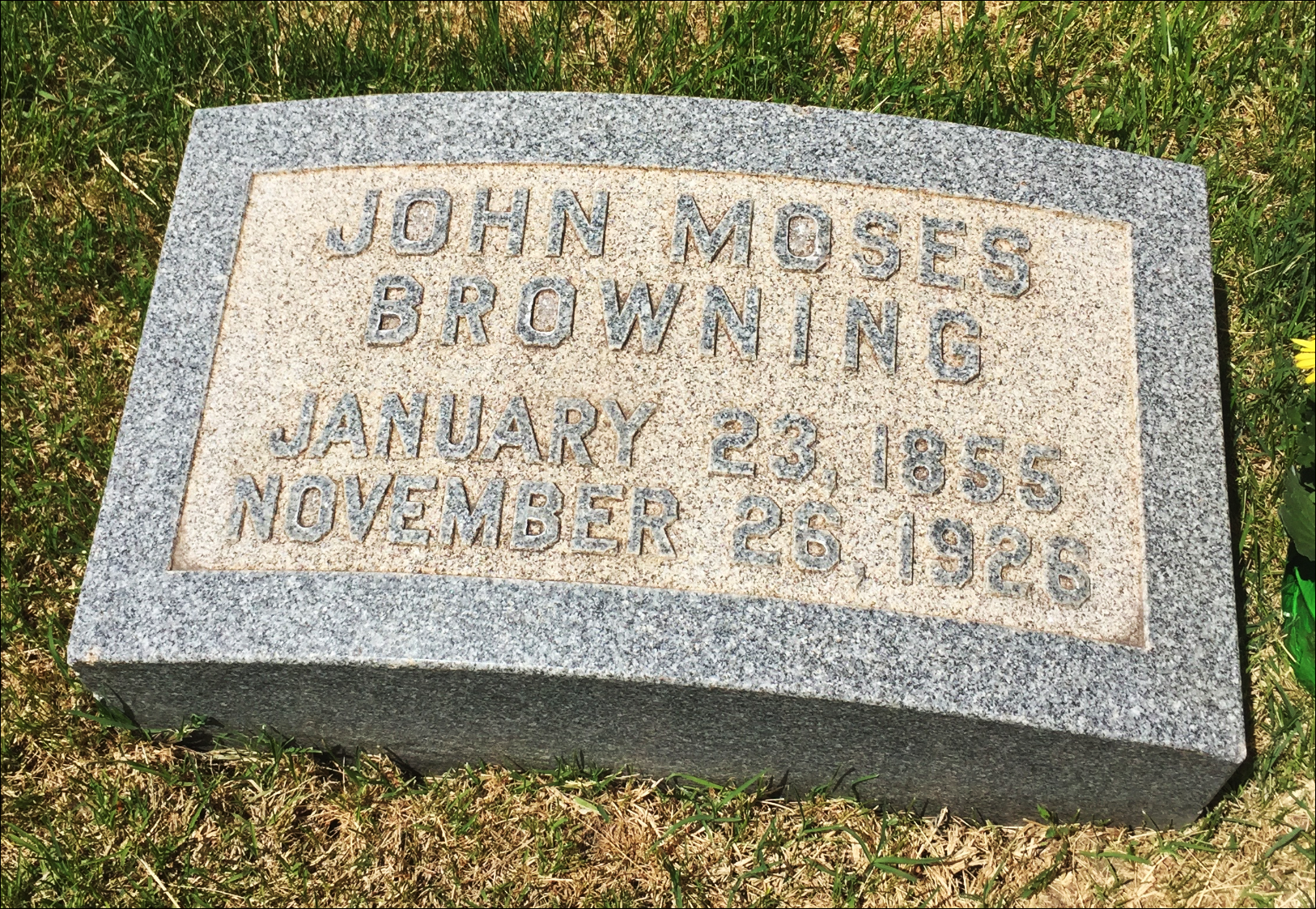
Browning, died on November 26, 1926, at the age of 71, passing away from heart failure at his workbench in the Fabrique Nationale (FN) facility in Herstal/Liège, Belgium. At the time, he was actively tinkering with a pistol design that his son Val A. Browning (and others) later refined and completed as the famous Browning Hi-Power (also known as the GP-35). Many accounts note the poignant detail he died doing what he loved most—designing firearms—literally collapsing at his bench during work. His body was later returned to the United States. He is interred at the Ogden City Cemetery in his birthplace, Ogden, Utah. ✪












▶️ ◼️◼️◼️◼️◼️◼️◼️◼️◼️ ✪✪✪ DONATE ✪✪✪ ◼️◼️◼️◼️◼️◼️◼️◼️◼️◼️
▶️ DONATE VIA PAYPAL (DEBIT & CREDIT CARD)
ALL PayPal Transactions Are Encrypted For Card Holder Privacy & Security
▶️ DONATE VIA ZELLE (DIRECT BANK CASH TRANSFER)
ZELLE is the perfect online alternative to PayPal. It’s an incredibly simple, secure, easy, fast and FREE way to send or receive money to recipients directly from your online banking account without a middleman. Best of all, there are NO fees.
ZELLE is a service provided by your bank and is already built in to your online banking account. You only need to activate it first before using. If you’ve already activated ZELLE in your online bank or credit union account, you can donate to The New Americanist by using our ZELLE address:
vip@thenewamericanist.com
To activate your ZELLE, follow these easy instructions (a simple two minute process):

▶️ DONATE VIA SNAIL MAIL