
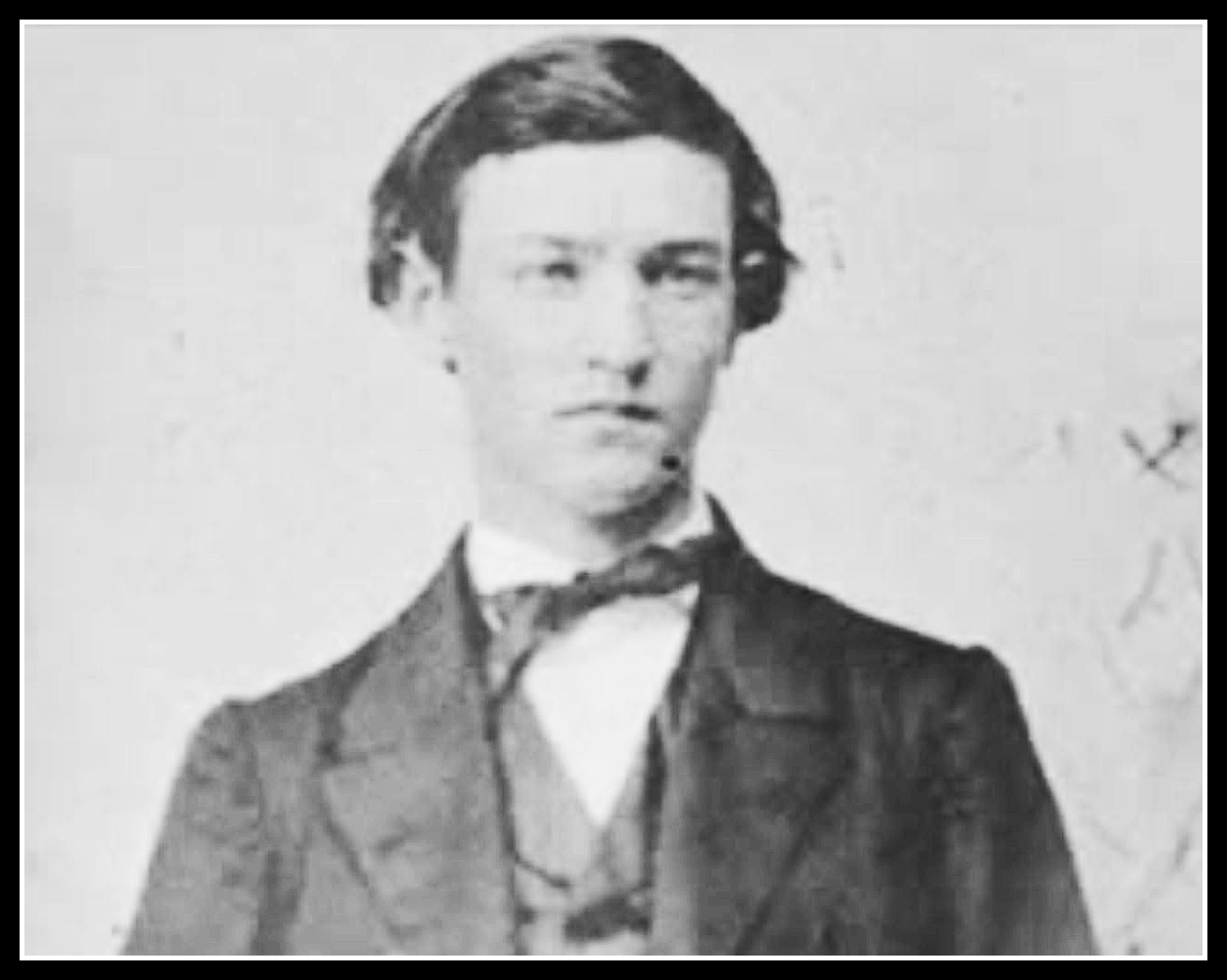

Dorence Atwater (February 3, 1845 – November 26, 1910)
✪ Dorence Atwater was a Union Army soldier and later a businessman and diplomat who served as the United States Consul to Tahiti.
In July 1863, during the American Civil War, Atwater was captured by the Confederate Army and found himself among the first batch of prisoners at the notorious Andersonville prisoner-of-war camp. He is notable for having created the Andersonville Death Register while imprisoned there; which recorded the identities of his fellow prisoners who died. He secretly made a copy of his list of the dead and missing which later allowed him, in cooperation with Clara Barton, to accurately mark the graves of otherwise unknown soldiers.
After the Civil War, Atwater was sent to the Seychelles and later Tahiti as a United States Consul. He was a proficient businessman who worked with lepers and other charities and was much beloved by the Tahitian people, who named him “Tupuuataroa” (Wise Man).
Dorence Atwater was born in Terryville, Connecticut, on February 3, 1845, the third child of Henry Atwater and Catherine Fenn Atwater. As a child, he worked as a clerk in his father’s store due to his fine handwriting and exceptional aptitude for numbers.
Atwater was only sixteen years old when the American Civil War broke out. After listening to a Union recruiter, Atwater, lied about his age to enlist in the Union Army and joined anyway. Although Henry Atwater hauled his disobedient son off to Hartford to confess his lie, Atwater really wanted to go to war. For over two years, he served as a scout; delivering important messages, and was involved in many battles. He wrote to his father informing him how his outfit had destroyed a bridge: “Imagine a body of two-thousand horsemen, each provided with a canteen full of turpentine; when passing over a bridge each man takes his canteen, holds it pointing downward and lets the turpentine run out on the bridge as they ride along. The last man strikes a match and sets fire to it.”
One morning in July 1863, Atwater was exercising his horse in the woods when he was captured by two Confederate soldiers disguised in Yankee uniforms. The Battle of Gettysburg had just occurred, and a new prison named Camp Sumter in southwest Georgia, known to the prisoners as Andersonville and to Atwater as “hell itself,” had just opened. Andersonville had a quota of 400 prisoners a day. The Confederates picked up Atwater on their way through Richmond, Virginia, and he was among the first prisoners to be marched to Andersonville.
Camp Sumter—known as Andersonville—was designed only to hold 10,000 men. Yet at its peak, over 32,000 prisoners were crammed inside 26 acres. No shelter from the elements & contaminated water from a single creek that also served as the latrine. Starvation rations. Disease everywhere. Approximately 50 prisoners died every single day.
Atwater was ill when he arrived and was put into the prison hospital. Upon his recovery, his handwriting was discovered again, and he was given the task of keeping the “Death List,” a register of those who had died at the camp. He was ordered to produce two copies, one for the Confederates and one which, he was told, would go to the United States Federal Government. He strongly suspected the Union would never see this copy and decided to keep his own list, hidden among the papers of the ones belonging to the Confederates. All the while, Atwater knew that if the prison leader, Captain Henry Wirz, discovered what he was doing, he would probably be hanged.
Day after day, Atwater collected and wrote down names; averaging fifty each day. Sometimes more and over the passing months, he collected thousands of names. However, he slowly began to recognize how important this list was. These weren’t only names; they were sons, brothers, fathers, husbands. Families back home had no idea what had happened to them. The Confederacy wasn’t reporting Union deaths to the Federal Government and the copy of Atwater’s list they claimed would be sent north never was. These men would simply disappear and remain listed as missing, with their families never knowing their fate.
In September 1864 the prisoners from Andersonville were transferred to Florence, South Carolina. On February 27, 1865, when Atwater was released to Union authorities, he smuggled the list out with him.
Shortly after Atwater arrived home, he pulled the Andersonville death list out of his bag and showed it to his father and siblings. There had been rumors that he had folded it and slipped it in the inner pocket of his coat. But as his brother Richard wrote, “First, the Union coats had no inside pockets, second, Dorence had no coat, and third, the huge, thick list was not folded.” Two days later, Atwater came down with diphtheria, typhoid, and scurvy. People rarely survived even one of these diseases, but Atwater survived all three.
Three weeks later, he was thin and weak but on the mend. He had just received a telegram requesting him to come to Washington, D.C. and bring the list. On the train there, word reached him that President Abraham Lincoln had been shot and was dying. Washington, D.C. was in chaos, and Atwater was still quite weak. A telegram then came from home notifying him that his father, who had nursed him through his illnesses, had diphtheria and was also dying. Atwater returned home at the first opportunity. His father died that night.
The U.S. Army wanted Atwater’s list. Atwater refused to hand it over permanently because he’d seen how the military bureaucracy worked. He feared the Army would suppress it, lose it, or that it would just disappear into some file cabinet where families would never see it. He’d watched the Confederate supply office steal blankets meant for prisoners. He knew what happened to inconvenient paperwork..
After handling his father’s funeral, Atwater returned to Washington to begin work as an intern. He was barely 20 years old when he met Clara Barton, who had the means to mark the Andersonville graves but no names with which to mark them; Atwater told her what she needed to know. This meeting began a lifelong friendship between Atwater and Barton.
Atwater took the death list and traveled with Barton, Dr. James Moore, and 42 headboard carvers to mark the graves of the soldiers who had died at Andersonville. Using his list, they identified and marked nearly 13,000 graves. They erected wooden headboards with names, creating the first national cemetery where so many had died. Because of the accuracy of Atwater’s list, only 460 graves would remain marked “unknown.”When the work was done, they erected a flag.
Families across the North could finally discover what had happened to their missing sons. Clara Barton wrote the introduction, praising Atwater’s “forethought, courage, and perseverance.” She called his work a gift; a sad gift, but one which was offered in kindness and truth.“For your record of the dead, you are indebted to the forethought, courage, and perseverance of Dorence Atwater,” she wrote. “A young man not yet twenty-one years of age; an orphan; four years a soldier; one-tenth part of his life a prisoner, with broken health and ruined hopes.”
Upon his return to Washington, D.C., he refused to reveal where his list was and was taken to be court-martialed.
Families who’d spent years wondering finally got answers. But the U.S. Army was furious. They claimed Atwater had “stolen” government property; the death register he’d complied at the risk of his own life. When he refused to tell them where the list was, they put him in ankle chains and marched him through town to Old Capitol Prison, which housed the worst criminals. In March 1866, Atwater was court-martialed.
After lobbying by Barton, Atwater was finally freed under a general pardon from President Andrew Johnson in December 1865. He was later appointed US Consul to the Seychelles Islands. The death list was eventually published by the Federal Government and reprinted in The New York Tribune.
After three years, Atwater was commissioned to be the US Consul to Tahiti where he was formally recognized as Consul in February 1872. In Tahiti he fell in love with Princess Moetia Salmon, or “Moe,” the sister of Queen Marau and the second consort of King Pōmare V of Tahiti. Moetia had been educated in France and England. They were married in 1875.
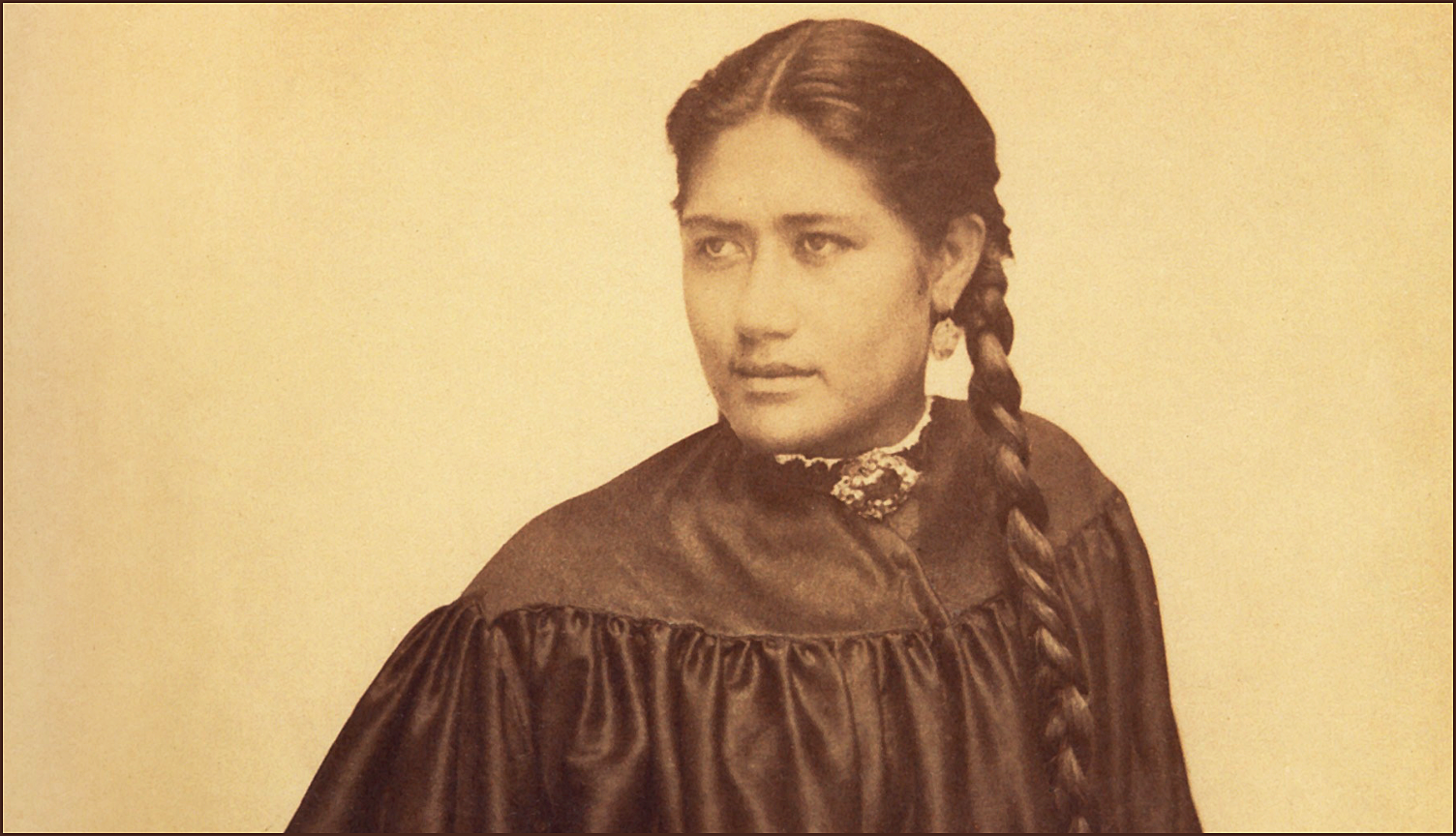
Moetia Salmon Atwater (1848–1935)
In Tahiti, Atwater didn’t only survive, he thrived. He became a successful businessman dealing in pearls, gold speculation, shipping, & vanilla plantations. After his marriage to Moetia Salmon, he became deeply integrated into Tahitian society. The Tahitians called him “Tupuuataroa”—“Wise Man.” While in Tahiti, he also befriended Robert Louis Stevenson, the famous author. Stevenson admired this young man who’d survived hell and built himself a new life in paradise. He even used Atwater as inspiration for a character named “Attwater” in his novel The Ebb-Tide.
Atwater died of a heart attack while under medical care on November 26, 1910, in San Francisco, at the age of 65.
Atwater lived in Tahiti for over 40 years. He was respected, successful, beloved—a remarkable contrast to the horrors of his youth. After his death, his body was returned to Tahiti.
Atwater was the first non-royal to be given a royal funeral in Tahiti. He was buried beneath a 7000 lb stone. On one side is carved “Tupuuataroa” (Wise Man). On the other side, the inscription reads, “He builded better than he knew that one day he might awake in surprise to found he had wrought a monument more enduring than brass.” Princess Moe died in 1935, at the age of 87, and is buried next to her husband. ✪
⭐️ Social.Justice.Warrior

















▶️ ◼️◼️◼️◼️◼️◼️◼️◼️◼️ ✪✪✪ DONATE ✪✪✪ ◼️◼️◼️◼️◼️◼️◼️◼️◼️◼️

▶️ DONATE VIA PAYPAL (DEBIT & CREDIT CARD)
ALL PayPal Transactions Are Encrypted For Card Holder Privacy & Security
▶️ DONATE VIA ZELLE (DIRECT BANK CASH TRANSFER)
ZELLE is the perfect online alternative to PayPal. It’s an incredibly simple, secure, easy, fast and FREE way to send or receive money to recipients directly from your online banking account without a middleman. Best of all, there are NO fees.
ZELLE is a service provided by your bank and is already built in to your online banking account. You only need to activate it first before using. If you’ve already activated ZELLE in your online bank or credit union account, you can donate to The New Americanist by using our ZELLE address:
vip@thenewamericanist.com
To activate your ZELLE, follow these easy instructions (a simple two minute process):

▶️ DONATE VIA SNAIL MAIL