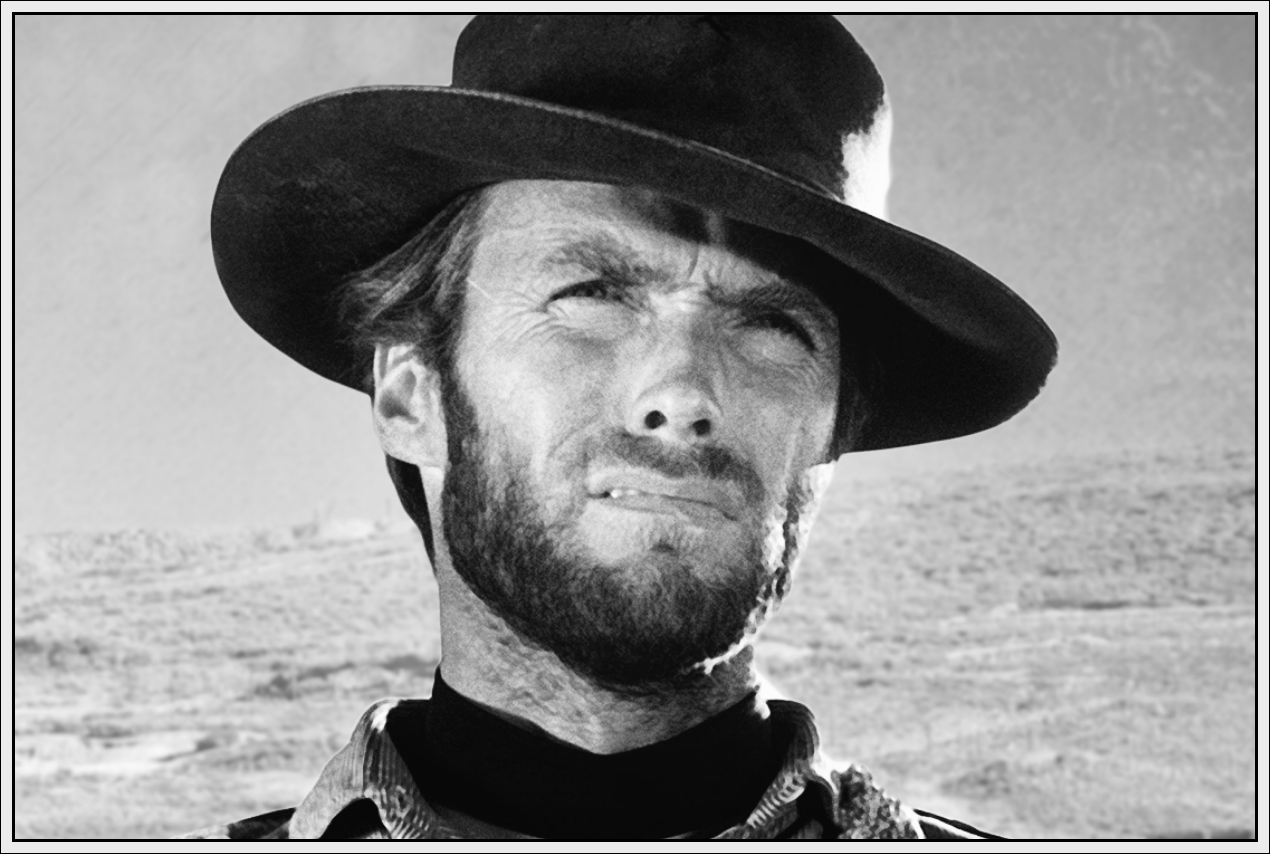

Clinton Eastwood Jr. (born May 31, 1930)
✪ Clinton Eastwood Jr. is an American actor and film director. After achieving success in the Western TV series Rawhide, Eastwood rose to international fame with his role as the “Man with No Name” in Sergio Leone’s Dollars Trilogy of spaghetti Westerns during the mid-1960s and as antihero cop Harry Callahan in the five Dirty Harry films throughout the 1970s and 1980s. These roles, among others, have made Eastwood an enduring cultural icon of masculinity. Elected in 1986, Eastwood also served for two years as the mayor of Carmel-by-the-Sea, California.
However, Eastwood’s greatest commercial successes are the adventure comedy Every Which Way but Loose (1978) and its action comedy sequel Any Which Way You Can (1980). Other popular Eastwood films include the Westerns Hang ‘Em High (1968), The Outlaw Josey Wales (1976) and Pale Rider (1985); the action-war film Where Eagles Dare (1968), the prison film Escape from Alcatraz (1979), the war film Heartbreak Ridge (1986), the action film In the Line of Fire (1993), and the romantic drama The Bridges of Madison County (1995). More recent works include Gran Torino (2008), The Mule (2018), and Cry Macho (2021). Since 1967, Eastwood’s company Malpaso Productions has produced all but four of his American films.
Eastwood’s accolades include four Academy Awards, four Golden Globe Awards, three César Awards, and an AFI Life Achievement Award. In 2000, he received the Italian Venice Film Festival’s Golden Lion award, honoring his lifetime achievements. Bestowed two of France’s highest civilian honors, he received the Commander of the Ordre des Arts et des Lettres in 1994, and the Legion of Honour in 2007.
Eastwood was born on May 31, 1930, at Saint Francis Memorial Hospital in San Francisco, to Ruth (née Margret Runner; 1909–2006) and Clinton Eastwood (1906–1970), who then lived in Oakland’s Lake Merritt neighborhood.
Eastwood was nicknamed “Samson” by hospital nurses because he weighed 11 pounds 6 ounces at birth and he has a younger sister, Jeanne Bernhardt (b. 1934). He is of English, Irish, Scottish and Dutch ancestry. Eastwood is descended from Mayflower passenger William Bradford, and through this line is the 12th generation born in North America.
His family relocated three times during the 1930s as his father moved to change occupations. Settling in Piedmont, California, the Eastwoods lived in an affluent area of the town, had a swimming pool, belonged to a country club, and each parent drove their own car. Eastwood’s father was a manufacturing executive at Georgia-Pacific for most of his working life. As Clint and his sister Jeanne grew older, Ruth took a clerical job at IBM.
Eastwood attended Piedmont Middle School, where he was held back due to poor grades; and records indicate he also had to attend summer school. From January 1945 until at least January 1946, he attended Piedmont High School, but was asked to leave after writing an obscene suggestion to a school official on the athletic field scoreboard and burning an effigy on the school lawn, on top of other school infractions. He then transferred to Oakland Technical High School and graduated on February 2, 1949.
Eastwood held a number of odd jobs, including lifeguard, paper carrier, grocery clerk, forest firefighter, and golf caddy. Eastwood said that he tried to enroll at Seattle University in 1951, but instead was drafted into the United States Army during the Korean War.
While returning to Seattle, he was a passenger on a Douglas AD bomber which ran out of fuel and crashed into the ocean near Point Reyes. Using a life raft, he and the pilot swam 2 miles to safety. Eastwood was discharged from the Army in February 1953.
According to a CBS press release for Rawhide, Universal-International’s camera crew was shooting in Fort Ord when an enterprising assistant spotted Eastwood and invited him to meet the director.
According to Eastwood’s official biography, the key figure was a man named Chuck Hill, who was stationed in Fort Ord and had contacts in Hollywood. While in Los Angeles, Hill became reacquainted with Eastwood and managed to sneak him into a Universal studio, where he introduced him to cameraman Irving Glassberg. Glassberg arranged for an audition for Eastwood under Arthur Lubin, who, although very impressed with Eastwood’s appearance and stature (then 6 ft 4 in), disapproved of his acting, remarking, “He was quite amateurish. He didn’t know which way to turn or which way to go or do anything.” Lubin suggested Eastwood attend drama classes and arranged for Eastwood’s initial contract in April 1954, at $100 per week. After signing, Eastwood was initially criticized for his stiff manner and delivering lines through his teeth, a characteristic which would ultimately become his lifelong trademark.
In May 1954, Eastwood made his first real audition for Six Bridges to Cross, but was rejected by director Joseph Pevney. After many unsuccessful auditions, he was eventually given a minor role by director Jack Arnold in Revenge of the Creature (1955), the sequel to the recently released Creature from the Black Lagoon.
Universal presented Eastwood with his first television role on July 2, 1955, on NBC’s Allen in Movieland, which starred comedian Steve Allen, actor Tony Curtis, and swing musician Benny Goodman. Although he continued to develop as an actor, Universal terminated his contract on October 23, 1955.
During this time, Eastwood was struggling. He landed several small roles in 1956 as a temperamental army officer for a segment of ABC’s Reader’s Digest series, and as a motorcycle gang member on a Highway Patrol episode. In 1957, Eastwood played a cadet in West Point series and a suicidal gold prospector on Death Valley Days.
▶️ 2 Minutes 22 Seconds
In 1958, Eastwood was finally cast as Rowdy Yates in the CBS hour-long western series Rawhide, the career breakthrough he had long sought. Eastwood was not especially happy with his character as he was almost 30; and Rowdy was too young and cloddish for his comfort. Filming for Rawhide began in Arizona in the summer of 1958. It took just three weeks for Rawhide to reach the top 20 in TV ratings and, although it never won an Emmy, it was a major success for several years, It peaked at number six in the ratings from October 1960 to April 1961.
The Rawhide years (1959–65) were some of the most grueling of Eastwood’s career, often filming six days a week for an average of 12 hours a day, but some directors still criticized him for not working hard enough.
Eastwood made his first attempt at directing when he filmed several trailers for the show, but was unable to convince producers to let him direct an entire episode. In the show’s first season, Eastwood earned $750 an episode. At the time of Rawhide‘s cancellation, he was receiving $119,000 an episode.
In late 1963, Eastwood’s Rawhide co-star Eric Fleming rejected an offer to star in an Italian-made western called A Fistful of Dollars (1964), filmed in a remote region of Spain by a then relatively unknown director, Sergio Leone. Richard Harrison suggested Eastwood to Leone because Harrison knew that Eastwood could play a cowboy convincingly. Eastwood thought the film would be an opportunity to escape from his Rawhide image. He signed a contract for $15,000 in wages for eleven weeks’ work, with a bonus of a Mercedes-Benz automobile upon completion.
Eastwood was instrumental in creating the Man with No Name character’s distinctive visual style and although a nonsmoker, Leone insisted Eastwood smoke cigars as an essential ingredient of the “mask” he was attempting to create for the character.
A Fistful of Dollars proved a landmark in the development of spaghetti Westerns, with Leone depicting a more lawless and desolate world than traditional westerns, and challenging American stereotypes of a western hero with a morally ambiguous antihero. The film’s success made Eastwood a major star in Italy and he was rehired to star in For a Few Dollars More (1965).
However, the Dollars trilogy was not released in the United States until 1967, when A Fistful of Dollars opened on January 18, followed by For a Few Dollars More on May 10, and The Good, the Bad and the Ugly on December 29. All three were commercially successful, particularly The Good, the Bad and the Ugly, which eventually earned $8 million in rental earnings and turned Eastwood into a major international film star.
Stardom brought Eastwood even more roles. He signed to star in the American revisionist western Hang ‘Em High (1968), playing a man who takes up a marshal’s badge and seeks revenge as a lawman after being lynched by vigilantes and left for dead. The film earned Eastwood $400,000 and 25% of its net box office. Using money earned from the Dollars trilogy, Eastwood’s advisor Irving Leonard helped Eastwood establish his own production company, Malpaso Productions, named after Malpaso Creek on Eastwood’s property in Monterey County, California.
In 1968, Eastwood was paid $750,000 for the war epic Where Eagles Dare ,about a World War II squad parachuting into a Gestapo stronghold in the Alps. Eastwood then branched out to co-star in the musical, Paint Your Wagon (1969). Eastwood and Lee Marvin play gold miners who buy a Mormon settler’s less favored wife (Jean Seberg) at an auction.
▶️ 1 Minute 52 Seconds
Eastwood’s career reached a turning point in 1971. Eastwood had long discussed the idea of Malpaso producing Play Misty for Me, a film that was to give Eastwood the artistic control he desired, and his debut as a director.
Dirty Harry (1971), written by Harry and Rita Fink, centers on a hard-edged New York City (later changed to San Francisco) police inspector named Harry Callahan who is determined to stop a psychotic killer by any means. Dirty Harry has been described as being arguably Eastwood’s most memorable character, and the film has been credited with inventing the “loose-cannon cop” genre. Author Eric Lichtenfeld argues that Eastwood’s role as Dirty Harry established the “first true archetype” of the action film genre.
▶️ 2 Minutes 59 Seconds
Released in December 1971, Dirty Harry earned $22 million in the United States and Canada. Following Sean Connery’s announcement that he would not play James Bond again, Eastwood was offered the role but turned it down, saying, “that was someone else’s gig. That’s Sean’s deal. It didn’t feel right for me to be doing it.“
Eastwood’s first western as director was High Plains Drifter (1973), in which he also starred. The film had a moral and supernatural theme, later emulated in Pale Rider. The revisionist film received a mixed reception, but was a major box-office success.
The Outlaw Josey Wales (1976), a western inspired by Asa Carter’s 1972 novel of the same name, has lead character Josey Wales (Eastwood) as a pro-Confederate guerrilla who refuses to surrender his arms after the American Civil War and is chased across the old southwest by a group of enforcers. The supporting cast included Locke as his love interest and Chief Dan George as an elderly Cherokee who strikes up a friendship with Wales.
Eastwood was then offered the role of Benjamin L. Willard in Francis Coppola’s Apocalypse Now, but declined as he did not want to spend weeks on location in the Philippines. Instead decided to make a third Dirty Harry film, The Enforcer (1976).
Eastwood also directed and starred in Honkytonk Man (1982), based on the eponymous Clancy Carlile’s depression-era novel. Eastwood portrays a struggling western singer Red Stovall who suffers from tuberculosis, but has finally been given an opportunity to make it big at the Grand Ole Opry.
Eastwood directed and starred in the fourth Dirty Harry film, Sudden Impact (1983), which is considered the darkest and most violent of the series. By this time, Eastwood was receiving 60 percent of all profits from the films he starred in and directed, with the remainder going to the studio.
Eastwood made his only foray into TV direction with the Amazing Stories episode “Vanessa in the Garden” (1985), which starred Harvey Keitel and Locke as a married couple. This was also his first collaboration with Steven Spielberg, who later co-produced Flags of Our Fathers and Letters from Iwo Jima. He would revisit the Western genre when he directed and starred in Pale Rider (1985), a film based on the classic western Shane (1953).
Eastwood began working on smaller, more personal projects and experienced a lull in his career between 1988 and 1992. Always interested in jazz, he directed Bird (1988). a biopic starring Forest Whitaker as jazz musician Charlie “Bird” Parker.
▶️ 9 Minute 22 Seconds
Eastwood revisited the western genre again in Unforgiven (1992), a film which he directed and starred in as an aging ex-gunfighter long past his prime. Scripts existed for the film as early as 1976 under titles such as The Cut-Whore Killings and The William Munny Killings, but Eastwood delayed the project because he wanted to wait until he was old enough to play his character and to savor it as the last of his western films. Unforgiven was a major commercial and critical success.
At the 1994 Cannes Film Festival Eastwood received France’s Ordre des Arts et des Lettres medal; and in 1995, he was awarded the Irving G. Thalberg Memorial Award at the 67th Academy Awards.
Eastwood directed and scored the crime drama Mystic River (2003), a film dealing with themes of murder, vigilantism and sexual abuse and starring Sean Penn, Kevin Bacon and Tim Robbins. The film was praised by critics and won two Academy Awards – Best Actor for Penn and Best Supporting Actor for Robbins – with Eastwood garnering nominations for Best Director and Best Picture.
In 2003, Eastwood was named Best Director of the Year by the National Society of Film Critics.
⭐️ 2 Minutes 31 Seconds
During Super Bowl XLVI, Eastwood narrated a halftime advertisement for Chrysler titled “Halftime in America” (2012). The advertisement was criticized by several U.S. Republicans, who claimed it implied that President Barack Obama deserved a second term. In response to the criticism, Eastwood stated, “I am certainly not politically affiliated with Mr. Obama. It was meant to be a message about job growth and the spirit of America.”
Beginning with the thriller Play Misty for Me, Eastwood has directed over 30 films, including Westerns, action films, musicals and dramas. He is one of few top Hollywood actors to have also become critically and commercially successful as a director. The New Yorker‘s David Denby wrote that, unlike Eastwood:
John Ford appeared in just a few silent films; Howard Hawks never acted in movies. Clark Gable, Gary Cooper, Spencer Tracy, James Stewart, Cary Grant, Humphrey Bogart, William Holden, Steve McQueen, and Sean Connery never directed a feature. John Wayne directed only twice, and badly; ditto Burt Lancaster. Paul Newman, Jack Nicholson, Warren Beatty, Robert Redford, Robert De Niro, and Sean Penn have directed a few movies each, with mixed commercial and artistic success.
From the very early days of his career, Eastwood was frustrated by other directors’ insistence that scenes be re-shot multiple times and perfected. When he began directing in 1970, he made a conscious attempt to avoid any aspects of directing he had been indifferent to as an actor. As a result, Eastwood is renowned for his efficient film directing and ability to reduce filming time and control budgets. He usually avoids actors’ rehearsing and prefers to complete most scenes on the first take. In preparation for filming Eastwood rarely uses storyboards for developing the layout of a shooting schedule.
According to Life magazine:
“Eastwood’s style is to shoot first and act afterward. He etches his characters virtually without words. He has developed the art of underplaying to the point that anyone around him who so much as flinches looks hammily histrionic.”
Eastwood is a former Republican who has occasionally supported Democrats, and has had a long interest in California politics; he is currently a registered Libertarian.
In April 1986, Eastwood was elected as the nonpartisan mayor of Carmel-by-the-Sea, California. He earned $200 per month for that position, which he donated to the Carmel Youth Center. While in office, he made it legal to consume ice cream on city streets, increased the number of restrooms on the public beach, and built an additional annex on the city library.
Eastwood is also an aficionado of jazz—particularly bebop—and blues, country and western and classical music. He dabbled in music early on by developing as a boogie-woogie pianist and had originally intended to pursue a career in music by studying for a music theory degree after graduating from high school. In late 1959, Eastwood produced the album Cowboy Favorites, released on the Cameo label, which included some classics such as Bob Wills’s “San Antonio Rose” and Cole Porter’s “Don’t Fence Me In.“
Twice divorced, Eastwood has had numerous casual and serious relationships of varying length and intensity over his life, many of which overlap. He has eight known children by six women. His biographer, Patrick McGilligan has stated on camera that Eastwood’s total number of children is indeterminate and that “one was when he was still in high school.”
Eastwood has been a health and fitness fanatic since his teens. During the production of Rawhide, Eastwood was often featured in magazines and journals, which documented his health-conscious lifestyle. In an August 1959 edition of TV Guide, for example, Eastwood was photographed doing push-ups. He gave tips on fitness and nutrition, telling people to eat plenty of fruit and raw vegetables, take vitamins, and avoid sugar-loaded beverages, excessive alcohol, and overloading on carbohydrates.
Eastwood’s father’s death from a heart attack at the age of 64 in 1970, described by Fritz Manes as “the only bad thing that ever happened to him in his life,” came as a shock to Eastwood, since his grandfather had lived to be 92. It had a profound impact on his life; and from then on he became more productive, working with greater speed and efficiency on set, and adopted an even more rigorous health regimen.
Eastwood is an avid golfer and owns the Tehàma Golf Club. He is an investor in the world-renowned Pebble Beach Golf Links west of Carmel and donates his time to charitable causes at major tournaments. Eastwood is an FAA licensed fixed wing and rotary craft private pilot who often flies his helicopter to the studios to avoid traffic.
Eastwood has said that he finds spirituality in nature (as suggested by his Western, Pale Rider, 1985), stating;
“I was born during the Depression and I was brought up with no specific church. We moved every four or five months during the first 14 years of my life, so I was sent to a different church depending on wherever we lived. Most of them were Protestant, but I went to other churches because my parents wanted me to try to figure out things for myself. They always said, ‘I just want to expose you to some religious order and see if that’s something you like’. So although my religious training was not really specific, I do feel spiritual things. If I stand on the side of the Grand Canyon and look down, it moves me in some way.“
Eastwood has been recognized with multiple awards and nominations for his work in film, television and music; although is widest reception has been in film work, for which he has received Academy Awards, Directors Guild of America Awards, Golden Globe Awards, and People’s Choice Awards, among others. Eastwood is one of only two people to have been twice nominated for Best Actor and Best Director for the same film (Unforgiven and Million Dollar Baby). At the age of 74, he was the oldest recipient of the Academy Award for Best Director to date.✪













▶️ DONATE VIA PAYPAL (DEBIT & CREDIT CARD)
ALL PayPal Transactions Are Encrypted For Card Holder Privacy & Security
▶️ DONATE VIA ZELLE (DIRECT BANK CASH TRANSFER)
ZELLE is the perfect online alternative to PayPal. It’s an incredibly simple, secure, easy, fast and FREE way to send or receive money to recipients directly from your online banking account without a middleman. Best of all, there’s NO fees.
ZELLE is a service provided by your bank and is already built in to your online banking account. You only need to activate it first before using. If you’ve already activated ZELLE in your online bank or credit union account, you can donate to The New Americanist by using our ZELLE address:
vip@thenewamericanist.com
To activate your ZELLE, follow these easy instructions (a simple two minute process):

▶️ DONATE VIA SNAIL MAIL