


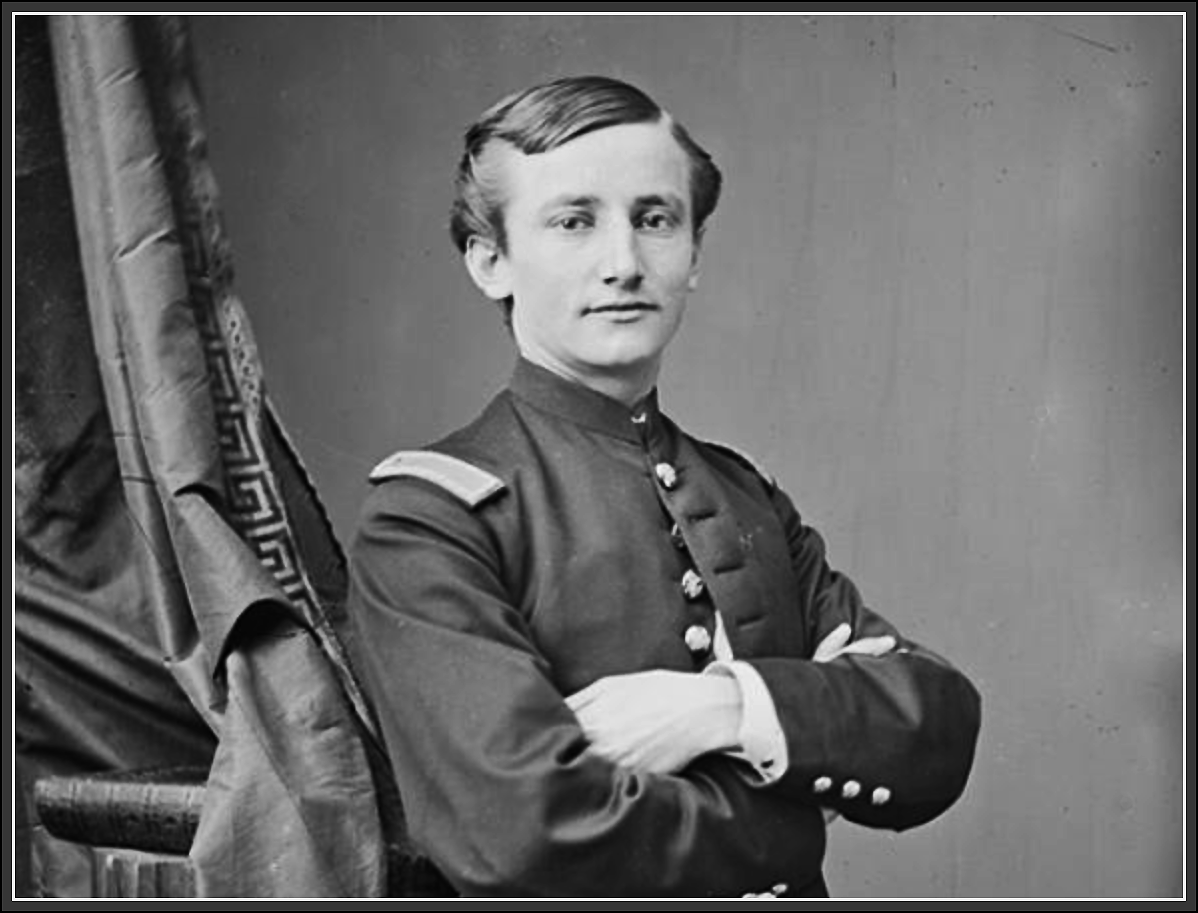

John Lincoln Clem (August 13, 1851–May 13, 1937)
✪ John Lincoln Clem (nicknamed Johnny Shiloh) was an American general officer who served as a drummer boy in the Union Army during the American Civil War. He gained fame for his bravery on the battlefield & became the youngest noncommissioned officer in the history of the United States Army.
Although most Civil War soldiers were between 18 and 39 years old, many younger children also fought in the war. It is estimated that at least 100,000 Union soldiers were boys under 15 years old and about 20 percent of all Civil War soldiers were under 18.
Clem retired from the Army in 1915, having attained the rank of brigadier general in the Quartermaster Corps; he was at that time the last veteran of the American Civil War still on duty in the United States Armed Forces. By special act of Congress on August 29, 1916, he was promoted to major general one year after his retirement.
John was born with the surname “Klem” in Newark, Ohio on August 13, 1851, the son of Roman and Magdalene Klem. In May 1861, he ran away from home to become a Union Army drummer boy after the death of his mother in a train accident. He first attempted to enlist in the 3rd Ohio Infantry but was rejected because of his age and small size. Next, he tried to join the 22nd Michigan, which also refused him. He tagged along anyway and the 22nd eventually adopted him as their mascot and drummer boy. Officers chipped in to pay him the regular soldier’s wage of $13 a month and allowed him to officially enlist two years later.
A popular legend suggests that Clem served as a drummer boy with the 22nd Michigan at the Battle of Shiloh. The legend suggests that he came very near to losing his life when a fragment from a shrapnel shell crashed through his drum, knocking him unconscious and that subsequently his comrades who found and rescued him from the battlefield nicknamed Clem “Johnny Shiloh.”
Regardless of the time of his entry into service, Clem served as a drummer boy for the 22nd Michigan at the Battle of Chickamauga. Clem became a national celebrity for his actions at Chickamauga. Armed with a musket sawed down for him to carry, Clem joined the 22nd Michigan in the defense of Horseshoe Ridge on the afternoon of September 20. According to various sources, as the Confederate forces surrounded the unit, a Confederate colonel spotted Clem and shouted either “I think the best thing a mite of a chap like you can do is drop that gun” or called him a “damned little Yankee devil.” Rather than surrender, Clem shot the colonel and successfully made his way back to Union lines. For his actions, Clem was promoted to sergeant, the youngest soldier ever to become a noncommissioned officer in the U.S. Army, and became known as the “Drummer Boy of Chickamauga.”
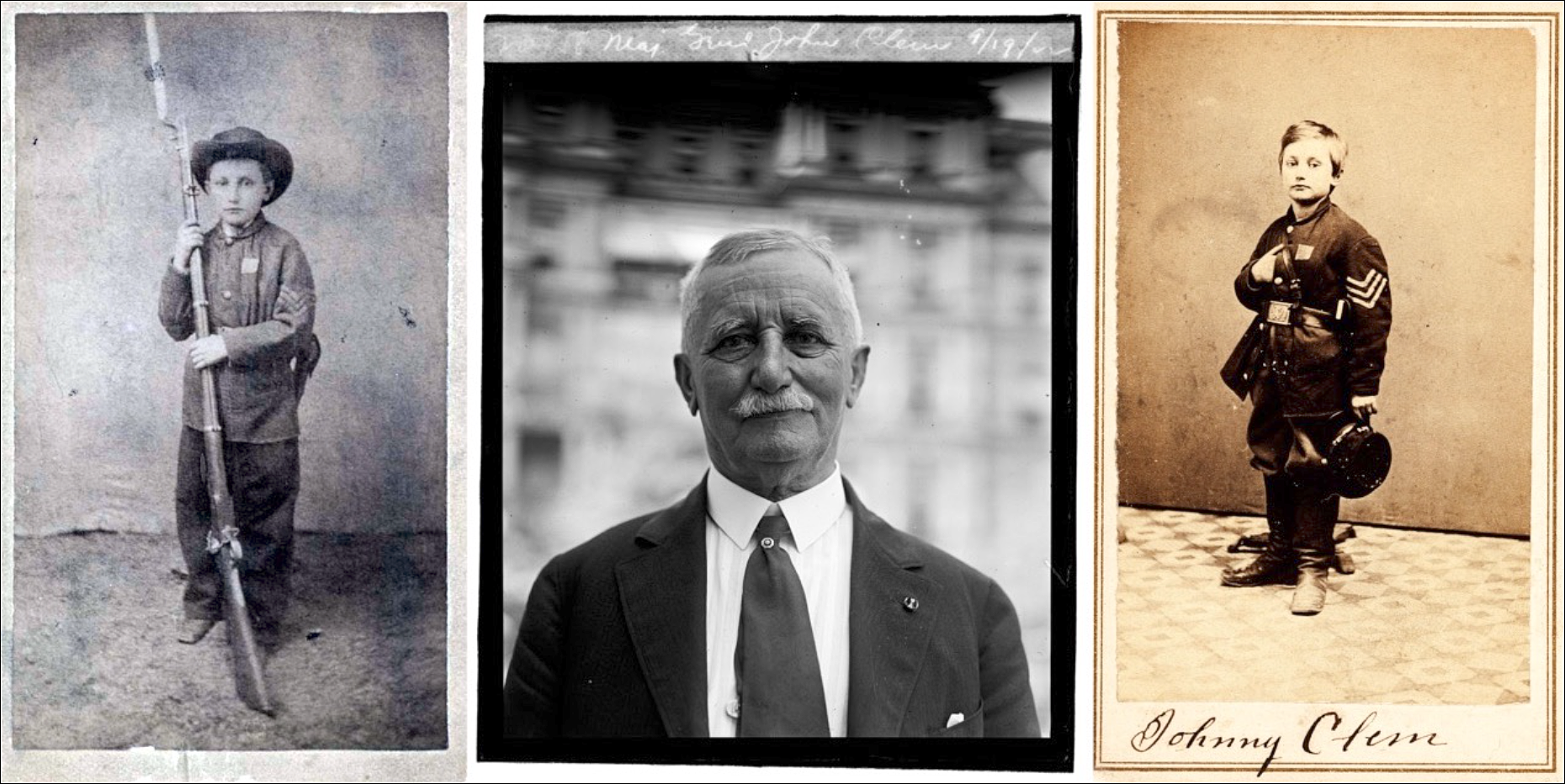
In October 1863, Clem was captured in Georgia by Confederate cavalrymen while on detail as a train guard. The Confederates confiscated his U.S. uniform, including his cap, which had three bullet holes in it. This reportedly upset him terribly. He was included in a prisoner exchange a short time later, and the Confederate newspapers used his age and celebrity status for propaganda purposes, to show “what sore straits the Yankees are driven when they have to send their babies out to fight us.” After serving as a mounted orderly & participating with the Army of the Cumberland in many other battles, Clem was discharged from the Army in 1864 at age 13, but sought to rejoin the military in 1870. Clem was wounded in combat twice during the war.
Clem graduated from high school in 1870. In 1871, he was elected commander & captain of the “Washington Rifles,” a District of Columbia militia unit. After he failed the entrance exam to enter the United States Military Academy, President Ulysses S. Grant appointed him second lieutenant in the 24th Infantry Regiment in December 1871. Clem was promoted to first lieutenant in 1874 and graduated from artillery school at Fort Monroe in 1875. He was promoted to captain in 1882 and transferred to the Quartermaster Department where he stayed for the rest of his career. He was promoted to major in 1895.
In 1898 during the Spanish–American War he served as depot quartermaster in Portland, Oregon as well as department quartermaster for the Department of Columbia. He then served in the occupation of Puerto Rico as depot and chief quartermaster in San Juan.
Clem was promoted to lieutenant colonel in 1901 and to colonel in 1903. He then served from 1906 to 1911 as chief quartermaster at Fort Sam Houston in Texas.
Clem reached the mandatory retirement age of 64 on August 13, 1915, when he was retired and promoted to the rank of brigadier general, as was customary for American Civil War veterans who retired at the rank of colonel. Clem was the last veteran of the American Civil War serving in the U.S. Army at the time of his retirement.
He married Anna Rosetta French, daughter of Major General William H. French, on May 24, 1875, in Maryland. After her death in 1899, he married Bessie Sullivan of San Antonio in 1903. Sullivan was the daughter of a Confederate veteran, leading Clem to claim that he was “the most united American” alive.
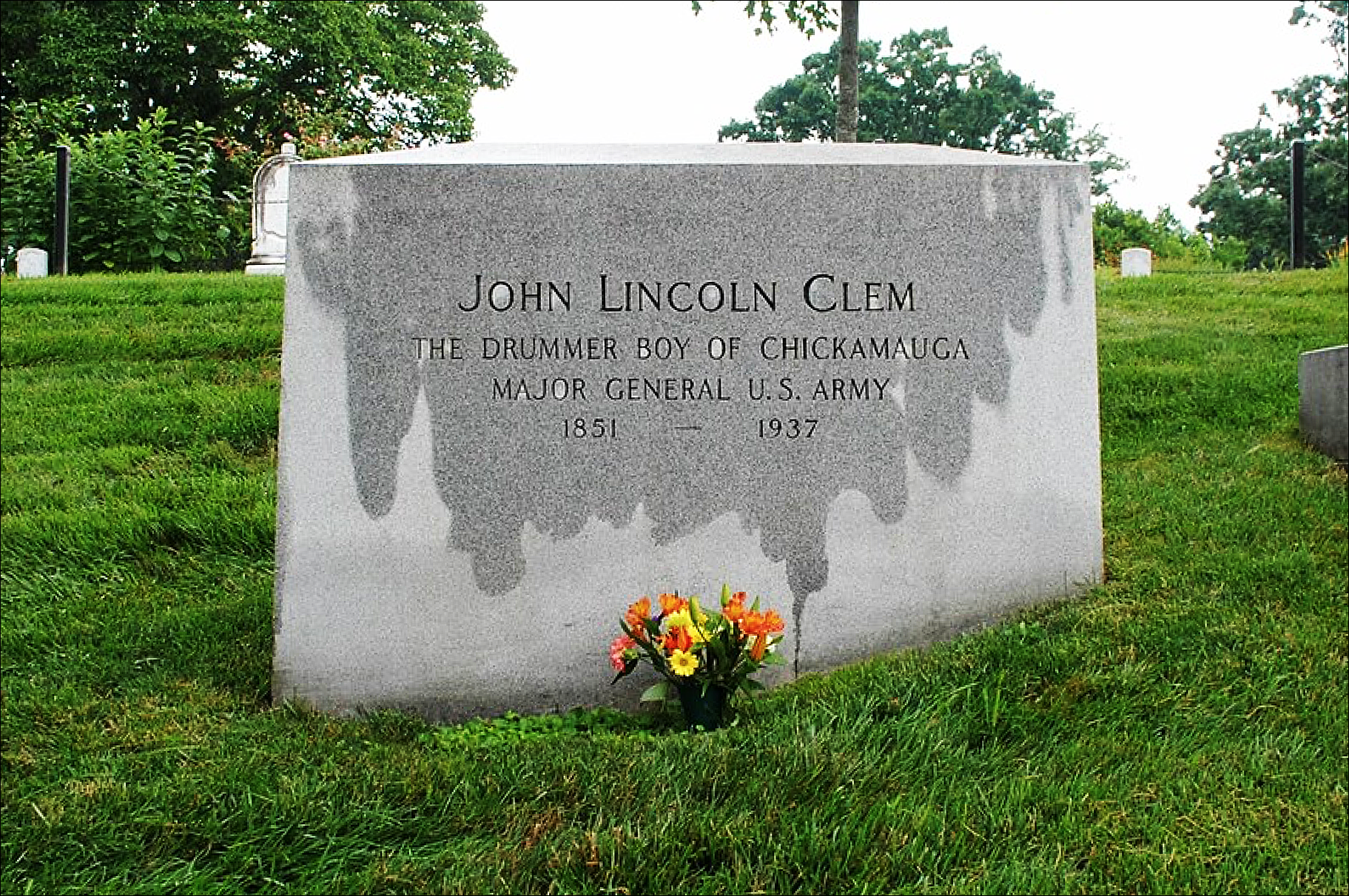
After retirement Clem lived out the rest of his life in Washington, D.C., before returning to San Antonio, Texas. He died in San Antonio on May 13, 1937 and is buried at Arlington National Cemetery.✪


▶️ CLICK HERE TO VIEW
▶️ 1 Hour 40 Minutes 22 Seconds
▶️ 1 Hour 5 Minutes 52 Seconds
▶️ 18 Minutes 22 Seconds
▶️ 11 Minutes 33 Seconds
▶️ 2 Minutes 55 Seconds
▶️ 2 Minutes 59 Seconds
▶️ 19 Minutes 57 Seconds
