


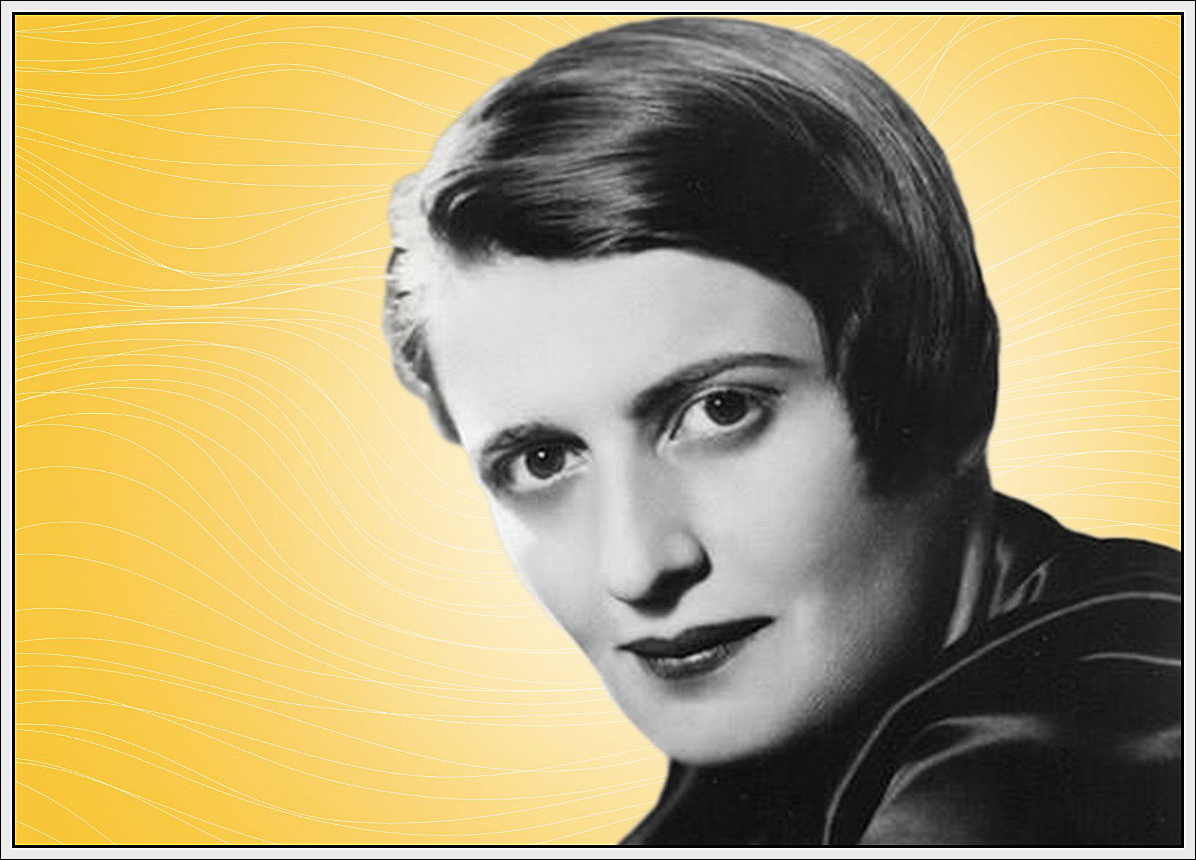

Alisa Zinovyevna Rosenbaum: February 2, 1905–March 6, 1982
✪ Alisa Zinovyevna Rosenbaum better known by her pen name Ayn Rand, was a Russian-born American writer and philosopher known for her fiction and for developing a philosophical system which she named Objectivism. Born and educated in Russia, Rand moved to the United States in 1926. After two early novels that were initially unsuccessful and two Broadway plays, Rand finally achieved fame with her 1943 novel The Fountainhead. In 1957, she published her best-selling work, the novel Atlas Shrugged. Afterward, until her death in 1982, she turned to non-fiction writing to promote her philosophy.
Rand advocated for reason and rejected faith and religion. Rand’s political philosophy emphasized individual rights, including property rights. She considered laissez-faire capitalism as the only moral social system because in her view it was the only system based on protecting those rights.
Rand opposed collectivism and statism which she considered to include many specific forms of government, such as communism, fascism, socialism, theocracy, and the welfare state. Her preferred form of government was a constitutional republic that is limited in scope and function to the protection of individual rights.
▶️ 3 Minutes 59 Seconds
Although her political views are often classified as conservative or libertarian, Rand preferred the term “radical for capitalism.” She supported rational and ethical egoism as opposed to altruism and hedonism. In art, she promoted romantic realism. She was sharply critical of most philosophers and philosophical traditions known to her, with a few exceptions.
Rand called her philosophy “Objectivism,” describing its essence as “the concept of man as a heroic being, with his own happiness as the moral purpose of his life, with productive achievement as his noblest activity, and reason as his only absolute.”
In metaphysics, Rand supported philosophical realism and opposed anything she regarded as mysticism or supernaturalism, including all forms of religion. Rand believed in free will as a form of agent causation and rejected determinism.
Rand’s ethics and politics are the most criticized areas of her philosophy. Critics from religious traditions oppose her atheism and her rejection of altruism.
Rand was born Alisa Zinovyevna Rosenbaum on February 2, 1905, into a Jewish bourgeois family living in Saint Petersburg, which was then the capital of the Russian Empire. She was the eldest of three daughters of Zinovy Zakharovich Rosenbaum, a pharmacist, and Anna Borisovna (née Kaplan). She was 12 when the October Revolution began and the rule of the Bolsheviks under Vladimir Lenin directly impacted and disrupted her family’s lives. Her father’s pharmacy was nationalized and the family fled to Yevpatoria in Crimea, which was initially under the control of the White Army during the Russian Civil War.
After graduating high school there in June 1921, she returned with her family to Petrograd, as Saint Petersburg was then named, where they faced extremely desperate financial conditions, occasionally nearly starvation.
After the Russian Revolution opened up Russian universities to women, Rand was among the first to enroll at Petrograd State University, now Saint Petersburg State University. At 16, she began her studies in the department of social pedagogy, majoring in history. She was one of many bourgeois students purged from the university shortly before graduating. After complaints from a group of visiting foreign scientists, many purged students, including Rand, were reinstated.
In October 1924, she graduated from the renamed Leningrad State University. She then studied for a year at the State Technicum for Screen Arts in Leningrad. She decided her professional surname for writing would be Rand, and she adopted the first name Ayn.
In late 1925, Rand was granted a visa to visit relatives in Chicago. She arrived in New York City on February 19, 1926. Intent on staying in the United States to become a screenwriter, she lived for a few months with her relatives learning English before eventually moving to Hollywood, California.
In Hollywood a chance meeting with director Cecil B. DeMille led to work as an extra in his film The King of Kings and a subsequent job as a junior screenwriter. While working on The King of Kings, she met the aspiring actor Frank O’Connor. and they married on April 15, 1929. Rand became a permanent American resident in July 1929 and an American citizen on March 3, 1931. She tried to bring her parents and sisters to the United States, but they could not obtain permission to emigrate from the Soviet government. Rand’s father died of a heart attack in 1939. One of her sisters and her mother died during the Siege of Leningrad.
In 1932, Rand’s first literary success was the sale of her screenplay Red Pawn to Universal Studios, although it was never produced. Her courtroom drama Night of January 16th, first staged in Hollywood in 1934, reopened successfully on Broadway in 1935. During the performance each night, a jury was selected from members of the audience. Based on their vote, one of two different endings would be performed. In December 1934, Rand and O’Connor moved to New York City so she could handle revisions for the Broadway production.
In 1936, her first novel was published, the semi-autobiographical We the Living. Set in Soviet Russia, it focuses on the struggle between the individual and the state. Initial sales were slow, and the American publisher let it go out of print; however, European editions still continued to sell well.
In December 1935, Rand started work on her next major novel, The Fountainhead, but took a break from it in 1937 to write her novella Anthem. The novella presents a dystopian future world in which totalitarian collectivism has triumphed to such an extent that the word “I” has been forgotten and replaced with “we.” As with We the Living, Rand’s later success allowed her to get a revised version published in 1946, and this sold over 3.5 million copies.
During the 1940s, Rand became politically active. She and her husband were full-time volunteers for Republican Wendell Willkie’s 1940 presidential campaign. This work put her in contact with other intellectuals sympathetic to free-market capitalism. She became friends with journalist Henry Hazlitt, who introduced her to the Austrian School economist Ludwig von Mises.
Rand’s first major success as a writer came in 1943 with The Fountainhead, a novel about an uncompromising architect named Howard Roark and his struggle against what Rand described as “second-handers” who attempt to live through others, placing others above themselves. Twelve publishers rejected it before Bobbs-Merrill Company accepted it at the insistence of editor Archibald Ogden, who threatened to quit if his employer did not publish it.
While completing the novel, Rand was prescribed Benzedrine, an amphetamine, to fight fatigue. The drug helped her to work long hours to meet her deadline for delivering the novel, but afterwards she was so exhausted that her doctor ordered two weeks bed rest.
The success of The Fountainhead brought Rand fame and financial security. In 1943, she sold the film rights to Warner Bros. and returned to Hollywood to write the screenplay. Producer Hal B. Wallis then hired her as a screenwriter and script-doctor for screenplays including Love Letters and You Came Along.
Rand became involved with the anti-Communist Motion Picture Alliance for the Preservation of American Ideals and American Writers Association. In 1947, during the Second Red Scare, she testified as a “friendly witness” before the United States House Un-American Activities Committee that the 1944 film Song of Russia grossly misrepresented conditions in the Soviet Union, portraying life there as much better and happier than it was.
When asked after the hearings about her feelings on the investigations’ effectiveness, Rand described the process as “futile.”
Rand described her approach to literature as “romantic realism.” She wanted her fiction to present the world “as it could be and should be,” rather than as it was. This approach led her to create highly stylized situations and characters. Her fiction typically has protagonists who are heroic individualists, depicted as fit and attractive.
Rand considered plot a critical element of literature and her stories typically have what biographer Anne Heller described as “tight, elaborate, fast-paced plotting.”
In school, Rand read the works of Fyodor Dostoevsky, Victor Hugo, Edmond Rostand, and Friedrich Schiller, who became her favorites. She considered them to be among the “top rank” of Romantic writers because of their focus on moral themes and their skill at constructing plots. Hugo was an important influence on her writing, especially her approach to plotting. Rand called him “the greatest novelist in world literature.”
Following the publication of The Fountainhead, Rand received many letters from readers, some of whom the book had influenced profoundly. In 1951, Rand moved from Los Angeles to New York City, where she gathered a group of these admirers who met at Rand’s apartment on weekends to discuss philosophy. The group included future chair of the Federal Reserve Alan Greenspan. Later, Rand began allowing them to read the manuscript drafts of her new novel, Atlas Shrugged.
Published in 1957, Atlas Shrugged is considered Rand’s magnum opus. She described the novel’s theme as “the role of the mind in man’s existence—and, as a corollary, the demonstration of a new moral philosophy: the morality of rational self-interest.”
The novel advocates for the core tenets of Rand’s philosophy of Objectivism and expresses her concept of human achievement. The plot involves a dystopian United States in which the most creative industrialists, scientists, and artists respond to a welfare state government by going on strike and retreating to a hidden valley where they build an independent free economy. The novel’s hero and leader of the strike, John Galt, describes it as stopping “the motor of the world” by withdrawing the minds of individuals contributing most to the nation’s wealth and achievements. The novel contains an exposition of Objectivism in a lengthy monologue delivered by Galt.
Despite many negative reviews, Atlas Shrugged became an international bestseller, but the reaction of intellectuals to the novel discouraged and depressed Rand. Atlas Shrugged was her last completed work of fiction, marking the end of her career as a novelist and the beginning of her role as a popular philosopher.
In the 1960s and 1970s, Rand developed and promoted her Objectivist philosophy through nonfiction and speeches, including annual lectures at the Ford Hall Forum. In answers to audience questions, she took controversial stances on political and social issues. These included supporting abortion rights, opposing the Vietnam War and the military draft, supporting Israel during the Yom Kippur War of 1973 against a coalition of Arab nations as “civilized men fighting savages,” claiming European colonists had the right to invade and take land inhabited by American Indians and calling homosexuality “immoral” and “disgusting.” During her career Rand also endorsed several Republican candidates for president of the United States, most strongly Barry Goldwater in 1964.
In 1973, Rand’s younger sister Eleonora Drobisheva (née Rosenbaum, 1910–1999) visited her in the United States at Rand’s invitation, but did not accept her lifestyle and views, as well as finding little literary merit in her works. She returned to the Soviet Union and spent the rest of her life in Saint Petersburg.
In 1974, Rand had surgery for lung cancer after decades of heavy smoking. In 1976, she retired from her newsletter and, despite her lifelong objections to any government-run program, was enrolled in and claimed Social Security and Medicare with the aid of a social worker. Her activities in the Objectivist movement declined with her health, especially after her husband died on November 9, 1979. One of her final projects was a never-completed television adaptation of Atlas Shrugged. On March 6, 1982, Rand died of heart failure at her home in New York City.
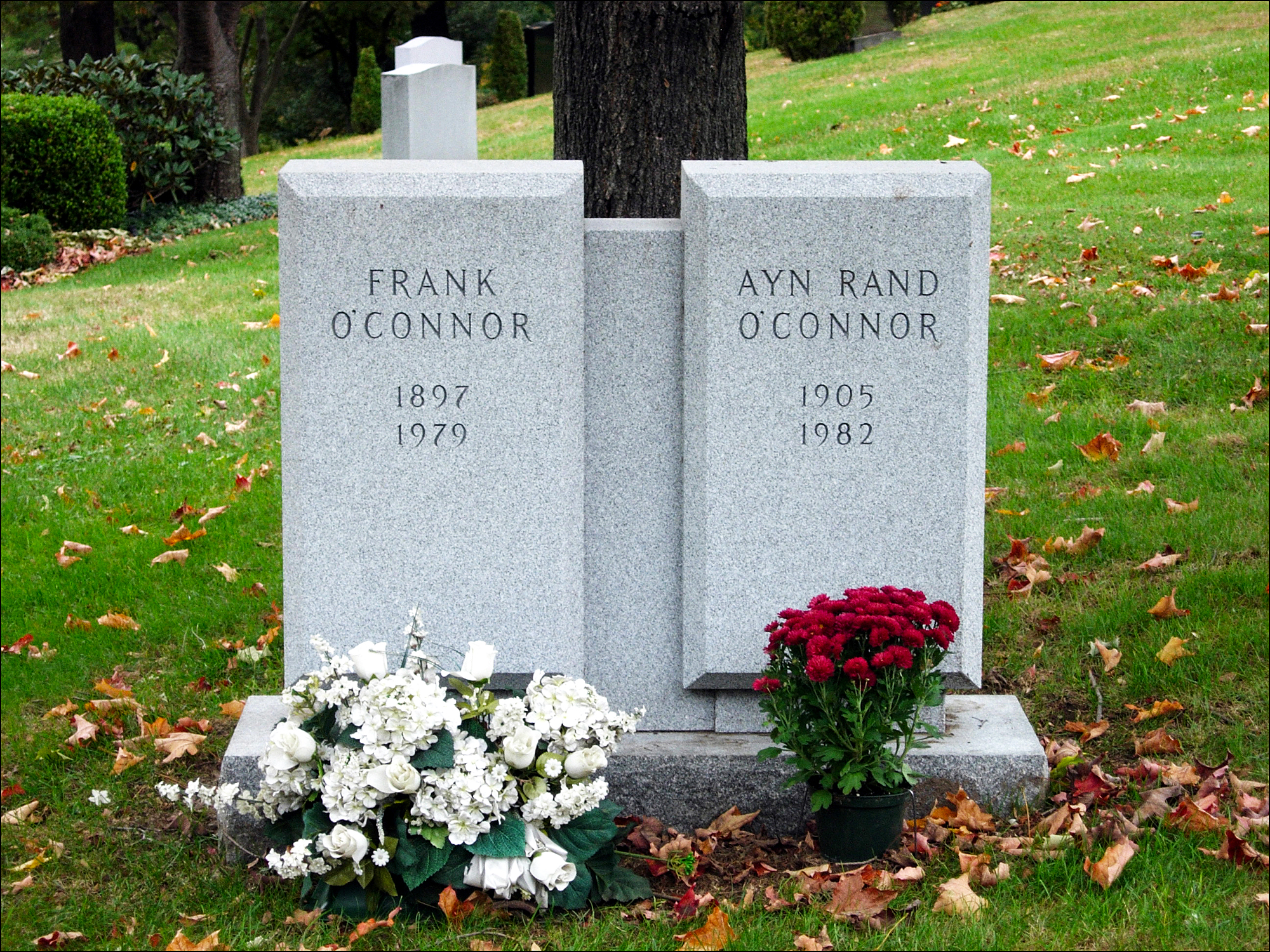
After her death, interest in Rand’s ideas have increased. The Philosophic Thought of Ayn Rand, a 1984 collection of essays about Objectivism was the first academic book about Rand’s ideas published after her death. In one essay, political writer Jack Wheeler wrote that despite “the incessant bombast and continuous venting of Randian rage,” Rand’s ethics are “a most immense achievement, the study of which is vastly more fruitful than any other in contemporary thought.”
With over 37 million copies sold as of 2020, Rand’s books continue to be read widely. In 1991, a survey conducted for the Library of Congress and the Book of the Month Club asked club members to name the most influential book in their lives. Rand’s Atlas Shrugged was the second most popular choice, after the Bible. Although Rand’s influence has been greatest in the United States, there has also been widespread international interest in her work. ✪















▶️ DONATE VIA PAYPAL (DEBIT & CREDIT CARD)
ALL PayPal Transactions Are Encrypted For Card Holder Privacy & Security
▶️ DONATE VIA ZELLE (DIRECT BANK CASH TRANSFER)
ZELLE is the perfect online alternative to PayPal. It’s an incredibly simple, secure, easy, fast and FREE way to send or receive money to recipients directly from your online banking account without a middleman. Best of all, there’s NO fees.
ZELLE is a service provided by your bank and is already built in to your online banking account. You only need to activate it first before using. If you’ve already activated ZELLE in your online bank or credit union account, you can donate to The New Americanist by using our ZELLE address:
vip@thenewamericanist.com
To activate your ZELLE, follow these easy instructions (a simple two minute process):

▶️ DONATE VIA SNAIL MAIL









▶️ CLICK HERE TO VIEW
▶️ 44 Minutes 36 Seconds
▶️ 1 Hour 1 Minute 36 Seconds
▶️ 23 Minutes 15 Second
▶️ 26 Minutes 29 Seconds
▶️ 1 Hour 32 Minutes 58 Seconds
▶️ 18 Minutes 39 Seconds
▶️ 16 Minutes 34 Seconds
▶️ 16 Minutes 41 Seconds
▶️ 9 Minutes 44 Seconds
▶️ 14 Minutes 43 Seconds
▶️ 13 Minutes 39 Seconds
▶️ 22 Minutes 45 Seconds
▶️ 11 Minutes 43 Seconds
▶️ 14 Minutes 24 Seconds
▶️ 10 Minutes 5 Seconds
▶️ 5 Minutes 31 Seconds
▶️ 8 Minutes 15 Seconds
▶️ 7 Minutes 44 Seconds
▶️ 32 Minutes 11 Seconds ⭐️ TokaiseBlessedPatriot
▶️ 5 Minutes 51 Seconds
▶️ 19 Minutes 16 Seconds ⭐️ The New Logical Show
A NEW video podcast produced by TNA’s very own bet125. Make certain you SUBSCRIBE & LIKE.
Let’s all support new Conservative Media. 😎
